
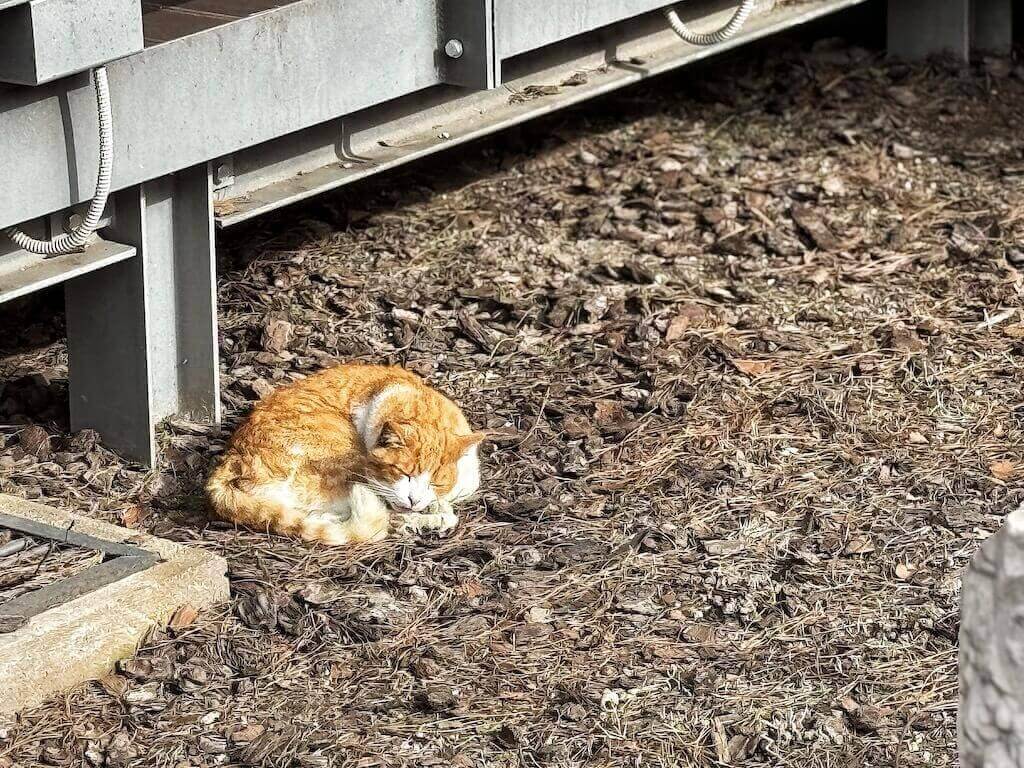
If you have learned to know me a little, you will also know that I am a self-professed cat lady. I live with Minnie, my beloved black cat, and literally everyone in my family as a furry companion.
Wherever I travel in the world, I befriend a cat or many. This happened in Amsterdam, in Istanbul (one of the most cat-friendly cities I have ever visited), in Greece and of course I have to pet all the cats in Rome whenever I go there (which is very often).
I find that cats in Rome are special. They are so special that they have their personal (or perhaps I should say purrsonal) merchandise – fridge magnets, calendars, postcards and what not.
But what’s even more special is that the cats of Rome aren’t just stray cat living in the streets: many of them live in archeological sites (for example in the Colosseum) and in historic cemeteries. I guess it goes to show how unique and rich in history the Italian capital is.
I have just returned from yet another weekend in Rome. This time, I slept in Trastevere and found a cat sanctuary right in the hotel’s park. But and any time I go to Rome I also visit my favorite cat sanctuary in the world – the Colonia Felina di Torre Argentina.
If you love cats as much as I do, there are some hidden gems of Rome that not only are pleasant sites to visit away from the typical crowds, but where you’ll also have the chance of spotting (and even petting) some beautiful cats.
In this post, I will share what you need to know about the felines of Rome, where to see them, and how you can contribute to their well being.
If you are visiting Rome for the first time, my posts What To See In Rome and What To Know Before Your Trip To Rome are essential reads.

Why Are There So Many Cats In Rome?
In the past, cats were highly respected and regarded for their essential role in protecting houses, warehouses, granaries and shops from rodents. Keep in mind that rats were often the spreading agent of diseases such as the plague, so you can see why cats were so important.
Cats were venerated in the ancient Egyptian Empire. And Rome had a close relationship with Egypt, which means that some religious groups in Rome also venerated cats. The Romans believed cats symbolized liberty and independence, which made them popular in both homes and public spaces.
For example, research shows that cats used to live in Trajan’s Market (which you can see along Via dei Fori Imperiali, on the way to the Colosseum) already in 400 AC.
Over the centuries, cats became permanent fixtures in Rome, adapting to life among the ruins and narrow alleys of the city which provide the perfect shelter.
By the 20th century, the city’s stray cat population had grown significantly and it was not uncommon for locals to abandon unwanted cats in popular spots such as the Colosseum, leading to the emergence of “gattare”—women who fed and cared for them usually referred to in English as “cat ladies”.
These caretakers helped establish Rome’s modern-day protections for stray cats, culminating in a 1991 law (City Law 281/91) that grants feral cats the right to live freely in their colonies, and in 2001 the City Council declared that cats living in the Colosseum, the Roman Forum and the Largo di Torre Argentina site are part of the city’s bio-heritage.

Cats In Rome Today
Today, Rome’s cats are considered part of the city’s cultural fabric. They roam ruins, lounge in the city squares (though don’t expect to see them in tourist crowded places such as Piazza Navona or the Fontana di Trevi), and have even inspired books and documentaries.
Locals and tourists alike recognize their place in the Eternal City – oftentimes stopping to just admire. That’s exactly what happened the first time I noticed cats in the ruins of Largo di Torre Argentina.
As of today, there are roughly 300,000 cats in Rome, of these around 180,000 are house cats; and around 120,000 are feral.
There currently are around 5,000 cat colonies in Rome: some of them are in hidden spots you may never come across as a tourists, but others in spots you will likely come across when you visit the city.
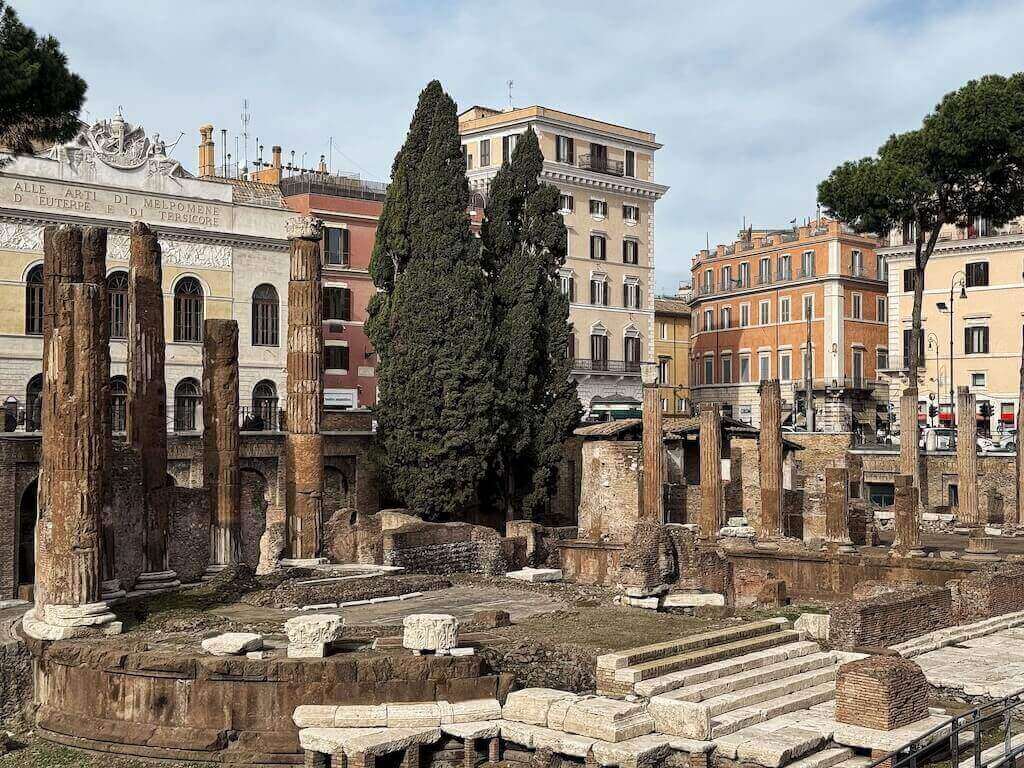
Largo Di Torre Argentina Cat Santuary
The Colonia Felina di Torre Argentina is the most famous cat sanctuary in Rome. I came across the site for the first time in 2005. I was in Rome for a job interview, my dad decided to come with me so we’d explore the city.
We were just walking around the historic center and decided to go from Piazza Venezia and the Altar of the Fatherland, which we had just visited, to the Pantheon. I was casually looking at some ruins below the street level and didn’t much much of them (they are marvelous, I will share more in a bit) when I noticed cats roaming about, and of course I had to find out more.
Looking more carefully, I realized that right there, among the ruins, there was a cat colony that was open to the public, and of course I had to walk in to discover more about it.
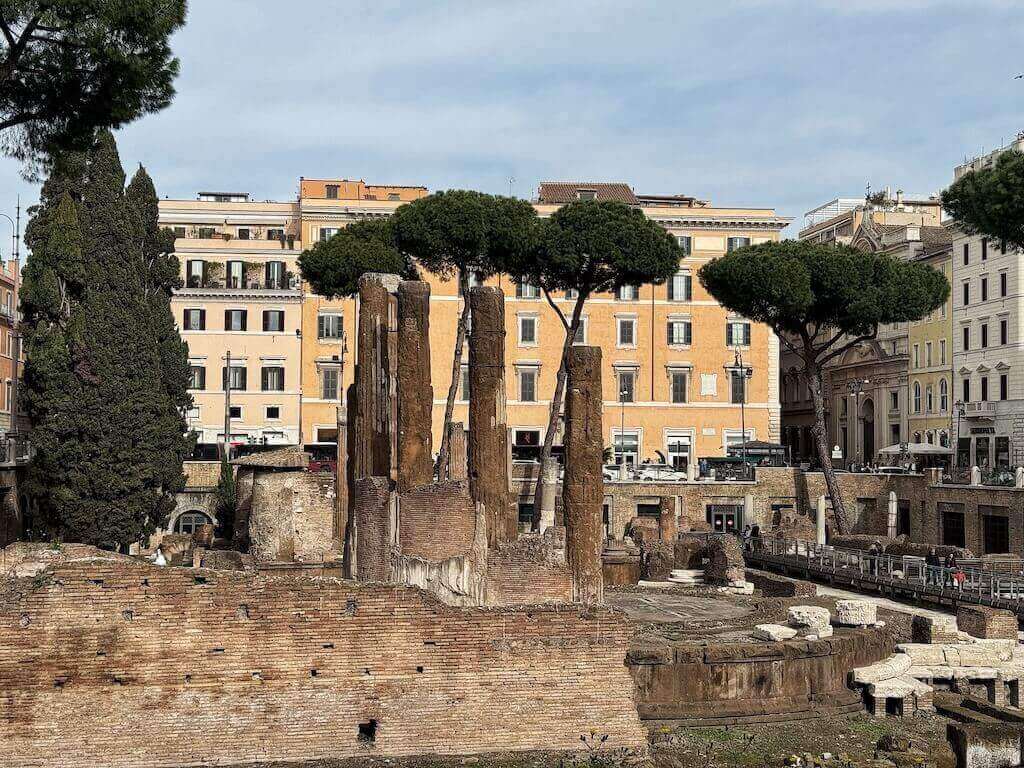
The history of Largo di Torre Argentina
Largo di Torre Argentina is one of Rome’s most fascinating archaeological sites. The site was first uncovered in 1927 during demolition works as part of the city’s urban modernization efforts: a modern neighborhood was meant to be created between Largo di Torre Argentina, Via Florida and the Via di San Nicola de Cesarini.
It was by pure chance that construction workers found the colossal head of the statue of the Goddess of Fortune that had been erected by Quintus Lutatius Catulus, a consul of the Roman Republic in 102 BC.
The discovery of the ruins led to a dispute between the archeologists, who wanted to excavate the area, and the owners of the area. It was Benito Mussolini, then Prime Minister of Italy, who decided that the excavation were to continue.
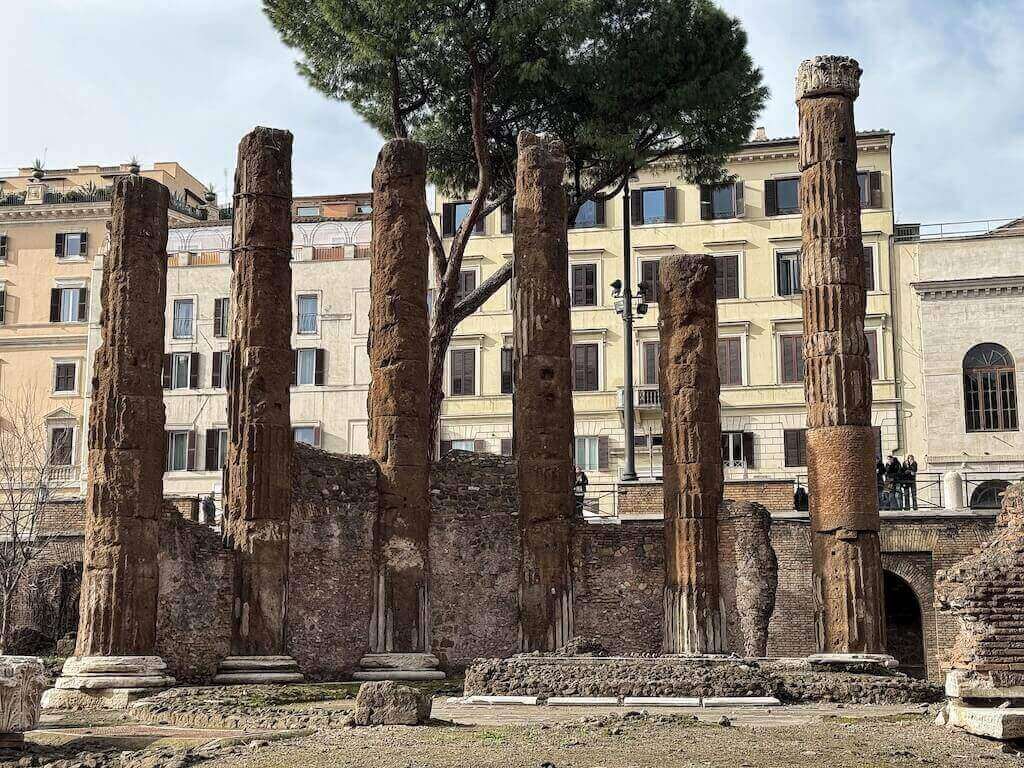
Works on the site went on relentlessly until 1929 and on April 21st of that year, in celebration of Rome’s birthday, a site was unveiled that dated back to the 4th-2nd centuries BC, with four ancient temples and the remnants of the Theater of Pompey – which we refer to in Italy as the Curia di Pompeo.
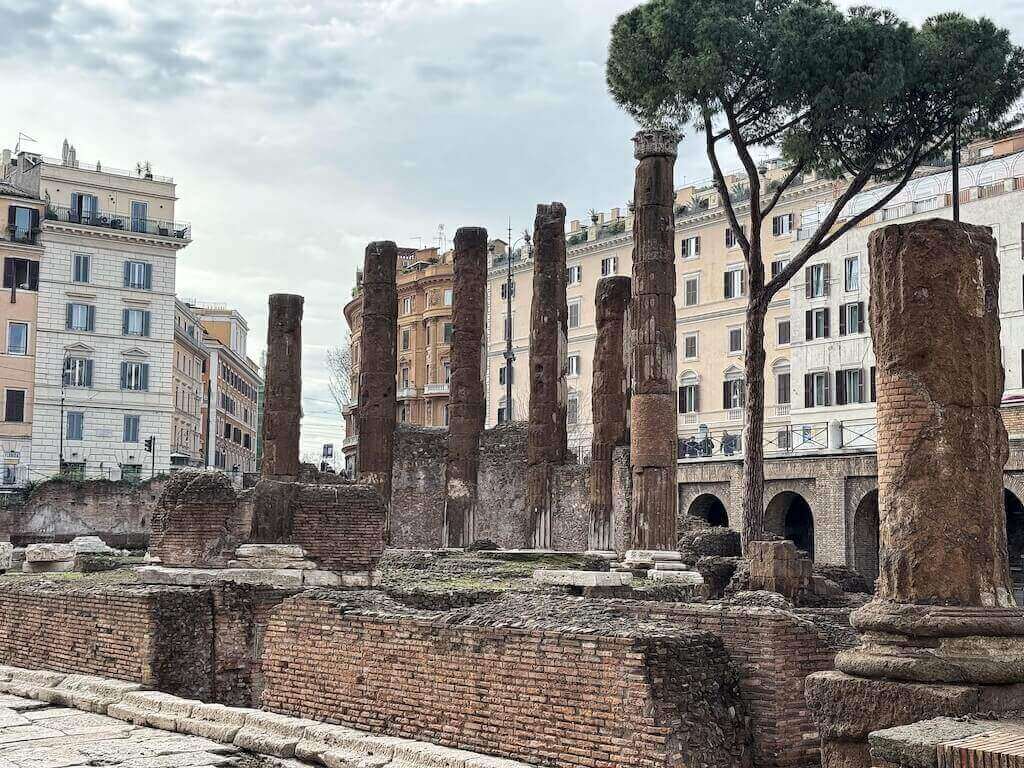
This is where the Roman Senate would meet during the last years of the Roman Republic. It’s a place of great historical significance as it’s where, on the Ides of March (15th March) in 44 BC Julius Caesar was assassinated.
The ruins of the Theater of Pompey are still visible in the site – in fact, the site underwent further excavation when the exact spot where Caesar was killed had been found. Thanks to those excavations, the site can now be explored via some boardwalks, rather than just be admired from the street as it was for a long time.
Other than that, you can admire the four temples (labeled at A, B, C and D), dedicated to different deities.
And of course, the ruins house one of Rome’s most important cat sanctuaries.

The Colonia Felina di Torre Argentina
The shelter of the Colonia Felina di Torre Argentina is located on the base of temple D, right under Via Florida. It is said that even Italian legendary actress Anna Magnani, who lived close to Largo di Torre Argentina, would help feed the cats of Largo di Torre Argentina.
However, it was Shakespearean actor Antonio Crast who found a warehouse and obtained the key so that he’d have a place to feed the local stray cats. He also built a fence to help keep the cats safe.
That warehouse is the current location of the shelter, though much work has been done since then (like installing water and electricity) to make it a more suitable place.
When Antonio Crast died of a heart attack in 1984 just as he was feeding the cats, the cat colony was taken over by yet another actress – Franca Stoppi. She made it a point not only to feed the stray cats, but to spay and neuter them as a way to keep the population under control.
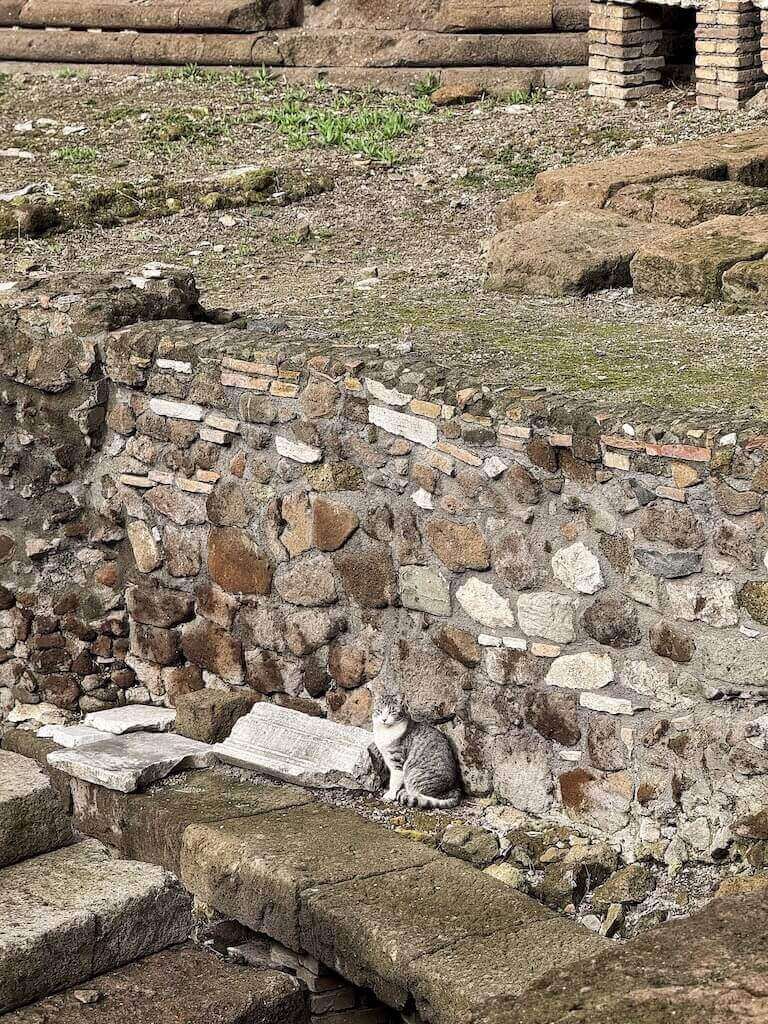
In 1993, Lia Dequel and Silvia Viviani (a retired opera singer) started helping Franca Stoppi, and a few years later, thanks to the support of AISPA (the Anglo Italian Society for the Protection of Animals) officially founded the cat sanctuary – in Italian, the Colonia Felina di Torre Argentina.
One interesting thing to point out is that cat sanctuary doesn’t legally own the shelter – we could say they are squatters, but the local authorities bothered with it and never asked them to move, at least not until further excavation works on the site started.
With the new works in 2012, the city’s authorities wanted to evict the cat shelter. The volunteers managed to gather more than 30,000 signatures in a short time and thanks to the public outcry the shelter could continue to stay where it’s always been.
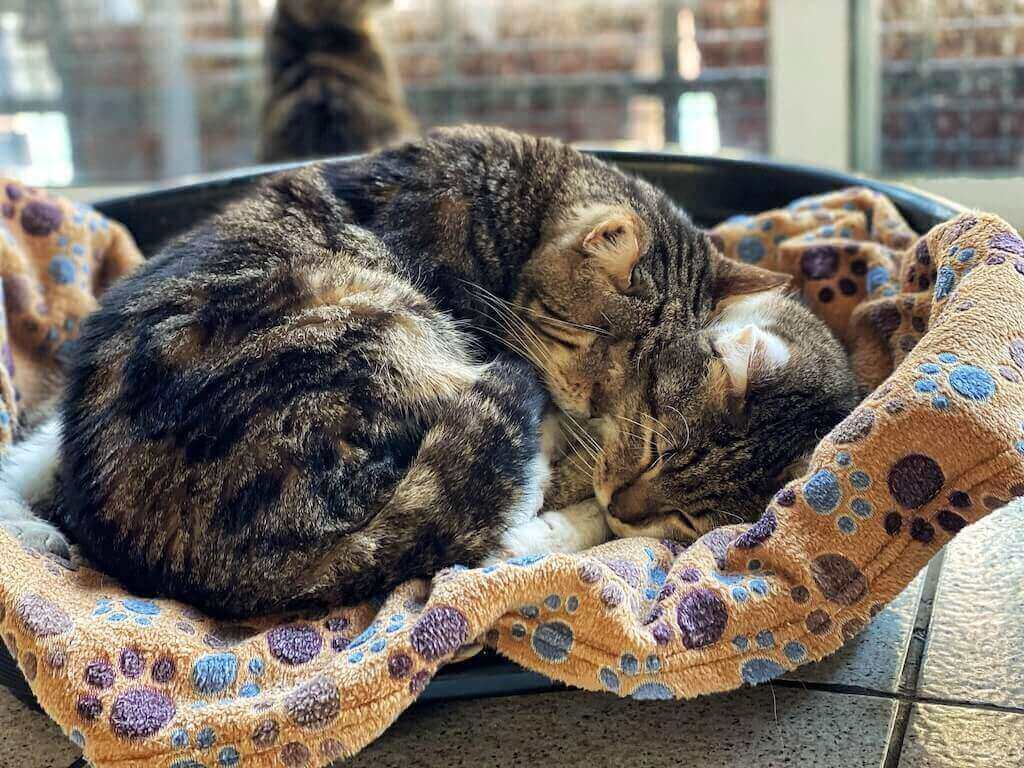
The shelter consists of two rooms, with a very low ceiling. One of them is open and cats can go in and out as they please. It’s where the shelter volunteers welcome visitors and where you’ll also find a tiny gift shop. In the past, I have bought things such as calendars, small purses and t-shirts, knowing all the profits are used to care for the cats.
The other room is closed. That’s where disabled or sick cats (some are blind, others are deaf or tripods, or have cerebellar hypoplasia) that need constant attention live, protected from the cold and rain in the winter, and from the sun and heat in the summer.
Last time I asked, there were 89 resident cats at Colonia Felina di Torre Argentina – but this numbers can increase or decrease depending on how many are (sadly) abandoned there, how many find a forever home, and how many pass away.
How the Colonia Felina di Torre Argentina helps cats in Rome
The Colonia Felina di Torre Argentina works some real miracles when it comes to taking care of the cats of Rome. Their main objective is to reduce the number of stray cats in Rome, and to make sure that the ones that don’t find a forever home are well taken care of.
They run three main programs to help with this objective:
Spay/neuter
As a former volunteer of a local cat shelter in my hometown Cagliari, I can attest that this is the only effective way of controlling the number of stray cats. The Colonia Felina di Torre Argentina doesn’t just spay and neuter the cats that live in the sanctuary, but with the help of local vets it provides support to other cat colonies in Rome.

Adoption program
Every year, Colonia Felina di Torre Argentina helps find a forever home for more than 100 cats. It also runs a foster program that helps find temporary homes for cats in need. Foster families usually commit to keeping the foster cat until a permanent home is found, but some end up adopting (it’s called “foster fail” in cat lady jargon).
Distant adoption program
I have been to the Colonia Felina di Torre Argentina more times than I can remember. Every time I go to Rome, I visit to see the cats, chat with the volunteers, buy a small gift and make a donation.
That’s how I learned about their distant adoption program – and how I ended up adopting Mozart a few years ago. He was a cat with cerebellar hypoplasia who’s unfortunately since passed away.
The distance adoption program costs a mere €15 per month (which you can pay monthly or even all together at once) and helps support not only the cat you adopt, but also the shelter, which really depends on donations.
When you adopt a cat at a distance, you get a photo of the cat and receive regular email updates about him or her.
How to visit the Colonia Felina di Torre Argentina
The cat shelter is located in the historic center of Rome, between the Pantheon and Piazza Venezia. You can enter via a set of steps located in Largo di Torre Argentina on the corner with Via Arenula.
The sanctuary is open to visitors who want to pet the cats, adopt or just learn about the sanctuary. They are open every day from 12:00 to 4:30 pm.
While there, you should also visit the impressive ruins of Largo di Torre Argentina. For decades these could only be seen from the street level, but the restoration works have finally ended and the ruins have been open to the public since June 2023. I visited last weekend, after many years of just looking at the ruins from above.
It’s a pleasant place to visit – and a very important site in Rome that has yet to be discovered by the tourist masses.
There is a small fee to visit – you need to book your tickets before going, and the site is very accessible thanks to a boardwalk. It takes about 45 minutes to explore if you read all the informative panels around the ruins.
How to help the cats of Rome
Honestly, the best way to help the stray cats of Rome is by donating money. The Colonia Felina di Torre Argentina takes donation – which are tax deductible. You can simply make a donation, stop by while in Rome to buy a small gift to bring home, adopt a cat or even adopt a cat at a distance.
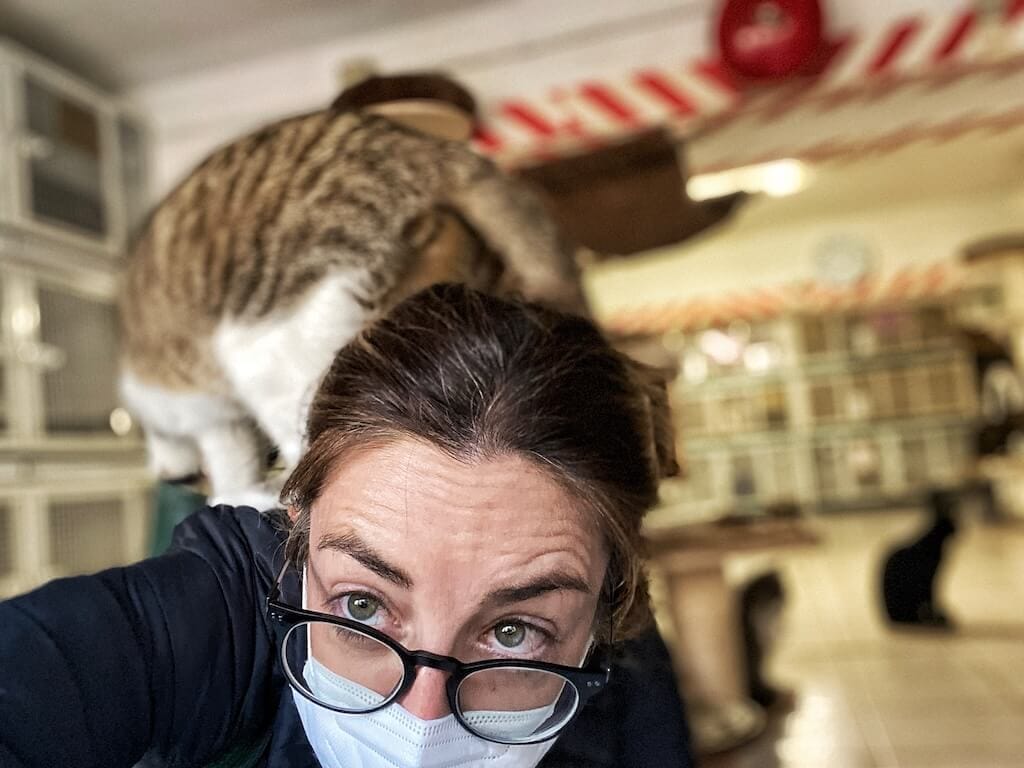
If you are staying in Rome for more than just a few days, consider volunteering at the shelter – they are always looking for help, and with so many tourists they need volunteers who speak English.
Make sure to follow their Instagram profile as the volunteers post daily updates about their cats.
Other Cat Sanctuaries In Rome
There are many more places where you can see cats in Rome.
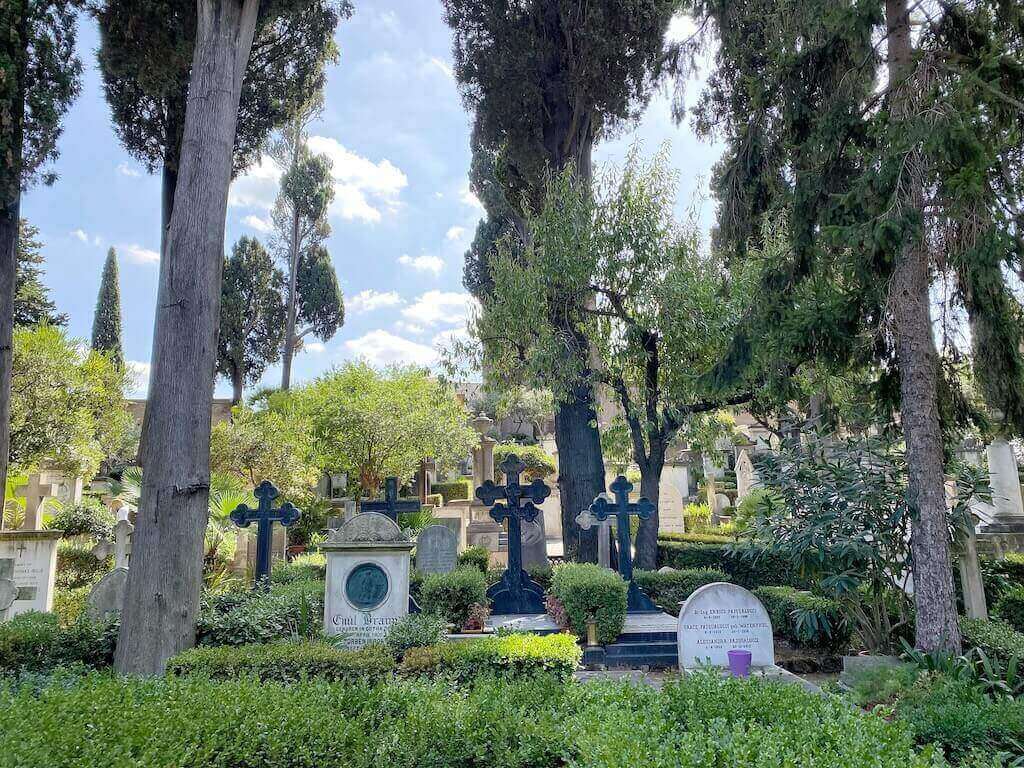
One I particularly love is the cat colony located in the Protestant Cemetery, close the the Pyramid of Cestius in the neighborhood of Testaccio. It’s a lesser known area of Rome to tourists (though very popular among locals as it’s packed with excellent eateries).
With time, the Protestant Cemetery has become a safe haven for stray cats, and much like the Colonia Felina di Torre Argentina it is a place with a rich history.
The Protestant Cemetery, also known as the Non-Catholic Cemetery of Rome, serves as the final resting place for many notable historical figures, including poets John Keats and Percy Shelley.
Close to it (it can be seen from the eastern side of the cemetery), there’s the Pyramid of Cestius, a pyramid built in the 1st century BC as a tomb for Gaius Cestius, near the city’s Aurelian Walls.
The cemetery is a lovely place to explore, and of course the added bonus for cat lovers is that there are cats roaming around. The sanctuary is officially called I Gatti della Piramide, and it is managed by volunteers who thanks to donations provide for the well-being of the furry residents.
PIN IT!


Claudia Tavani
Claudia Tavani was born and raised in Sardinia, and after moving between the United States and the United Kingdom, she's now back living in her hometown, Cagliari. She's a travel blogger and certified travel designer who loves planning trips and publishing guides, travel tips, and packing lists so that you don't have to. Owner of Strictly Italy, cat mom to Minnie. Loves pizza, hiking, archeology, cities, beaches, swimming, and running. Hates peppers.