
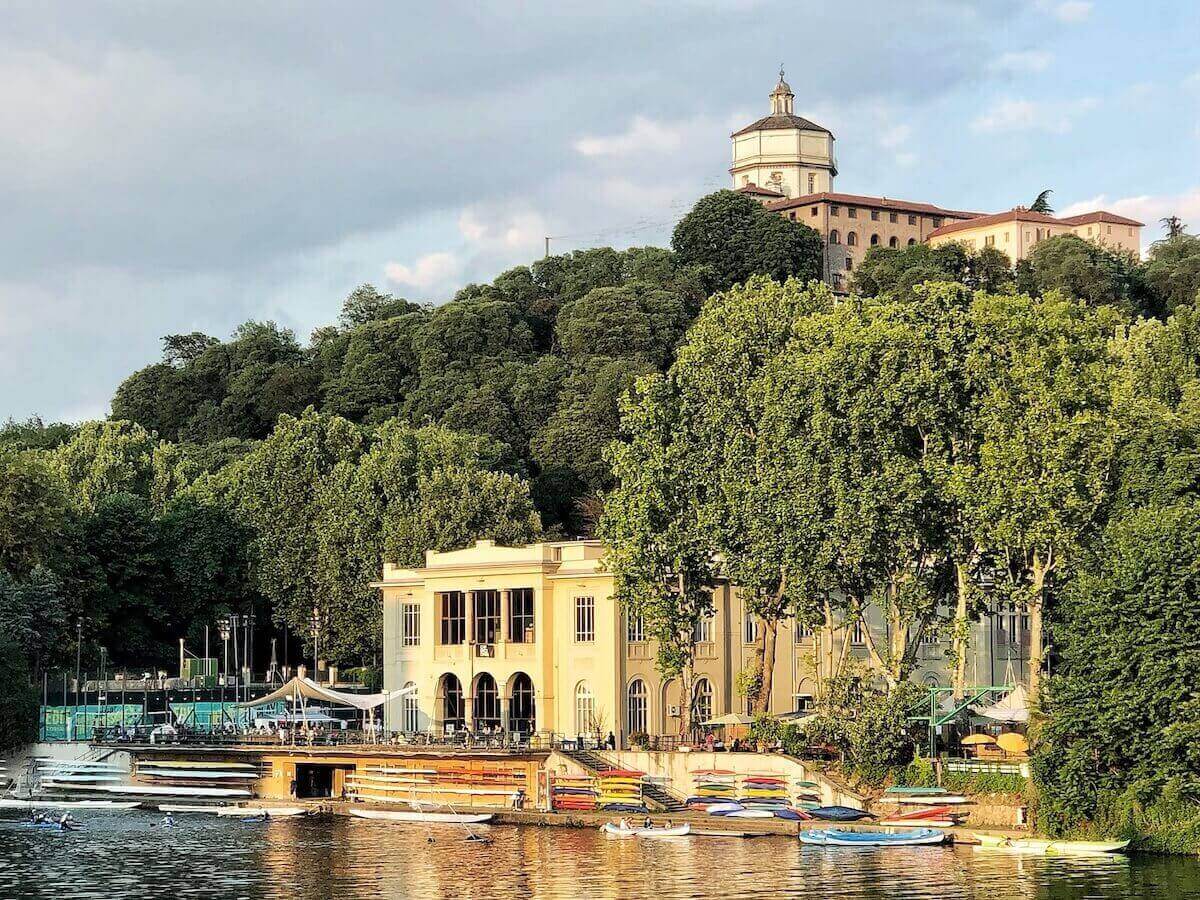
There are more things to do in Turin than you can possibly imagine.
Turin is perhaps Italy’s most surprising city. I visited many times, including during a recent road trip around Tuscany and Piedmont, as I moved from Florence and the famous Val d’Orcia to Piedmont’s Langhe, and decided to add it to my itinerary. Sure enough, I did not regret it.
Less talked about and visited than other cities in Italy, Turin became the first capital of Italy in 1860, and it has a historical importance that you will recognize at every glance.
Located at the foot of the Alps, Turin isn’t far from the French border. The capital of Piedmont is eclectic and surprising in many ways: it has a unique history and art scene, lots of good food and wine, and offers fun sports events and insights into Italy’s car industry.
Turin is home to some of the world’s best museums, numerous historical sites, and an extraordinary Italian café culture.
Curious to find out more? Here’s my selection of things to do in Torino. Let me first start by giving you some essential background information about the city.
Where Is Turin?
Turin (Torino in Italian) is a city in northwestern Italy, close to the borders with France and Switzerland. It’s the capital of the Piedmont region of Italy and sits at the foot of the Alps, along the Po River (Italy’s longest river).
Here are some essential facts:
- About 140 km (87 miles) west of Milan
- Roughly 1 hour from the French border
- Surrounded by mountains, it’s a perfect gateway to Alpine valleys and ski resorts
It’s a major historic and industrial city, the first capital of unified Italy (1861–1865), and the home of Fiat.
Best Things To Do In Turin
Explore Piazza San Carlo
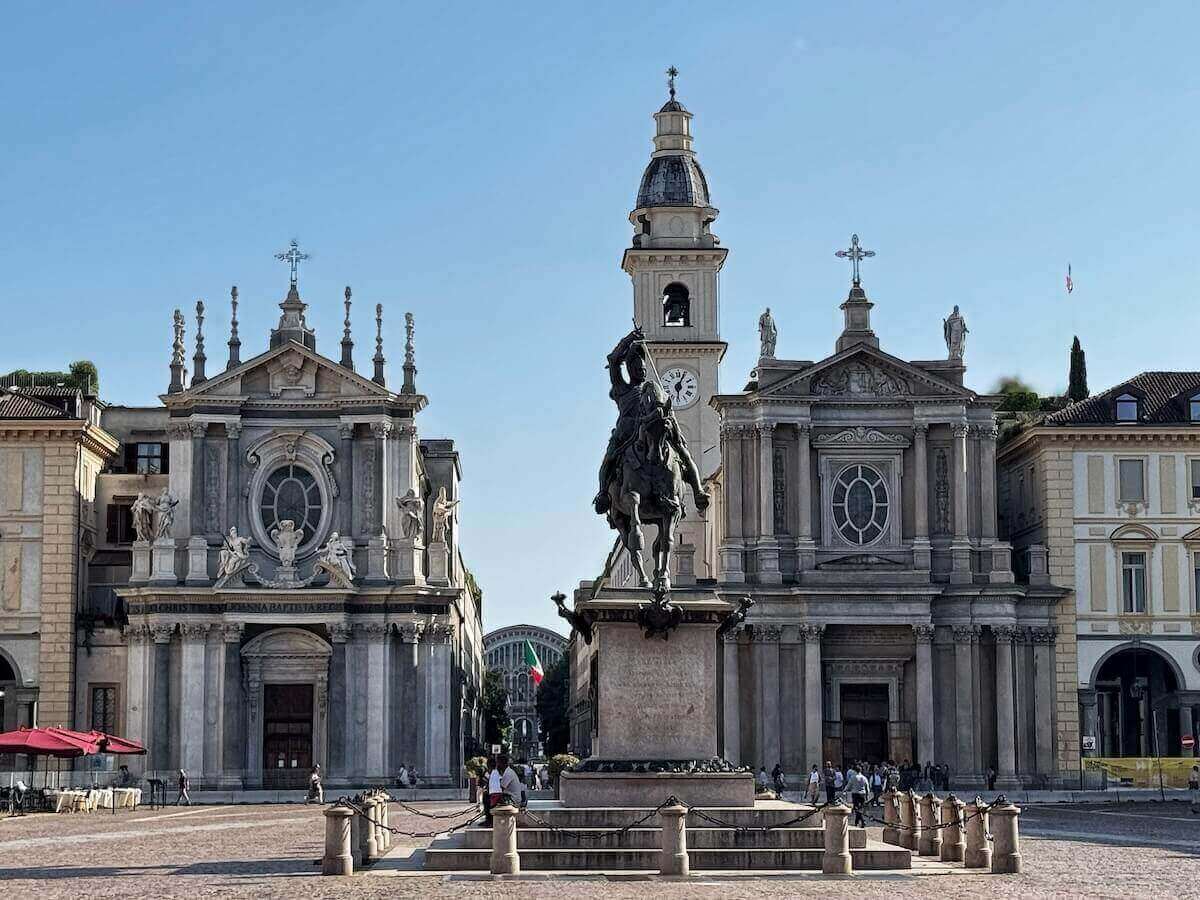
In the heart of the city, Piazza San Carlo is dedicated to Saint Charles Borromeo and is one of the symbols of Turin.
It has changed several names throughout the years: Piazza Reale, Piazza d’Armi, and Piazza Napoleone. It’s also known as the Salotto di Torino, “Turin’s Living Room,” because of the extraordinary elegance of the buildings around it, and, above all, its historical role as a meeting place for academics, intellectuals, and nobles.
Inaugurated in 1638 at the Duke of Savoy’s commission, it was designed by the architect Carlo di Castellamonte. It has a rectangular shape and, in the center, an equestrian statue of Emanuele Filiberto stands to celebrate the victory at San Quintino.
On the south side, there are two twin Baroque churches, Santa Cristina, built in 1639, and San Carlo, built in 1619. The square is connected to Piazza Castello by Via Roma, the main city street.
Take a seat and enjoy a coffee at Caffè Torino: this was writers Pavese and Einaudi, and political figure De Gasperi’s favorite place. From here, you can fully appreciate the beauty of the square.
Important events take place here, such as concerts, social and cultural events, demonstrations, and celebrations for the victories of the Juventus football team. There’s no wonder why it’s one of the unmissable things to see in Turin.
Take a guided tour of the Egyptian Museum
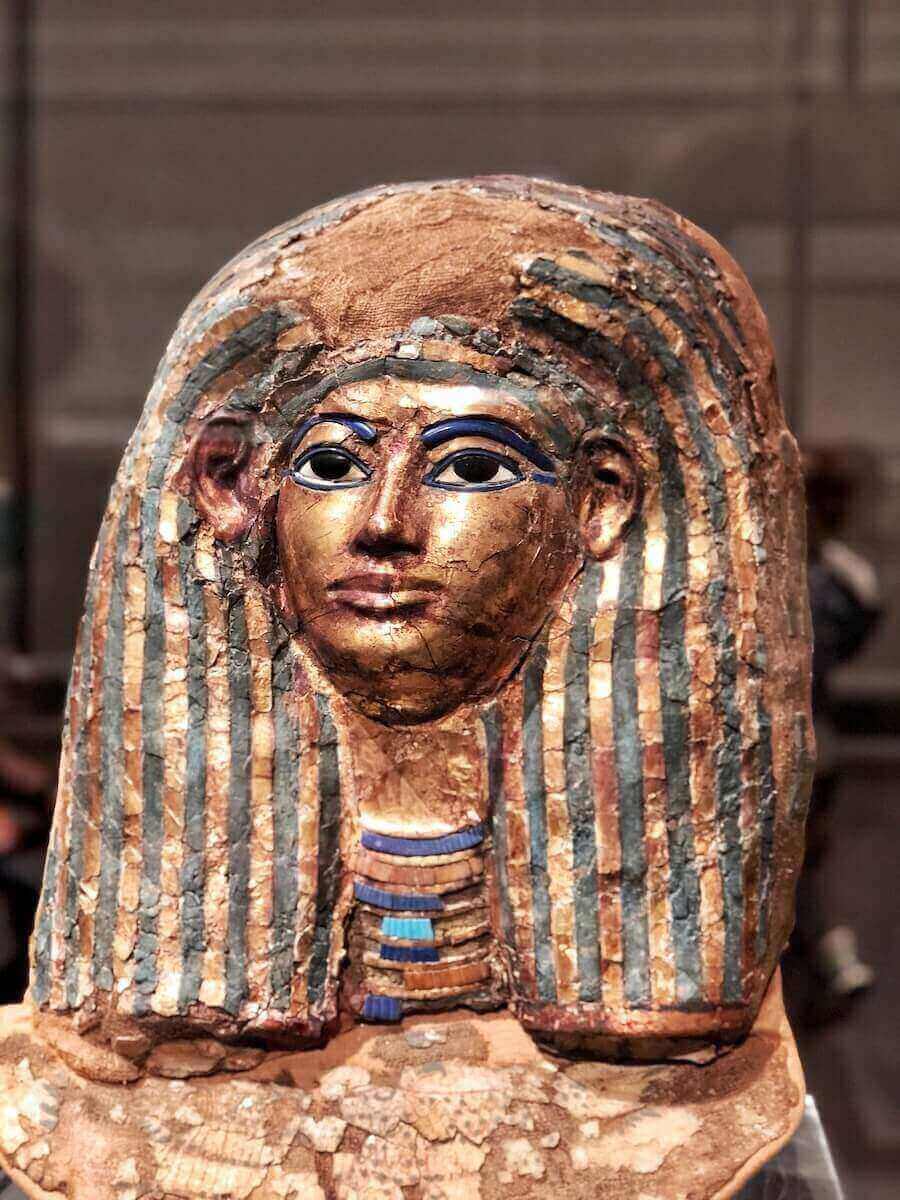
A guided tour of the Egyptian Museum is one of the best things to do in Turin. Located in the heart of the city, not far from Piazza San Carlo, the Egyptian Museum is the world’s second-largest museum dedicated to ancient Egyptian civilisation. Founded in 1824, it holds the record for being the oldest museum of Egyptian culture.
The Palazzo dell’Accademia delle Scienze, an elegant Baroque palace, houses this massive collection of more than 30,000 to 40,000 artifacts, including statues, sarcophagi, papyri, and everyday objects through over 4,000 years of history.
The exhibition is constantly evolving, with new areas and multimedia installations that allow visitors to take an immersive journey through the history of Egypt.
Take your time to explore this Museum; you need a minimum of 2 hours. There’s a free audio guide available through the museum’s website, but you’d better join a guided tour. You can choose from different ones depending on your needs and interests, including ones designed for families.
Good to know: Tickets to the Egyptian Museum must be purchased in advance via the official website. However, for a more meaningful experience, I recommend joining this small-group guided tour. It’s available in various languages and includes skip-the-line tickets.
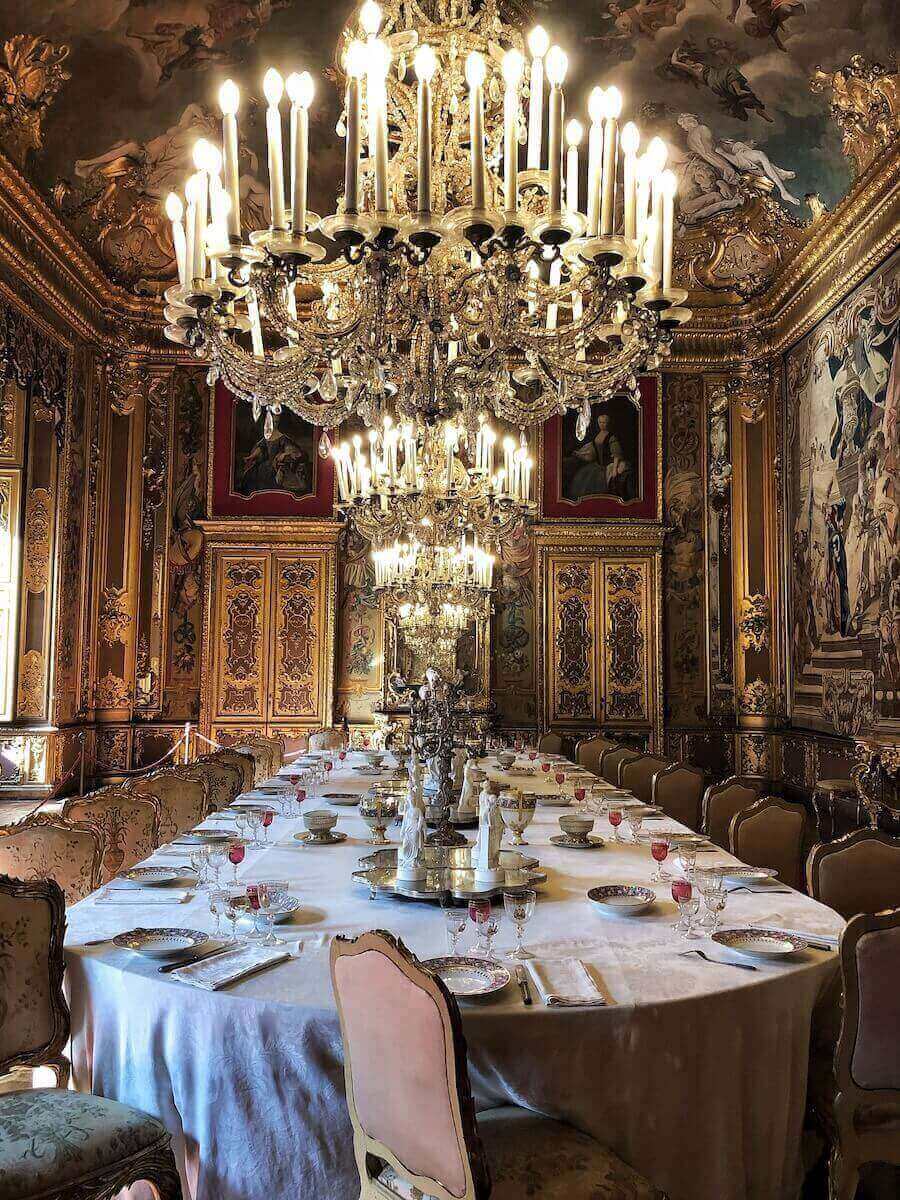
Visit the Royal Palace
A visit to the Royal Palace is one of the top things to do in Turin: a UNESCO World Heritage Site, it is the symbol of Turin’s power, strength, and wealth throughout history.
Turin became the capital of the Duchy of Savoy in 1563 and remained so for the next three centuries.
Charles Emmanuel I had this palace built to serve as his and the bishop’s residence. You will be impressed by the beautiful decorations, precious tapestries, decorated furniture, and works of art.
Good to know: this small-group guided tour of the Savoy Royal Palace will help you learn more to know more about the life of the royal families, the splendid architecture, and the masterpieces. The guide will share useful information and intrigue you with some fun anecdotes.
The Royal Gardens, behind the Royal Palace, are a huge green area in the heart of the city that is free to explore. Don’t miss the Fountain of the Tritons and the Nereid.
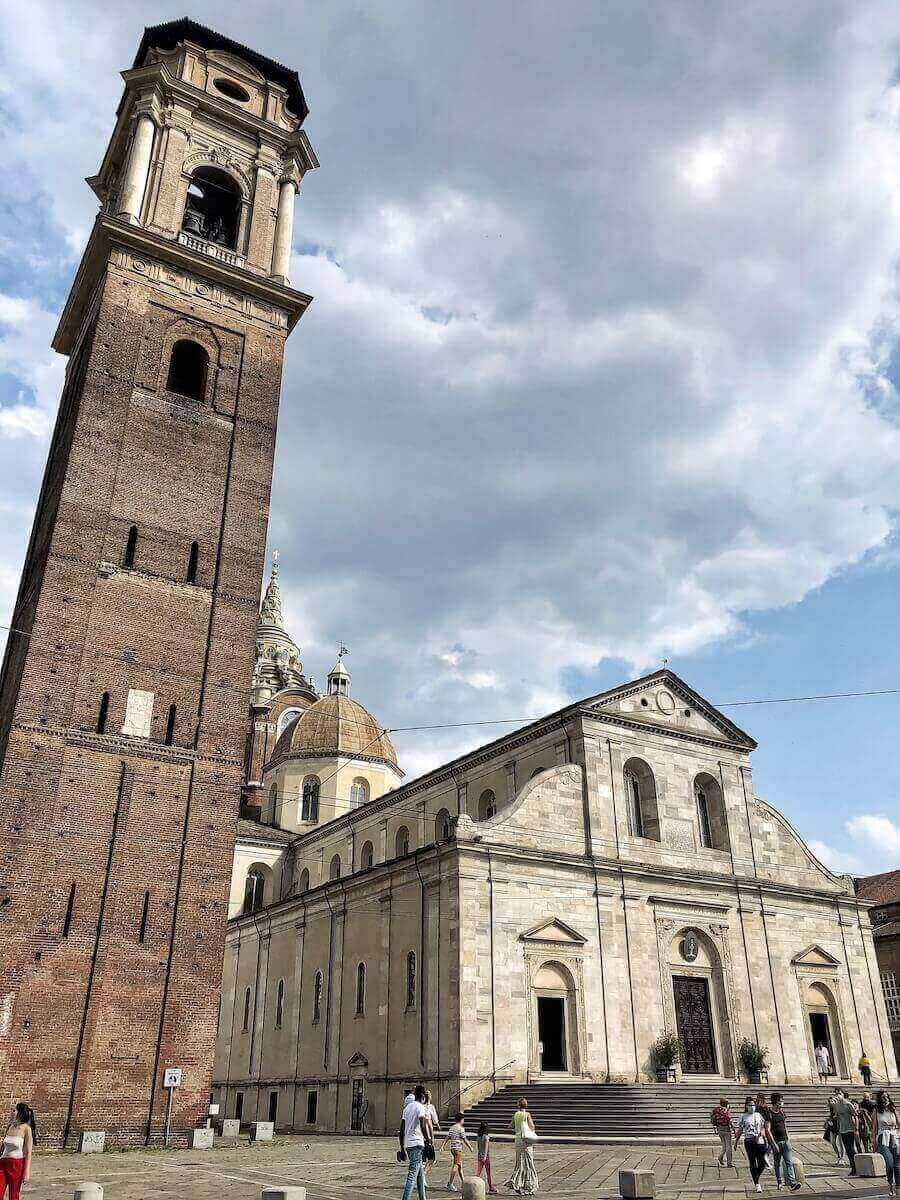
Visit the Cathedral of St. John the Baptist
The Cathedral, dedicated to St. John the Baptist, is the first example of Renaissance architecture in Turin. Commissioned by Bishop Domenico della Rovere, it was built on the site of three medieval churches dedicated to the Savior, St. John the Baptist, and St. Mary.
Built between 1491 and 1498 on a design of the Tuscan architect Meo del Caprina, the Church has been integrated during subsequent renovations with the Chapel of the Holy Shroud, which connects the Cathedral to the Royal Palace.
The bell tower of Saint Andrew was raised in 1720 by Filippo Juvarra. The staircase places the Cathedral in a prominent position compared to the Castle of the Dukes of Savoy.
The Church was largely destroyed by a fire on the night between April 11 and 12, 1997. Luckily, the Shroud was taken out of the burning building and saved. Long years of restoration have allowed the Church to return to its former glory.
Don’t miss the copy of Leonardo Da Vinci’s Last Supper, located on the wall opposite the high altar. It is a truly impressive painting, weighing about 900 kg, commissioned in 1835 by King Carlo Felice and painted in oil on wood by the Vercelli painter Luigi Cagna.
Admire the Cappella della Sindone
Located between the Cathedral and the Royal Palace, the Chapel of the Holy Shroud (Cappella della Sacra Sindone in Italian) housed the relic of the Holy Shroud from 1694 until the early 1990s, hence its name. Today, the precious sheet is kept in the transept of the Cathedral.
Reopened in 2018 after extensive restoration works following a fire, the Chapel of the Holy Shroud remains one of the most important things to see in Turin thanks to its dome, a Baroque masterpiece by Guarino Guarini.
Declared a UNESCO World Heritage Site in 1997, the building consists of a lattice of overlapping and staggered arches that allowed the dome to be built upwards.
The precious gray-veined black marble, the beautiful arches and pillars, the play of light, the statues of the House of Savoy, the dense web of allusions, and the bronze capitals with symbols of the Passion make this work a true masterpiece that will take your breath away.
Good to know: you can certainly explore the church independently, but for a more meaningful and in-depth experience, I recommend this private tour of the path of the Holy Shroud. It includes a visit to the Museum of the Holy Shroud, a guided tour of the Cathedral and the Chapel of the Holy Shroud, and a visit to the Real Chiesa di San Lorenzo.
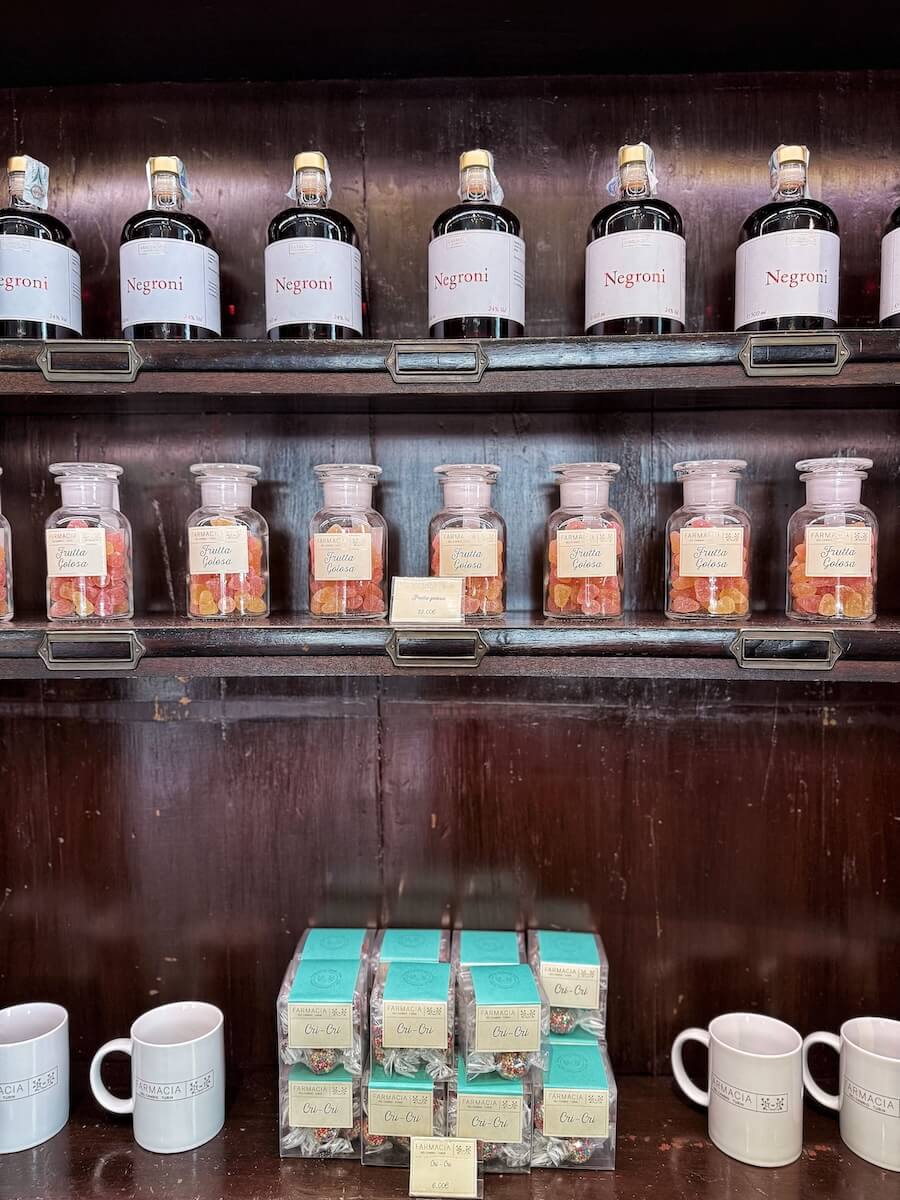
Farmacia del Cambio and unmissable pastry shops
In Italian, the word “farmacia” means pharmacy, but this is not an actual pharmacy. In fact, Farmacia il Cambio is a boutique pastry shop in Piazza Carignano, right in the center of Turin, halfway between Palazzo Madama and the Egyptian Museum.
But why this name? The pastry shop is located in the historic premises of Farmacia Bestente, an ancient apothecary’s shop founded in 1833.
Farmacia del Cambio is an unmissable place to visit in Turin for food lovers. Here, all your senses will be satisfied: sight, smell, and taste – especially taste. Be sure to try the 1757: a cocoa brioche filled with gianduia cream and the single-serving Gianduiotto.
In addition to desserts, you can also find excellent savory delicacies.
The Italian version of the cubic croissant was born here: in fact, Maicol Vitellozzi baked the first Crubik here.
Today, Chef Maicol Vitellozzi has opened his own bakery: Maicol-Croissant Pane Pasticceria in Via San Tommaso 27.
Turin has some excellent pastry shops. Here are my favorite ones:
- Pasticceria Gerla, under the arcades of Corso Vittorio Emanuele II – famous for its excellent chocolates.
- Pasticceria Venier, in Via Monte di Pietà 22 – especially loved for its Umbertino, a refined pastry similar to a bacio di dama but filled with chocolate.
They are fairly expensive, but the quality of the products in all these bakeries is very high.
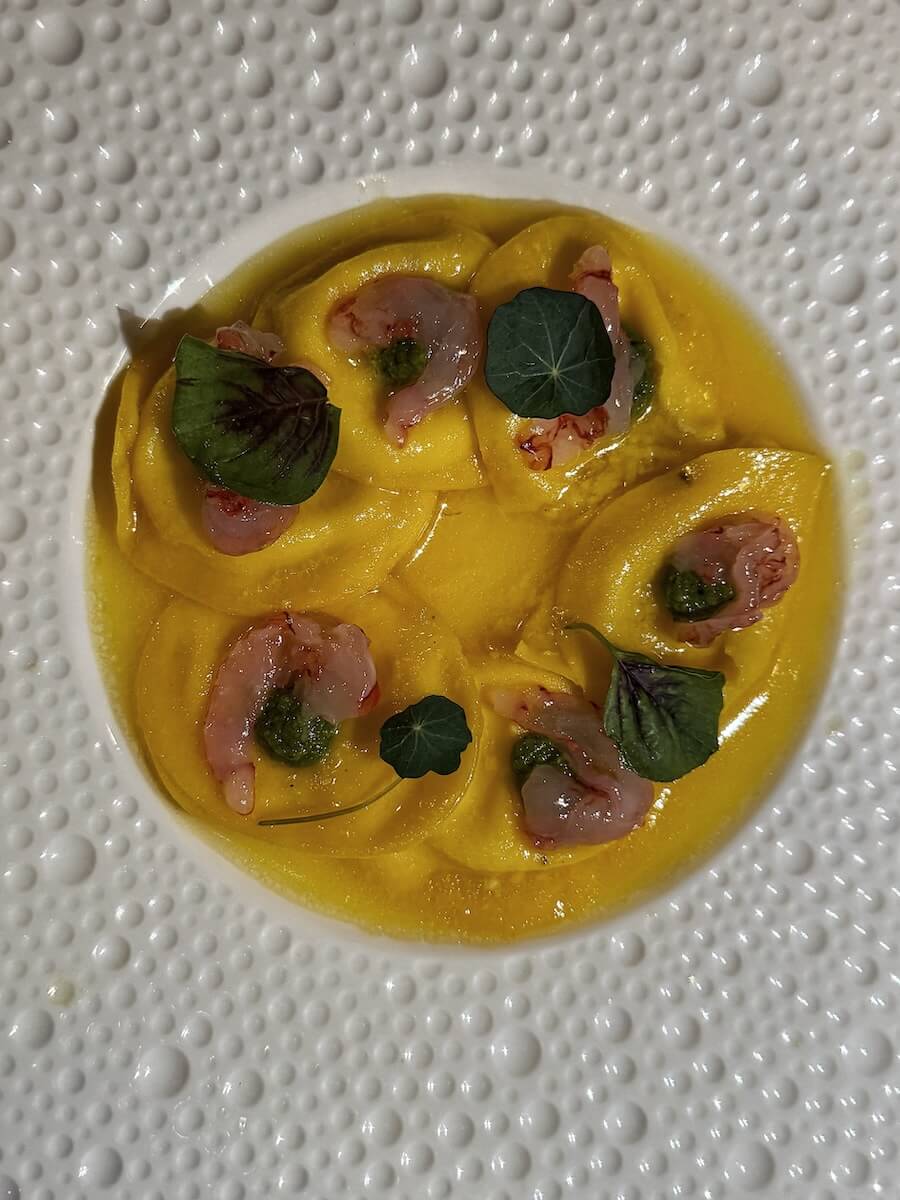
Ristorante Del Cambio
Del Cambio is the most renowned restaurant in the city of Turin. It is part of a single project together with Farmacia del Cambio and Bar Cavour, and they are adjacent to each other.
Founded in 1757, Del Cambio was born in a vibrant era, a crossroads of cultures and influences between the Kingdom of Savoy and France. From this union and these contrasts, it came the idea of a cuisine that combines the excellence of both countries. Chef Diego Giglio reinterprets history and tradition, with an eye to the future.
The wine cellar has a vast selection of labels, some even older than the restaurant itself.
The restaurant is beautiful and decorated with works by contemporary artists.
It is the most expensive Michelin-starred restaurant I have ever eaten at, but it is still a wonderful and unforgettable experience.
Pro tip: If eating here is an experience you care about, make sure to book your table well in advance via the official website.
Fun fact: Camillo Benso, Count of Cavour and first Prime Minister of unified Italy, used to come here and sit at the table on the corner.
Go up the Mole Antonelliana
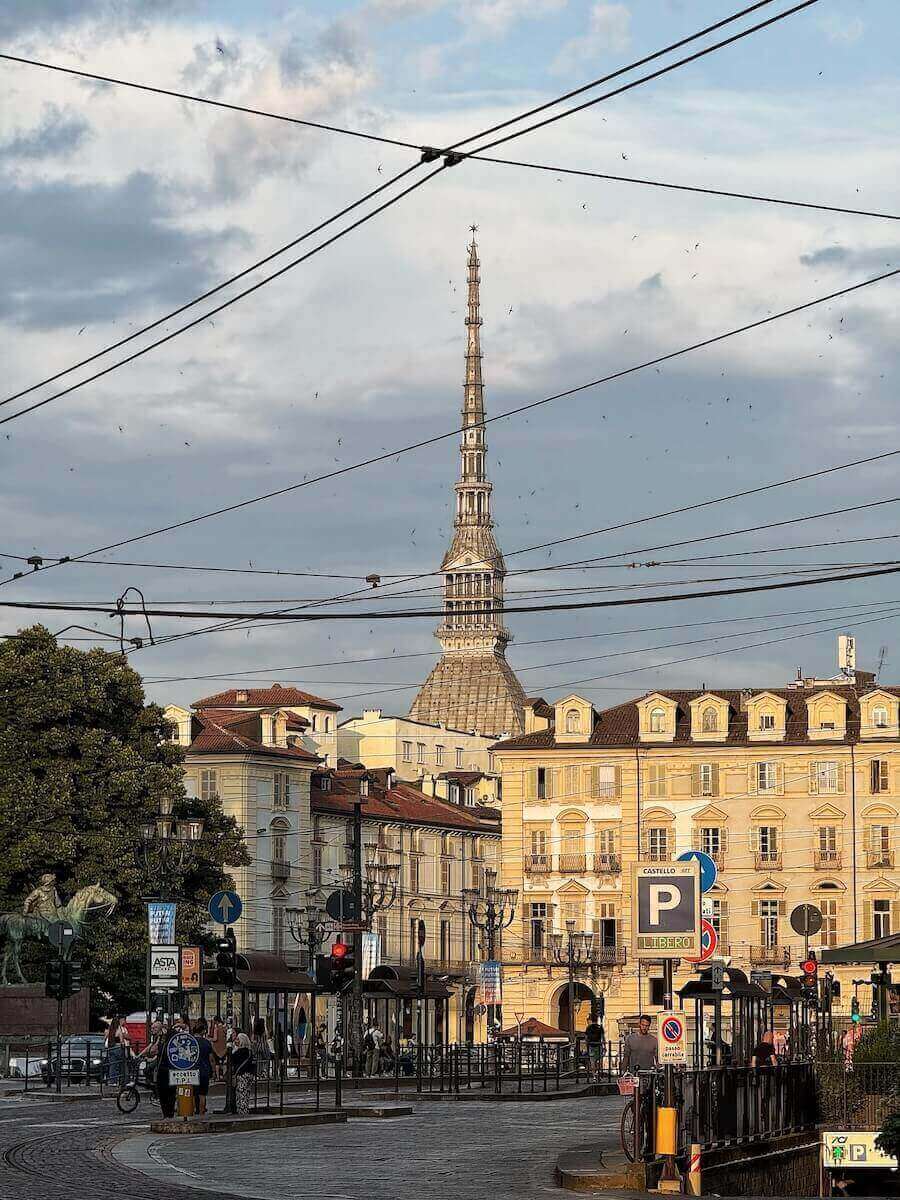
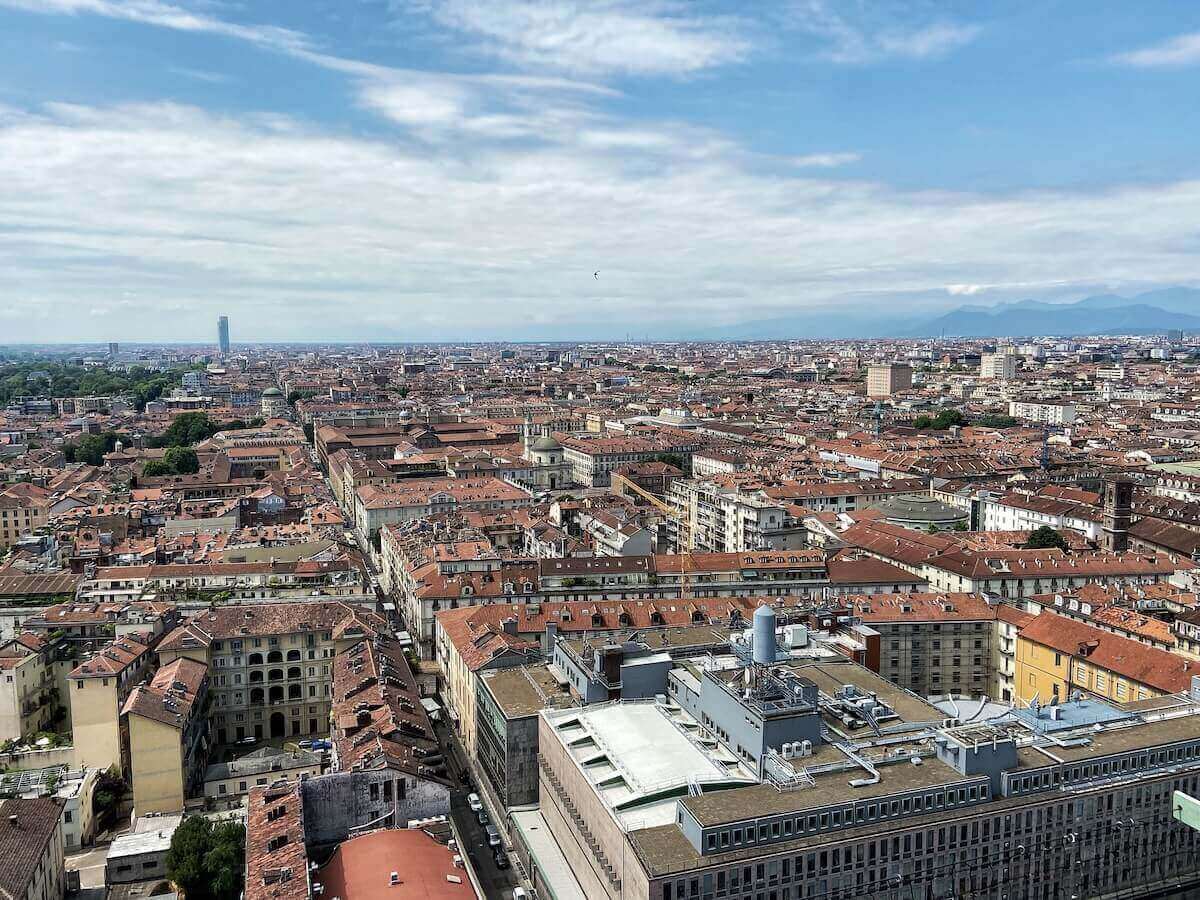
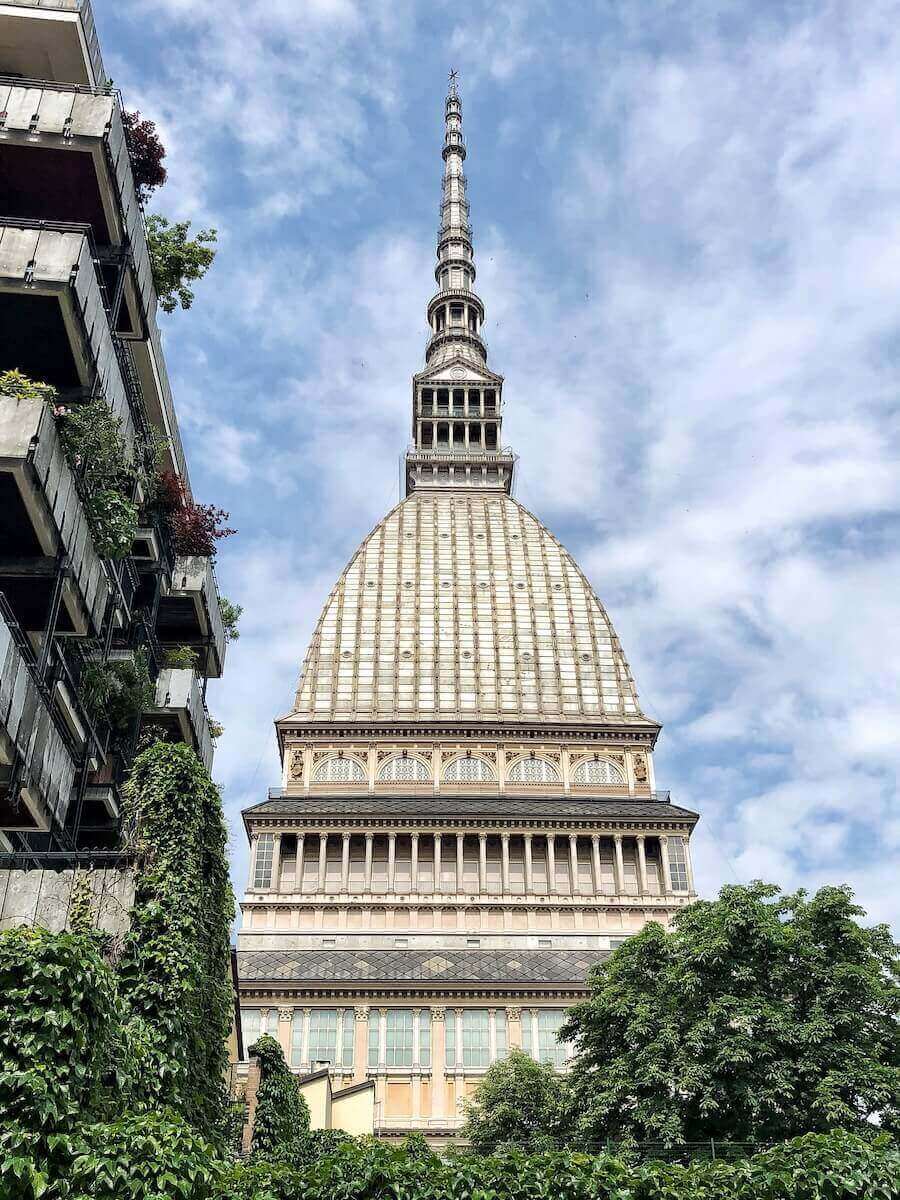
One of Turin’s undisputed landmarks is the Mole Antonelliana.
Designed in 1862 by the engineer Alessandro Antonelli, it was meant to be a synagogue. After disagreements with the University of the Israelites, the building was completed by the municipality and became the headquarters of the National Museum of the Italian Renaissance.
Since 2000, the Mole has housed the National Cinema Museum. Here, you can learn more about the magic of cinema, including scenery, projections, and lighting effects. The interactive journey goes from the time of shadow theater and the first magic lanterns to special effects and virtual reality.
The Mole Antonelliana is 167.5 meters (549.5 feet) tall, and for years it has been the tallest masonry building in Europe. In 1953, a storm caused part of the spire to collapse.
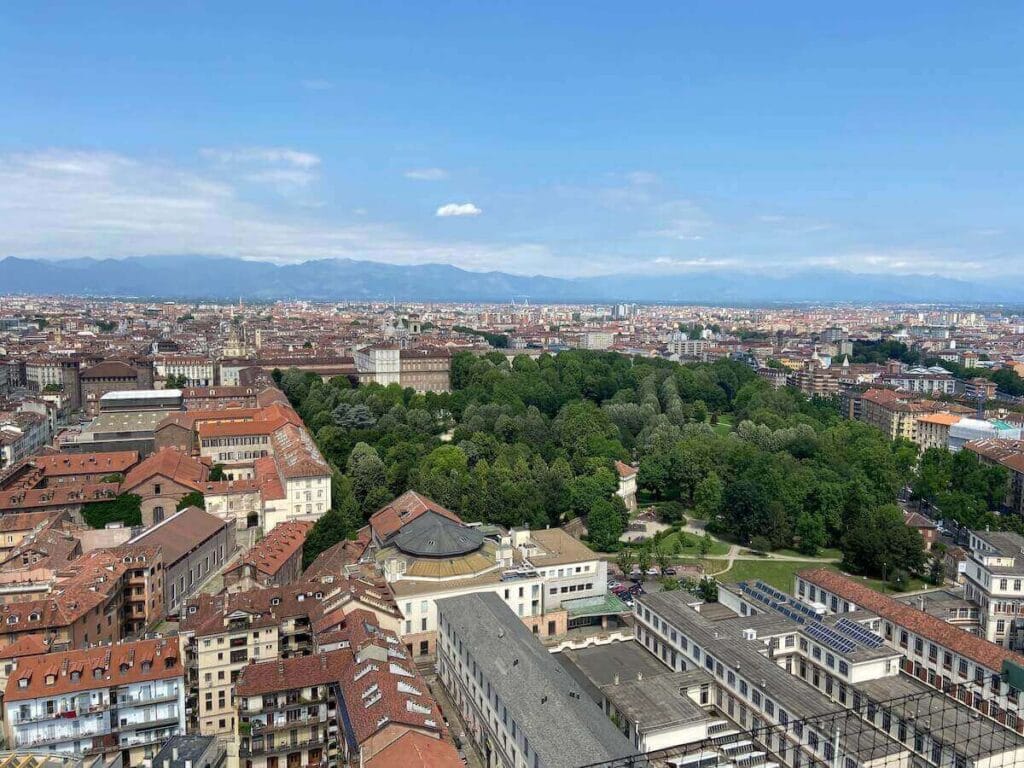
Take the panoramic elevator to reach the terrace, at a height of 85 meters (almost 279 feet), and admire the extraordinary view of the city and the surrounding Alps. You can also climb to the terrace on foot.
Pro tip: this is one of the most popular things to do in Turin, so you need to get tickets in advance via the official website.
Taste the iconic “Bicerin”
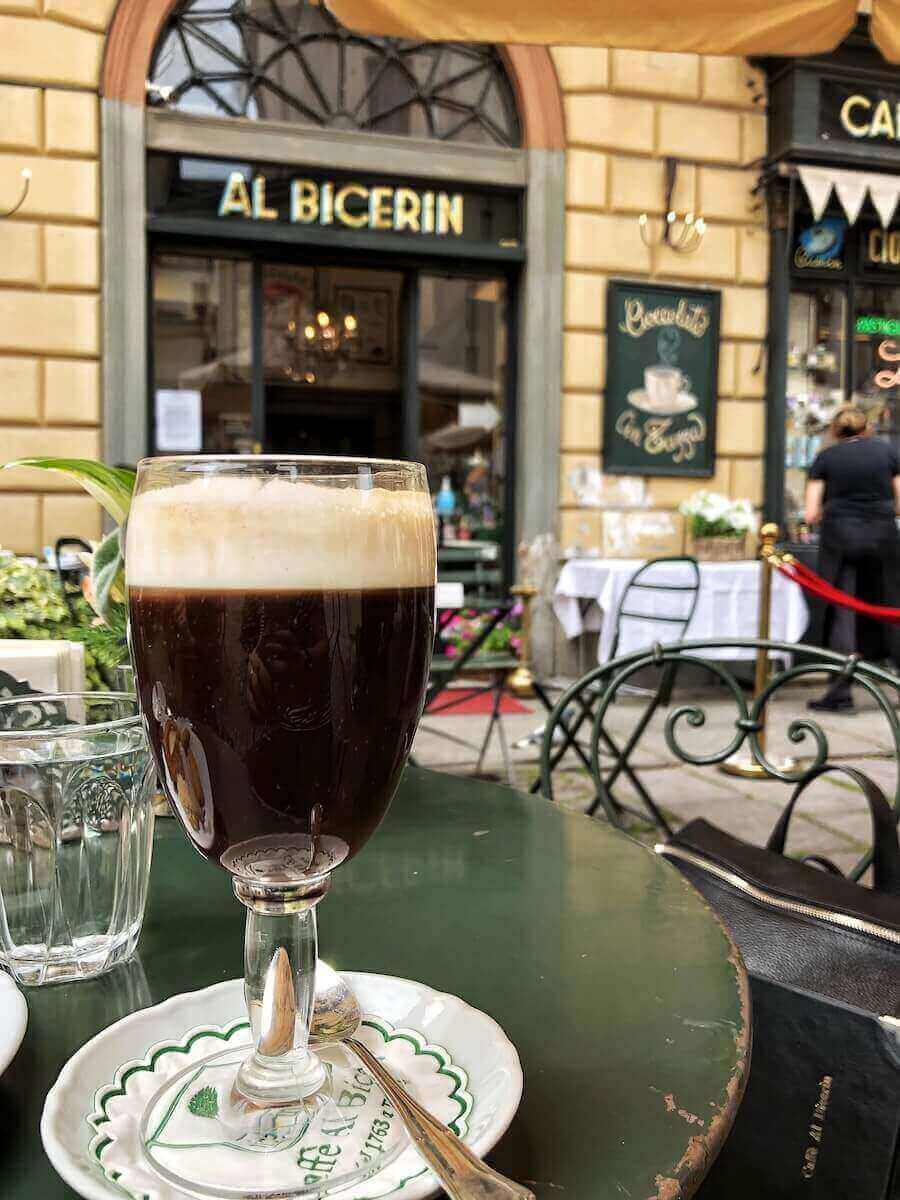
Bicerin is an iconic drink from Turin, unmissable above all for its delicious taste. It is a hot non-alcoholic drink made with coffee, dark chocolate, and milk cream. It is served in a small glass (from which it takes its name in Piedmontese) so that you can admire its three distinct layers. You should not mix the three ingredients to fully enjoy the flavors and different temperatures that blend on the palate.
Bicerin originated as an evolution of the 18th-century bavareisa, a drink served in large glasses, made with coffee, chocolate, milk, and syrup that was very fashionable at the time.
Initially, the three ingredients were served separately, but in the 19th century, the recipe that combines them into a single “bicerin” glass prevailed over the rest, and it has remained unchanged to this day.
There are various places where you can try Bicerin, but I highly recommend the place where it was created to taste the original version: Caffè Al Bicerin dal 1763, located in Piazza della Consolata, 5, a kilometer (0.6 miles) walk from the Royal Museums.
Have the original aperitif in one of the historic cafes
Did you know that the concept of aperitif was born in Turin?
The aperitif is an evolution of the Piedmontese tradition “merenda sinoira”: in fact, people here used to gather in the evening in one of the many taverns to drink a glass of wine accompanied by a large number of appetizers.
The king of aperitifs was Vermouth, a Muscat wine flavoured with cinchona bark and a secret blend of herbs. It was the result of an experiment made by Benedetto Carpano in a shop in Turin. If you add a dash of bitter to Vermouth, you get the “Punt e Mes.”
Since then, the aperitif has become a real ritual around the world by which, at the end of a working day, people meet with friends to unwind, chat, and enjoy a drink and some snacks.
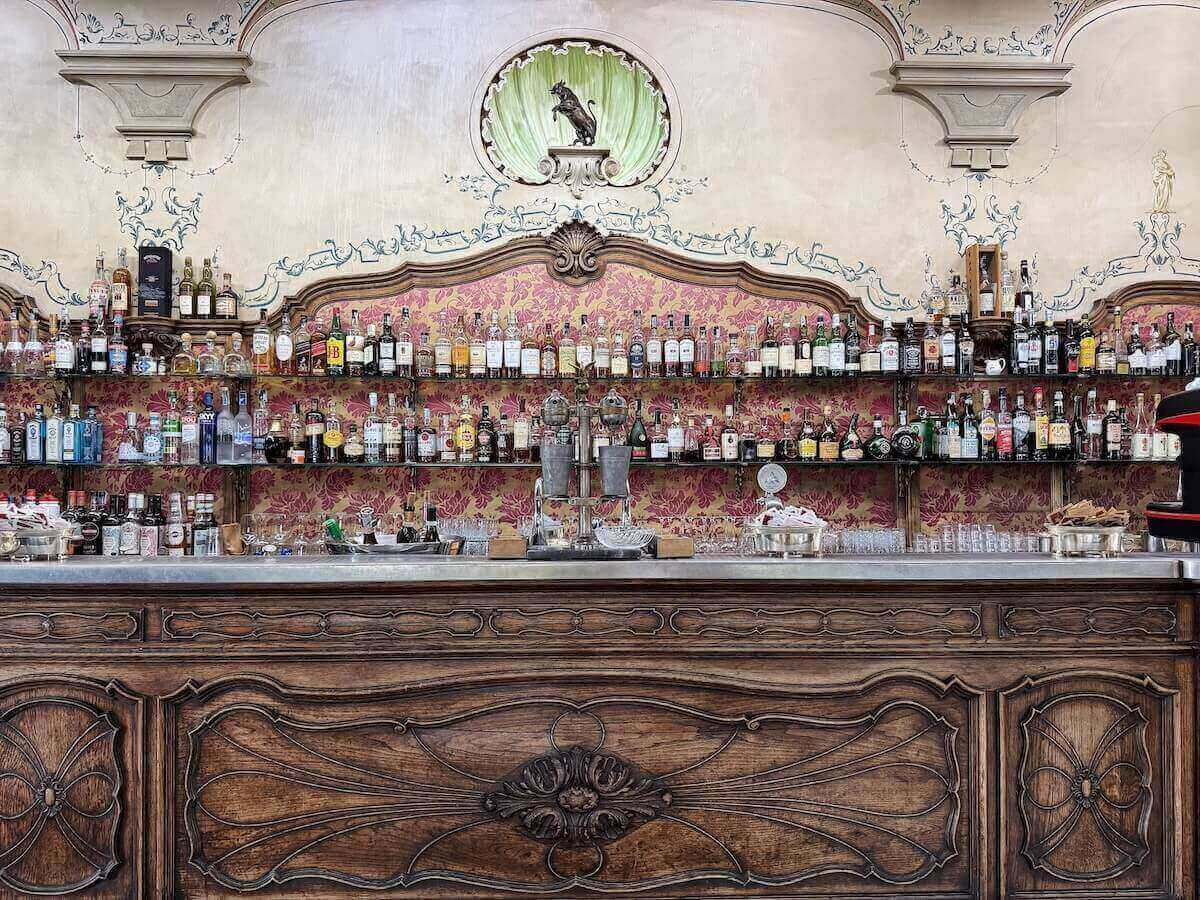
Enjoying an aperitif in one of the cityìs historic cafés is one of the best things to do in Turin. Many elegant salons played an important role in the city’s history and are now part of the Association of Historic Cafés of Turin and Piedmont.
This is also your chance to try the tramezzino sandwich, which was invented by Angela Demichelis Nebiolo at Caffè Mulassano, in Piazza Castello 15.
Where to have an aperitivo in Turin:
- Baratti & Milano café – located in the Galleria dell’Industria Subalpina, here, traditional vermouths and liqueurs are served in both classic and innovative cocktails. Be sure to taste their chocolates: gianduiotti, cremini, and pralines. They are also an authentic souvenir to bring home.
- Caffè San Carlo – located under the arcades of the square of the same name.
- Gelateria Pepino – this is where the Pinguino, the first ice cream on a stick, was created in 1926.
Take a walk in Parco del Valentino
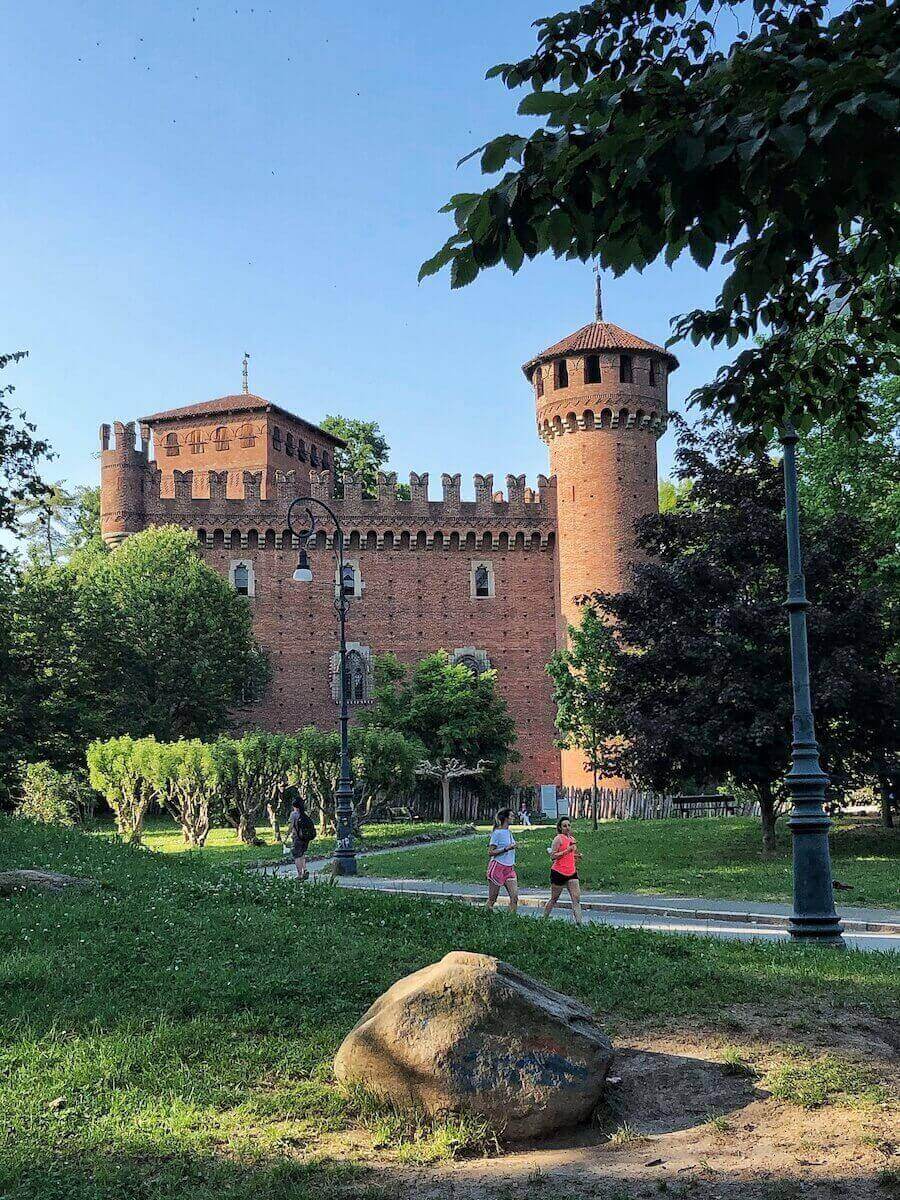
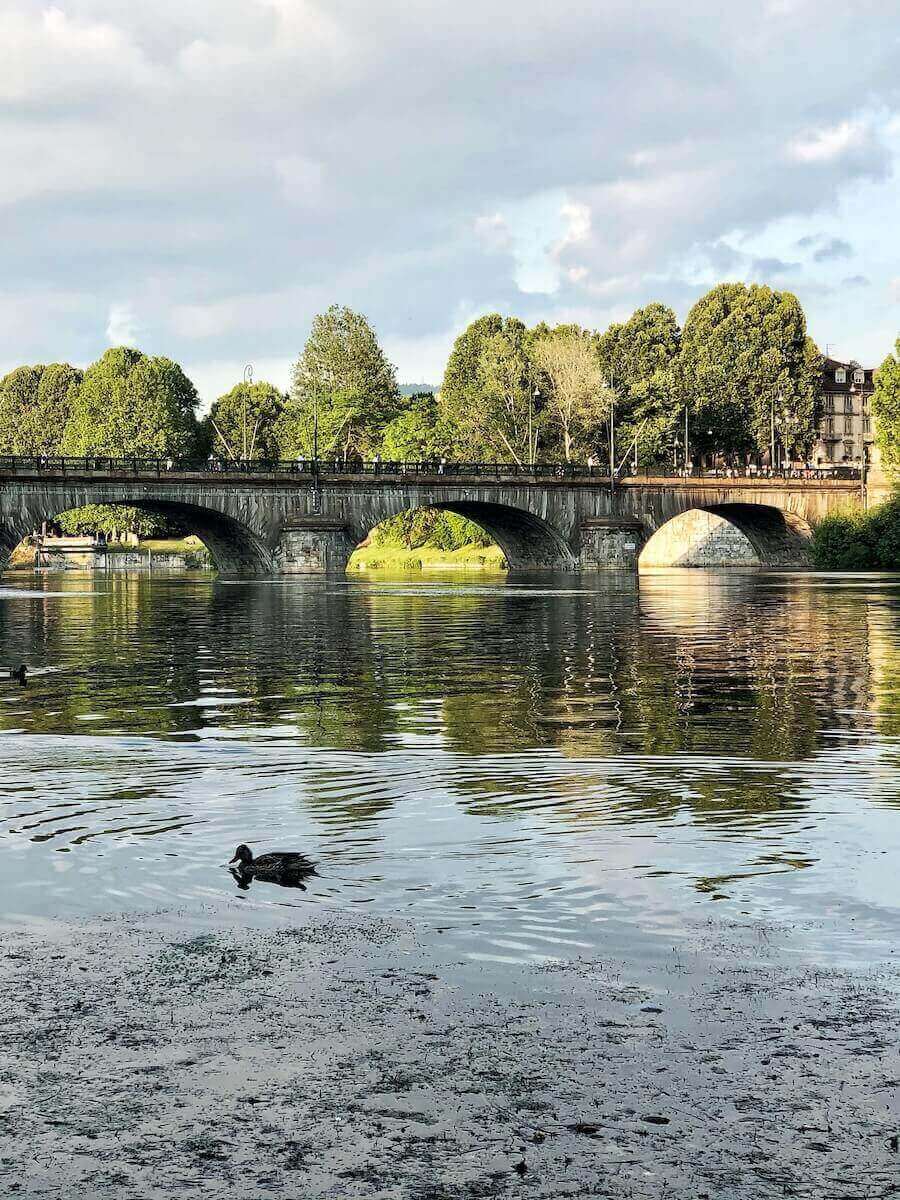
Located along the banks of the River Po, Valentino Park is the green heart of the city.
Rent a bike and make sure to wear comfortable shoes to fully enjoy this huge park where nature meets beauty and culture. Among green lawns, you can admire many species of trees, such as oaks, poplars, willows, and beeches, just to name a few. You can also spot squirrels, ducks, and birds.
Attractions you should not miss inside the Parco del Valentino include:
- Valentino Castle
- Valentino Arch
- Ceppi Fountain, also known as the Fountain of the 12 Months
- Rock Garden with the Lovers’ Lanterns
- The bust dedicated to Cesare Battisti
- Botanical Garden
- Medieval Village of Valentino, a faithful 19th-century reconstruction of a small 15th-century village where the historical and cultural traditions of Piedmont are represented.
The Park also plays an important social role, hosting events, public initiatives, and other gatherings thanks to its size.
There are bars and cafes where you can stop for a drink or for Turin’s famous aperitif (or apericena).
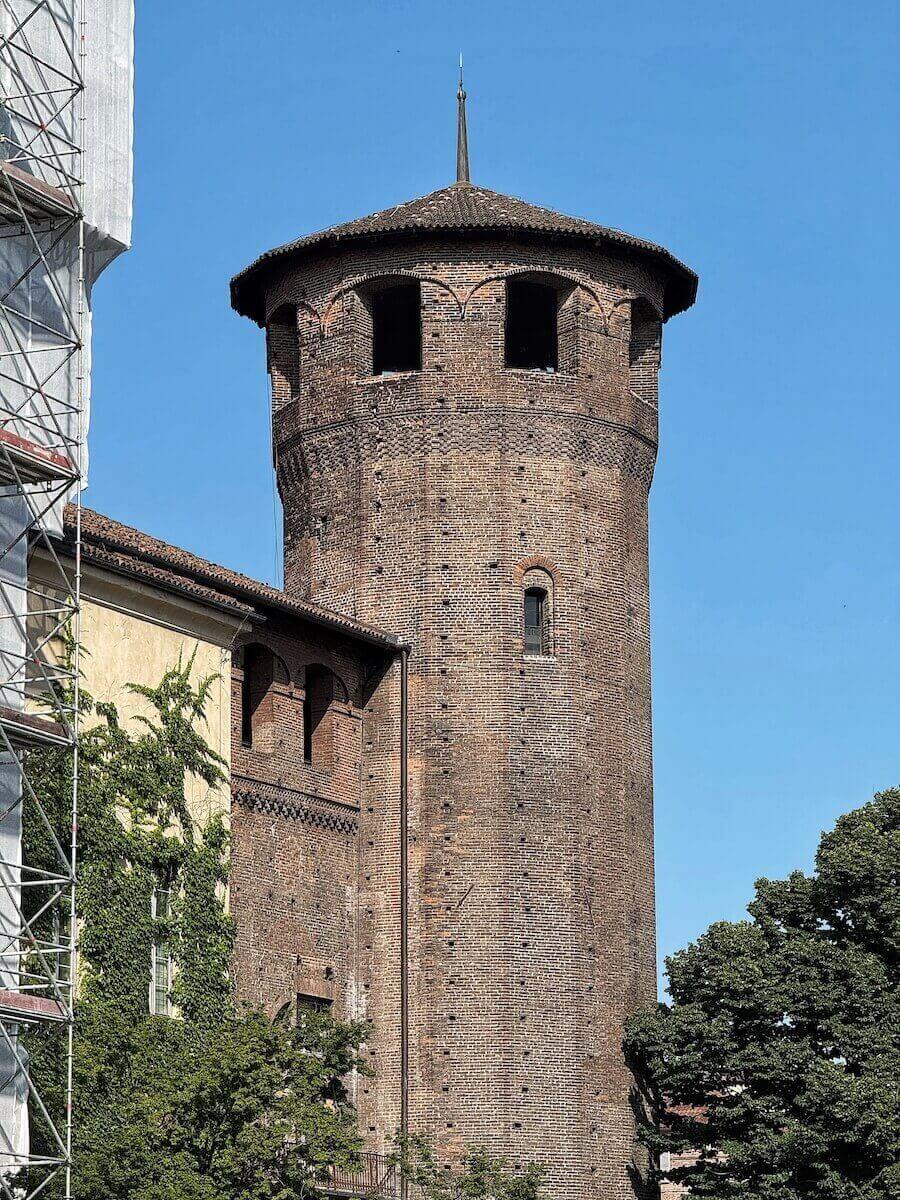
Check out Piazza Castello
Piazza Castello has always been the heart of Turin. Second in size after Piazza Vittorio Veneto, this beautiful square was designed by the architect Ascanio Vitozzi in 1584.
Four main roads branch off from the square: Via Po, Via Pietro Micca, Via Roma, and Via Garibaldi, one of the longest pedestrian streets in Europe. The latter two, together with Via Lagrange, are the city’s shopping streets.
Surrounded on three of its four sides by the famous and elegant porticoes, Piazza Castello is home to some of the most important attractions in Turin:
- Palazzo Madama, right in the center of the square
- Palazzo Regio
- Teatro Regio, one of the most important opera houses in Italy
- Royal Church of San Lorenzo, where the Holy Shroud was housed for a short period after its arrival in Turin
Make sure to walk around not to lose any of these impressive buildings.
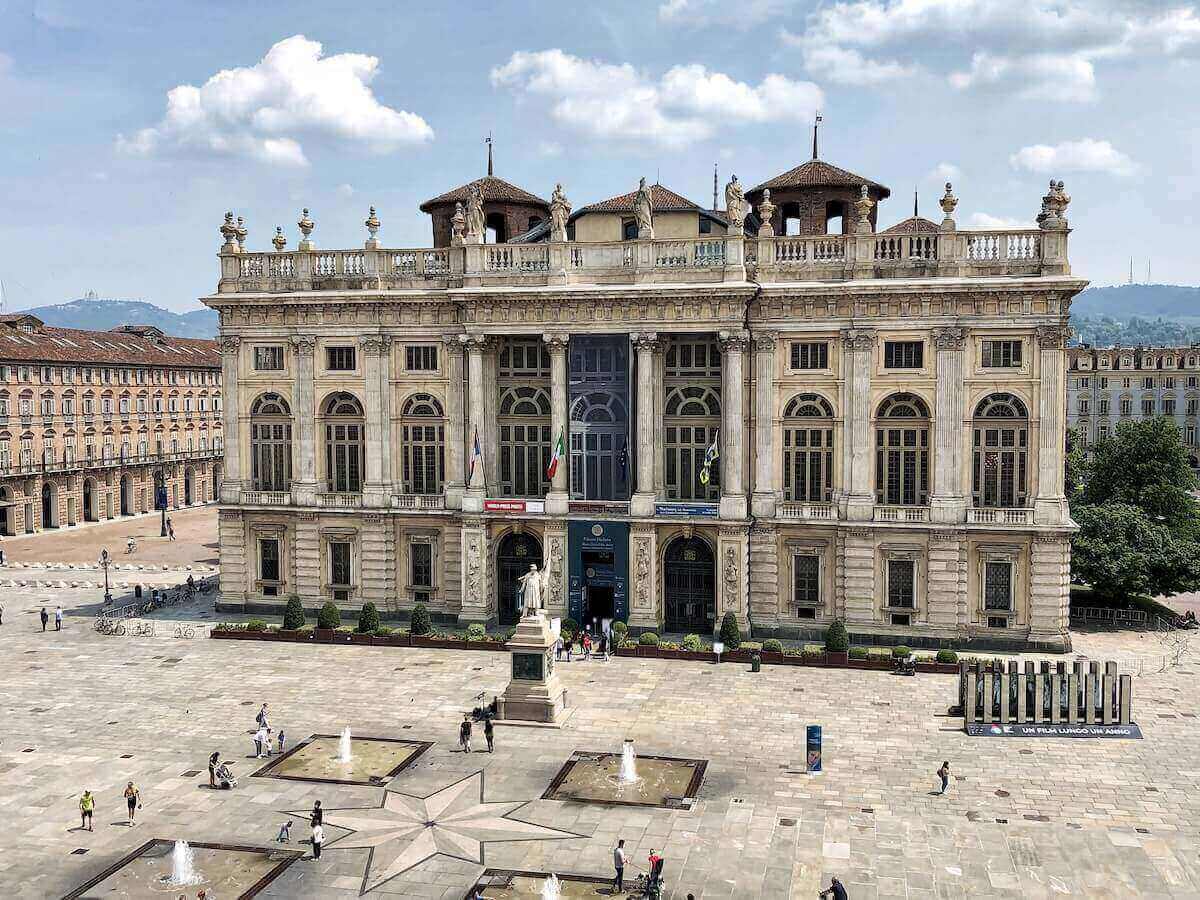
Visit Palazzo Madama
Located in Piazza Castello, in the heart of Turin, Palazzo Madama is one of the most representative buildings in Piedmont, if not in all of Italy.
The Palace boasts a centuries-old, glorious history. At the time of the Roman Empire, here was a gate that allowed access to the city from the Po River side. In the Middle Ages, it was transformed into a fortress and later on into the Castle of the princes of Acaja.
The Palace reached its maximum splendor in 1637, when it became the residence of Maria Cristina of Bourbon of France, regent of Savoy. It was during those years that it became the luxurious and opulent residence that you can visit nowadays.
Later on in its history, Carlo Alberto made it the Seat of the Royal Art Gallery and the Subalpine Senate, whose last session was in 1864.
Today, Palazzo Madama is a UNESCO World Heritage Site and houses the Civic Museum of Ancient Art.
The museum is spread across four floors. Here, you can admire a vast collection of sculptures and works of art from the Middle Ages to the Renaissance, and one of the most important porcelain collections in the world. There’s also the famous Portrait of a Man by Antonello da Messina.
Good to know: Palazzo Madama is a popular place to visit in Turin. Make sure to get your tickets in advance to avoid lines at the door.
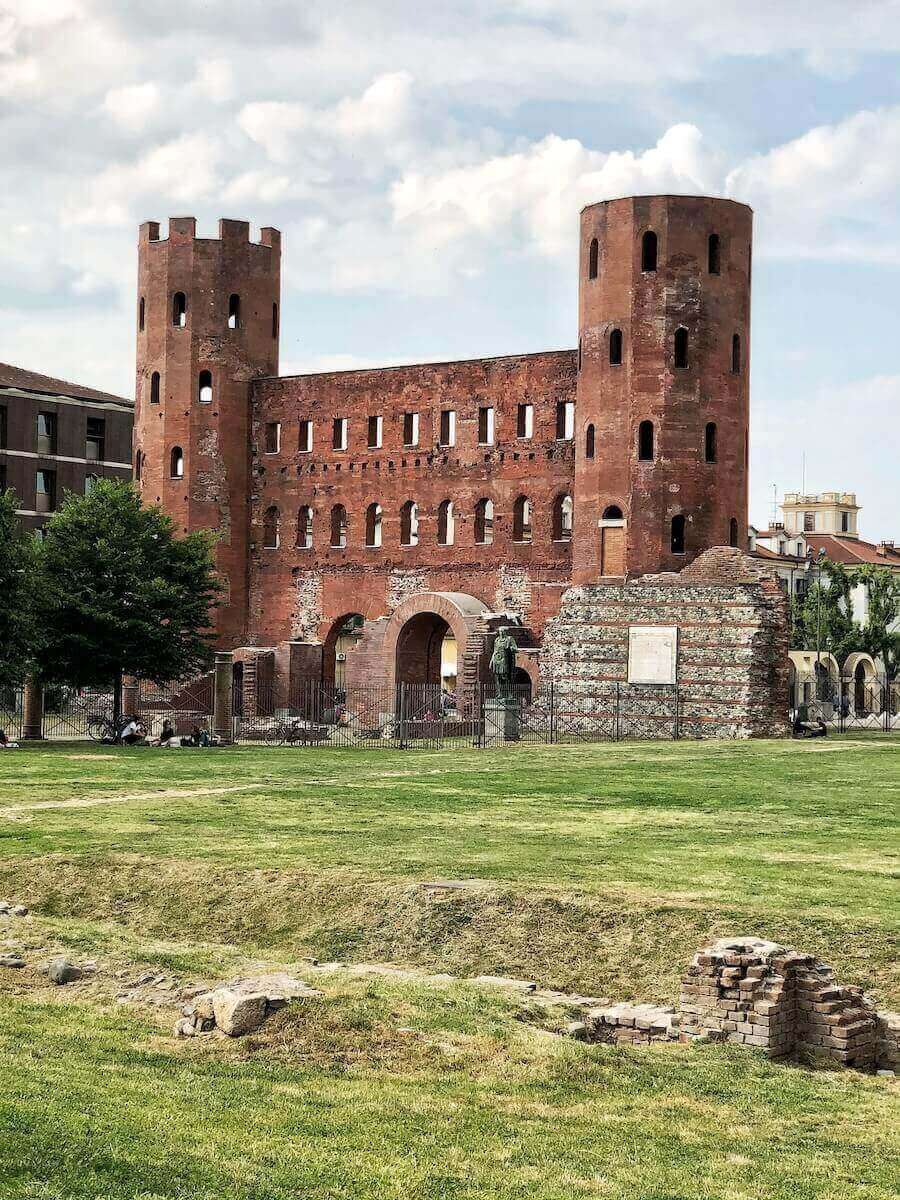
Admire the Porta Palatina of Turin
The Porta Palatina is the best-preserved Roman gate in Turin and one of the most intact Roman city gates in the world. It formed the northern entrance to Augusta Taurinorum, the Roman city founded in the 1st century BCE. The gate stands at Piazza Cesare Augusto, marking the edge of the ancient Roman grid.
The structure is built in brick and includes two polygonal corner towers and a central façade with four openings: two large carriage entrances and two smaller pedestrian passages. The façade rises about 30 meters and still shows original Roman construction techniques.
During the Middle Ages, the gate was incorporated into a fortress, which helped preserve it. Restoration works in the 18th and 19th centuries removed later additions and exposed the Roman structure.
Today, Porta Palatina stands within an archaeological area that includes the remains of a Roman theater. It’s one of the most impressive things to see in Turin.
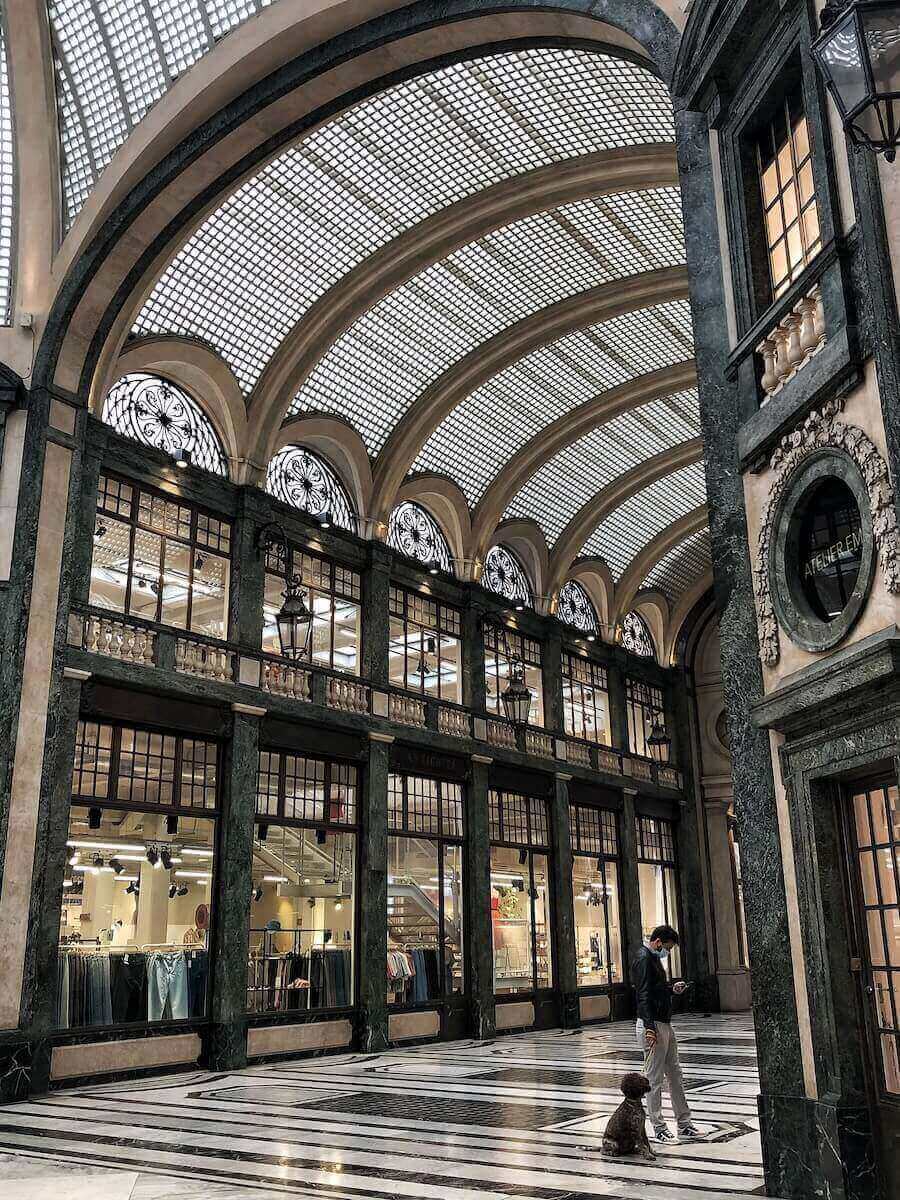
Covered galleries
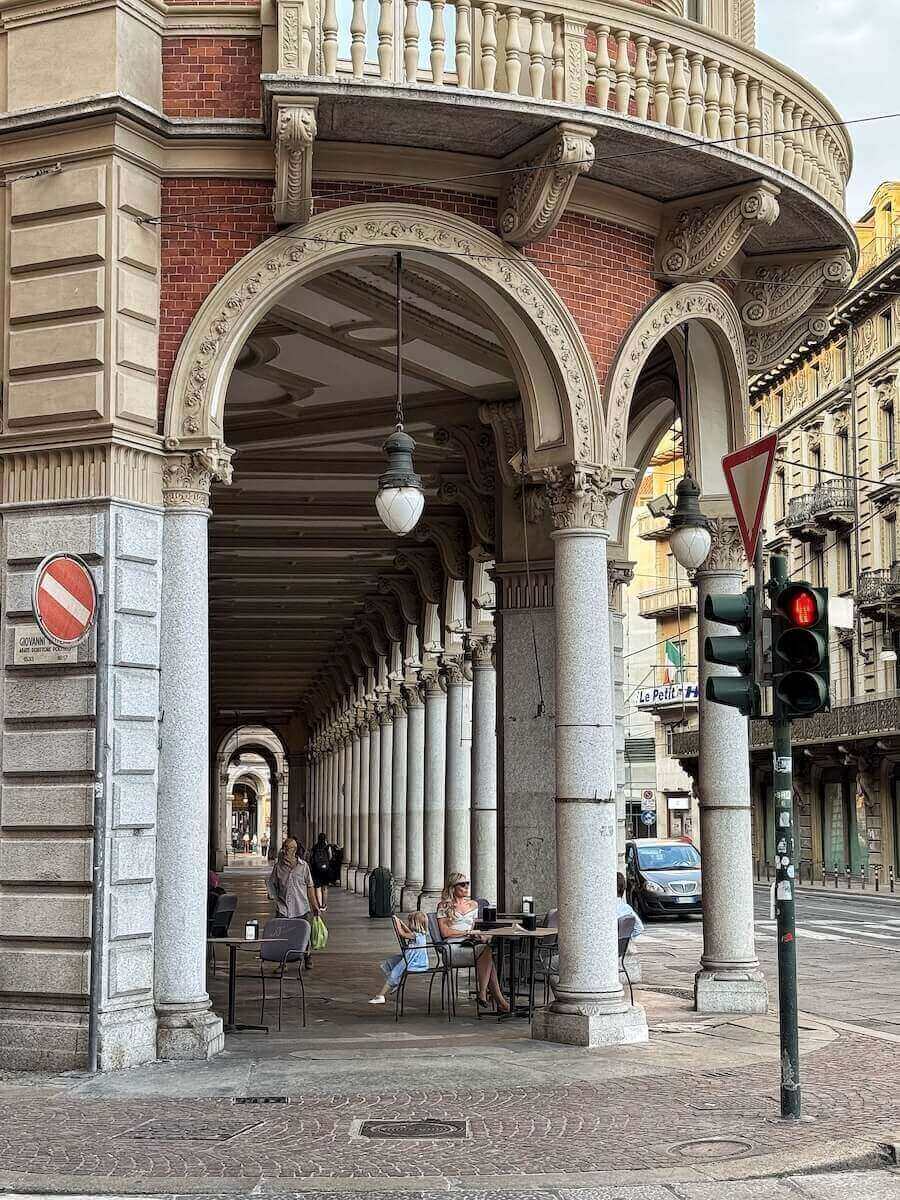
Turin’s galleries were created to allow nobles to stroll through the city center even on rainy and very cold days. While their purpose is to connect different buildings, their beauty lies in the glass that lets in the sunlight, and the beautiful interiors, where you can still find cafes, restaurants, and boutiques.
Today, there are three large galleries in the historic center of the city: the Galleria Subalpina, the Galleria Umberto I, and the Galleria San Federico.
The Galleria Subalpina owes its name to the Banca dell’Industria Subalpina, which financed its construction. In typical 19th-century style, it houses one of the oldest cinemas in the city, the Cinema Romano, and one of the most famous historic cafés, Baratti e Milano, which I have already mentioned.
The Galleria Umberto I used to be the site of the Mauriziano Hospital, the largest hospital in the city in the second half of the 1500s. Today, the gallery is home to shops, restaurants, and cafés.
The Galleria San Federico, the most recent, will leave you breathless with its columns and precious marble vaults. The daily newspaper La Stampa inaugurated its first headquarters here. Today, it is home to the Lux cinema, one of the oldest movie theaters of Turin, as well as ateliers, jewelry shops, bars, and offices.
Visit MAUTO – Museo dell’Automobile di Torino
For more things to do in Turin, visit MAUTO, a one-of-a-kind museum. The gallery displays more than 200 original cars of 80 different brands from all over the world. Even if you are not a car enthusiast, it is impossible to remain indifferent to the beauty and uniqueness of these rare and iconic pieces that have made history.
The founder of the Museum is Carlo Biscaretti di Ruffia, who, in 1933, started to collect cars, chassis, and engines. The collection has continued to grow over the years.
The cars on display aren’t simple means of transportation. They are beautiful, and they tell stories about historical, sporting, social, or cultural achievements, hard work, defeats, and victories.
Good to know: you can get your MAUTO tickets in advance for a smoother visiting experience.
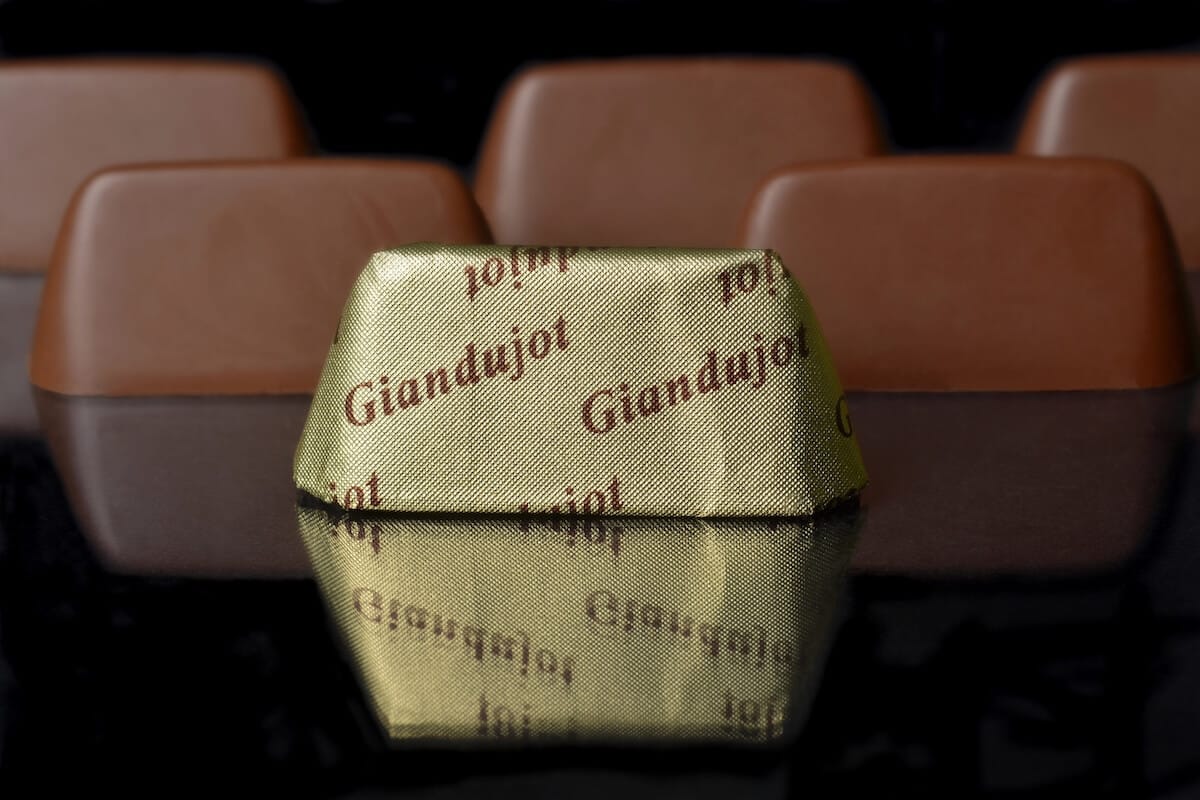
Try chocolate
The tradition of chocolate in Turin began in 1560, when Emanuele Filiberto of Savoy celebrated Turin as the new capital by toasting with a cup of hot chocolate.
Since then, thanks to the importation of cocoa, master chocolatiers have spread throughout the region. There are many artisans in Turin who work with cocoa to create new recipes.
These are some of the chocolate specialties that you can try in Turin.
- The already mentioned bicerin.
- Gianduiotto – created at a time when cocoa was scarce, it combines cocoa with Tonda Gentile delle Langhe hazelnuts, and today it is still a symbol of the city of Turin.
- Cremino – a chocolate praline with three layers of gianduja, chocolate, and hazelnut
- Boero – a chocolate praline filled with liqueur.
In short, tasting chocolate is one of the best things to do in Turin.
Good to know: Every year, Turin hosts a fair that celebrates chocolate and the skill of master chocolatiers. In 2026, CioccolaTò will be held in Piazza Vittorio Veneto from February 13 to 17.
Pro tip: A chocolate tasting tour is easily one of the most fun things to do in Turin. There are many on offer. I recommend this tour that also includes wine tasting and goes around the historic center. Alternatively, you could visit the Chocolate and Gianduja Museum: it’s an interesting museum to learn about the chocolate-making process.
Go to the Basilica di Superga
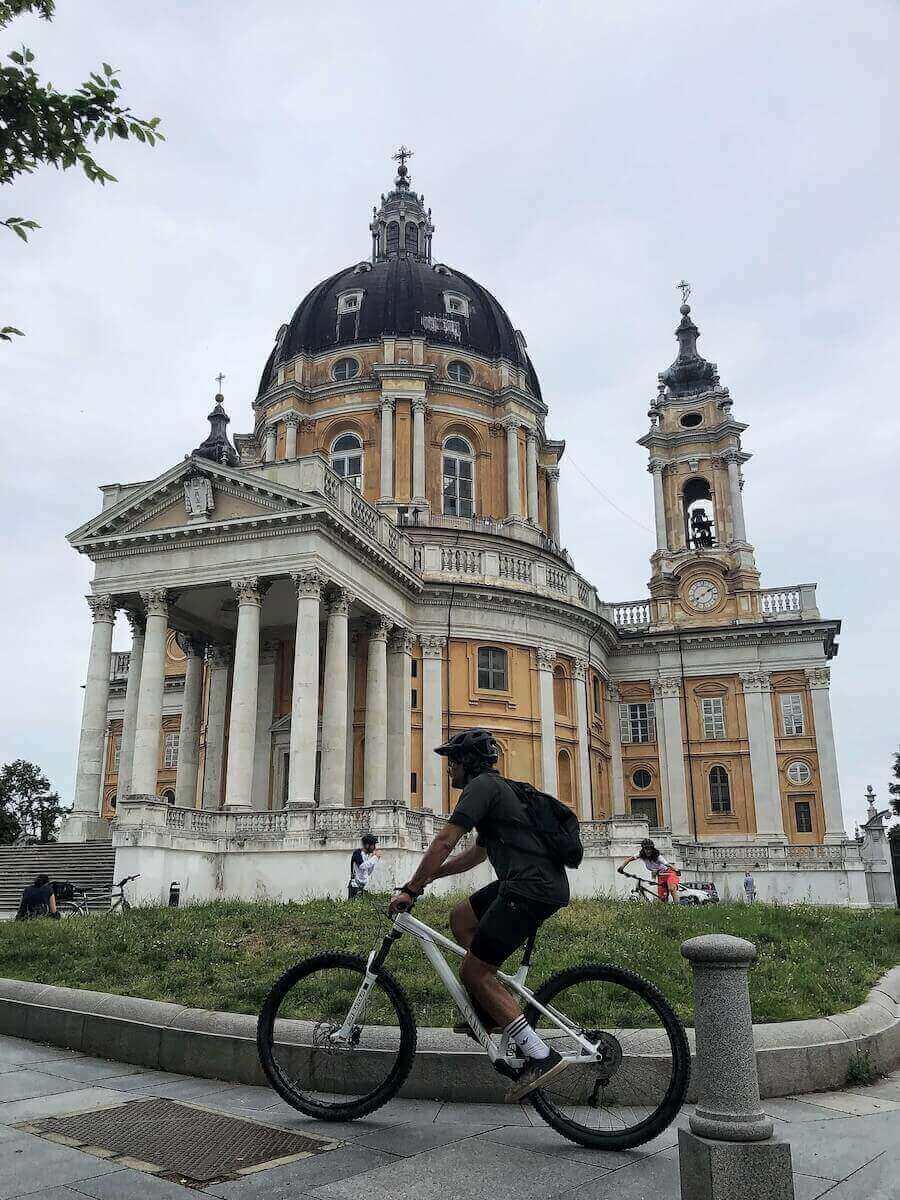
Outside the city, on the Superga hill from which it takes its name, there’s a majestic basilica.
Designed by the famous Baroque architect Filippo Juvarra, the Basilica di Superga is one of the most impressive places to visit in Turin for anyone staying in the city for a few days.
From the square in front of the basilica, you can enjoy fantastic views of Turin. Legend has it that King Victor Amadeus II witnessed the Siege of Turin in 1706 from here. He asked the Virgin Mary for help in defeating the Franco-Spanish invasion. Thanks to the victory, the Church was built to fulfil the promise.
Make sure to admire the dome, the colonnade, the two bell towers on the outside. Inside, you can see the many works of art, including the king’s coffin in the Royal Crypt and the wooden statue of the Madonna to which King Victor Amadeus II made his vow.
Behind the Basilica of Superga, you will find the monument commemorating the tragedy of the Grande Torino football team. Football fans probably already know that in 1949, the airplane carrying the players home crashed into the wall due to the heavy fog. No one survived the impact.
Good to know: You can get to the Basilica independently if you aren’t tight on time, but otherwise, I recommend this guided tour that also includes transportation from Turin.
Attend a soccer game
One of the most interesting things to do in Turin for football fans is to visit Juventus’ home, the Allianz Stadium, located in the north-west of the city, not far from the Venaria.
This is an architectural symbol of contemporary Turin, and of the most technologically advanced stadiums in the world. Watching a football match here is truly exciting, thanks to the absence of architectural barriers.
But this stadium goes beyond soccer matches. The same complex houses a shopping center and the Juventus Museum, which can be visited by purchasing tickets in advance.
To attend a match, tickets can be purchased on the official website.
How To Get Around Turin
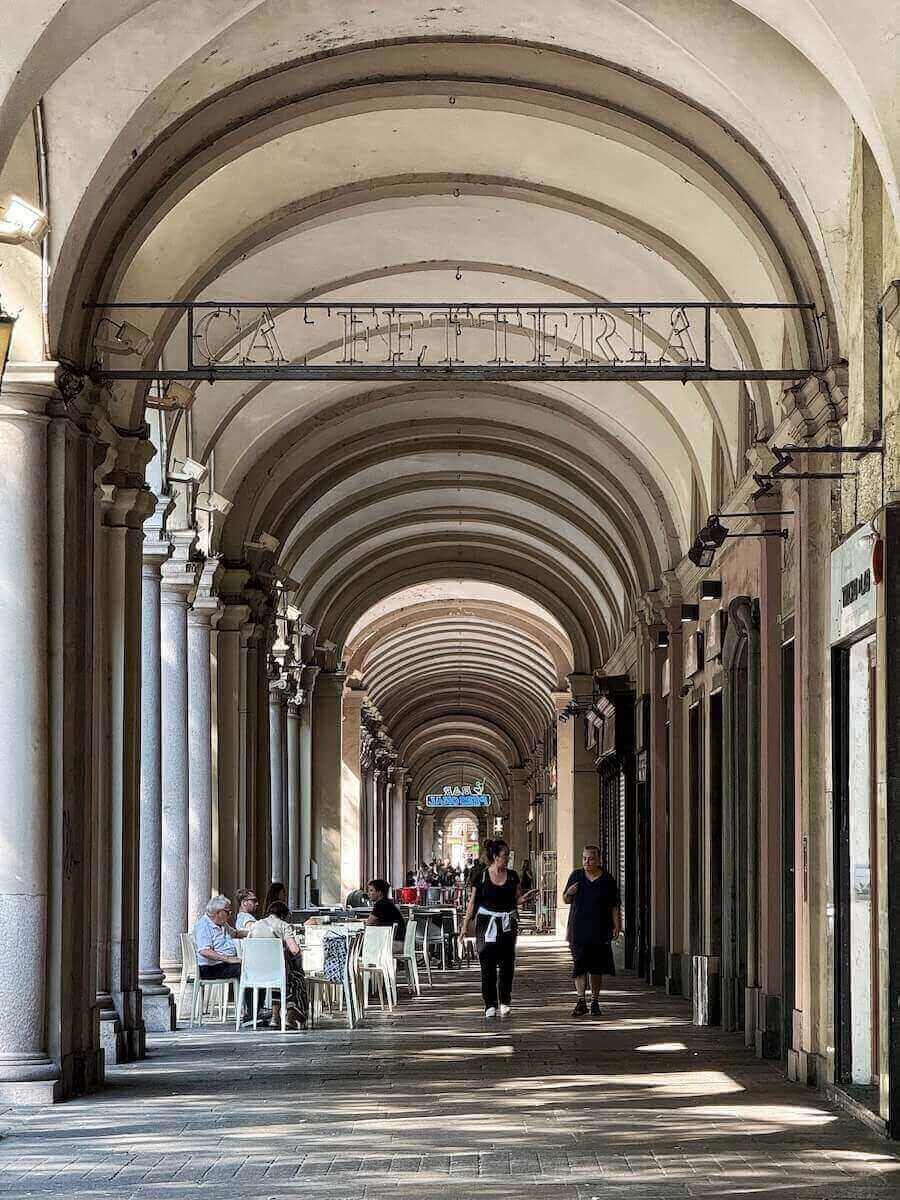
I explored Turin on foot, and I suggest you do the same. Most of the attractions are in the city center and can be quickly and easily reached on foot.
To reach attractions outside the city center, such as the Basilica of Superga or Venaria, or if you are tired, you can easily use public transportation. The city’s public transport network, which includes trams, buses, and a subway line, is very efficient.
If you love cycling, a bike-sharing service is also available.
Best Time To Visit Turin
The best time to visit Turin is the fall, particularly October and November. During this season, temperatures are still pleasant, and you will find many cultural events, concerts, football matches, and exhibitions, including the famous Turin Film Festival.
Turin is also very beautiful in the spring when temperatures are mild and the days are long.
Last time I visited, I was there in mid-June, and it was already incredibly hot.
For more information, head over to my post The Best Time of Year To Visit Italy.
Where To Stay In Turin
I recommend staying in Turin’s historic center. This is where most of the attractions, restaurants, and historic bars are located.
Here are some recommended places to stay in Turin:
- Corte Realdi Luxury Rooms Torino – I once stayed at this hotel, which has an amazing location right opposite Palazzo Madama. Rooms are big and have high ceilings and elegant furnishings.
- Attic Hostel Torino – This place offers different options: private rooms or dormitories, with private bathroom or shared for every budget. It’s near Torino Porta Nuova Train Station.
- XX SETTEMBRE Urban Relais – Gorgeous rooms in a historic building right in the city center.
FAQs on Turin
Yes, Turin is worth visiting, especially if you like layered history and fewer crowds. Turin mixes Roman roots, baroque architecture, and elegant cafés.
Highlights include the Egyptian Museum, royal palaces, and views of the Alps. It’s also a food city: think chocolate, vermouth, Piedmont cuisine. The city is less chaotic than Milan, more local in feel.
Turin is a city rich in attractions of every kind. To enjoy all its beauty at a leisurely pace, you need to stay at least five to seven days. But if you make a selection of the places you want to visit based on your tastes, a long weekend – two to three days – is enough to see the main sights and enjoy the atmosphere.
If you only have a day in Turin, focus on the most important landmarks. Visit Piazza San Carlo, the Egyptian Museum, go up the Mole Antonelliana and explore Piazza Castello. If you still have time, go inside the Royal Palace.
As you know, Italian food is very regional, and Turin is a city with a long and rich gastronomic history.
There are specialties that originated in Turin that are definitely worth trying, such as the Bicerin and tramezzini.
Grissini (crunchy breadsticks) were also created in Turin in 1679 by Antonio Brunero, the baker of the House of Savoy.
Another typical Turin dish is vitel tonné. You cannot leave Turin without tasting these thin slices of roast beef, served cold and accompanied by a sauce made from mayonnaise and finely chopped tuna.
A must-try pasta dish is Tagliolini al Tartufo d’Alba: thin handmade egg pasta tagliatelle seasoned with butter and shavings of the precious white truffle of Alba.
Meat lovers should try the Barolo braised beef: a piece of Fassona beef is first marinated in Barolo wine for at least 24 hours with onion, carrots, celery, and lots of aromatic herbs. Then it’s slowly cooked until the meat falls apart and melts in your mouth. Simply delicious
There are many typical desserts in the region: from Zabaione to Gianduia cream, Gianduiotti, Cremini, and Bonet, a famous traditional pudding.
Pair your meal with a glass of Barolo and, at the end of your meal, taste Vermouth or San Simone.
One of the most famous things to see in Turin is the Mole Antonelliana. Originally planned as a synagogue, it’s now Turin’s symbol and houses the National Cinema Museum. Its tall spire dominates the skyline, and the panoramic lift offers the best city views.
Culturally, the Shroud of Turin is also globally known, kept in the Cathedral of Saint John the Baptist, though rarely displayed.
The Torino+Piedmont Card is a digital tourist pass that includes admission to over 60 museums and attractions in Turin, such as the Royal Museum, the Egyptian Museum, and the Cinema Museum Mole Antonelliana.
Depending on the length of your stay, you can purchase a card with different validity periods: 24, 48, 72, or 120 hours. It is activated upon first use.
You can get yours online here.
If you want energy and fashion, Milan is one of the best places to visit in Italy. But for atmosphere, Turin often feels nicer. It’s calmer, more elegant, and far less visited. You get baroque streets, historic cafés, and Alpine views without big crowds.
Milan is louder and more international; Turin feels more local and livable. Many travelers end up preferring Turin once they experience both – and that honestly includes me.
Final Considerations
Turin is easy to explore and rewards a slower pace. Most major things to see in Turin sit within a compact historic center, so you can move around on foot and focus on details. The city stands out for its Roman origins, baroque planning, and strong museum scene. It also offers solid food culture, from traditional Piedmont dishes to historic cafés and local aperitivo.
Plan at least two days in Turin to cover the essentials without rushing. Add more time if you want to visit museums, take day trips to the Alps, or visit wine areas like the Langhe.
Turin can be visited year-round, though spring and autumn are the most comfortable.
Compared with bigger Italian cities, this city feels less crowded and more local. That makes it a good choice if you want culture without constant lines. It may not have the instant appeal of Rome or Florence, but it leaves a lasting impression once explored properly.
Recommended Readings
10 Best Things To Do In Montepulciano, Italy + Tips For Visiting
Local Guide About The Macchina Di Santa Rosa In Viterbo, Italy
PIN IT!

Claudia Tavani
Claudia Tavani was born and raised in Sardinia, and after moving between the United States and the United Kingdom, she's now back living in her hometown, Cagliari. She's a travel blogger and certified travel designer who loves planning trips and publishing guides, travel tips, and packing lists so that you don't have to. Owner of Strictly Italy, cat mom to Minnie. Loves pizza, hiking, archeology, cities, beaches, swimming, and running. Hates peppers.