
I love visiting Viterbo, and it holds a special place in my heart. My dad is from Viterbo. He grew up here (in the historic center, in the Crocetta District) and spent his childhood running around the quintessential alleys. So, every time I visit (about twice a year), I feel a special connection.
Viterbo is a small, ancient city in Italy’s Lazio region, about 80 km (less than 50 miles) north of Rome. It’s the capital of Tuscia, which spans across northern Lazio, southern Tuscany, and Umbria. While it may not be a household name like Rome or Milan, it’s still worth visiting.
This mid-size city is a real hidden gem of Italy. It is known in Italy for its Etruscan roots, beautiful architecture, good, earthy cuisine, stunning landscapes, and for being a really authentic place to visit.
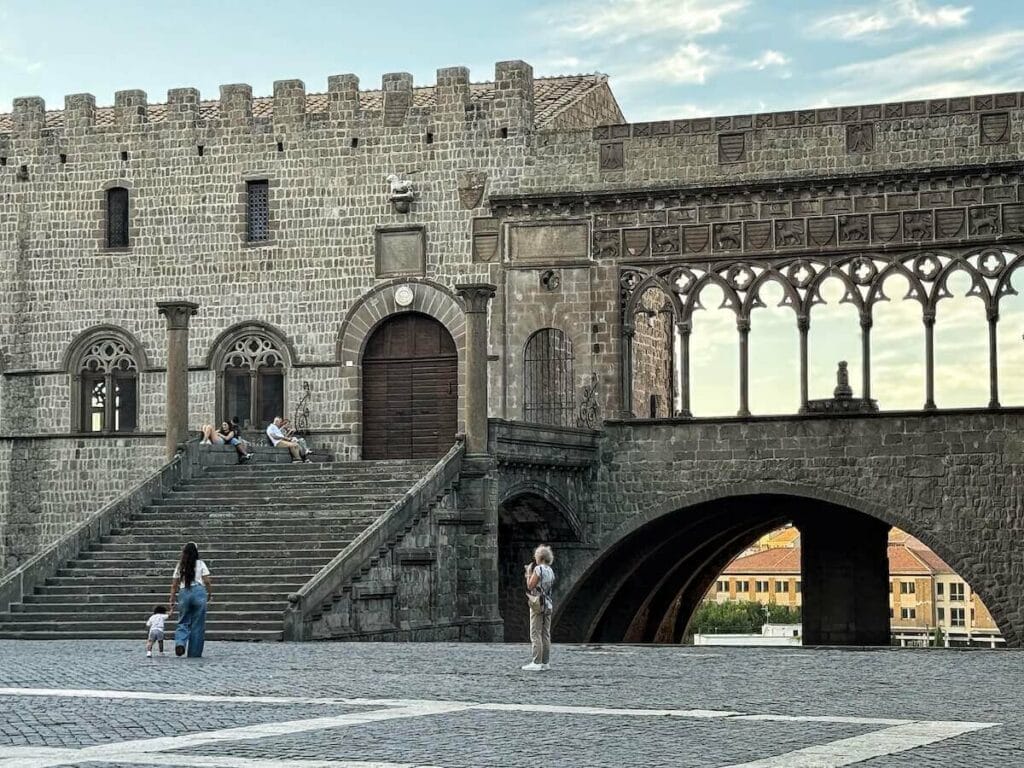
If you’re planning a trip to Italy, you might want to visit somewhere different – with fewer crowds, for example – and Viterbo is the perfect place to add to your itinerary.
So, without further ado, here’s my ultimate Viterbo travel guide, including how to get there, the best things to do in Viterbo, where to stay, where to eat, and other helpful information for visiting Viterbo, Italy.
Quick Overview of Viterbo
Short on time? Here’s a quick overview of the best places to visit in Viterbo, and some tips to plan your visit.
BEST PLACES TO VISIT IN VITERBO
- Viterbo’s Papal Palace
- Viterbo’s Cathedral
- San Pellegrino Historic District
- Palazzo dei Priori
- Viterbo Underground
- Terme dei Papi
BEST GUIDED ACTIVITIES IN VITERBO
- Private Walking Tour of Viterbo
- Audio Guide Tour of the Palazzo dei Papi
- Audio Guide Tour of Viterbo Underground
ESSENTIAL VITERBO TIPS
- Transportation: Rent a car at Fiumicino Airport via Discover Cars to be able to explore Tuscia more freely.
- Accommodation and restaurants: Viterbo is hardly ever busy, except in the week of Santa Rosa, at the beginning of September. If that’s when you are visiting, book your accommodation and make lunch and dinner reservations well in advance.
Where To Stay In Viterbo
A handful of really nice hotels, boutique hotels, B&Bs, and even holiday rentals are available in Viterbo. I stay at a different place every time I visit, so I have tried a bunch. I recommend picking something in the historic center, preferably with a parking spot if you are driving, or even just outside.
Here are a few of my top recommendations for your trip:
- Alloggio Turistico da Elide – We stayed here on our most recent trip (we came back 3 days ago) and liked it. It’s just in front of the lovely Prato Giardino park, minutes outside of the historic center. It has two spacious double rooms, a bathroom, a fully equipped kitchen, and a living room. As an additional bonus, it also has a private parking spot.
- Il Gallo Nero – If you want to stay in the San Pellegrino historic district, this is the best option. It has cozy, spacious rooms, and a delicious breakfast is served every morning. There’s no parking on site.
- La Fontaine Residenza D’Epoca – Set in a beautiful 16th-century building in the historic center, it’s been nicely renovated to include all modern comforts while keeping its historic charm. It’s a lovely place to stay in Viterbo.
- Casa Claudia – A cozy vacation home in the city that offers all sorts of comforts. With two bedrooms, a proper living room, and a fully equipped kitchen (yes, there’s even a dishwasher), you’ll have plenty of space to spread out and relax if you are traveling with your family.
Best Things To Do In Viterbo
Explore San Pellegrino
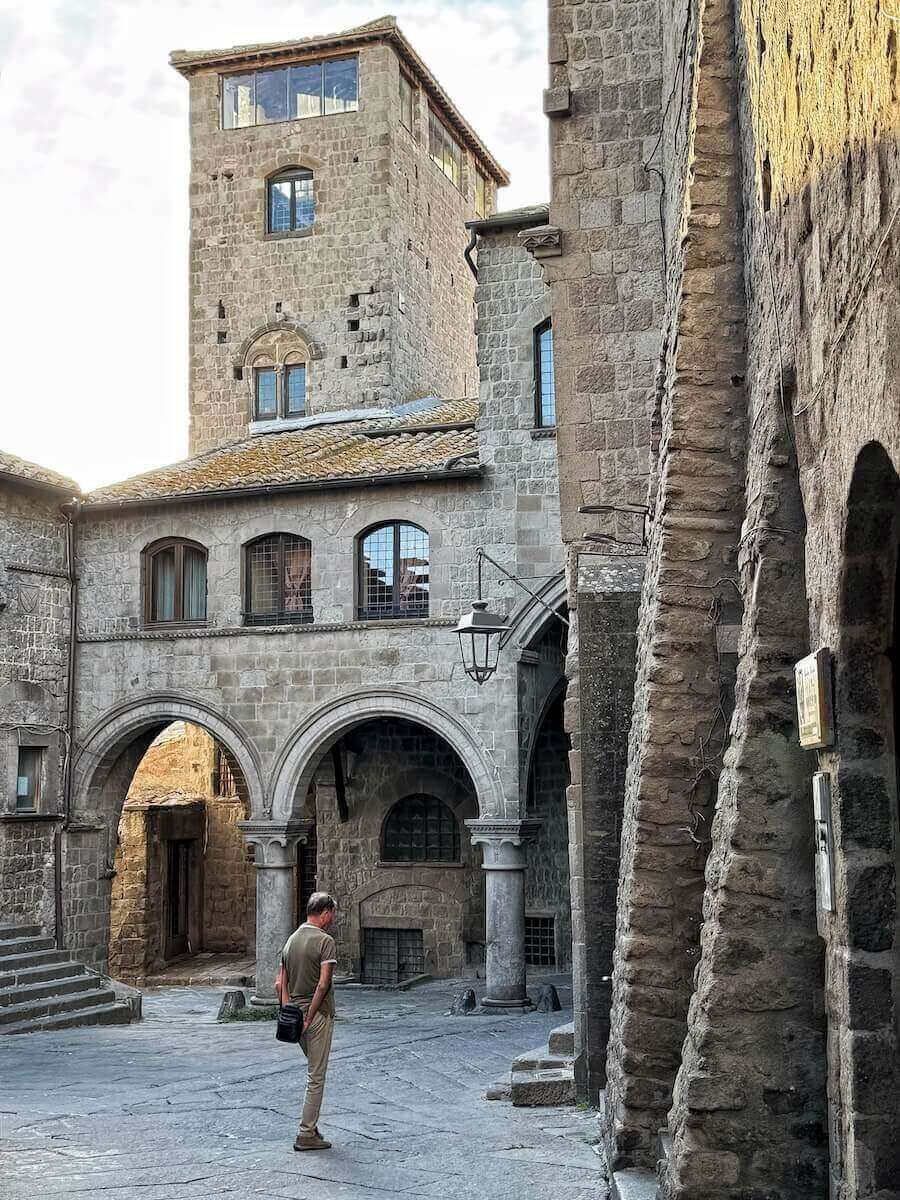
The San Pellegrino quarter is the city’s most fascinating district in the southern part of Viterbo’s old town. Many will tell you it is the largest preserved medieval quarter in Europe — and I must agree with them.
Make sure to spot the famous “profferli“— the external staircases typical of Viterbo. Stop by Piazza San Pellegrino, home to the graceful Palazzo degli Alessandri and the small church that gave the quarter its name.
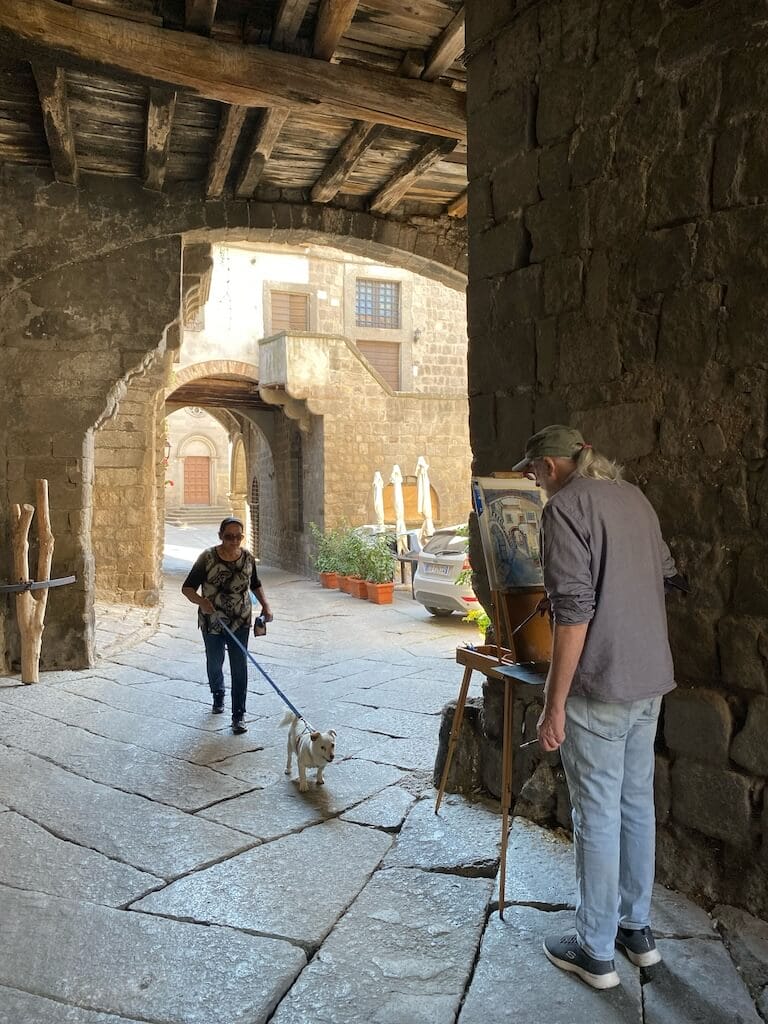
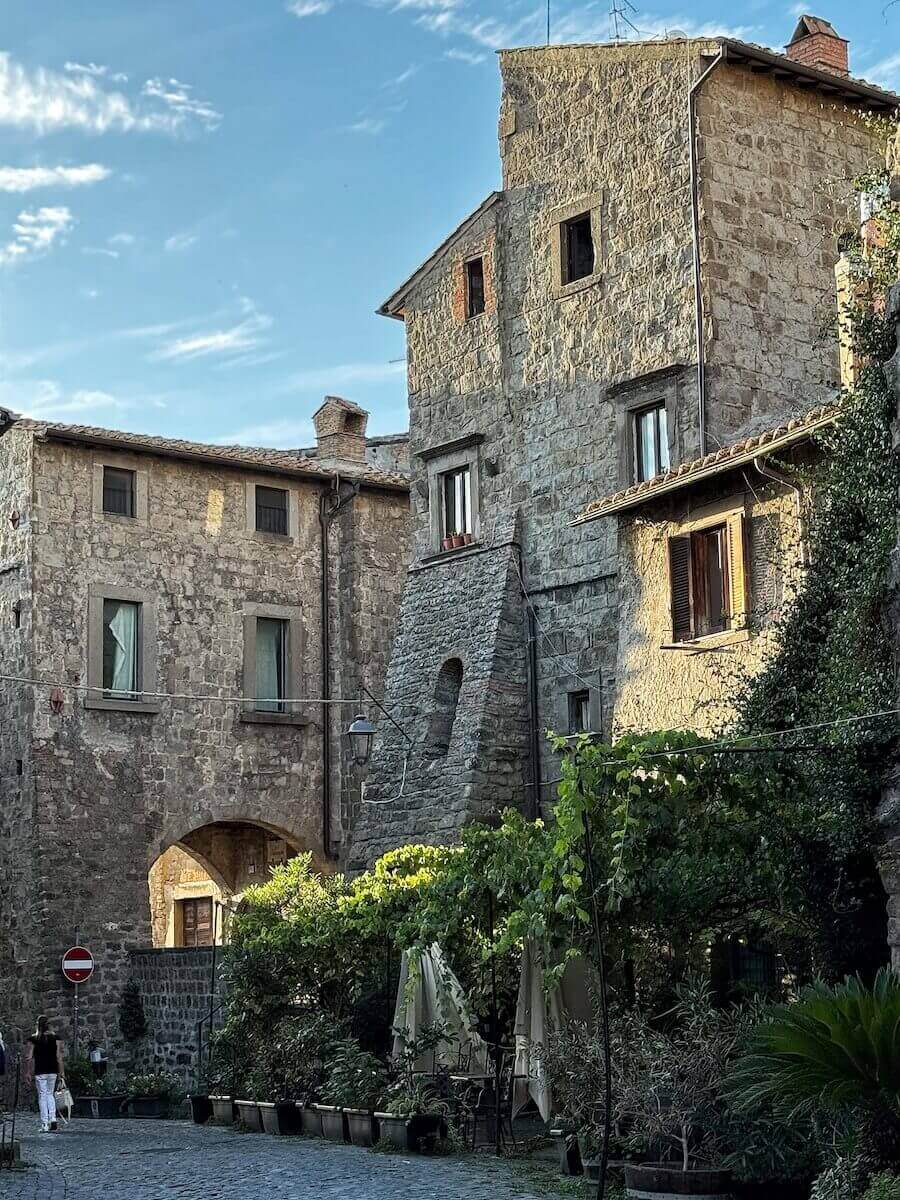
Here, you’ll find a maze of medieval streets that have kept their original layout. Beautifully preserved buildings flank weathered facades, all decorated with flowering balconies and historic windows.
The quarter is also home to several good trattorie and cafes where you can stop for a meal or drink while soaking in the atmosphere. It’s the perfect place to wander and get lost, where you’ll feel like you’ve stepped back in time. You’ll also find artisan shops, cozy cafés, and plenty of photogenic spots.
If you want to explore Viterbo with a guide, I recommend this Viterbo: Private Walking Tour. It’s fully customizable but can take you through all the main attractions in the historic center. It’s a great way to learn your way around the city with a local guide.

Visit Palazzo dei Papi (Papal Palace)
One of the unmissable things to do in Viterbo is to visit the Palazzo dei Papi.
The Palace of the Popes is a stunning Gothic palace located on Piazza San Lorenzo. This was the actual residence of the Popes from 1257 to 1281 (9 popes lived there), and it’s most famous for hosting the first and longest papal conclave in history.
Pope Alexander IV moved the papal seat here from Rome, which was undergoing a period of unrest. When Pope Clemens IV died in 1268, the cardinals took more than 3 years to choose a new Pope. The people of Viterbo were exasperated by the lavish lifestyle of the cardinals, for which they were heavily taxed, and ended up besieging the palace.
The cardinals were literally locked in the Aula del Conclave until they decided on a new pope: the food supplies were cut off, and the roof of the main hall was removed, in order to force the cardinals to elect a new pope as soon as possible.
One of the palace’s most interesting features is the Loggia della Benedizione, a balcony where newly elected Popes would first appear. After being locked in for an amazingly long time, they finally elected Pope Gregory X in 1271.
You can visit the Pope’s Palace on a guided city tour of Viterbo, like this Viterbo Private City Tour, which includes Popes, Tombs, Conclave Palace, and Duomo. It’s perfect for those who are short on time or want to make the most of a day.
Otherwise, you can get this combined ticket that allows you to visit the various monuments in the area with an audio guide, or simply get tickets at the door.
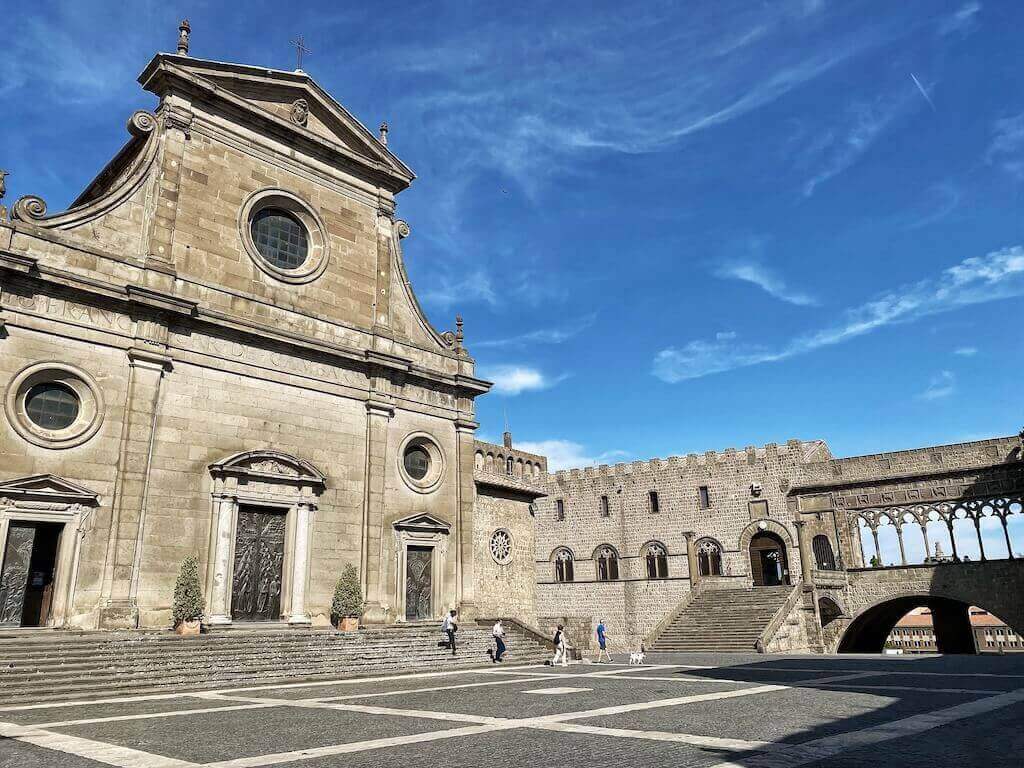
Viterbo Cathedral & Museum
The Duomo of Viterbo is located right next to the Palazzo dei Papi. It is believed to have been built on top of an ancient Etruscan temple dedicated to Hercules.
While the current Romanesque cathedral dates back to the 12th century, it was reconstructed in the mid-16th century and still maintains its impressive presence overlooking Piazza San Lorenzo. It’s all in peperino, a local stone that’s quite dark (it’s what you will mostly see used in Viterbo).
Make time to visit the interior of the church, which is quite beautiful. There are three aisles, and light only comes in through the windows of the second order. The chapels on the sites have beautiful frescoes dating from the 17th and 18th centuries, and there’s a marble baptismal font in Renaissance style.
Next door, you’ll find the Museo del Duomo, which houses important archaeological finds and religious art. The museum’s highlights include a 13th-century icon known of the Madonna della Carbonara and a crucifixion painting that some believe was painted by Michelangelo.
From Piazza San Lorenzo, you can also see Faul Valley, where there’s one of the many city gates. It is now home to a large parking lot, but also to a weekly market.
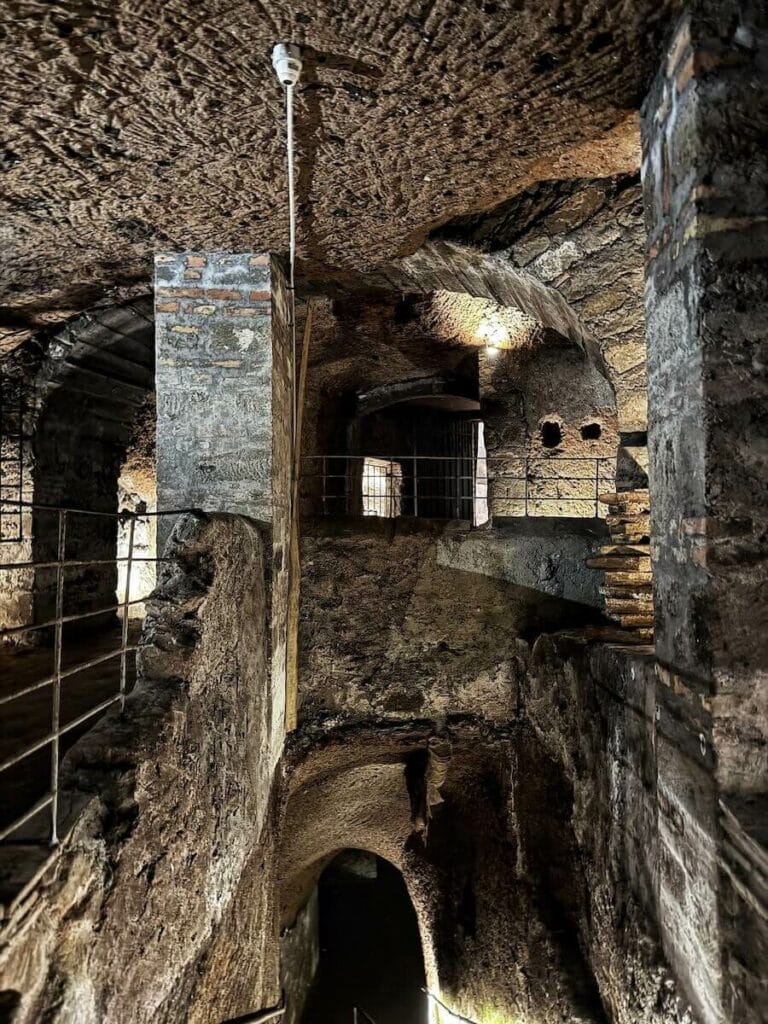
Viterbo Underground
I only visited Viterbo Sotterranea (Viterbo Underground in English) on my most recent trip to Viterbo about a week ago. Locals like my dad or my cousins aren’t too enthusiastic about this site, but I still think it’s worth going, as you get to see a side of the city tourists never learn about.
Under the city, there’s a labyrinth of tunnels carved into volcanic tuff. This 2,500-year-old underground network likely began with the Etruscans and was originally used for water collection. Then, they became a secret passageway, a hiding place, and a shelter during the heavy bombings that hit Viterbo during World War II.
There isn’t much to see, to be honest – just four rooms if you get the audioguide. But apparently, you see more if you join a guided tour.
You will find the main entrance to Viterbo Underground in Piazza della Morte, one of the most scenic squares in the city. It’s open every day. You have the option of getting an audio guide online or at the door. Otherwise, you can request a guided tour in your language of choice by sending an email to [email protected].
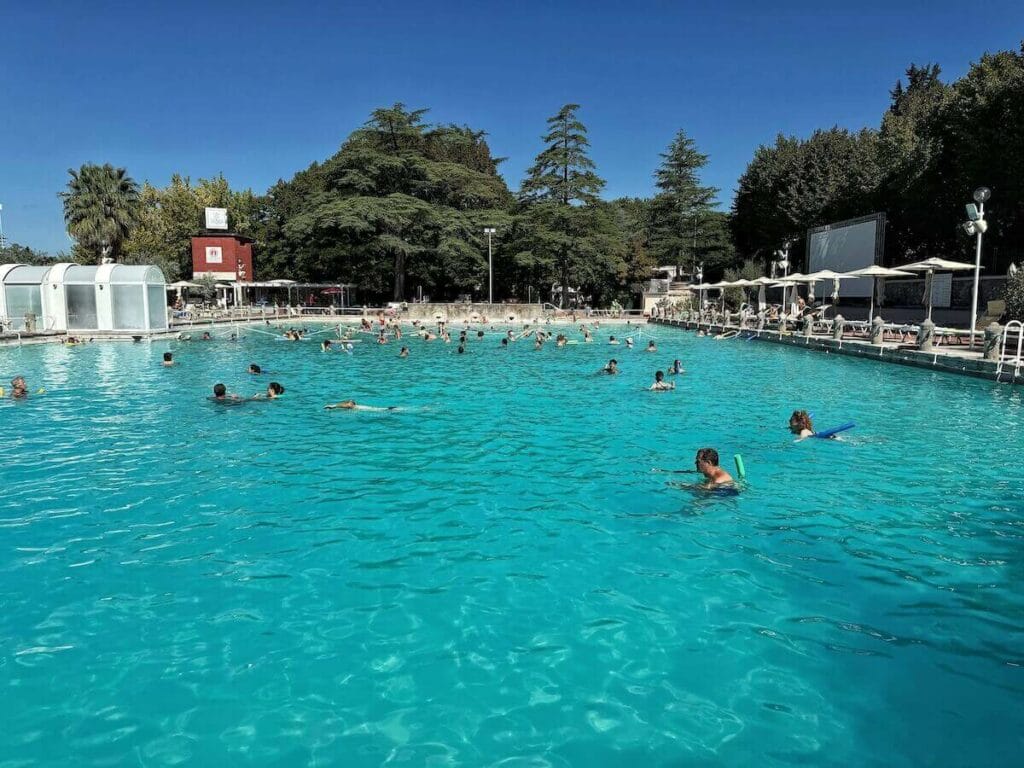
Relax at Terme dei Papi
The history of the Terme dei Papi goes back to Etruscan and then Roman times.
However, as the name suggests, Terme dei Papi owe their name to centuries of papal visits, starting with Pope Gregory IX in 1235, and later Pope Nicholas V, who in 1450 commissioned a thermal residence after finding relief in their waters.
The highlight here is the massive outdoor pool—over 2,000 square meters. This is fed by the Bullicame spring with water emerging at around 58 °C, gradually cooling as you move away. But of course, there are many treatments you can have here, and you can also opt to stay at the hotel for a relaxing weekend.
There’s a fee to enjoy the outdoor pool, which varies depending on whether you visit during the week or the weekend. They are quite popular with locals as well as tourists, so you may want to get your tickets in advance. You’ll have to bring your own towel and slippers as they don’t provide any.

Or at one of the free thermal baths
Not far from the Terme dei Papi, you will find many other thermal baths which are actually free to access. Last time I was in Viterbo, I went to Piscine Carletti. They are beautifully tucked in the countryside of Viterbo and fed by the same hyperthermal spring that feeds the Terme dei Papi.
There are several small pools where you can relax; each has a slightly different temperature. Keep in mind that this is a very rustic and local place. There are no facilities, so you need to bring everything – a towel, slippers, etc. There are no changing rooms either.

Santa Rosa Church
The 19th-century Santa Rosa Church is dedicated to Viterbo’s patron saint, though its history goes much deeper. The current building is a reconstruction of a 1632 structure built on a religious site dating back to 1235 (I know, it sounds complicated).
The church is particularly important because it houses Santa Rosa’s tomb and the mummy of Santa Rosa, which is incredibly well-preserved.
While many of the original frescoes of the church were destroyed in the 15th century, you can still see artwork from the 19th and 20th centuries.
Right next door, you can visit the Casa di Santa Rosa, the humble house where the saint once lived.
As you can surely imagine, both places are the center of the action during Santa Rosa celebrations. More about that further below.
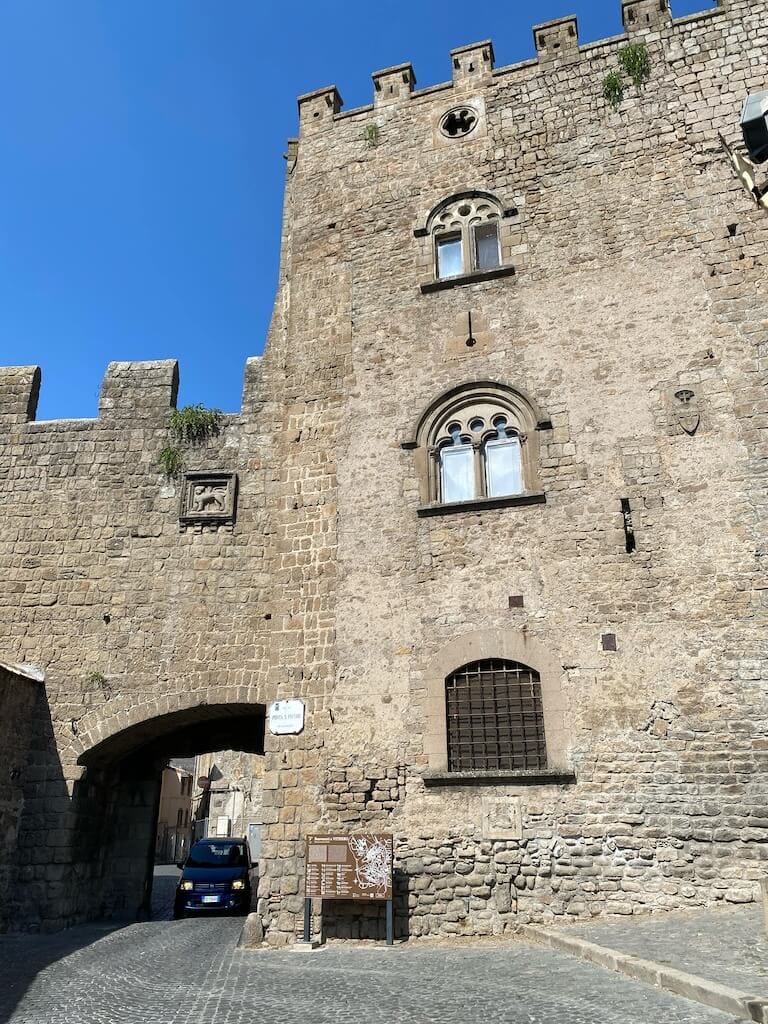
Historic City Gates
Viterbo was once protected by 14 medieval gates. Many of them are still standing today. The Porta San Pietro is one of the oldest and most historic—it was bricked up when Roman troops attacked and later closed during the 14th-century plague epidemic.
Other notable gates include the 12th-century Porta della Verità (Gate of Truth), the 13th-century Porta del Carmine with its moat and drawbridge, and the Porta Fiorentina, which is the access I most frequently use whenever I am in town.
Walking through these gates helps you understand how the city was defended in medieval times.
One interesting fact that my dad revealed is that at a certain point before the Santa Rosa celebrations start, the gates of Viterbo are closed, and no cars or people can go in or out of the city.
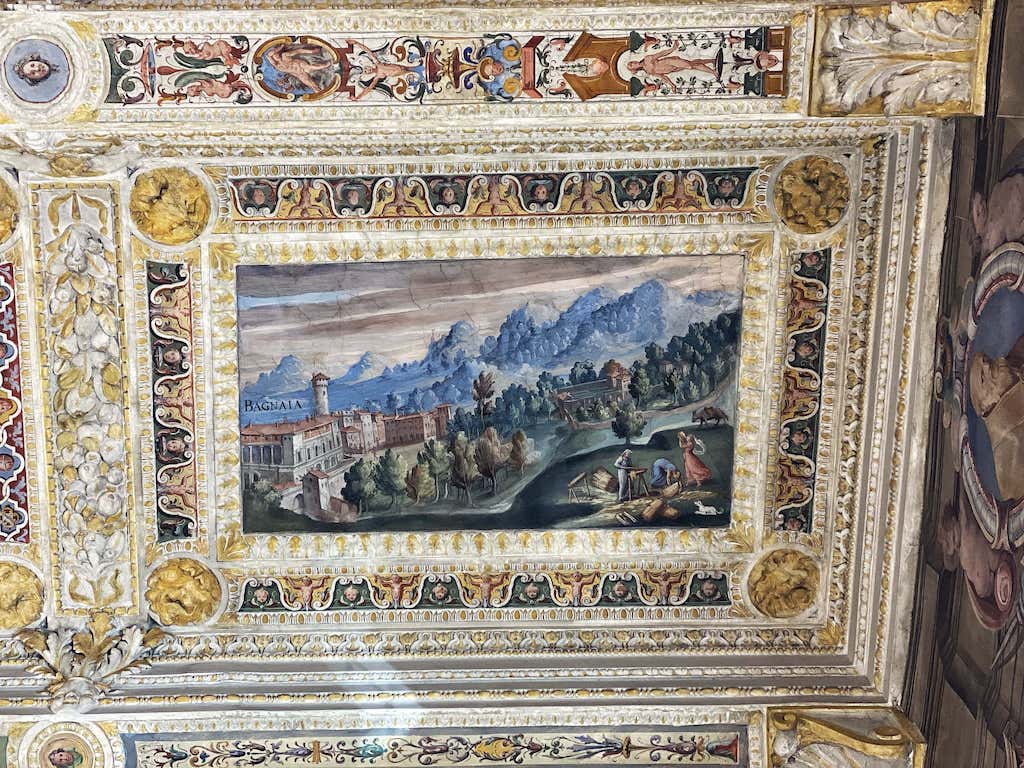
Palazzo dei Priori
You will find the Palazzo dei Priori (Priori Palace) in the Piazza del Plebiscito, the very heart of the historic center of Viterbo. This is the 15th-century hall of the city, and one of the most interesting places to visit in Viterbo.
You can pay the small admission fee and check out the first floor, where you can see beautifully decorated rooms adorned with 16th-century frescoes. It’s a nice place to learn more about the city’s ancient past.
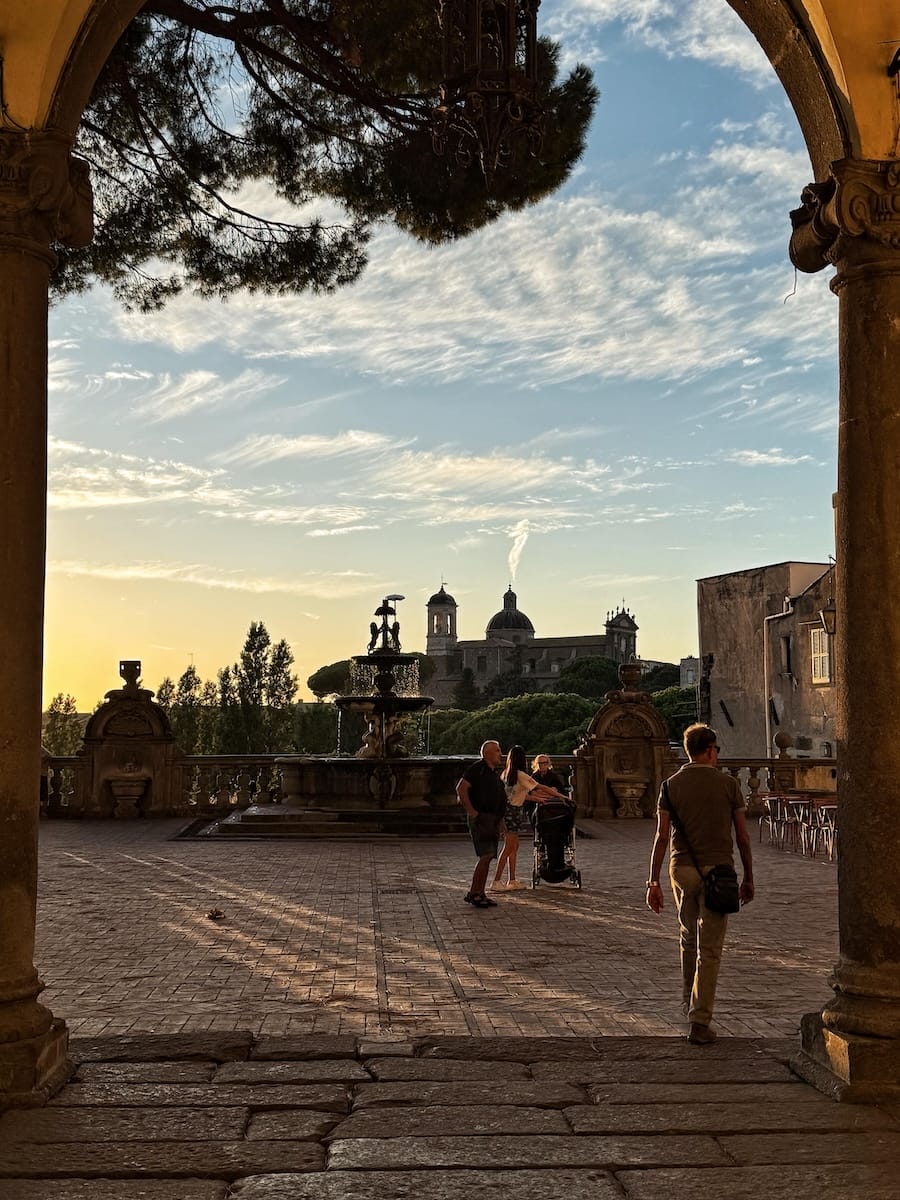
You can also stop on the terrace on the ground floor to take in the views of the city. It’s one of my favorite spots for sunset in town!
There’s a small fee to visit the Palazzo dei Priori. You can pay directly at the door, or get tickets online, which also include an audio guide.
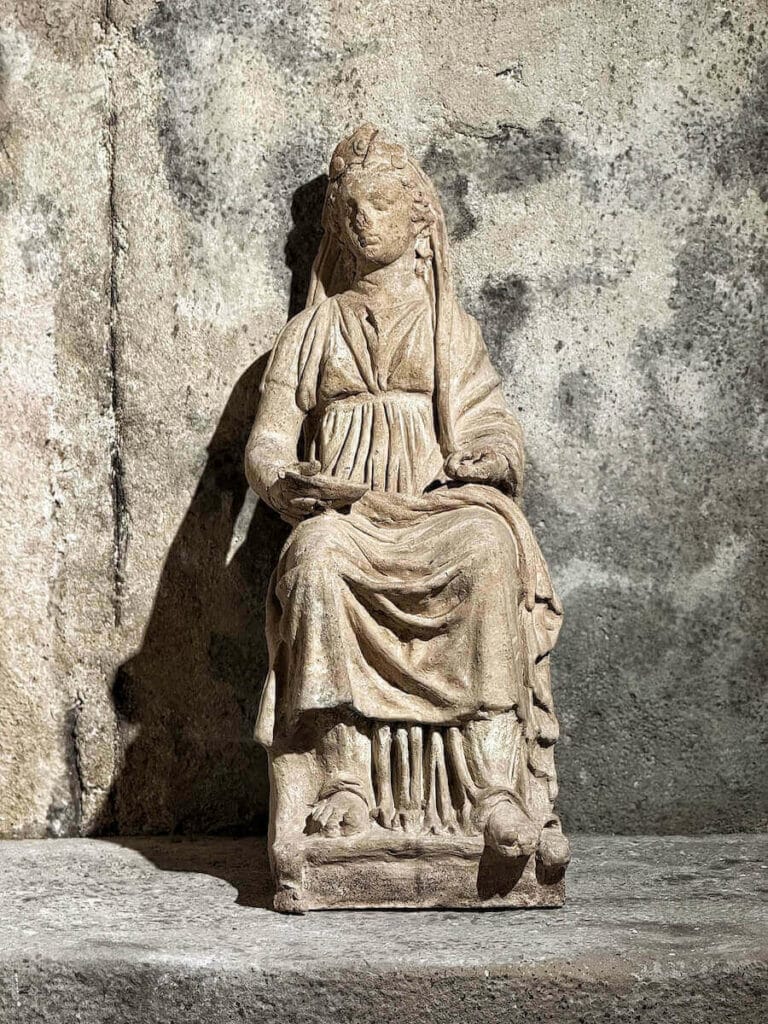
Viterbo’s Museo Etrusco
Housed in the imposing Rocca Albornoz, the National Etruscan Museum of Viterbo is one of the city’s most important cultural sites. The fortress, built in 1354 by Gil de Albornoz, legate for Pope Clement VI, was enlarged and enhanced later on with a Renaissance courtyard.
Inside, you’ll find terracotta decorations, reconstructions of Etruscan houses, and artifacts from nearby sites like Acquarossa and Ferento. Highlights include the Roman Muses statuary cycle, an inscribed mosaic, and the extraordinary Tomba della Biga, a complete chariot funerary set from Ischia di Castro.
The building itself is impressive. Make sure to stop on the terrace for views of Piazza della Rocca below: you can see all the way to the Monti Cimini.
It takes between one and two hours to visit this museum, depending on how much you want to read during your visit. You can get tickets directly at the door.
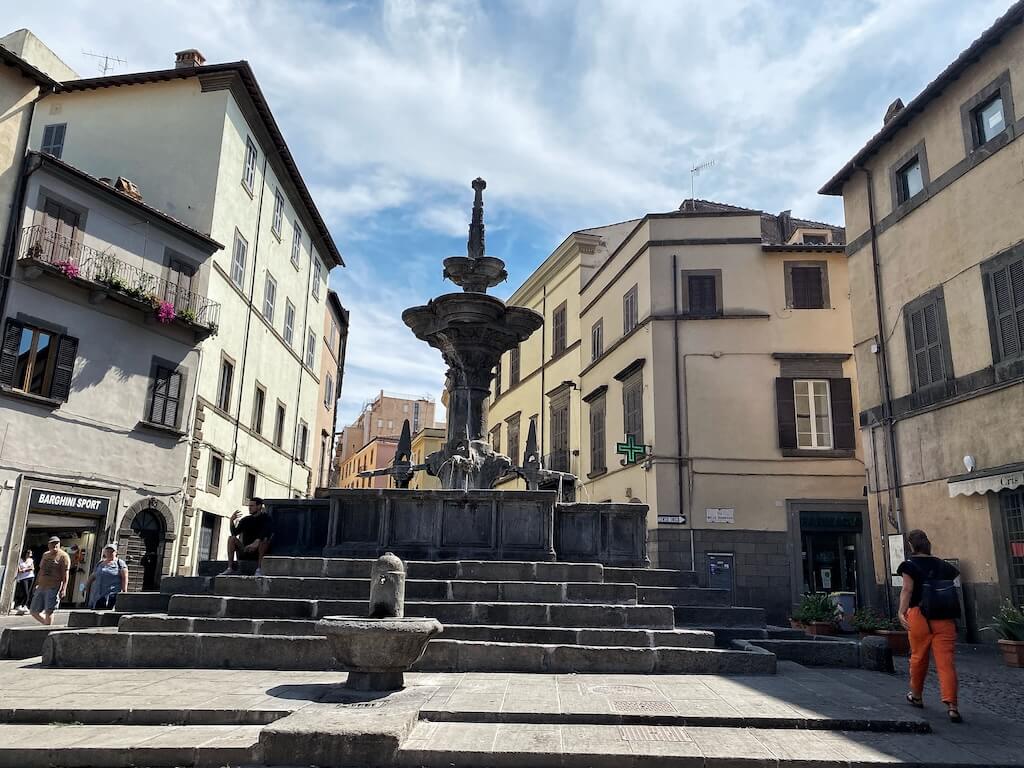
Viterbo’s fountains
There are many beautiful fountains you can admire in Viterbo.
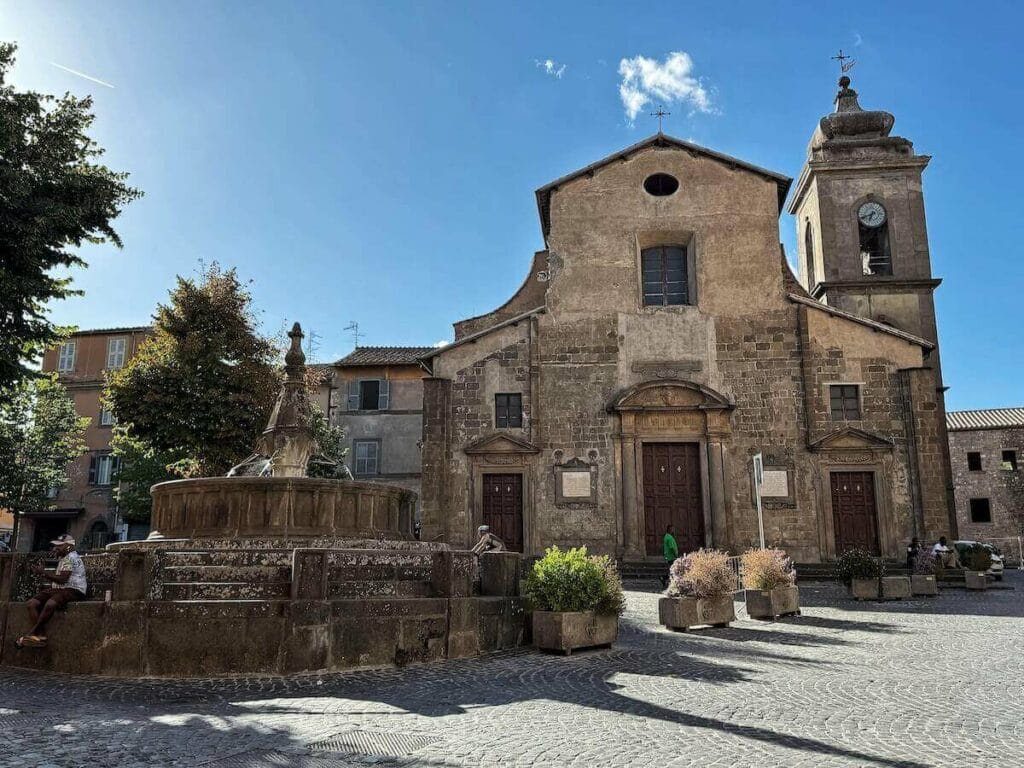
The Fontana Grande is such an important landmark that it names an entire square. This elegant 13th-century fountain features gray stone construction and a unique cross-shaped water basin.
In medieval times, merchants would conduct their business on the fountain’s steps. Today, it’s a perfect spot to take a break from sightseeing and watch local life go by.
Fontana Grande is certainly my favorite fountain in town, but I also recommend stopping by the one in Piazza delle Erbe (you’ll walk by it on your way from Corso Italia to Piazza del Plebiscito), the one in Piazza del Gesù, and the one in Piazza della Morte (where Viterbo Underground is located).
Another beautiful fountain is in Piazza della Crocetta, right in front of Via Mazzini and by the Crocetta Church. This is the exact spot where my dad grew up.
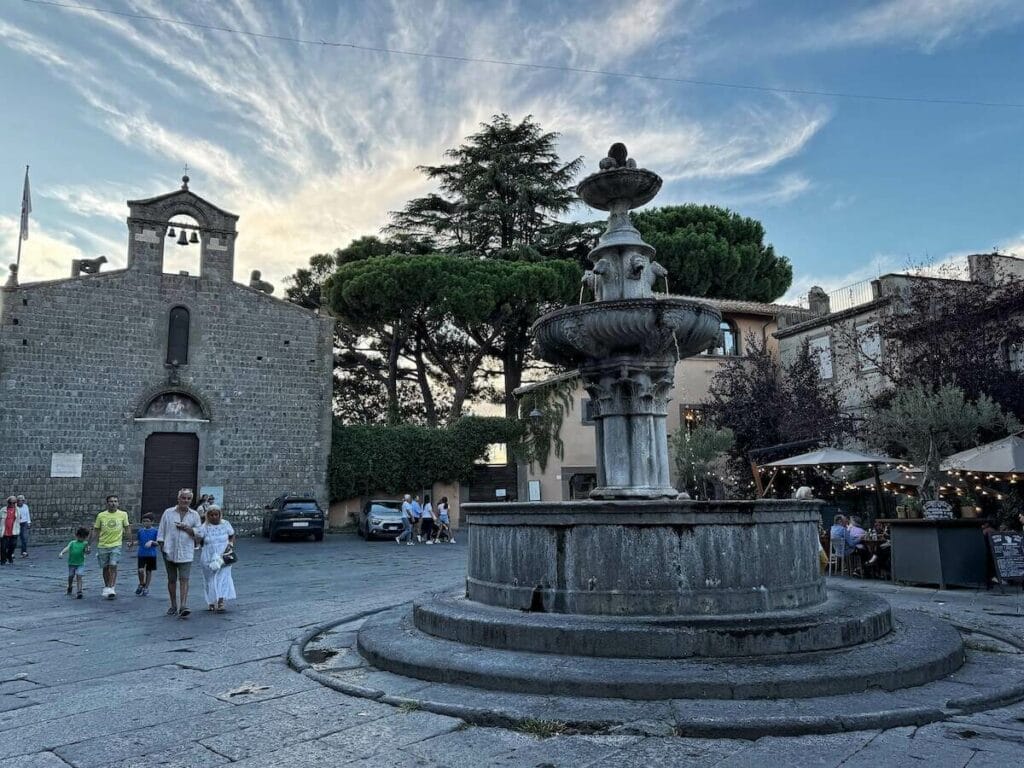
Piazza del Gesù
One of the best things to do in Viterbo is hanging out in one of the many city squares, and this is my favorite.
Also known as Piazza San Silvestro, Piazza del Gesù is home to a beautiful Romanesque-style church and the 14th-century Tower of Borgognone (which, however, can’t be accessed).
This was the heart of the city between the 11th and the late 13th century, as here was located the seat of the podestà, who administered justice in the city. It was also home to the city market – my dad actually told me that it was where the market took place when he was growing up.
If you pass by in the evening, you will see people sitting at one of the tables in the square, that belong to a restaurant at the corner. It’s a nice spot to sit for a drink and some people watching. I also tried the food at the restaurant, but wasn’t too impressed, to be honest.
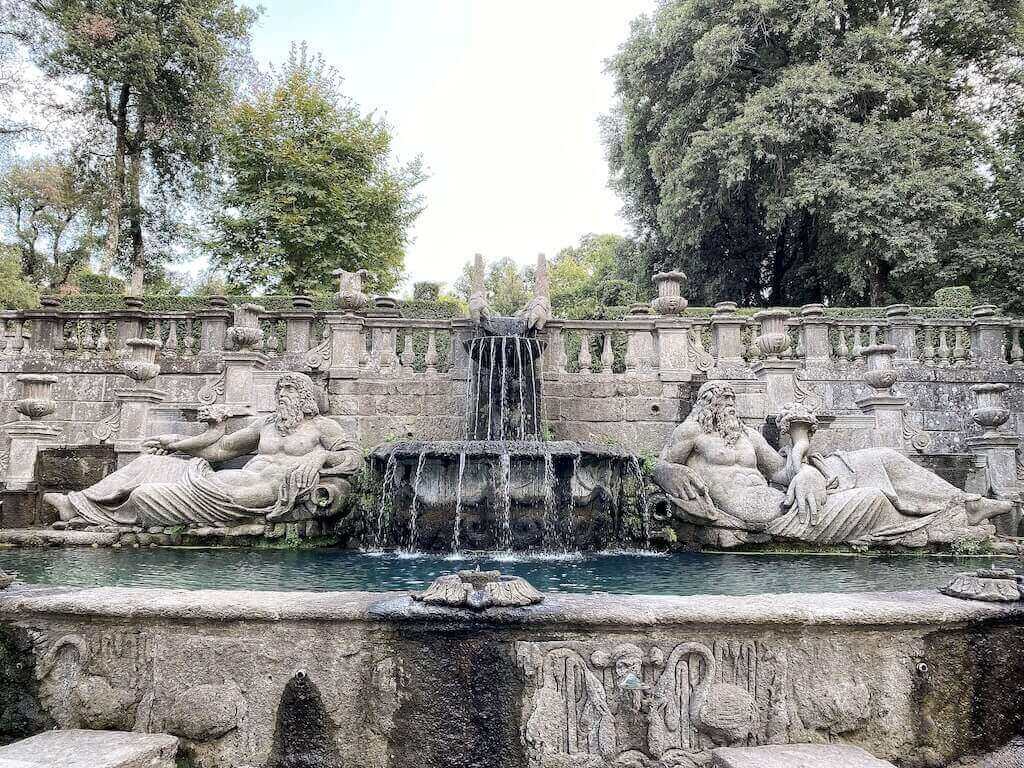
Villa Lante Gardens
Just an eight-minute drive east of Viterbo in the village of Bagnaia, you’ll find the impressive Mannerist gardens of Villa Lante. We used to visit all the time when I was a kid, as my uncle worked and lived there, and it’s a place I love and always recommend visiting.
Jacopo Barozzi da Vignola created these gardens, featuring perfectly maintained hedges in symmetrical patterns, beautiful fountains, and Baroque sculptures.
Interestingly, these gardens didn’t become famous until a century after their creator died. Today, they’re considered some of the finest Renaissance gardens in Italy and make for a perfect place to visit near Viterbo.


Experience the Macchina di Santa Rosa Festival
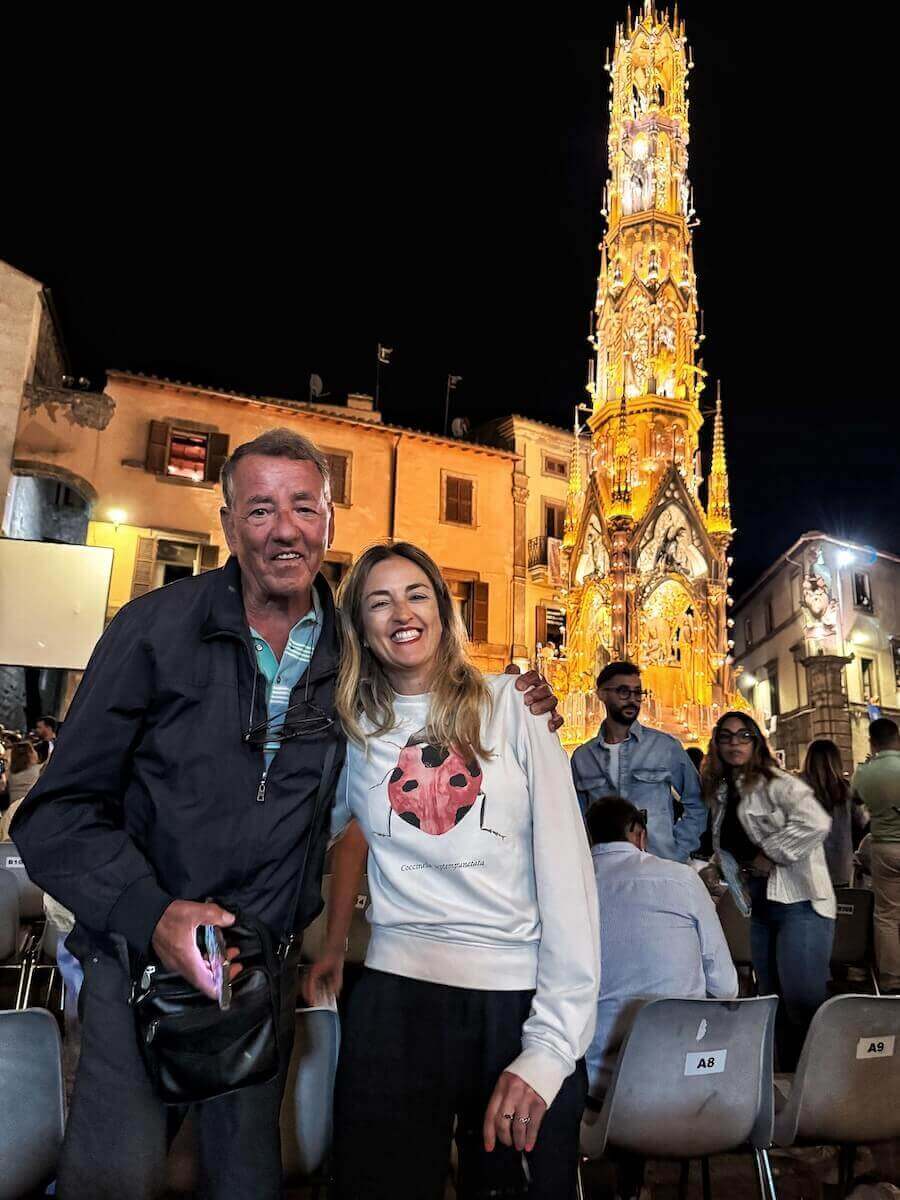
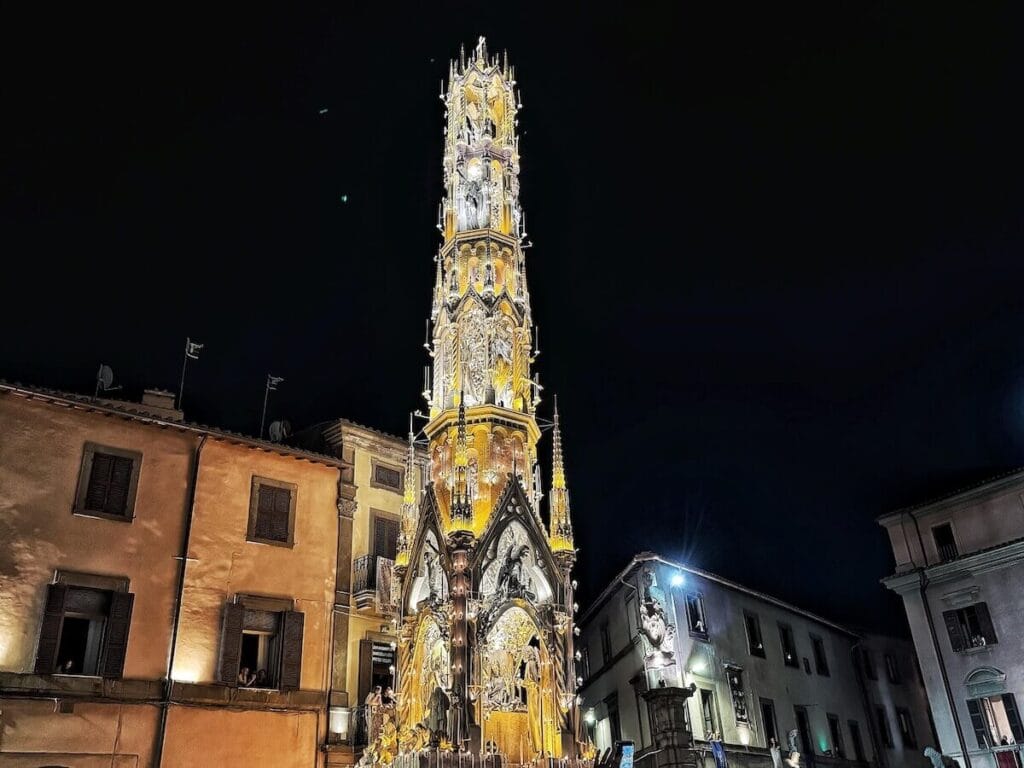
Every year on the night of September 3rd, Viterbo hosts the UNESCO-recognized Macchina di Santa Rosa festival. During this incredible celebration, a 30-meter (more than 98 feet) papier-mache statue weighing five tons is entirely lit and carried through the dark streets of the historic center by 100 men known as the “Facchini di Santa Rosa” (Porters of Saint Rose).
I love the Santa Rosa festival so much that I generally try to time my visit to Viterbo with the celebrations.
The atmosphere in the city is special – younger generations spend the night in the street to save their spot just to catch a glimpse of the enormous statue. It’s a very heartfelt celebration, with chanting, cheering, and more.
Celebrations actually start on September 2nd with the Historical Procession. That’s when the Facchini di Santa Rosa parade the relics of the saint around the streets of the historic center, along with people dressed in clothes of various historical eras.
They then continue on September 4th, with Viterbo’s fair. It’s honestly nothing to write home about, but you may have the chance to taste some local street food and to catch local action.
I have written a Complete Local Guide To The Macchina Di Santa Rosa Parade that you should read.
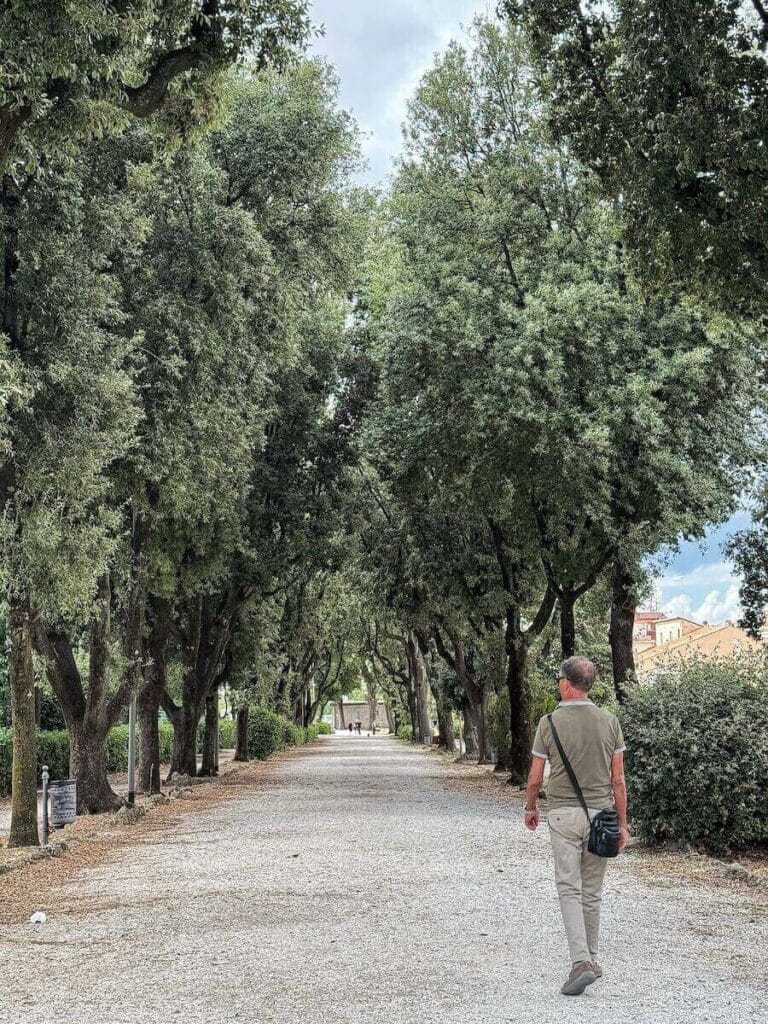
Prato Giardino
Viterbo isn’t exactly a touristy place. Regardless of that, if you are looking for a quiet spot in town, go for a walk at Prato Giardino, one of the nicest city parks. The main gate is just outside Porta Fiorentina, so immediately out of the historic center, and there’s another gate along Via della Palazzina.
The park first opened in 1855, but its roots stretch back to the 14th century, when the area served as a training ground for papal soldiers next to the imposing Rocca Albornoz.
Today, during the summer time, the park hosts events like street food fairs, open-air concerts, and more.
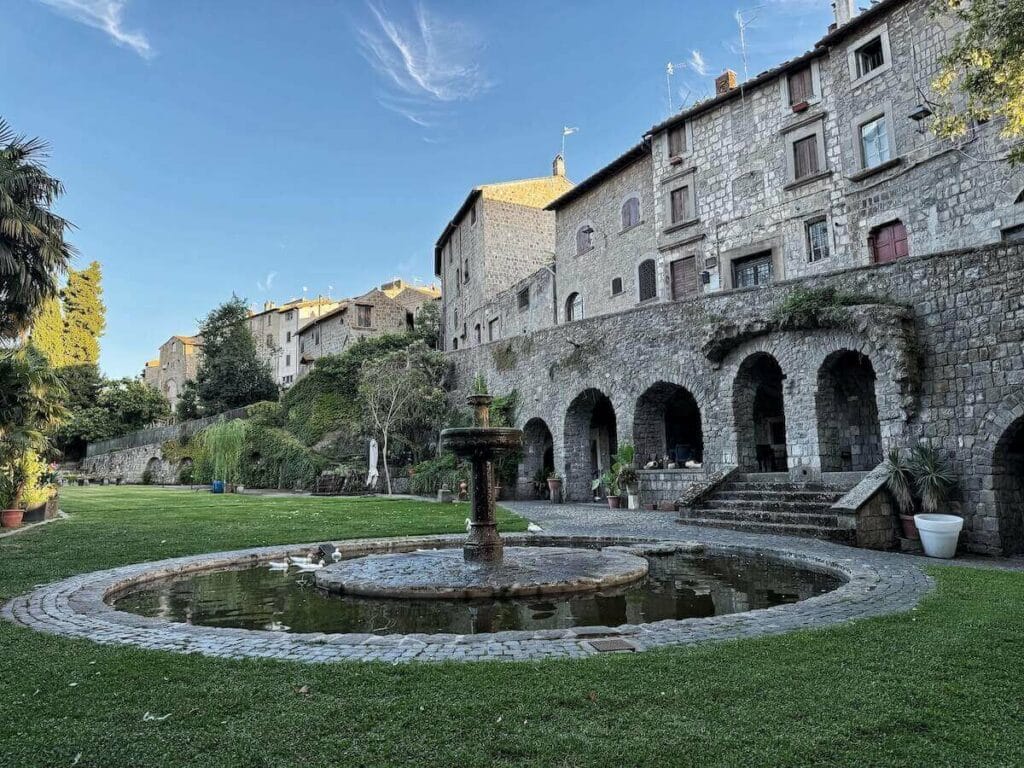
Parco del Paradosso
Another place I really love in Viterbo is the Parco del Paradosso, close to the Ponte del Paradosso (Paradox Bridge). It is tucked between the Pianoscarano and San Pellegrino neighborhoods.
Back when my dad was growing up, this was nothing more than a dump. Now, it is a small, charming green space perfect for a relaxing stop while you are exploring the historic city.
Despite its modest size, it carries a hint of paradox—lush and tranquil, yet snug amid historic stone walls and narrow lanes.
There is a nice café in the park – the last time I visited, the owners told me they are trying to revive it into a fancier restaurant.
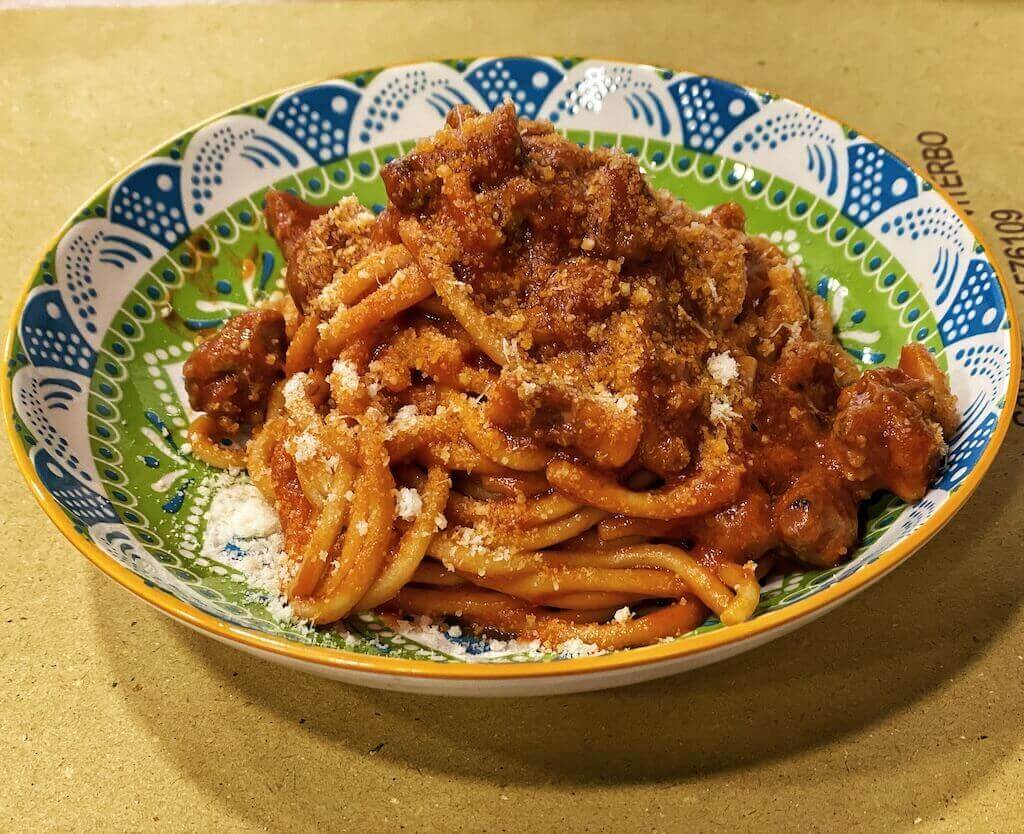
Try local specialties
As you may already know, food in Italy is very regional, and there are some dishes in Viterbo that you won’t see on the menu anywhere else in Italy. Viterbo offers plenty of good restaurants, pizzerie, and gelaterie.
Here are some dishes you should try in Viterbo:
- Lombrichelli alla Viterbese – A traditional homemade pasta served with a thick tomato sauce with fennel and occasionally sausage. You’ll find it in traditional places such as Trattoria Enoteca San Lorenzo, Al Richiastro, and Taverna Etrusca.
- Acquacotta – Similar to the soup you can have in southern Tuscany, this comforting soup has leftover bread, lots of herbs, chicory, potatoes, and at times, also an egg.
- Fieno di Canepina – A kind of thin tagliatelle served with a meat (pork and beef) sauce and local pecorino cheese.
- Tozzetti – These cookies look and taste a lot like Tuscany’s cantuccini, though perhaps they are a bit softer.
Other than those mentioned, these are other restaurants I have tried (and loved):
- Il Grottino – I have been going there for years and love the friendly service, the comforting food, and the bargain prices.
- Braceria San Lorenzo – If you want a good steak, look no further. They have an excellent wine selection.
- Contrasto – The best seafood restaurant in Viterbo.
For the best gelato, my dad swears by Chiodo, a local institution that’s been in the same spot for decades. They only make three flavors of gelato, but they do them perfectly. I am a fan of Antica Latteria, which offers many flavors, including lactose-free options and a lovely terrace for people watching.
Before eating out at a restaurant in Italy, make sure to read my article, Tipping In Italy: The Ultimate Guide, From A Local. Tipping is not as common in Italy as in other popular places like the United States, so there’s no need to come here and change local expectations.
Day Trips From Viterbo
Viterbo offers many great activities, and it’s also near some of the best attractions in central Italy. If you have the time, I recommend visiting some of these places near Viterbo:
Bomarzo Monster Park
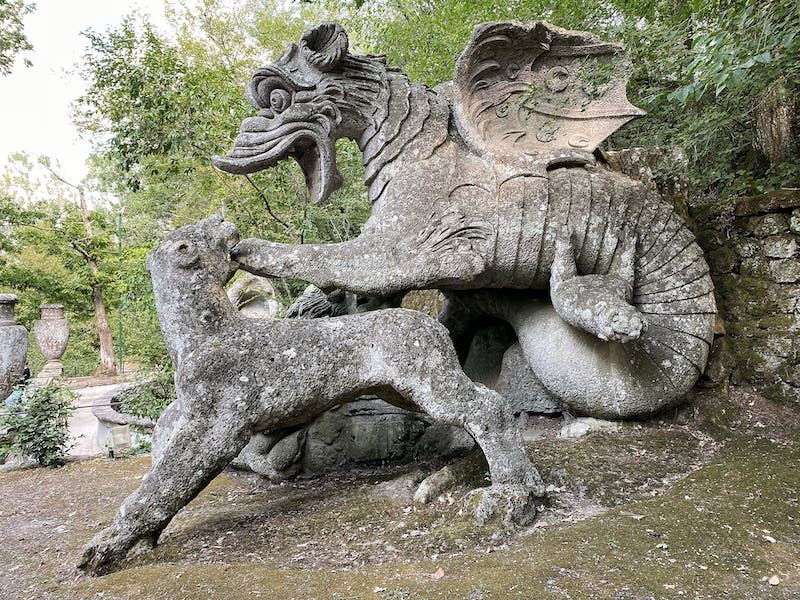
The Bosco Sacro di Bomarzo (also known as Parco dei Mostri, or Monster Park), is just 20 minutes from Viterbo (and an easy day trip from Rome). This is one of Italy’s weirdest and most wonderful places—the Bomarzo Monster Park. This isn’t your typical manicured Italian garden, either.
Instead, imagine wandering through a woodland filled with giant stone monsters and mythological creatures created in the 16th century by Pier Francesco Orsini. It’s unique and photogenic, a lovely place for an afternoon walk, whether you are traveling alone or with your family.
This Rome Tour to Bomarzo, Caprarola & Calcata Tour includes transportation, bottled water, and a local guide. Keep in mind it doesn’t go to Viterbo.
Caprarola
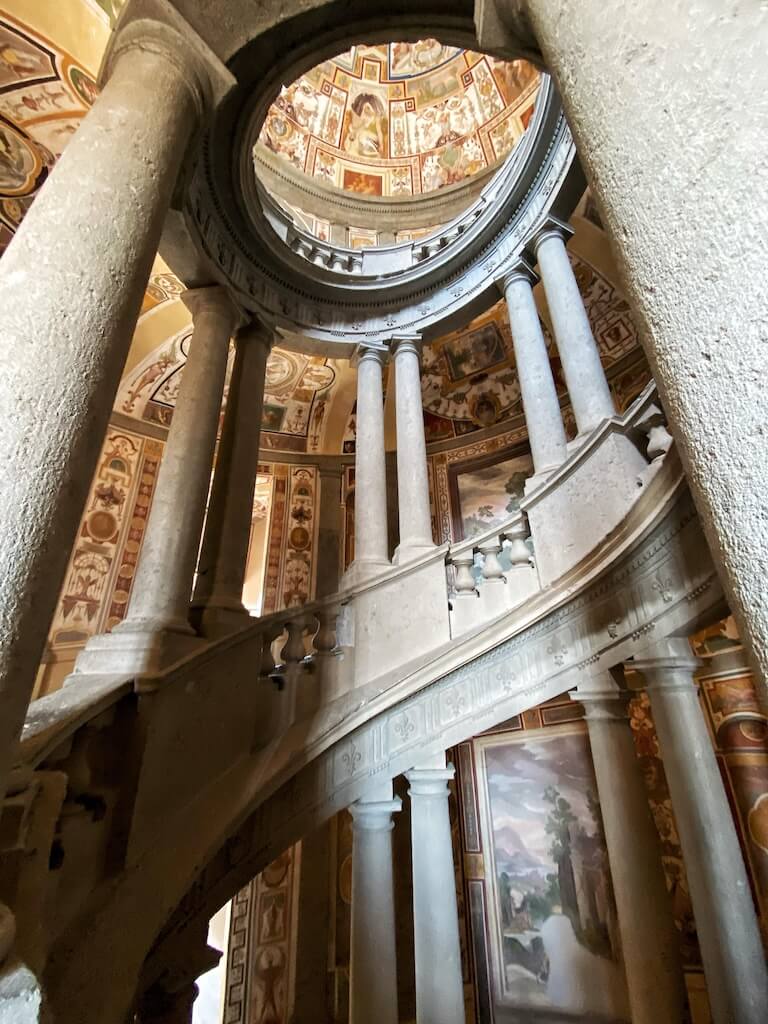
About 30 minutes from Viterbo sits one of the most impressive Renaissance mansions you’ll ever see. The Palazzo Farnese is much more than your typical palace. It’s a massive pentagon-shaped building perched high above the lovely small town of Caprarola.
Inside, it is packed with gorgeous frescoes and a magnificent spiral staircase, and the gardens are just as impressive as the palace. If you love architecture or exploring grand old buildings, you’ll be in heaven here.
Vitorchiano
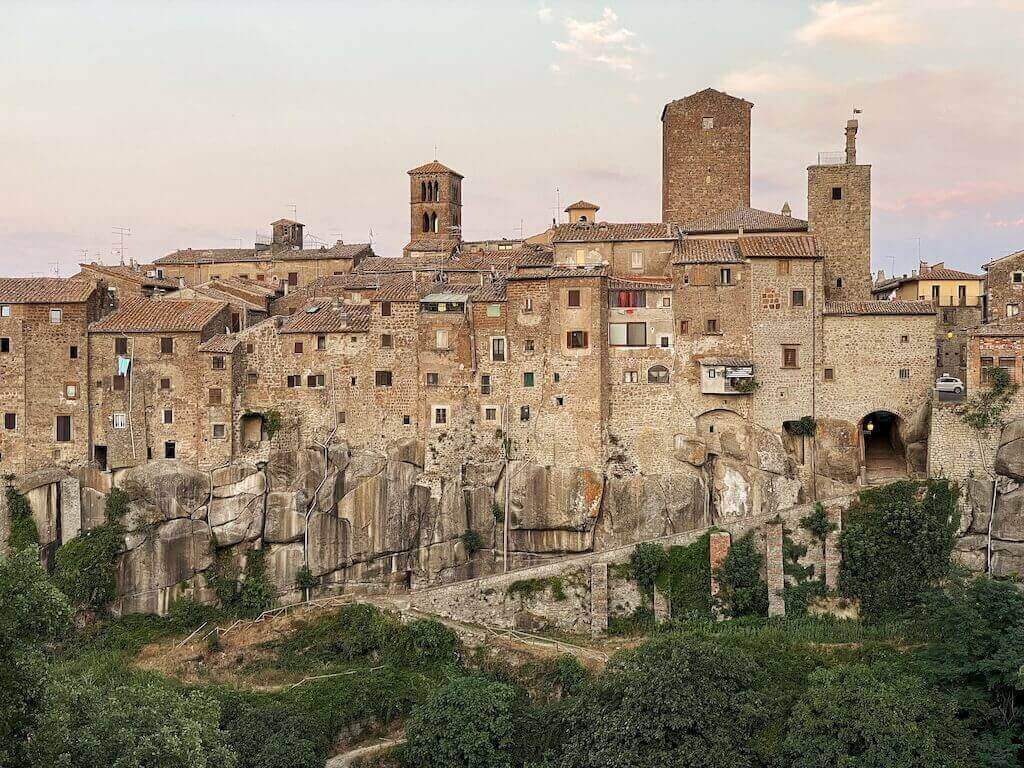
Just a quick 15-minute drive from Viterbo, Vitorchiano is a picture-perfect Italian hilltop town that makes you feel like you’ve stepped back in time. Perched above the Vezza valley, it’s perfect for a few hours of wandering and soaking in the authentic Italian atmosphere – there are no tourists around, and the locals are very welcoming.
There are several hiking trails you can tackle that go around the small town and in the surrounding valleys.
The best panoramic views of Vitorchiano are from the Provincial Road 21 (SP21). In the same spot, you’ll also be able to see a real Moai coming from Rapa Nui.
Ferento Roman Theater
I only discovered Ferento thanks to a local tip on my most recent trip to the city, last week.
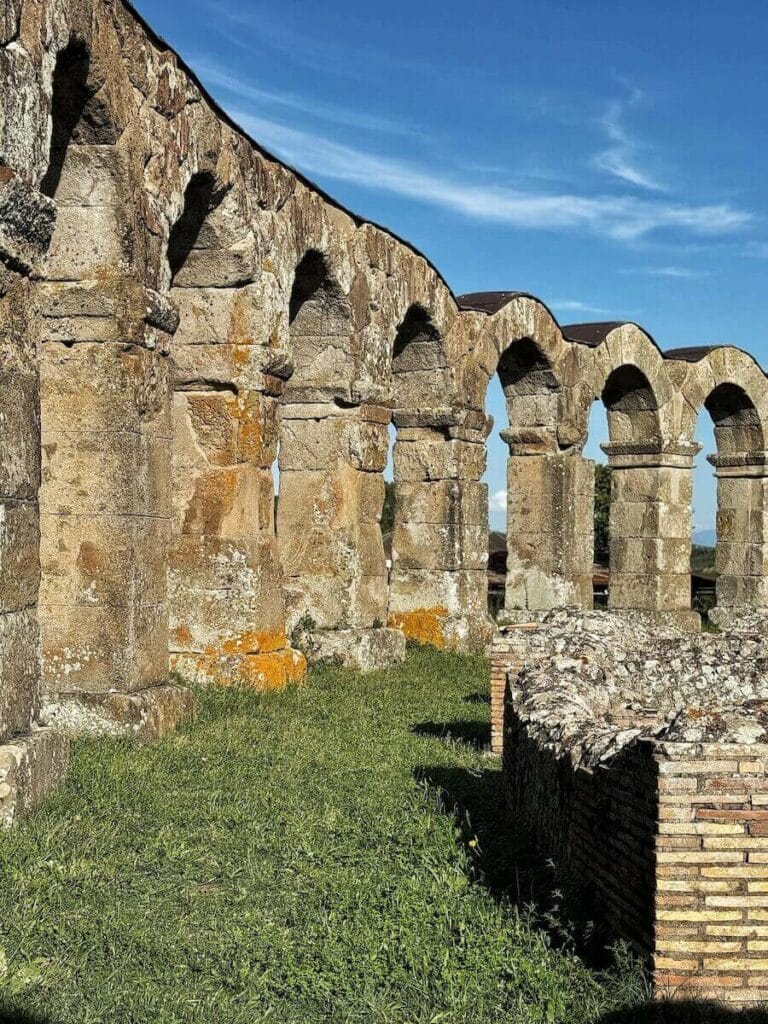
Ferento Roman Theater is located just north of Viterbo. It dates back to the 1st century AD and stands as one of the region’s best-preserved Roman theaters. The theater could host up to 3,000 spectators, which testifies to the importance of the city it served.
On site, there are also remains of Roman baths, a temple, and a decumano (a Roman road).
The theater and the surrounding town were in a complete state of abandonment after the destruction of 1172. Much of what you see today was excavated in the 19th century.
The site is open every day. Visiting is free, but you should leave a small offering after the visit, especially if you join a guided tour with the person who manages the site.
Civita di Bagnoregio
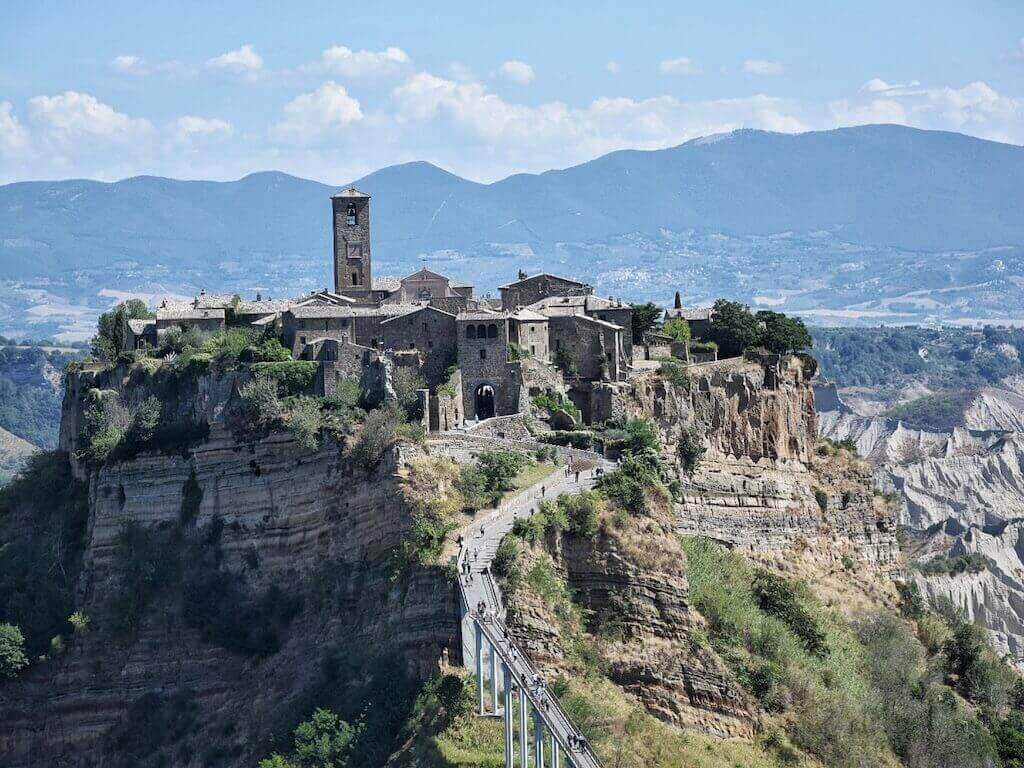
This place is seriously special, and Viterbo just happens to be the nearest city. Civita di Bagnoregio is often called the “dying city” (but I prefer “floating city”).
The old town sits dramatically atop a plateau of volcanic rock, only accessible by a long footbridge. The views from a distance are incredible, and while it’s becoming more popular with tourists, it still feels magical.
The town dates back to Etruscan times, though these days, only a handful of people still live here due to the eroding cliffs it sits on – most residents have moved to the modern city nearby.
You can also visit Civita di Bagnoregio on a day trip from Rome. I recommend this guided tour, Orvieto & Civita di Bagnoregio Private Tour from Rome. It skips Viterbo and goes to Orvieto, another quintessential Italian city in the Umbria region.
My post A Useful Guide To Civita Di Bagnoregio shares more information on what to see and how to visit.
Celleno Borgo Fantasma (“Ghost Town”)
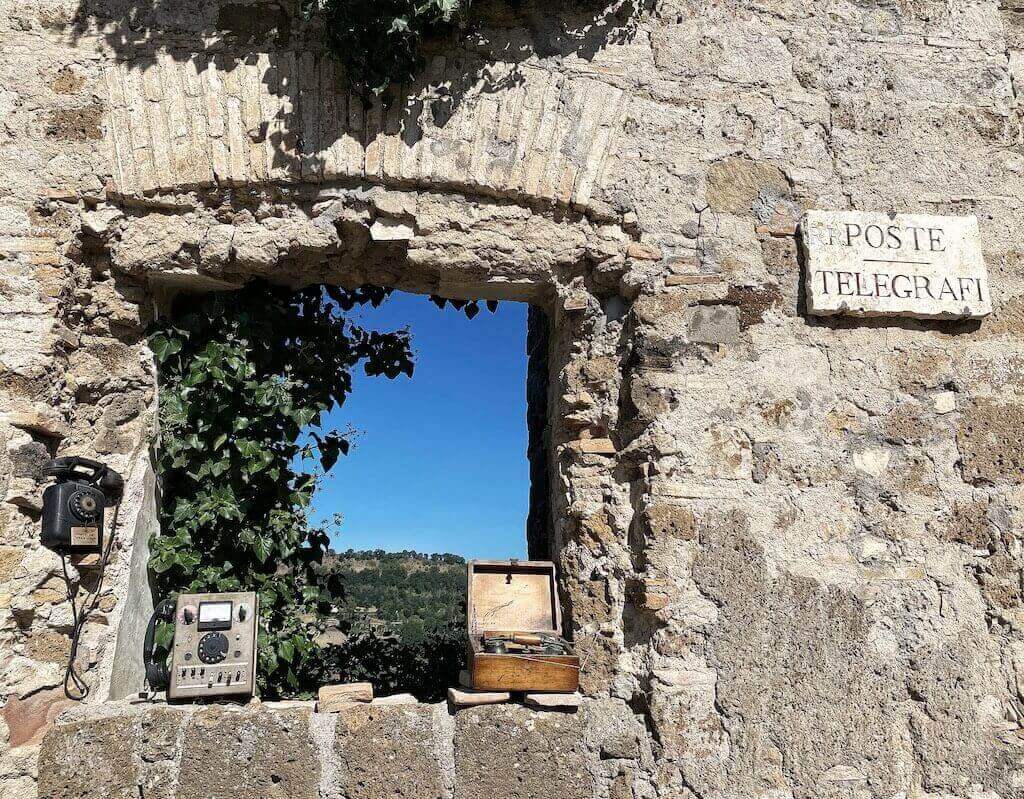
Here’s something different—an actual ghost town, much more so than the above mentioned Civita di Bagnoregio, and certainly completely off the international tourist track.
Celleno was abandoned in the mid-20th century, when the few remaining inhabitants were forced to relocate to the modern town just below. Yet, it is one of the most atmospheric places near Viterbo.
Sitting high on its rocky perch, the town is full of crumbling old buildings that look almost exactly like they did when the last residents left. It’s a bit eerie but fascinating, perfect for photographers or anyone who loves exploring off-the-beaten-path spots.
This selection of day trips from Viterbo is by no means exhaustive, and there are many more places to visit in Tuscia. My post What To See In The Lovely Tuscia Region shares more options, like the lovely Bolsena, Capodimonte, and lesser-known Soriano nel Cimino.


The Viterbo Pass
The Viterbo Pass offers excellent value if you wish to explore multiple museums and monuments. This all-in-one ticket includes entry to:
- Palazzo dei Priori
- Rossi Danielli Civic Museum
- Union Theater (I always refer to this as Teatro Verdi, as it’s located in Piazza Verdi)
- Monumental Pole Colle del Duomo (this includes the Duomo, the Papal Palace, and the nearby museum)
- An audio guide is included in each place
- VR experience
While available at all included attractions, the most convenient place to purchase your pass is at the centrally located Palazzo dei Priori, but you can also purchase the ViterboPass online.
How To Get To Viterbo From Rome
Getting to Viterbo from Rome can be tricky. Having tried all modes of transportation to get there, let me be straightforward and tell you that the best way to get to Viterbo is by car. While the city itself is really walkable, having a car will also allow you to explore the beautiful surroundings.
Here are all the ways you can get to Viterbo from Rome.
By car
Most of the time, when I visit Viterbo, I rent a car at Rome Fiumicino Airport and drive.
The way to Viterbo is easy. You have the option to follow the Cassia road, which goes through the mountains and offers scenic views. Alternatively, for a smoother drive, you can take the A1, one of Italy’s toll roads: you’ll have to exit at Orte and follow the freeway signs to Viterbo,
Either way, it takes approximately 1.5 hours to get to Viterbo from Fiumicino Airport, a bit longer if you travel from Rome, as there’ll be more traffic.
Renting a car in Italy is particularly convenient if you plan to explore the surrounding Tuscia region, with its medieval villages and historic sites just a short drive away.
I highly recommend renting through Discover Cars. It’s an international car rental comparison site. It is easy to navigate, they have good customer support, and they have lots of rental options – needless to say, I use them all the time!
By train
Traveling by train is usually the best way to get around Italy, but I don’t necessarily recommend traveling to Viterbo by train. That’s because the region is so pretty to explore that you’ll want to have a car.
I have taken the train from Rome city center and even from Fiumicino to Viterbo and vice versa several times, and while the distance is short, the journey is long.
If you are in the Rome city center, you’ll have to take the train from Ostiense, San Pietro, or Tiburtina station to Viterbo Porta Romana. The journey takes about 2 hours. It’s a regional train that stops at all stations along the way, but the ride is scenic and the train conveniently drops you right in the heart of Viterbo.
If you are traveling from Fiumicino Airport, you’ll first have to take a regional train from the airport to Rome Trastevere station, and from there travel to Viterbo. It takes slightly more than 2.5 hours.
You can check the train timetable and book tickets through the Trenitalia website or via the app Omio.
By tour
Viterbo is easy to explore on your own, though having a guide always helps contextualize what you see with some historical facts. If you are short on time or simply don’t wish to plan your Viterbo trip, you can plan to visit Viterbo on a day trip from Rome.
Of course, I don’t recommend this. The city has a lovely, low-key atmosphere that you only find in extreme off-the-beaten-path places in Italy (and Viterbo definitely is one). However, if a day is all you have, you should consider a guided day trip.
Guided tours usually include round-trip transportation (which means not worrying about train schedules or parking) and an expert guide who’ll tell you all the cool stories and hidden details about the city that you might miss on your own.
Of course, the main downside of visiting is that you don’t get to see as much as the city has to offer, and it may feel a bit rushed.
There’s this excellent day trip from Rome that goes to Viterbo and the lovely Caprarola, where you get to see Farnese Palace.
I also recommend this Viterbo and Tuscia: full-day private tour from Rome. It stops in Viterbo, the charming lakeside village of Capodimonte, and the incredible Civita di Bagnoregio.

How Long To Stay In Viterbo
I always recommend staying a bit longer than you would in Viterbo. The city is fairly small and you can explore most of it in a day, but the surroundings are worth exploring too.
If you have just one day, you can still experience the city’s main highlights, including:
- The stunning medieval quarter of San Pellegrino
- The impressive Palazzo dei Papi
- Viterbo’s historic Cathedral and Museum
- A stroll through the ancient city gates

However, if you can spare 3-4 days, you’ll have time to explore more deeply and venture into the surrounding Tuscia region, which is one of the most scenic places to visit in Italy. With extra time, you can:
- Relax at the historic Terme dei Papi thermal baths
- Visit the enchanting Villa Lante gardens
- Explore the surreal Monster Park of Bomarzo
- Visit charming nearby villages like Civita di Bagnoregio, Vitorchiano, or Celleno Borgo Fantasma.
- Spend a relaxing day on Lake Bolsena, having lunch with a view in Capodimonte or Bolsena.
- Push yourself beyond the region’s limit to visit another region of Italy and explore Orvieto, in Umbria.
Best Time To Visit Viterbo
There’s no clear-cut answer to the best time to visit Italy and Viterbo. If you only have set dates to come to Viterbo, come during those dates – Viterbo is lovely year-round, though perhaps a bit too quiet in the winter months.
If possible, I recommend planning your visit for the week of September 3rd to witness the spectacular Macchina di Santa Rosa festival. On that day, 100 men carry a 30-meter (more than 98 feet!) illuminated papier-mache statue through the medieval streets of the historic center—a UNESCO-recognized celebration you won’t want to miss.
If you decide to do that, book your accommodation well in advance as the city gets packed on those days – but don’t worry about the crowds. The atmosphere is festive, and most people you’ll see around are locals enjoying the festivities, with very few tourists from other parts of Italy or overseas.
Quick Viterbo FAQs
Yes! Viterbo is a real hidden gem of Italy. It’s a gorgeous city with lots to see, a lovely local atmosphere, and a fraction of the crowds of more famous places to visit in the country.
Viterbo is famous for being the place of the first Conclave in history. It’s also known for the many Medieval Churches, the beautiful Renaissance Palaces, the thermal baths, the delicious food, and for cultural traditions such as the Macchina di Santa Rosa.
Top attractions in Viterbo include: San Pellegrino historic district, the Papal Palace and San Lorenzo Cathedral, Villa Lante gardens, Terme dei Papi thermal baths and Piscine Naturali Carletti hot natural pools, Viterbo Underground, the Macchina di Santa Rosa celebrations.
Wondering, “Where is Viterbo?” Viterbo is about 80 km (less than 50 miles) north of Rome, in the Lazio Region. It’s the main administrative center of the Province of Viterbo.
Yes, as a tourist (and even for a local) Viterbo is a very safe city to visit.
There are many! You could go to Civita di Bagnoregio, Calcata Vecchia, Bomarzo, Soriano nel Cimino, Orvieto, Caprarola – to just name a few places.
The name Viterbo comes from two Latin words: Vetus, which means old, and Urbs, meaning Town. The name literally means Old Town. The city is known for having the largest medieval historic center in Europe.
Conclusions: Is Viterbo Worth Visiting?
Yes, Viterbo is really worth visiting! Hopefully, now you understand why Viterbo has earned such a special place in my heart. Not only is it my father’s home, but it’s also a magical place that many overlook.
There are some Italian tourists, but many fewer international tourists make it to this region of Italy. Unfortunately, many still prefer visiting more famous Italian cities.
But between the Papal Palace, the thermal baths, and its proximity to some of the best sites in Lazio and Umbria, you shouldn’t miss Viterbo if you can fit it into your Italy itinerary.
Recommended Readings
Local Guide About The Macchina Di Santa Rosa In Viterbo, Italy
Is A Day Trip From Rome To Naples Worth It? (The Honest Truth)
PIN IT!


Claudia Tavani
Claudia Tavani was born and raised in Sardinia, and after moving between the United States and the United Kingdom, she's now back living in her hometown, Cagliari. She's a travel blogger and certified travel designer who loves planning trips and publishing guides, travel tips, and packing lists so that you don't have to. Owner of Strictly Italy, cat mom to Minnie. Loves pizza, hiking, archeology, cities, beaches, swimming, and running. Hates peppers.