

Are you looking for Venice hidden gems to escape the crowds? You are in the right place. I know the city well, and I know the best hidden spots.
Venice is one of the most romantic cities in the world. We know all the usual Venice activities: the gondola rides, St. Mark’s Square, and the Rialto Bridge. But these are popular tourist attractions and can get busy.
If you’ve done all that, or have extra time in your Venice itinerary, you might want to venture off the beaten path and explore some of the best Venice hidden gems.
As an Italian living in Sardinia who visits Venice frequently, I have some insider tips.
Over the years, I’ve discovered wonderful places that most tourists never see; peaceful islands, historic buildings with fascinating stories, and charming corners where locals outnumber visitors. These hidden gems in Venice will give you a much richer and more authentic experience of this incredible floating city.
These are the best guided tours of Venice off the beaten path:
If want to find more hidden gems around all of Italy, check out my article, 25 Best Hidden Gems In Italy – What To See In Italy Off The Beaten Path. It focuses on different regions, cities, and towns that are often missed on travelers’ first trip to the country.

Map of Venice Hidden Gems
Are you wondering where the best hidden gems in Venice are? I have created a map that will help you locate them and fit them in your itinerary.
How to use this Venice hidden gems map: This map shows you the best hidden gems in the city. You can use it on desktop, laptop and even on your smartphone. Use your mouse to enlarge it. If you are using your phone you’ll need to use your fingers. Click on the star by the title of the map to save it into your Google Maps account among “Your saved maps”.

Complete List of Hidden Gems in Venice
Jewish Ghetto
Venice’s Jewish Ghetto is one of the most historically significant areas in the city, yet it remains relatively uncrowded compared to other parts of Venice. Located in the Cannaregio district, it was established in 1516 and is the world’s first “ghetto” (the word originates from here).
What makes this area unique is not just its history, but also its architecture. Because space was limited and the Jewish population continued to grow, buildings here are unusually tall for Venice, reaching up to six or seven stories.
Today, the area has a handful of active synagogues, a Jewish museum, kosher restaurants, and bakeries. The Campo del Ghetto Nuovo (the main square) is peaceful and features moving memorial sculptures dedicated to Holocaust victims.
When you visit, I recommend you stop at one of the kosher bakeries for some traditional Jewish-Venetian pastries, it’s the perfect energy boost while exploring.
I recommend this guided Jewish Ghetto Walking Tour and Synagogue Visit. You’ll learn a lot about the history and cultural significance of the Jewish Ghetto, visit the Spanish Synagogue, and more.
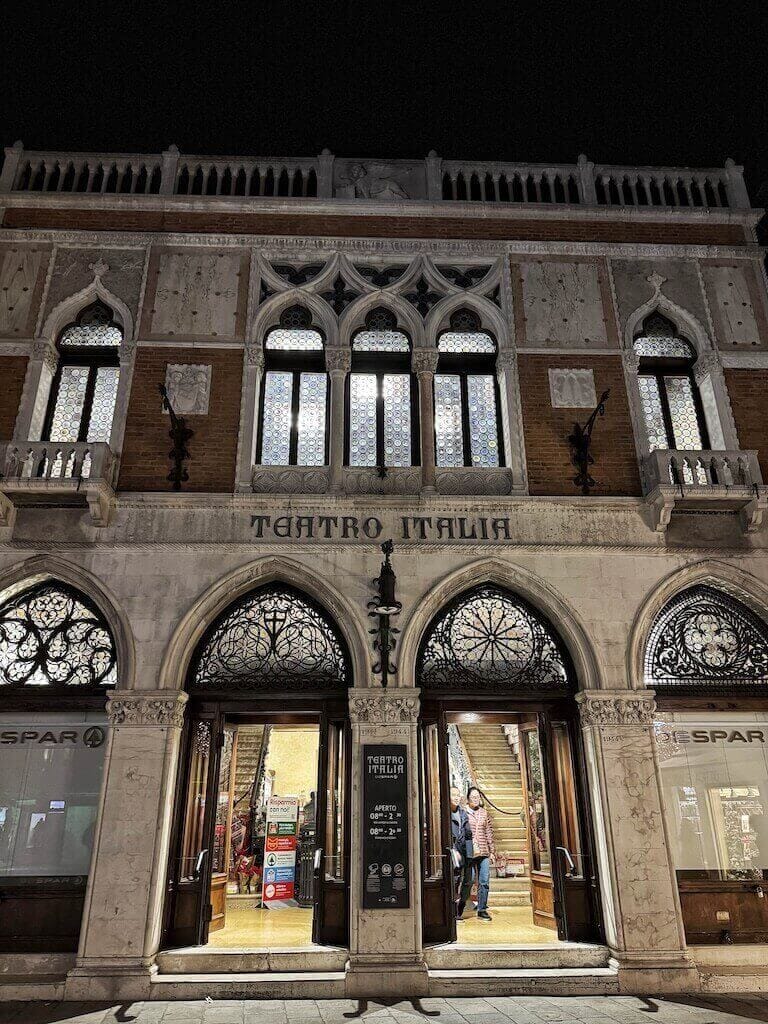
Spar Teatro Italia
This might sound strange, but one of Venice’s hidden gems is actually… a supermarket. But the Spar Teatro Italia isn’t just any grocery store. Located in Cannaregio, you will find this Spar supermarket inside a restored early 20th-century theater, and it’s stunning.
While shopping for snacks or water (much cheaper here than at tourist kiosks), look up at the ornate ceiling with beautiful frescoes and decorations. The original theater boxes along the walls have been preserved; some even display products. It’s easily the most beautiful supermarket I’ve ever visited.
I recommend this spot to my friends who visit Venice because it’s both practical (you can stock up on affordable drinks and snacks) and a unique cultural experience.
If you don’t want to hunt for the best Venice hidden gems on your own, you can look into some hidden gem walking tours. I recommend this Highlights and Hidden Gems Night Walking Tour. It doesn’t tell you exactly where you go (because that might let the cat out of the bag), but it’ll take you to some classic sites alongside lesser-visited places with a certified guide. Exploring in the evening also means there will be fewer tourists at some of the sites.

Dorsoduro Area
While San Marco and the Rialto area are the most popular places to stay in Venice, the Dorsoduro district is authentic Venice with just enough attractions to keep you interested. It’s home to some major museums like the Peggy Guggenheim Collection and Gallerie dell’Accademia, but if you step away from these, you’ll find quiet canals and local life.
My favorite part of Dorsoduro is the floating vegetable barge. This traditional boat (called the barca dei frutti) has been selling fresh produce to locals for generations. It’s one of the last of its kind in Venice. The boat represents a tradition that dates back centuries when most goods were transported and sold via the canals.
The surrounding area is filled with small cafes and bacari (traditional Venetian wine bars). There, you can enjoy cicchetti (Venetian tapas) and a spritz while watching the world go by. The views across the water to Giudecca Island are also spectacular, especially at sunset.
When I visited I took this Venice off the beaten path tour that explored the Dorsoduro area. The guide explained a lot of the history and less known facts about the city.
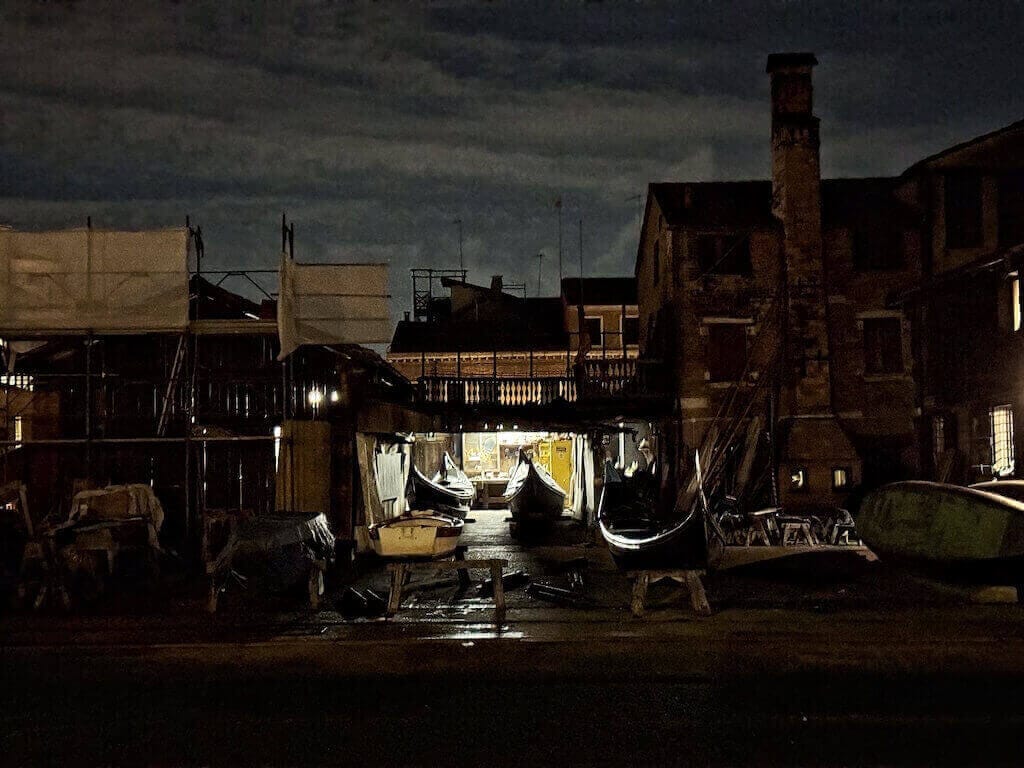
Squero di San Trovaso
Have you ever wondered where Venice’s iconic gondolas are made and repaired? The Squero di San Trovaso is one of the last remaining gondola boatyards in Venice, dating back to the 17th century. Located in Dorsoduro, this small workshop continues the ancient tradition of gondola crafting.
While you can’t go inside the workshop (it’s still an active workplace), you can get a great view of it across the small canal. The building looks more like a mountain chalet than a typical Venetian structure, as many of the original gondola makers came from the Dolomites region and built it in the style of their homeland.
Ponte dei Pugni (Bridge of Fists)
Venice has over 400 bridges, but the Ponte dei Pugni (Bridge of Fists) in Dorsoduro has one of the most interesting histories. This unassuming bridge over the Rio di San Barnaba gets its name from the fistfights once held here as a form of public entertainment.
From the 12th to 18th centuries, different factions of Venetians would gather to battle each other on this bridge, trying to push opponents into the canal below. These “Wars of the Fists” were so popular that thousands would come to watch.
Look down at the bridge, and you’ll notice four footprints carved into the stone that marked the fighters’ starting positions. Today, it’s a peaceful spot with a lovely fruit and vegetable market nearby, but I always pause here and imagine the chaos that once reigned on this small bridge.
Ponte Chiodo
Speaking of unusual bridges, the Ponte Chiodo (Bridge of the Nail) in Cannaregio is unique because it’s one of the last bridges in Venice without parapets or railings. Most bridges were eventually fitted with railings for safety. Yet this one remains as bridges would have looked in medieval Venice.
It’s a small bridge crossing the Rio di San Felice. While it might not seem spectacular at first glance, its historical significance and rarity make it special. There’s something a little thrilling about crossing a bridge with no railings over a Venetian canal. Just be careful if you visit after enjoying a few Venetian spritz.
The bridge is also a wonderfully photogenic spot without the crowds you find at more famous bridges.

Libreria Acqua Alta
I’ll admit, Libreria Acqua Alta isn’t quite the hidden gem it once was. However, despite its growing popularity, this unique bookstore still deserves a place on this list because it embodies Venice’s quirky relationship with water.
The name means “Bookstore of High Water.” You will see books in bathtubs, gondolas, and even a full-sized boat to protect them when the waters rise. The chaotic stacks of books create a magical atmosphere that bibliophiles will love.
The back of the shop features a “staircase” made entirely of damaged books that leads to a small lookout over a canal. The shop’s resident cats add to its charm, often found lounging on stacks of books. They also sell nice small souvenirs.
I visited right at opening time and found no crowds. So try to visit early in the morning too. It remains one of Venice’s most creative adaptations to life with water.
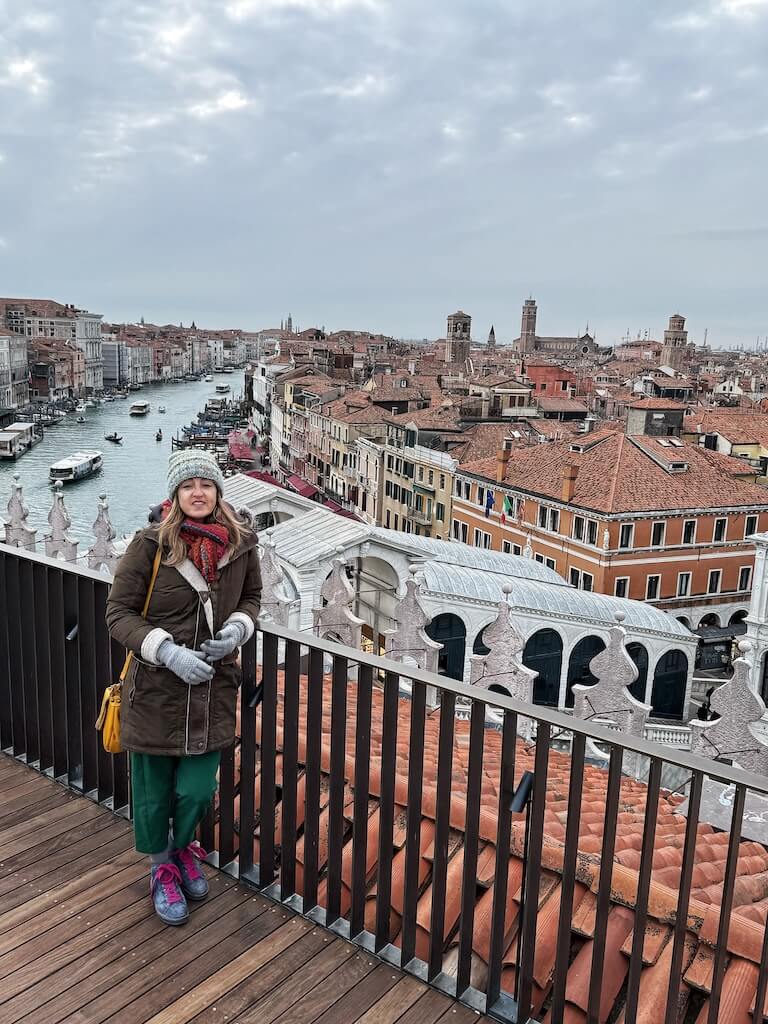
Fondaco dei Tedeschi
The Fondaco dei Tedeschi has a fascinating history as a trading post for German merchants during the Renaissance. Today, this massive building near the Rialto Bridge has been transformed into a luxury department store. Still, its historical significance and architectural beauty make it worth a visit even if you’re not shopping.
The true hidden gem here is the free-to-access rooftop terrace, which offers spectacular panoramic views over Venice. You just need to reserve a timed entry slot (either online in advance or at the information desk if spots are available).
The interior of the building has been beautifully renovated with a stunning central courtyard. Even if luxury shopping isn’t your thing, exploring the architecture and taking in the rooftop views makes this a good stop.
On the other hand, if luxury shopping is your thing, leave plenty of space in your bag while packing for Venice as you’ll definitely find something to bring home at the Fondaco dei Tedeschi.
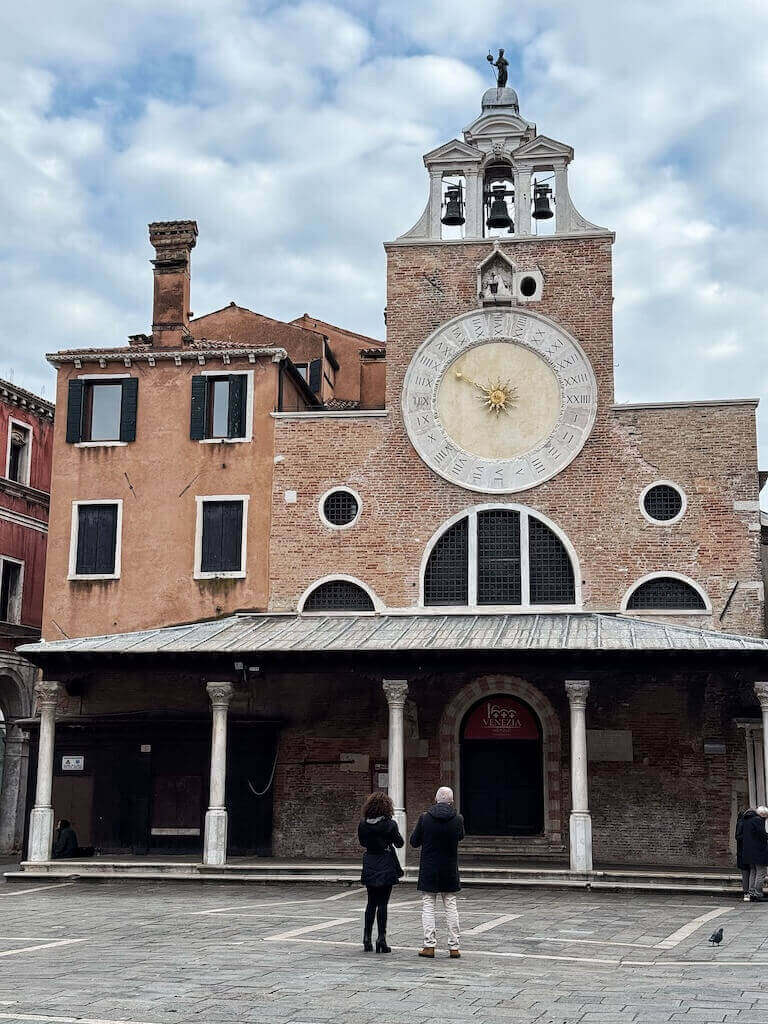
San Giacomo di Rialto Church
Often overshadowed by its more famous neighbor, the Rialto Bridge, the Church of San Giacomo di Rialto is one of the oldest churches in Venice. It was allegedly founded in 421 (though the current structure dates to around the 12th century with later renovations).
What makes this church special is its location in the heart of what was once Venice’s commercial center and its beautiful clock on the facade, one of the oldest in the city. The interior is quite small but features some lovely Byzantine elements.
I particularly love the church’s portico, traditionally a meeting place for merchants and business people. Despite being steps away from one of Venice’s busiest areas, many tourists walk right past without noticing this historic gem.
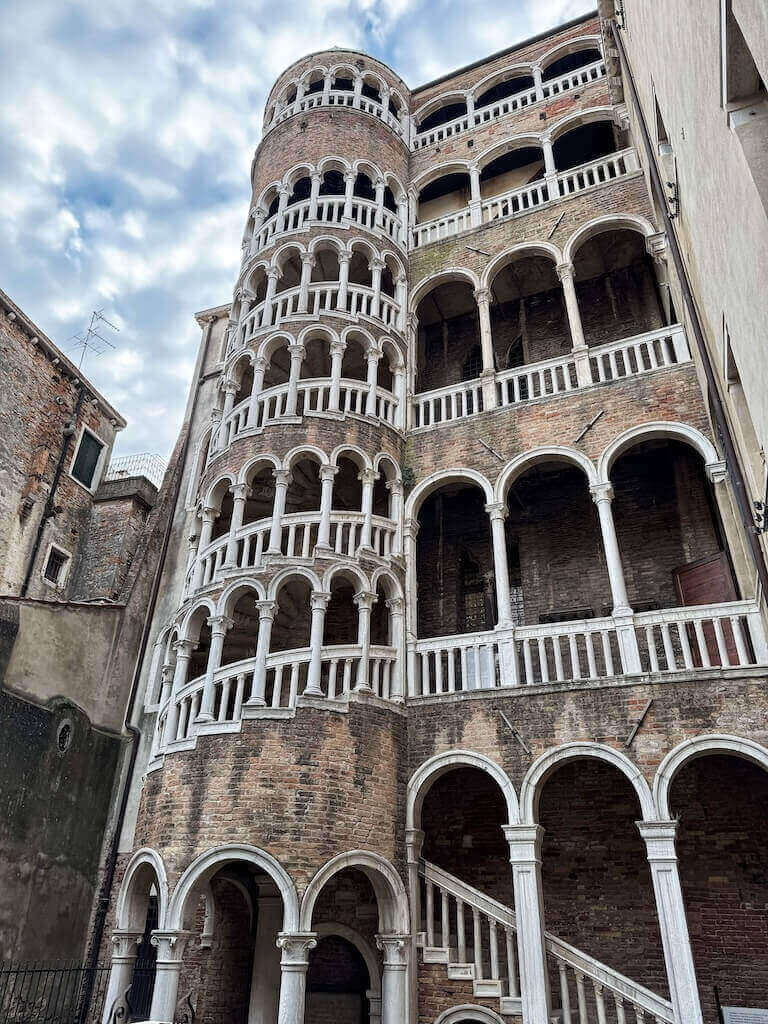
Palazzo Contarini del Bovolo
Hidden down a narrow alley near Campo Manin is one of the best Venice hidden gems: the Palazzo Contarini del Bovolo. It’s so central that you can see it even if you are only spending a day in Venice, and even more so if you are staying 3 days in Venice or 5 days in the city.
What makes this palace special is its external spiral staircase (bovolo means “snail” in Venetian dialect), which combines Gothic, Renaissance, and Byzantine elements in a uniquely Venetian way.
The palazzo’s tower and staircase offer beautiful Venice views over the rooftops of Venice. While there is a small entrance fee to climb the stairs, it’s worth it for the unique architecture and the panoramic vistas without the crowds of St. Mark’s Campanile.
A few walking tours touch on some of these hidden gems, like this Rialto Bridge & Offbeat Unusual Venice Walking Tour. The tour includes a short stop at Palazzo Contarini del Bovolo, as well as Teatro La Fenice, San Moisè Church, and a few other hidden gems of Venice.

Leaning Towers of Venice
Everyone knows about the Leaning Tower of Pisa, but few realize Venice has several leaning bell towers. The most famous is the campanile of San Giorgio dei Greci (the Greek Orthodox church). It has been tilting since the day it was built due to Venice’s unstable foundations.
Another notable example is the bell tower of Santo Stefano, which leans noticeably. These tilting towers are a reminder of Venice’s ongoing battle with the water and soft ground beneath it.
Unlike Pisa, these leaning towers aren’t actual tourist attractions, so you can enjoy them without crowds and overpriced tickets. They also make for interesting photographs that capture Venice’s unique relationship with its environment.
San Giorgio Maggiore Island
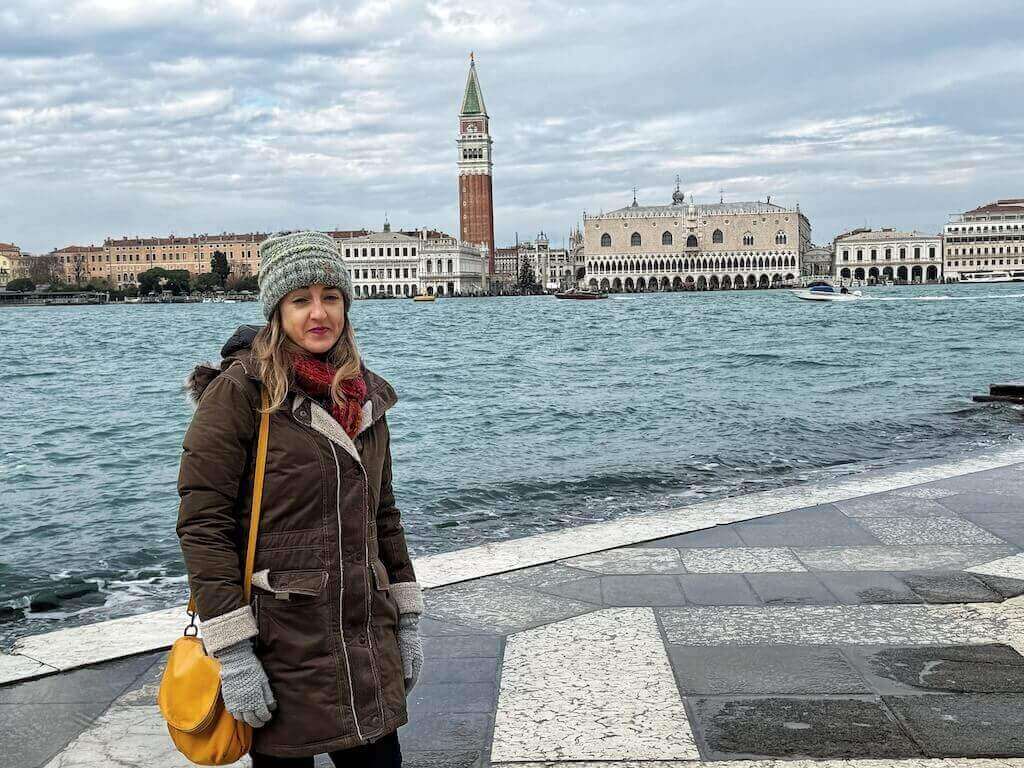
Just a short vaporetto ride from St. Mark’s Square is the island of San Giorgio Maggiore, which offers one of the best views of Venice yet receives only a fraction of the tourists who crowd into the city center.
Dominating the island there’s the Church of San Giorgio Maggiore, designed by the famous architect Andrea Palladio. The church is beautiful, with works by Tintoretto inside, but the real highlight is the bell tower. For a small fee, you can take an elevator to the top for panoramic views of Venice, the lagoon, and the surrounding islands.
The vaporetto journey takes just minutes, but it feels like stepping into a different, calmer Venice.
If you’re interested in islands, there are also Burano and Murano, two of the most popular islands in Venice. If you’re heading there, as well, read my article What To Do in Burano: A Guide to Venice’s Colorful Island, for more information.
Giudecca Island
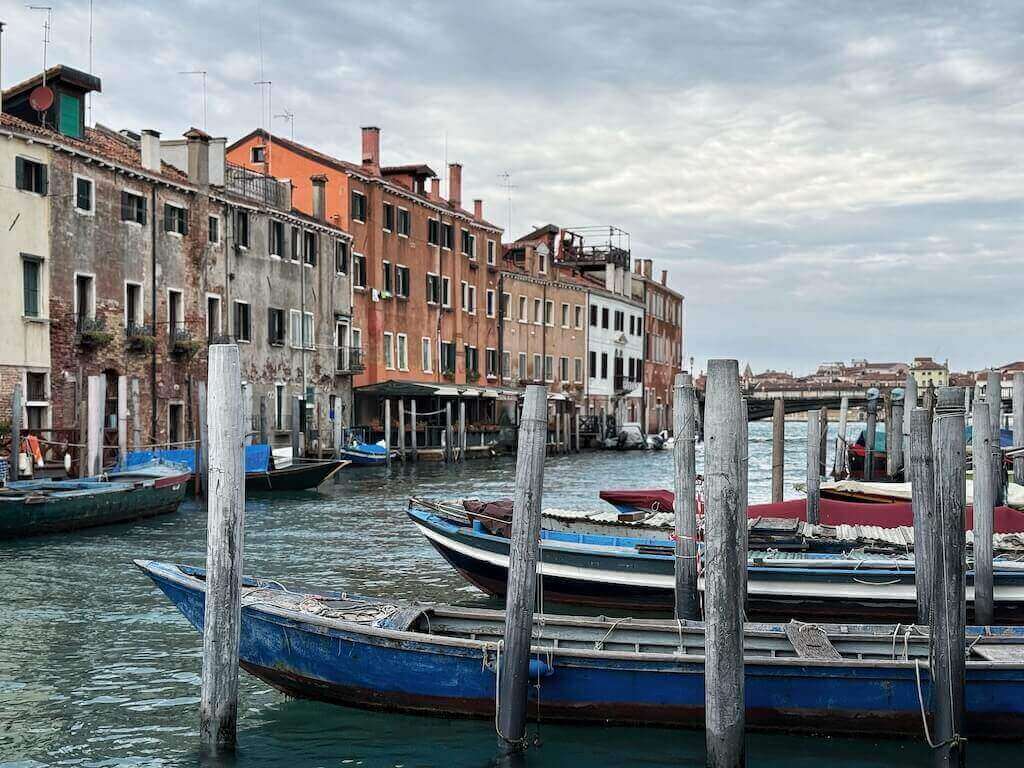
Giudecca is a long, thin island facing Venice’s southern shore, just a short vaporetto ride from the main city. Despite its proximity, relatively few tourists make the crossing, so it remains one of the best Venice hidden gems.
Historically a working-class area with factories and shipyards, Giudecca has undergone changes in recent years but maintains its authentic character. The island offers spectacular views back toward Venice proper, especially from the waterfront promenade.
While there are some luxury hotels on Giudecca (including the famous Hotel Cipriani), most of the island remains residential and retains a local feel. The Church of the Redentore, designed by Palladio, is the island’s most notable landmark and hosts the annual Festa del Redentore in July.
It’s also home to some excellent restaurants where you’ll find more locals than tourists. When my friend and I visited, it was about lunch time so we stopped at a local bacaro and ordered some cicchetti. We were the only tourists there, and the others at the bacaro were speaking Venetian.
Torcello Island
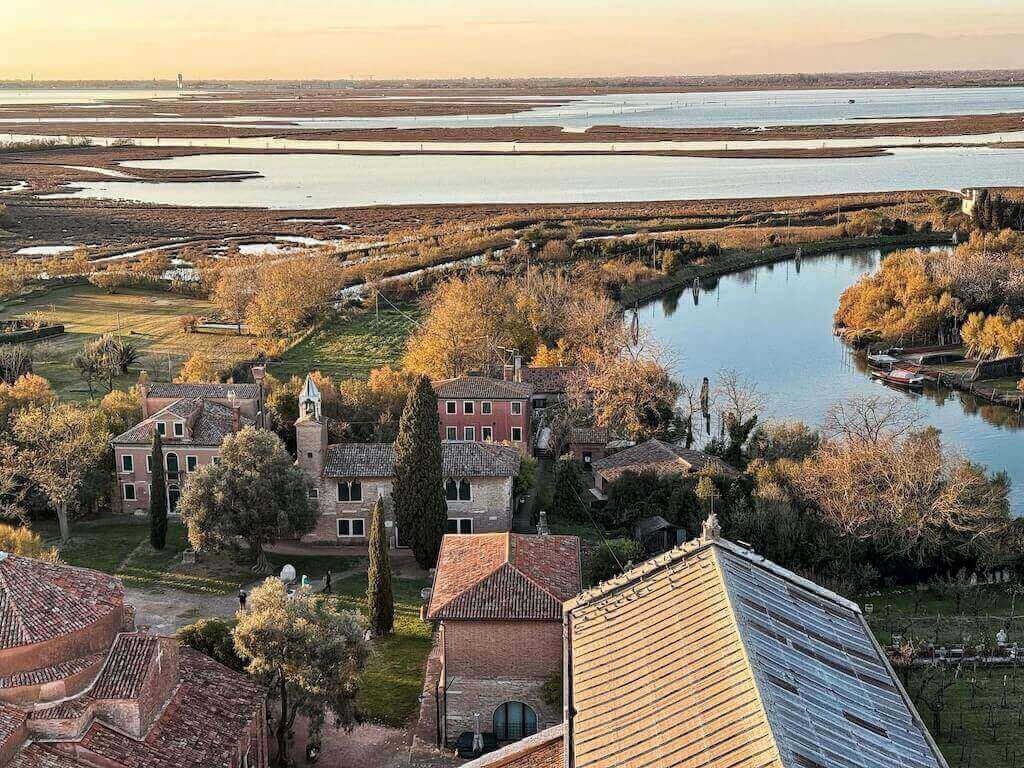
For a true escape from Venice’s crowds, head to Torcello Island. This requires a bit more time as it’s further out in the lagoon (about 45 minutes by vaporetto), making it a perfect day trip from Venice.
What’s fascinating about Torcello is that it was the first center of civilization in the Venetian lagoon and settled before Venice. Today, only a handful of people live on the island, but it’s home to some remarkable Byzantine mosaics in the Cathedral of Santa Maria Assunta, which dates back to the 7th century.
Annexed to the church there’s a bell tower which offers impressive views of the island and the rest of the lagoon. You can take the elevator up for a small fee.
The island has a haunting, almost melancholic beauty. Ernest Hemingway spent time here writing, and it’s easy to see why the island’s atmosphere might inspire writers and artists. There’s also the small Church of Santa Fosca and an archaeological museum worth visiting.
Walking along the island’s single canal and through fields and vineyards feels like stepping back in time. It’s hard to believe you’re so close to bustling Venice. If you visit, don’t miss lunch at Locanda Cipriani, a legendary restaurant with a beautiful garden.
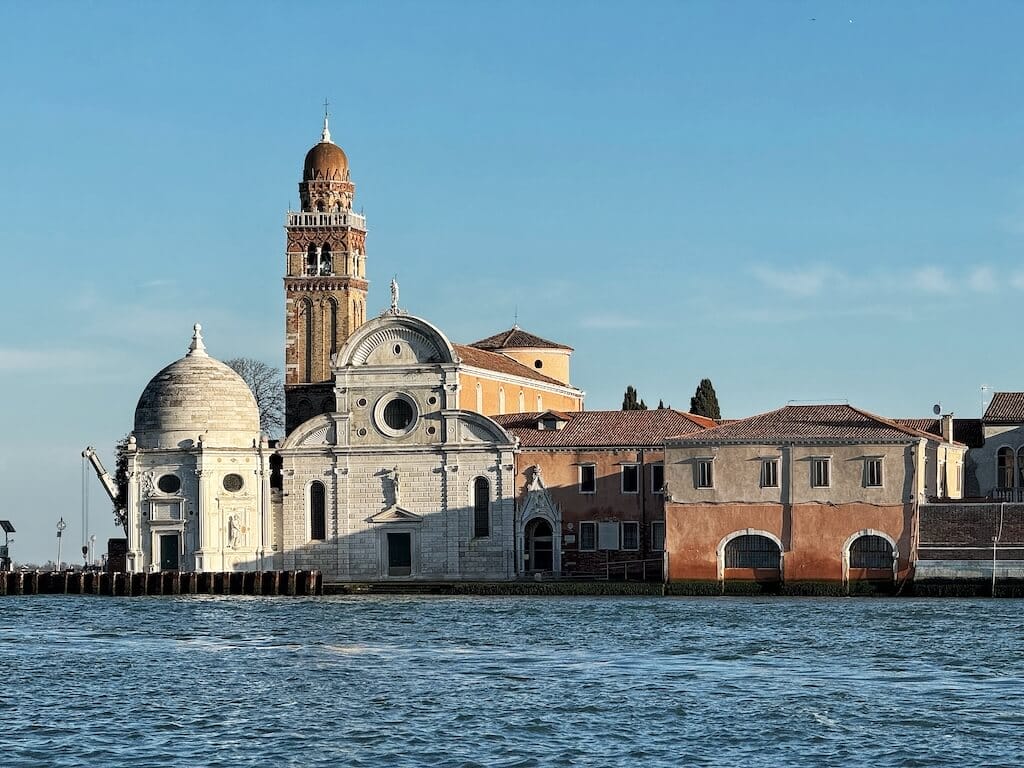
San Michele Island
The island of San Michele is Venice’s cemetery. It’s between the main city and Murano. While visiting a cemetery might seem like an unusual tourist activity, San Michele is both beautiful and culturally significant.
The island is entirely occupied by the cemetery, with cypress trees and church buildings creating a peaceful atmosphere. Many famous people are buried here, including composers Igor Stravinsky and Ezra Pound, ballet impresario Sergei Diaghilev, and poet Joseph Brodsky.
Due to limited space, remains are typically exhumed after about 12 years and moved to an ossuary, unless families pay for a permanent plot. This practice reflects Venice’s ongoing challenge with limited space.
San Michele is a peaceful place that offers insight into Venetian culture and traditions around death. It’s also a place of surprising beauty, with magnificent tombs and monuments set against the backdrop of the lagoon.
Crypt of San Zaccaria
The Church of San Zaccaria near St. Mark’s Square is worth visiting for its Renaissance art, but many visitors miss the real treasure: the flooded crypt beneath the church. For a small fee, you can descend into this atmospheric space where water constantly seeps in from the lagoon.
The crypt contains the tombs of eight doges (Venetian rulers) and dates back to the 10th century. The partial flooding creates haunting reflections and is yet another a powerful reminder of Venice’s precarious relationship with water.
What I find most fascinating is how the water level changes with the tides – sometimes it’s just a shallow pool, while at other times (especially during acqua alta) it can be quite deep. The play of light on water amidst ancient stone columns creates an almost mystical atmosphere.
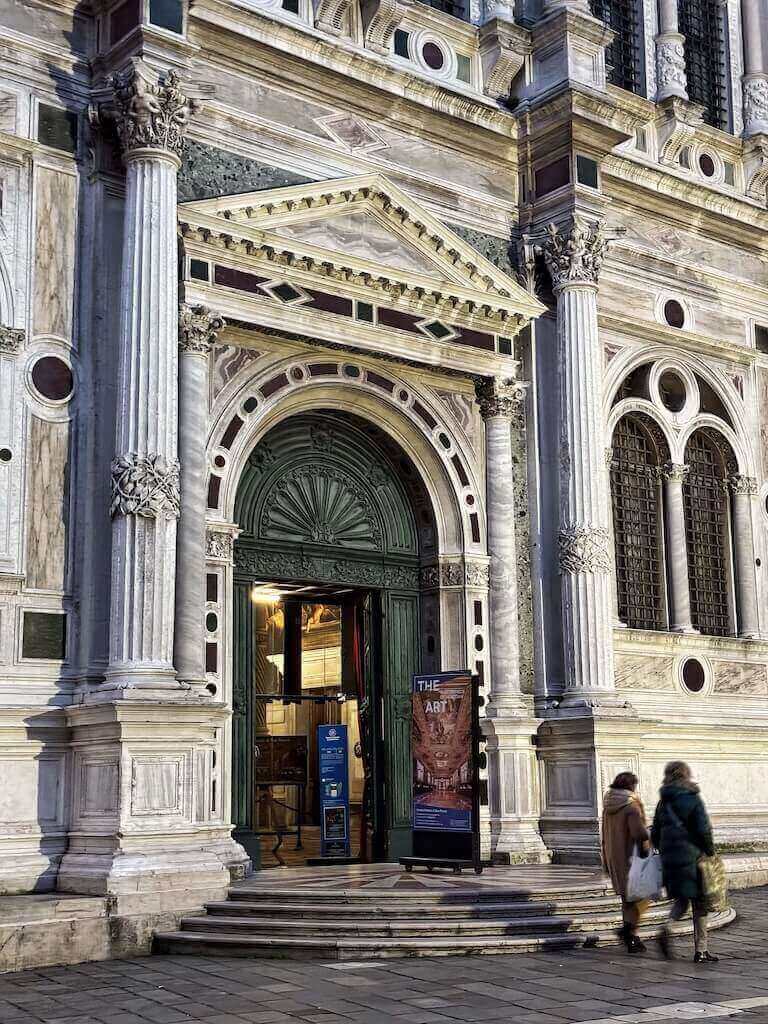
Scuola Grande di San Rocco
The Scuole Grandi were wealthy confraternities unique to Venice; part charitable organization, part social club for the city’s citizens. While several of these grand buildings exist in Venice, the Scuola Grande di San Rocco is exceptional for housing an incredible collection of paintings by Tintoretto.
Over the course of 23 years, Tintoretto decorated the walls and ceilings with scenes from the New and Old Testaments. The result is one of the most impressive single-artist decorative cycles in Italy. The upper hall is breathtaking, with its ceiling panels and enormous Crucifixion painting.
Despite containing this artistic treasure, the Scuola Grande di San Rocco receives far fewer visitors than the Doge’s Palace or Gallerie dell’Accademia. This means you can often enjoy Tintoretto’s masterpieces in relative peace. Mirrors are provided to help you admire the ceiling without straining your neck!
The building itself is also magnificent, with beautiful woodwork and architectural details. For art lovers, this is truly one of the best Venice hidden gems.
Conclusions On Exploring Venice Off The Beaten Path
Venice is one of the most popular cities in Italy, and for good reason. It has everything we all know and love about Italy: incredible history, stunning architecture, and a unique atmosphere you won’t find anywhere else.
When visiting Venice, you should see the famous sites like St. Mark’s Square, the Rialto Bridge, and the Grand Canal. But if you have the time and wish to avoid the crowds, try exploring some of these Venice hidden gems.
The beauty of this city is that even after dozens of visits, I still discover new hidden gems every time I visit.
PIN IT!

Claudia Tavani
Claudia Tavani was born and raised in Sardinia, and after moving between the United States and the United Kingdom, she's now back living in her hometown, Cagliari. She's a travel blogger and certified travel designer who loves planning trips and publishing guides, travel tips, and packing lists so that you don't have to. Owner of Strictly Italy, cat mom to Minnie. Loves pizza, hiking, archeology, cities, beaches, swimming, and running. Hates peppers.