

There are more things to do in Umbria than you’d imagine. This is an often-overlooked place to visit in Italy, despite having a lot to offer. My sister and I realized this as soon as we set foot there, on one of the many trips we take together.

Nature lovers are spoilt for choice in Umbria: there are hiking trails that go through lush forests, hills and beautiful valleys; trails in the countryside among vineyards and centuries-old olive groves; fun biking trails.
Albeit being one of the few Italian regions that has no direct access to the sea, water sports are quite the thing in Umbria: you can go kayaking on Piediluco Lake, discover Marmore Waterfall or swim in the natural pools of Narni.
It’s not by chance that Umbria is also called the green heart of Italy!
Umbria is a region rich in history and art, where you can admire ancient masterpieces dating back to Roman and Lombard times; medieval villages and fortresses that have endured the passing of time.
My sister and I visited Umbria last fall, and here I am ready to tell you about the best things to do in Umbria and the experiences you should not miss.
These are the best tours and activities you can book online before your trip:
Finally, let’s discover what to do in Umbria.
Best Things To Do In Umbria Italy
Visit Perugia
Your journey around Umbria is most likely to begin in Perugia, its capital, which connects the city to many other Italian and European cities thanks to low-cost flights. Perugia is also a great place to base yourself in Umbria to explore more of the region.
Perugia is a university city with a sparkling social life. It’s known in Italy for being home to a University founded in 1308 and for the International University.

Chocolate is produced and celebrated here by locals with the largest chocolate fair in Europe, Eurochocolate – and that’s enough of a reason to visit if you like chocolate. If you are visiting outside of the festival season, walk along Corso Vannucci and stop at one of the many stores to taste and buy handmade chocolate.
The historic center revolves around Piazza IV Novembre and Fontana Maggiore, which overlooks Palazzo dei Priori and San Lorenzo’s Cathedral. That should be the starting point of your visit.
From here, you can continue towards the National Gallery of Umbria, where you can admire the masterpieces by Piero della Francesca, Benozzo Gozzoli, Beato Angelico, Pinturicchio and Perugino.

Then reach Piazza d’Italia, where you can admire the beautiful statue of the Little Mermaid and continue to the Rocca Paolina and Porta Marzia.
You should also climb the Sciri Tower and admire the view of the city from above. Another place you shouldn’t miss is the scenic Aqueduct Stairway and, of course, the medieval Aqueduct.
Other sights include the Etruscan Arch and the Etruscan Well, and the nearby Palazzo Sorbello, a house turned into a museum.
I wrote extensively about Perugia in my Complete Perugia Guide – you will find more ideas on things to do and places to visit there.
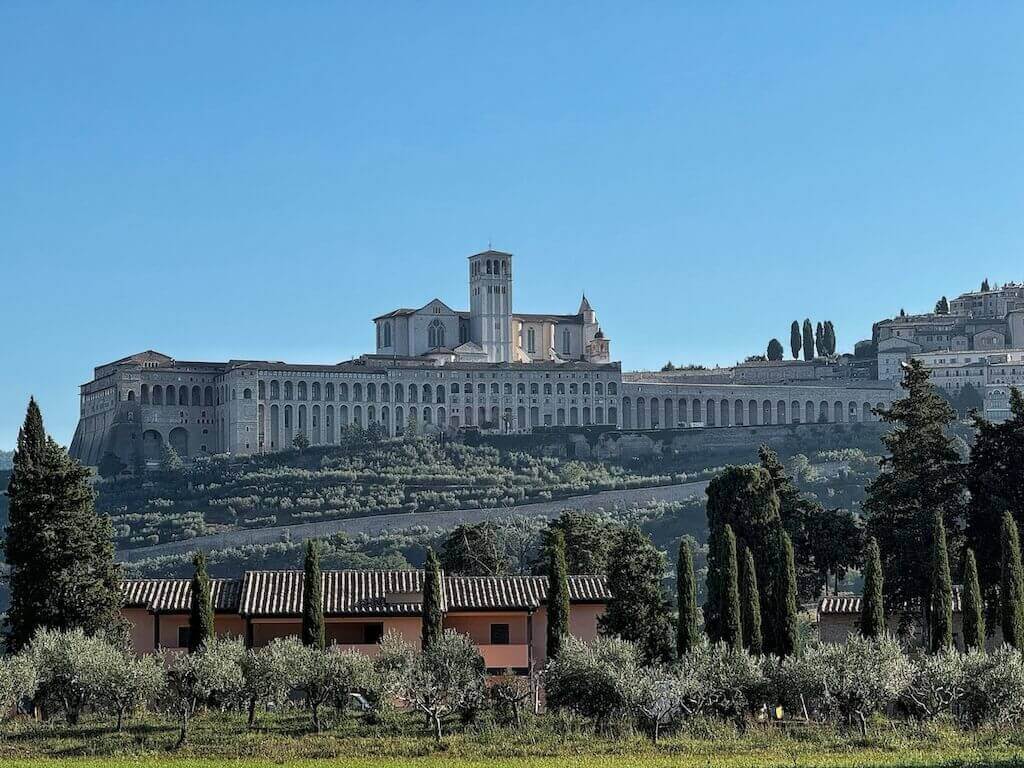
Explore Assisi
Assisi is one of the most famous places to visit in Umbria. Its historic center was declared UNESCO World Heritage in 2000. The town is known for being the birthplace of St. Francis and for its artistic beauty, closely linked to the Franciscan movement.
It’s a spiritual place that leaves even the less religious people (like myself) moved. The atmosphere we felt in Assisi was magical. It’s a sense of peace and brotherhood brought by the pilgrims that is hard to explain here, but which you will surely feel.
Start your visit from the magnificent St. Francis Basilica: explore the lower and the upper Basilica and take your time to admire the frescoes painted by Giotto and Cimabue, and then continue to the Cloister.
One of the places you can’t miss in Assisi is St. Clare Basilica. St. Clare was a spiritual pupil of St. Francis and the founder of the Poor Clares order. The Church overlooks a large square with a fountain and a terrace from which you can enjoy a splendid view of the valley.
Walking along the narrow alleys of Assisi, make your way to San Rufino Cathedral and then to San Rufino fountain, also known as the fountain of the six lions.
Enjoy the beautiful buildings made of white and pink stone from Mount Subasio on the way to Piazza del Comune, the center of social and cultural life in Assisi.
Here you can spot the Fountain of the Three Lions, symbolizing the three urban districts of Assisi; Minerva Temple; the Tower of the Captain of the People; and the People Palace, where the assemblies of the General Council of the People used to be held.
Next to Piazza del Comune, the New Church was built on the ruins of the house where St. Francis was born.
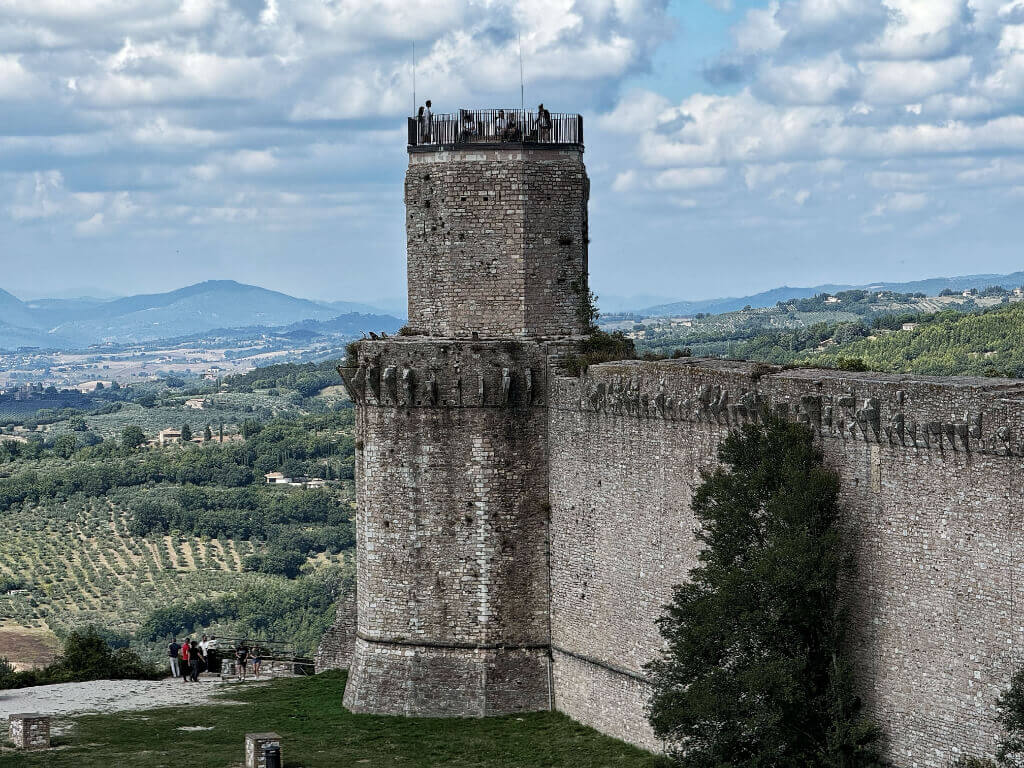
Finally, I recommend walking up to the impressive Rocca Maggiore that overlooks the town and the valley. It’s a bit of a steep way to the top if you decide to walk it, but the views are worth it.
There’s quite a bit to take in in Assisi, and a guided tour can make your experience so much better. I recommend this guided walking tour of Assisi with a local guide. It stops at San Rufino Cathedral, Basilica of Saint Claire, Santuario di San Francesco Piccolino, and Piazza del Comune, and ends with an in-depth visit of St. Francis Basilica.
I have written a more detailed guide on The Best Places To Visit In Assisi, which will be very helpful when planning your trip.
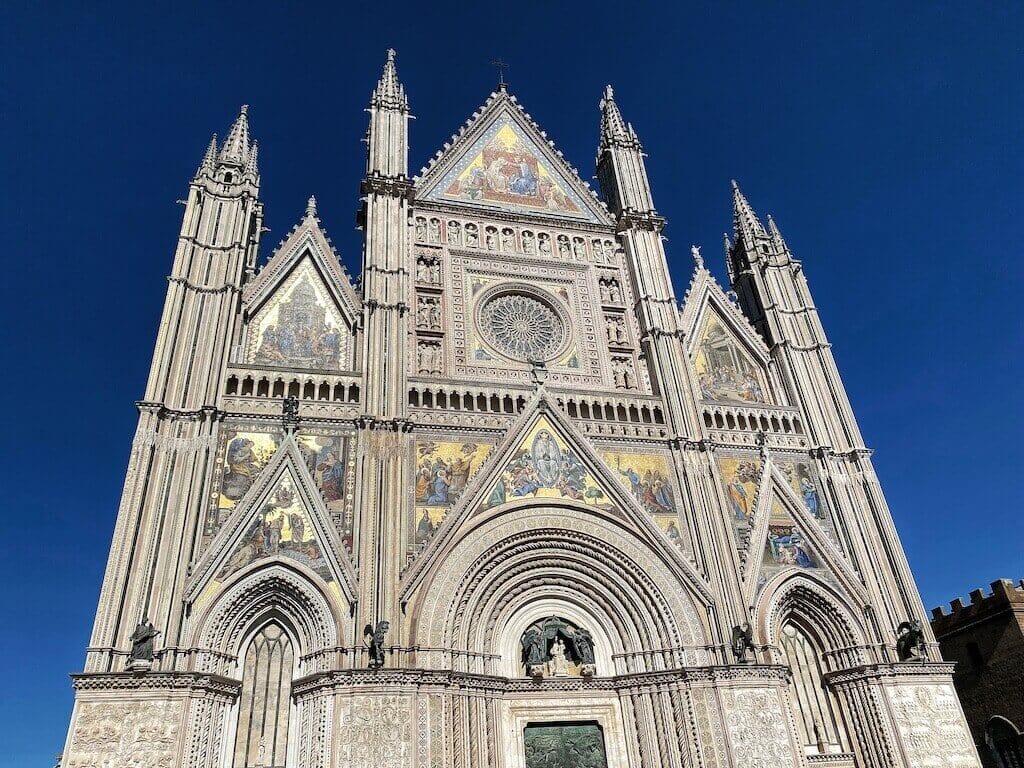
Check out Orvieto
Orvieto is one of the nicest places to see in Umbria: this amazing medieval town sits on the top of a tuff cliff.
With more than three thousand years of history, the Etruscan origins of Orvieto are in its underground, where tunnels, caves, and wells will take you to a journey through history.
Underground Orvieto really deserves a visit. For a better experience, I recommend joining this highly-rated Underground Orvieto tour that also goes to the Cathedral and the famous Pozzo della Cava.
Orvieto Cathedral is one of Italy’s most stunning examples of Gothic architecture. Its facade will stop you in your tracks with its golden mosaics, intricate sculptures, and striking black basalt and white travertine stripes. Inside, the Chapel of San Brizio is decorated with frescoes with scenes of the Day of Judgement and the Afterlife by Luca Signorelli.
Next to the Cathedral, I recommend visiting the Museo dell’Opera del Duomo (M.O.D.O), which displays precious sculptures, paintings, and sacred furnishings removed from the Cathedral during the 19th-century restoration. The building used to be an ancient papal palace.
One more attraction you should visit is the Torre del Moro. It’s 236 steps to get there, but you’ll enjoy the best views of Orvieto.
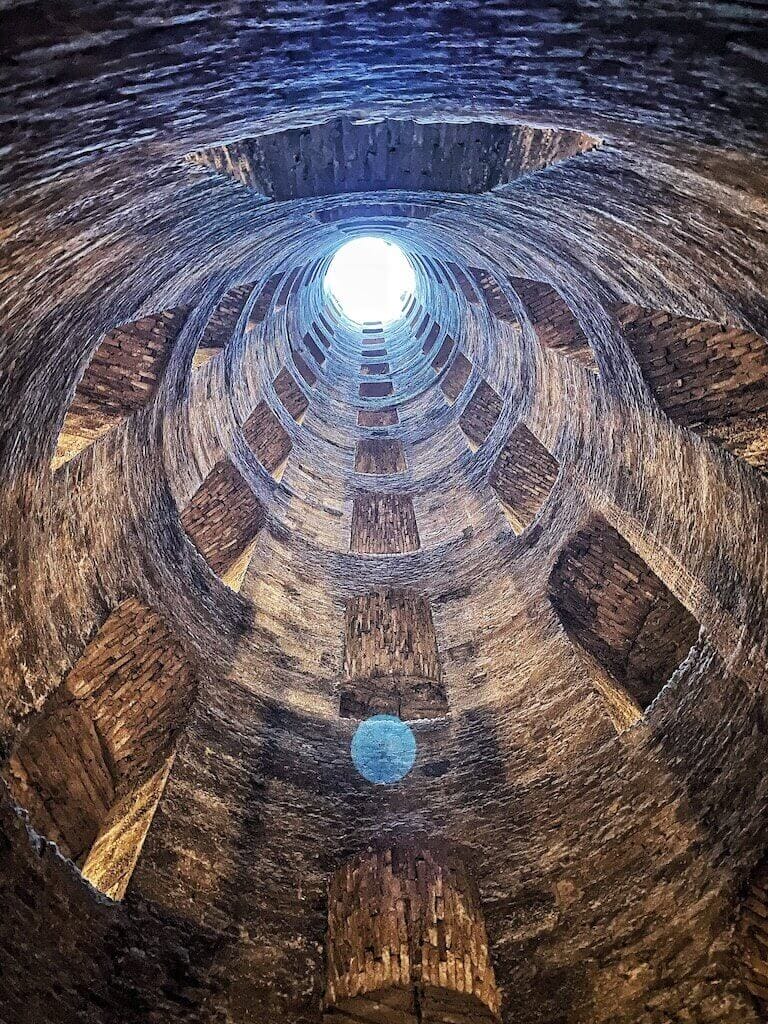
You should also walk down the 248 steps of the spiral staircase in St. Patrick’s Well. This was commissioned by Pope Clement VII when he fled to Orvieto to escape the sack of Rome in 1527, to ensure water access in case of siege.
Among the more outdoorsy things to do in Umbria that you can enjoy in Orvieto, there are fishing at Corbara Lake, canyoning at Forra di Prodo, and hiking along Anello della Rupe, just to mention a few.
To learn more about the history and mysteries of Orvieto, consider joining this guided tour that goes to the Cathedral and the unique St. Patrick’s Well. The tour lasts two hours, and you’ll have plenty of time to visit the two sites and then explore more of Orvieto on your own.
You can also read my full Guide To Orvieto, Italy, for more ideas on places to visit and activities.
Spend some time in Spoleto
Spoleto is one of my favorite places to visit in Umbria. It’s a small town steeped in history and rich in attractions that will keep you busy for a couple of days.
Start exploring from the top of Sant’Elia hill, visiting the Rocca Albornoziana. This fortress has housed the National Museum of the Duchy of Spoleto since 2007. The building is full of history and offers an impressive view of the city.
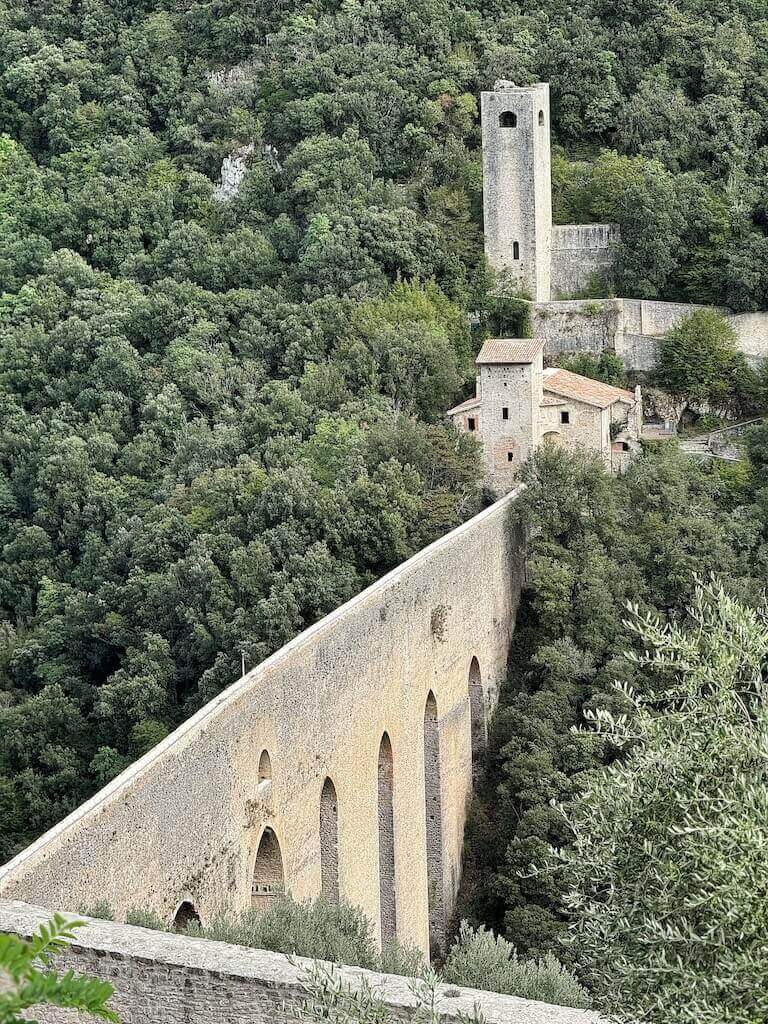
From there, you can start to cross the imposing bridge Ponte delle Torri (Bridge of Towers) that connects Sant’Elia hill to Mount Monteluco. You can also walk down the hill or just take the elevator to reach the Duomo, one of the unmissable sights.
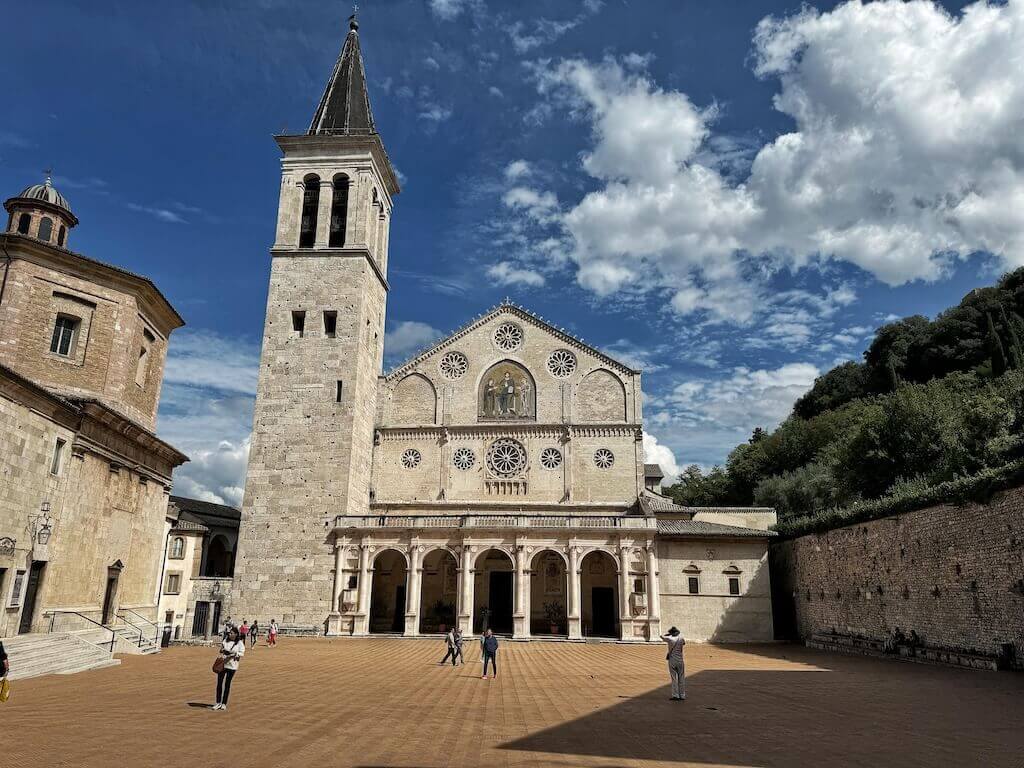
Walk through the narrow alleys of the center towards Piazza del Mercato, one of the liveliest squares in town, where you can admire the beautiful Fonte di Piazza.
From the square, it is easy to reach the other main attractions and buildings of the city: the Roman House, the Town Hall, Campello Square, the Basilica di San Salvatore, the Roman Theater, and much more.
If you happen to visit in June, don’t miss the Festival dei Due Mondi (Festival of Two Worlds). Spoleto really comes to life during the festival (but keep in mind it gets very busy then!).
My post What To See And Do In Spoleto highlights even more interesting sights in this delightful town.
Wander around Spello
Spello will impress you with its uniqueness: its magical atmosphere, the beauty of the narrow cobblestone alleys and pink brick facades, and the care with which everything is kept.
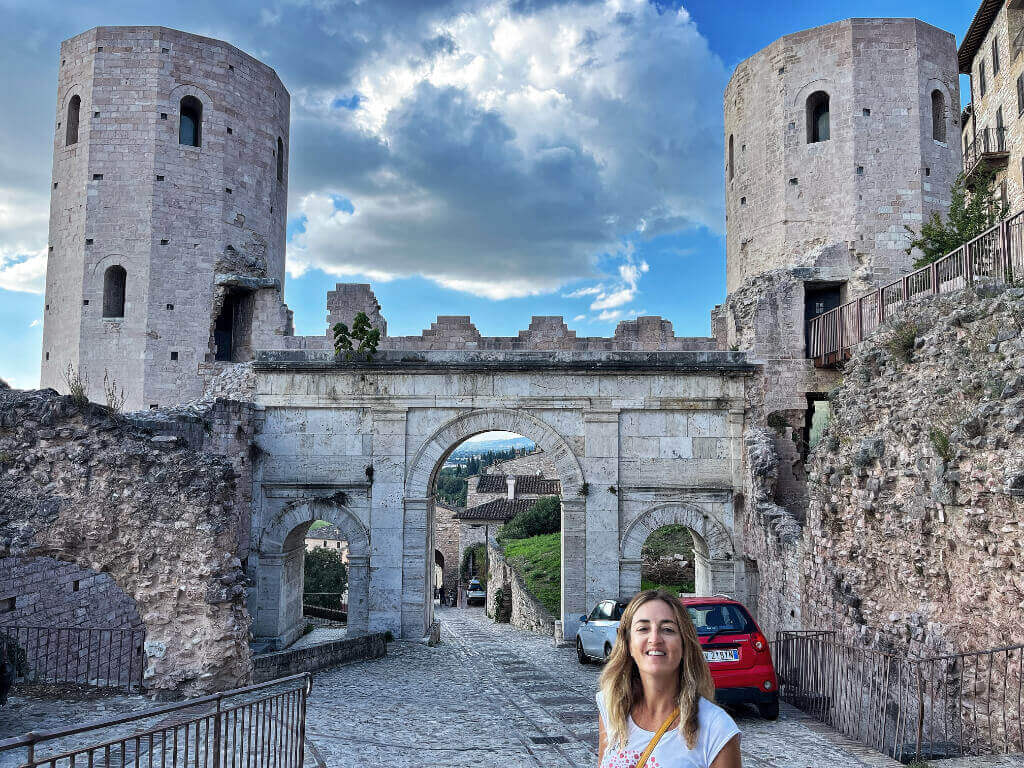
Wandering through the narrow streets of this small town, you can observe the signs of its long Roman history: the city walls, the majestic entrance gates, the remains of the theater, amphitheater, and even those of the Roman baths.
If you love flowers, I recommend you go to Spello for the Infiorate festival, when Spello becomes an open-air museum. For that occasion, teams of flower composers create colorful paintings on the ground, using only flower or plant elements. This Festival is both a religious event and an artistic competition
Spello is surrounded by centuries-old olive groves, so you cannot miss a bike ride along the spectacular Olive Path Trail that connects the village to Assisi.
This guided e-bike tour is what to do in Umbria for a more in-depth visit of Spello, the neighboring towns, and to learn more about the extra virgin olive oil production in the region. It includes several tastings too. It’s an audio-guided tour, so you are free to go at your own pace.
My Spello Umbria Guide highlights the many reasons to visit this lovely small town.
Visit the Fonti del Clitunno
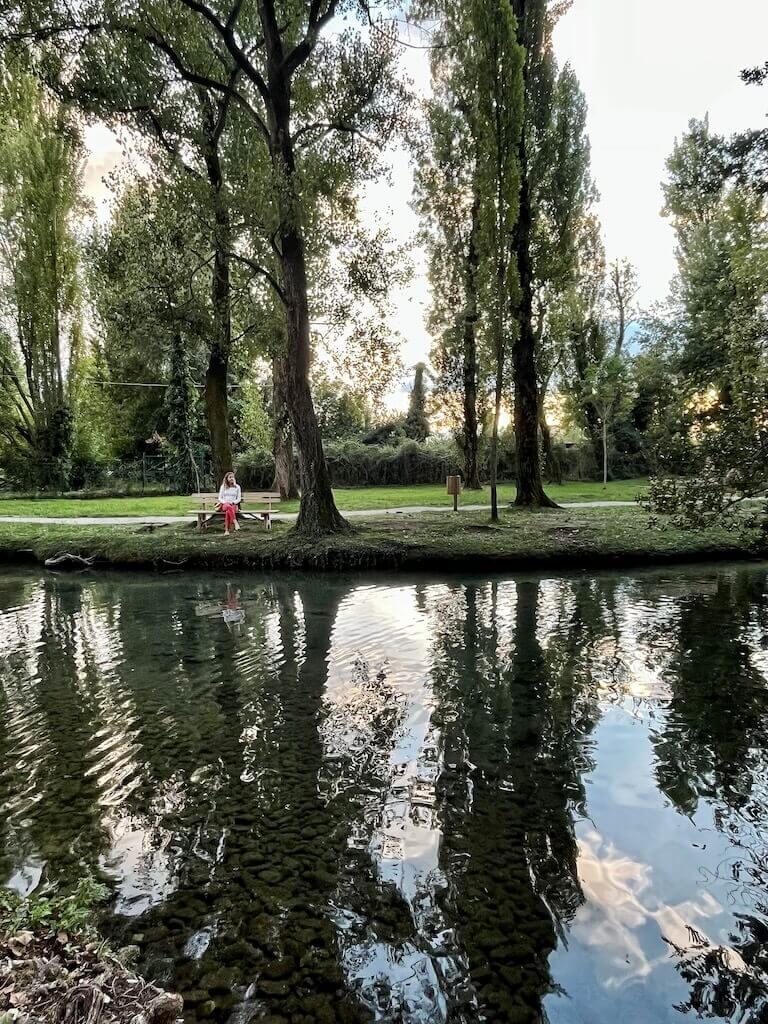
The Fonti del Clitunno is a natural park located between Spoleto and Foligno. Its springs were considered sacred and dedicated to Jupiter Clitunno, which is why there are so many small temples in this area.
In the past, the springs’ flow was so abundant that it created a navigable river that connected this area with Rome. An earthquake in the 5th century AD destroyed part of the springs and greatly reduced the water supply.
In the second half of the 19th century, Count Paolo Campello della Spina restored the park, creating the pond and bringing animals to live there.
Water here is supplied by underground springs that flow naturally from cracks in the rock and create the pond, where carp, trout, swans, and ducks swim. You can also spot various kinds of birds living in the willows and cypress poplars.
A less than five-minute drive from Fonti del Clitunno, above one of the springs of the Clitunno River, you will find the Tempietto del Clitunno, another nice place to visit.
Admire the Calamita Cosmica in Foligno
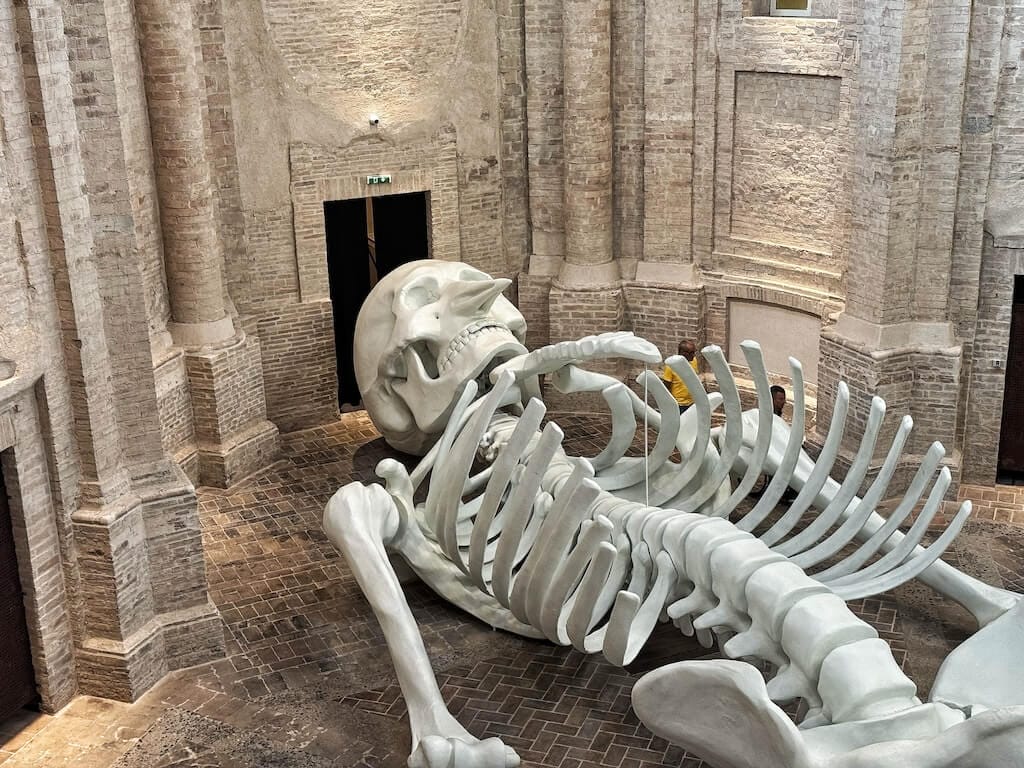
Foligno is one of the less touristy places to visit in Umbria, but it’s an interesting town. Here you will find the Calamita Cosmica, the Cosmic Magnet – a contemporary artwork created by Gino De Dominicis in the utmost secrecy, and exhibited for the first time at the Centre National d’Art Contemporain of Grenoble in 1990.
Since 2011, the Calamita has been part of the permanent collection displayed at the Centro Italiano di Arte Contemporanea, in the former Church of the Holy Trinity in Foligno.
I must admit I didn’t know about it until my sister insisted we’d go check it out, and I am glad she did because it’s quite an impressive artwork to see!
The Cosmic Magnet is a gigantic human skeleton lying supine, anatomically correct except for the bird-billed nose that stands out in the middle of the face.
The statue, which is 24 meters (78.7 feet) long, is made of fiberglass, iron, and styrofoam. The name comes from the long golden rod on the middle finger of the right hand.
The meaning of the Calamita Magnetica is shrouded in mystery: some think the rod symbolizes the rhythmic passage of time, and others believe it is the link between heaven and earth, and the rod symbolizes the stars.
The best view of the skeleton is from the first floor.
Spend an afternoon in Bevagna
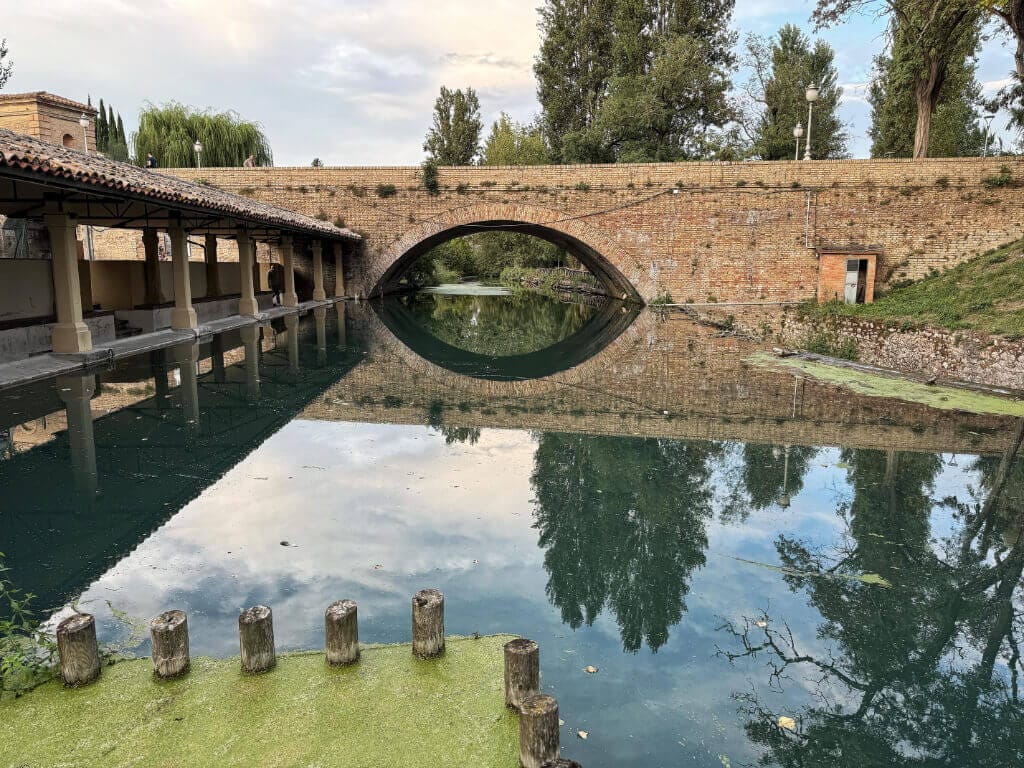
Bevagna is considered one of the most beautiful villages in Italy thanks to its environmental, cultural, and artistic heritage. It’s an easy place to visit on day trips from Perugia. Not many foreign people visit, so I’d say it still is an Italian hidden gem.
We weren’t really planning to go there – we actually wanted to visit a different place, but as we needed to drive back to Perugia, we decided to stop somewhere along the way, and Bevagna proved to be a truly pleasant place!
This medieval village, surrounded by ancient walls, has ancient Roman origins – as proven by the Roman temple, later turned into Madonna della Neve Church, a Roman Theater (not much remains of that, but it’s still interesting to visit), and the Roman public baths with a beautiful floor mosaic.
Bevagna was indeed a flourishing commercial center in Roman times due to its location along the ancient Via Flaminia (now Corso Matteotti), and thanks to its river port at the confluence of Clitunno and Timia.
The main gathering point here is Piazza Silvestri, where you’ll find three churches, a theater, and a fountain, which was built over a medieval well used to supply water to the historic center and was inaugurated in 1896.
S. Silvestro Cathedral is a real jewel of Umbrian-Romanesque architecture: the interior walls are finely frescoed by painters of the Umbrian school. The church of St. Michael Archangel has a beautiful facade, portal, and bell tower.

Another place you may want to visit in Bevagna is Palazzo dei Consoli, which now houses Francesco Torti Theater. It’s a tiny theater with only 140 seats, and a beautiful staircase that leads to a wide loggia covered by cross vaults.
If you happen to visit Umbria in June, make sure to head to Bevagna for the Mercato delle Gaite, one of the most popular historical events. Gaite is one of the four districts that used to compete for control of administrative duties.
During this event, the inhabitants relive the historical period between 1250 and 1350 by dressing up in traditional clothing and reenact ancient crafts and arts, traditional music, juggler and jester performances, and knightly and archery competitions.
If you visit in May, you may want to attend the Arte in Tavola, which celebrates Bevagna’s food and wine.
Go to Cascata delle Marmore
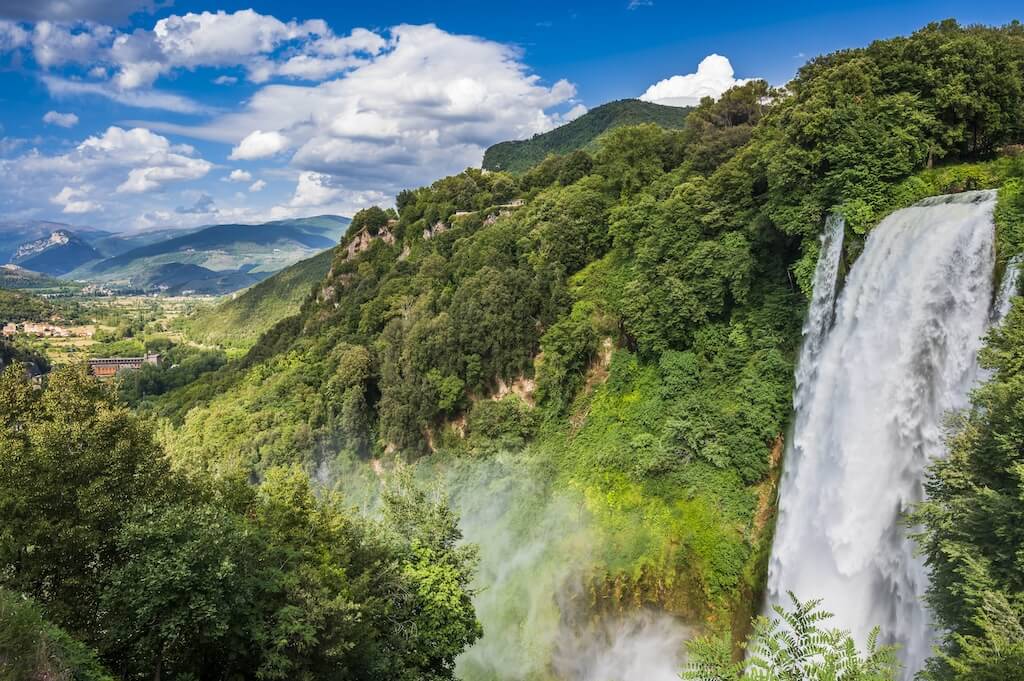
Visiting the Marmore Waterfall is one of the best things to do in Umbria. It’s about one hour and 15 minutes drive from Perugia, and just 15 minutes from Terni. The Cascata delle Marmore (that’s the name in Italian) is located in the Valnerina Valley, within the Nera River Regional Park, where the Velino River pours its waters into Nera River.
It’s one of the highest waterfalls in Europe, measuring 165 meters (over 541 feet), and the largest artificial waterfall in the world.
In fact, the Marmore Falls were built in 271 BC by the Romans to reclaim a marshy area: when Velino River overflowed, it created areas of stagnant, swampy water; but, through channels, the waters were made to flow towards the edge of the cliff of Marmore.
There are two different viewpoints to admire the waterfall: the Upper Belvedere offers a spectacular view of the first fall, while in the Lower Belvedere, you can have a complete overview. The two viewpoints are connected by a scenic trail, and there’s a shuttle service during peak season.
There are six well-marked trails inside the park, with different lengths and levels of difficulty, but all surrounded by lush vegetation and offering breathtaking views. Four trails can only be visited if you pay the park entrance fee, whereas two are free. Some trails are disabled accessible too, and the park is pet-friendly.
The area is also a fantastic spot for kayaking, rafting, and canyoning.
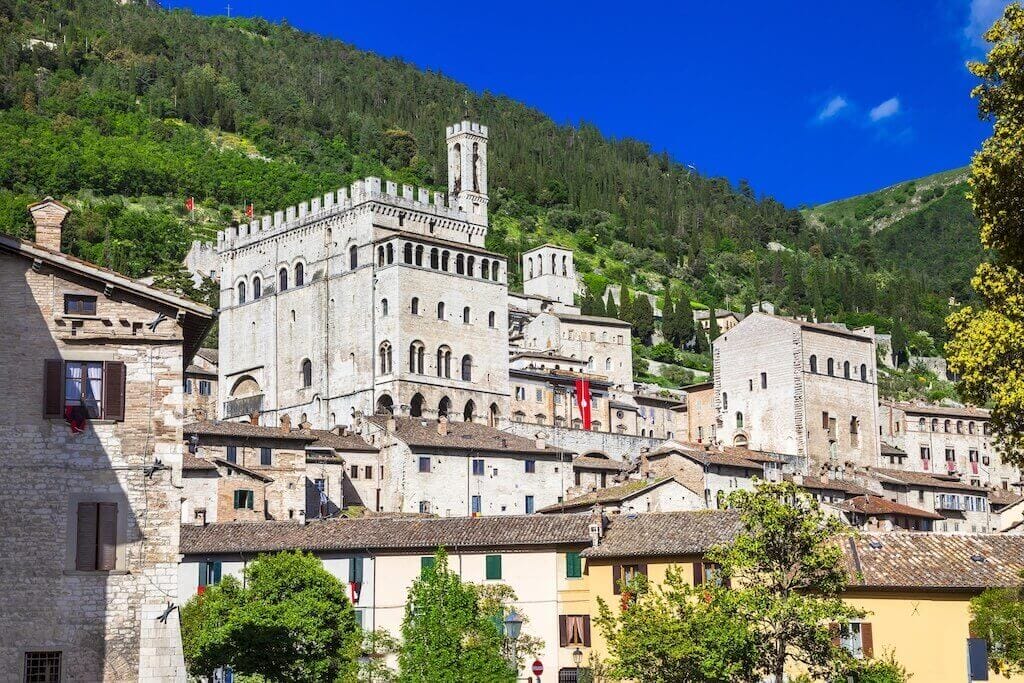
Explore Gubbio
Gubbio, better known as the city of stone (“città di pietra” in Italian), sits on the slope of Mount Ingino. It’s a beautiful medieval town full of charm and traditions.
The best starting point to explore Gubbio is Piazza Giordano Bruno. From there, you can head to Bagello Fountain, right in front of the Bargello Palace. The fountain is known as the Madmen’s Fountain due to the belief that people of Gubbio are a bit eccentric.
Other sights include Piazza Grande or Piazza della Signoria, overlooked by Palazzo Ranghiasci Brancaleoni, Palazzo del Podestà (now the town hall), and the Gothic-style Palazzo dei Consoli (now home to the Civic Museum).
The Civic Museum is where you can see the “Eugubine Tablets”: dated between the 3rd and the 1st centuries BC, these seven bronze tablets in the Umbrian language testify to the city’s ancient origins.
The Cathedral of Saints Marian and James is opposite the Ducal Palace, designed by Francesco di Giorgio Martini in Renaissance style. From the gardens next to the Palace, there is a beautiful view of the city.

In the lower part of Gubbio, don’t miss the Church of San Francesco – it’s in the square where the market was held in the Middle Ages. There, you can also spot the Loggia dei Tiratori, built in 1603 by the guild of wool weavers to lay the freshly woven wool cloths out.
Gubbio is surrounded by walls, built in the late 13th century and still well preserved: there are six gates where you can still see the city’s coat of arms.
Outside the walls, you can find the remains of the Roman Theater and the Church of Madonna del Prato, as well as the Bottaccione Canyon, caves created by the erosion of the Carmignano stream, where the medieval aqueduct used to run. The gorge was also home to the Monastery of Sant’Ambrogio.
Another place to visit near Gubbio is the Basilica of Sant’Ubaldo, found on top of Mount Ingino. You can get there by cable car, and the view from the top is priceless. The Church has medieval origins, but the convent and cloister were added later. The church has a simple facade but a rich interior with five naves and stained-glass windows about St. Ubaldo’s life.
Christmas is a great time to visit Gubbio, which is home to the world’s largest Christmas tree, whose lights are lit on December 7th until the Epiphany. You will find Christmas markets, a large Ferris wheel, and a nativity scene with life-size statues in the alleys of the San Martino district.
Gubbio can be explored independently, but for a more in-depth experience, consider joining this guided walking tour. Your local guide will bring all the history and legends to life during this three-hours guided tour.
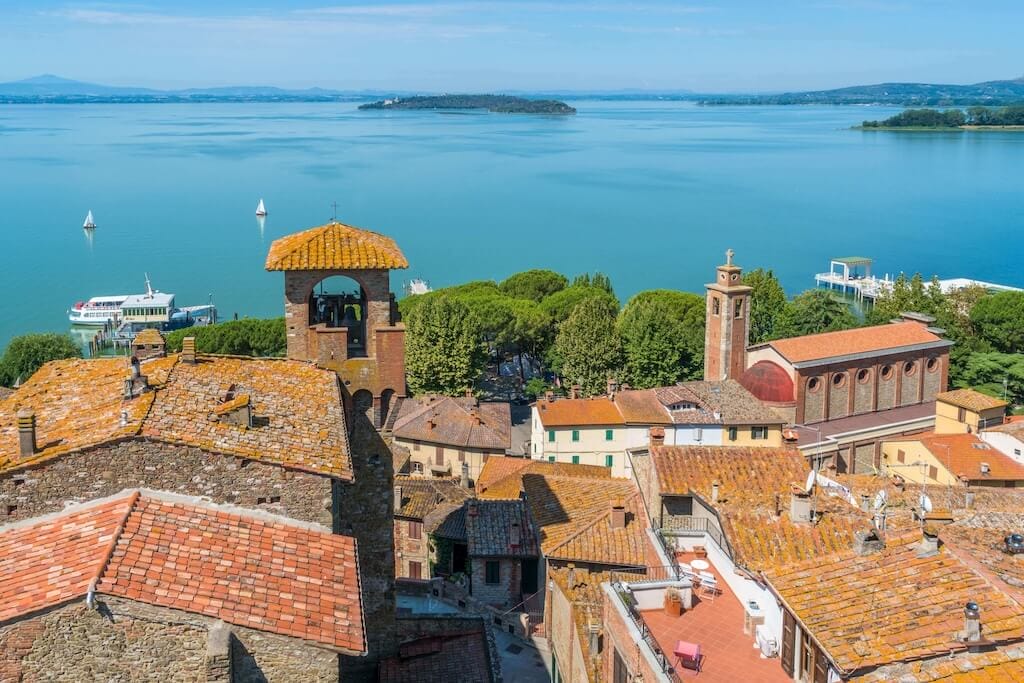
Take in the magnificent landscape (and towns) of Lago Trasimeno
Located between Umbria and Tuscany, Lake Trasimeno is the fourth-largest lake in Italy. The Umbrian hills overlook its waters, and the views are extraordinary, especially at sunrise and sunset.
Its shallow waters are home to many varieties of fish, including carp, pike, perch, catfish, and eel. Lake Trasimeno is also a great place for windsurfing, kitesurfing, rowing, and water skiing, and there are some nice beaches where you can stop for a relaxing moment, or to swim in the lake.
Within the lake, there are three islands, which can be reached by ferry.
Polvese Island is the largest and is part of the Trasimeno Regional Park. It’s home to various species of birds and amphibians and ancient olive groves. If you go, make sure to also visit the Rocca and the ruins of the two churches.
Maggiore Island is the only one of the three that is permanently inhabited. In 1211, St. Francis of Assisi spent time in meditation on this island. Check out ancient buildings and beautiful churches.
Minore Island is private and therefore cannot be visited.
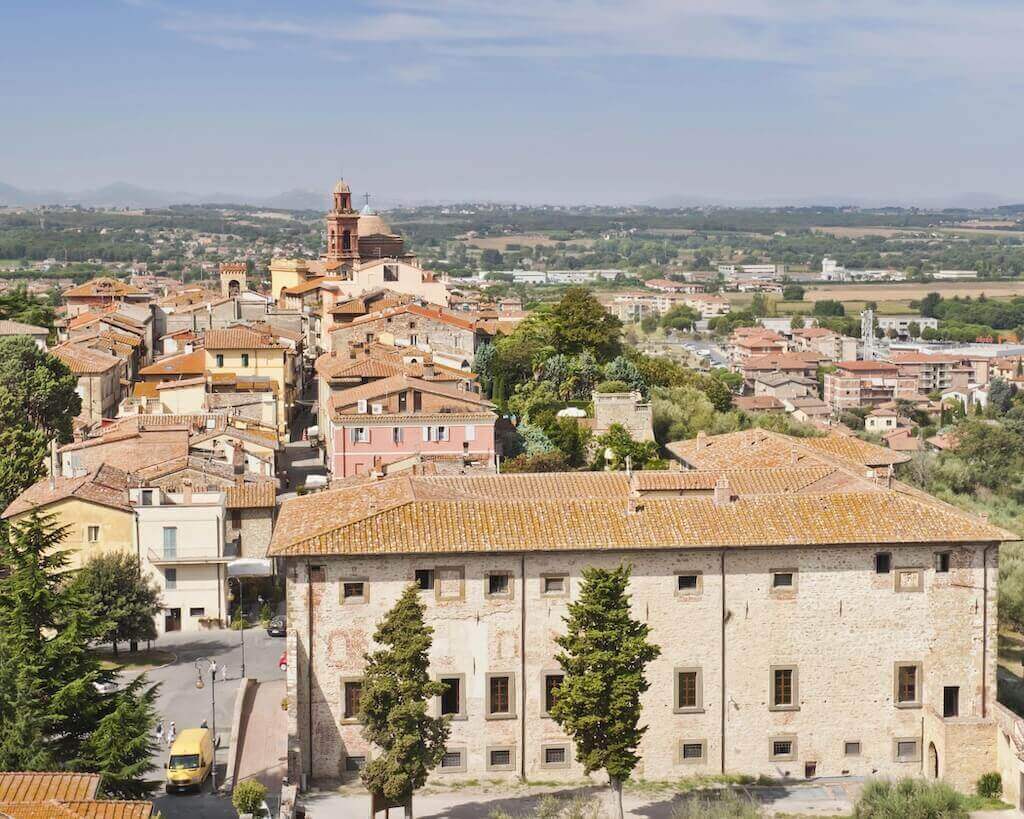
There are several small medieval towns around Lake Trasimeno that you should visit.
One of them is Castiglione del Lago, built on a limestone promontory and offering an extraordinary view of the lake. It was originally an island, later incorporated into the mainland. Here, you should visit the Palazzo Della Corgna and admire the frescoes by Niccolò Circignani, known as Pomarancio.
Don’t miss the frescoes in the Municipal Library depicting the Upside-Down World: where a mouse catches the cat and a hare the hound. Continue along the walkway inside the medieval walls until you reach the Rocca del Leone Lion Fortress. This fortress has a pentagonal plan, inspired by the Lion Constellation, and dominates the whole town.
It also has a direct connection to the impressive Palazzo della Corgna, built by governor Ascanio della Corgna (nephew of Pope Julius III).
Castiglione del Lago is the starting point of a bike and pedestrian trail, about 60 km (37.2 miles) long, that goes around the lake.
Another town to visit is Città della Pieve, the birthplace of painter Pietro Vannucci, called the Perugino, Raphael’s master. You will find several of his works in the Cathedral of Saints Gervasio and Protasio and the Oratory of Santa Maria dei Bianchi.
Other towns you could explore are Passignano sul Trasimeno Magione, Panicale, Tuoro sul Trasimeno, Piegato, and Paciano.
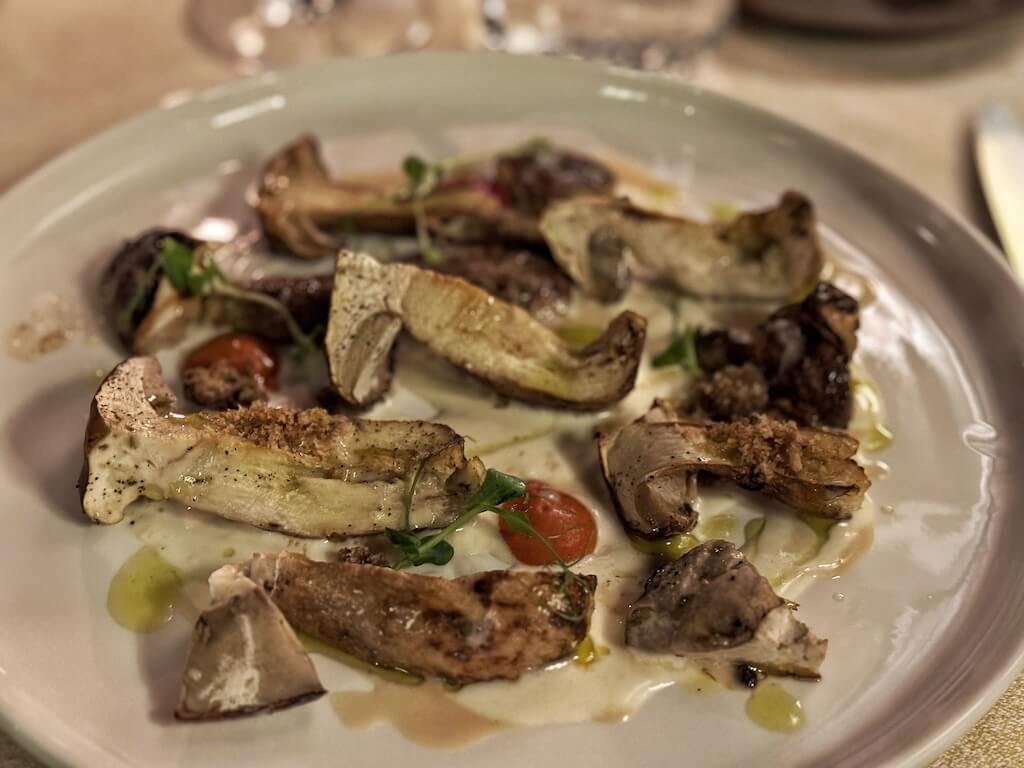
Try all the delicious food
As you should know, if you have been reading my blog, food in Italy is very regional. Umbria boasts local products of the highest quality. Italians associate Perugia (the capital) with chocolate and its chocolate festival.
But there’s way more.
The Umbrian hills are covered with vineyards and olive trees. The most famous local wine is Montefalco Sagrantino, a full-bodied red wine. Other local varietals are Grechetto, a mineral white wine, and Trebbiano. The Wine Museum in Torgiano is a good place to learn more about local wine.
The Olive and Olive Oil Museum celebrates another exquisite Umbrian product: extra virgin olive oil. It’s so good here that it turns a simple slice of bread into a delicious bruschetta.
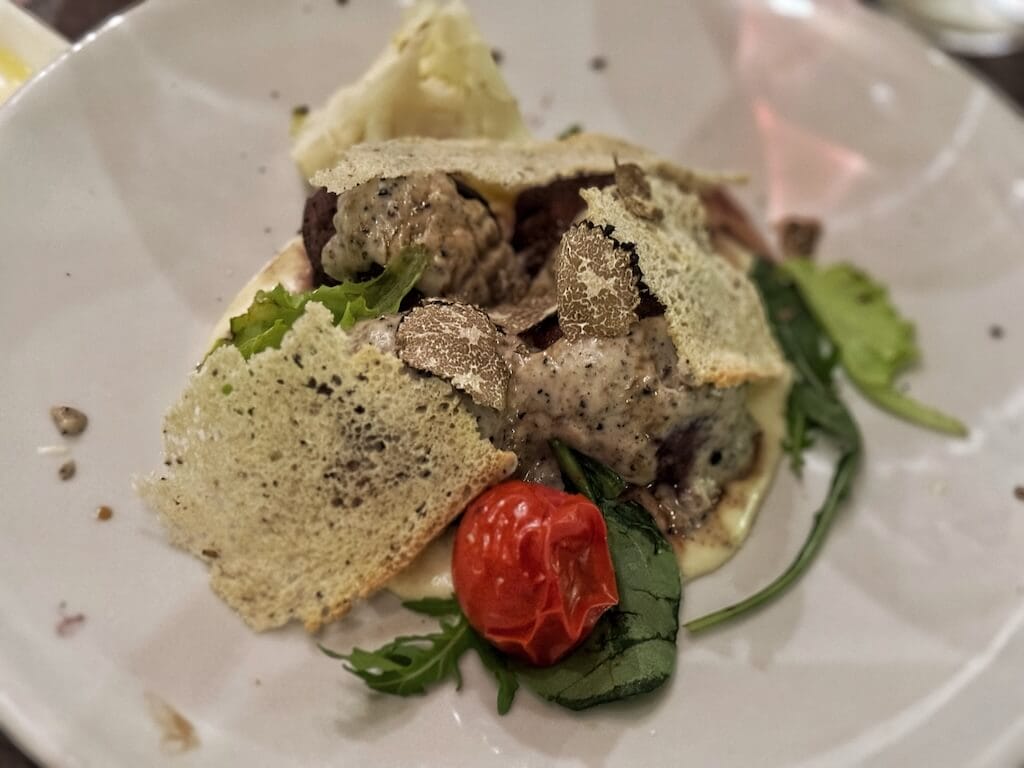
The woods of the Valnerina valley hide the Norcia Black Truffle, the Summer Truffle, and the Winter Truffle. There are so many typical local recipes with this product, such as Strangozzi with black truffle. I think my sister didn’t have a meal without truffle when we visited!
If you like salami, prosciutto, and the like, head straight to Norcia. This town has a centuries-old tradition of processing and preserving pork. Make sure to try Norcia ham, Prete fiaschette (finely ground salami), truffled wild boar salami, and ciauscolo, a spreadable salami made by grinding shoulder, loin, ham, bacon, and spices.
Dishes you should try include:
- Tegamaccio – a flavorful (lake) fish stew.
- Carp in porchetta – Trasimeno carp stuffed with herbs and cooked in a wood-fired oven.
- Fagiolina del Trasimeno – legumes that can be eaten either in a tasty soup paired with truffles, sautéed together with tomato and garlic, or simply boiled with a drizzle of raw oil.
- Pasta alla norcina – a pasta with spicy sausage, fresh sheep’s milk ricotta, and grated black truffle.
- Oca muta in porchetta – goose prepared with the same herbs used for porchetta, such as rosemary, sage, and wild fennel, and cooked in a wood-fired oven.
- Torta al testo – a kind of bread known as “crescia” in Gubbio or “torta del panaro” in Terni. Typical trattorias bring it together with mixed cold cuts, grilled sausages, and chicory repassed in the pan.
- Torcolo di San Costanzo – typical cake of Perugia, prepared for San Costanzo, one of the city’s patron Saints, on January 29th. It is a soft doughnut filled with pine nuts, raisins, and candied citron.
One of the best things to do in Umbria Italy to discover all of its flavors is to join a guided food tour. There are many, but I particularly recommend this food tour in Perugia as a great starting point: it includes 5 stops and several tastings of the best local produce.
Alternatively, you can consider dining at a local’s home. There are many experiences that you can book online and almost anywhere in the region, but I find this local dining experience in Perugia to be easy to access, even for travelers who don’t have a car.
I also recommend this guided tour to a traditional oil mill that includes oil tasting. It’s a wonderful way to learn more about one of the key ingredients of Italian cuisine, and to learn to appreciate it.
Finally, there’s this wine tasting experience that includes a visit to the vineyards of Montemelino and several tastings of the local organic wine.
FAQs about Umbria
Many would say that Orvieto is the prettiest town in Umbria, and who am I to disagree? This small town is beautifully perched atop a massive tufa rock, and has one of the most unique cathedrals you’ll ever see.
Umbria is known to be the “green heart of Italy.” It’s also famous for the many lovely medieval towns like Perugia and Assisi, as well as the rolling hills and scenic waterfalls. In terms of food, Umbria is famous for truffles and red wine.
This post has already provided an overview of what to do in Umbria. Here’s a quick summary:
Cascata delle Marmore
Basilica of Saint Francesco d’Assisi
Duomo of Orvieto
Orvieto Underground
Pozzo di San Patrizio
Fonti del Clitunnio
Calamita Cosmica di Foligno
Perugia
Conclusions: Is Umbria Worth Visiting?
As I was writing this post, I was thinking about planning my next trip to Umbria: there are many places to see in Umbria I want to visit again, and others I wish to discover for the first time.
Umbria is one of the most beautiful and historically and artistically rich regions in Italy. There are so many festivals throughout the year that will make your experience even more unique and complete.
There are many small towns and villages to visit, and nature is also amazing with waterfalls, lakes, and bike paths through beautiful scenery.
One of the most fun things to do in Umbria is exploring by bike, so you could consider the “Bus & Bici,” an Umbria holiday package that is ideal for sport and nature lovers. You get regional bus trips (and can transport bikes on the bus), and the bus connects routes along bicycle paths.
Umbria is beautiful year-round. If you are wondering how long to spend there, let me just say that a week isn’t enough to take in all it has to offer!
PIN IT!

Claudia Tavani
Claudia Tavani was born and raised in Sardinia, and after moving between the United States and the United Kingdom, she's now back living in her hometown, Cagliari. She's a travel blogger and certified travel designer who loves planning trips and publishing guides, travel tips, and packing lists so that you don't have to. Owner of Strictly Italy, cat mom to Minnie. Loves pizza, hiking, archeology, cities, beaches, swimming, and running. Hates peppers.