

Are you planning a trip to Italy? You might want to learn more about some famous Rome myths and legends first. Roman mythology isn’t the most influential aspect of Roman power, but it paints a fascinating picture of beliefs and Roman life.
Ancient Rome is best known for its advanced military, political, and social institutions, which allowed the Empire to conquer much of modern-day Europe and northern Africa.
The Ancient Romans were also incredibly innovative. They were among the first places to illustrate advanced language and record-keeping, the 12-month calendar we use today, a complex road system, and impressive architectural structures.
Nowadays, you can visit Italy and still see remnants of ancient Roman societies and accomplishments. This is perhaps one of the most fascinating things about traveling to learn about ancient Rome’s history and advanced civilizations. For example, Rome is overflowing with incredible cultural attractions like the Pantheon and the Roman Forum.
However, remnants of ancient Rome aren’t isolated to just the capital city; there are places all over Italy with incredible historical connections.
Learning more about ancient Rome myths can help you better understand Italy’s culture and history and make your Italy travels much more exciting and diverse. Plus, ancient Rome legends are fascinating tales that have stood the test of time.
Ready to learn all about the most famous ancient Roman legends and myths, some of which we even studied in school here in Italy? Let’s dive right in.
Make sure to read my travel guide, Planning A Trip to Italy: 10 Dos and 10 Donts. The travel guide will help you prepare for the best Italy vacation.
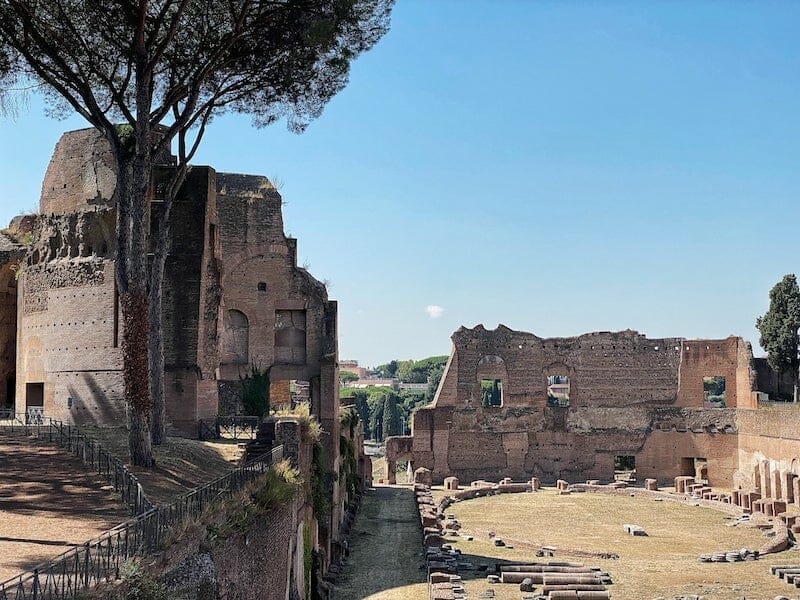
Quick Facts About Rome Myths And Legends
Before going over the most famous Rome legends and myths, here are a few quick facts that might help you understand better:
- Greek Mythology vs. Roman Mythology: It’s easy to find similarities between Greek and Roman mythology. They share many attributes, and there are even variations of similar stories between the two. However, Roman mythology has some stark differences, and there are many tales unique to ancient Rome.
- Myths vs. Legends: The terms myths and legends are often used interchangeably. In the context of Roman myths and legends, the word myth usually implies a more fantastical or imagination-driven story, whereas legend has more historical ties.
- The Importance of Mythology: Roman mythology is incredibly important to understanding the people and history. It is viewed as a story that reflects society’s culture, beliefs, and values.
- Written Records: There are many written records of Rome legends and myths. Some of the most established sources include the poet Virgil, who wrote the Aeneid; Titus Livius, who detailed an account of Roman origins; and others.

Famous Ancient Rome Myths And Legends
Founding legends of Romulus and Remus
The tale of Romulus and Remus is perhaps the most well-known story. These twins are central figures in the lore that traces the origins of Rome and its early monarchy.
According to Roman legends, the twins, Romulus and Remus, were born in Alba Longa, southeast of Rome’s eventual location.
They were from noble lineage. Their mother, a princess and daughter to the King of Numitor of Alba Longa, was usurped by his sibling, Amulius. Fearing a prophecy that the twins would end his reign, Amulius ordered their demise.
Fate had other plans, and the Tiber River’s banks, where they were abandoned, became the place of their survival. They were saved by Tiberinus, the river deity, nurtured and breastfed by a she-wolf in the sanctuary of the Lupercal cave, located at the base of Palatine Hill.
They were then raised by the shepherd Faustulis; the twins flourished as shepherds and remained oblivious to their regal heritage.
As adults, they were caught up in the conflict between Numitor and Amulius, which led to Remus’s capture. The unfolding events led them to suspect their royalties.
Romulus’s daring rescue of Remus from captivity was the catalyst for their alliance with Numitor, resulting in his rise to the throne of Alba.
Not content with restoring a kingdom, the twins established their own city. Yet, disagreement over which of the seven hills to form it on resulted in Remus’s untimely death. They had even tried to consult with the gods over the location. Remus’s death was shrouded in mystery and speculation.
After his brother’s death, Romulus became the first king of Rome. If it had been the other way around, it’s possible Rome would be called “Reme” today. Furthermore, April 21st, 753 BC, became the founding date of Rome and is considered year zero in the Roman calendar.
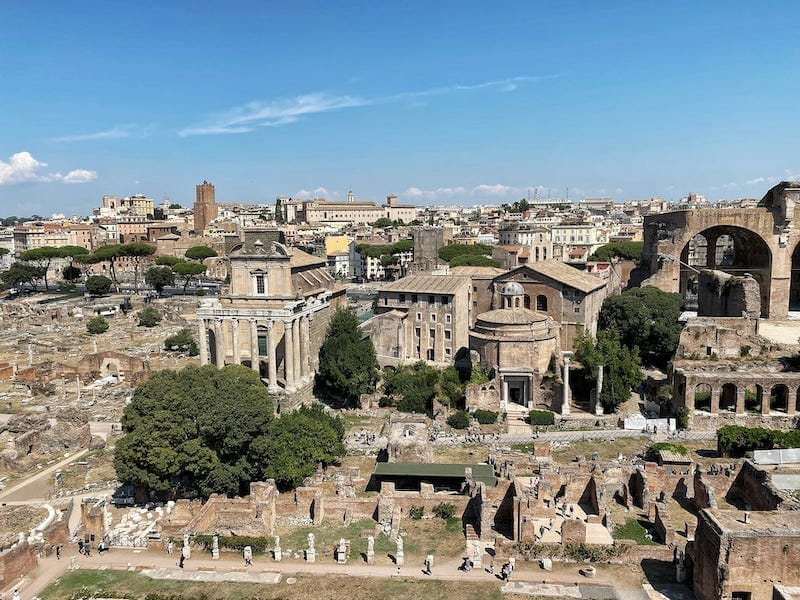
Numa Pompilius
Numa Pompilius, a native of the Sabine region, was Rome’s second king after Romulus. His rise to power hinted at Rome’s expanding influence. Numa’s reign, from 715 to 673 BC, marked a time of great innovation for Rome.
He introduced the Roman calendar, established the Vestal Virgins, and created the role of Pontifex Maximus, a critical religious position.
His most notable change was adding January and February to the calendar, turning the previously ignored 51 days into recognized months, and aligning the year with the lunar cycle at 355 days.
Plutarch tells of Numa’s life as one of discipline, devoid of luxury, even though he was born on the day Rome was founded.
Initially reluctant to rule, Numa accepted the kingship after a divine nod from Jupiter, earning him immense respect from his people. His reign brought a deeper spiritual connection, encouraging Romans to honor their gods with rituals and sacrifices devoutly.
In a bold move, Numa dismissed his predecessor’s 300-strong guard, signaling a shift from war to peace in Rome’s leadership.
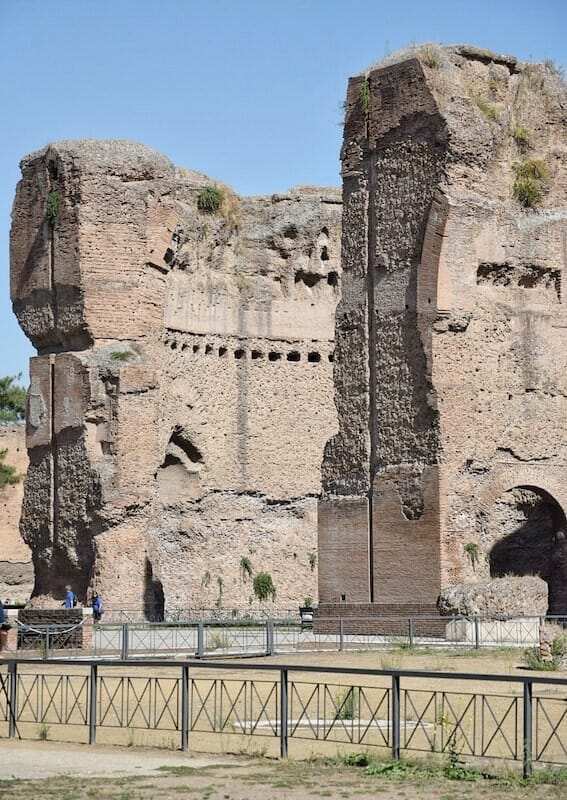
Scaevola’s Loyalty
Gaius Mucius, also known as Scaevola, is a unique figure from Roman legends. He straddles the line between heroism and infamy, between hero and anti-hero.
He stepped forward in 508 BC during Rome’s conflict with the Etruscans, offering to eliminate their leader, Lars Porsena. With Rome’s blessing, he infiltrated the enemy camp, but his plans went awry when he accidentally killed a look-alike instead of the king himself.
Captured and defiant, he shared his identity and intent, declaring his readiness to face death. He bragged that hundreds more Romans were prepared to follow in his footsteps and that they would win.
In a dramatic display, he thrust his right hand into the flames of a sacrificial fire, enduring the pain without flinching, earning him the nickname “Scaevola” or “left-handed.” Impressed by this decision, the king released him, suggesting he was a greater threat to himself than to Prosena.
This act of courage led to peace negotiations, with Prosena sending envoys to Rome to discuss terms.

Cloelia’s River Crossing
In the wake of a fierce conflict in 508 BC, a tale emerged from the depths of Rome about a young woman named Cloelia. She was abducted by the Etruscan ruler Lars Prosena and became an unexpected symbol of resilience.
Cloelia escaped her captors and led her fellow captives to freedom across the Tiber River. Her courageous act moved the Etruscan king, who offered her a boon: the release of half the prisoners.
From the prisoners, she chose the most capable warriors, which ensured Rome’s fight for sovereignty would endure. Today, her legacy is immortalized in stone within the Roman Forum, a testament to her bravery on the Via Sacra.
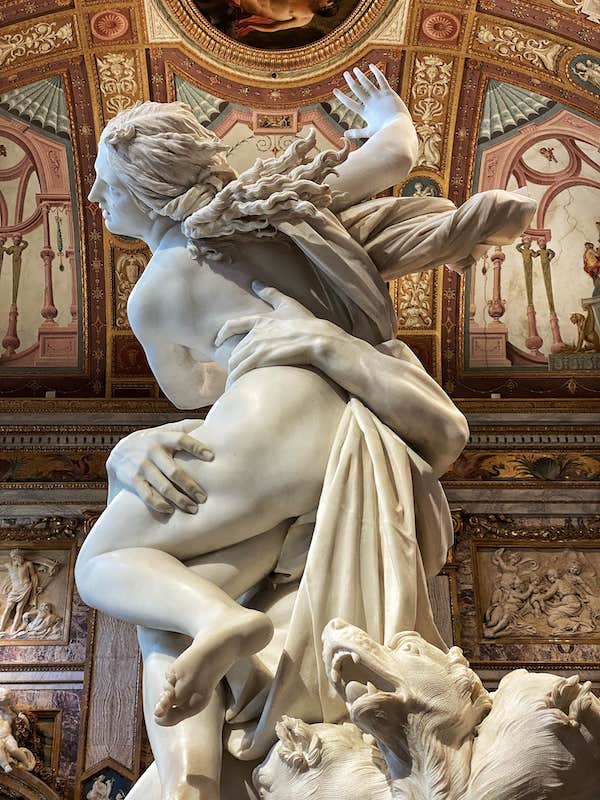
Rape of the Sabine Women
The city faced a dire demographic challenge in the early days of Rome’s history. Romulus, the city’s founder, realized that the predominantly male population, composed of exiles and refugees, was not helpful to the city’s longevity. The population would eventually die down with so few women and brides.
The Roman Senate proposed an outreach to neighboring communities for potential brides. Still, the proposal was met with staunch refusal, especially from the Sabine people, who did not trust Rome’s intentions.
Undeterred, Romulus devised a cunning strategy. He organized a grand festival honoring Neptune, drawing crowds from all around, including the Sabines.
Amidst the festivities, at a prearranged signal, Roman men sprang into action, seizing Sabine women to be their brides and fighting off their kinsmen. This bold move secured thirty new matrons for Rome and integrated the abductees’ families into Roman society.
While temporarily solving the demographic issue, this act set the stage for conflict with neighboring states, foreshadowing future strife.

Aeneas and the Aeneids
The story behind Aeneas is said to be factual, although historians argue about the finer details. Virgil, a famous Roman poet who helped piece together many of the famous Roman myths and legends in an epic poem (the Aeneid), also detailed it in great depth.
One of the most significant messages from Aeneas is that there is always hope in loss and the possibility of new beginnings, no matter how dark the days might be.
Aeneas was a hero in ancient Roman myths, known for his role in the Trojan War and his long journey afterward. Aeneas was a Trojan prince and, during the Trojan War, managed to escape with some of his close family and a small selection of loyalists (the Aeneids).
Aeneas and the Aeneids traveled around the region for over six years, eventually reaching the Italian Peninsula. It was an epic adventure during which they overcame many obstacles and survived many hardships (including an attack from the goddess Juno).
At one point, Aeneas had an affair with Dido, the Carthaginian queen. Dido offered Aeneas and the travelers her kingdom, but Aeneas was told by Mercury, the messenger god, to decline it. Aeneas and the Aeneids ended up sneaking away in the middle of the night, which further angered Dido.
Dido took her own life and cursed the Trojans’ future homeland, Rome. The curse resulted in the Punic Wars between Carthage and Rome in 246 BC.
At one point, Aeneas traveled to the underworld, where he was shown his future. He was the direct ancestor of Rhea Silvia, the mother of Romulus and Remus, who were to become the legendary founders of Rome.

Coriolanus’s Dilemma
In the annals of ancient Rome, the tale of Gaius Marcius, better known as Coriolanus, stands out as one of the best Rome myths.
Born into the elite patrician class, his courage in battle earned him his nickname after he played a pivotal role in the siege of the Volscian city of Corioli. The Volscians, a thorn in Rome’s side, were the city’s archenemies until the Carthage’s rise.
The story takes a twist in 491 BC when Rome, reeling from a famine, welcomed a Sicilian grain shipment. Yet, the joy was short-lived as a debate erupted over the distribution of this vital sustenance to the populace. Coriolanus, ever the patrician, saw an opportunity to restore the old social order.
He proposed a controversial ultimatum: the grain would flow only if the plebeians relinquished their newly gained political influence. This suggestion sparked outrage, leading to his trial and exile.
In another turn of events, Coriolanus allied with the Volscians, leading their forces to Rome’s doorsteps. Only the heartfelt pleas of his mother and wife halted his campaign, sparing Rome from potential devastation.
While his existence is debated, with some details lost to legend, Coriolanus’ story remains a powerful narrative of loyalty, conflict, and the complexities of power.

Cybele’s Protection
Cybele, also known as the Great Mother or Magna Mater, was embraced by Rome during its conflict with Carthage in the Second Punic War, from 218 BC to 201 BC, against the Carthaginians.
The Roman Republic was frightened by a series of ominous events that appeared to foreshadow the fall of Rome. A meteor shower, a massive famine, and a failed harvest devastated the community and seemed to signify an even larger tragic event in the future.
The Roman Senate met with religious advisors and sought divine intervention. They decided to bring in a foreign god, the Magna Mater, from the kingdom of Pergamum. Envoys were dispatched to bring Magna Mater to Rome to help defeat the Carthaginians.
On the way, they stopped to visit with an oracle, a highly respected figure who could help foresee prophecies and deliver messages from the gods, at Delphi. The oracle reassured them that their course was true: Rome should bring in the goddess, Magna Mater, to guarantee their victory.
The goddess finally arrived in Rome as a meteoric stone from Pessinus. She was first brought to the Temple of Victoria and later enshrined in her own temple on Palatine Hill. The uncarved stone was used as the goddess’s face on a new statue.
Following these events, the unfortunate events ended in Rome. The famine ended, the crops flourished, and the Carthaginian leader was defeated. From this moment on, the stone of goddess Cybele was seen as Rome’s protector.
The Bee’s Wish
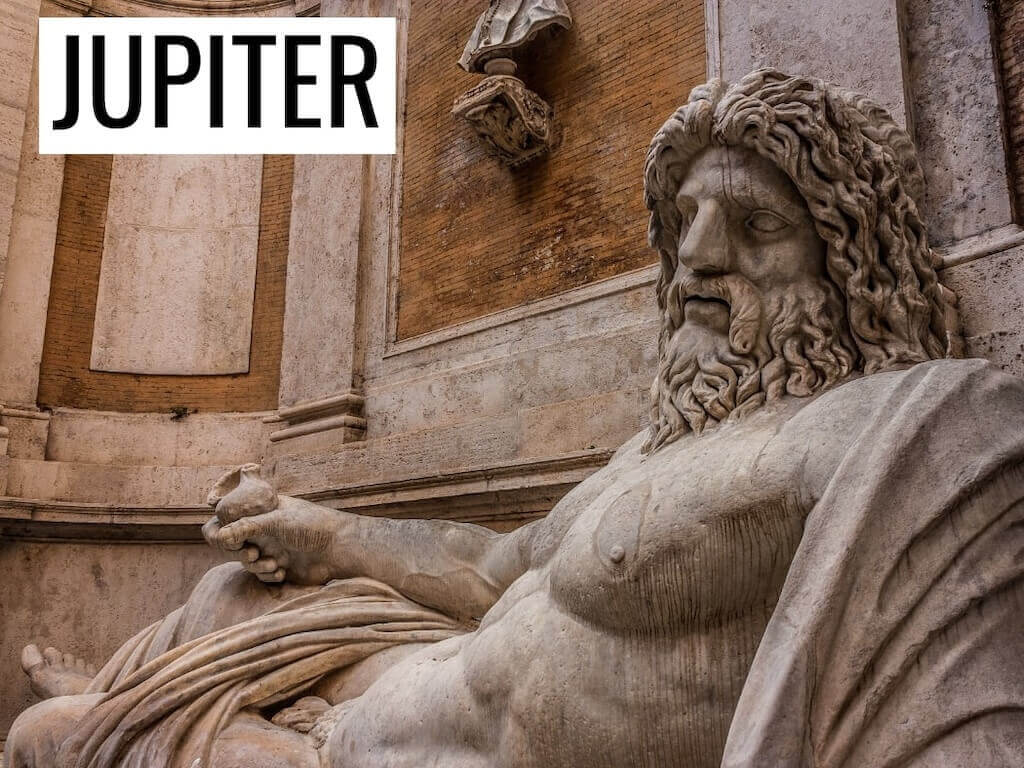
The tale of Jupiter and the bee is one of the most famous Roman legends and explains bee habits to this day. It’s also a good reminder to be careful what you wish for because you never know what you’ll give up in exchange for that wish.
The story begins with a bee, tired of having his honey stolen, seeking help from Jupiter, the king of all gods. The bee decides to visit Jupiter with a special gift of his delicious honey. Jupiter was thrilled with the honey and decided to grant the bee’s wish for a stinger to help him protect his honey.
However, Jupiter’s gift came with one dire condition. If the bee used its stinger, he would pay with his life. According to the myth, this is why bees die when they lose their stinger.
The story reminds us that with great power comes great consequences. Even the strongest gods must balance the outcome of their gifted boons.

Jupiter’s Lover, Io
The ancient Roman legend of Jupiter and Io is another famous one involving the king of gods. This tale echoes the themes of love, jealousy, and transformation, which are relevant even to modern-day relationships and affairs.
Jupiter became enthralled by a beautiful priestess, Io. However, Jupiter was married to Juno, who he knew would not take kindly to his desires. Jupiter turned himself into a dark cloud to be closer to Io and to hide from Juno. However, Juno quickly recognized him. So, to conceal Io from Juno, Jupiter transformed Io into a heifer (or a female cow).
However, Juno wasn’t to be fooled so easily. She also recognized Io, requested the cow as a gift, and put the cow under Argus’s watch with his 100 eyes.
Despite Jupiter’s plead to free Io by sending Mercury to lull Argus to sleep, Juno retaliated by sending a gadfly to torment Io. Finally, Jupiter promised never to see Io again if Juno left her alone. Io was freed and fled to Egypt, where she became the first Egyptian goddess.

Apollo and Cassandra’s Prophecies
Apollo is a central figure in Roman and Greek mythology. Actually, Apollo is the only god in Roman and Greek mythology who has the same name. This specific tale tells of divine desire and defiance. In a way, it teaches others about the sometimes disastrous outcomes when mortals get too close to the sacred.
The story revolves around the beautiful Cassandra, the daughter of King Priam of Troy. Apollo, the god of the sun, prophecy, and music, became utterly smitten by her. To win her over, Apollo granted her a powerful gift, the gift of prophecy, so long as she complied with all of his wishes.
However, Cassandra valued her freedom above the god’s affection. She denied all of his advances, angering him and causing him to curse her. He made it so that while she kept her power of prophecy, nobody would ever believe her.
Cassandra was considered a prophet, and she was basically shunned from the community for this “wild” prophecy. Her most famous prophecy was the attack on Troy. She saw the attack and tried to warn people, but nobody believed her, and the city was left in rubble.
Lucretia’s Sacrifice
The tale of Lucretia tells the story of one of the most famous women in Roman mythology. The story follows Lucretia and teaches the power of integrity and how one person’s actions can create a massive ripple effect.
This legend isn’t factually proven; historians often argue against its accuracy, but it’s an essential piece of Roman mythology.
Lucretia was the wife of Lucius Tarquinius Collatinus and was raped by Sextus Tarquinius, the son of the Etruscan king. Despite her innocence, the shame got to Lucretia, and she ended up taking her own life after her husband and brother promised to avenge her.
Her death triggered a revolution. The revolution destroyed the reigning empire, expelled the Tarquin family, and established the Roman Republic.

Janus’s Two Faces
Janus is one of the most unique figures in these Roman myths and legends. The most famous depiction of Janus, the Roman god of beginnings, is a god with two faces, one facing the front (or future) and the other facing the back (or the past).
He’s also usually portrayed holding a key, symbolizing his protection of doors, gates, and new beginnings. Another unique characteristic of Janus is that there’s no Greek mythology equivalent, which is rare.
The Roman story behind Janus, the god with two faces, sends the message that every ending starts a new story and that there’s a deep connection between endings and beginnings.
One of Janice’s most famed acts is rescuing the Sabine woman kidnapped by Romulus to help with their demographic problem. Janus stopped Romulus from reaching the women by flooding the path with volcanic water and burying the kidnappers under boiling water.
The most famous depiction of Janus is in the Roman Forum, the shrine called anus Geminus. The shrine held a bronzed statue and double doors on either end. It’s said that the doors were left closed during peaceful times and opened during times of conflict.
Pluto’s Underworld and the River Styx
Pluto and the River Styx is one of the darkest and most intriguing stories in ancient Rome’s myths and legends. It teaches of morality, the finality of death, and the decrees that even gods must follow.
Pluto, the god of the underworlds, watched over the shadow realm where past souls would journey to the afterlife. The River Styx, a boundary that divided the living world from the underworld, was a massive expanse that souls had to cross to reach the underworld.
It’s said that all souls were ferried across the watery, dark expanse by Charon, the ferryman. Loved ones must place a coin in the mouth of the deceased that they could use to pay for their crossing.
But the River Styx could also be cruel to gods. It was said that the River Styx held gods to their oaths. If a god broke an oath, he would be compelled to drink from the river Styx, and the water was so foul that they would lose their voice for nine years.

Hercules’s Twelve Labors
Hercules is hands-down one of the most famous figures in Roman and Greek mythology. After all, almost everyone has seen the animated movie Hercules, which is about his strength and courage.
There are dozens of Rome myths about Hercules, but the story of Hercules and the twelve labors (or tasks) is one of the most famous tales.
The story teaches a valuable lesson about one’s strength and ability to overcome impossible trials with enough determination and courage.
You likely already know Hercules was known for his impossible strength despite being born a mortal, not a god. In Roman mythology, he was the son of Jupiter, the king of all gods, and a mortal woman seduced by the god.
According to legend, Hercules was driven to madness and tricked by Juno (Jupiter’s wife acting out of jealousy) into killing his family. To atone for his sins, Hercules approached King Eurystheus, who gave him twelve impossible tasks.
Some of these tasks are pretty famous (and even appear in the movie Hercules), like slaying the nine-headed hydra and retrieving the golden fleece.
Conclusions On Roman Legends And Myths
There are honestly dozens of other Roman myths, all of which are interesting and teach a very valuable lesson.
Sometimes, you have to look deep into the story, like the epic adventures of Aeneas, which teach you how good things can come out of tragic events. Other lessons are much more apparent, like how the story Jupiter and the Bee teaches us to be careful what we wish for.
Some ancient Rome legends are tangible in the Roman ruins left behind in Italy. For example, you can still find the she-wolf statue of Romulus and Remis feeding in Rome in Musei Capitolini.
Learning about ancient Rome legends and myths can add new dimensions to your Italy travels and to your trip to Rome, giving you more perspective and understanding of the region’s past.
PIN IT!


Claudia Tavani
Claudia Tavani was born and raised in Sardinia, and after moving between the United States and the United Kingdom, she's now back living in her hometown, Cagliari. She's a travel blogger and certified travel designer who loves planning trips and publishing guides, travel tips, and packing lists so that you don't have to. Owner of Strictly Italy, cat mom to Minnie. Loves pizza, hiking, archeology, cities, beaches, swimming, and running. Hates peppers.