

Which are the best day trips from Perugia? My sister and I visited recently, so I can share what we discovered.
Umbria is one of the most beautiful, historically and artistically rich regions in Italy.
You will find ancient towns and villages to visit, incredible nature with waterfalls, lakes and bike paths through beautiful sceneries. It’s an ideal destination to visit year round.
If you want to explore these places and make the most of Umbria, Perugia is the best starting point
You can easily reach Perugia from many Italian and European cities thanks to low-cost flights. I recommend spending a couple of days exploring the city, and then go on day trips around the region.
My post What To Do In Perugia has more tips on places to visit and interesting activities in Umbria’s lovely capital.
Traveling to Puglia soon? I recommend reading the following posts too:
Now, let’s discover the best places you can visit on easy day trips from Perugia.

Best Day Trips From Perugia
You can enjoy most of the day trips from Perugia that I mention by using the efficient public transport network of Umbria.
Needless to say, having a car will make your life infinitely easier. When we visited, my sister and I rented a car directly at the airport – the process was very smooth.
There are plenty of car rental companies in Perugia’s Airport. I recommend using Discover Cars to pick the best deal for your travel and budget needs. That’s what my sister and I used when we visited.

Assisi – one of the most popular day trips from Perugia
If you are looking for an easy day trip from Perugia, Assisi should be your first choice.
If you don’t want to rent a car, you can easily reach it by train. Trains leave about every hour from Perugia, Ponte S. Giovanni Station and take about 15 minutes to reach Assisi S.Maria Degli Angeli station. From there, you can take a bus to the historic center.
The historic center of Assisi has been declared UNESCO World Heritage in 2000. St. Francis was born here and for this reason the town is closely linked to the Franciscan movement.
The magnificent St. Francis Basilica should obviously be the starting point of your visit. Explore the lower and the upper Basilica and take your time to admire Giotto’s and Cimabue’s frescoes.
You should also visit St. Clare Basilica and San Rufino Cathedral. Next to that, you’ll see San Rufino fountain, also known as the fountain of the six lions.
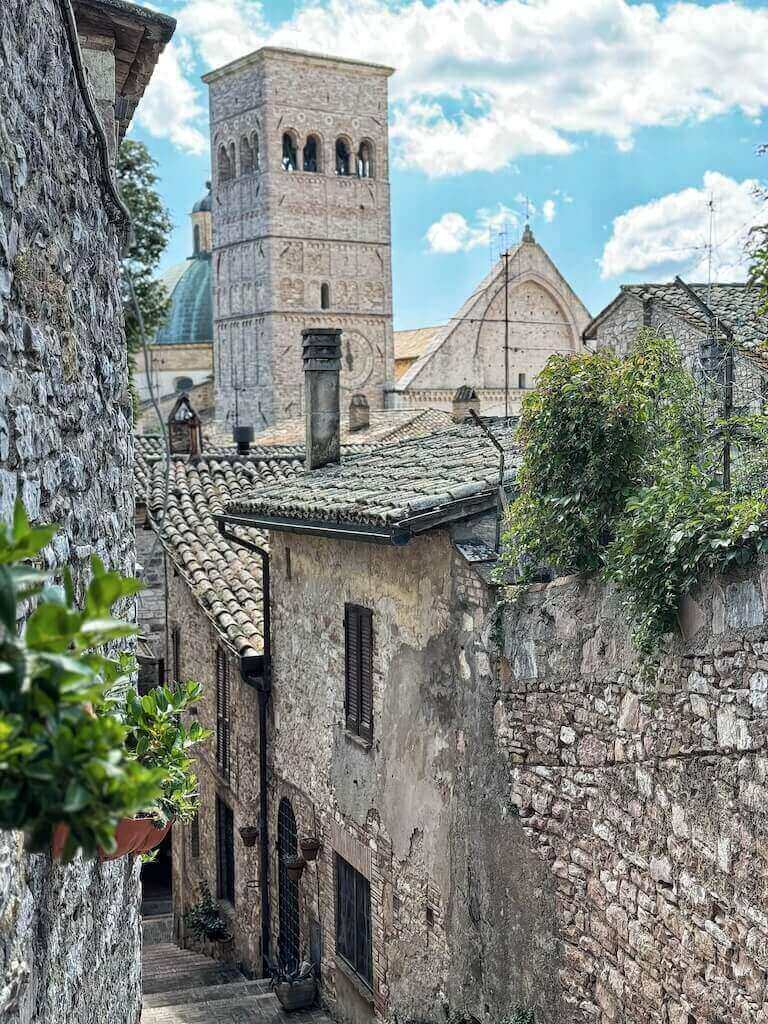
I also recommend visiting the New Church, built on the ruins of the house where St. Francis was born.
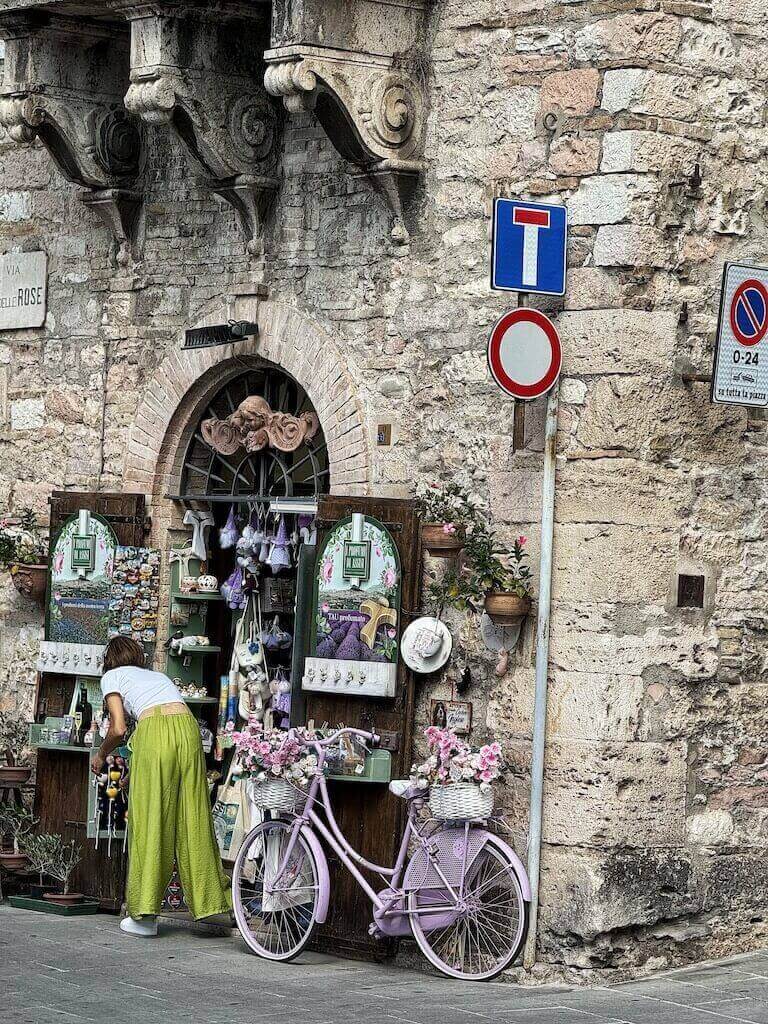
Enjoy walking along the narrow alleys to reach the Piazza del Comune, the center of social and cultural life.
Here you can spot the Fountain of the Three Lions, which symbolizes the three urban districts of Assisi; Minerva Temple; the Tower of the Captain of the People; and the People Palace, used for the assemblies of the General Council of the People.
Finally, I recommend visiting the impressive Rocca Maggiore that overlooks the town and the valley. Try to get there in time for sunset.
To make the most of Assisi, consider joining this guided walking tour that also goes to St. Francis’ Basilica. It lasts 2.5 hours and includes a live guide.
My post A Useful Guide To Assisi highlights the best attractions in town and helps you plan your visit.
Spoleto – a small town rich in history
If you love history, culture, art and good food Spoleto is an ideal place to visit on a day trip from Perugia. This small town is rich of attractions – in fact, I wonder if a day is enough to explore it as there’s so much to see.
There’s a direct train that connects Perugia to Spoleto. I recommend catching an early train (the journey takes little over an hour) and spending the whole day to discover its beauty. A bus from the train station will take you to the historic center.
If you are driving, it takes less than an hour to reach Spoleto from Perugia.
Once you are in Spoleto, get the Spoleto Card: it’s valid for 7 days and gives you access to 7 attractions. You can buy it at the Tourist Information Office in Largo Ferrer 6 or at any of the included museums.
The most important building in the city is the Duomo.
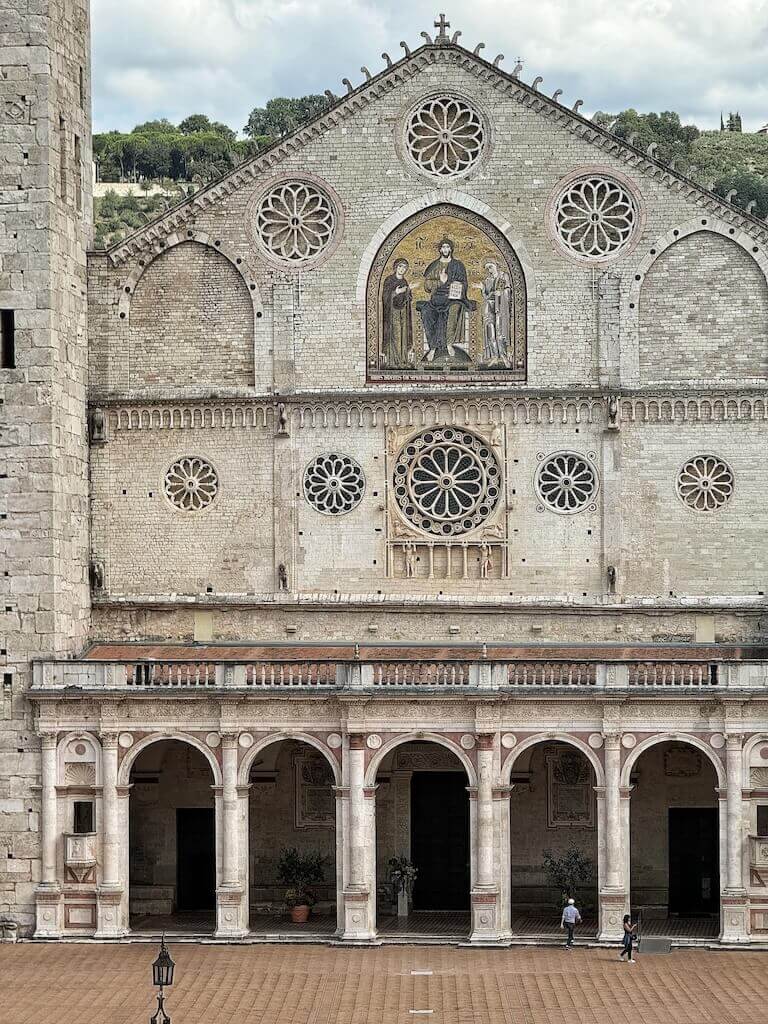
Spend a moment to observe the exterior: a long flight of steps, a Romanesque facade with eight rose windows, a large Byzantine-style mosaic, a beautiful portico, the bell tower to the side. Inside you’ll see masterpieces by Bernini, Pinturicchio, Alberto Sotio and Filippo Lippi, just to mention a few.

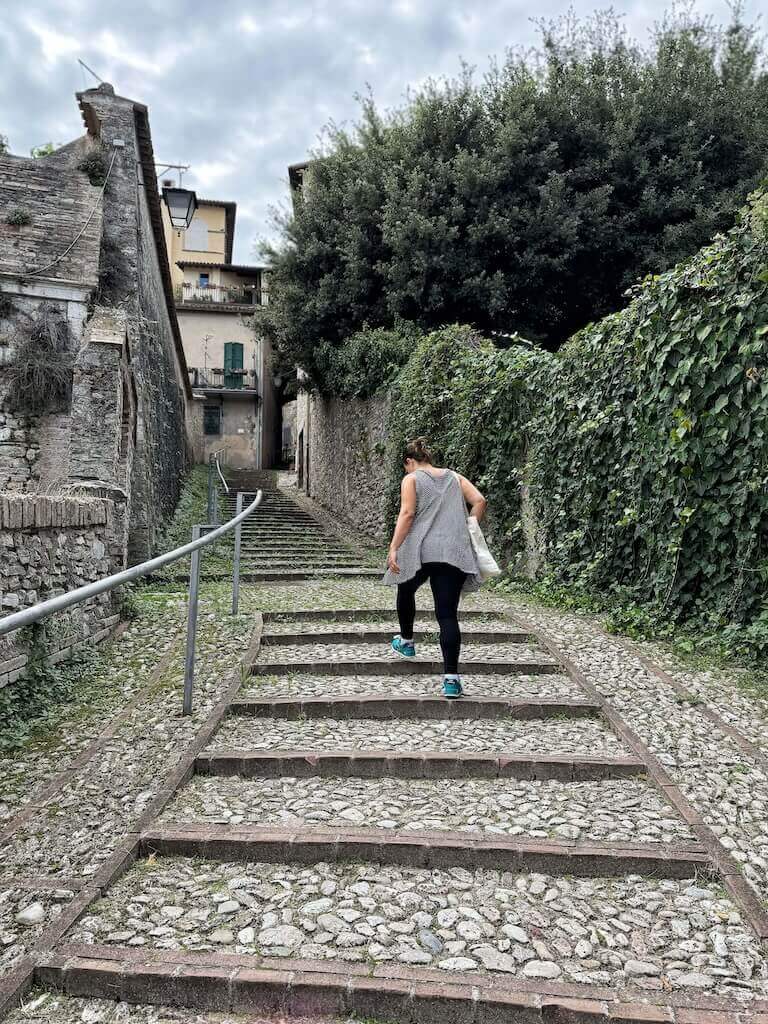
From the center of Spoleto you can reach Sant’Elia hill, where you can visit the Rocca Albornoziana. In the past this fortress used to be both a military defense and a papal residence. Today it houses the National Museum of the Duchy of Spoleto.
Our favorite part, when we visited, was the outstanding view of the city.
From the Rocca, you can cross the imposing Ponte delle Torri (Bridge of Towers) that connects Sant’Elia hill to Mount Monteluco. The bridge has finally been reopened to the public after restoration works were completed in 2024.
Back in the historic center, walk through the narrow alleys of the center towards Piazza del Mercato. This is where the beautiful Fonte di Piazza stands. From this square you can reach the other main attractions and buildings of the city.
We loved visiting the Roman House, where there still are original mosaics and frescoes. Researchers suggest it belonged to the mother of Emperor Vespasian. The Town Hall is right next to it. It’s a short walk from there to the Arch of Drusus, the Museo del Tessile e del Costume, Campello Square, the Basilica di San Salvatore.
Another impressive site to visit is the Roman Theater, still used today for performances during the Festival dei Due Mondi, an international festival dedicated to music, art, and dance. The annexed Archaeology Museum houses an extensive collection of archaeological finds from Spoleto and the surrounding areas.
Finally, I recommend visiting Palazzo Collicola. It hosts contemporary art exhibitions, and has a permanent collections of paintings and sculptures.
Head over to my post What To See And Do In Spoleto for more tips on the town’s attractions.
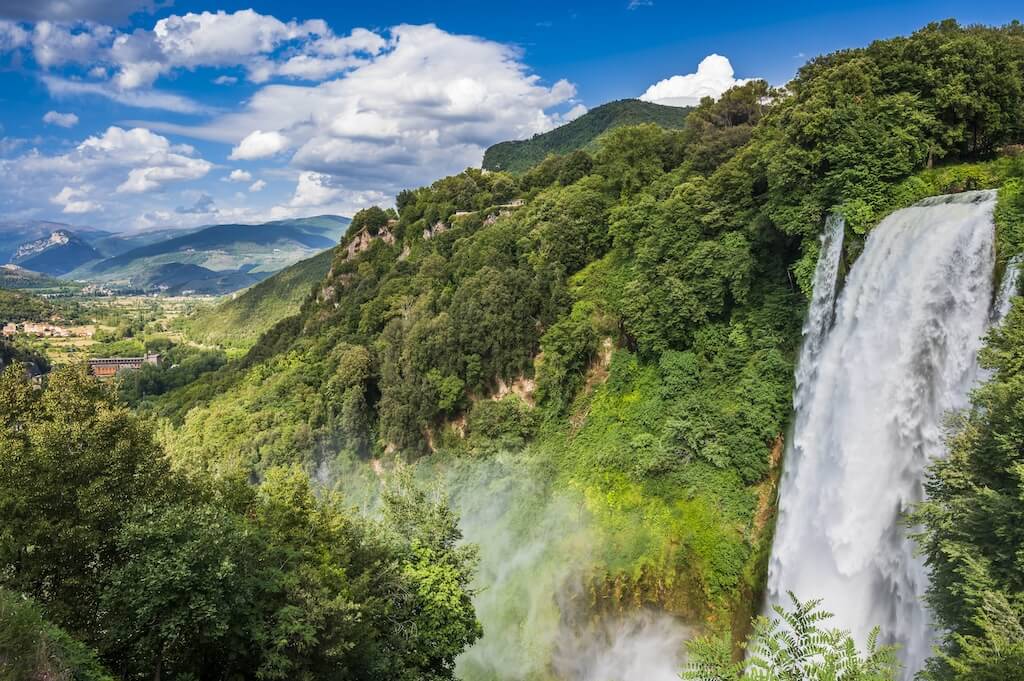
Cascata delle Marmore – the most fun day trip
This is one of the day trips from Perugia for which you will need a car. The journey by public transport from Perugia takes almost 3 hours each way; whereas it’s only about one hour and 15 minutes by car.
The Cascata delle Marmore is located in the Nera River Regional Park. It is one of the highest waterfalls in Europe, measuring 165 meters (over 541 feet), and the largest waterfall in the world that was created by men.
In 271 BC, Romans engineered different channels to converge the water towards the edge of the cliff of Marmore, in order to reclaim a marshy water.
Sluices control the flow of the falls: at set times the water flow rate is increased. When there is a small stream, the water is used for hydroelectric power generation.
You can admire the waterfall from two different viewpoints. The Upper Belvedere offers a spectacular view of the first fall. The Lower Belvedere for a complete, but less scenic, overview. A scenic trail connects the two viewpoints, but there’s also a shuttle service during peak season.
There are six well-marked trails inside the park, of different lengths and levels of difficulty. You can visit four of these trails if you pay the park entrance fee, whereas two are free to access. Some trails are accessible to disabled too, and the park is pet-friendly.
Other things you can do in the area include kayaking, river walking, rafting and canyoning.
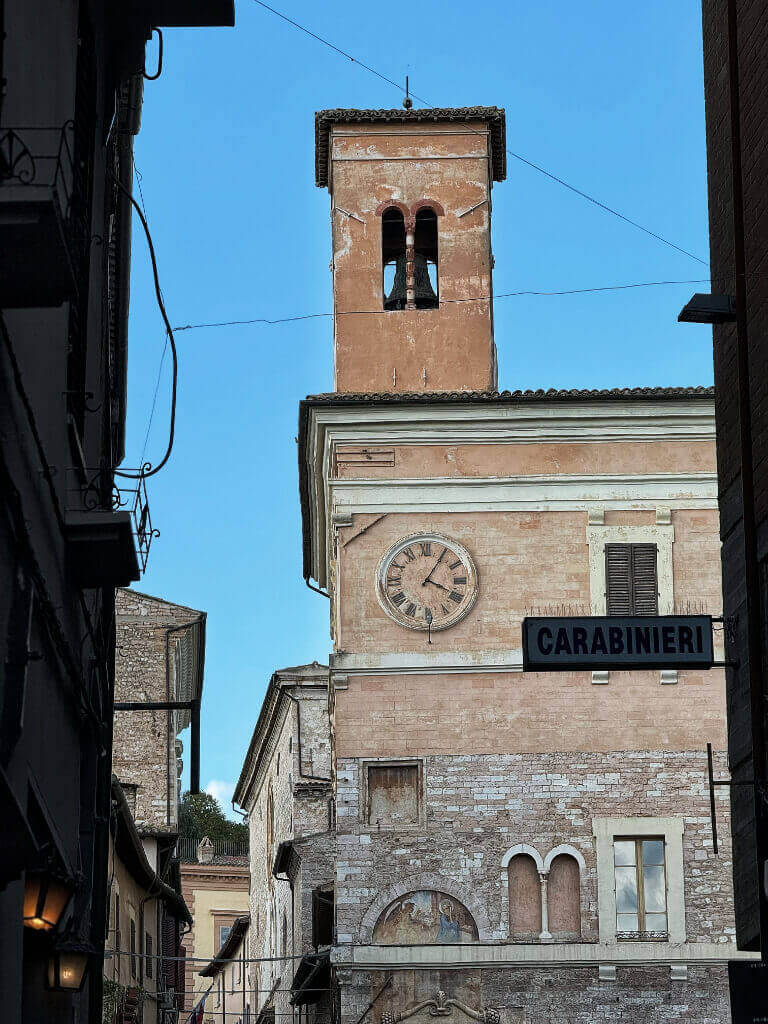
Spello – a wonderful village in Umbria
The small town of Spello is an easy day trip from Perugia by train. Trains leave every hour from Perugia, and take little over 30 minutes to get to Spello.
If you love flowers and colors, you will also fall in love with Spello.
Start exploring from the Porta Consolare, one of the ancient Roman gates, and walk along the narrow cobblestone alleys. Then head to the Church of Santa Maria Maggiore and admire the Cappella Baglioni, with frescoes by Pinturicchio and by Perugino.
I also recommend to check out Porta Venere, another Roman majestic entrance gate.
Wandering around Spello, you will find many other signs of its long Roman history – the city walls, the remains of the theater, amphitheater, and even those of the Roman baths.
Spello is well known for the Infiorate festival, during which flower composers create colorful paintings on the ground, using only flower or plant elements. The festival takes place every year in June. If you are visiting Umbria at that time of year consider timing your day trip with the festival for a unique experience.
You could also consider renting a bike to explore the centuries-old olive groves that surround Spello.
I wrote a detailed Guide To Visiting Spello that will help you plan your day trip from Perugia.

Gubbio – easy to reach on day trips from Perugia
The easiest way to reach Gubbio from Perugia is by car – it takes about 45 minutes. Otherwise, there’s a bus that takes a bit over one hour.
Gubbio is an amazing medieval town full of charm and traditions. Ancient buildings here are made of local limestone, in gray and white blocks.
You can start your visit from Piazza Piazza Grande or Piazza della Signoria, one of the most beautiful squares in Italy because of the extraordinary views of the valley below.
The square is overlooked by Palazzo Ranghiasci Brancaleoni, Palazzo del Podestà (now the town hall), and by Palazzo dei Consoli. This was built in the 14th century to house the city’s magistracies. Currently, it houses the Civic Museum.
In the Civic Museum, you can see the “Eugubine Tablets”: dated between the 3rd and the 1st centuries BC, these seven bronze tablets in Umbrian language testify the city’s ancient origins.
I also recommend admiring Bargello Fountain, right in front of Bargello Palace. It is known as the Madmen’s Fountain due to the reputation of people of Gubbio as eccentrics.
Other places to visit in this part of the city include the Cathedral of Saints Marian and James. It’s located opposite the Ducal Palace, and was designed by Francesco di Giorgio Martini in Renaissance style. From the gardens next to the Palace there is a beautiful view of the city.
You will find the Church of San Francesco in the lower part of the city.
There are also the remains of a Roman Theater just outside the 13th century walls.
Finally, you can complete your visit by checking out the Church of Madonna del Prato, as well as the Bottaccione Canyon. This is a series of caves created by the erosion of the Carmignano stream, where the medieval aqueduct used to run. The gorge was also home to the Monastery of Sant’Ambrogio.
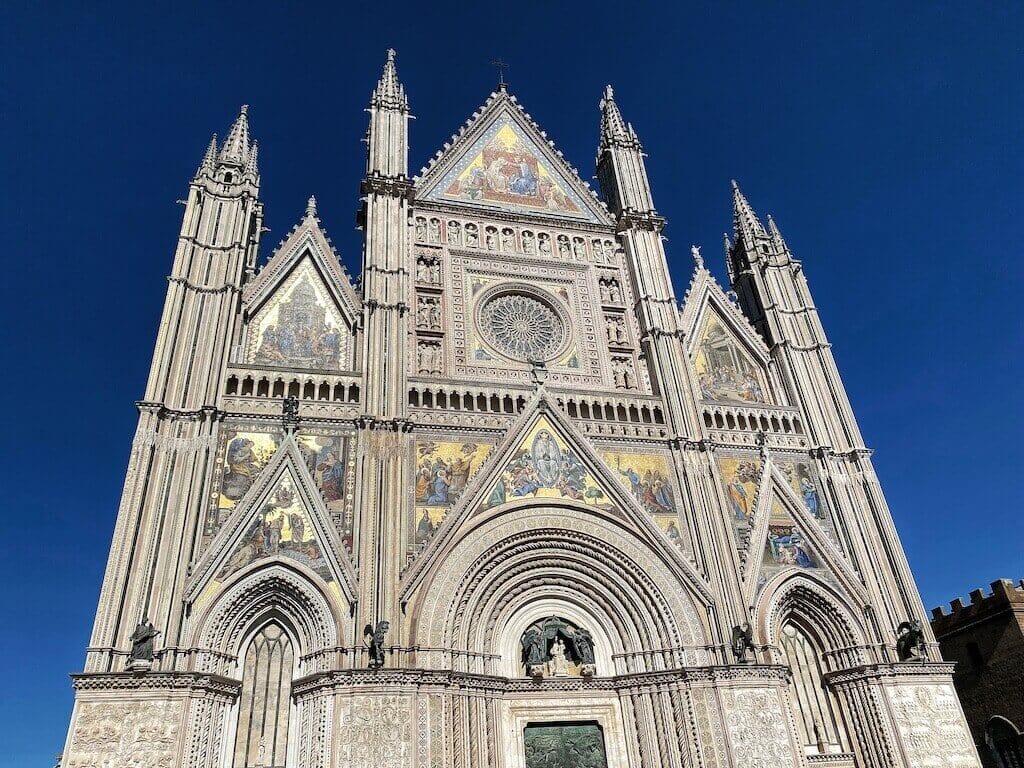
Orvieto – one of the most beautiful towns in Umbria
Perugia is about 80 km from Orvieto. The fastest way to get there is by car: it takes about an hour and 15 minutes. I don’t recommend trying to get there by train as there’s no direct route and the trip can take over three hours.
The best starting point to explore Orvieto is the Duomo. It’s a stunning example of Gothic architecture. The golden mosaics of the façade literally shine. I recommend visiting the interior too, as it is just as striking as the outside of the church.
Next to the Cathedral, you should visit the Museo dell’Opera del Duomo (M.O.D.O), which displays precious sculptures, paintings and sacred furnishings removed from the Cathedral during the 19th century restoration. The building itself is beautiful: it used to be an ancient papal palace.
Opposite to the Duomo you will find the Civic Museum and the Etruscan Museum Carlo Faina.
I also recommend visiting the Underground Orvieto. Here, in the tunnels, caves and wells, you can best appreciate the Etruscan origins of the city.
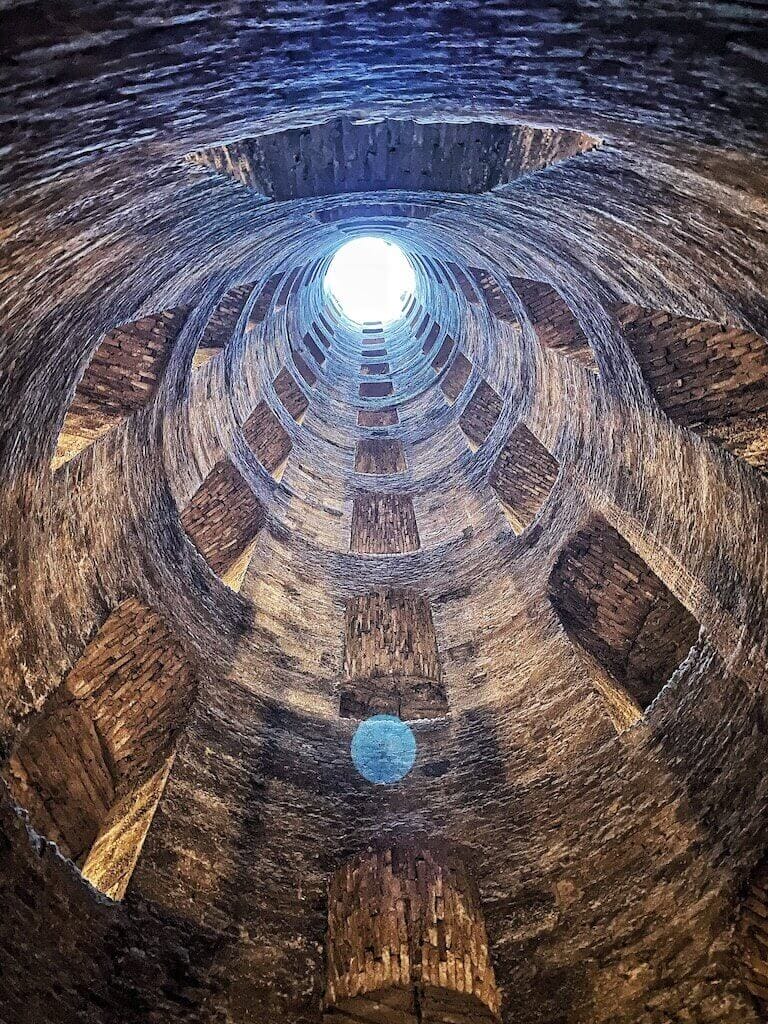
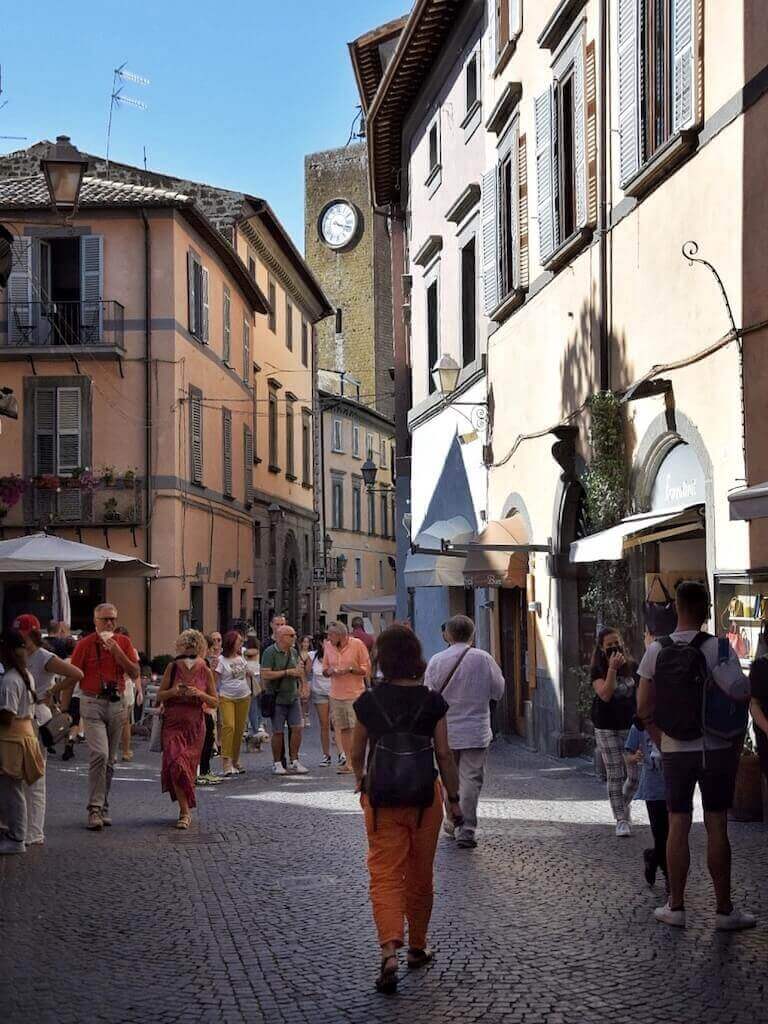
Another place you should visit is Piazza della Repubblica, where you can see the Palazzo Comunale, designed by the Orvieto architect and sculptor Ippolito Scalza. This is also where you can see the the octagonal Bell Tower and St. Andrew Church.
You should also visit the Torre del Moro and climb up its 236 steps to enjoy wonderful views.
Finally, check out the Giardini Comunali where you can see the Albornoz Fortress and enjoy a view of the valley. And don’t miss St. Patrick’s Well, one of the most interesting sites in Orvieto.
The Orvieto Card is a great idea if you intend to visit all the attractions I have mentioned.
To make the most of Orvieto, consider this guided tour of Orvieto that also goes to the Cathedral and Orvieto Underground. It’s a great introduction to the city.
My post The Ultimate Guide To Orvieto is a valid help in planning your visit.
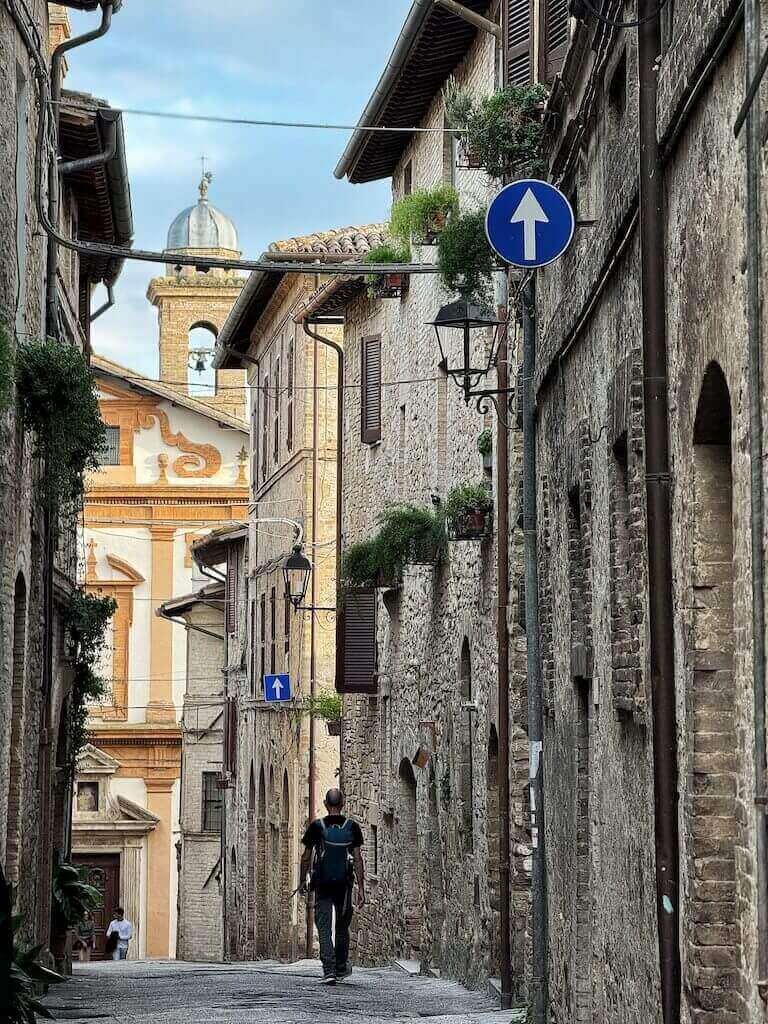
Bevagna – a less popular day trip from Perugia
Bevagna is a lovely small town to visit on a day trip from Perugia, but isn’t well connected by public transport. I recommend renting a car to get there. The drive only takes around 40 minutes.
I have no doubt you’ll love Bevagna as much as my sister and I did, thanks to its rich environmental, cultural and artistic heritage.
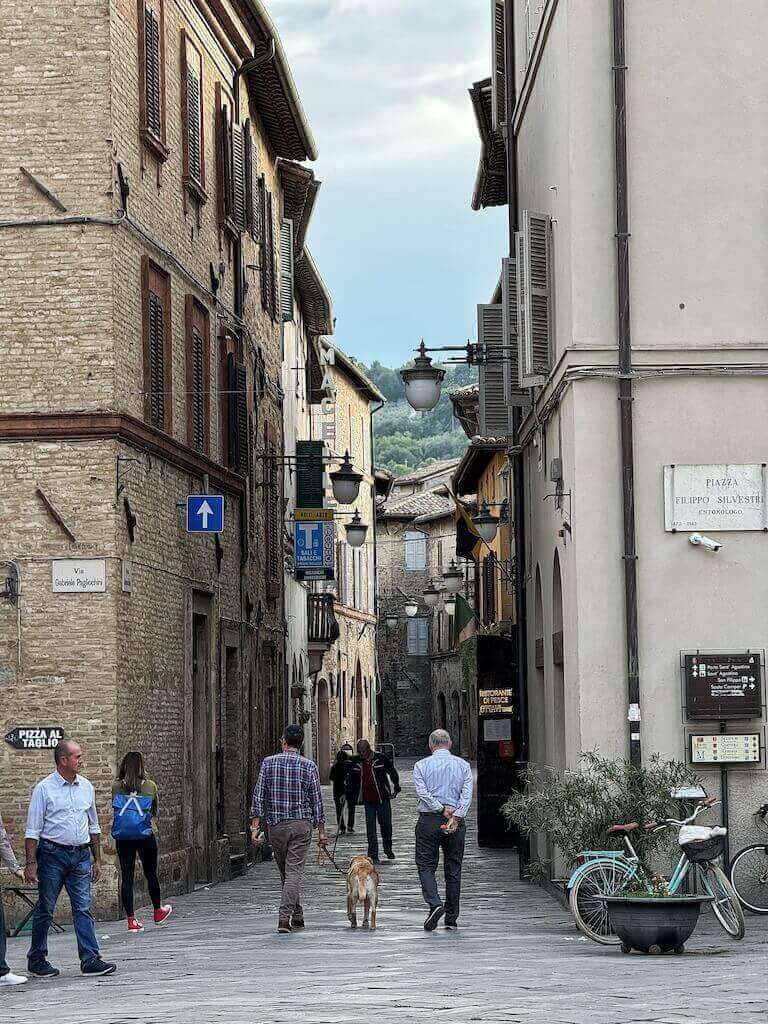
Use Piazza Silvestri as your starting point to explore Bevagna. This is the small town’s main gathering point.
Overlooking the square there are three churches, a theater and a fountain, inaugurated in 1896. It was built over a medieval well used to supply water to the historic center.
You will love visiting San Silvestro Cathedral, a real jewel of Umbrian-Romanesque architecture. Its interior walls are finely frescoed by painters of the Umbrian school. The collegiate church of St. Michael Archangel has a beautiful facade, portal and bell tower.
The Church of Saints Domenico and Giacomo houses two wooden sculptures from the end of the 13th century: Madonna with Child and a Crucifix.
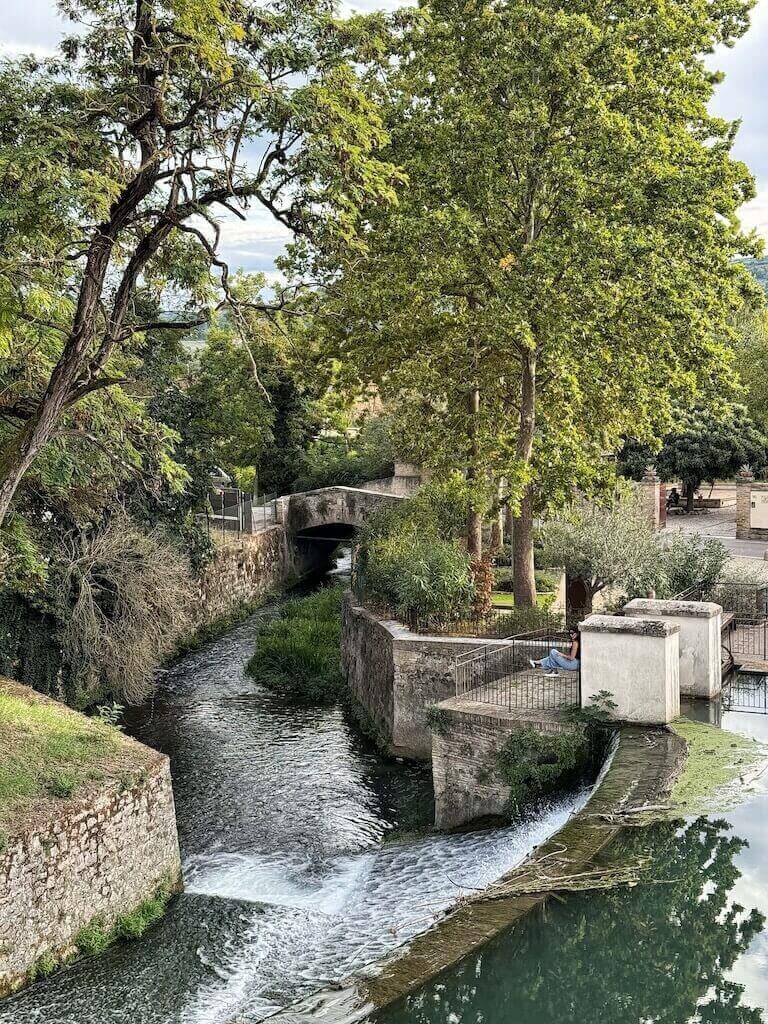
One of the places we enjoyed the most is the Accolta public washhouse, built in a reservoir by the damming of the Clitunno River. There are two small houses by the river, built around 1880, where officials collected the duties.
Another place I recommend visiting is the Palazzo dei Consoli, which now houses Francesco Torti Theater. It’s a tiny theater with only 140 seats, and it has a beautiful staircase that leads to a wide loggia covered by cross vaults.
Don’t miss the remains of the Roman temple, turned today into Madonna della Neve Church and the Roman public baths with a beautiful floor mosaic.
Ancient Roman walls surround Bevagna. Here, six gates provide access to the Gaite, Bevagna four districts. If you happen to visit in June, you may be able to experience the Mercato delle Gaite, the most popular historical event.
The inhabitants relive the historical period between 1250 and 1350 by dressing up in traditional clothing and reenact ancient crafts and arts, traditional music, jester performances, and knightly and archery competitions.
Foligno – a unique place to visit in Umbria
Foligno is one of the less touristy places to visit in Umbria. There’s a direct train from Perugia that reaches Foligno in about 40 minutes.
Foligno is located in the Umbrian Valley, at the confluence of Topino and Menotre rivers. It is an important commercial center with an interesting mix of history, art and culture.
This is where in 1472, the first edition of the Divine Comedy was printed. You can start your visit at the Museo della Stampa (Printing Museum) located in the old Orfini Palace in Piazza della Repubblica.
This is the center of social life in Foligno. The Town Hall, the Palazzo del Podestà, and Palazzo Trinci, a masterpiece of medieval architecture, all overlook the square. Here you’ll also find St. Feliciano Cathedral, an example of Romanesque architecture.
Not far from Piazza della Repubblica, the Oratorio della Nunziatella is a fine example of Renaissance architecture with frescoes by Perugino.
The oldest church in Foligno is Santa Maria Infraportas, a great example of Romanesque architecture. Inside there are beautiful 12th-century mosaics. Next to the Church you will find San Domenico Auditorium, that used to be a Church.
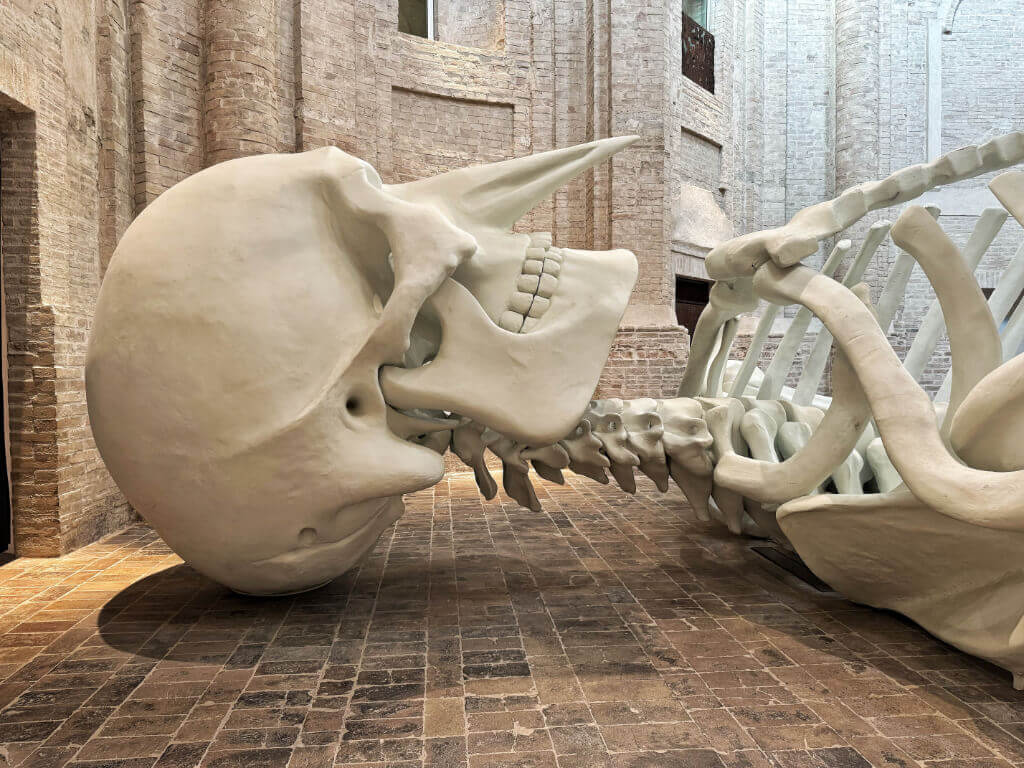
If you love modern art, don’t miss the Museum of Modern Art (CIAC) and the Cosmic Magnet. This gigantic human skeleton lying supine, anatomically correct except for the bird-billed nose, was created by Gino De Dominici. It was our favorite sight in Foligno when we visited.
PIN IT!

Claudia Tavani
Claudia Tavani was born and raised in Sardinia, and after moving between the United States and the United Kingdom, she's now back living in her hometown, Cagliari. She's a travel blogger and certified travel designer who loves planning trips and publishing guides, travel tips, and packing lists so that you don't have to. Owner of Strictly Italy, cat mom to Minnie. Loves pizza, hiking, archeology, cities, beaches, swimming, and running. Hates peppers.