
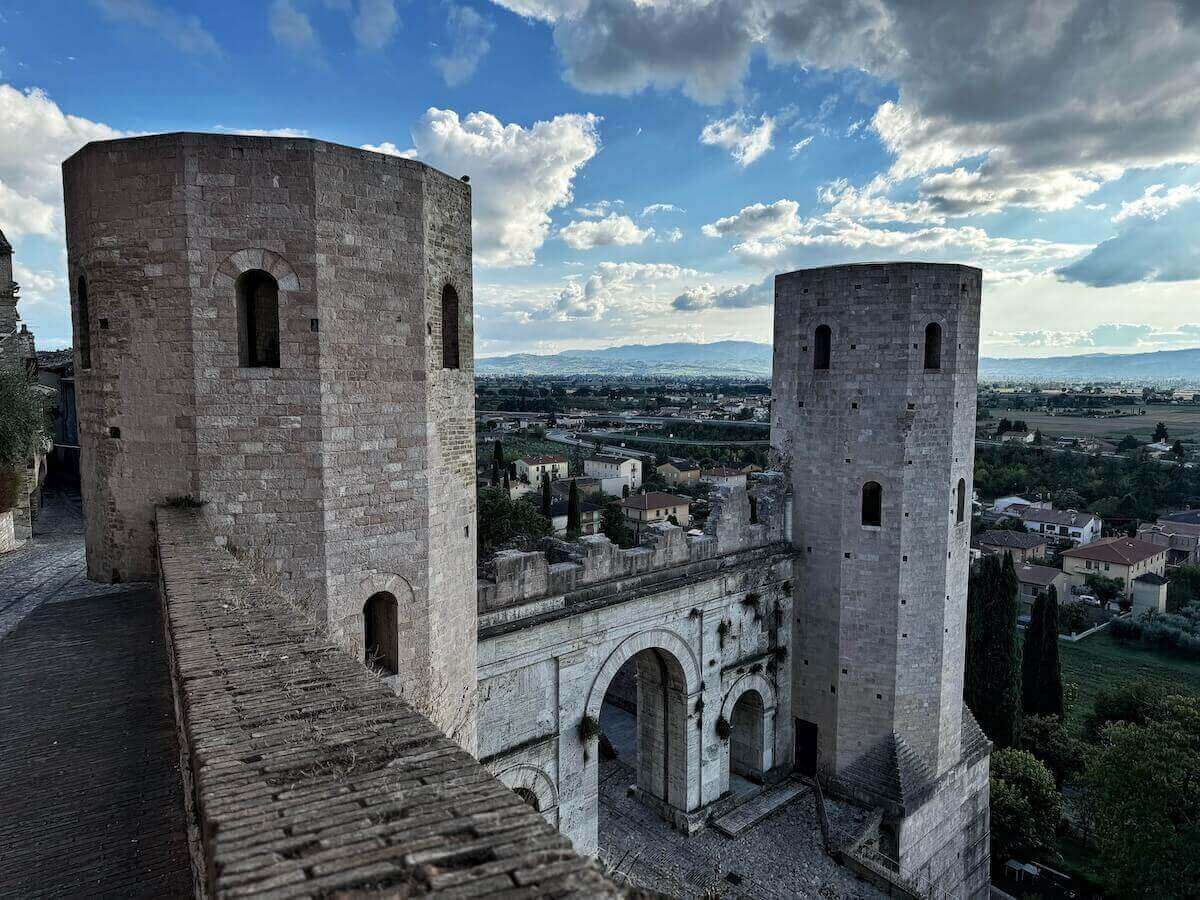
Spello is a small town in the province of Perugia, in the region of Umbria, a short drive from the more famous Assisi and the larger Foligno. My sister and I visited Spello during a recent trip to Umbria and explored it thoroughly. We spent our time wandering through its narrow alleys, checking out the hidden corners, and taking in all its immense beauty.
Located at the foot of Mount Subasio, Spello is surrounded by centuries-old olive groves. Walking through the narrow streets of the village, you can observe the signs of its long Roman history, such as the city walls, the majestic entrance gates, the remains of the theater, amphitheater, and even the Roman baths.
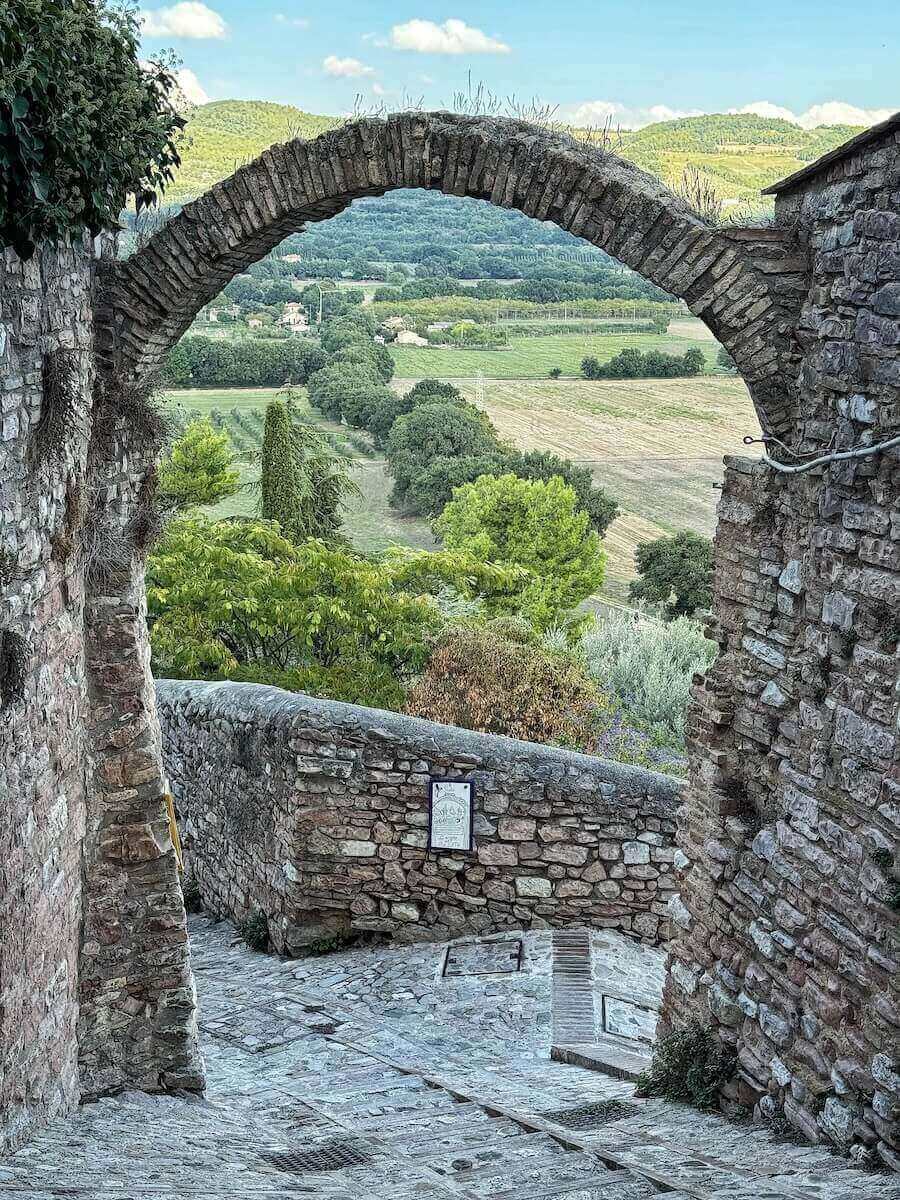
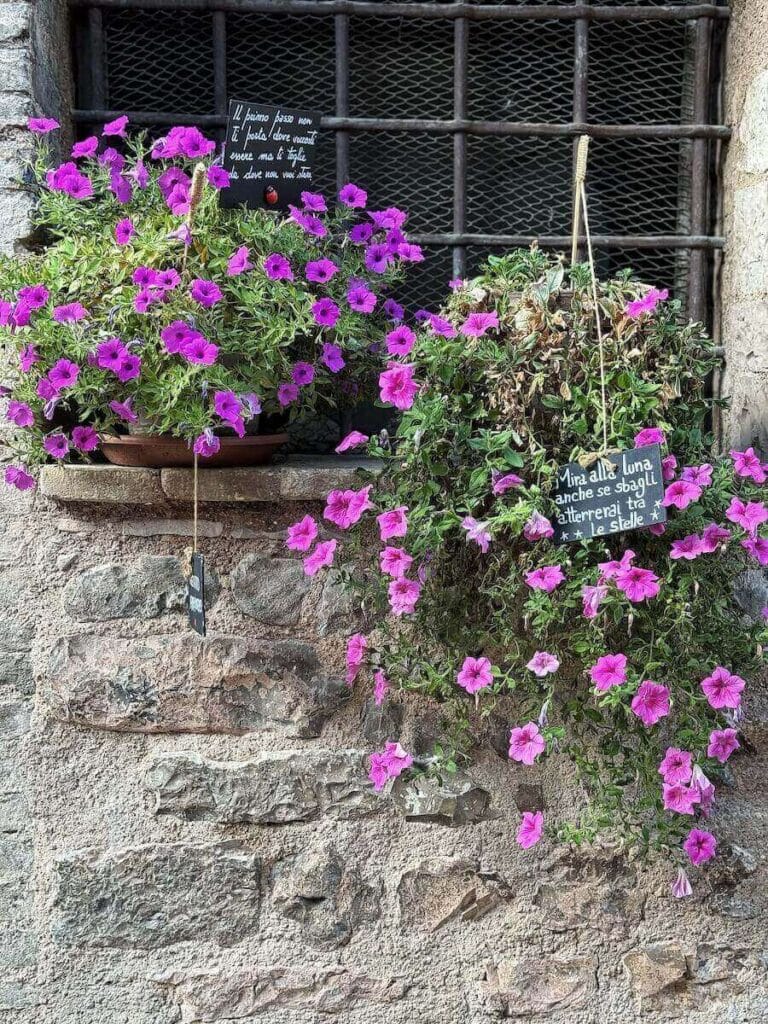
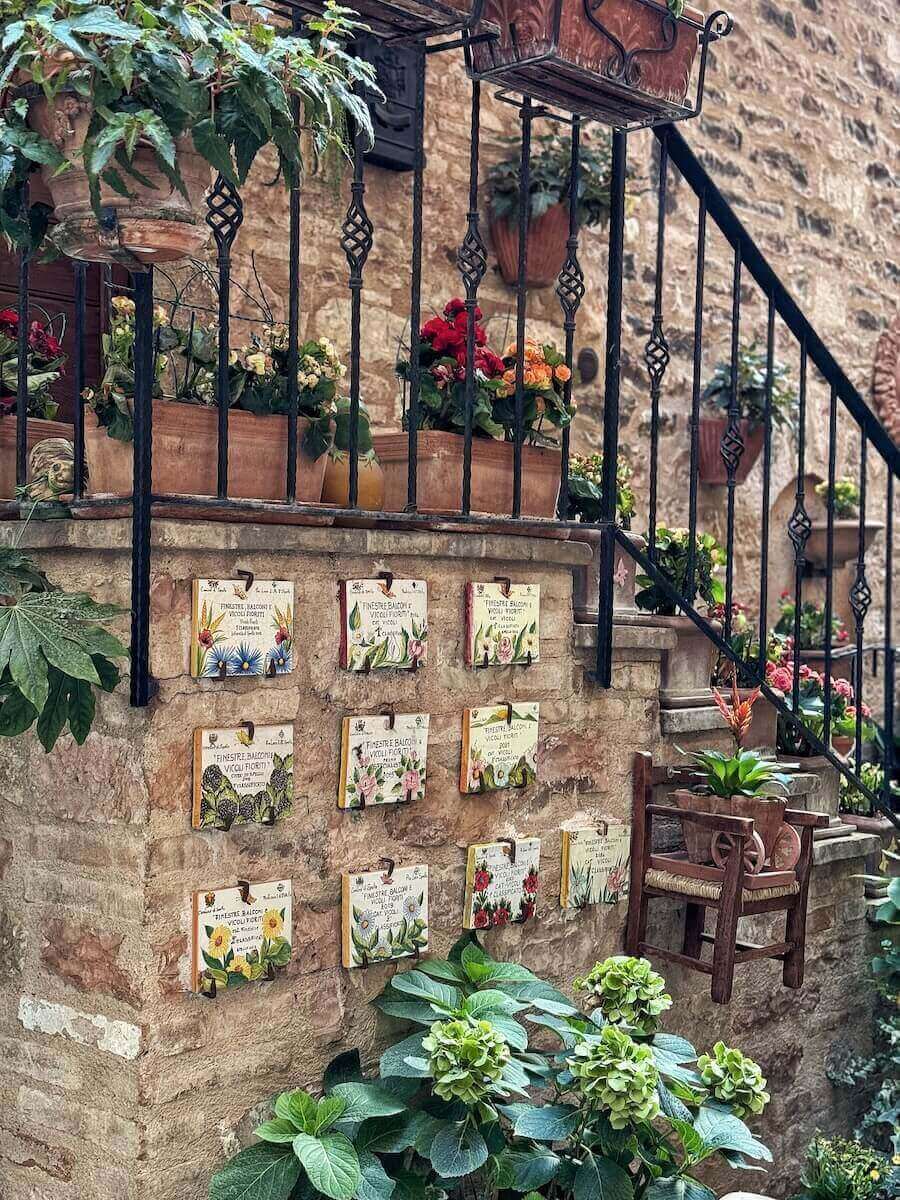
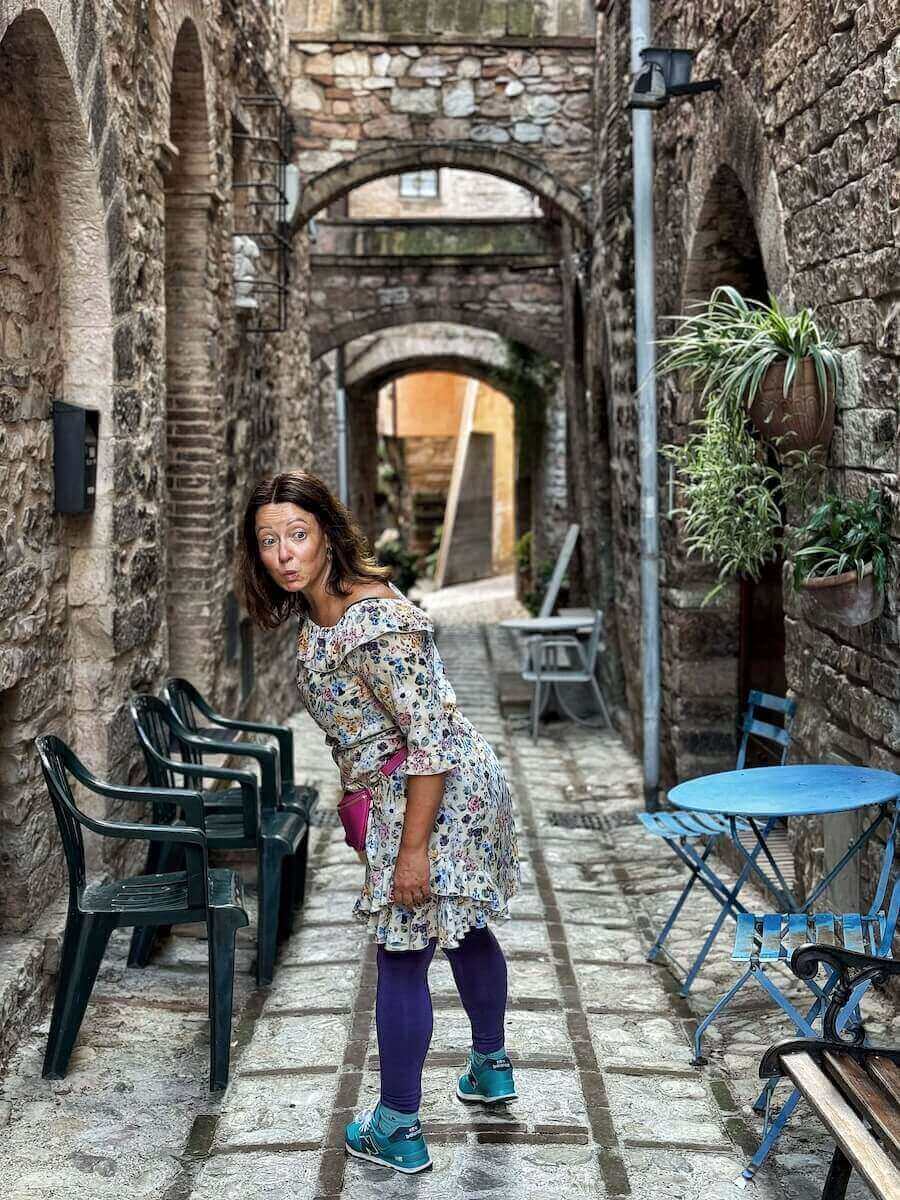
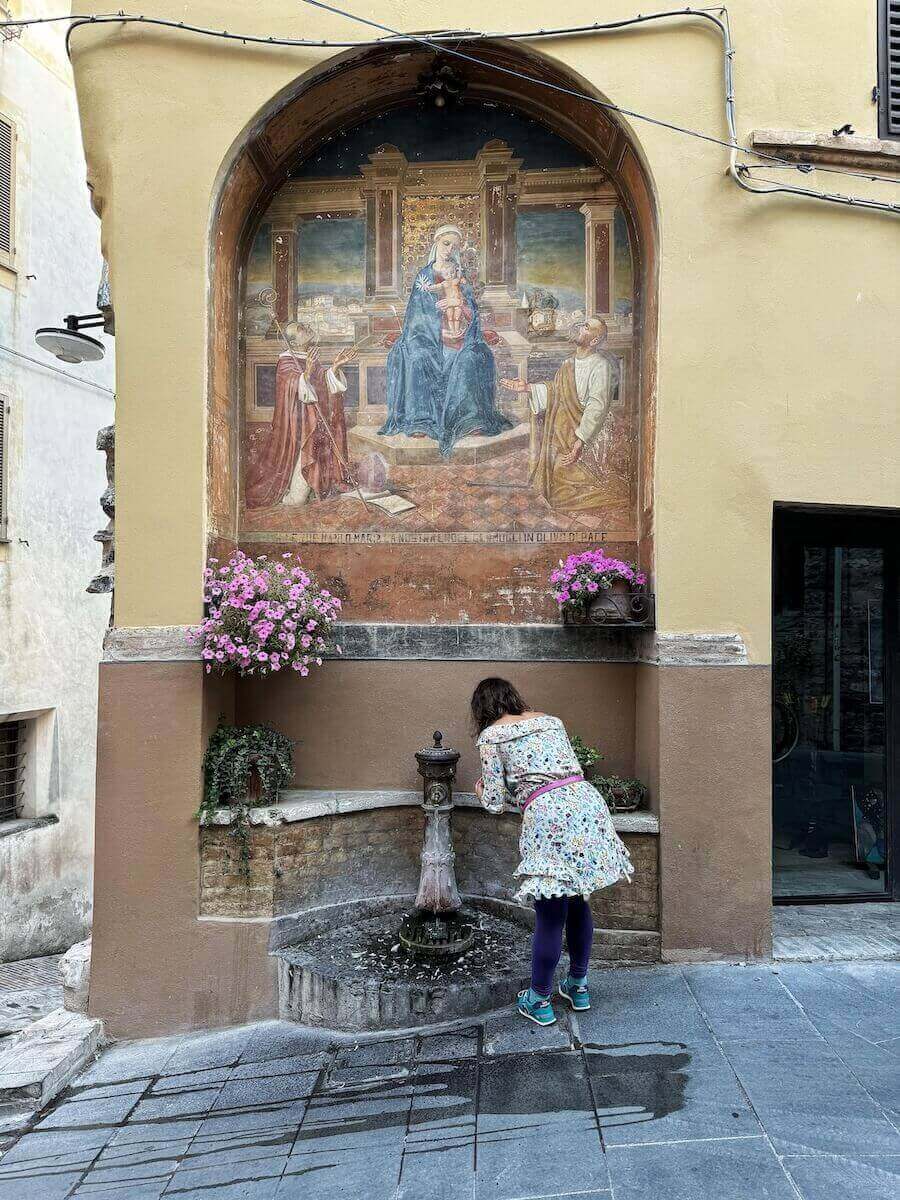
Wandering around town, you’ll see pink brick building facades, walk along narrow cobblestone alleys, and spot the town’s many arches and manicured flowers. Spello is a real jewel, every corner unique.
Curious to find out more? Continue reading as I will highlight all the best things to do in Spello Italy.
Are you looking to spend some time in Umbria and don’t know where to base yourself? Make sure to read my post Where To Stay In Umbria for help in finding a place to stay.
I also have a guide on The Must-See Places In Umbria that you may want to read before your trip.
Why Visit Spello, Italy?
Here in Italy we often refer to Spello as one of I Borghi Più Belli d’Italia – The Most Beautiful Villages in Italy. Visiting Spello, you will quickly understand why.
This small hilltop town is packed with history and art. Its narrow alleys are lined with flowers, making it colorful and charming.
You could say Spello is one of the hidden gems of Italy – and it certainly is compared to other more famous places to visit in Umbria like Assisi or Orvieto. In fact, Umbria isn’t the most visited region of Italy either. Visit Spello, and you’ll likely have this small town to yourself – or share it with other Italian tourists at most.
The only time Spello gets crowded is in June, during the Infiorate di Spello festival, when the streets are decorated with magnificent floral carpets.
I spent a full day in Spello when I visited with my sister. We rented a car and used Perugia as our base to explore the surroundings, but found Spello would have been perfect too, as it’s equally close to Assisi, Perugia, Spoleto, and other Umbria destinations – it really is the green heart of Umbria.
How To Get To Spello
Getting to Spello is fairly easy. The best airports to fly into to reach Spello are Perugia San Francesco d’Assisi Airport (PEG) and Rome Fiumicino (FCO). From there, you can reach Spello by car, by train or by bus.
Here’s a bit more information.
By car
The easiest way to get to Spello and to move around this part of Italy is by car. Having a car will give you complete freedom to explore the many lovely small towns and parks at your own pace, without a set itinerary.
You can rent a car at the airport (I recommend using Discover Cars, it’s the best comparison site for car rental) and it takes just 20 minutes to drive to Spello.
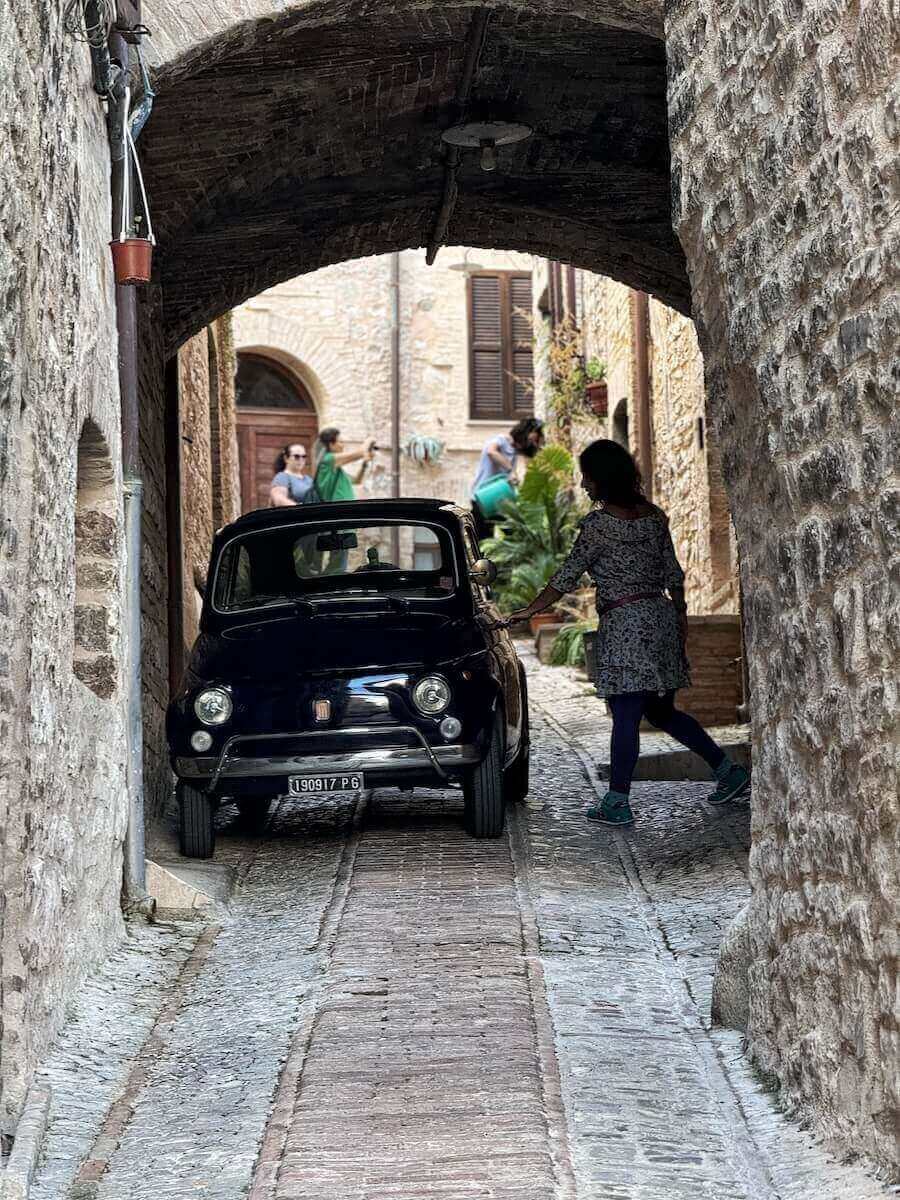
Once in Spello, many accommodations have a parking spot. Or if you are just spending the day there like we did, you can count on the many parking spots outside the historic center, which is pedestrian-only.
By public transport
There are direct trains to Spello from Assisi – it takes just about 15 minutes, and the train station in Spello is located about 10 minutes walk from the Porta Consolare, one of the town’s gates.
If you are landing in Perugia Airport, you’ll first have to take a bus to Assisi, and then take the train from there.
There are direct trains to Spello from Rome Termini Station (you need to take a train to Arezzo and get off at Spello), and from Florence Campo di Marte Station.
Use the App of Trenitalia or Omio to look for the train timetable or to buy bus tickets.
You’ll also find direct buses to Spello from other smaller towns in Tuscany or Umbria, too.
Where To Stay In Spello
Most people who visit Spello go there for just a day, but this is an excellent spot to base yourself for your Umbria trip. You could opt to stay in a small bed and breakfast in the historic center of town, and there are various you could consider.
Here are my top recommendations for Spello:
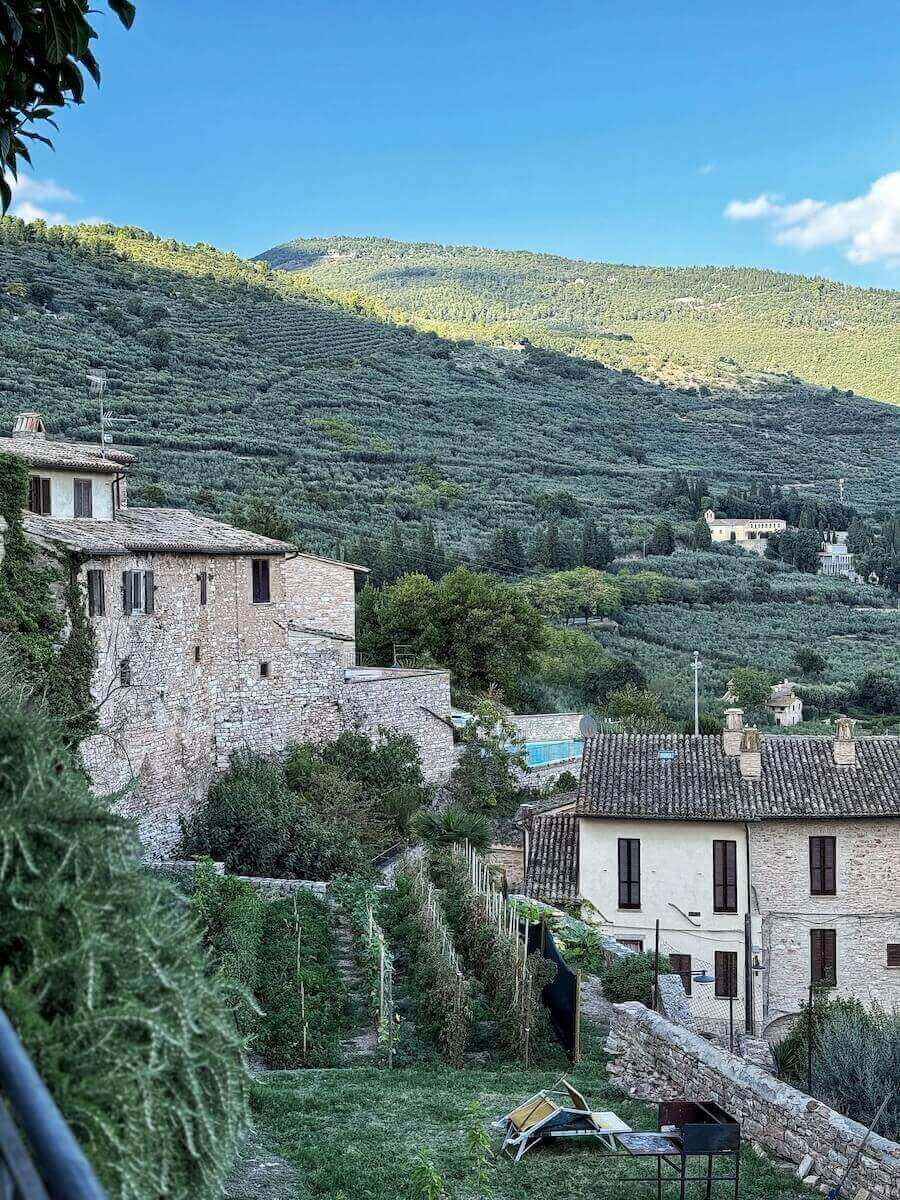
- Villamena – This is by far the best place to stay in Spello. It’s a beautiful bed and breakfast in the historic center with cozy rooms, a beautiful garden with a view of the hills and countryside and a swimming pool for guests.
- Pekko – Another option would be to stay in an agriturismo just outside of town. Pekko is just a few minutes drive from Spello. It has rooms with a view, and a nice pool for guests use and it’s immersed in the quiet Umbrian countryside.
9 Best Things To Do In Spello Italy
Spot the Porta Consolare and other gates
Spello boasts one of the oldest and best-preserved fortified walls of Roman origin in Italy.
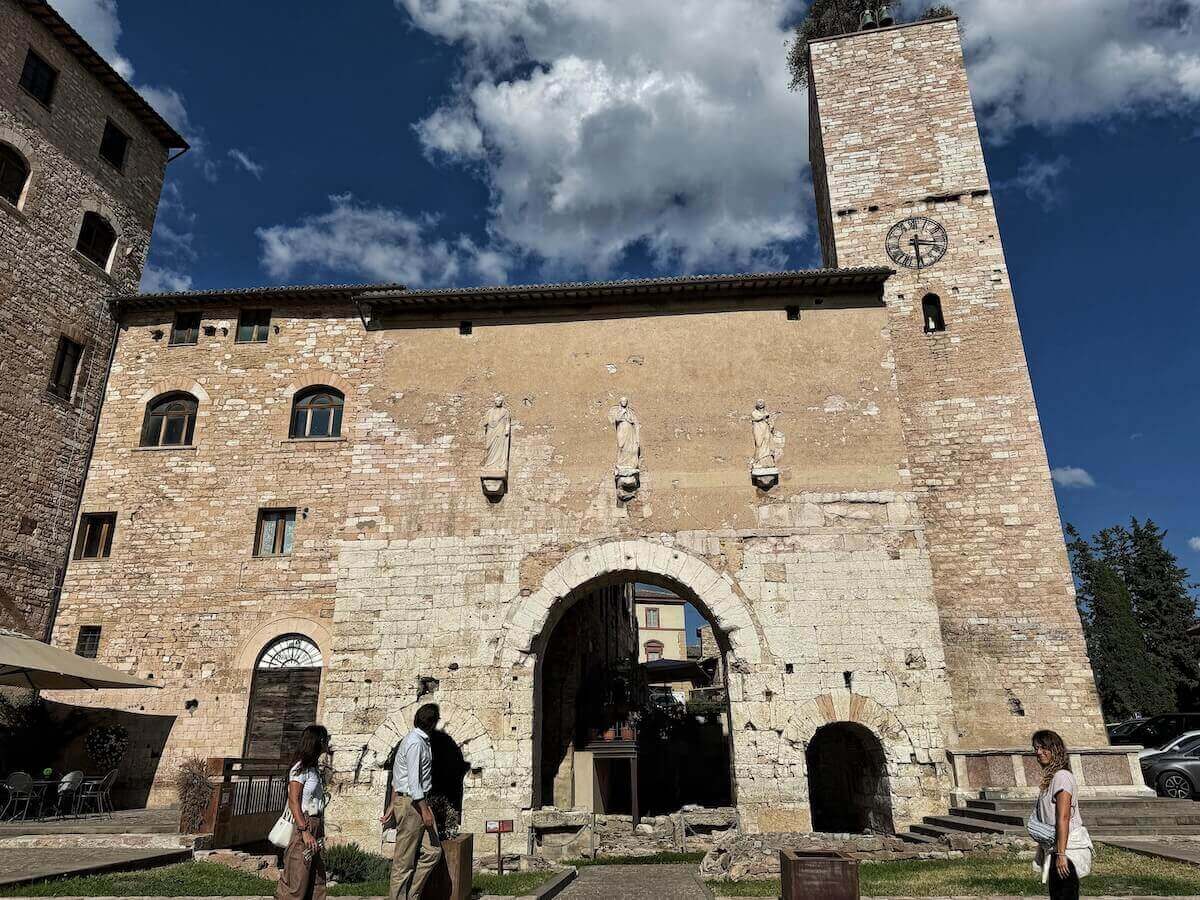
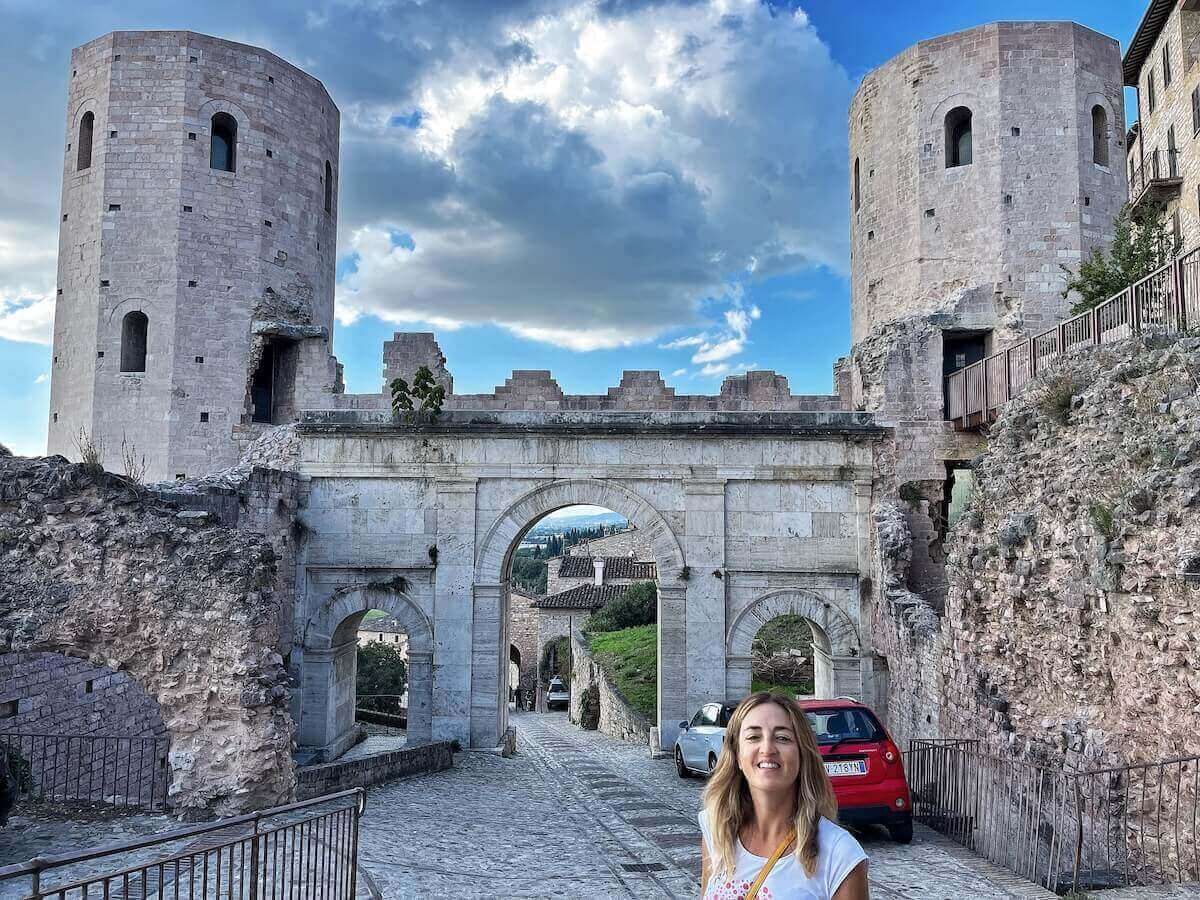
The Porta Consolare, or Consular Gate in English, was the main access point to the town from the southern slope.
Made of limestone blocks coming from Mount Subasio, the Porta Consolare has three fornices, the central one used to be for chariots and the two smaller side ones were for pedestrians. On the front, there are three marble statues, and you can also see the medieval tower on the side.
The gate has always been in use, so it’s been restored many times over the centuries. Under the central arch, you can literally see the layers of history, belonging to the pre-Roman, Roman, and medieval ages: this means that the first road in town is even older than the gate, being erected during the triumvirate era.
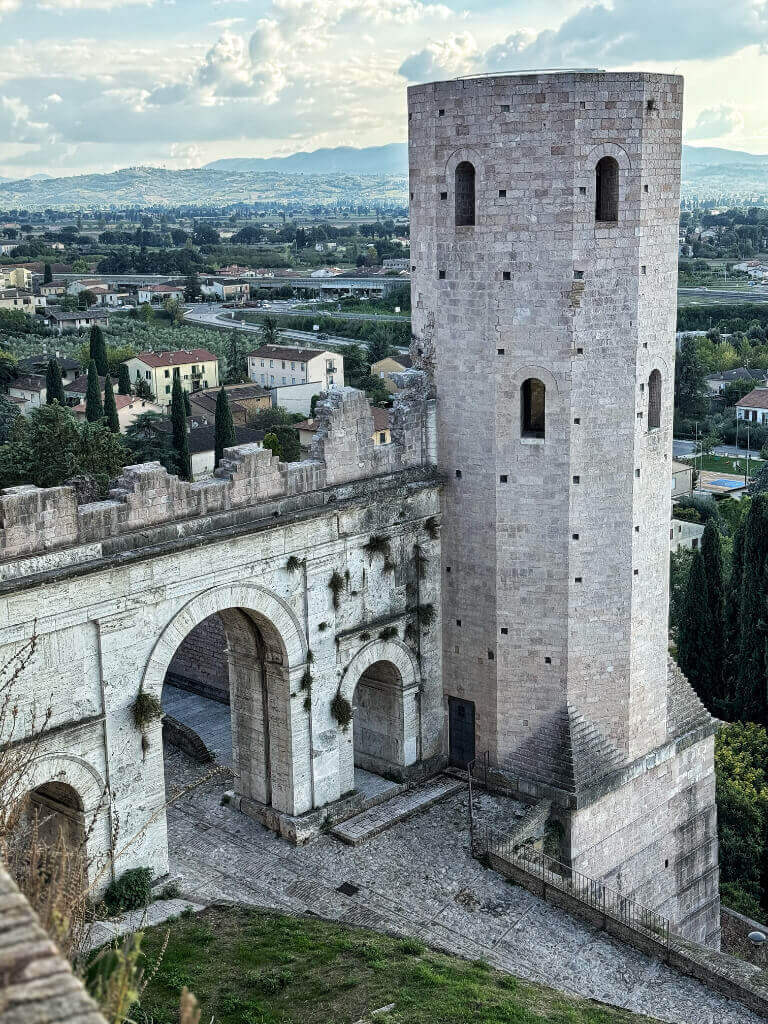
Along the city walls, there are other stunning gates. Porta Venere and Porta Urbica are of particular significance.
The majestic Porta Venere is named after a nearby temple dedicated to the goddess of beauty. It is marked by three arched openings, much like the Porta Consolare. On either side, you will see the Propezius Towers, probably built in medieval times and named after the Roman poet.
The Urbica Gate stands out for its grandeur and is topped on one side by a small watchtower.
Visit the many Churches of Spello
Chiesa di Santa Maria Maggiore
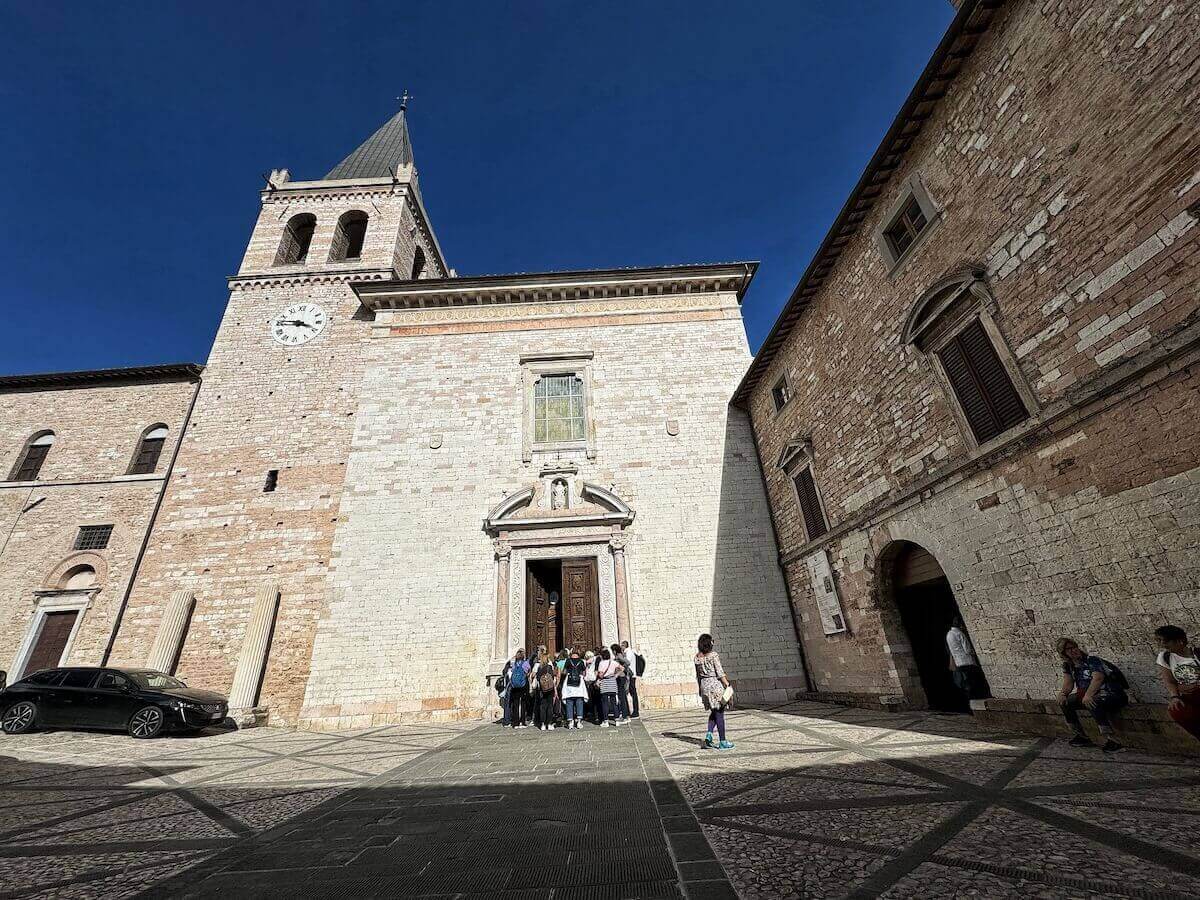
The Church of Santa Maria Maggiore, also known as Collegiata, was founded between the 11th and 12th centuries, but the facade dates back to 1644, when the building was enlarged. It is divided into two parts: the priory building, where the parish priest lives, and Palazzo dei Canonici, home to the Pinacoteca Civica.
The masterpiece in the church is the Baglioni Chapel, commissioned in 1500 by Troilo Baglioni to Bernardino di Betto, better known as Pinturicchio. Here you can see the Deruta majolica floor, as well as Pinturicchio’s frescoes that are all over the chapel wall. They depict Mary’s life and Christ’s childhood.
Don’t miss the marble altar by Gaius Titienus Flaccus, now used as a stoup; the Renaissance sandstone pulpit by Simone da Campione; and the paintings by Pietro Vannucci, known as Perugino.
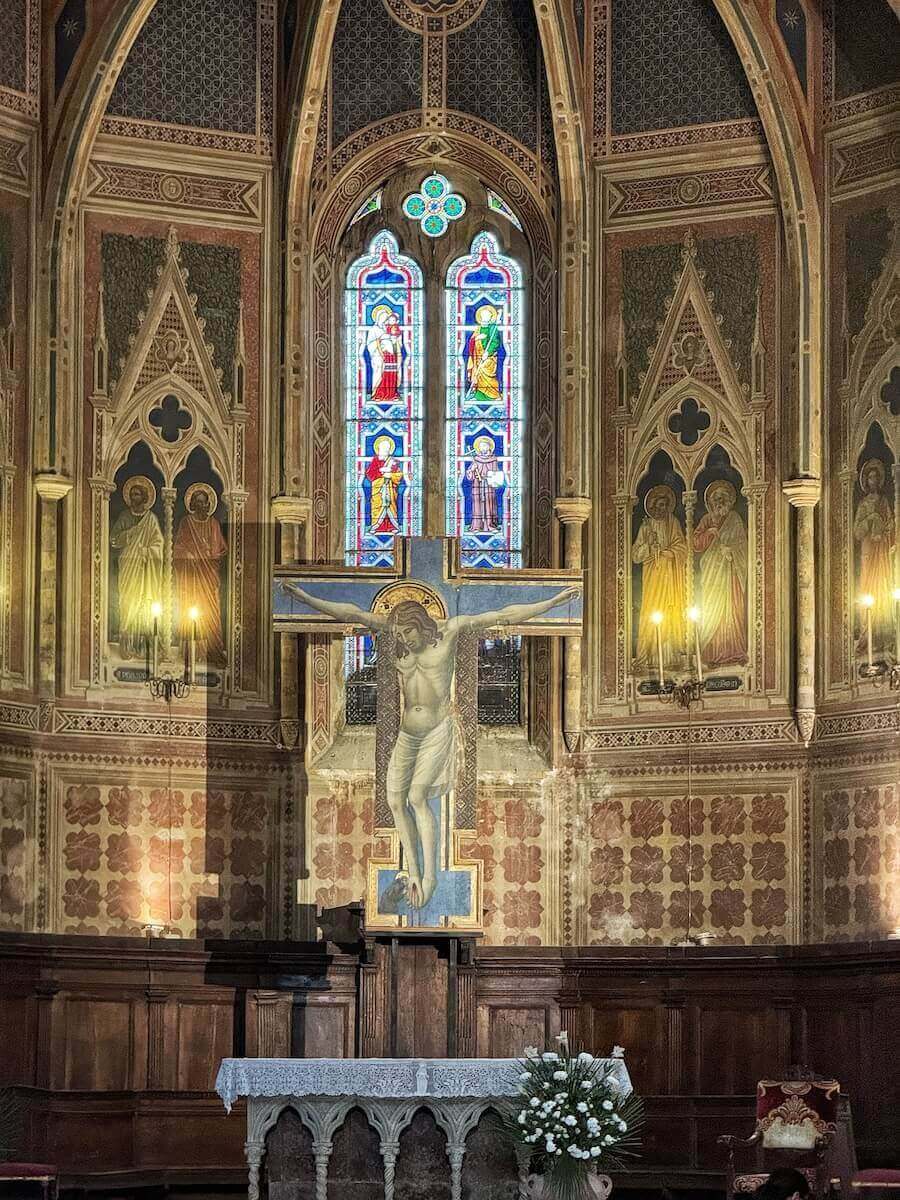
Cappella di Sant’Anna o Tega
The original name of this church is St. Anne’s Chapel, because it used to be a hospital administered by St. Anne Disciplined Fraternity since 1362. But in 1571, the hospital was suppressed.
In 1895, it turned into a workshop. The owner was Pietro Tega, a tailor who, together with master Umberto Perini, accidentally discovered in 1911 the frescoes that, until then, had been hidden by a coat of plaster.
After the discovery, the Chapel became municipal property, was restored, and opened to the public.
Despite its small size, the walls and vaults of the church are totally covered with frescoes of 1461, by two artists from Foligno: Niccolò di Liberatore, known as the Pupil, and Pietro di Mazzaforte, son of the well-known Foligno artist Giovanni di Corraduccio and father-in-law of Nicolò himself.
Unfortunately, the Cappella di Sant’Anna is generally closed. It opens only on special occasions, such as events and small exhibitions.
Chiesa di Sant’Andrea
Near Santa Maria Maggiore Church, along Via Cavour, you will find the small Church of St. Andrew. Built in 1025, it has undergone numerous interventions over time, including one in 1253 by the Franciscan Friars Minor, who restored the church and built the convent.
The Church has a Latin cross plan with a single nave. The Baptistery Chapel was commissioned in the 15th century by Grifonetto Baglioni, who is portrayed here.
The most fascinating work is the Altarpiece. The panel was begun in 1506 by Pintoricchio and completed in 1510 by Eusebio da San Giorgio and depicts the Madonna and Child among Saints.
The altar dates from the late 13th and early 14th centuries. Inside a gilded wooden urn, it holds the relic of Blessed Andrea Caccioli.
Spend some time in the Pinacoteca Civica
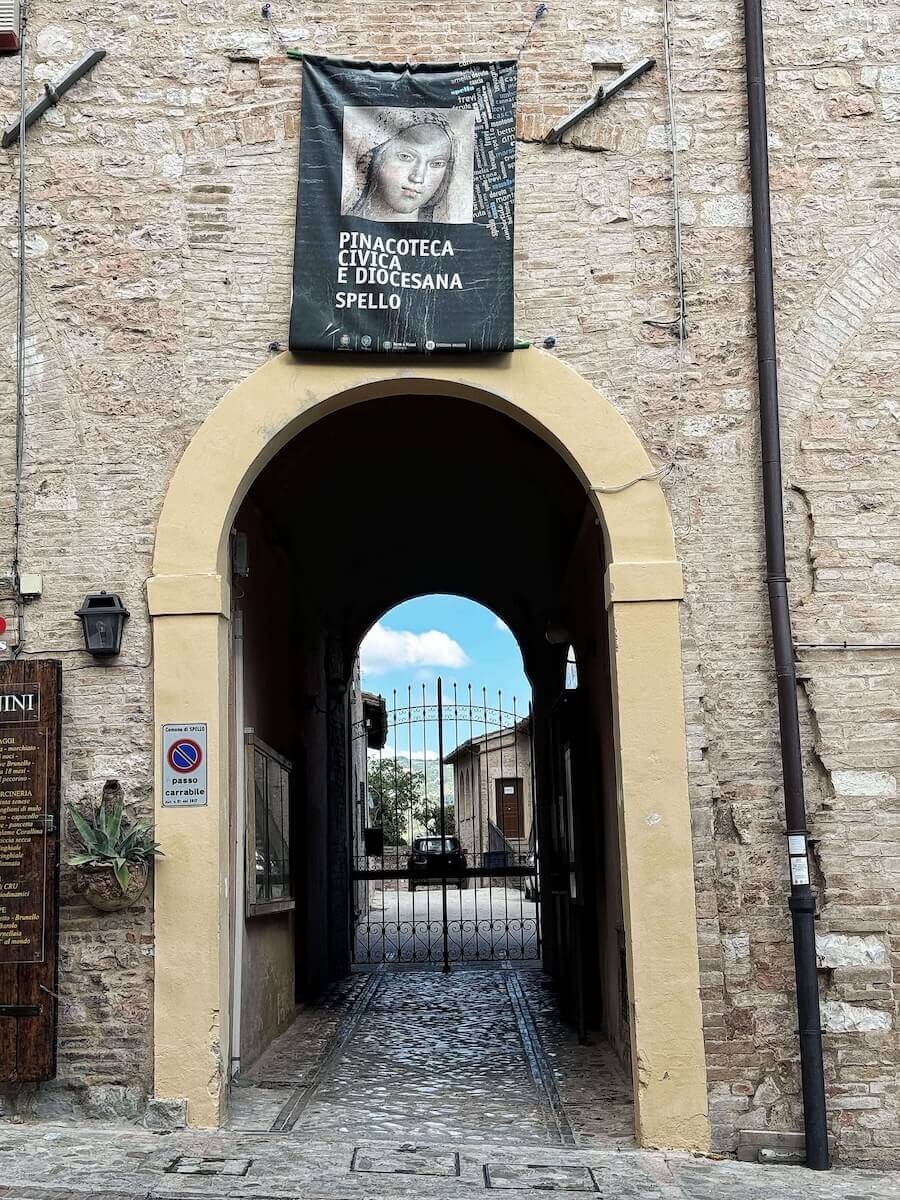
In 1916, Prior Luigi Pomponi collected the most significant art objects from Collegiate Church of Santa Maria Maggiore in the Chapel of the Savior, thus starting an art gallery. The collection was expanded in 1920 when the municipality of Spello and the Congregation of Charity added more pieces.
The Civic Art Gallery has been located in the Palazzo dei Canonici, a 16th-century building next to Santa Maria Maggiore Church in Piazza Matteotti, since 1994.
Visit to admire various sacred paintings, sculptures, textiles, and furnishings. Among the various works you will find the Madonna Enthroned, a 13th-century polychrome wood sculpture (whose child was stolen in 2008); the 13th-century Deposed Crucifix; Paolo Vanni’s 1398 gilded silver processional cross; and Pinturicchio’s Madonna and Child.
Pass by the Arco Romano
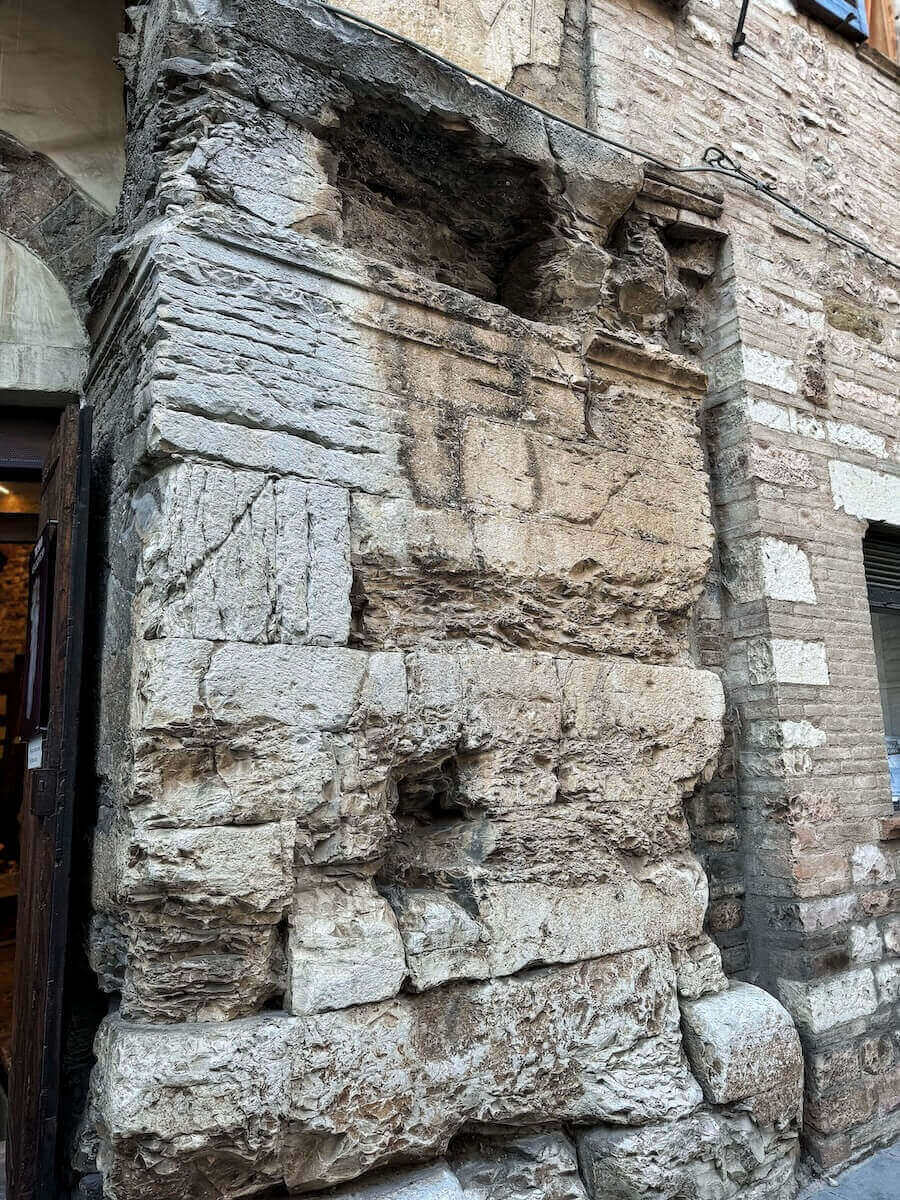
Numerous remains of Roman times are visible in the historic center of Spello, bearing witness to the town’s ancient origins: among them, there’s the Roman Arch in Via Giulia. Also known as the Arch of Augustus, it used to be one of the gateways to the city.
Unfortunately, you won’t pass under it while walking down the street, because only some parts of this arch are still evident. We honestly had trouble locating it in the street, as we didn’t know what to look for and kept walking until we eventually asked and were pointed in the right direction.
It’s literally just a piece of an arch that’s now built within the walls of another building. Have a look at the inscription from the Augustan period, the solid foundations, and the large blocks of white limestone.
Right by the arch, a door takes you to a private collection of old Barbie dolls. I am a massive fan (it was my favorite doll growing up), so of course I had to take a look!

Wander around the Old Town
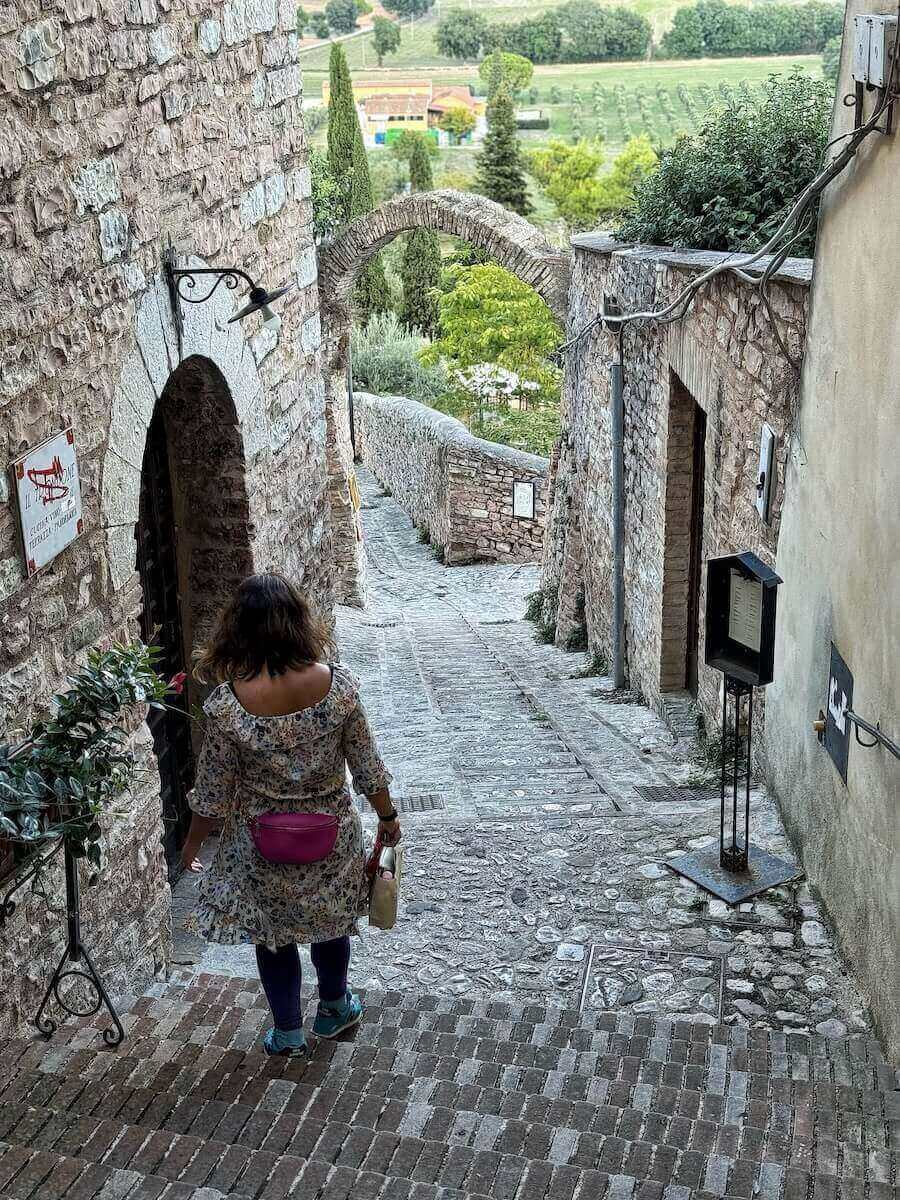
Honestly, this is the best thing to do in Spello Italy! When my sister and I visited, we just spent endless hours wandering around the old town, discovering the quietest alleys, checking out all the most antique buildings.
Make sure to walk along Via Consolare, the main street of the historic center, and head toward Piazza della Repubblica. Locals use it as their meeting place, and it is also the focal point during the Infiorate festival (more about it in a bit). On the square, there is the Municipal Palace, built in 1270 and expanded in the 16th century.
Between Piazza S.Andrea and Piazza della Repubblica, you can see the remains of the Roman forum, now encompassed by modern buildings.
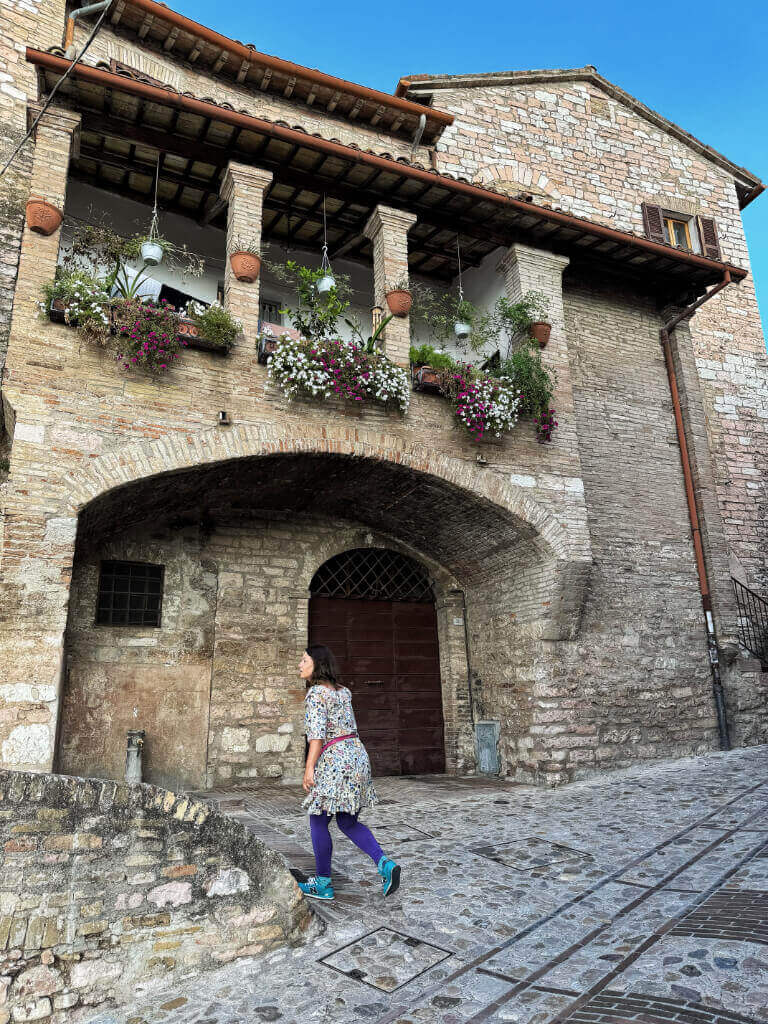
Continue to Via dei Cappuccini and pass under the Arch of Cappuccini, which once connected the highest part of the town with Mount Subasio.
Passing under Porta Venere, you will arrive at the Amphitheater. It dates back to the 1st century AD, during the glorious period of the Colonia Julia. You can distinguish its elliptical shape, small parts of the original tiers of steps and flooring, and finally, large ashlar blocks that supported the podium and remnants of the corridor.
Admire the view from the belvedere and then head toward Villa Fidelia.
Visit Villa Fidelia
Outside the old city walls of Spello, you will find Villa Fidelia near the Roman Amphitheater and St. Claudius Church. It stood on what was considered a sacred area together with the Temple of Venus, the Theater, and the Roman Baths.
Built in the 16th century by the Urbani family, it was bought by Teresa Pamphili Grillo in 1700. She soon started work to enlarge and renew the villa. The building changed property again in 1923, when it was bought by engineer Decio Costanzi. He divided it into two parts – one was sold to the Missionary Sisters of Egypt and the other to the Province of Perugia.
Villa Fidelia (or Villa Costanzi, the name of its last owner) complex includes a Baroque garden, an Italian garden, and a cypress park. The main building has a rectangular plan and five floors, only three of which are above ground because of the slope of the hilly terrain.
The facades are richly decorated in baroque and neoclassical style.
The villa is now open to the public and houses temporary exhibitions, as well as concerts and performances – just make sure to visit the official site for opening hours and fees. On the other hand, the park is always open to visitors.
And the Villa Romana di Spello
Not far from the Consular Gate, you will find the Villa Romana. Discovered only in 2005, the villa dates back to the early 4th century AD. Research suggests that the splendid mosaics were made by Roman craftsmen, hence its name.
The villa boasts numerous rooms, and each is named after the designs on the floor: some mosaics depict animals from the nearby Subasio area, others wild and fantastic animals, geometric designs, birds, and male figures.
Go on a bike tour along the path of Olive Oil
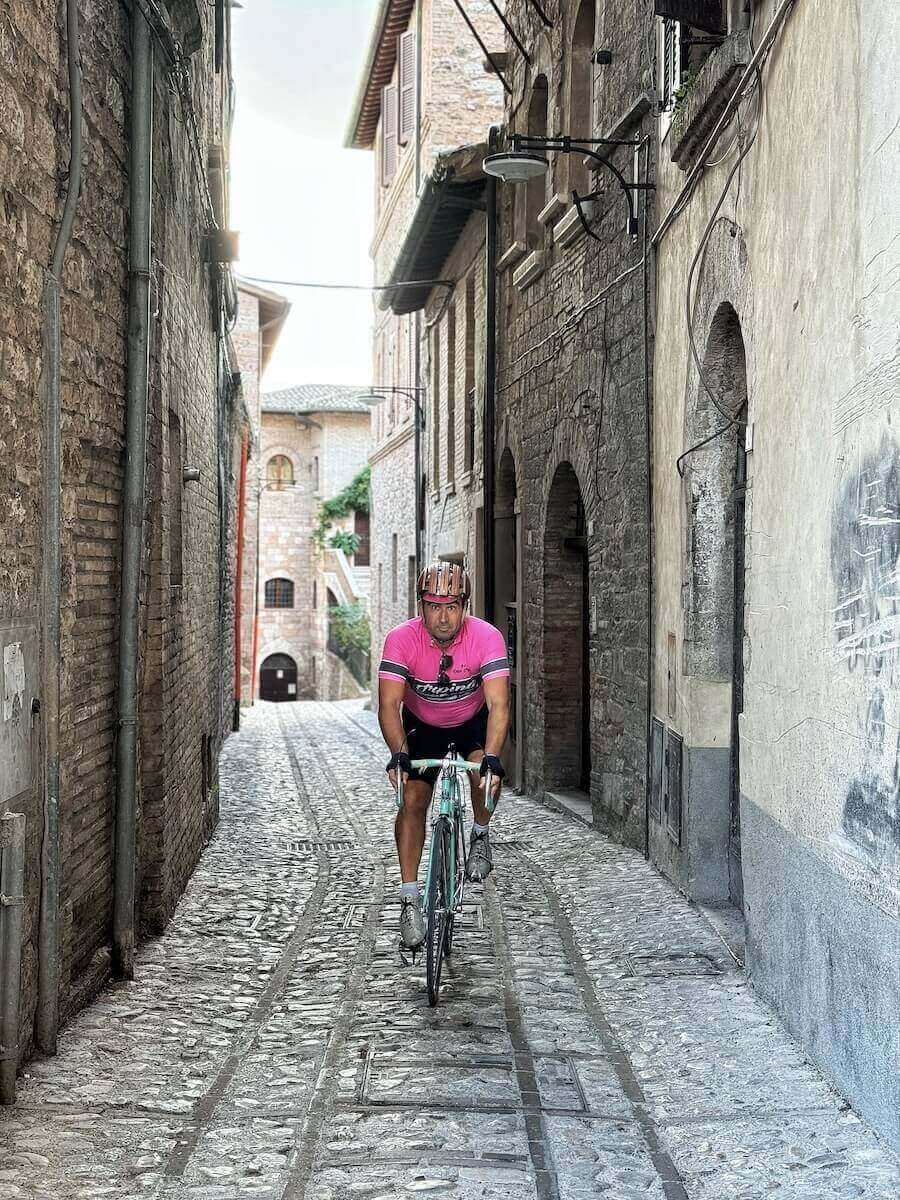
If you love nature, one of the best things to do in Spello Umbria, is a bike tour along the spectacular Olive Path Trail that connects Spello to Assisi.
The views along the trail are breathtaking, and the landscape changes together with the seasons: in springtime you will see intense shades of green; whereas during the summer trees are in full bloom with fruits, and in autumn everything turns to red – that’s harvest time and olive picking time.
The best way to explore the Olive Path Trail is on a guided bike tour such as this one. You can opt for an e-bike tour that goes along the biking trails, so away from traffic. You will visit some local family-run farms, learn about olive trees and try different kinds of olive oil.
There are also tours such as this one that include wine tasting – you stop by local olive mills (frantoio, in Italian) and try olive oil, local produce and wine.
If you are visiting Umbria, you should not skip Assisi! My post What To See And Do In Assisi will help you plan your visit.
Enjoy the Infiorate festival di Spello
Every year, during Corpus Christi night, the ninth Sunday after Easter, the Infiorate di Spello festival is celebrated.
This is both a religious event and an artistic competition in which several teams of flower composers create colorful paintings on the ground, using only flower or plant elements.
During the nigh,t each team must complete its flower carpet, and by Sunday morning, the village is an open-air museum. Try to imagine the beauty, colors, and fragrance of these flower carpets!
The festival dates from 1930, when a local woman drew a simple floral image on the road. Since then, residents began this challenge, which over the years has led to the creation of increasingly beautiful, complex, and large works using just flowers.
In the months before the festival, each team studies, plans, and prepares for the big event. On Saturday afternoon, the streets of Spello are closed off, and the works start with the placement of lighting systems and rain and wind protection systems.
On Sunday, the Procession led by the bishop goes through the decorated streets of Spello, and the winning team is elected. Besides this competition, there are other parallel ones, such as the best decorated balcony. Spello reaches the height of its beauty in these days.
Pilgrims, master florists who participate in the competition, and tourists come to Spello for the Infiorate, so finding lodging may be difficult. If you plan everything in advance and don’t mind the crowds, you will be rewarded by the beauty and fragrance of these masterpieces.
Make sure to check the official website of the Infiorate di Spello for the exact dates, in case you don’t want to miss it!
FAQs about Spello, Umbria
Spello is a small, ancient walled town, located on the southern side of Mount Subasio (in the Apennine mountain range that crosses central and southern Italy). It’s in the lesser-known region of Umbria, in central Italy, a 30-minute drive from the capital of Umbria, Perugia, a 20-minute drive from Assisi, and 25 minutes from Spoleto.
Yes, Spello is worth visiting. In fact, not only is Spello worth visiting, but I recommend it.
Known in Italy as one of the “Borghi Più Belli d’Italia” (most beautiful villages in Italy), this small town is well-kept, packed with history (you can visit museums and ancient Roman ruins), and an easy drive or train ride from Perugia, which means you can also easily visit it on day trips from Perugia.
Spello is known in Italy for the infiorate. These are carpets of flower petals, which are created by real artists to celebrate Corpus Christi.
There are many attractions and things to do in Spello. These are just some of them:
Historical Center
Infiorate di Spello festival
Cappella Baglioni
Torri di Properzio and Porta Venere
Chiesa di Santa Maria Maggiore
Roman Acqueduct of Spello
Half a day is enough to explore Spello – that’s how much we spent when we visited.
When in Spello, you may want to consider following the Olive Path Trail on a guided bike tour such as this one, or you could join a tour such as this one that includes wine tasting, stops by local olive mills (frantoio, in Italian) where you also try olive oil.
The historic center of Spello is pedestrian-only, but you won’t have trouble finding a spot to park your car. There’s free parking just before the city gates, and in doubt, you could just look for a “parcheggio” (Italian for parking) on Google Maps to find a parking lot.
We decided to base ourselves in Perugia for our Umbria trip, but Spello is centrally located and a great place to stay in Umbria. If you decide to do that, I recommend renting a car (we always use Discover Cars to get the best deals on car rental) as it’s the best way to travel in Umbria.
Final Considerations
Most people visiting Umbria head straight to Assisi or Orvieto, but a stop in Spello is a must. This small town is beautiful, well-kept, and full of history, and it’s easy to get there by train from Perugia. It’s actually one of my recommended Perugia day trip destinations.
If you love flowers, the best time to visit Spello is in spring. Particularly in late May or June, during the Infiorate festival, when Spello is really at its best. But if you want to come during those days, you should plan your trip in advance. Keep in mind that it might be hard even to walk through the village.
The small town is also charming in the fall (that’s when we visited). You can spend just an afternoon in Spello – like my sister and I did – to get lost in its alleys or stay a few days to explore the countryside and villages nearby.
And if you are looking for a slightly larger town to visit, consider going to Spoleto – it’s a real jewel!
Recommended Readings


PIN IT!



Hi, Claudia! Twenty five years ago you tutored my husband, Andy, our daughter, Laura, and me in Italian before our 3 month sabbatical to Italy from Colorado. We found you on the internet and continue to follow you as we travel to different places in the world. We actually have an apartment in Spoleto and visit Italy regularly. Thank you for all of your insights. We were just in Spello (love that town) and saw something for which I cannot find a description anywhere. I can’t post a picture but it looks like a tower on a castle. Do you have any idea what it might be? Grazie
Hello Carle, what a lovely surprise! So nice of you to remember me and to write me. I think what you are probably thinking of is the Porta Consolare (Consular Gate) which has a tower next to it. If you look on Google Images, you can check if it’s that one.