
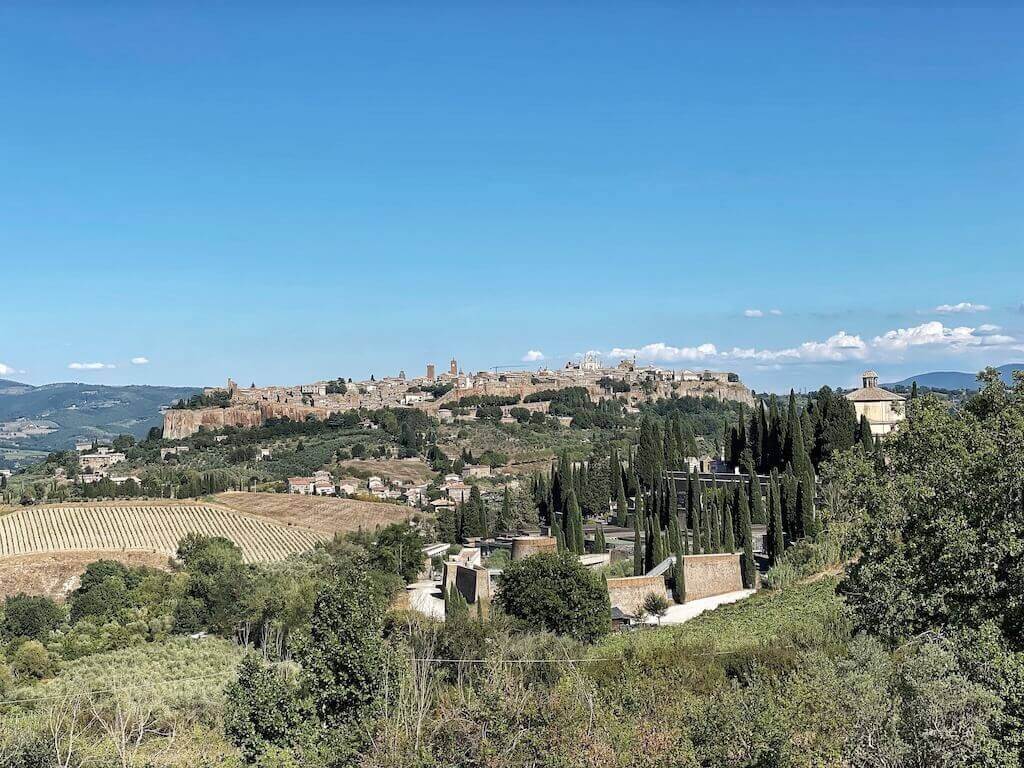
Orvieto is one of Italy’s most underrated medieval towns. If you’re looking for something more off-the-beaten-path in central Italy, this is the place to go.
It’s located in southwestern Umbria, in a region called Tuscia, easily reachable from Rome, Perugia, and Viterbo (Tuscia’s capital and my dad’s hometown). Many people visit on a day trip from Rome, but you can easily spend a few days exploring the region.
I visited Orvieto with my sister, and we decided to have a mini road trip and visit Orvieto and Civita di Bagnoregio together in one trip. They’re very close to one another, so I recommend visiting both of them – and unless you have plenty of time to travel, you can actually see the highlights of both in just one day.
This guide is for you if you’re planning a trip to Orvieto or just want to know more about visiting. I’ll share all the most important information, including how to get there, the best things to do in Orvieto and brief background information about the lovely small town.
Looking for more places to visit during your trip? My guide What To See In Umbria has you covered.
You should also read my post The Best Things To Do In Perugia: the city is a great base for exploring Umbria.
Essential Planning Information For Orvieto
How to get there
Even though Orvieto is a little hidden gem in Italy, it’s surprisingly easy to get to. It’s perfect for day trips from Rome or day trips from Perugia. It’s also ideal for longer stays. Here are your best options to get there.
By train
This is my recommended way to reach Orvieto. Actually, it’s one of the best ways to travel around Italy because it’s fast, affordable, and reliable.
Trains depart regularly from Rome Termini and Rome Tiburtina stations, taking about 1 hour and 15 minutes.
The station in Orvieto is at the base of the hill, but a convenient funicular takes you to the historic center right outside the train station.
By car
Driving gives you the most flexibility if you’re planning to explore the wider region. It’s about a 1 hour and 45-minute drive from Rome along the A1 motorway (76.4 km), one of Italy’s convenient toll roads. It’s even closer to Viterbo, just 45 km (28 miles) and under an hour’s drive. When we visited, we actually went there from Viterbo.
My recommended company for car rental in Italy (and anywhere in the world) is Discover Cars. They offer competitive rates and excellent customer service.
By tour
If you prefer everything organized, several excellent guided tours run from Rome. I particularly recommend:
This Private Day Trip to Orvieto and Civita di Bagnoregio from Rome if you want to visit these stunning towns without worrying about transportation or planning. You’ll comfortably travel by private Mercedes minivan, explore Orvieto’s famous cathedral and underground tunnels, enjoy local wine tasting, and experience the unique “dying city” of Civita di Bagnoregio.
This Day Trip to Orvieto and Assisi from Rome if you want to experience two of Umbria’s best towns in one well-organized journey. You’ll discover Orvieto’s remarkable gothic cathedral, taste the region’s renowned DOC wines, and then explore Assisi‘s rich religious heritage, including St. Francis’ birthplace and the stunning frescoes of his basilica.

How long to stay
While Orvieto is compact enough to explore in a day, how long you stay depends on your travel style and interests.
A well-planned day trip gives you enough time to see the major highlights, including:
- The stunning Cathedral
- Underground Orvieto
- Key viewpoints
- A leisurely lunch
- Some shopping in artisan stores
However, if you love medieval towns and wine or simply prefer a slower pace, consider staying overnight. This allows you to:
- Explore nearby attractions and maybe even other towns if you have a car
- See what the town is like after all the day-trippers leave
- Take longer wine tours or full-day tours
- Visit all the historical sites without having to worry about time
Orvieto pairs perfectly with Civita di Bagnoregio for a two-day trip. They’re close enough to visit both in one day if you have a car, but spending a night in Orvieto lets you explore both towns without rushing. The last time we were in the area, my sister and I rented a car and visited both. I’d highly recommend it.
If you plan on spending some time in Umbria, my post Where To Stay In Umbria will help you decide the best base for your trip. You should also read my Guide To Civita Di Bagnoregio for more help in planning your getaway.
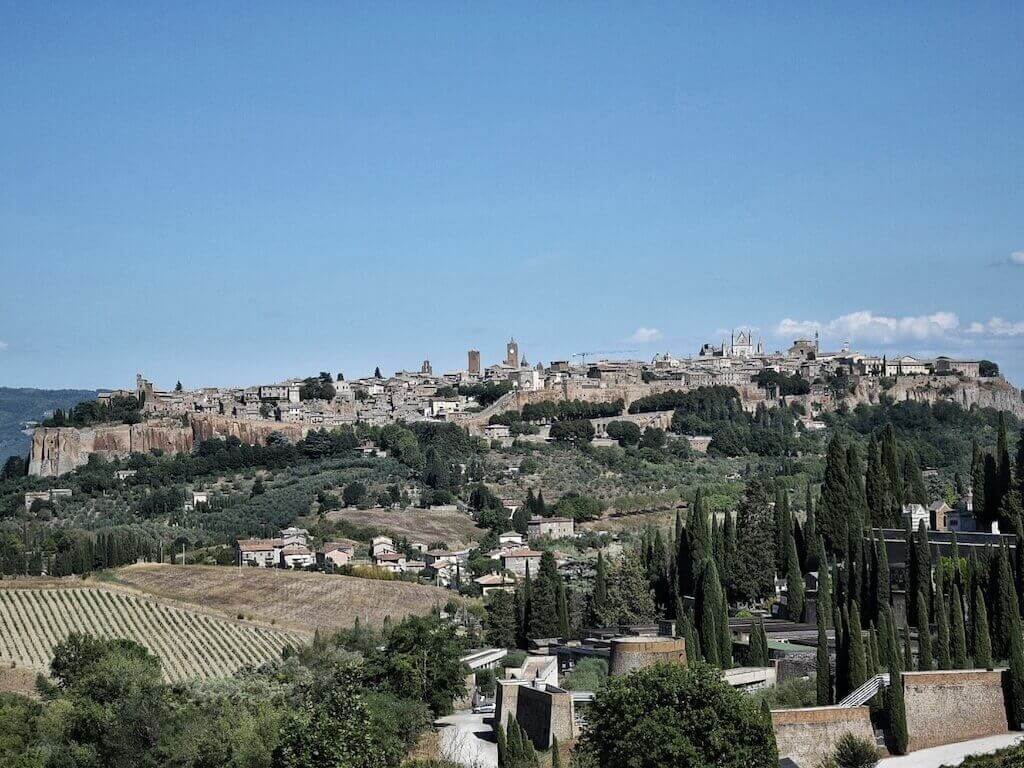
Best time to visit
Orvieto is beautiful year-round, but each season offers something unique. Spring (March-May) and fall (September-November) are ideal, with comfortable temperatures perfect for exploring and fewer crowds than summer.
Fall offers the bonus of wine harvest season and local food festivals. Summer brings warmer temperatures and longer days but also the biggest crowds (we felt it was quite packed when we visited at the beginning of September).
At the same time, winter offers the most authentic experience with fewer tourists, crisp, clear days, and special holiday events—plus lower accommodation prices.
For the best experience, try visiting mid-week rather than on weekends, especially during high season. There will be fewer tourists and you’ll experience the local atmosphere.
If you’d like to know more about seasons and events in Italy, make sure to read my article, When Is The Best Time Of Year To Visit Italy? in which I discuss the different regions of Italy and the best months and seasons to visit them.
Best Things To Do In Orvieto
The iconic Orvieto Cathedral (duomo)
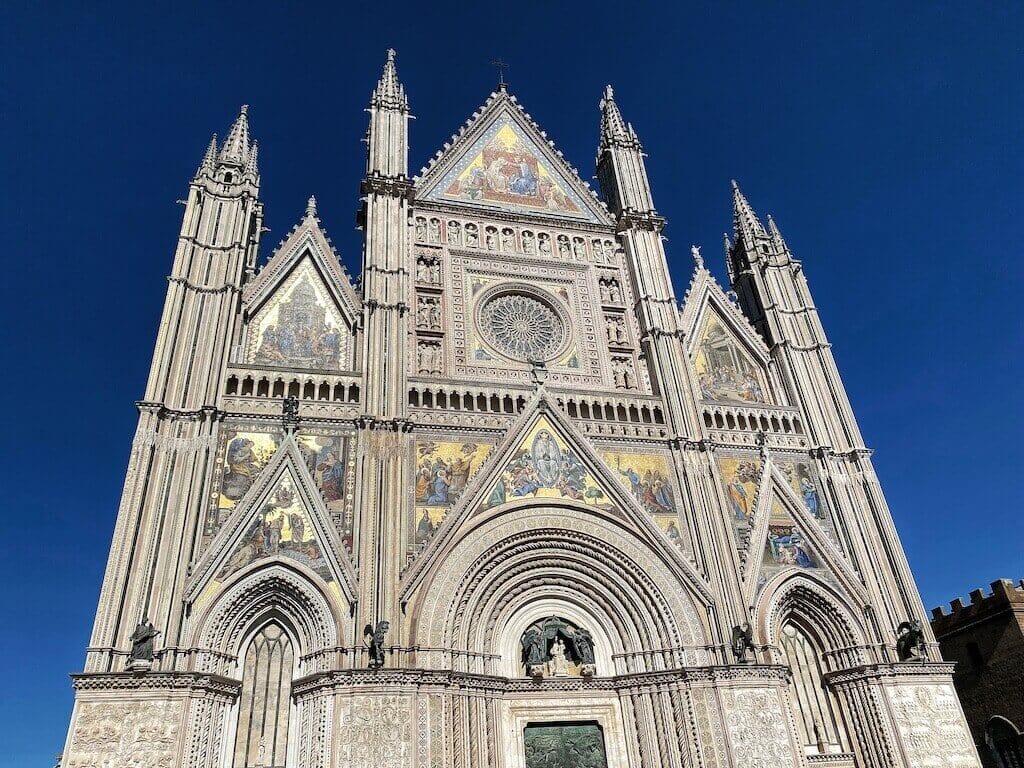
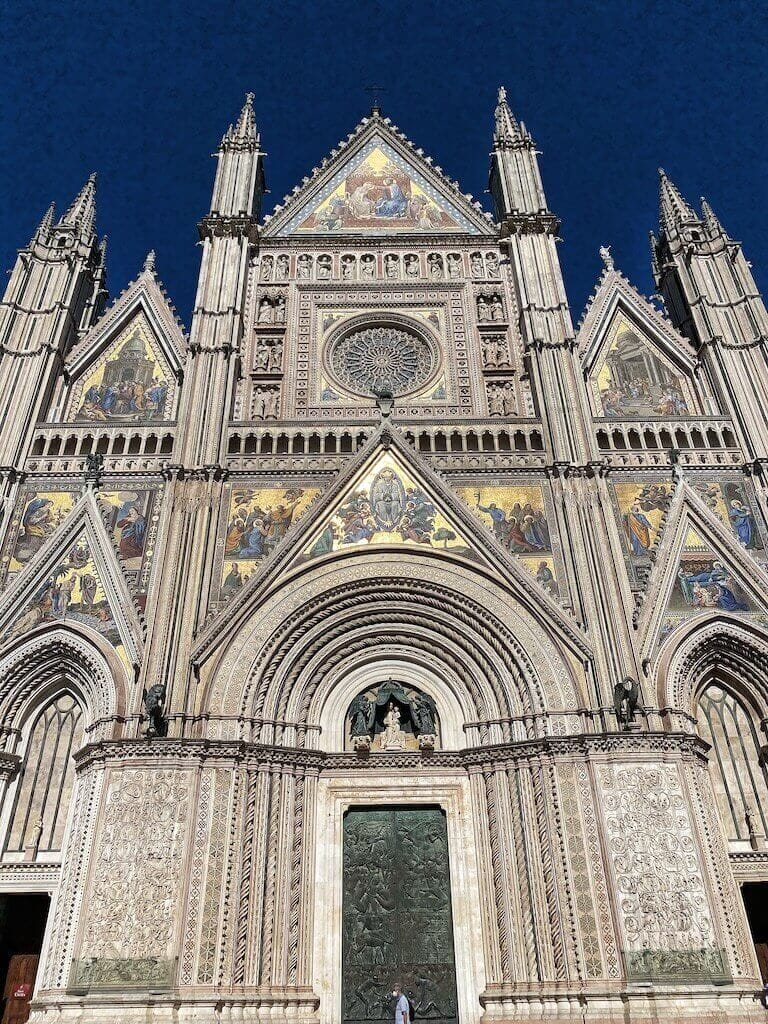
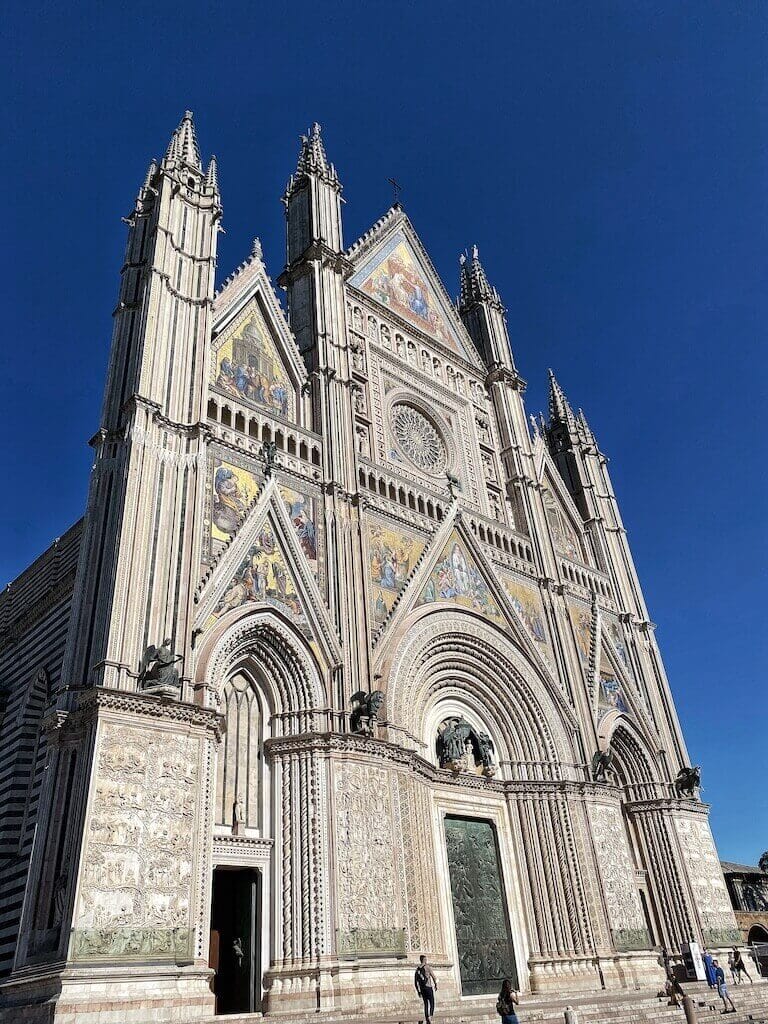
The city’s crown jewel, Orvieto Cathedral, is one of Italy’s most stunning examples of Gothic architecture.
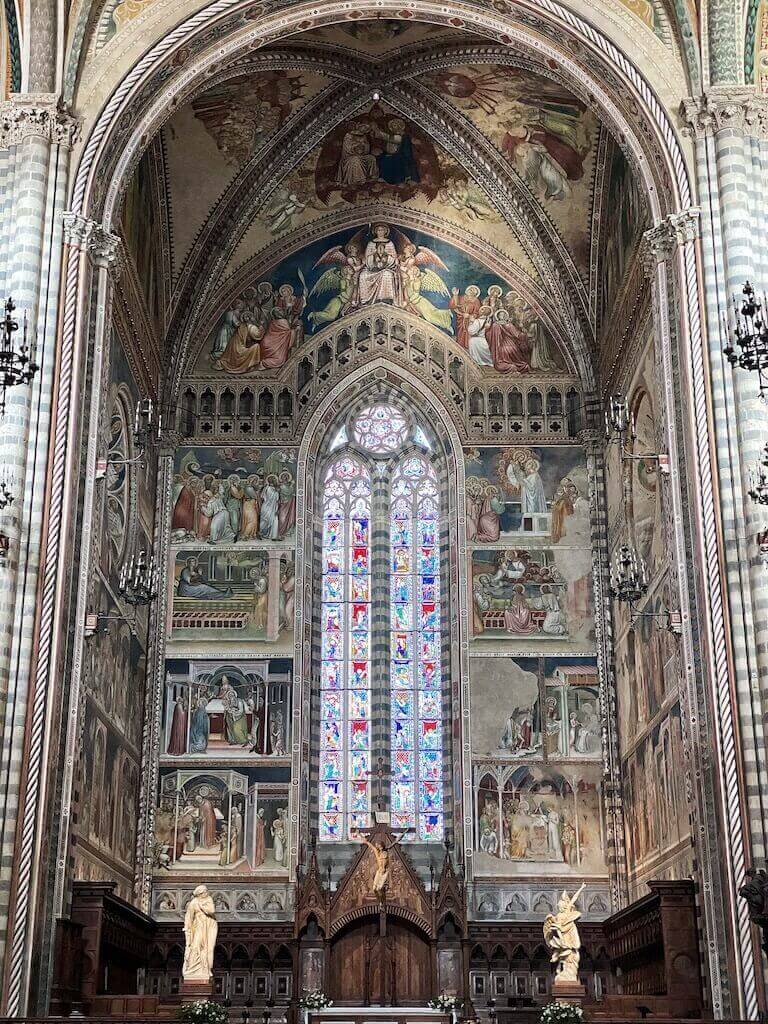
Construction began in 1290 and was completed in 1591. Its facade will stop you in your tracks with its golden mosaics, intricate sculptures, and striking black basalt and white travertine stripes.
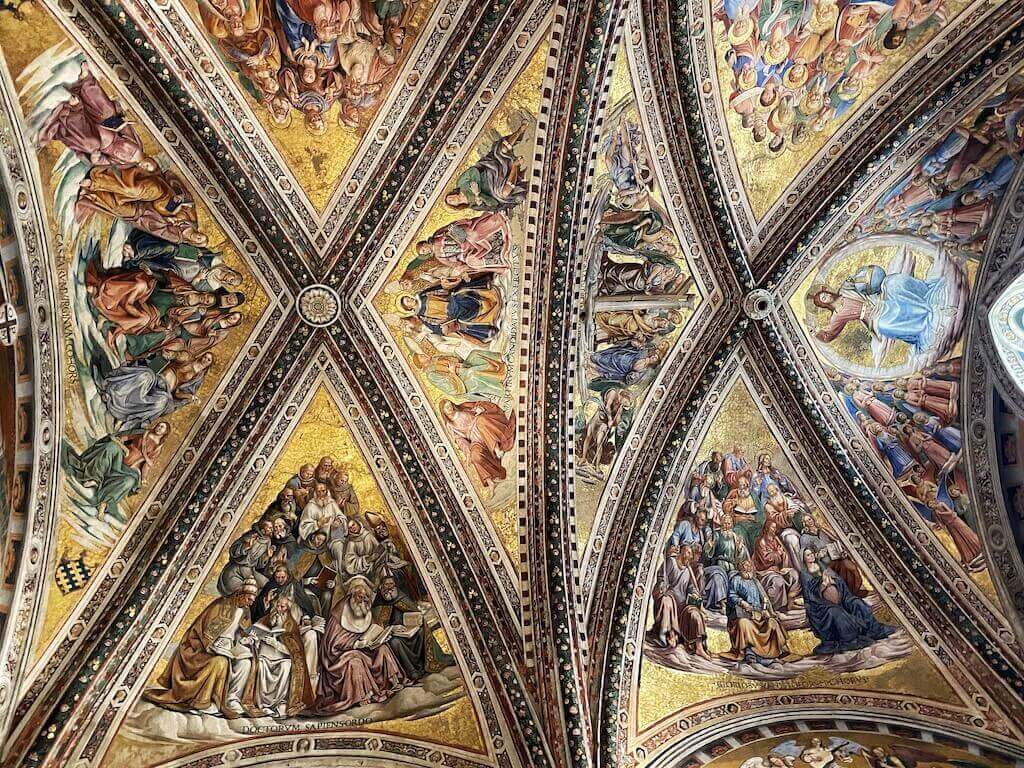
Don’t miss the Chapel of San Brizio inside, decorated with breathtaking frescoes by Luca Signorelli depicting the Day of Judgement and Afterlife. These masterpieces were so influential they even inspired a young Michelangelo.
I highly recommend a walking tour to get some background information. This Private tour of the city and cathedral of Orvieto takes you through the city’s charming alleys with your own guide, who’ll share the story of this incredible town, from its Etruscan beginnings to the stunning cathedral that dominates the skyline today. It’s the best way to visit the cathedral and other nearby sites.
Underground Orvieto
Beneath Orvieto’s streets lies a fascinating network of tunnels and caves that tell the city’s secret history. I am a massive fan of visiting underground cities and Orvieto didn’t fail to impress.
This underground maze contains over 1,200 tunnels, passages, and wells, many dating back to Etruscan times. You’ll discover ancient olive presses, pigeon coops, and even escape routes used by wealthy families during medieval conflicts.
If you’d like to visit both the cathedral and underground Orvieto, I recommend this Orvieto: 2-Hour Cathedral and Underground Tour. The local guide will explain all the details of the cathedral’s facade and frescoes and then take you to explore the fascinating caves and wells beneath the city. The tour ends with beautiful views from the cliffs and a walk through the medieval streets. It’s also perfect for those on a day trip because it’s only two hours.
Torre del Moro
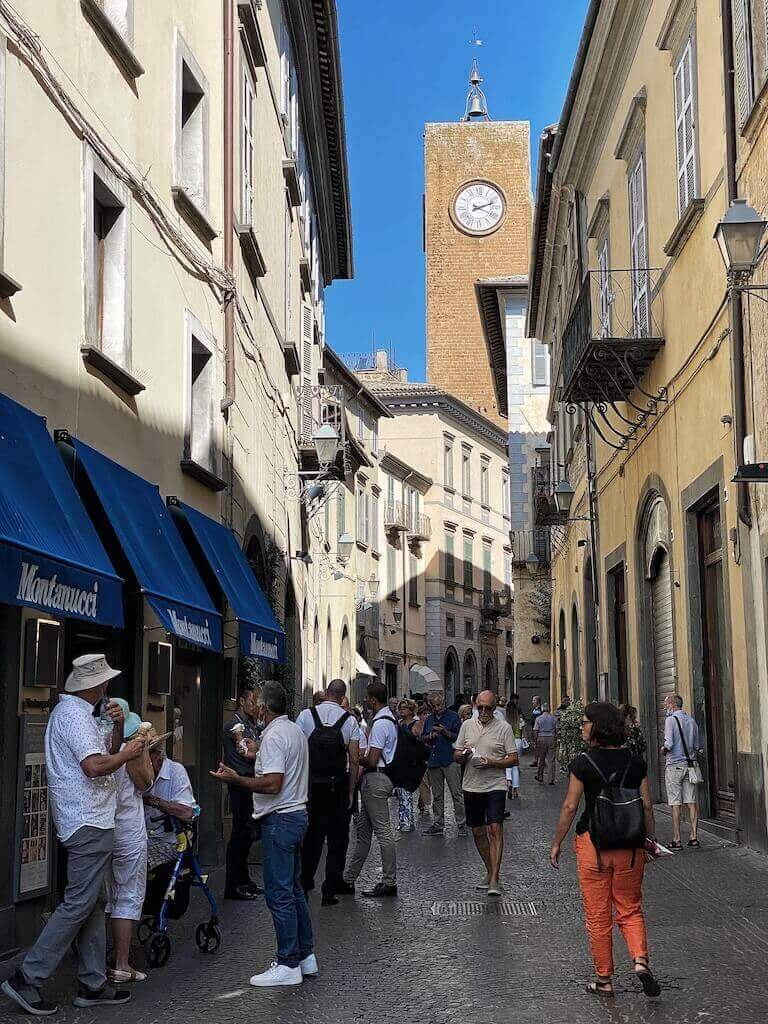
For the best views in Orvieto, climb the 236 steps of this impressive 47-meter (154 feet) tower. The panorama from the top gives you a full-blown view of the entire city and stretches across the Umbrian countryside.
The climb is worth it for the views and understanding of why this strategic position has made Orvieto important throughout history.
Built on a massive plateau of volcanic rock with cliffs on all sides, Orvieto was practically impossible for invaders to reach. Its position along the central road between Florence and Rome made it an attractive refuge for popes fleeing Rome.
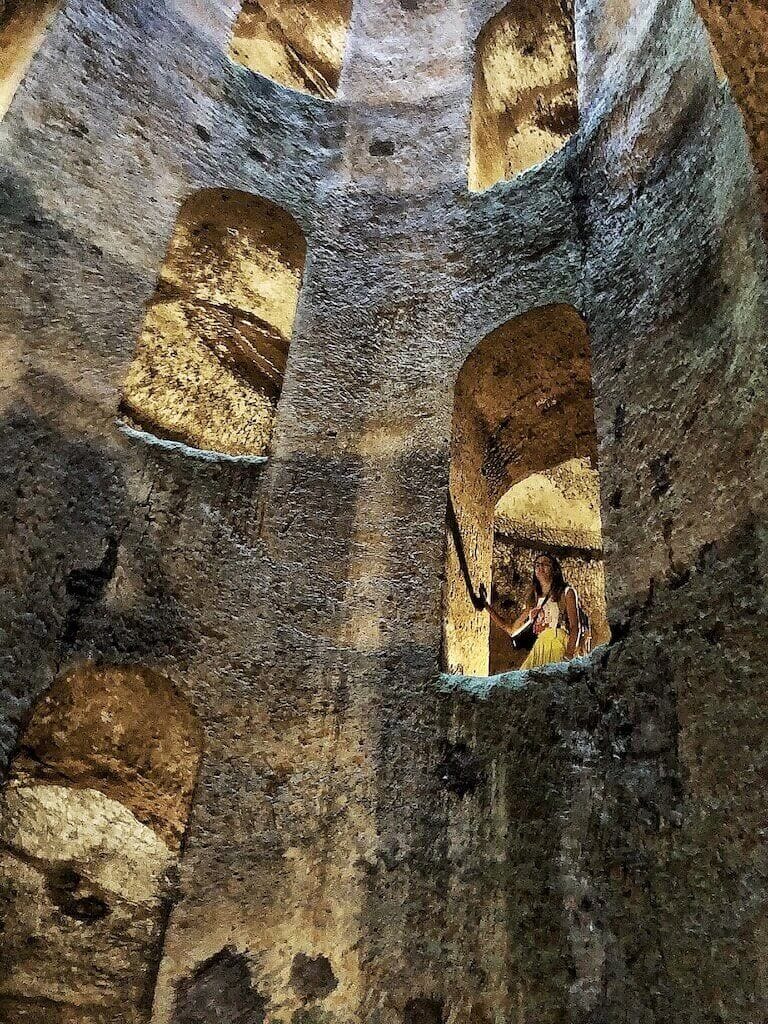
St. Patrick’s Well (Pozzo di San Patrizio)
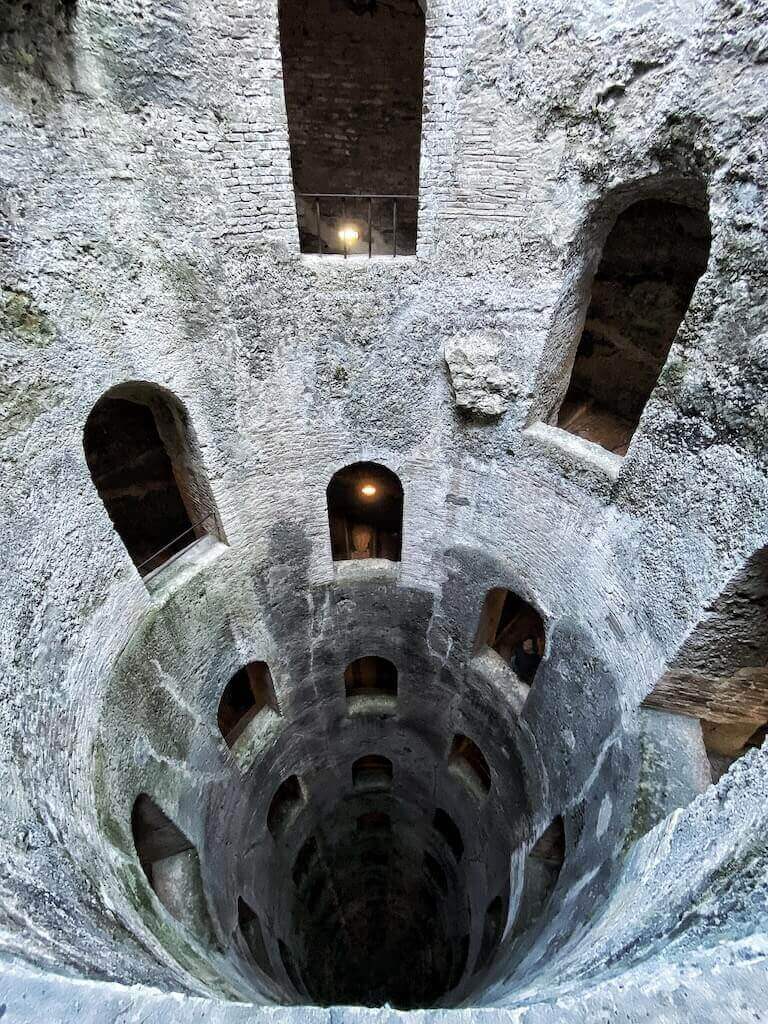
This incredible 53-meter-deep (that’s almost 174 feet) well is a truly fascinating site and visiting is one of the unmissable things to do in Orvieto. When Pope Clement VII fled to Orvieto during the sack of Rome in 1527, he commissioned this well to ensure water access in case of siege.
Its unique double-helix design features two separate spiral staircases, one for descending and one for ascending, allowing donkeys to transport water efficiently without creating traffic jams. We didn’t know to expect when we visited, but I must say we were impressed and amused!
Pozzo della Cava
This Etruscan-era well is 36 meters (118 feet) deep and was dug entirely by hand. It has two different sections: a circular part about three meters (almost 10 feet) wide and a rectangular part just over a meter (3.2 feet) wide.
Pope Clement VII modified it in 1527 to help with the city’s water supply, but by 1646, the city had decided to close it.
Today, the well is especially interesting during Christmas when its largest cave hosts a special Nativity scene with animated figures that change every year. They call it “The Nativity in the Well,” it’s become a local tradition.
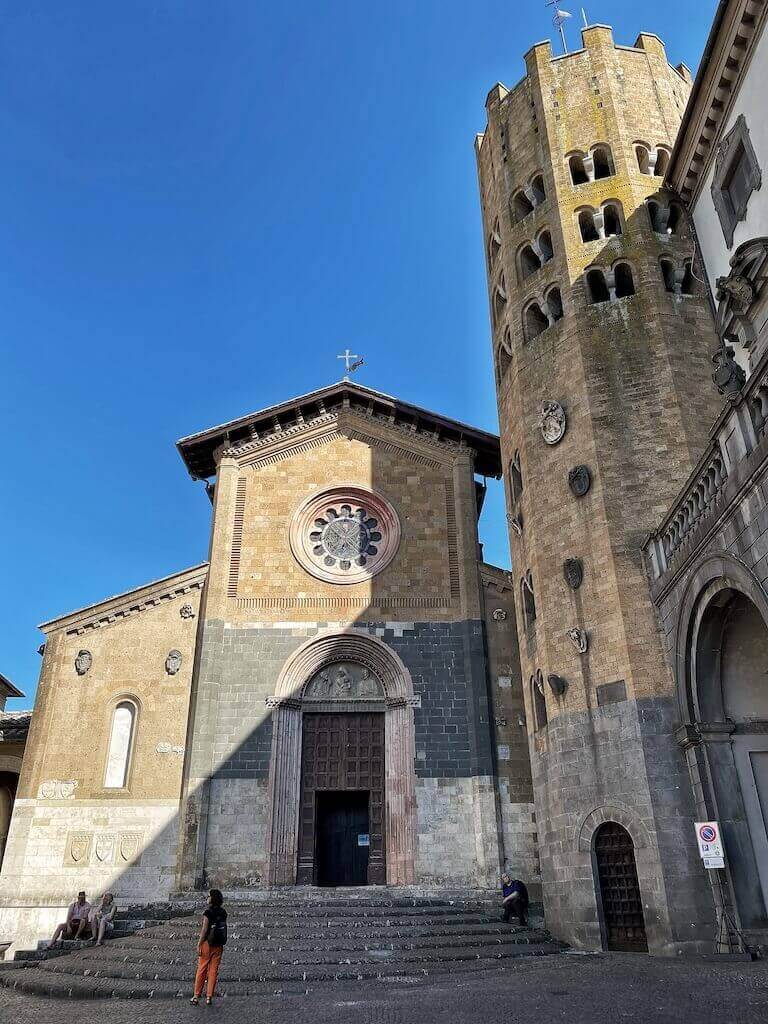
Church of Sant’Andrea
This is one of the first things you’ll see in Orvieto once you arrive from the parking lot below the cliffs.
Before the Duomo existed, Sant’Andrea was Orvieto’s main religious center. Its unique decagonal bell tower makes it a photographer’s dream, but what fascinated me most is what lies beneath: the church’s basement contains remnants of Etruscan and Roman buildings, even an early Christian church.
The church was so important that medieval cardinals were appointed here, and you can still see traces of different time periods in its architecture. The walls are made of local tuff stone, while the floors are marble. During its last restoration in 1926, new sculptures and a stained-glass rose window were added.
Church of San Giovenale
This is one of Orvieto’s oldest churches, dating back to 1004, built on top of an ancient Etruscan temple. The brick exterior is simple, but inside, you’ll find beautiful frescoes from the 12th and 13th centuries that are still in good condition.
This church shows how different cultures built on top of each other here. The Etruscans built their temple to Tinia (their version of Jupiter) first, then the Romans used the spot, and finally, the medieval church was built on top.
If you want to visit the Church of San Giovenale and other main attractions in Orvieto, I recommend this E-bike tour in Orvieto in small group: history, culture with lunch or dinner. The guide takes you through the city’s history by e-bike, stopping at the ancient church and the Cathedral, and even heading underground to explore Orvieto’s cave network. The tour ends with wine tasting in a historic cellar.

Etruscan Necropolis
Below the cliffs of Orvieto, you’ll find more than 200 Etruscan tombs arranged in a grid pattern. These rectangular graves are carved from tuff stone, and even though they’re a bit overgrown now, you can still read the family names on many of them. It’s incredible to think these tombs are over 2,000 years old.
The necropolis shows how important Orvieto was during Etruscan times. Many of the objects found in these tombs are now in the Museo Claudio Faina, so it’s good to visit both sites to get the full picture.

Museo Claudio Faina
The Museo Claudio Faina opened in 1954 when Claudio Faina Jr. gave his family’s whole collection to Orvieto. It’s in Palazzo Faina, right on Piazza Duomo, and has some of the most important Etruscan artifacts in the region.
The ground floor shows things around Orvieto, including terracotta pieces from the 5th century BC and parts of an Etruscan temple. The second floor is different—it shows the art collection the Faina family gathered over the years.
Belvedere Temple
Located near St. Patrick’s Well, the Belvedere Temple’s name means “beautiful view” in Italian, and it really lives up to that name.
The temple ruins are located in a spot with panoramic views of the countryside. They were built in the 5th century BC to honor the Etruscan god Tinia.
Most of the temple’s artifacts are now in the Museo Claudio Faina. Although not much remains of the original temple, it’s worth visiting for the views and to understand how the Etruscans chose such strategic spots for their important buildings.
Wine tasting
The local white wine of Orvieto has been famous since ancient Roman times. Emperors used to have it sent down the Tiber River to Rome. Today, you can try the Orvieto Classico DOC wines in many enoteche (wine bars) in the city. If you have time, you can also visit the vineyards just outside town to taste wine directly from the producers.
The wine is special because of the volcanic soil around Orvieto and their particular mix of grapes. Most Orvieto Classico wines are dry and light-colored, perfect for drinking with local dishes or just enjoying while watching the sunset over the city.
If you love wine, I recommend checking out this Winery tour and wine, cheese & charcuterie tasting that takes you just outside Orvieto. The tour goes to the vineyards and into the ancient barrel cellar carved by the Etruscans into the tuff rock. You’ll finish with a tasting of four local wines paired with regional cheeses and cold cuts—it’s a perfect way to experience Orvieto’s famous wine tradition firsthand.
If you want to try a more adventurous wine-tasting tour, I recommend this Unique EnoBike experience with tasting in 2 excellent wineries. You’ll cycle through the countryside on an electric bike (so no worrying about the hills!) and visit historic wineries like Palazzone, which dates back to 1295. The tour stops at three wineries where you can taste local wines, olive oil, and typical products while exploring ancient cellars carved into the tuff rock.
Artisan shopping
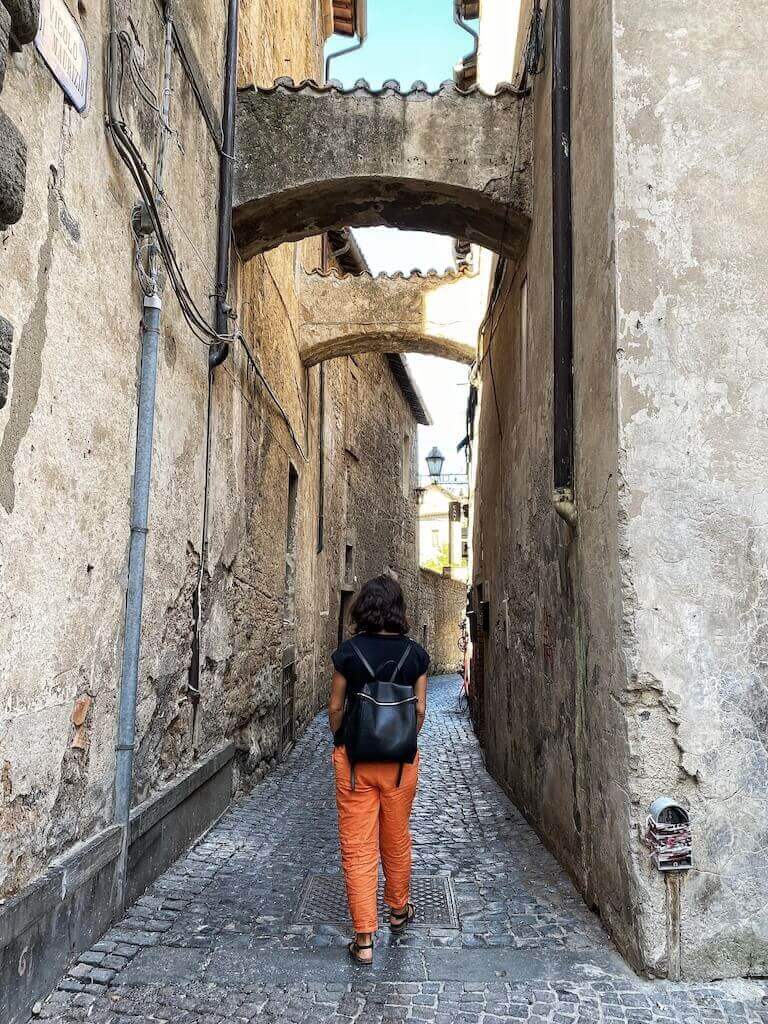
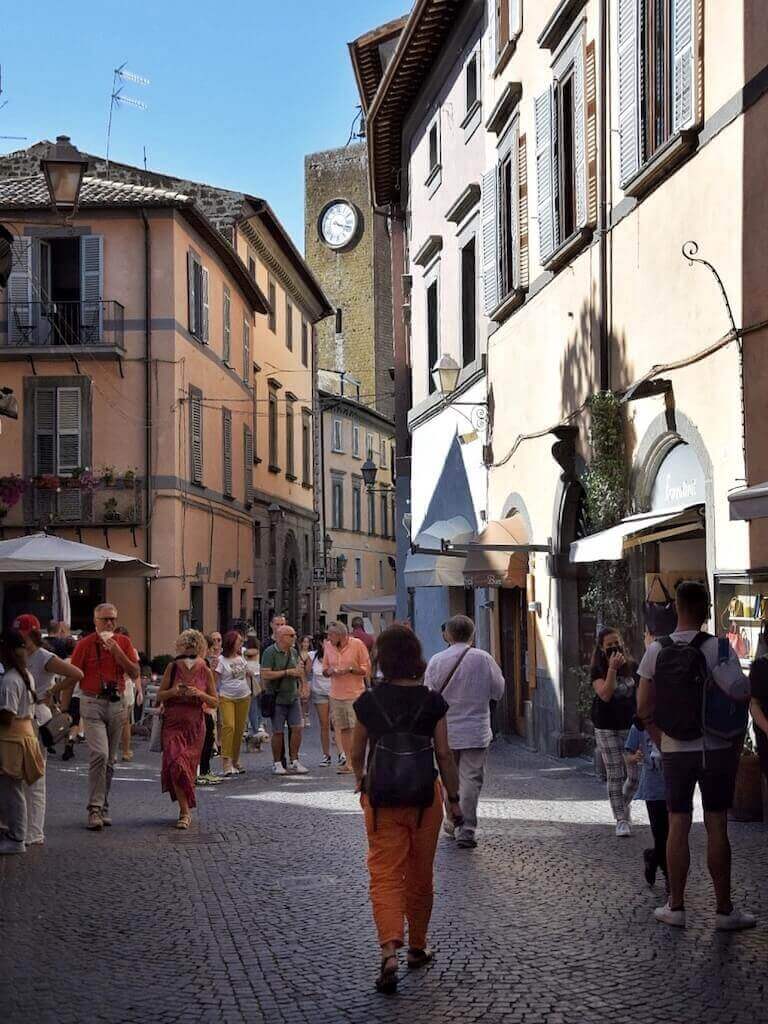
The narrow medieval streets of Orvieto are full of small shops selling local products. You can find ceramics, leather goods, lace, and local foods like meats and olive oil. The prices here are usually better than in Rome or Florence, so it’s a good place to buy souvenirs.
Many of these shops have been run by the same families for generations, and they still use traditional methods to make their products. The best area for shopping is around Via del Duomo and the streets leading off from it. I bought a lovely small leather backpack last time I visited.
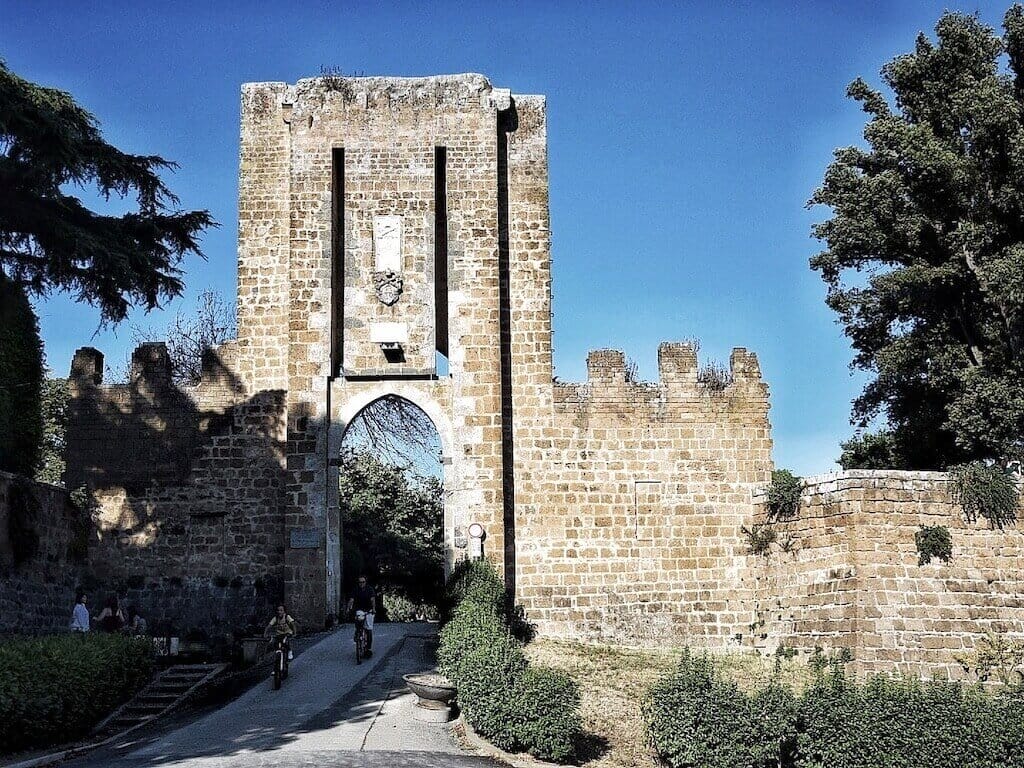
Giardini Comunali
These public gardens were once part of a castle called Fortezza Albornoz. While the castle’s moat and drawbridge are gone, you can still see the old defensive wall. It’s a nice place for a walk or a picnic and a playground if you’re traveling with kids. The best part is the view over the Paglia River valley, especially in the late afternoon when the light is good.
From the gardens, you can see how Orvieto sits on top of its volcanic rock plateau. This position has helped protect the city for centuries, and now it gives visitors some of the best views of Umbria. There are several benches where you can sit and enjoy the panorama.

Piazza della Repubblica
This main square has been important since Etruscan times. Today, you’ll find many cafes and restaurants where you can sit and watch local life. The Town Hall is interesting to look at. Looking back, you can see some original Gothic windows from the 13th century that were never finished.
The square changes character throughout the day. In the morning, locals come for coffee and to do errands, while in the evening, it becomes lively with people having aperitivo before dinner. It’s my favorite place to stop for a coffee and watch daily life in Orvieto.
Practical Travel Tips For Visiting Orvieto
Getting around Orvieto
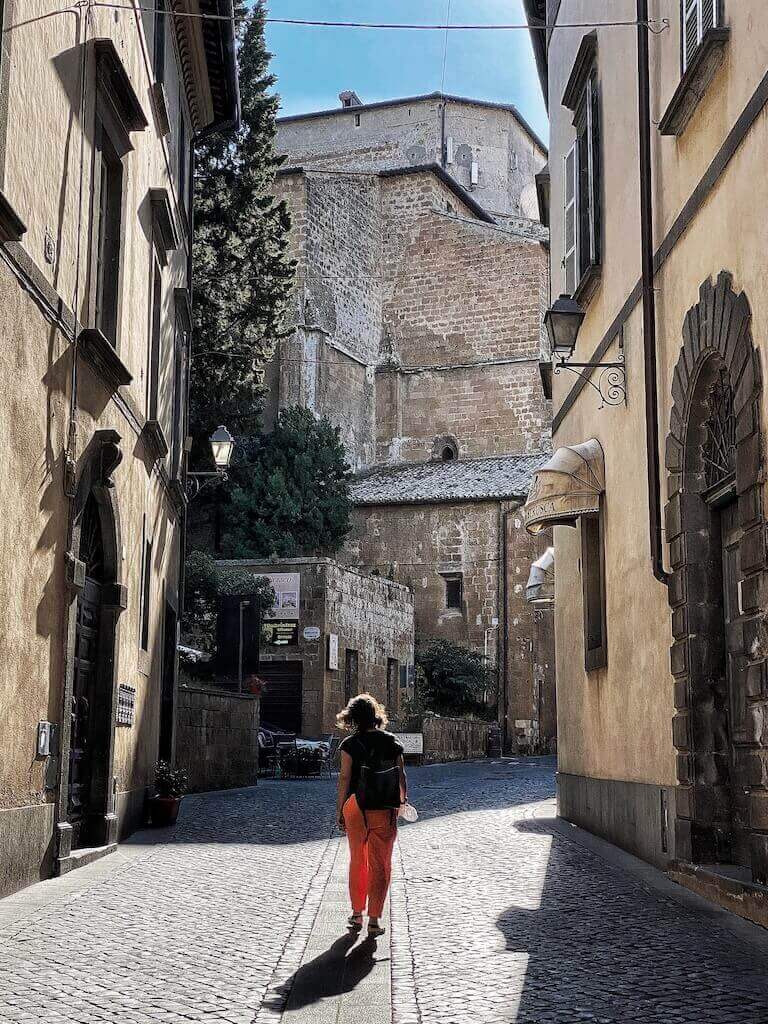
The historic center of Orvieto is relatively small and easy to walk around. Almost everything is within a 15-20-minute walk and the main streets are mostly flat, although some side streets can be steep. Comfortable walking shoes are a must, as the streets are often made of old stones.
If you’re uncomfortable walking, you can hop on one of the urban buses passing by the historic center. You can buy tickets at tobacco shops or directly on the bus. Regular city buses are also available if you’re outside the historic center or want to visit the Etruscan Necropolis.
The escalators from the large parking lot (Campo della Fiera) to the historic center are a big help if you arrive by car. They’re clean, accessible, and run all day. At night, the walk through the historic center is well-lit and safe, but the escalators stop running around 8:00 pm (times vary by season).
Local customs and events
Orvieto’s biggest celebration is Corpus Christi, which makes sense since the cathedral was built to honor this feast. The celebration includes a historic parade where locals dress in medieval costumes.
Another important event is the Umbria Jazz Winter Festival, held between Christmas and New Year’s. During this festival, the whole town is filled with music.
Wine is a big part of local culture, and several wine festivals occur throughout the year. The biggest is in autumn during the grape harvest. If you visit during a festival, remember that many shops and restaurants might change their hours, and hotels often get booked early.
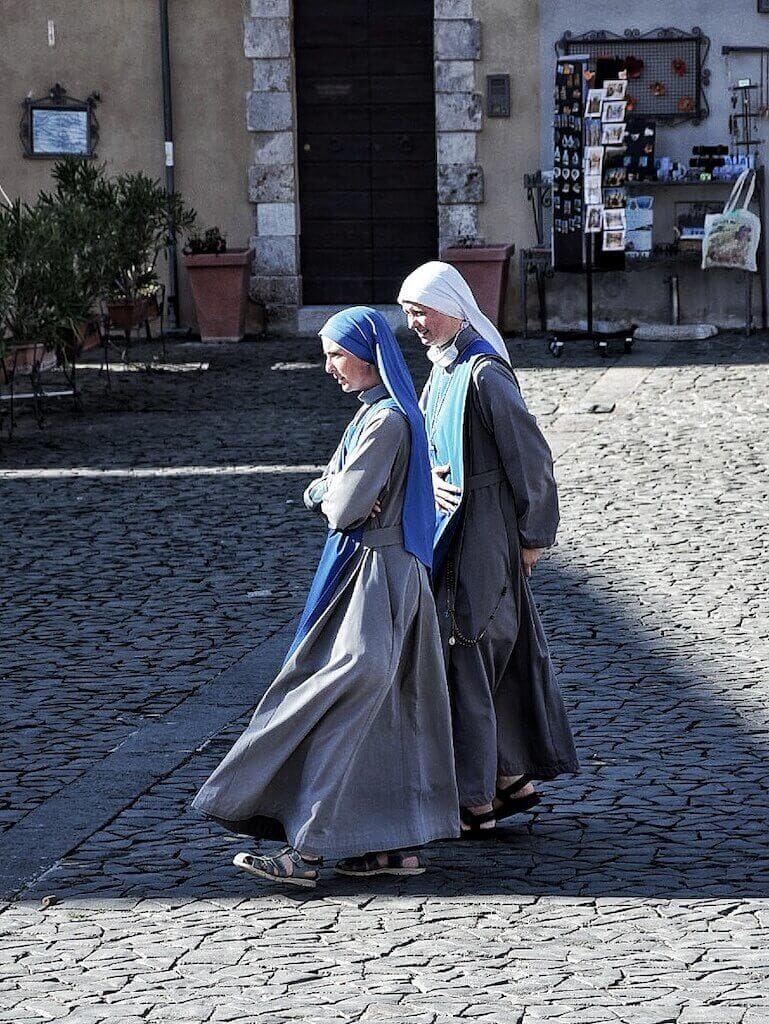
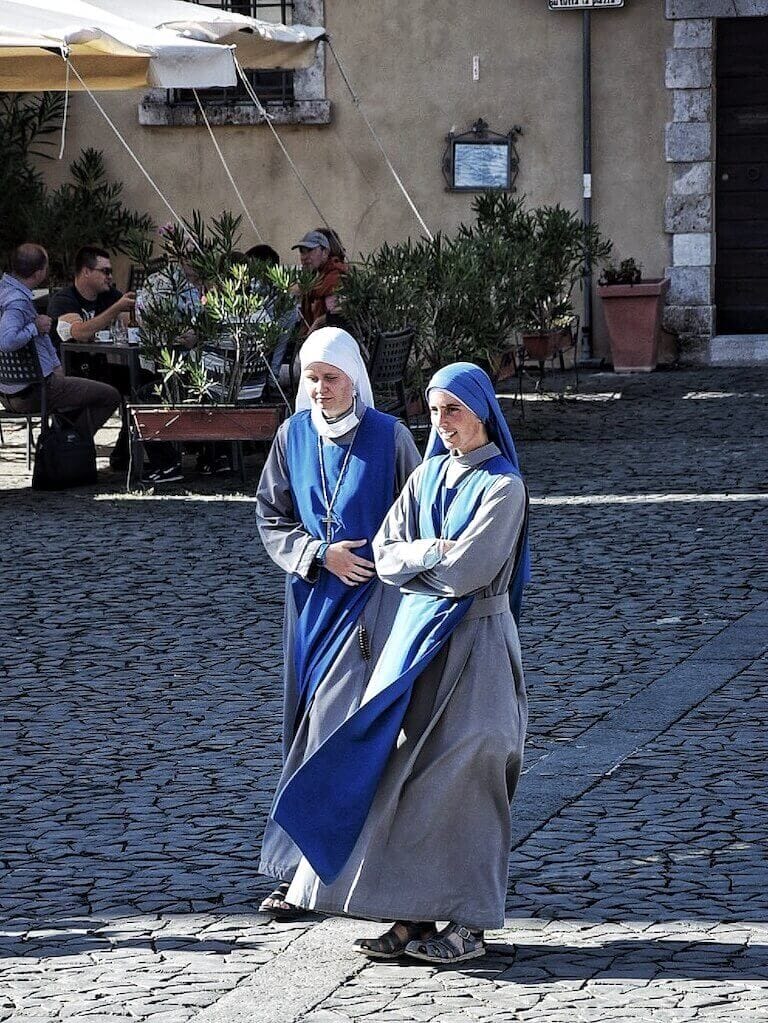
The dress code in Orvieto is fairly casual but you need to be dressed modestly when visiting churches. Remember to cover your shoulders and knees when visiting the cathedral.
Orvieto’s historical background
Orvieto has been inhabited since ancient times, with roots going back to the Etruscan era when it was a thriving center of civilization. Archaeologists have found evidence that Etruscan and Celtic cultures existed together here, giving us a glimpse of what life was like in ancient Italy.
The Roman Republic took control of Orvieto in the 3rd century BC. The city’s position on top of steep volcanic rock made it almost impossible to attack, which proved important after the Roman Empire fell.
Various invaders, including Goths and Lombards, fought over the city. However, by the 10th century, Orvieto became self-governing. During this time, Pope Benedict VII visited with his nephew, Filippo Alberici, who later became consul of Orvieto.
The city’s location along the main road between Florence and Rome helped it grow significantly. By the 13th century, Orvieto had 30,000 residents, and noble families fought for city control.
This eventually involved the Papacy, which was at its peak of wealth and power. Between 1261 and 1303, five popes used Orvieto as a residence: Urban IV, Gregory X, Martin IV, Nicholas IV, and Boniface VIII. During Nicholas IV and Boniface VIII, Odrvieto was often used as Rome’s papal residence.
Orvieto enjoyed a peaceful period during the 17th and 18th centuries, later becoming a canton of Napoleon’s empire. Its importance declined in the 19th century until it joined the newly formed Kingdom of Italy in 1860.
During World War II, the Germans occupied Orvieto and used the surrounding areas for airfields, again because of its strategic location. Finally, British forces liberated the city toward the end of the war.
Conclusions: Is Orvieto Worth Visiting?
Are you wondering “is Orvieto worth visiting?” It is! Orvieto isn’t as popular as other major Italian cities like Rome, Florence, or Venice. But it’s a little gem all on its own.
Not only is it in a beautiful region of Italy, but it also has a rich history that is quite different from other parts of the country.
You don’t need a lot of time there; you can visit on a day trip from Rome, but you can also set aside a few days to dedicate to the town and other nearby attractions and small towns such as Spoleto.
PIN IT!

Claudia Tavani
Claudia Tavani was born and raised in Sardinia, and after moving between the United States and the United Kingdom, she's now back living in her hometown, Cagliari. She's a travel blogger and certified travel designer who loves planning trips and publishing guides, travel tips, and packing lists so that you don't have to. Owner of Strictly Italy, cat mom to Minnie. Loves pizza, hiking, archeology, cities, beaches, swimming, and running. Hates peppers.