
My 3 days in Venice itinerary for first-timers will help you make the most of the city, and takes away the worry of planning as I have done all of that for you.
When people think of Venice, they usually picture gondolas gliding down canals, historic bridges, and beautiful architecture. And honestly, that’s precisely what you’ll find in this unique Italian city built entirely on water.
It is one of my favorite cities in Italy, and I’ve been lucky enough to visit multiple times over the years – including recently.
I’m often asked if 3 days in Venice is enough time, and my answer is always a confident yes. Sure, you could always spend more time there if you wishes. And you’d still have plenty of things to do. But three days give you the perfect time to see the main attractions, discover some hidden gems, and even explore the surrounding islands without feeling rushed.
Having just visited Venice again, I’m excited to share my detailed 3 day Venice itinerary that combines must-see landmarks like St. Mark’s Square with more unusual experiences. This guide will help you navigate the city efficiently, avoid tourist traps, and maximize your time in the Floating City.
Are you traveling to Venice soon? These are the attractions and tours that must be booked in advance:
- Boat Tour With Grand Canal And Tower Climb
- Doge’s Palace & St. Mark’s Basilica with Terrace Access Tour
- Skip The Line Entrance for St. Mark’s Campanile
- Food Tour with Rialto Market Visit
You may want to consider getting a Venice City Pass if you intend to visit many attractions.
My post Best Places To Visit In Venice highlights all the must-see attractions.
3 Days In Venice: Itinerary Overview
Venice is special and deserves more than just a quick day trip (though if that’s all you have, I have a One-Day In Venice Itinerary for you). This itinerary for seeing Venice in 3 days gives you enough time to see the famous spots while finding some quieter corners that most tourists rushing through will completely miss.
Here’s how I’ve broken down this 3-day Venice itinerary to help you make the most of your time:
- Day 1 covers the classics around St. Mark’s Square – you’ll visit the Basilica and Doge’s Palace and see cultural spots like Teatro La Fenice. The day ends with my favorite activity – a food tour where you’ll try traditional Venetian cicchetti (small bites) at local wine bars.
- Day 2 gets you away from the crowds with a trip to San Giorgio Maggiore for amazing views. You’ll explore the artsy Dorsoduro neighborhood and visit some of Venice’s best museums, like the Peggy Guggenheim Collection.
- Day 3 takes you island-hopping to see Murano’s glass workshops, Burano’s colorful houses, and the peaceful island of Torcello. You’ll also have time for iconic experiences like a gondola ride or browsing the historic Rialto Market.
I’ve been to Venice several times in different seasons, and this itinerary mixes the must-sees with more authentic experiences, so you get a real feel for the city.
Now, let’s get into a bit more details and discover what I have planned for your 3 days in Venice.
Day 1: Classic Venice Highlights
Your first day in Venice focuses on the city’s most iconic landmarks, starting with the spectacular St. Mark’s Square area before venturing to some literary and cultural gems. This route perfectly introduces Venice’s rich history and architecture while letting you experience some truly special places that many visitors miss.
NOTE: If you find too much stuff packed into one day, feel free to trim something you’re not as interested in on this 3 days in Venice itinerary and swap for a relaxing sit at a cafe to slow things down. There is a lot of stuff on this itinerary because there’s a lot to do in Venice.
St. Mark’s Basilica
St. Mark’s Basilica, or Basilica di San Marco, is the crown jewel of Venice and your first stop of the day. Built in the 9th century and becoming Venice’s official cathedral in the 19th century, this stunning church blends Byzantine, Gothic, and Renaissance elements in a way you won’t see elsewhere in Italy.
The basilica was originally built to house the remains of St. Mark, which, according to legend, were smuggled out of Alexandria by Venetian merchants.
There’s a fascinating story: when St. Mark traveled through Europe, he stopped in one of Venice’s lagoons, and an angel told him this city would be his final resting place!
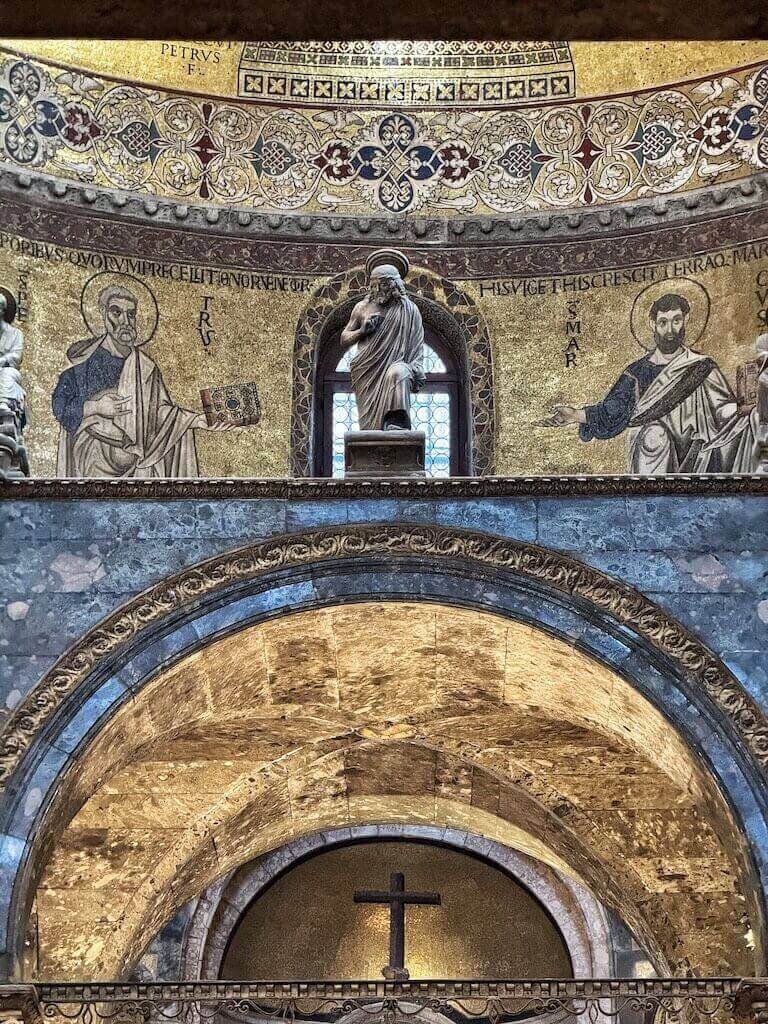
When you enter, look at the golden mosaics covering the domes and walls that make this basilica special. They cover over 8,000 square meters and glimmer beautifully when the light hits them.
Other spots not to miss inside are the Pala d’Oro, the high altar golden retable and a real masterpiece of goldsmithing, the Quadriga of St. Mark, bronze horses that now can be seen in the St. Mark’s Basilica Museum, and the view of the square from the terrace.
St. Mark’s Basilica is one of the most popular attractions in Venice. You will be better off booking your visit in advance. You can do that via the official website, which gives you several ticket options. Otherwise, you could consider this St. Mark’s Basilica with terrace access and Pala d’Oro which is one of the most inclusive options sold on a third-party booking site.
I have a Detailed Guide To Visiting St. Mark’s Basilica that will help you plan your visit.

Doge’s Palace and Bridge of Sighs
Just steps from St. Mark’s Basilica is the Doge’s Palace (Palazzo Ducale), another must-see in Venice. This massive Gothic palace was home to the Doge (the elected leader of the Venetian Republic) and served as the heart of political power for centuries.
The exterior is impressive with its delicate arches and intricate stonework, but the interior is what stands out. You’ll walk through lavish rooms with gold ceilings and enormous paintings by masters like Tintoretto and Veronese.
The Chamber of the Great Council is especially impressive; it was once the largest governing hall in Europe.
When you visit Doge’s Palace, you’ll also have access to the infamous Bridge of Sighs, which connects the palace to the old prisons. The enclosed white stone bridge got its name because prisoners would supposedly sigh as they took their last look at beautiful Venice through the small windows before being locked away.
This Doge’s Palace & St. Mark’s Basilica with Terrace Access Tour offers a guided exploration of the above attractions. You’ll enjoy priority entrance to the Doge’s Palace. The tour includes special access to St. Mark’s Basilica’s first-floor terrace with spectacular views across the lagoon.
If you’re planning a trip to St. Mark’s and Doge’s Palace, you need to read my article How To Visit Doge’s Palace Venice: Best Ticket Options, Tours, & Insider Tips for all the information you need.
St. Mark’s Bell Tower
Your 3 days in Venice itinerary will include some iconic views of the city.
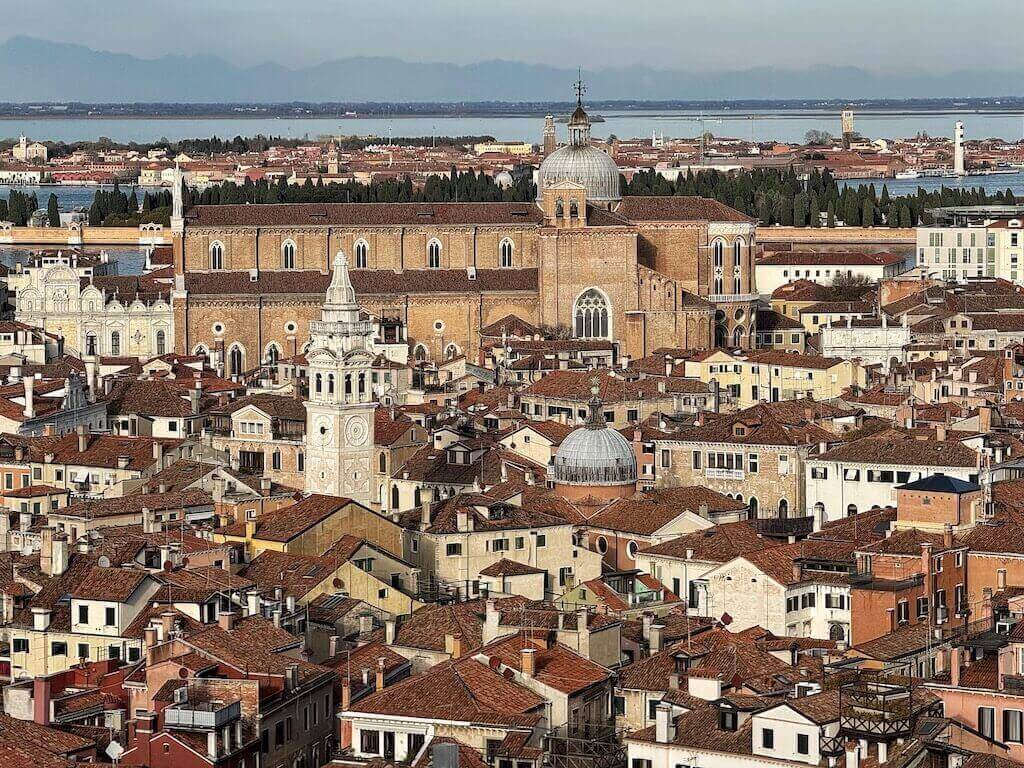
After exploring the palace, head to St. Mark’s Bell Tower (Campanile di San Marco) for the best views in Venice. Standing at almost 99 meters (almost 325 feet) tall, it’s the highest point in the city and offers a spectacular 360-degree panorama of Venice, the lagoon, and on clear days, you can even see the distant Dolomite mountains.
The original tower collapsed suddenly in 1902, and what you see today is a faithful reconstruction completed in 1912. Thankfully, an elevator takes you to the top, so there’s no need to climb hundreds of stairs like in other Italian towers.
This St Mark’s Basilica, Doge Palace, & Bell Tower Option tour covers Venice’s three iconic monuments with skip-the-line access. Your guide will lead you through Doge’s Palace, with its splendid rooms full of masterpieces, across the famous Bridge of Sighs and into the golden interior of St. Mark’s Basilica. The tour includes options to add a virtual reality experience and access to St. Mark’s Campanile.
My post The Best Views of Venice highlights even more spots to get impressive panoramas of the city.
Lunch at Taverna Scalinetto
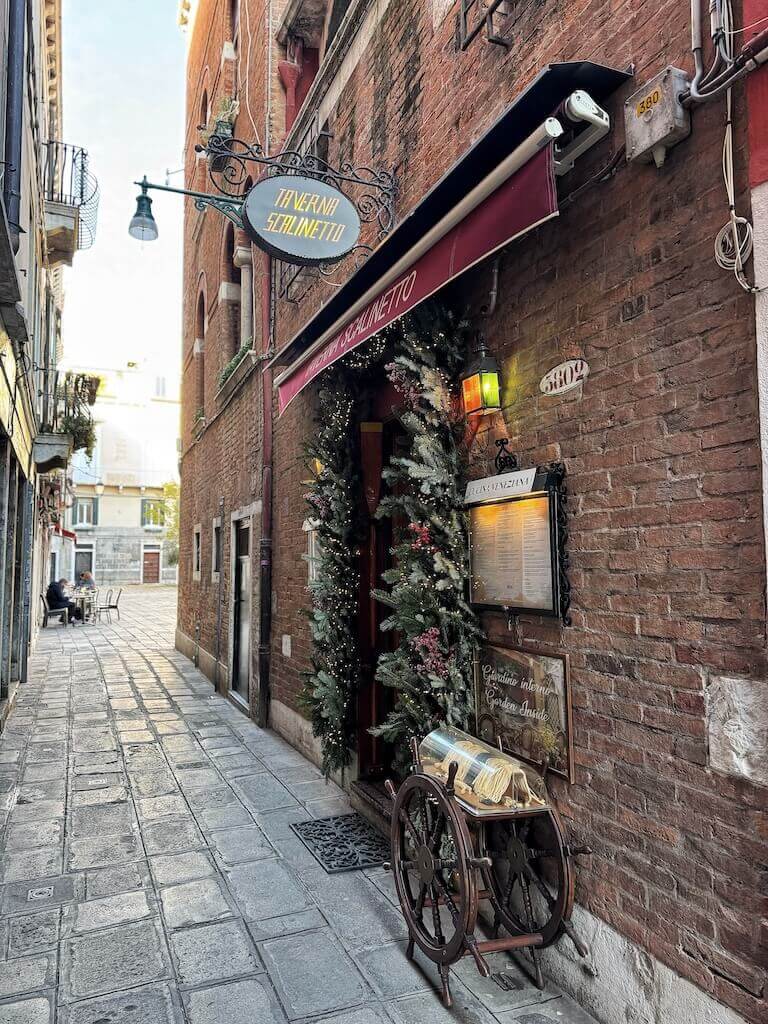
By now, you’ve worked up an appetite, so head to Taverna Scalinetto for a delicious lunch in a truly lovely setting. Located on Calle Scalinetto in the San Polo district, this family-run taverna is about a 10-minute walk from St. Mark’s Square.
The restaurant is set in a 16th-century building with a cozy interior and a small garden to snag a table outside. They’re known for excellent seafood pasta dishes and traditional Venetian specialties like sarde in saor (sweet and sour sardines) and baccalà mantecato (creamed salt cod).
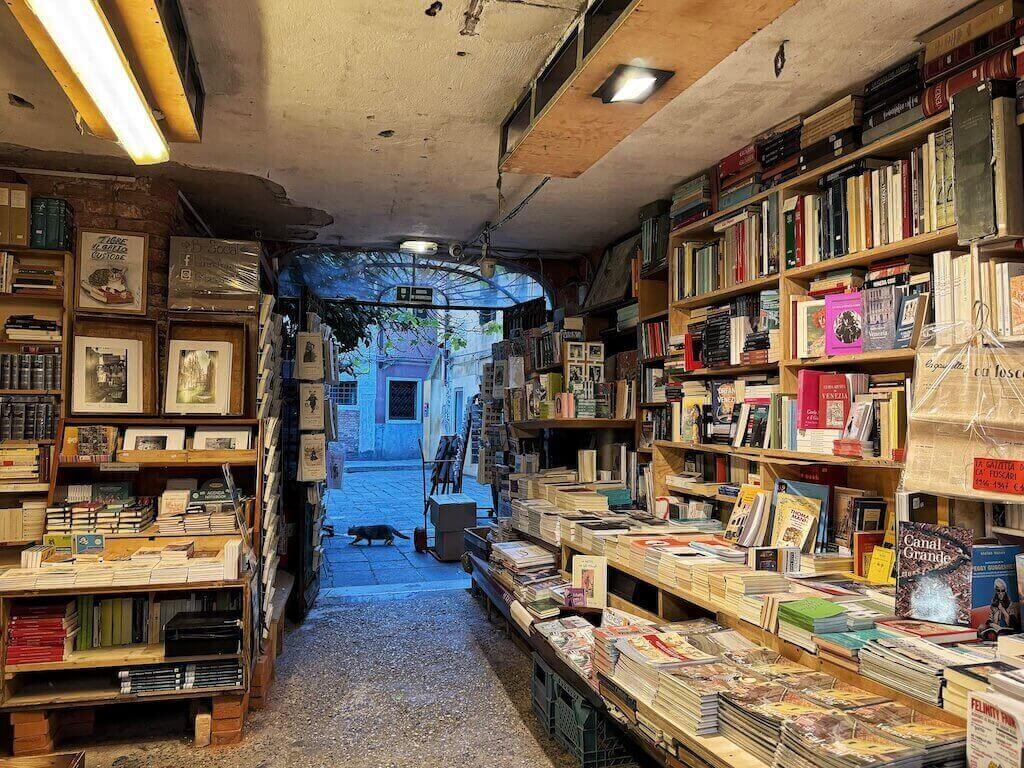
Libreria Acqua Alta
From Taverna Scalinetto, walk about 10 minutes toward the Castello district to find Libreria Acqua Alta, one of the most unique bookstores you’ll ever visit.
This once was a lesser known corner of Venice, but it became famous after the BBC featured it among one of the most beautiful bookstores in the world. So, depending on when you visit Venice, and what time of day you make it there, there may be a line to get in.
The name means “Bookstore of High Water,” and it’s perfectly designed for Venice’s occasional flooding. Books are stored in bathtubs, waterproof bins, and even a full-sized gondola!
The chaotic charm of this place makes it a favorite among photographers and book lovers. Don’t miss the “staircase of books” in the back courtyard, made entirely of damaged books, which offers a quirky photo spot with views over a quiet canal.
The eccentric owner often greets visitors, and the resident cats wander freely among the stacks.
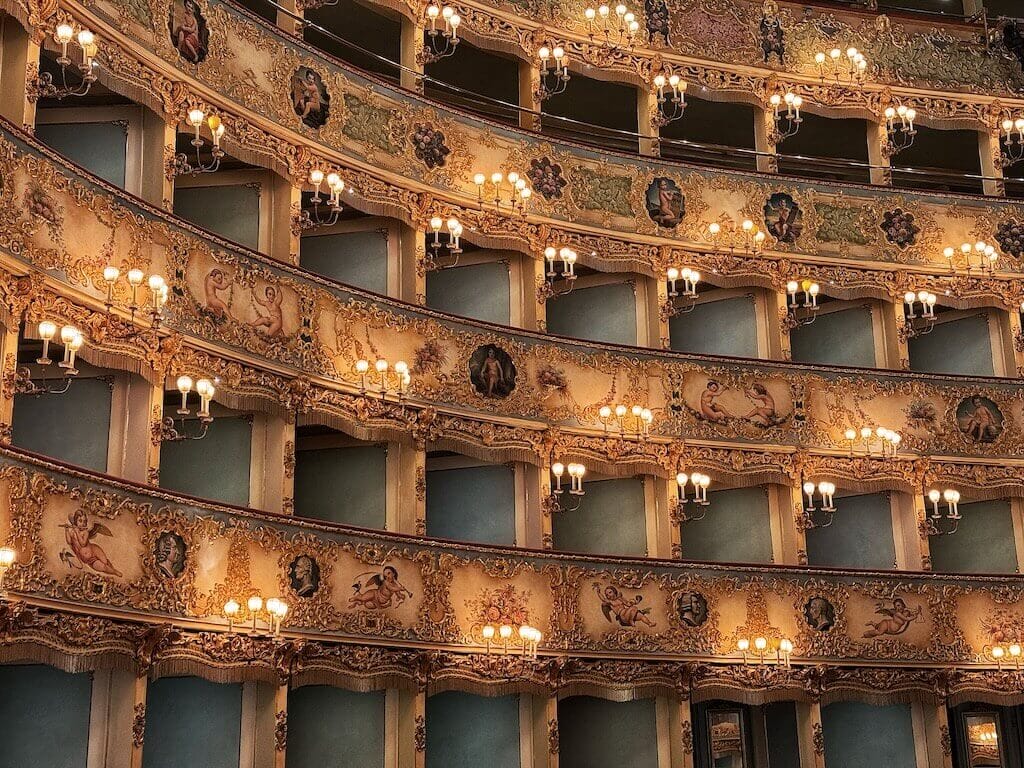
Teatro La Fenice
From Libreria Acqua Alta, it’s a 15-minute walk southwest to Teatro La Fenice, one of Italy’s most famous and historic opera houses. The name means “The Phoenix” in Italian, perfectly representing its history.
The theater has burned down three separate times throughout history, each time being rebuilt and rising from the ashes like its namesake.
The interior is absolutely stunning, and its gold decorations and red velvet seats create a luxurious atmosphere. The emperor’s box is particularly impressive with its ornate detailing.
If you’re lucky enough to be in Venice when a performance is scheduled, attending an opera here is an unforgettable experience (but book well in advance on the Teatro La Fenice official website).
When I visited, I got tickets directly at the door as it was low season and there weren’t many tourists around. Otherwise, you can get tickets for the same price on a third party booking site – all tickets come with an audioguide.
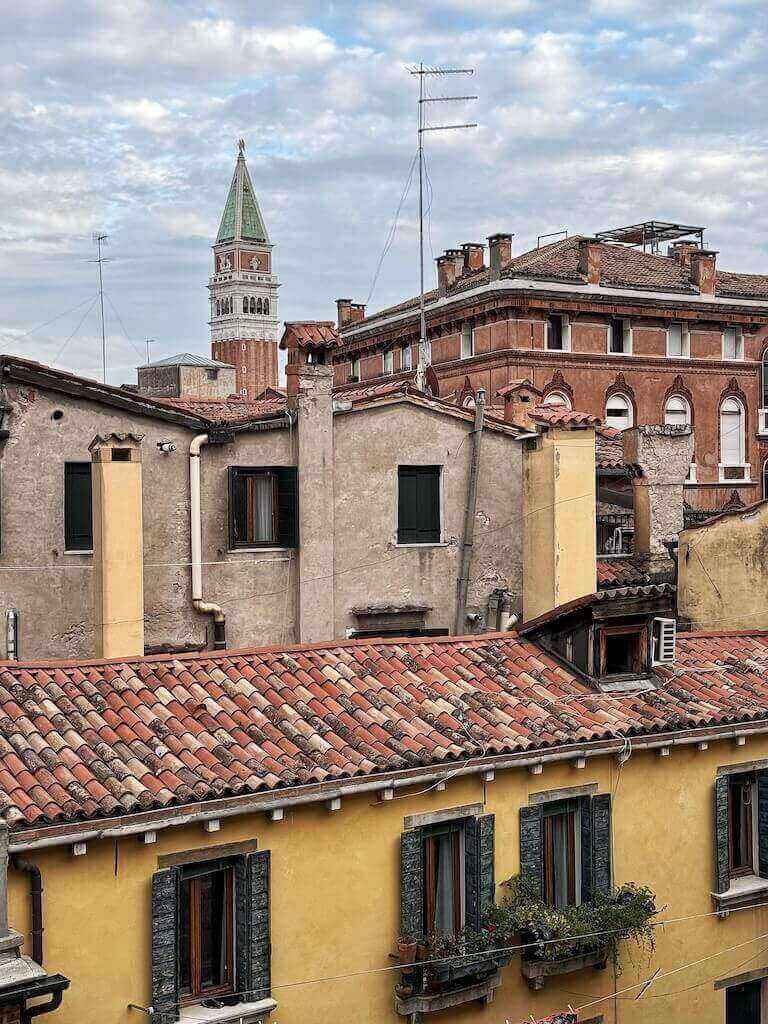
Palazzo Contarini del Bovolo
From Teatro La Fenice to Palazzo Contarini del Bovolo is just a 5 minute walk. This hidden gem is home to one of Venice’s most unique architectural features, an external spiral staircase known as the Scala Contarini del Bovolo. “Bovolo” means “snail” in Venetian dialect, perfectly describing this spiral structure.
Built in the late 15th century, this Gothic-Renaissance palazzo is tucked away down a very narrow alley. Many tourists never make it to that alley at all. Some walk right past it without noticing it.
The staircase winds elegantly up the exterior of the building, featuring a series of arches that get smaller as they ascend.
For a small fee, you can climb the 80 steps to the top for wonderful views over the Venice rooftops. It’s less crowded than St. Mark’s Bell Tower and offers a different perspective of the city.
My post What To See In Venice Off The Beaten Path suggests even more hidden gems to visit in the city.
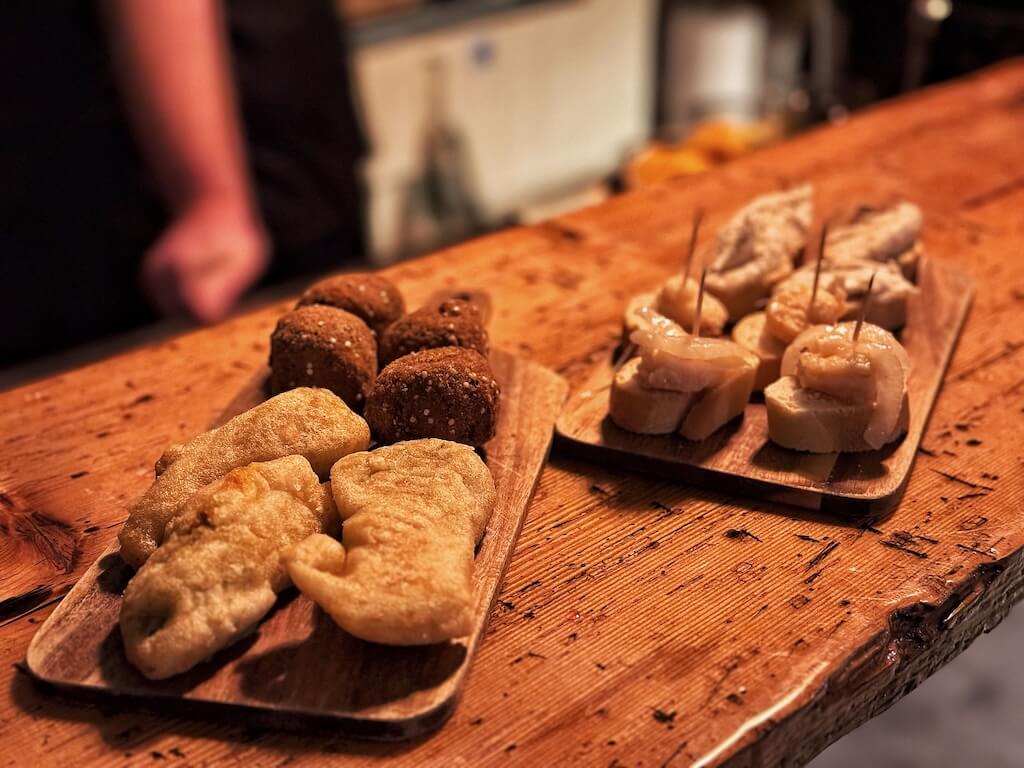
Evening cicchetti food tour
End your first day with one of Venice’s most authentic experiences – a food tour to sample cicchetti, the small bites Venetians enjoy with drinks at local bacari (wine bars). These tours typically take place in the early evening, perfect timing after a day of sightseeing.
There are several options. Most food tours include enough tastings to replace dinner and should be booked in advance, especially during busy periods.
This Street Food Tour Cicchetti & Spritz with Local Guide is an excellent walking tour that explores the historic Jewish Ghetto while sampling traditional Venetian small bites at authentic local spots. You’ll try dishes like sarde in saor and baccalà mantecato paired with a spritz. I did this tour and enjoyed learning about Venice’s food culture (which says a lot coming from an Italian).
This Street Food Tour with a Local Guide and Tastings, takes you through different neighborhoods, including the Rialto Market, San Marco, and Campo Santa Margherita. You’ll sample regional specialties from cheeses to tiramisù while visiting places where locals actually eat. The route includes several historical sites along with food stops.
If you’re interested in Italian cuisine, you can also read my article, Must-Try Traditional Italian Food By Region. I talk about food in Venice, as well as other parts of Italy. Our food is very diverse, so it’s good to read up a bit before visiting Italy.
Day 2: Venice Views and Artistic Treasures
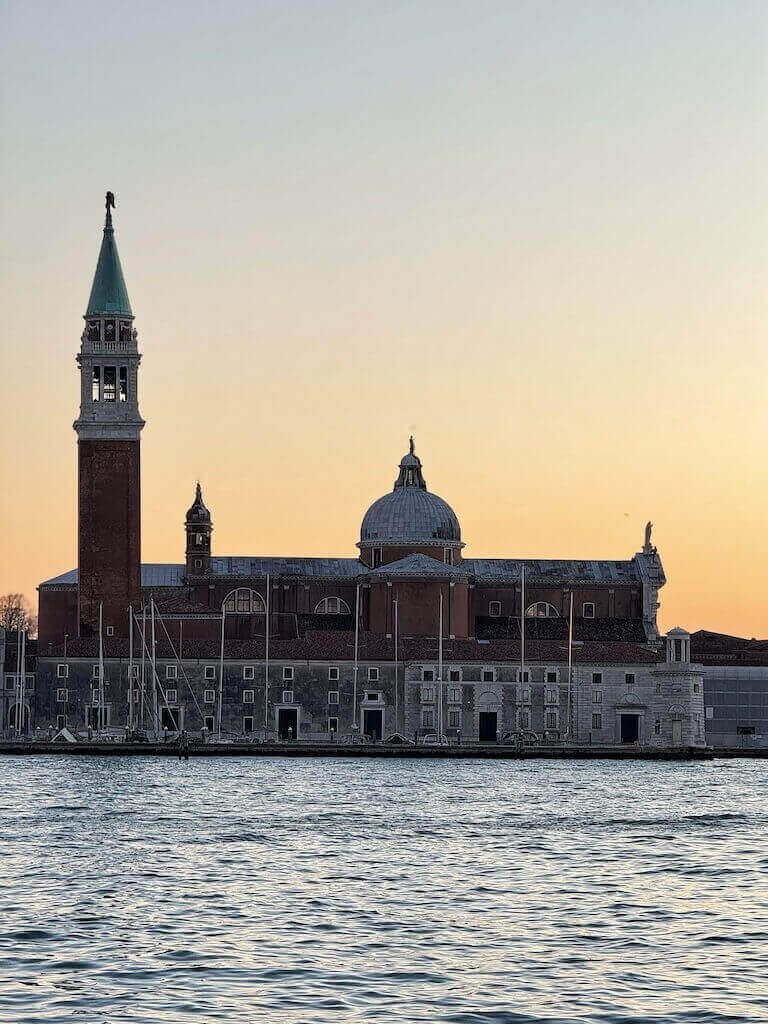
Start the second of your 3 days in Venice by heading to the waterfront to catch a vaporetto to San Giorgio Maggiore island, then spend the afternoon exploring the artsy Dorsoduro district with its world-class museums and charming canals.
Today involves several vaporetto rides, so consider getting a 24-hour vaporetto pass to save money on transportation.
San Giorgio Maggiore
Start your day by taking vaporetto line 2 from San Zaccaria (near St. Mark’s Square) to San Giorgio Maggiore island. The ride takes just 5 minutes across the lagoon but offers one of the best views of St. Mark’s Square and the Doge’s Palace from the water.
San Giorgio Maggiore is dominated by its stunning white church designed by the famous Renaissance architect Palladio. The church interior is bright and airy with two important Tintoretto paintings, but the real highlight is climbing the bell tower (it’s the one you can see from Riva degli Schiavoni and clearly from St. Mark’s Bell Tower).
Unlike the Campanile di San Marco, there are rarely lines here (there was none when I visited in December), and the panoramic view is arguably even better. From the top, you get a perfect postcard view of Venice with the Doge’s Palace and St. Mark’s in the foreground and the Grand Canal sweeping into the city. You can also see the Giudecca Island nearby.
If you have time and have booked in advance, visit the Giorgio Cini Foundation on the same island. Keep in mind it can only be visited on guided tours but they must be booked in advance on the official website.
Explore Dorsoduro neighborhood
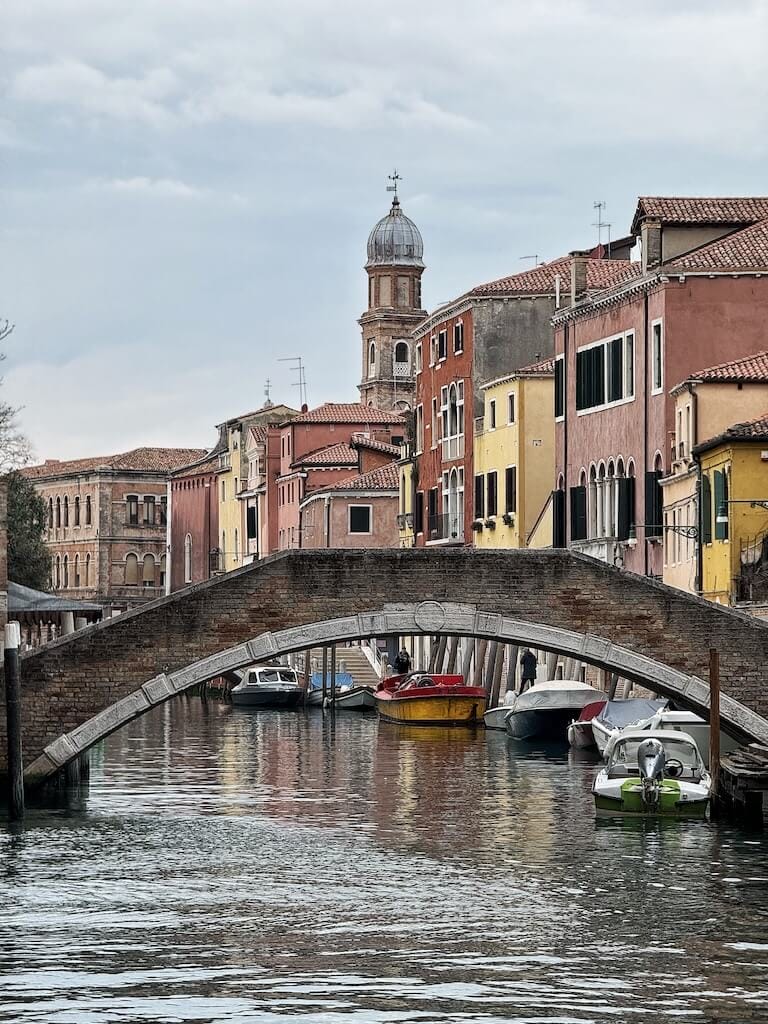
From San Giorgio Maggiore, take vaporetto line 2 to Zattere stop, which takes about 10 minutes. This drops you off in Dorsoduro, one of Venice’s most charming and authentic neighborhoods. With fewer tourists than San Marco but plenty of artistic and cultural attractions, Dorsoduro offers a more relaxed Venice experience.
Start by walking along the sunny Zattere promenade, which stretches along the Giudecca Canal with beautiful views of the Giudecca across the water. This wide walkway is popular with locals for afternoon strolls and is lined with several cafes where you can stop for a coffee if needed.
As you explore Dorsoduro, wander through Campo Santa Margherita, one of the liveliest squares in Venice. With university students, local shops, and neighborhood restaurants, it offers a glimpse of everyday Venetian life that feels worlds away from the tourist crowds at St. Mark’s.
GOOD TO KNOW: The same vaporetto that drops you off at Zattere also stops in Giudecca, one of the most authentic islands of the Venetian Lagoon. When I visited, I decided to stop there and eat lunch at a local bacaro there, went for a quick walk and then went to Dorsoduro.
Lunch at Al Squero
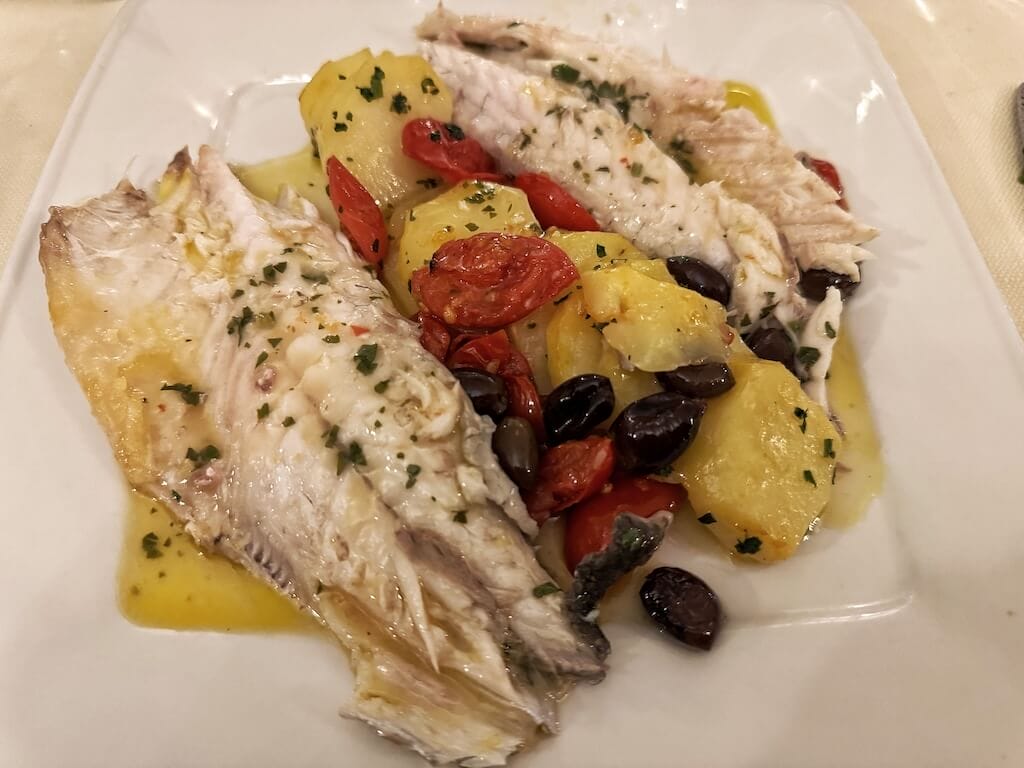
For lunch, head to Al Squero, a tiny bacaro located directly across from the Squero di San Trovaso, one of Venice’s last traditional gondola workshops. From Zattere, it’s about a 10-minute walk inland following signs to “Accademia.”
Al Squero is famous for its reasonably priced cicchetti.
You can choose from various small sandwiches, seafood bites, and other Venetian specialties displayed in the glass case at the counter. Try the baccalà mantecato (creamed cod) on polenta or the sardines in saor for authentic Venetian flavors.
Pair them with a small glass of house wine or a spritz for the full experience.
The place is small, with no seating inside, but you can stand at the canal-side counter or take your food to eat along the canal.
After lunch, you have the option of visiting one of the most famous museums in Venice. You could try to see both if you are doing well on time, but it may be tiring. So just pick the one that picks your interest the most.
Ponte dell’Accademia
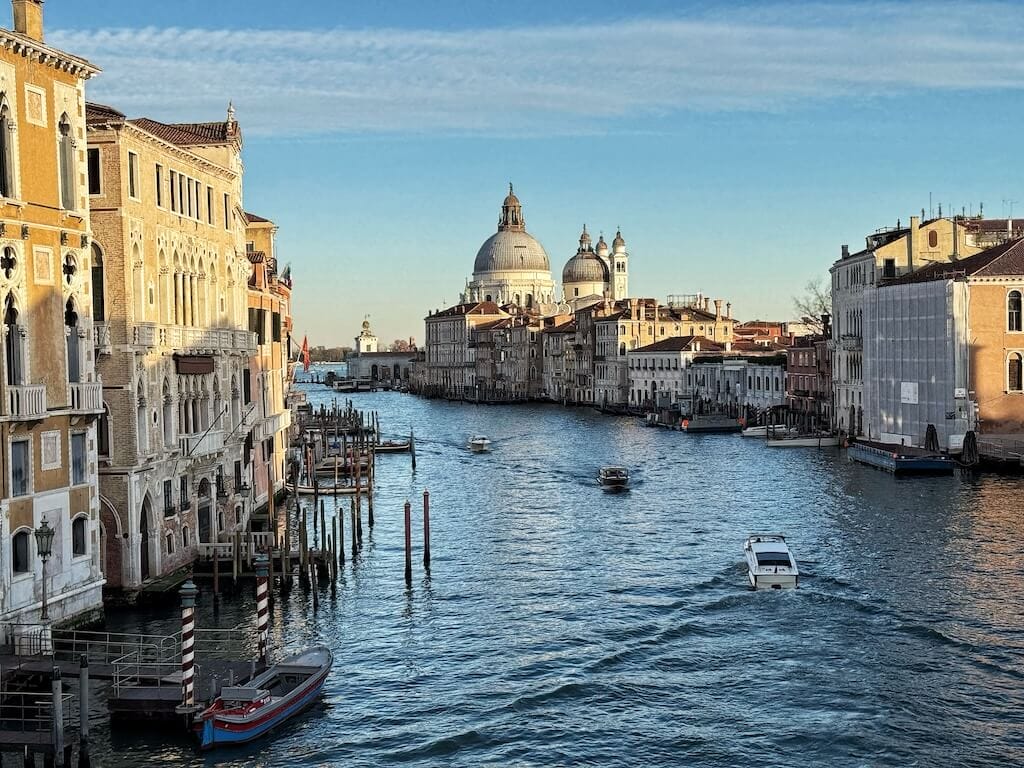
From Al Squero, it’s just a 5-minute walk to the Ponte dell’Accademia, one of only four bridges spanning the Grand Canal. The current bridge is a wooden structure (rebuilt several times) offering one of Venice’s most iconic views.
From this vantage point, you can see the Grand Canal curve toward Santa Maria della Salute with gondolas and vaporetti gliding by. This is an especially beautiful spot at sunset when the light turns golden across the water. Take some time to enjoy the view and snap a few photos before continuing your journey.
Option 1: Galleria dell’Accademia
Right in front of the bridge, there’s the Galleria dell’Accademia, Venice’s most important art museum focusing on pre-19th century Venetian painting.
This is where you’ll find the masterpieces of Venetian artists like Titian, Tintoretto, Bellini, and Veronese displayed in a former religious complex.
The collection spans several centuries of Venetian art, with highlights including Giorgione’s “The Tempest,” numerous works by Titian, and Veronese’s massive “Feast in the House of Levi.” The museum provides an excellent context for the art you’ve seen in churches and palaces throughout Venice.
Option 2: Peggy Guggenheim Collection
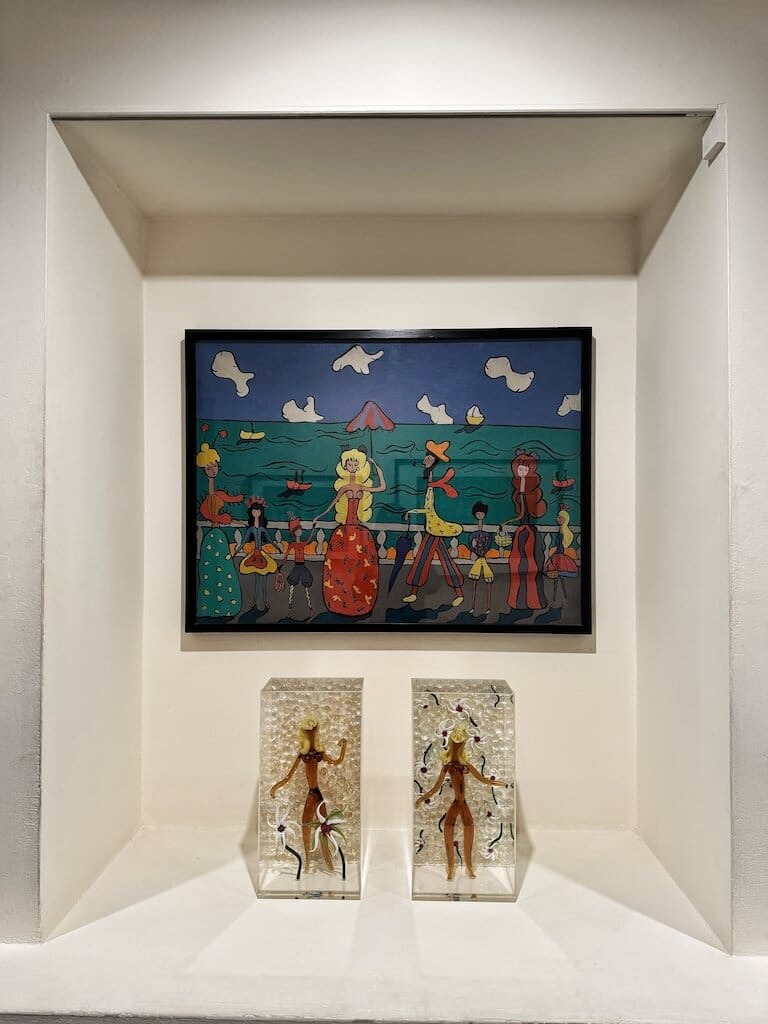
Alternatively, you can visit the Peggy Guggenheim Collection, one of Italy’s most important museums of modern art. It’s a 5-minute walk from the Ponte dell’Accademia. It’s my personal preference, but I am a massive fan of contemporary art.
Located in Peggy Guggenheim’s former home, the Palazzo Venier dei Leoni on the Grand Canal, this museum houses her impressive personal collection of 20th-century masterpieces.
The collection includes works by Picasso, Dalí, Pollock, Kandinsky, and many other major artists of the modern era. Beyond the artwork, the museum offers a fascinating glimpse into Peggy’s life as an art collector who made Venice her home in 1947.
Don’t miss the sculpture garden, where Peggy herself is buried alongside her beloved dogs. The museum’s terrace also offers lovely views over the Grand Canal.
The exterior is just as impressive as the interior, with the steps leading down to the water creating a perfect spot for photos of both the church and the view across St. Mark’s.
Santa Maria della Salute
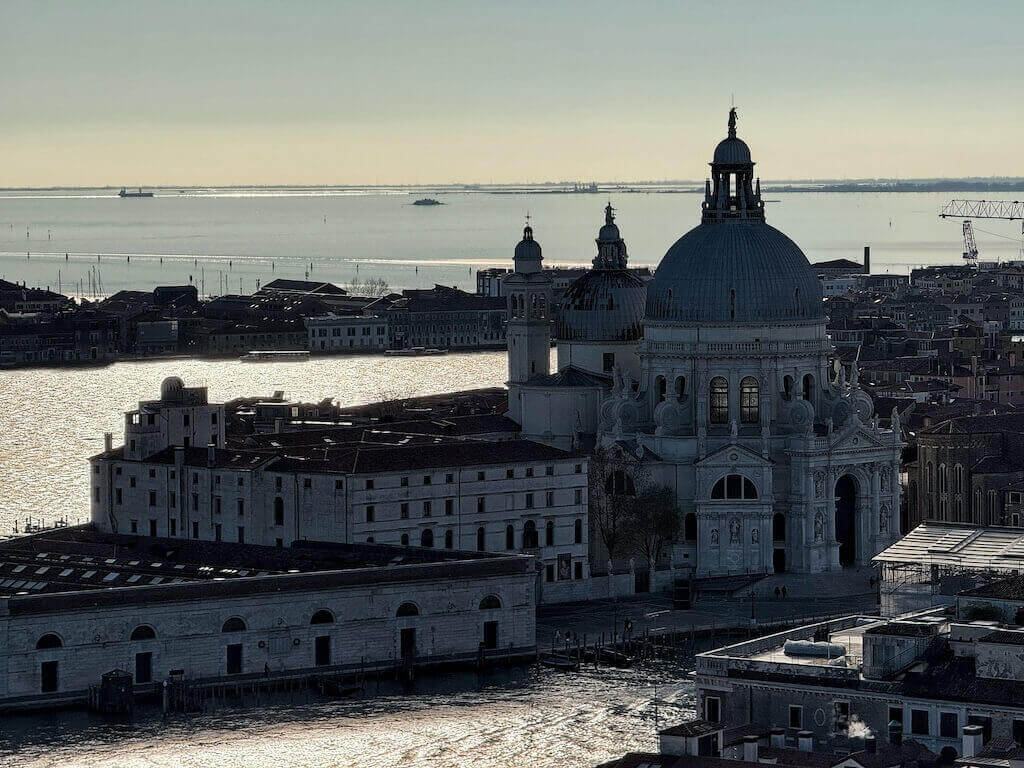
It’s another short walk to get to Santa Maria della Salute, one of Venice’s most recognizable churches. This massive white baroque church with its distinctive domed roof stands proudly at the entrance to the Grand Canal.
The church was built in the 17th century as a thank-offering after a devastating plague ended.
Its octagonal design and prominent position make it one of the most photographed buildings in Venice. The spacious interior is surprisingly bright, with several important artworks, including Titian’s “Marriage at Cana” in the sacristy.
For a small fee you can also access the dome, which offers beautiful views of the city and of the lagoon. Dome visits are usually suspended in the low season, and if you visit in the peak season you should book in advance on the official website.
From Santa Maria della Salute, you can either walk back to Ponte dell’Accademia to get back to San Marco, or take a traghetto (it’s like a public gondola) across the Canal Grande. These run until about sunset time. Depending on what you opt for in the evening, you should stay in Dorsoduro.
Evening options
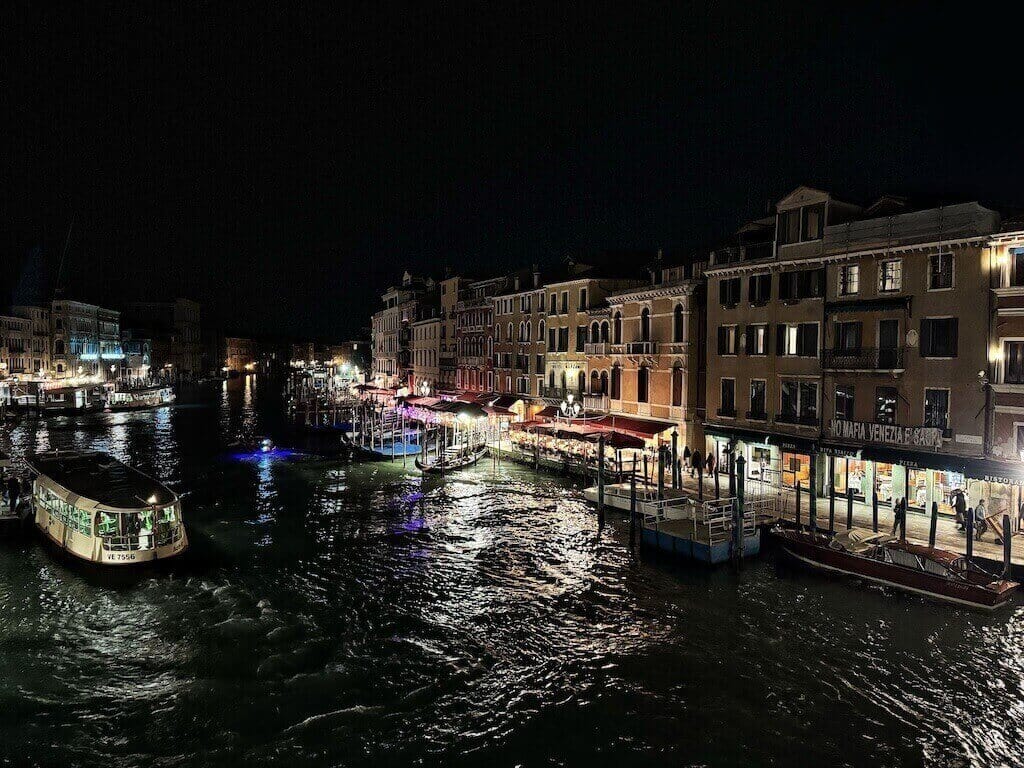
For your evening, you have two excellent tour options to experience different aspects of Venice:
Option 1: Off the beaten path tour of Venice
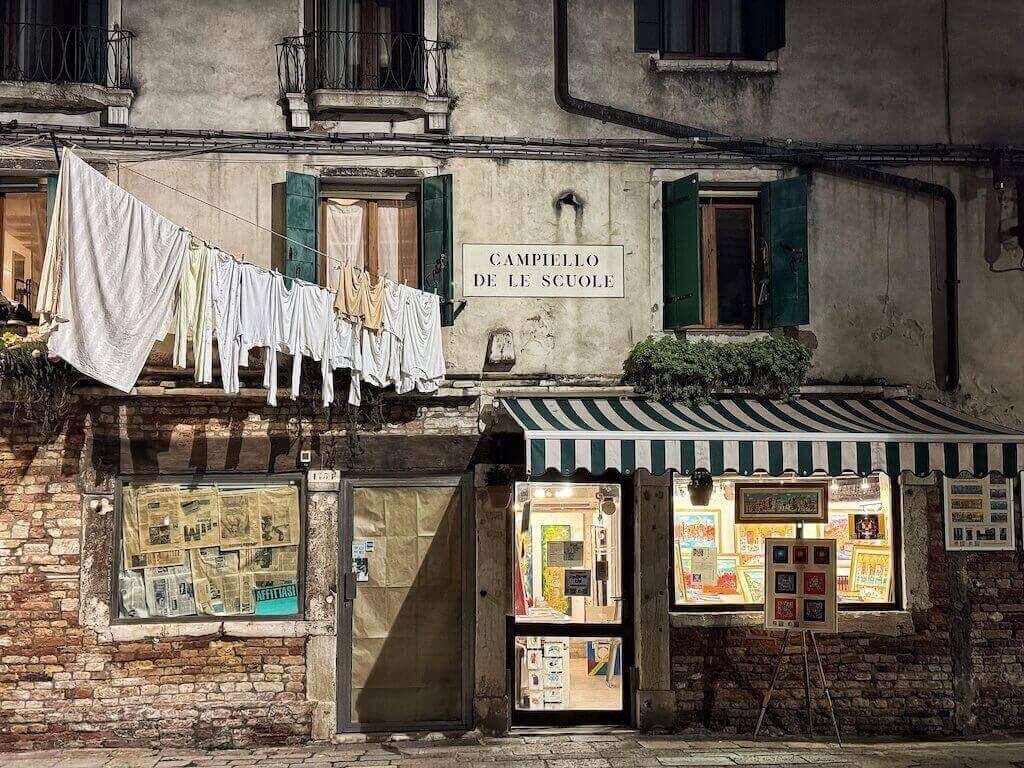
Last time I visited, I took this Venice: Off the Beaten Track Private City Tour. It’s a private tour that takes you through the trendy Dorsoduro neighborhood, showing you a different side of Venice away from the usual tourist spots.
Your local guide will lead you to hidden architectural gems, local hangouts, interesting spots like Palazzo Zenobio degli Armeni, and more. You’ll learn about Venetian history and discover the city life and culture from a local perspective. In addition to that, you will see parts of the city most visitors never discover.
Option 2: Jewish Ghetto of Venice tour
I also took this Jewish Ghetto of Venice Tour – though on a different night (but I spent more than 3 days in Venice last time I visited).
The tour allows you to explore Venice’s historic Jewish Ghetto, the oldest in the world and the very place where the term “ghetto” originated. This walking tour takes you through the Cannaregio district to Campo del Ghetto Nuovo, established in 1516 as the confined area where Venetian Jews used to live.
You’ll visit the Levantine and Spanish Synagogues with expert guides from the Jewish Museum and see unique bas-reliefs that most tourists miss. The area today is filled with bakeries, restaurants, and artisan shops that showcase Jewish culture and history in Venice.
Option 3: Mysterious tales of ghosts and murders
This Mysterious Tales of Ghosts and Murders tour takes you through narrow, dimly lit alleys while sharing stories of magic, betrayal, and revenge. You’ll discover hidden details in the architecture – an engraving on stone, a heart embedded in a wall – that reveal Venice’s darker history.
The itinerary avoids crowded areas and includes local legends and true historical events, making it suitable for adults and children who enjoy a more mysterious side of the city.

Day 3: Island Hopping And Final Experiences
The last of your 3 days in Venice takes you island-hopping through Venice’s famous lagoon to discover the colorful houses of Burano, the glass-making traditions of Murano, and the ancient history of Torcello.
These three islands each have their distinct character and provide a wonderful contrast to the main city of Venice.
You can explore these islands independently using the public vaporetto system or join a guided tour. I’ll cover both options so you can choose what works best for you.
Visit Murano, Burano, and Torcello
Murano and Burano are the classic day trip from Venice. They are close enough that they are easy to visit for the day, and offer enough attractions to keep you busy.
Murano is world-famous for its glass-making tradition dating back to 1291 when glassmakers had to relocate from Venice due to fire risks. The island is essentially a smaller version of Venice with its canals and historic buildings, but the main attraction is watching master craftsmen at work. Stop by a glass factory and visit the Glass Museum (Museo del Vetro).
Burano is the most photogenic of the three islands, with its rows of brightly painted houses in every color of the rainbow reflected in the still canal waters. Legend has it that fishermen painted their homes in vibrant colors so they could recognize them from a distance when returning from sea.
Beyond its Instagram-worthy streets, Burano has a long tradition of lace-making. Visit the Lace Museum (Museo del Merletto) to see intricate handmade pieces and sometimes watch older women demonstrating this dying art.
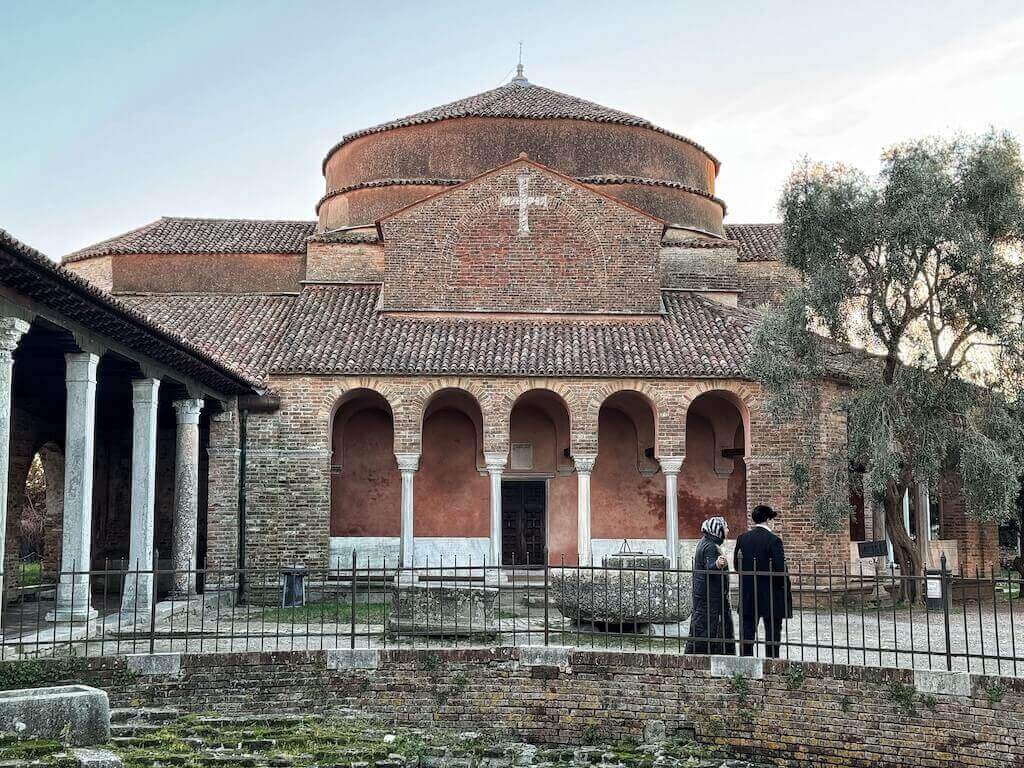
Torcello is Venice’s oldest continuously populated region, though now incredibly quiet, with only about 10 permanent residents. This peaceful island was once home to 20,000 people and was the original settlement in the Venetian lagoon before Venice itself. There’s a gorgeous Basilica and a bell tower you can climb for stunning lagoon views.
How to get to the islands on your own
To visit the islands independently, head to the vaporetto stops along Riva degli Schiavoni (the waterfront promenade near St. Mark’s Square) early in the morning. For the most efficient route:
- Take Line 12 from Fondamente Nove (about a 15-minute walk from St. Mark’s) to Murano (a 15-minute ride)
- After exploring Murano, take Line 12 to Burano (30-minute ride)
- From Burano, it’s a short 5-minute ride on Line 9 to Torcello
- Return from Torcello to Burano, then take Line 12 back to Fondamente Nove
Start early (around 8:30-9:00 am) to maximize your time, as the last boats back to Venice leave the islands in the early evening.
Guided tour of Murano, Burano, and Torcello
If you prefer to have transportation and information taken care of, a guided tour is an excellent way to visit all three islands efficiently.
I took Venice: Murano, Burano, Torcello, and Glass Factory Tour and found it to be a good hassle-free chioce. It takes you across the emerald waters of the Venice lagoon for a full day of island exploration.
You’ll travel comfortably by ferry with excellent views from the boat while your guide on board (they won’t accompany you once you get to the islands) provides interesting commentary about the islands and their history.
The tour includes visiting a glass factory on Murano, where you’ll see skilled artisans create intricate glass pieces. You’ll have about an hour there for shopping. Then you’ll spend about by two hours in colorful Burano, where you can enjoy lunch or aperitifs and photograph the famously bright houses.
The final stop (though this is optional) is historic Torcello, where you’ll have an hour to see the ancient cathedral with its Byzantine mosaics before returning to San Marco in the early evening.

Lunch in Burano at Ai Banky
If possible, plan your day so you’re in Burano around lunchtime (the above tour already stops here for lunch). Ai Banky is a wonderful spot for lunch with a beautiful setting along a colorful canal. Located at Via San Mauro 358, it’s about a 5-minute walk from the vaporetto stop.
The restaurant specializes in incredibly fresh seafood caught daily from the lagoon. We had grilled shrimp, grilled sea bream and fritto misto (mixed fried seafood) and they were all delicious.
I have a post on What To Do In Burano which explains more about the island’s attractions.
Other Things To Do
If you’ve covered all the main attractions in this 3-day Venice itinerary or want to swap something out, or (say) you have 5 days in Venice, here are some other excellent experiences to consider during your time in Venice.
Gondola ride experience
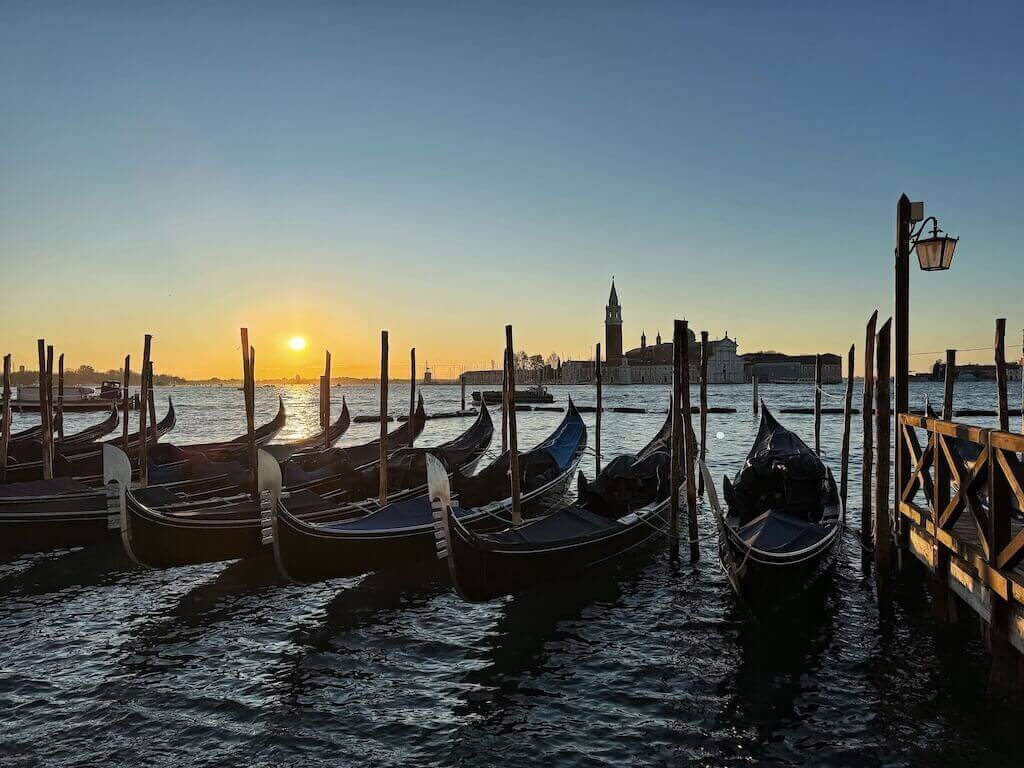
No trip to Venice feels complete without experiencing a gondola ride, even if it is touristy. There are two main options depending on your budget:
- Private Gondola: For the most authentic experience, book a private gondola for just your group. Your gondolier can tailor the route based on your interests, taking you through quieter, more atmospheric canals away from the crowds.
- Shared Gondola: If you prefer a more budget-friendly option, shared gondola rides are available where you’ll join 4 to 5 other travelers. While less intimate, it offers the same beautiful views through Venice’s picturesque waterways.
You can book gondola rides all over Venice and generally don’t need to book far in advance. Most people get one at the gondola stations (servizio gondole) throughout the city. You can also ask reception at your hotel to book one for you, or book it online.
If you’d like to book your gondola ride in advance, I recommend this Off the Beaten Path Private Gondola Ride. It stays away from the main canals. You will navigate through quieter waterways, where you’ll see beautiful palaces, houses, and bridges that many tourists miss.
If you’d like to pre-book a shared gondola, I recommend this Shared Gondola Ride Across the Grand Canal. It’s a simple tour but is the classic budget-friendly gondola ride along the canal.

Visit Rialto Market
The Rialto Market (Mercato di Rialto) has been the commercial heart of Venice for 700 years. Located near the Rialto Bridge, this vibrant market offers a fascinating glimpse into everyday Venetian life and local culinary traditions.
The market is divided into two main sections: the Pescaria (fish market) and the Erbaria (fruit and vegetable market).
In the fish section, you’ll see an incredible variety of seafood fresh from the lagoon and Adriatic, from familiar fish to strange creatures you may never have seen. The produce section overflows with seasonal fruits and vegetables, many from the farming islands in the lagoon.
Enjoy the views from Fondaco dei Tedeschi
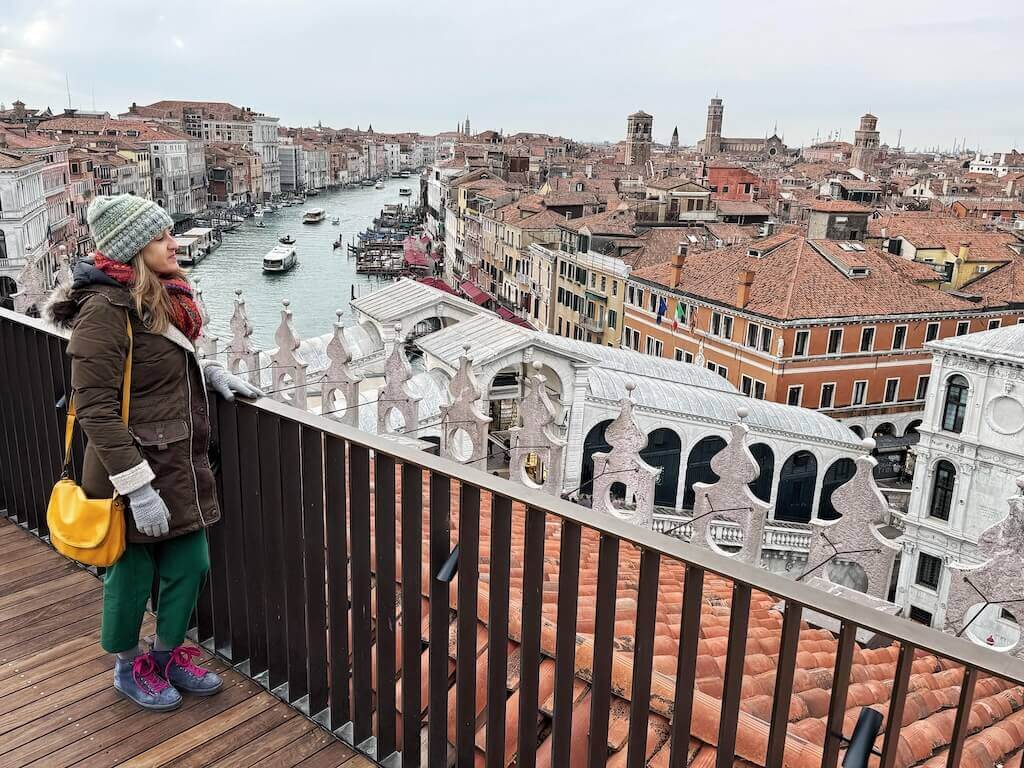
For one of the best free views in Venice, head to the rooftop terrace of T Fondaco dei Tedeschi, a luxury department store near the Rialto Bridge. This historic building was once the headquarters for German merchants in Venice during the Renaissance. It has been beautifully restored.
The rooftop offers a spectacular 360-degree panorama across Venice’s rooftops, the Grand Canal, and the Rialto Bridge. The view is free, but you must book a time slot through the website.
Even if you’re not interested in shopping, the building has an impressive atrium and architecture that you should see. After enjoying the view, you can browse the high-end shops or stop at the café inside.
Where To Stay For Your 3 Days In Venice Italy
For 3 days in Venice, I recommend accommodations in the San Marco district, or in nearby Dorsoduro. These central locations put you within walking distance of most major attractions, saving you valuable time and making it easy to return to your hotel for a quick break during the day.
Here are excellent options at different price points, all conveniently located for making the most of your Venice itinerary.
- Hotel Moresco – Gorgeous hotel in Dorsoduro with plush rooms, some facing the garden and some overlooking the canals.
- Nolinski Venezia Evok Collection – Fabulous luxury hotel with modern and comfortable rooms. You will be steps away from all the main attractions.
- Hotel Bernardi Semenzato – Located in Cannaregio, it’s one of the best budget friendly places to stay in Venice.
If you’d like more recommendations for different neighborhoods and budgets, check out my article, Where To Stay In Venice: Best Neighborhoods & Hotels. I also talk about each of Venice’s neighborhoods and who should stay in them.
How To Get To Venice
Venice is well connected to the rest of Italy by train and plane.
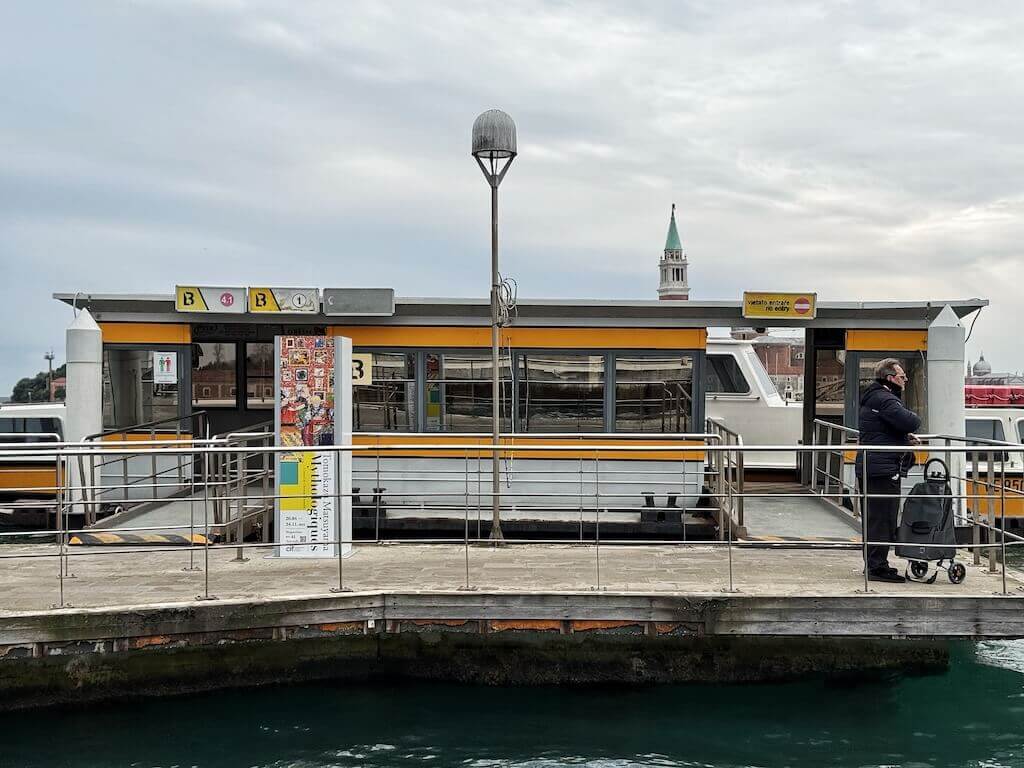
If Venice is your first stop on your Italy itinerary, you are likely going to fly there. Then you’ll have to make your way from Marco Polo Airport to the city. It’s fairly easy. You can opt to take the bus to Piazzale Roma, from where you can take one of the Vaporetto to take you closer to your hotel.
Alternatively, you can opt for water transportation in which case you can either travel with the public Alilaguna or opt for a water taxi or a private transfer.
I have a guide that carefully explains How To Get From Marco Polo Airport To Venice City Center that you should read for further information.
You can also get to Venice by train. There are direct trains from a variety of cities in Italy including Rome, Bologna, Milan and Florence. Trains will drop you off at Santa Lucia Station, from where you can take a Vaporetto along the Grand Canal to reach your final destination.
Do You Need A Venice City Pass?
Honestly, it depends. Some people love them because city passes allow you to keep all tickets in one place, and there are some savings (and skip the line access).
Personally, I am not the biggest fan. I prefer booking the various attractions individually as many passes force you to book attractions separately anyways so it feels like doing even more work.
I also think it’s only worth investing in a city pass if you plan on visiting many attractions.
If you decide to get a city pass, remember that they are not all the same. I found two for you. Below you can see their main differences:
This City Pass with Museums, Churches, & Public Transport includes Venice’s top museums, historic churches, and landmarks such as the Doge’s Palace, Museo Correr, the Archaeological Museum, and 16 churches across the city. It’s available for 1, 2, 3, or 7 days.
This Venice Pass is perhaps a better option as it allows you to customize over a set itinerary. It includes entry to St. Mark’s Basilica, Doge’s Palace, and a choice between a gondola ride or a Murano & Burano boat tour. It does not include museums or public transportation.
Recommended Venice Tours
Most of the attractions mentioned in this post can be booked via the official website. However, there are some tours that you may want to consider for an even more in-depth experience. These are the ones I recommend:
Exclusive Alone In St. Mark’s Basilica After Hours – A great tour for a more intimate experience of St. Mark’s Basilica. You visit when most people have already left for the day.
Venice off the beaten path tour – It visits some hidden gems of Venice like the Ponte dei Pugni and the Squero di San Trovaso, mostly in the Dorsoduro area. It’s an interesting way of learning more of the history of Venice. It’s a well paced tour during which you see lots!
Cicchetti and Spritz food tour – The tour mostly goes around the Cannaregio area and the Jewish Ghetto. It includes enough tasting for a full meal, and two drinks. You learn a lot about the local culinary culture and vibe.
Jewish Ghetto Tour – If you are interested in the history of the Jewish community of Venice and want to learn how the creation of the ghetto , this is an excellent tour. It also visits the synagogues. It overlaps a bit with the Cicchetti tour.
Murano, Burano and Torcello Tour – I found this to be a well paced tour that allowed enough time in each island for a bit of exploration. You have a guide on board of the ferry that explains the history and culture of the places you visit, but then you mostly get to explore on your own. Torcello is only an optional stop (I went, and loved it).
Tips For Your 3 Days Venice Itinerary
Here are my top Venice tips based on multiple visits. They are meant to ensure you have the best possible experience in this unique city.
Avoid visiting in the peak season
Venice is notoriously crowded during the summer when tourists flood the narrow streets. Waiting times for major attractions can be hours long. If possible, plan your visit during the shoulder seasons (March-April or November-December) when the weather is still pleasant but the crowds are significantly smaller.
Winter in Venice (December-February) offers the most authentic experience with few tourists (except for the days of the Carnival, when big crowds arrive). However, be prepared for potential acqua alta (high water) and cooler temperatures. I recently visited Venice in December and loved it.
I have a full post that explains what Venice in December is like.
If you must visit during peak season, staying overnight in Venice is essential as you’ll be able to experience the city early morning and evening when day-trippers have departed.
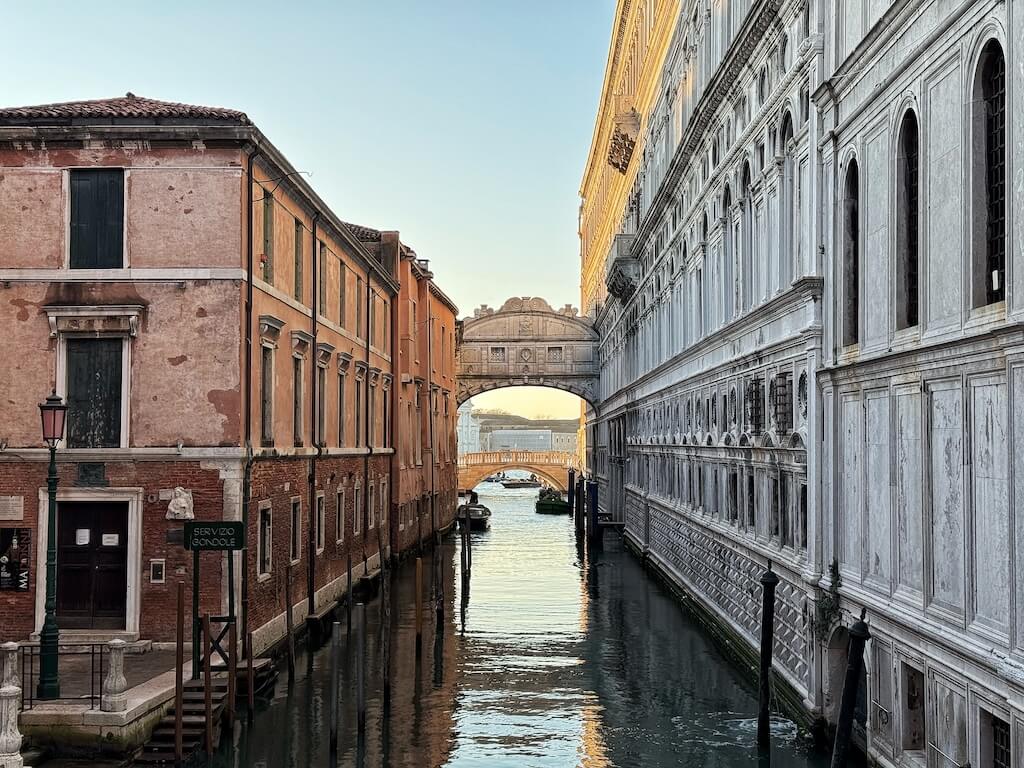
Start early to beat the crowds
One of the best ways to experience Venice’s magic is to start your day around 7:30-8:00 am before most tourists arrive. The early morning light is beautiful for photography, and you’ll have famous spots like St. Mark’s Square almost to yourself.
Major attractions like St. Mark’s Basilica open around 9:00 am, so plan to avoid long lines at the entrance right when they open. Use these quiet morning hours to walk through areas that become unbearably crowded by midday, such as the Rialto Bridge and the streets around St. Mark’s.
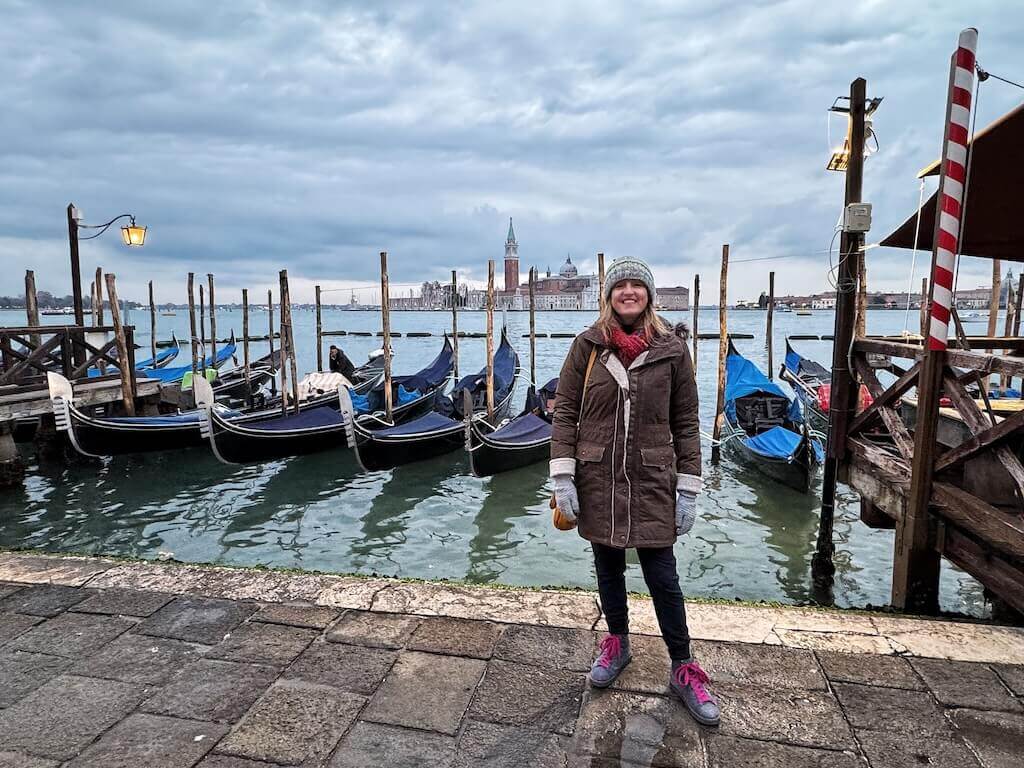
Wear comfortable shoes
Venice is a walking city with over 400 bridges, many with steps, and uneven cobblestone streets throughout. There’s no such thing as “too comfortable” when it comes to footwear in Venice.
Avoid heels or brand-new shoes you haven’t broken in yet. Waterproof shoes are a bonus, especially if visiting during acqua alta season (typically October-January) when streets can flood temporarily.
Plan your daily routes thoughtfully to minimize unnecessary walking, and don’t be afraid to take vaporetto rides to give your feet a break when traveling between distant parts of the city.
For more packing tips specific to Venice, head to my article, What To Wear In Venice: Season By Season Packing Guide. You’ll find tons more information specific to Venice’s seasons.
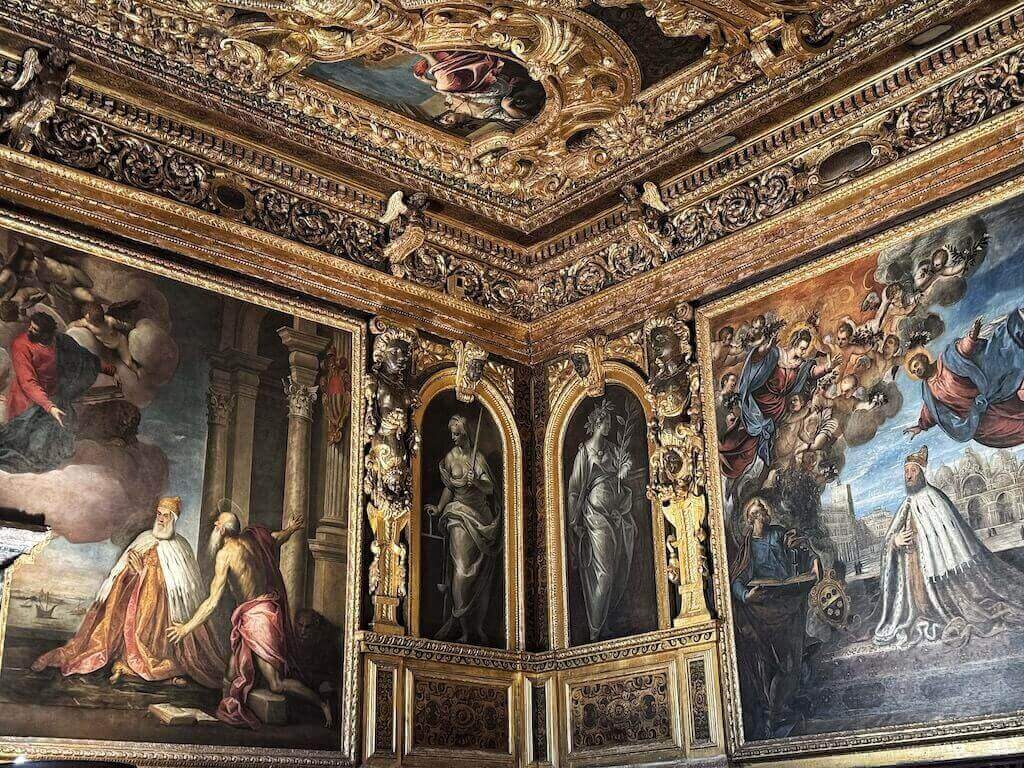
Book attractions in advance
For popular sites like St. Mark’s Basilica, Doge’s Palace, and even restaurant reservations, booking in advance is no longer optional but essential, particularly during busy periods.
Many attractions offer timed entry tickets that let you skip the regular lines. While these often cost a few euros more, they’ll save you hours of waiting time that you are better off spending enjoying Venice.
For special experiences like after-hours tours or visits to limited access areas, book weeks in advance as these sell out quickly, especially during spring and summer.
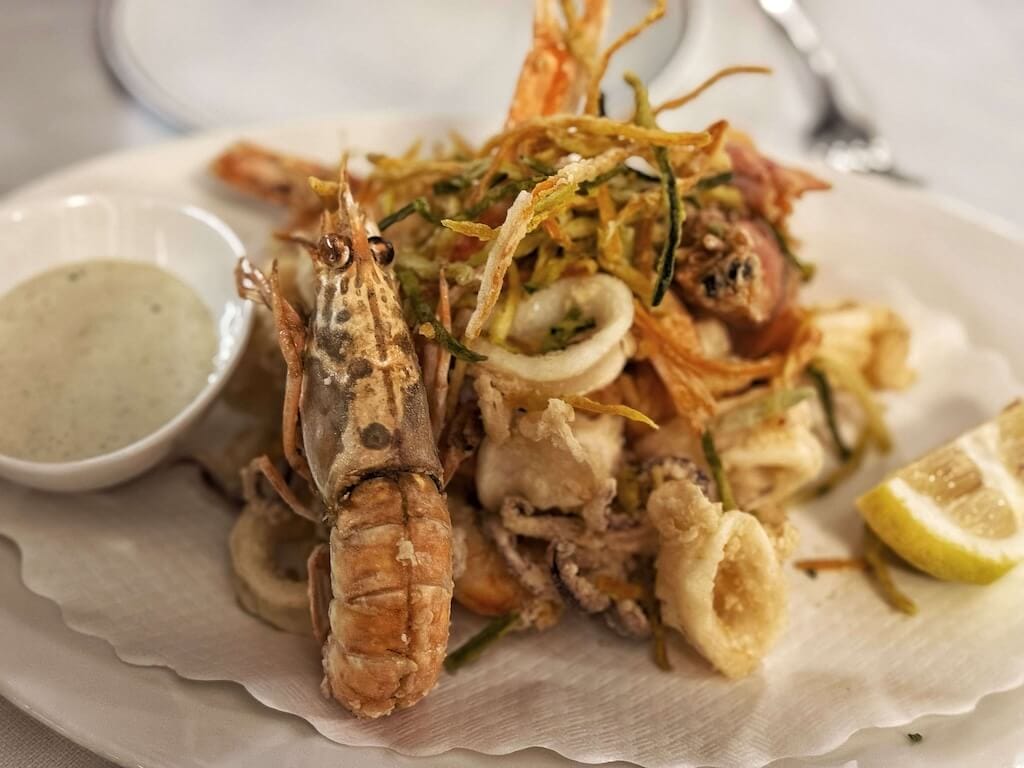
Avoid tourist restaurants
Venice has a reputation for overpriced, mediocre food at tourist traps (even I had a couple of those unfortunately).
But excellent authentic cuisine can be found if you’re willing to hunt for it. The easiest way to spot tourist restaurants is by their menus – if they advertise “tourist menus” or dishes that aren’t Venetian (like carbonara, lasagne, or tagliatelle alla bolognese), keep walking.
Authentic Venetian restaurants typically:
- Are located away from major tourist areas
- Have menus primarily in Italian
- Feature local specialties like sarde in saor, baccalà mantecato, and seafood risotto
- Don’t have staff outside trying to persuade you to enter
Ask your hotel staff for local recommendations.
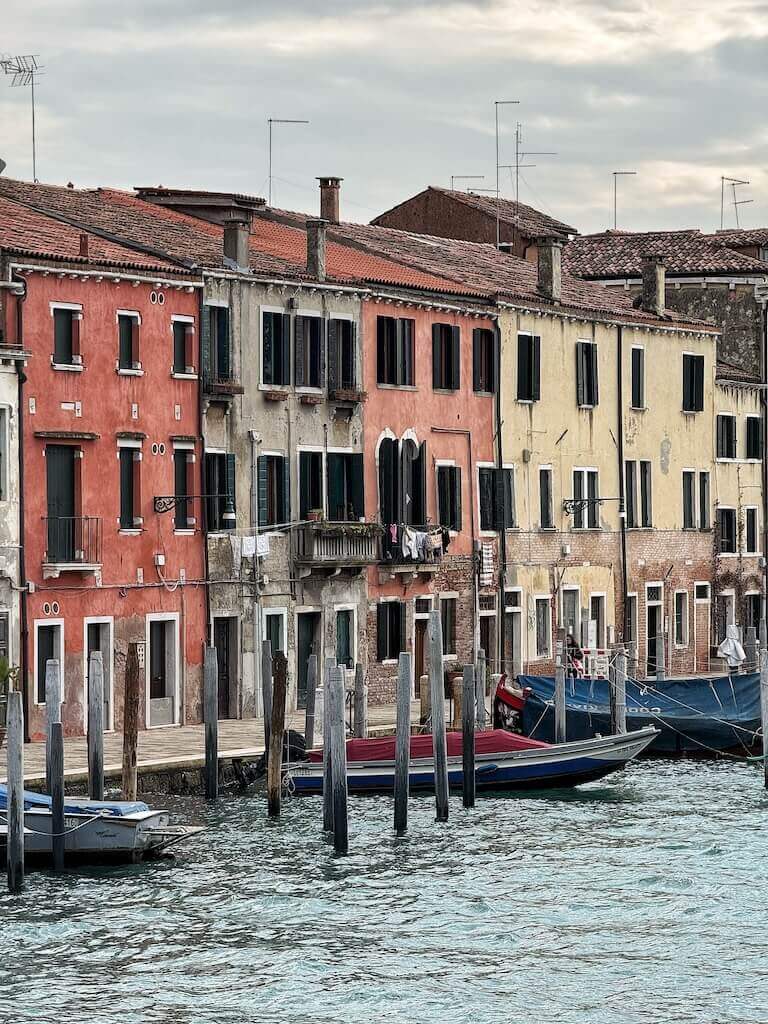
Are 3 Days In Venice Enough?
3 days in Venice are just enough to allow you to see the most important attractions and a few hidden gems. Staying less would mean rushing your way through. On the other hand, staying longer means more time to explore at a more leisurely pace. It would also give you the chance of visiting more places.
Last time I was in Venice, I spent 5 full days in the city and I didn’t have a dull moment. My days were packed with things to see – though I never felt rushed. If you decide to stay more than 3 days in Venice, you won’t have troubles finding things to do.
My post How Many Days Should You Stay In Venice? shares more tips that will help you determine how long to stay.
Conclusions On The Perfect 3 Days In Venice Itinerary
After multiple trips to the romantic city in different seasons, I’ve found that 3 days in Venice is the right balance for first time visitors – enough time to see everything important without feeling rushed. This itinerary mixes the classics (yes, you should see St. Mark’s) with some lesser-known spots that most day-trippers miss.
Venice can be overwhelming with its crowds and confusing layout, but don’t stress about seeing everything. Try to sit back and enjoy. Trust me, three days in Venice done right will leave you planning your return before you’ve even left.
PIN IT!

Claudia Tavani
Claudia Tavani was born and raised in Sardinia, and after moving between the United States and the United Kingdom, she's now back living in her hometown, Cagliari. She's a travel blogger and certified travel designer who loves planning trips and publishing guides, travel tips, and packing lists so that you don't have to. Owner of Strictly Italy, cat mom to Minnie. Loves pizza, hiking, archeology, cities, beaches, swimming, and running. Hates peppers.