
My 5 days in Venice itinerary is perfect for anyone who is visiting the city for the first time, but would like to explore it more in depth and well beyond the typical tourist trail, outside of the typical places you’d visit if you only had one day in Venice.
Venice is one of my favorite cities in Italy, and I’ve visited many times. On my most recent trip, I spent 5 days in Venice. Some of you may think it’s too much time. Honestly, it isn’t. There are many interesting attractions in the city that will take you forever to explore. Five days allow you to see the main attractions and get a bit off the beaten path, too.
The 5 days in Venice itinerary you will find here is exactly the one I followed during my last trip to the city. It is perfectly doable – I tested it with my friend, and we didn’t encounter any issues. Of course, you will have to book most attractions in advance. Don’t worry, I will explain everything (including my suggested time for visiting).
Continue reading to discover how to make the most of your time in Venice.
Are you following my 5 days in Venice itinerary? These are the tours you need to book:
- Private off-the-beaten-path tour of Venice
- Cicchetti and Spritz food tour
- Venice Jewish Ghetto walking tour
- Murano, Burano, and Torcello guided boat tour
You could also get a Venice City Pass if you intend to visit many attractions.
I have a post on The Best Places To Visit In Venice that you should read before your trip.
5 Days In Venice: Itinerary Overview
I honestly cringe whenever I hear someone is visiting Venice on a day trip. The city deserves so much more! Yet, to help those who have very little time, I have already created a One-Day in Venice Itinerary to prepare for the trip.
My itinerary for seeing Venice in 5 days allows you plenty of time to see the most famous attractions and explore some lesser-known areas.
Here’s how I’ve broken down this 5-day Venice itinerary:
- DAY 1 – Arrival in Venice. Keep it nice and simple as you may suffer from jet lag. Plan to visit no more than one church or museum; walk around and enjoy a leisurely dinner.
- DAY 2 – Visit the main attractions in St. Mark’s Square and then opt for an off-the-beaten-path tour of the city.
- DAY 3 – After exploring Doge’s Palace, you’ll head San Giorgio Maggiore for amazing views. You’ll then get away from the tourist crowds in Giudecca Island and return to Dorsoduro. Your next stop will be the gorgeous La Fenice Theater. You’ll finish your day with a cicchetti tour.
- DAY 4 – Hop on a vaporetto to head to Venice’s Jewish Ghetto for a guided tour, then explore the area of Rialto. Your last stop for the day is the Scala Contarini del Bovolo.
- DAY 5 – Beat the crowds at the Libreria dell’Acqua Alta, then go island hopping to see Murano’s glass workshops, Burano’s colorful houses, and the lesser-visited Torcello. You’ll also have free time in the afternoon once you are back for a gondola ride, if you wish.
As you can see, my itinerary mixes the must-sees with lesser-known attractions, so you get to really experience the city in depth.
Finally, let me detail what your 5 days in Venice itinerary looks like.
Day One – Arrival In Venice
Depending on where you are traveling from, what time you arrive in the city, and where you are staying in Venice, you will have more or less time to explore. Either way, I suggest keeping your first day simple and enjoying a walk around the city and visiting at most one museum.
Here’s the itinerary I followed when I visited.
Basilica di Santa Maria della Salute
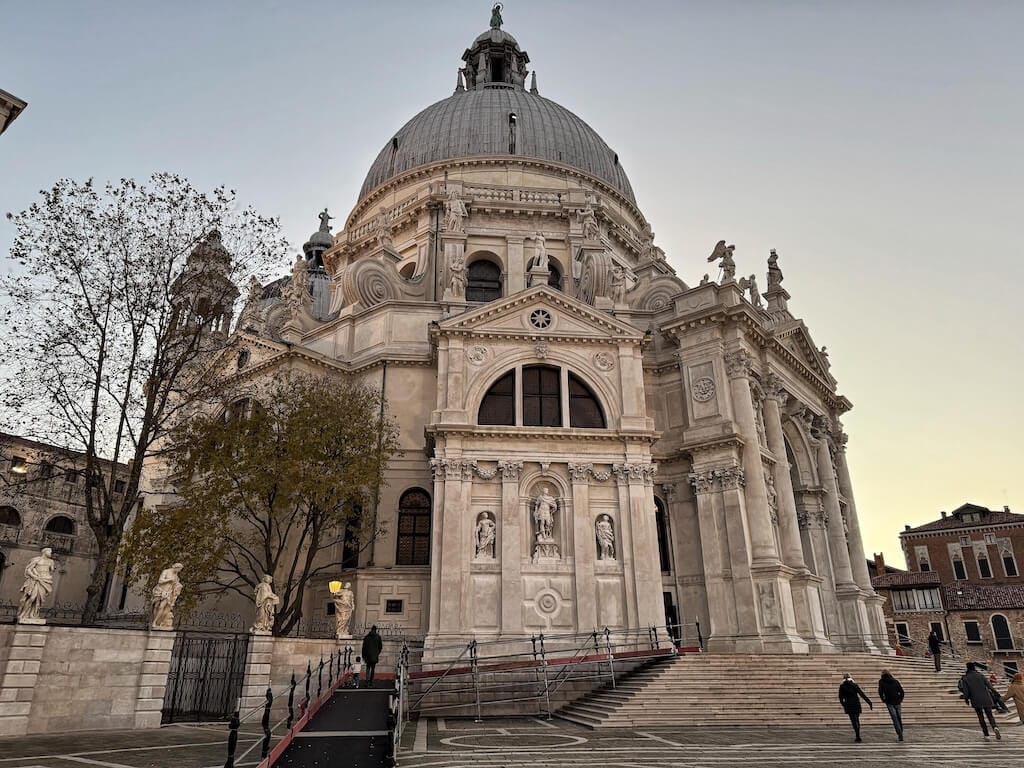
To get to Santa Maria della Salute Church, in Dorsoduro, you can either take a traghetto (like a collective gondola: that’s how I traveled there) across the Canal Grande, ride the Vaporetto, or cross the Ponte dell’Accademia.
This white Baroque church, with its large dome that’s visible from so many places in the city, marks the entrance to the Grand Canal. Santa Maria della Salute was built in the 17th century as a votive offering after a devastating plague.
Make sure to go inside. There are some stunning art pieces, such as Titian’s Marriage at Cana in the sacristy. You can also climb to the dome for views of the lagoon and the city (but keep in mind the dome is only accessible during the peak tourist season). If you wish to do so, make sure to book in advance on the official website.
Peggy Guggenheim Collection
If you wish to visit one museum on the day of your arrival in Venice, consider going to the Peggy Guggenheim Collection. It’s a few minutes walk from Santa Maria della Salute church and fits nicely in this 5 days in Venice itinerary.
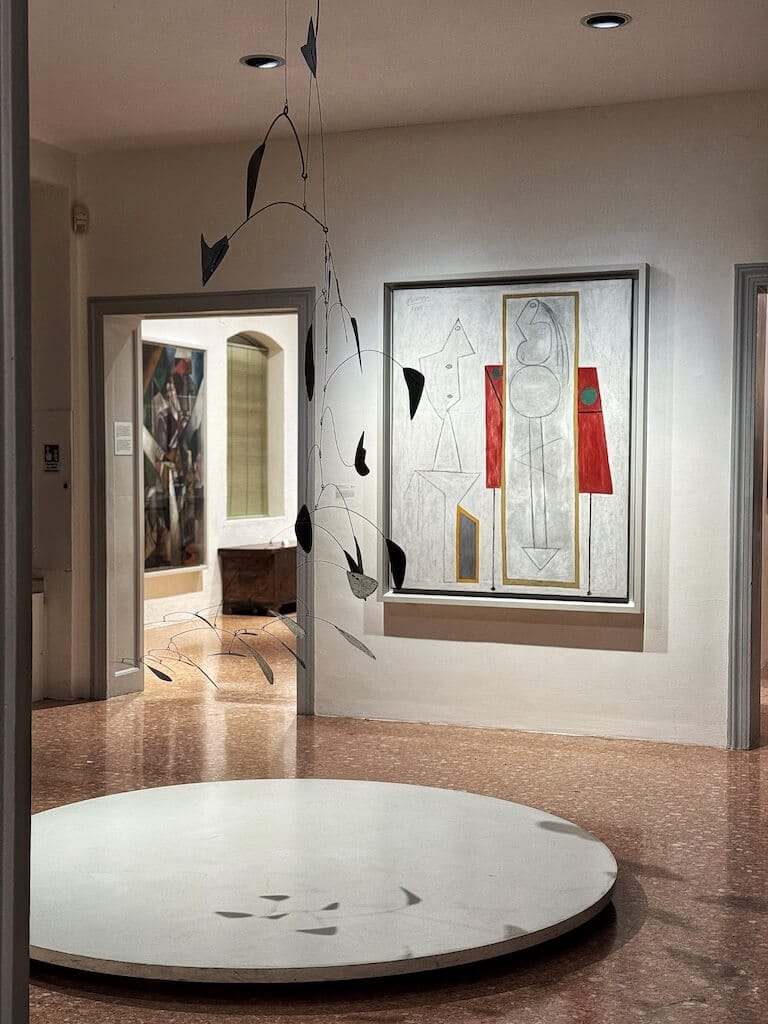
The Guggenheim is one of Italy’s top modern art museums. The museum is housed in Peggy Guggenheim’s former home, Palazzo Venier dei Leoni on the Grand Canal. She moved to Venice in 1947 and became one of the most central figures in the art world.
The museum is fairly small, but filled with some of the 20th century’s most influential works. Inside, you can admire pieces by Picasso, Dalí, Pollock, Kandinsky, and many others from Peggy’s personal collection.
I also love the sculpture garden, where Peggy is buried, and the waterside terrace.
When I visited in December, I just got tickets at the door and found no line, but if you are visiting in the peak season, you may want to get tickets online ahead of your visit.
As an alternative to Peggy Guggenheim Collection, you could also consider visiting the Galleria dell’Accademia di Venezia, which is just nearby and focuses on pre-19th-century art.
Ponte dell’Accademia
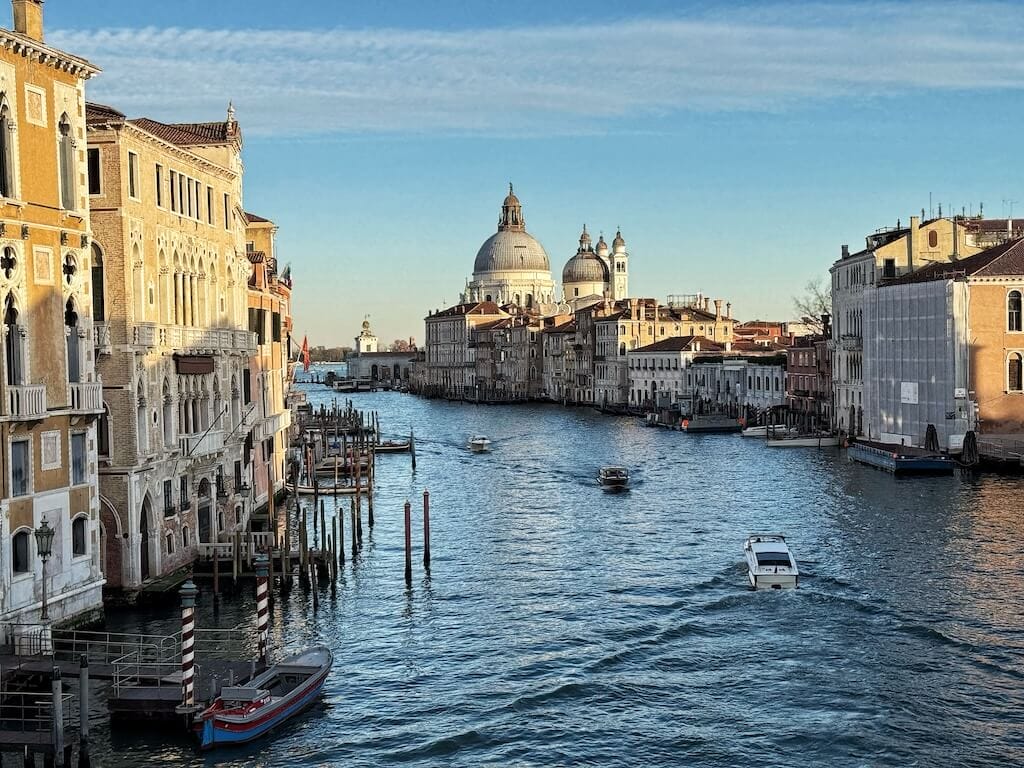
The Ponte dell’Accademia is one of the only four bridges across the Grand Canal. It’s a fairly plain wooden structure, but from there you’ll get one of the most impressive views of the city, as the Grand Canal slightly curves and you can see the Santa Maria della Salute Church and other beautiful palaces along the canal.
You will likely cross the Accademia Bridge several times during your trip to Venice – definitely if you follow my itinerary. And every time, you will be wowed by the views.

Ponte di Rialto
If you aren’t too tired, you can continue walking until you reach the Rialto Bridge – it’s about 15 minutes from the Ponte dell’Accademia. This is one of Venice’s most iconic landmarks and the oldest of the four bridges that cross the Grand Canal.
Originally built as a wooden structure in the 12th century, it was rebuilt in stone in the late 1500s following a design by Antonio da Ponte. It’s a very popular photo spot, and another great place to get views of the city. It’s always busy with tourists, if anything, as it’s a bridge that links San Marco to the San Polo district.
The bridge is lined with small shops that sell jewelry, souvenirs, and Murano glass.
Just beside the bridge, you will find several bars where you can stop for a drink. When I was there, I went for a drink at a place that’s marked on the map as Ri. Gu. You will find it literally at the entrance of the bridge on the San Marco side. It’s a nice spot with a fun vibe.
Day Two – St. Mark’s Square And Some Evening Fun
On your second day in Rome, you will focus on some of the attractions in St. Mark’s Square, then head off the beaten path for a guided tour.
St. Mark’s Basilica
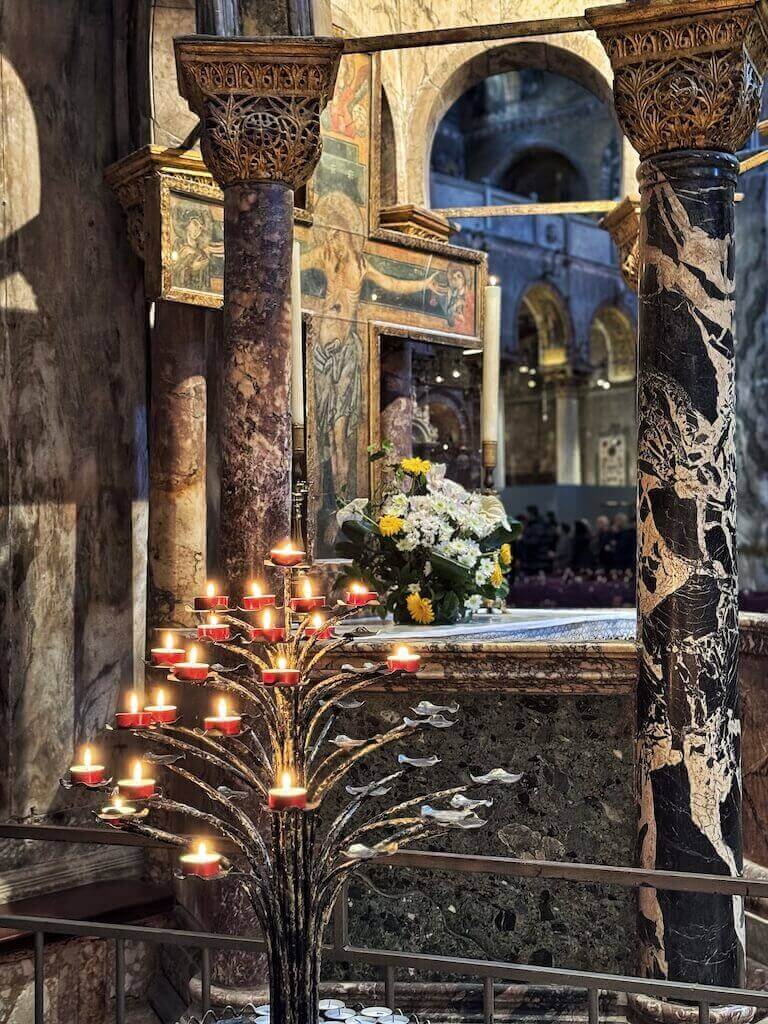
St. Mark’s Basilica—or Basilica di San Marco—is one of the most popular attractions in Venice and the ideal place to start your day.
Originally built in the 9th century to hold the stolen remains of St. Mark, it became the city’s official cathedral much later, in the 19th century. The architecture is a layered mix of Byzantine, Gothic, and Renaissance influences—unlike anything else in Italy.
Inside, over 8,000 square meters of golden mosaics shimmer across domes and walls. Highlights include the Pala d’Oro, a stunning gold altarpiece, and the original bronze horses, now kept in the basilica’s museum. Don’t skip the upper terrace—it gives you one of the best views over Piazza San Marco.
Make sure to book your visit in advance via the official website, which gives you several ticket options. I recommend picking the earliest time slot. If nothing is available on the official website, you could get this St. Mark’s Basilica with terrace access and Pala d’Oro. It’s one of the most inclusive options sold on a third-party booking site.
I have a Detailed Guide To Visiting St. Mark’s Basilica that will help you plan your visit.
Museo Correr
I visited the Museo Correr for the first time during my last trip to Venice – this is to say, you are never quite done exploring. I highly recommend going.
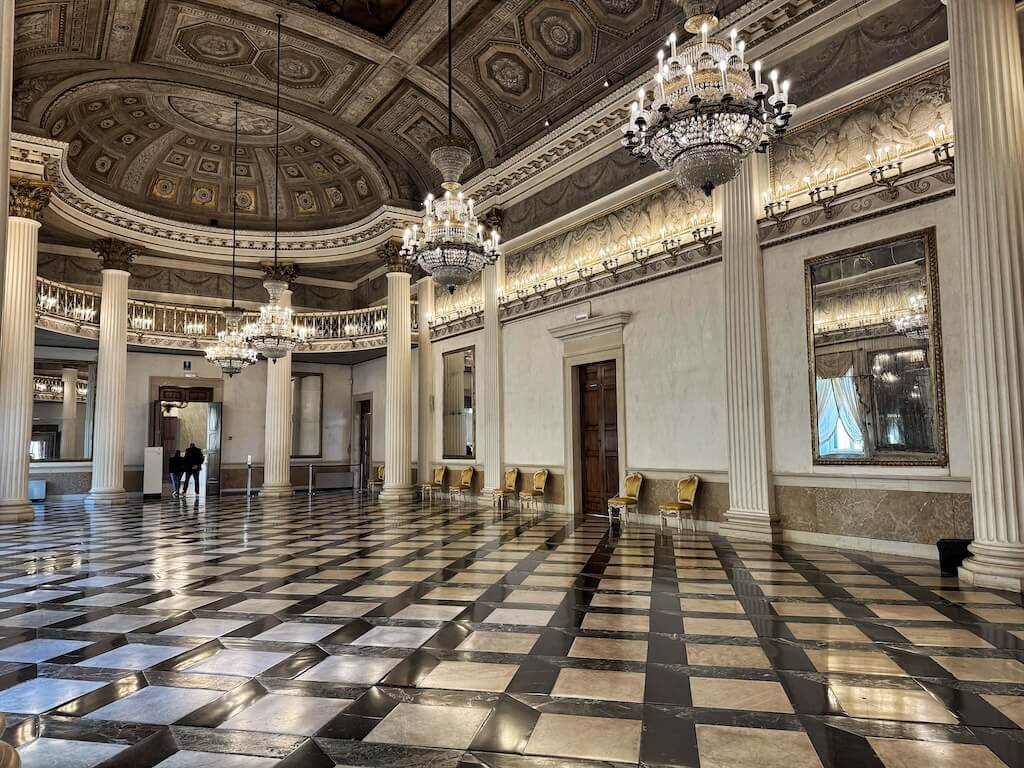
This fascinating museum sits at the far end of Piazza San Marco, inside the elegant Napoleonic Wing of the square. It’s one of Venice’s major museums, but much quieter than the nearby basilica.
The collection focuses on the city’s political, cultural, and artistic history—from its days as a powerful maritime republic to its final years under Austrian rule.
The museum is named after Teodoro Correr. He was a wealthy Venetian who donated his personal art and book collection to the city in the early 19th century. Inside, you can see anything from classical sculptures to Venetian paintings to maps, coins, and period furnishings.
One highlight is the series of rooms once used by the Habsburg royals, preserved with their 19th-century décor.
I also recommend stopping for a drink at the café inside the museum. It’s incredibly cozy, and it has stunning views of Piazza San Marco, the basilica, and St. Mark’s Bell Tower.
Get your tickets in advance on the official website if you visit in peak season. You could also get the Museum Pass, which includes admission to Museo Correr, Doge’s Palace, the Archeological Museum, the Lace Museum in Buran,o and a few more.
St. Mark’s Bell Tower
There are plenty of good lunch spots near St. Mark’s Square. My friend and I ate at Taverna Scalinetto, but you won’t have trouble finding another good lunch spot.
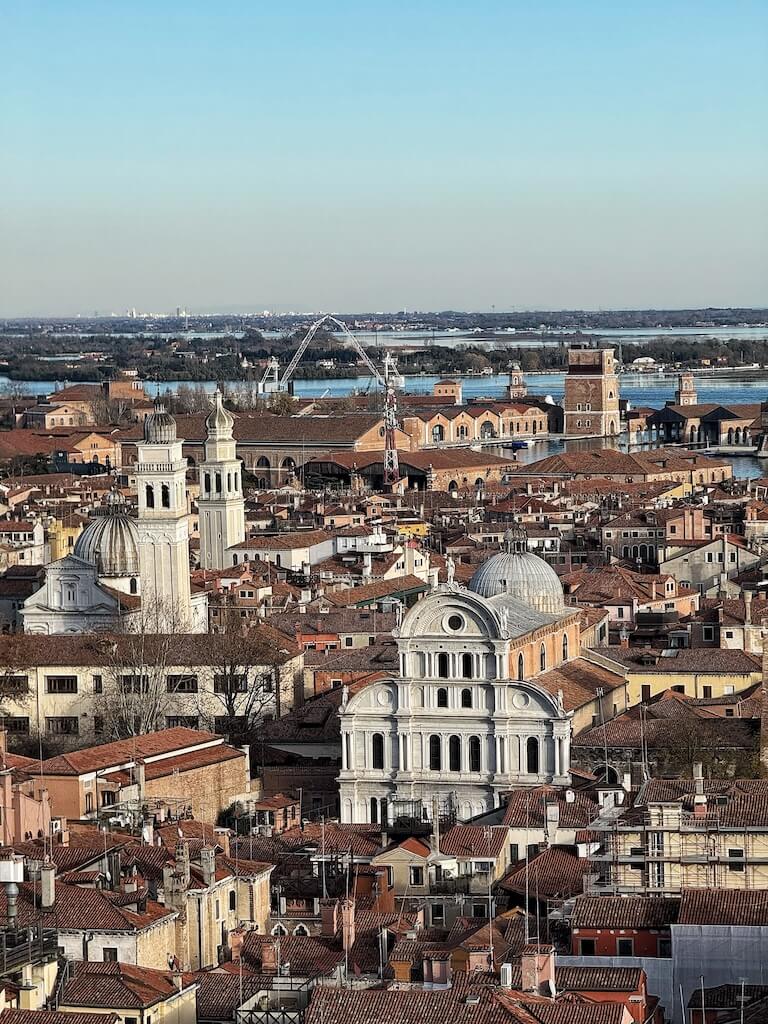
After lunch, head to the Campanile di San Marco (St. Mark’s Bell Tower). With its 99 meters (about 325 feet), it’s a fantastic vantage point to get stunning 360° views of the city. The original tower, unfortunately, collapsed in 1902, but today’s tower (whose construction was completed in 1912) is a faithful reconstruction.
Don’t worry, there’s an elevator to take you all the way to the top.
I recommend booking your visit in advance. You can do so on the official website. Alternatively, you can get this St Mark’s Basilica, Doge Palace, & Bell Tower Option tour that covers Venice’s three iconic monuments with skip-the-line access. In this case, you’d visit Doge’s Palace on the same day
For more places with stunning views, read my post The Best Views of Venice.
Off-the-beaten-path tour of Venice
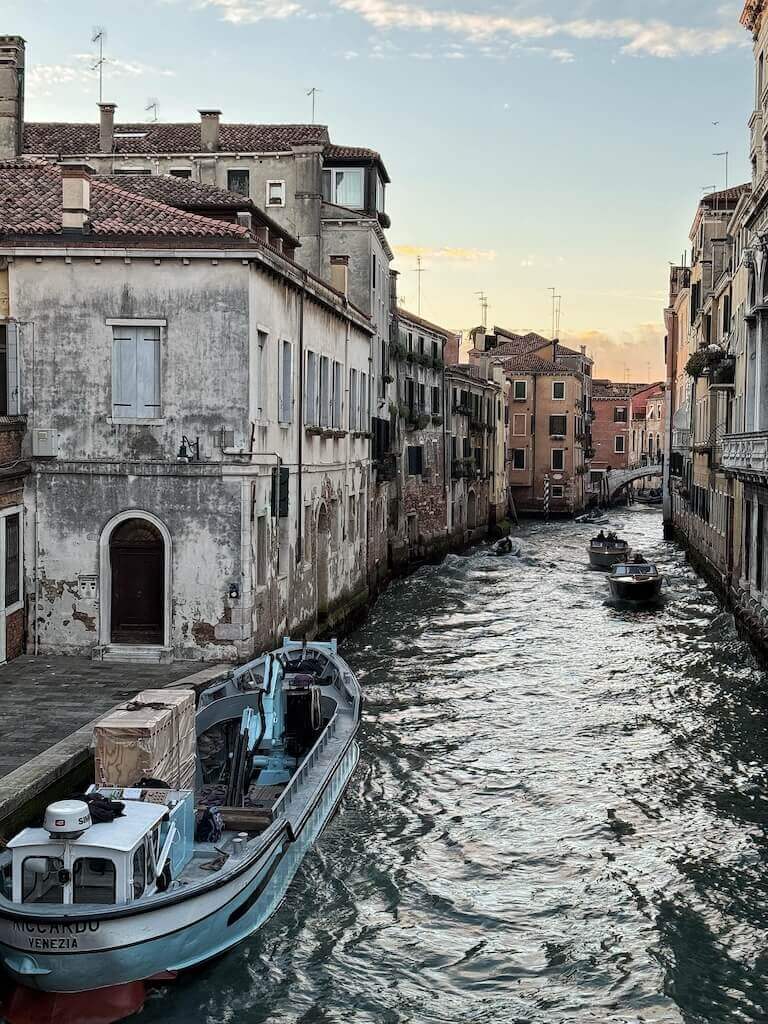
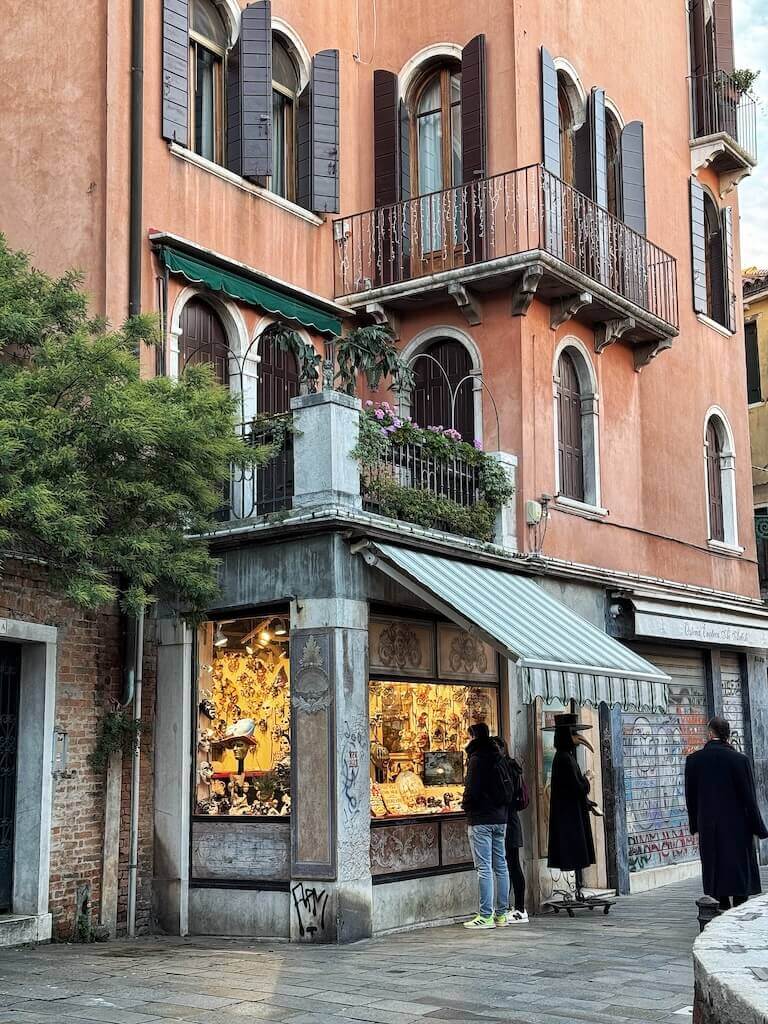
Your last activity for the day is a Venice: Off the Beaten Track Private City Tour. My friend and I took this tour when we visited Venice in December and loved it.
It’s a private tour that mainly focuses on the Dorsoduro neighborhood, so an area that is less visited compared to others in Venice.
You will walk around with a local guide who will take you beyond the usual sights, showing you lesser-known architectural treasures, quiet local spots, and places like Palazzo Zenobio degli Armeni.
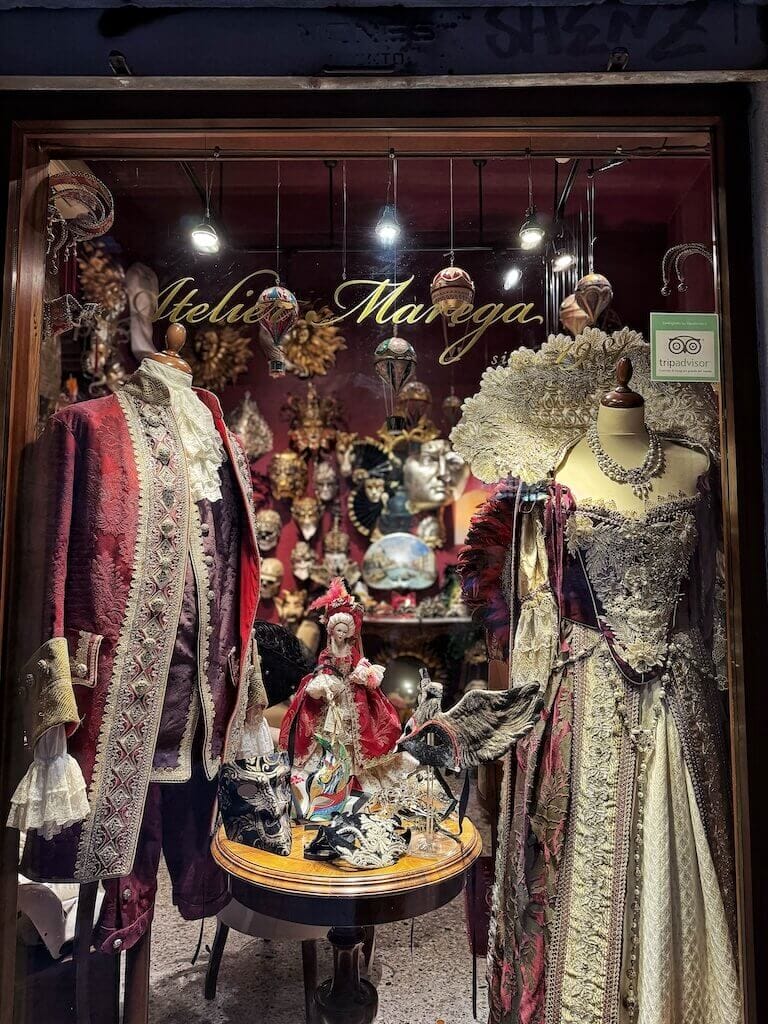
We also visited the Squero di San Trovaso, one of the last places in Venice where they still make gondolas; the nearby Ponte dei Pugni (where, in the past, men would meet for fist fights), and a local traditional mask maker.
Along the way, you’ll get insight into Venice’s history and daily life from someone who knows it intimately.
If you have more time in the country, you should consider exploring lesser-known places in Italy for a more exclusive experience.
Day Three – Doge’s Palace And Beyond
Your third day in Venice is again a mix of the most popular place to visit in town (Doge’s Palace) and a few lesser-visited spots. I recommend buying a Vaporetto day pass for the day, as you will be hopping on a few.
Doge’s Palace and Bridge of Sighs
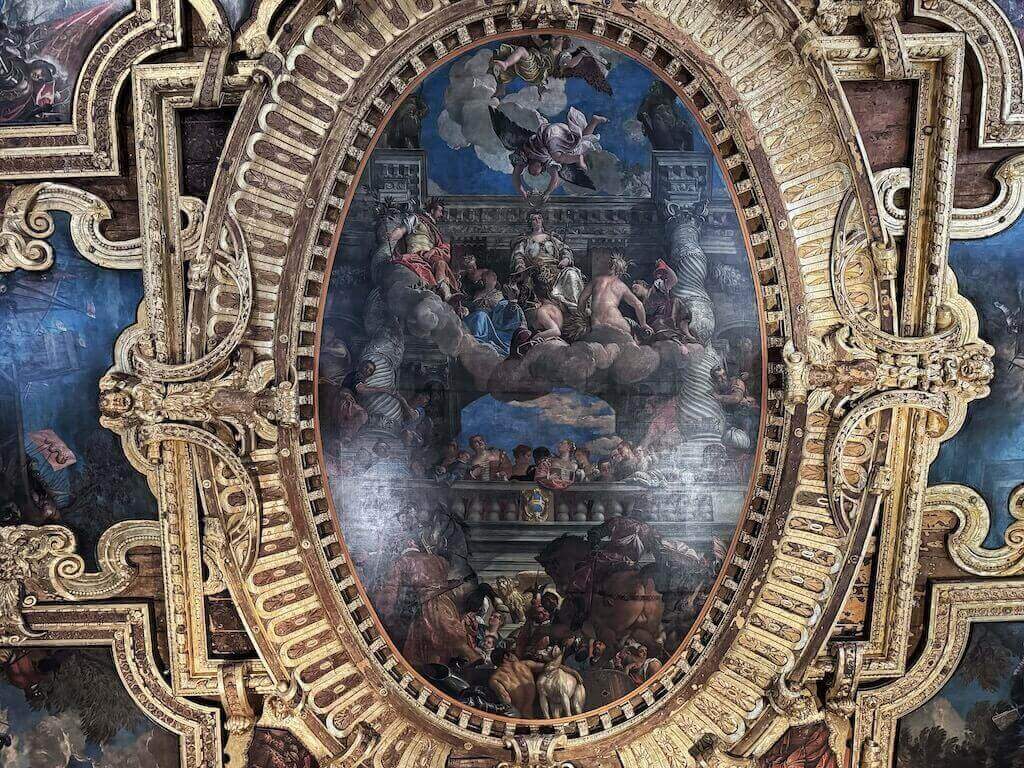
You can’t go to Venice and skip Doge’s Palace (Palazzo Ducale). The Gothic palace was once the residence of the Doge—the elected head of the Venetian Republic—and the center of political power for centuries.
The exterior, with its lace-like arches and detailed stonework, is striking. But it’s the interior that truly impresses. Inside, you’ll walk through grand halls with gilded ceilings and massive canvases by Tintoretto and Veronese. The Chamber of the Great Council, once the largest government hall in Europe, is a highlight.
The visit also includes the Bridge of Sighs, which links the palace to the old prisons. Its name comes from the idea that prisoners would sigh as they caught their last glimpse of Venice through its small stone windows.
When we visited, my friend and I booked the first time slot of the Secret Itineraries tour via the official website.
The Doge’s Palace & St. Mark’s Basilica with Terrace Access Tour includes fast-track entry to Doge’s Palace and access to St. Mark’s first-floor terrace, with wide views over the piazza and lagoon.
My article How To Visit Doge’s Palace Venice: Best Ticket Options, Tours, & Insider Tips has all the information you need to plan your visit.
San Giorgio Maggiore
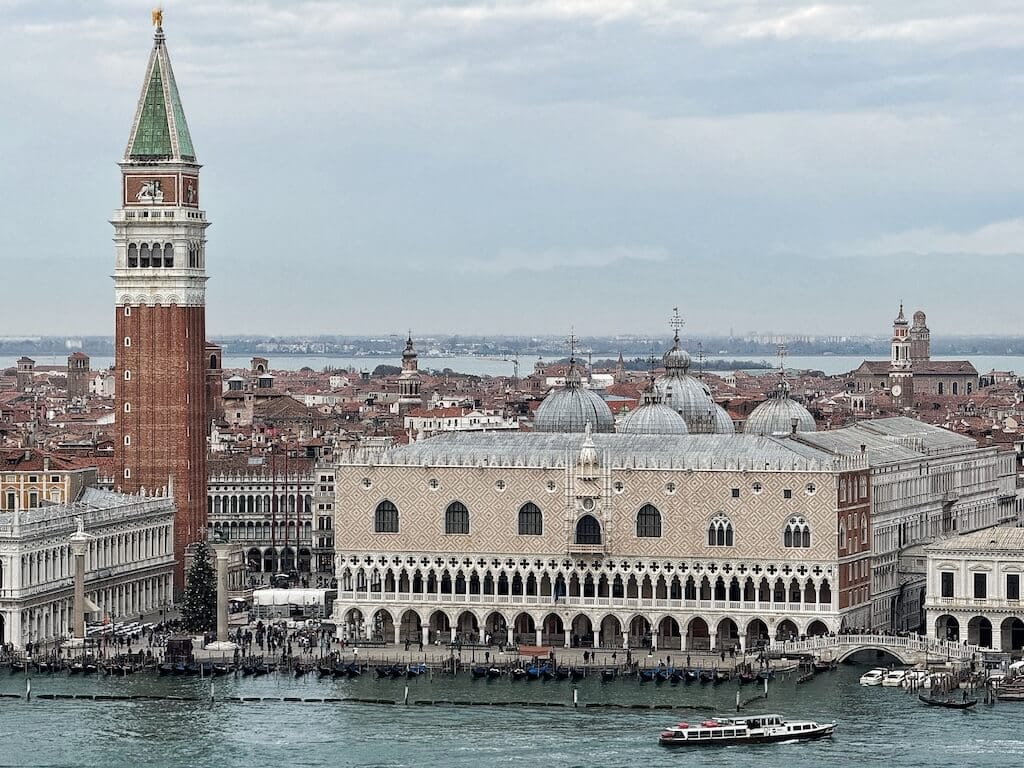
Once you are done exploring Doge’s Palace, head to San Zaccaria vaporetto stop (it’s near St. Mark’s) and hop on line 2 to San Giorgio Maggiore island. It’s a quick ride, but you’ll have incredible views of St. Mark’s Square and the Doge’s Palace.
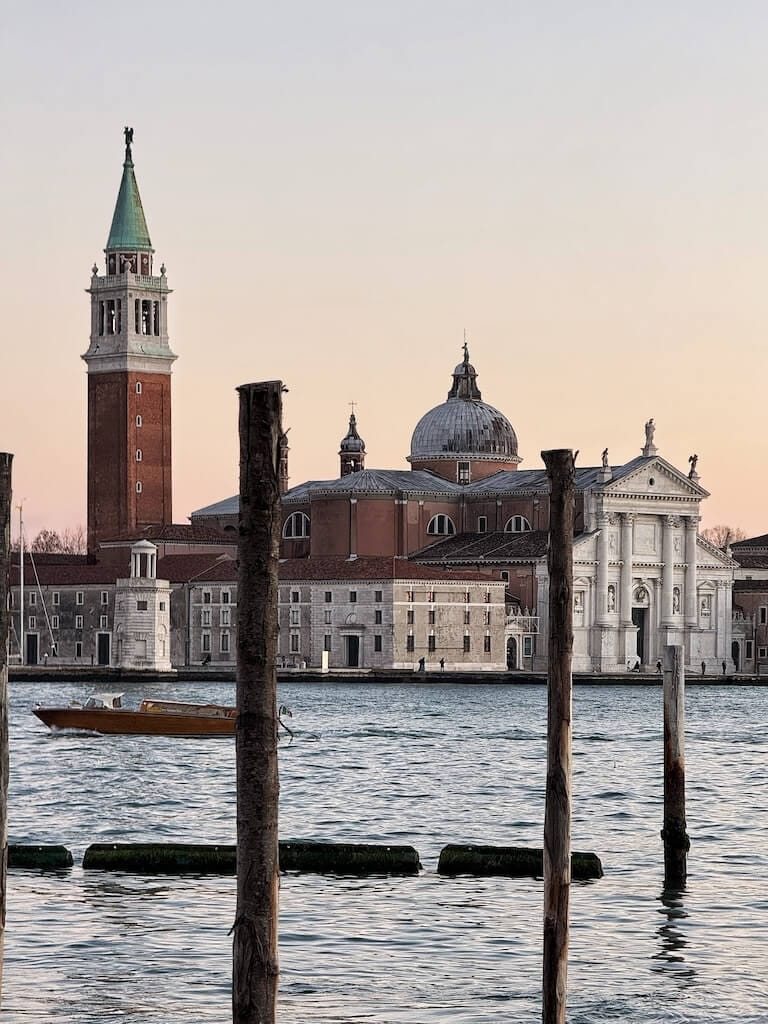
The main sight in San Giorgio Maggiore is the beautiful white church designed by Renaissance architect Palladio. Inside the church, you can see two important Tintoretto paintings. I also recommend climbing the bell tower (it’s the one you can spot when walking along Riva degli Schiavoni or from St. Mark’s Bell Tower).
The views from the bell tower are incredible. Not only do you get to see Doge’s Palace, St. Mark’s Square, and Campanile. You also see all the way across Dorsoduro and Santa Maria della Salute, and the Giudecca Island.
Also on the island is the Giorgio Cini Foundation. Visits must be booked in advance on the official website.
Giudecca Island
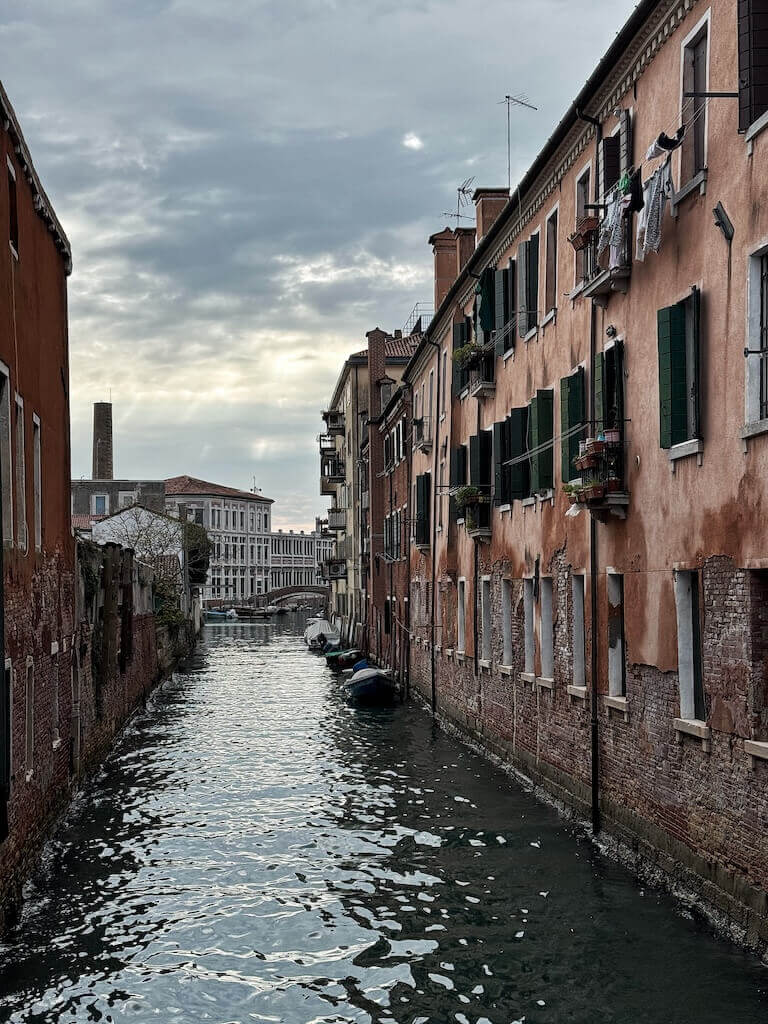
From San Giorgio Maggiore, you can hop again on Vaporetto line 2 and get off at La Giudecca. This is probably the least touristy area in Venice, significantly less crowded even in peak season.
We honestly went because we were taking the Vaporetto back to Dorsoduro, and when we saw it was stopping in La Giudecca, we decided to get off and explore a bit.
The best sight here is Il Redentore, a striking 16th-century church designed by Palladio. Other than that, it’s a quiet area with some nice bacari (wine bars that also serve cicchetti, Venice’s style tapas) and trattorie where you can stop for a quick lunch.
Teatro La Fenice
To get to Teatro La Fenice, you’ll have to take Vaporetto line 2 again, get off at Zattere and then walk across the Ponte dell’Accademia.
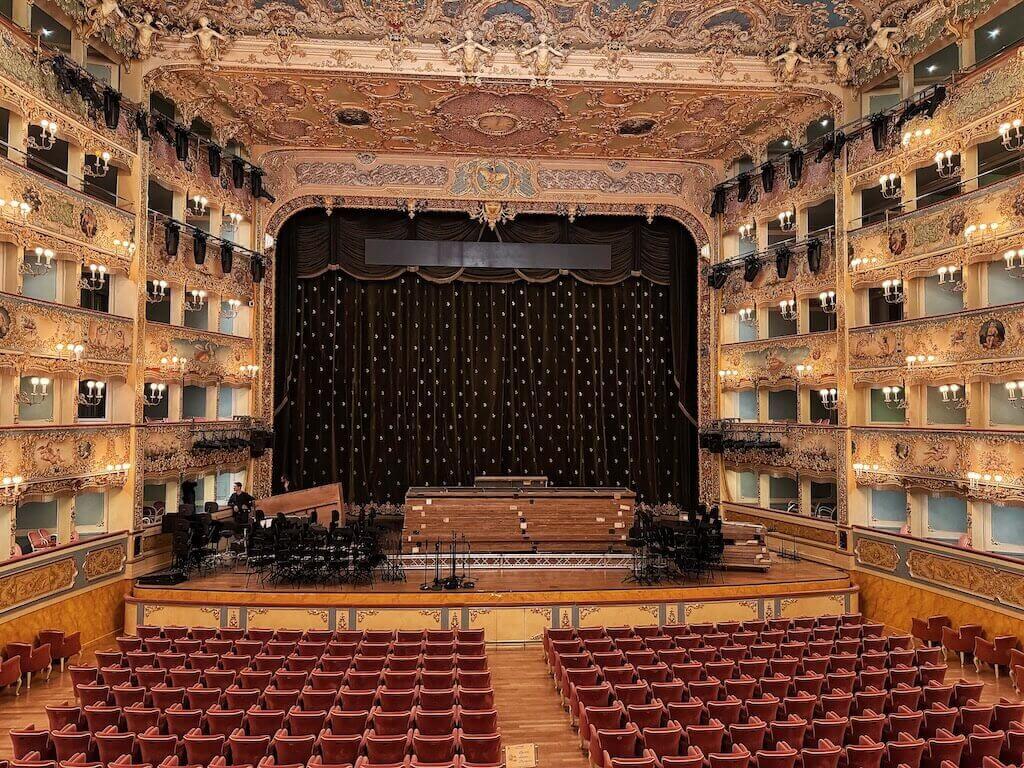
The theater is one of Italy’s most famous opera houses. The name means “The Phoenix,” and it’s totally apt for the place. The theater was destroyed by fire three times throughout history, and each time it was rebuilt and rose again from its ashes.
Outside, the building is pretty. But it’s the interior that’s striking. Think gold decorations, red velvet seats, and a lavish atmosphere. The emperor’s box is the most beautiful spot inside.
When we visited, we got tickets at the door. However, if you are traveling in peak season, you should get La Fenice Theater tickets in advance before you go. Tickets come with an audio guide that takes you around the most important spots. The visit lasts about one hour.
Cicchetti food tour
Your last activity for the day is a cicchetti tour, through which you’ll discover at least some traditional Italian dishes (though contrary to most misconceptions about Italian food, I must stress that food in my country is very regional).
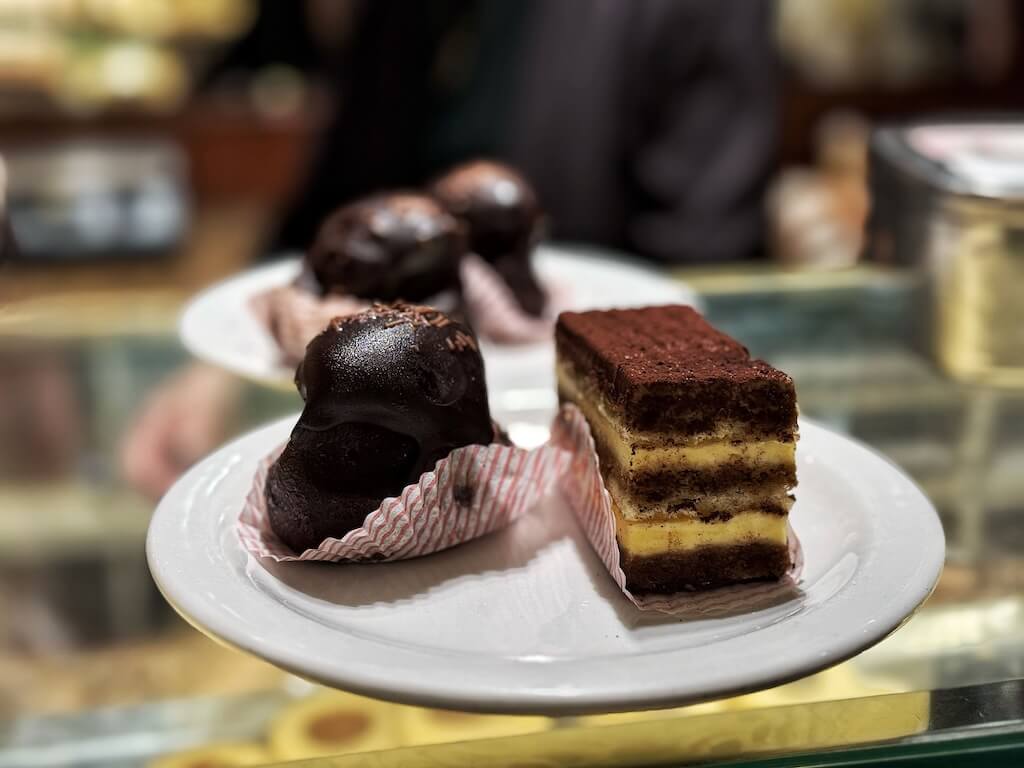
So, what are Cicchetti? These are small bites the locals enjoy at bacari (wine bars). They can be anything from a small toasted slice of bread with “baccalà mantecato” (a typical dish in Venice) to elaborate bruschetta.
Cicchetti tours normally take place in the evening – ours started around 6:00 pm, though the exact time also depends on the season. They are the perfect way to end your day, and obviously, there is always enough food for a meal.
There are several options you can consider. We booked this Street Food Tour Cicchetti & Spritz with Local Guide that went mostly around the Jewish Ghetto of Venice and Cannaregio. The tour included two drinks – a glass of wine and a spritz – besides all the food.
Day Four – Venice Ghetto And Rialto
Your fourth day in Venice will see you explore the unique Jewish Ghetto of Venice, the area of Rialto, and one of its best-kept secrets.
Jewish Ghetto
Depending on where you are staying in the city, you’ll need to hop on a Vaporetto again to reach the meeting point for your first activity of the day: a tour of the Jewish Ghetto of Venice.
We took this Jewish Ghetto of Venice Tour, and the local guide brought the area to life thanks to her knowledge and the many histories she shared. We also opted to visit the two functioning synagogues – the Levantine and the Spanish Synagogues. Tickets are included in the price of the tour if you select the option, but you’ll get a different guide for those.
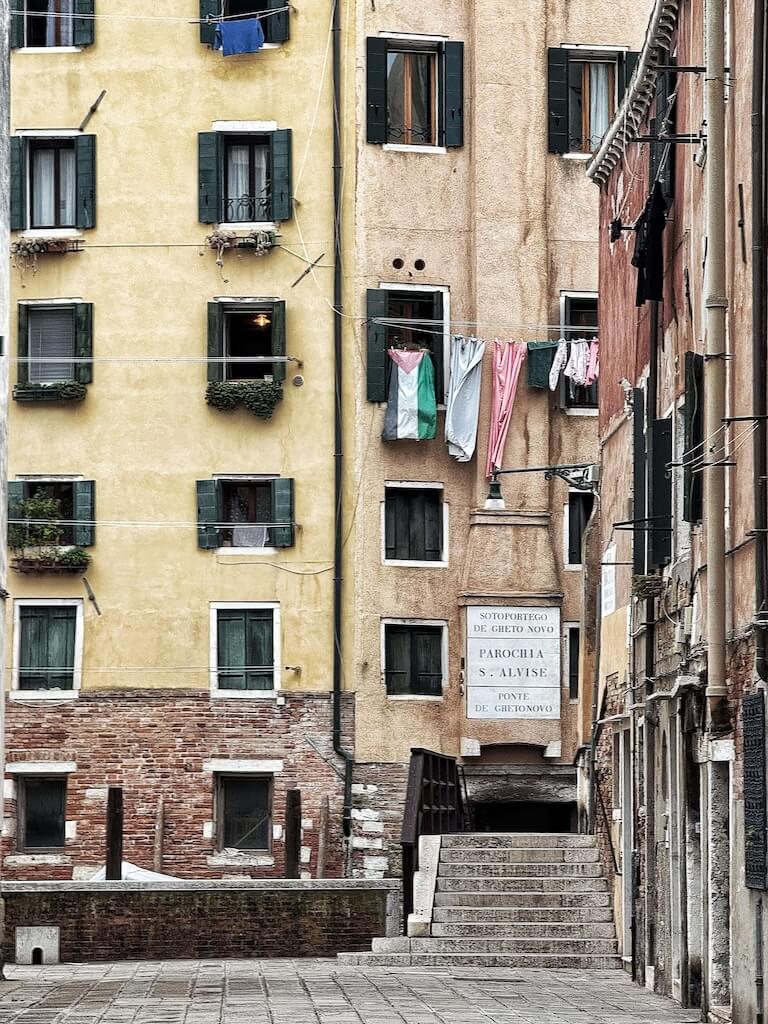
During the tour, you will learn the origins of the word “ghetto” (it’s not nearly as discriminatory as you think). You will explore the Campo del Ghetto Nuovo, established in 1516 as the area where the Jews of Venice moved.
You will learn about the history of the Jews of Venice, their traditions, their plight during WWII, and even their food, thanks to the many bakeries and artisan shops that sell typical products.
Rialto Market and Bridge
It’ll take you about 20 minutes to walk from the Ghetto to the Rialto Bridge. You could also hop on Vaporetto line 2 again.
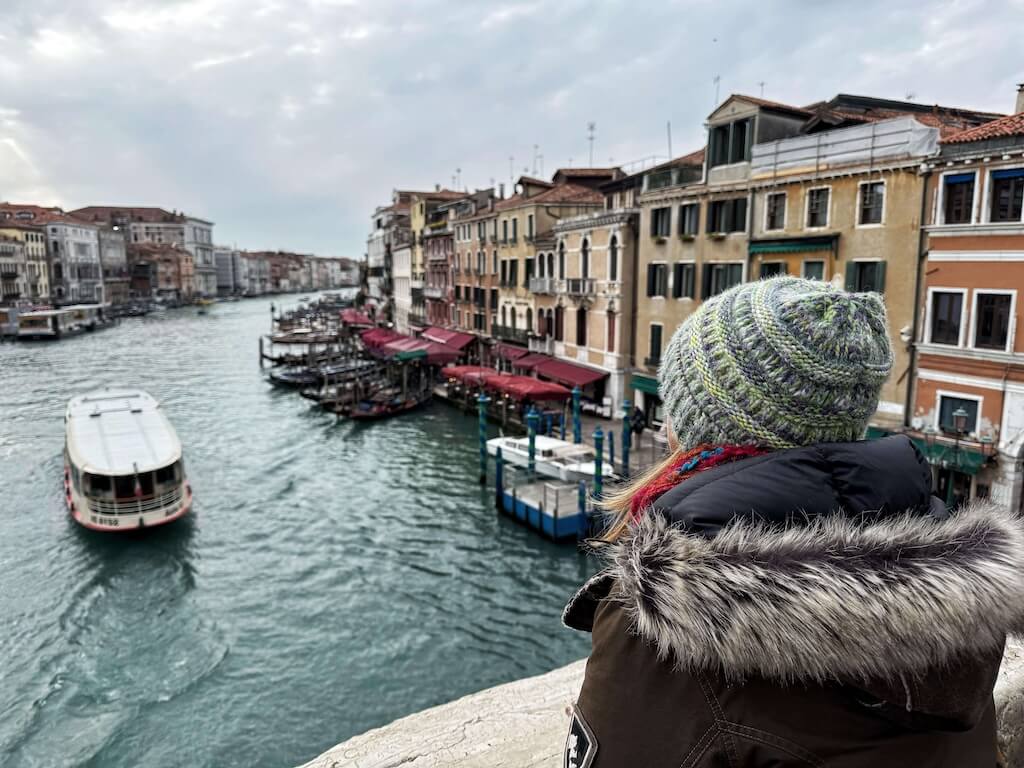
The Rialto Bridge and Rialto Market are the heart of Venice’s commercial past—and they’re still buzzing with life today, though frankly they are extremely touristy. The bridge remains a must-see.
The nearby Rialto Market overflows with fresh produce, seasonal fruit, and daily catches from the lagoon. The fish market has been running for centuries.
Another spot you should see is San Giacomo di Rialto Church, which was founded in 421. However, the current structure you see today dates to around the 12th century and saw many subsequent renovations.
As it’ll be about lunch time by the time you get to Rialto, it’s worth pointing out that most restaurants in the area are extremely touristy. Take a look at the menu before walking inside, and stay away from any place that offers dishes like carbonara, as those are not from Venice at all!
Fondaco dei Tedeschi
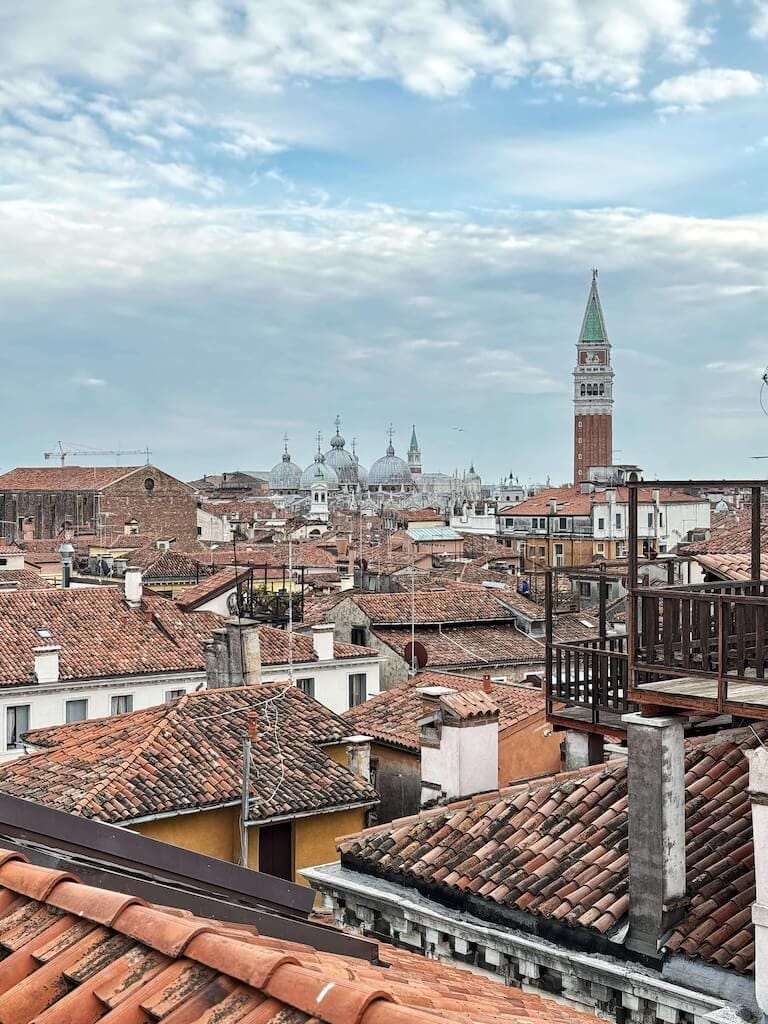
Just by the Rialto Bridge, you will find the Fondaco dei Tedeschi. From its terrace, you can enjoy one of the best views in Venice – and it’s completely free.
The area where the luxury department store is now located was once the headquarters of German merchants during the Renaissance. The building has been fully restored and is a masterpiece of architecture you’ll enjoy visiting even if you aren’t there to shop (it’s really beyond expensive!).
The rooftop terrace offers a 360-degree view over the Grand Canal, the Rialto Bridge, and the tiled rooftops of Venice. To access, you’ll need to reserve a time slot in advance through the official website. Make sure to do it well in advance, as it’s a popular spot.
Palazzo Contarini del Bovolo
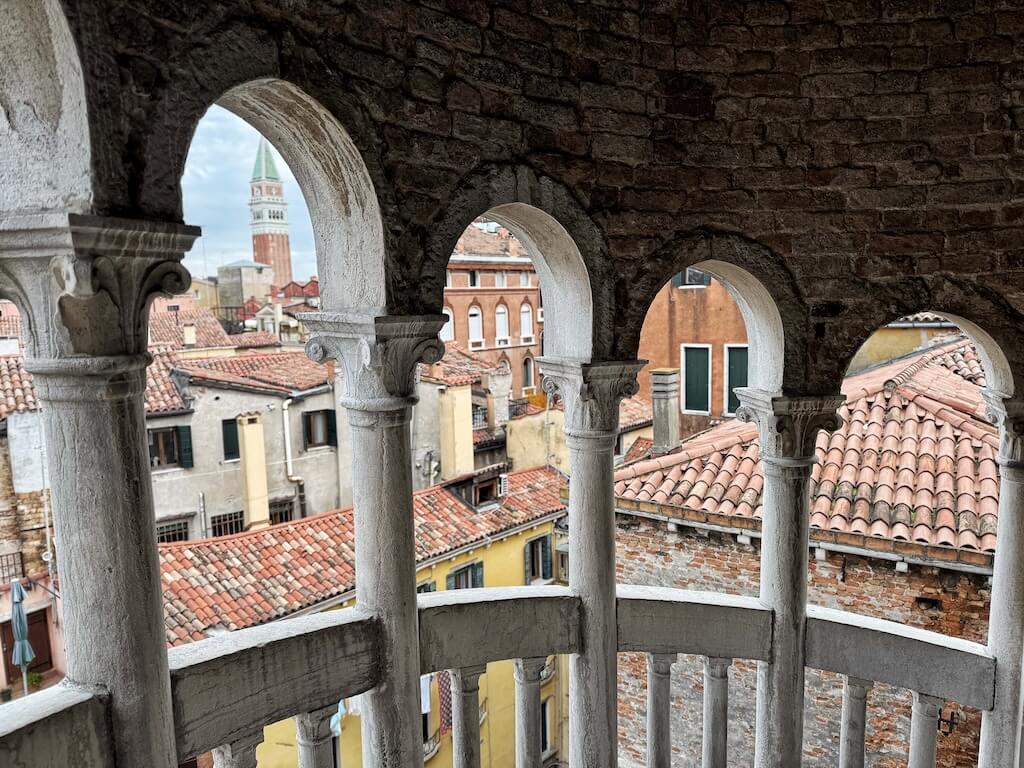
Hidden down a narrow alley near Campo Manin, just a 6-minute walk from the Fondaco dei Tedeschi, you will find Palazzo Contarini del Bovolo. This is where you’ll be able to see (and climb) the Scala Contarini del Bovolo, a graceful spiral staircase that wraps around the outside of the building. “Bovolo” means “snail” in Venetian, a fitting name for its coiled shape.
Built in the late 15th century, Palazzo Contarini del Bovolo blends Gothic and Renaissance elements. Here, the staircase climbs in a series of elegant arches that narrow as they rise. At the top there’s a small terrace that offers wide views across Venice’s rooftops.
There’s a small fee to pay to climb the staircase. If you are visiting in the peak season, you’ll want to get tickets in advance just in case there’s a line at the door (there was none when we visited).
Day 5 – Another Hidden Gem And A Day Trip
For the last of your 5 days in Venice, head out nice and early to beat the crowds and see one of the last hidden gems of the city before you hop on the ferry to visit the islands of the Venetian lagoon.
Libreria Acqua Alta
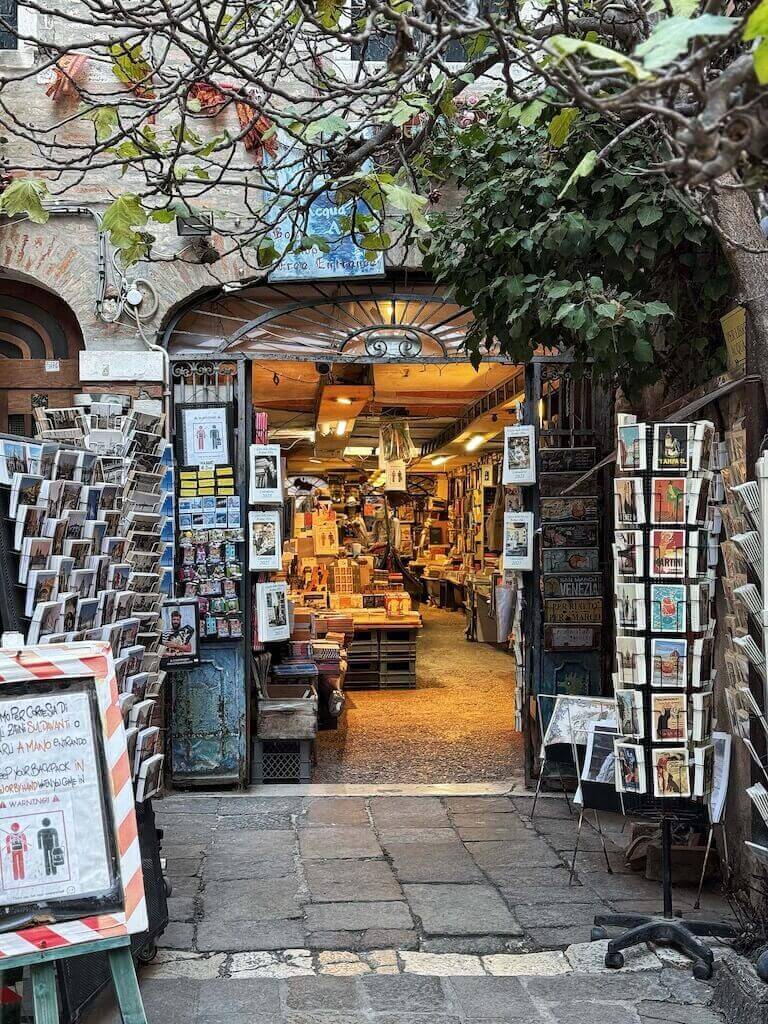
Head out nice and early (before 9:00 am) towards the Castello district, where the Libreria Acqua Alta (Bookstore of High Water, that’s the name in English) is located. This is one of the most unique bookstores in the world.
Some will continue saying that this is a hidden gem in Venice, but it has become very famous since the BBC featured it in an article on the most beautiful bookstores in the world. We went right when it opened, and in the off-season, so we found no lines to walk in. But there might be.
It’s a unique place. Books – new and second-hand – are stored in regular shelves but also in gondolas and waterproof bins. It’s truly charming. Make sure to walk all the way to the other side of the store, where some old books (damaged from the “acqua alta” flooding) now act as a staircase in a small terrace with lovely canal views.
The resident cats (I counted 3, but there may be more) are friendly, and so is the owner. It’s a nice place to buy souvenirs.
For more hidden gems head over to my post What To See In Venice Off The Beaten Path.

Murano, Burano and Torcello
The islands of the lagoon are perfect for a day trip from Venice. You can get there independently by Vaporetto or, for a completely hassle-free day, join a guided tour like my friend and I did.
Murano is known worldwide for its glassmaking heritage, which dates back to 1291. At the time, glassmakers were moved from Venice due to fire concerns.
Today, Murano is a lovely maze of canals and historic buildings. The main thing to do here is to visit a working glass factory to watch skilled artisans shape molten glass. There’s also a Glass Museum (Museo del Vetro) you may want to visit.
Burano is the most colorful of the lagoon islands. Here, houses painted in vivid shades reflect beautifully in the canal waters. Burano is also famous for lace-making. The Lace Museum (Museo del Merletto) is the best place to visit to learn about this tradition, and there are plenty of shops where you can buy some.
Torcello is the least visited of the main lagoon islands. It’s peaceful and almost empty today, but it was once the heart of lagoon life. Only a few residents remain, but the Cathedral of Santa Maria Assunta and its climbable bell tower make it worth the visit for quiet views and a sense of deep history.
Murano, Burano and Torcello Tour – I found this to be a well-paced tour that allows enough time on each island for a bit of exploration. You have a guide on board the ferry that explains the history and culture of the places you visit, but then you mostly get to explore on your own. Torcello is only an optional stop (I went, and loved it).
My post What To See In Burano shares more information on attractions in this lovely island. I also have a guide on the Best Day Trips From Venice in case you want more options.
Where To Stay For 5 Days In Venice
I stayed in Riva degli Schiavoni during my last trip to Venice, and the location is definitely unbeatable as it puts you within walking distance of most major attractions – albeit quite touristy. There are plenty of good accommodation options, but make sure to book in advance.
Here are my main recommendations for the various price points:
- The Venice Venice Hotel – Fabulous luxury hotel in Cannaregio, out of the largest tourist crowds. Rooms are decorated in a contemporary style; they are spacious and comfortable.
- Palazzo Keller – This excellent mid-range hotel is located in the San Marco district, so you’ll be within walking distance of most major attractions.
- Hotel Torino – One of the best budget-friendly hotels in Venice, conveniently located in the San Marco district.
For even more recommendations for different neighborhoods and budgets, make sure to read my post, Where To Stay In Venice. I explain about each of Venice’s neighborhoods and their best pros and cons.
Tips For Your 5 Days Venice Itinerary
Here are some additional Venice tips based on my multiple visits. They are meant to make sure you enjoy the city without any hiccups:
- Avoid visiting in the peak season: If you can, try to visit in the shoulder season (March, April, and November. The weather is still good, but there aren’t as many tourists. We visited Venice in December, and while it was really cold, we felt privileged to have the city almost to ourselves.
- Start your day early: Day trippers start arriving in Venice around 8:30 am. Head out before 8:00 am to beat the crowds. Book the earliest possible time slot for your first attraction or activity of the day.
- Wear comfortable shoes: You will be walking a lot in Venice, and high heels really aren’t suitable for its cobbled streets. Also, keep in mind the dress code whenever you visit churches: you’ll have to cover your shoulders, chest, and knees.
- Book attractions in advance: This is especially important if you are visiting during the peak season.
- Consider getting a Venice Pass: This City Pass with Museums, Churches, & Public Transport includes all the main attractions. It’s available for 1, 2, 3, or 7 days.
- Plan how to get to the city: Depending on how you are traveling to Venice, you will have several options. I have a detailed guide on How To Get From Marco Polo Airport To Venice City Center.
My post What To Wear In Venice: Season By Season Packing Guide has packing list suggestions for any season.
I also have a post packed with tips for visiting Italy that you should read.
Are 5 Days In Venice An Overkill?
5 days in Venice is definitely not overkill—if anything, it gives you the chance to see the city without rushing. Most visitors – including first timers – squeeze the main sights—St. Mark’s Basilica, the Doge’s Palace, the Grand Canal—in a day or two. The most experienced planners decide to spend 3 days in Venice.
But Venice rewards slower travel, and my last trip there (for which I followed the itinerary you have just read) proves it.
With 5 days in Venice, you can explore beyond the tourist trail. Wander through quieter neighborhoods like Cannaregio or Castello, take your time in the museums, and visit nearby islands like Murano, Burano, and Torcello without feeling pressed for time. And don’t worry, you won’t ever get bored without things to do.
You’ll also get to enjoy Venice at different hours—early mornings and late evenings are especially atmospheric once day-trippers leave. The extra time in Venice lets you follow your curiosity and leaves enough time for spontaneity, whether that’s stopping for a glass of Italian wine at a backstreet bacaro or spending a full afternoon at a museum.
Rather than overkill, 5 days lets you experience Venice the way it’s meant to be seen: slowly, on foot, and with space to breathe.
My post How Many Days Should You Stay In Venice? will help you decide how long to stay in Venice.
Conclusions On This 5 Days In Venice Itinerary
As you know, I have visited Venice many times – it’s one of my favorite places to visit in Italy. During my last trip, I spent 5 days in Venice and found that the trip was, for once, nicely paced. I got to see (almost) everything I wished to see. Indeed, there are still some museums that I would have liked to visit, and for which I will need yet another trip.
My itinerary to see Venice in 5 days mixes some classic Venice attractions like St. Mark’s Basilica and Doge’s Palace, with lesser-known places like Giudecca Island.
If you follow my Venice itinerary, you won’t feel overwhelmed and won’t have to stress. Just book the attractions before you go, at the exact timings I suggest, and your trip to Venice will be a breeze.
PIN IT!

Claudia Tavani
Claudia Tavani was born and raised in Sardinia, and after moving between the United States and the United Kingdom, she's now back living in her hometown, Cagliari. She's a travel blogger and certified travel designer who loves planning trips and publishing guides, travel tips, and packing lists so that you don't have to. Owner of Strictly Italy, cat mom to Minnie. Loves pizza, hiking, archeology, cities, beaches, swimming, and running. Hates peppers.