
How much do you know about traditional Italian food? You might think you know everything there is to know, but you’d be sorely mistaken. I am Italian, and I see it all the time: people think they know about Italian food, but they don’t. And they butcher our food, our traditions, our identity. We don’t like it.
Italian food is consistently ranked as one of the best national cuisines in the world. When you think of the best cuisines, you probably think Italian, Japanese, and Mexican, right? Let me tell you, it’s hard for me to enjoy the food outside of Italy because our food is so good!
Everyone knows and loves Italian food, which is just one of the many reasons to visit Italy. But, honestly, Italian food is so much more than what you see abroad or in the movies. In fact, food here is very regional and complex and has strong ties to our history and culture.
So, when you travel to Italy, you should arrive knowing at least the basics of the typical Italian food, what food comes from which regions, and some other basic information.
As a proud Italian foodie and travel lover, I have prepared this guide to help you understand traditional Italian food and get some inspiration for the best food in Italy that everyone needs to try.
What Is Traditional Italian Food?
Traditional Italian food is not just pizza and pasta. This is really only a small glimpse into the real Italian flavors and seasonings. While pasta and pizza are both staples, you might be surprised by how much seafood and other Italian dishes you’ll find across the country.
One of the most important things to understand about traditional Italian food is its regional complexities and deep connection to family traditions.
Food varies from region to region. Some dishes can only be found in a certain region, while other dishes may change drastically between the north and south.
Also, many of the most famous recipes are passed on through familial ties. That means your favorite local Italian restaurant on the corner of Rome is likely one-of-a-kind. Don’t expect a recreation of your favorite Italian dish all over the country.
Short history of Italian food
One of the best things about the food in Italy is the diverse range of periodical influences. Here’s a brief overview of some of the biggest influences on traditional Italian food:
ANCIENT ROME: Ancient Rome has deep roots in all Roman food. The widespread use of fresh olive oil, many different styles and techniques for making pasta, and even the cultivation of grapes can all be traced back to the Roman Empire.
MEDIEVAL: The Medieval period was actually very influential, as it was the period where spices and seasonings were brought in from the East. This added more flavor to our food.
RENAISSANCE: During this period, Italian dining was much more refined, and the connection between the arts, cuisine, and culture became stronger than ever.
NEW WORLD EXPLORATION: Pomodoro, or tomato, comes from the Americas. Despite being one of the main staples local food as we know it today, it wasn’t until the discovery of the Americas that it began being integrated into Italian cuisine.
SLOW FOOD MOVEMENT (1986): This is one of the most recent influences on Italian cuisine. The movement began in 1986 in Rome when a new fast-food chain opened up on the Spanish Steps. It emphasizes the use of fresh, healthy, and locally-grown food in our national dishes.
Of course, there’s a lot more nuance and history behind Italian food we all know and love. But having a vague idea of how strongly history influenced the development of local Italian dishes goes a long way in appreciating the foods.

Best Traditional Italian Food By Region
Northern Italy Food
Risotto
WHERE IT COMES FROM: Lombardia Region
Risotto was once considered a very humble dish, as its main ingredients were only rice, butter, and local vegetables, like onion. But it has developed into one of the most recognizable Italian dishes around the world.
Because of its popularity, risotto can be found all across Italy, not just in its home region of Lombardy. However, different regions, restaurants, and families might have their own unique take on the rice dish.
The main thing that sets risotto apart from other dishes is that the rice is slow-cooked with all the ingredients from the start rather than added at the end.
Ossobuco
WHERE IT COMES FROM: Lombardia Region/Milan
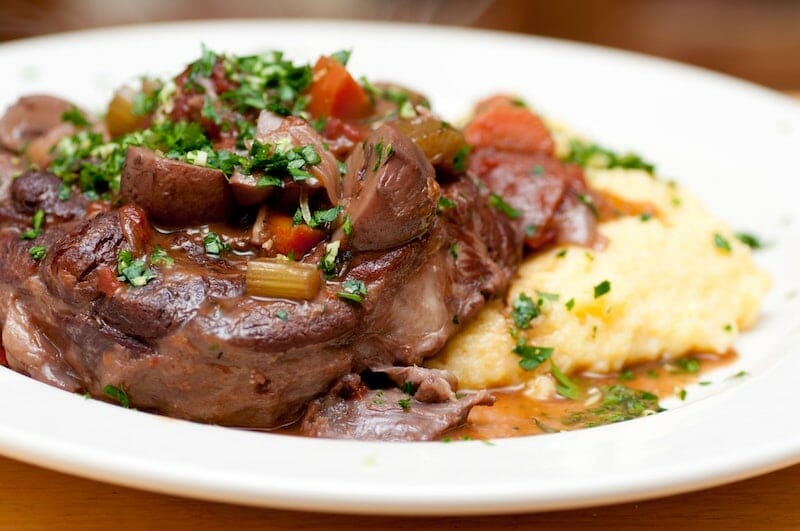
Ossobuco, or braised veal shanks, dates back to the 1700s and is a classic Milan recipe. It’s usually made with veal shanks (although sometimes other substitutes, depending on where you are) that are boiled or steamed and often served with risotto.
Cotoletta alla Milanese
WHERE IT COMES FROM: Milan
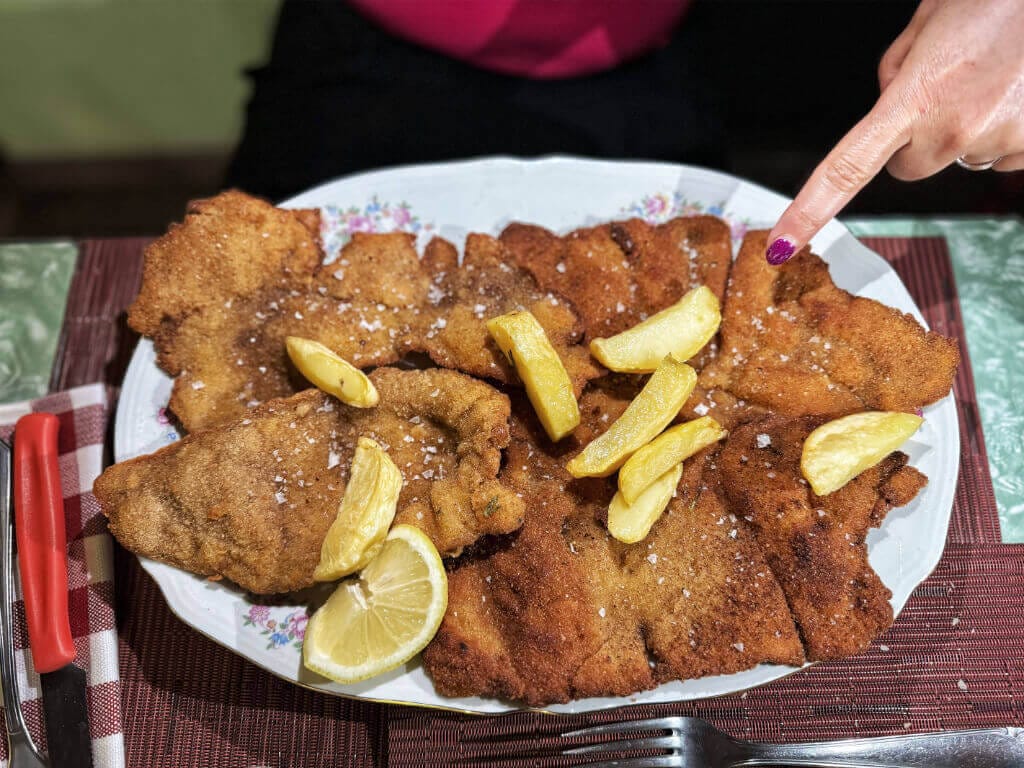
Cotoletta alla Milanese is one of the most important and well-known Italian dishes in Milan. It’s made with veal rib chop (or sirloin) coated in breadcrumbs and fried in butter, though there’s a variant that has no bone and where the veal is beaten until very thin, called “orecchio d’elefante” (elephant’s ear). It’s become a staple all over the world, actually.
Italian immigrants brought it to the Americas and other parts of Europe, so you’ll likely find it in everyday food in Argentina, Mexico, Germany, and France, to name a few.
There are so many different variations of cotoletta alla milanese, but the real stuff comes from Milan, Italy, no matter what anyone else says.
Polenta
WHERE IT COMES FROM: All of Northern Italy
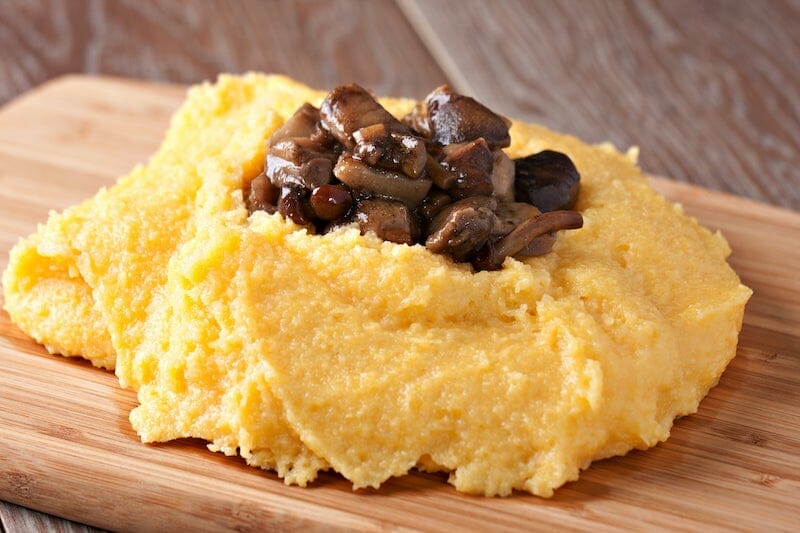
Polenta isn’t tied to one exact city. It was eaten throughout the mountainous regions of Italy, including Lombardy, Veneto, Friuli, and Piedmont. It’s Italy’s traditional cornmeal cuisine, most often made with corn, wheat, water, and salt.
Although originally considered a “poor” dish, it became common among peasants and working-class families because it was very filling.
Nowdays, it’s just as popular, though spruced up a bit to add more flavor and variance across the country. It was traditionally served with cheese, mushrooms, or sausage sauce. Today, you’ll most often find it with cheese or sauce as a side dish.
Bagna Cauda
WHERE IT COMES FROM: Piedmont
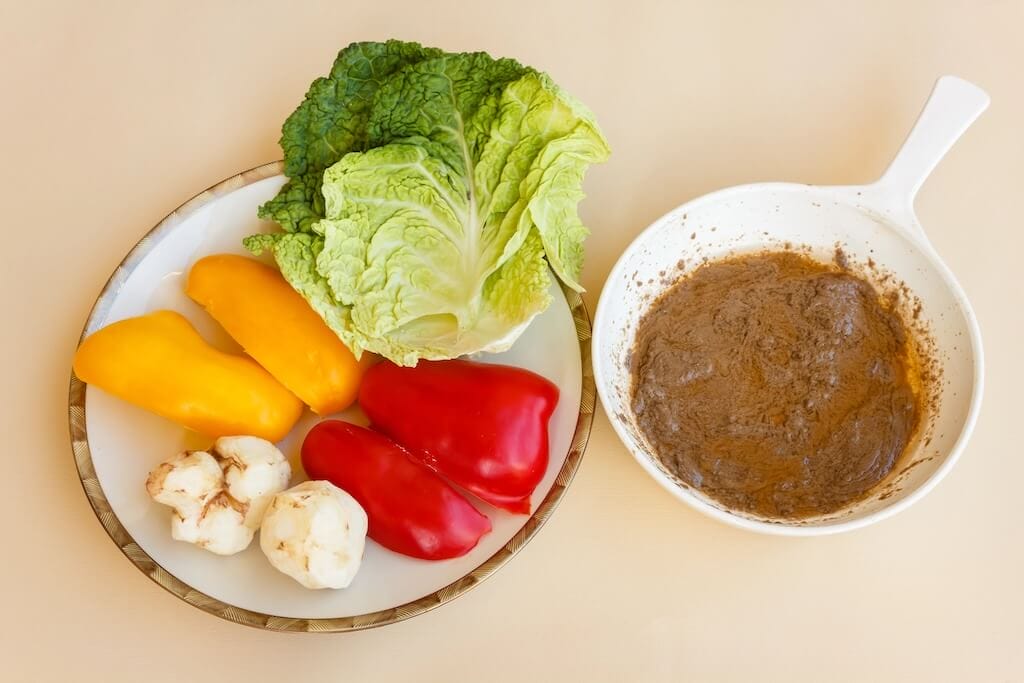
Bagna Cauda is a traditional Piedmont dipping sauce that’s usually served with a variety of different things. You can dip meat, vegetables, or good bread in the mouth-watering sauce.
Bagna Cauda is made from anchovies, garlic, and olive oil. It’s usually served in a special bowl with a small flame underneath to keep the sauce warm (and it’s definitely best when it’s still warm and fresh).
Vitello Tonnato
WHERE IT COMES FROM: Piedmont
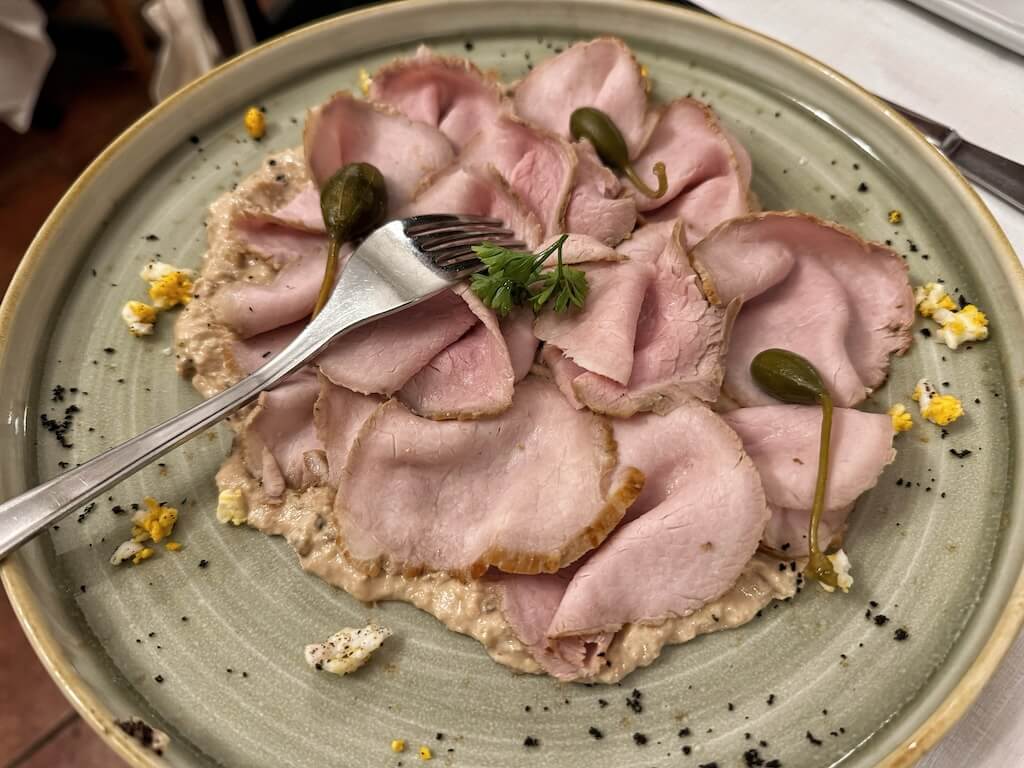
Vitello tonnato, veal with tuna sauce, is one of the most unique flavors you’ll find from the Piedmont region. It’s thin-sliced slow pot cooked veal served at room temperature or chilled, with a tuna-flavored sauce drizzled over it.
It’s usually served as a light meal or an appetizer and almost always in the summer months, and it’s commonly found all over northern Italy, though it’s now also becoming more popular in the rest of the country.
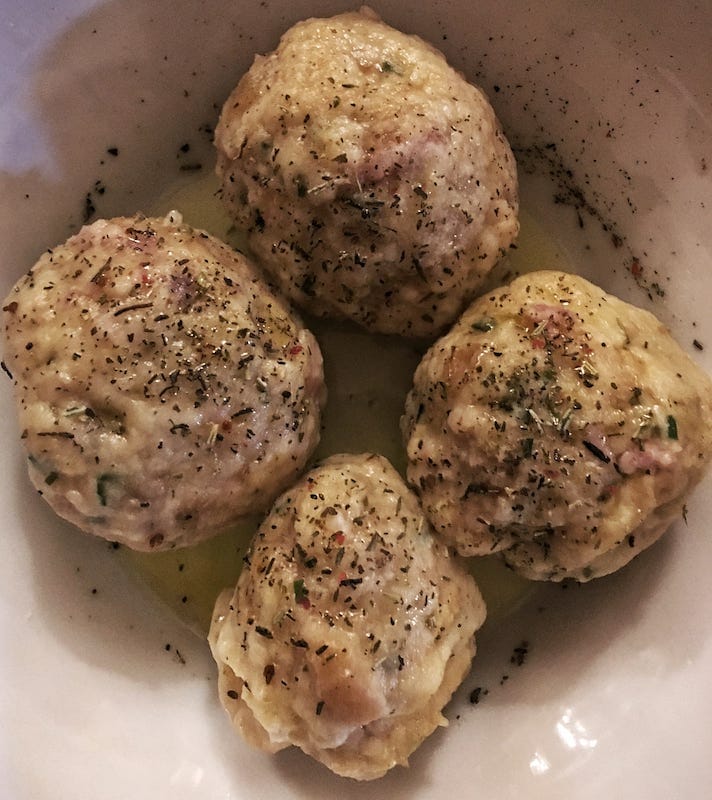
Canederli
WHERE IT COMES FROM: Trentino
Canederli is Trentino’s version of bread dumplings. They’re made from leftover bread, milk, speck (a kind of cured ham that’s very peppery) or local cheese, vegetables, and eggs, and were originally meant to be a way to reuse food to avoid waste.
They are a very filling dish, typically served with a broth and mostly eaten in the colder winter months.

Pesto alla Genovese
WHERE IT COMES FROM: Liguria
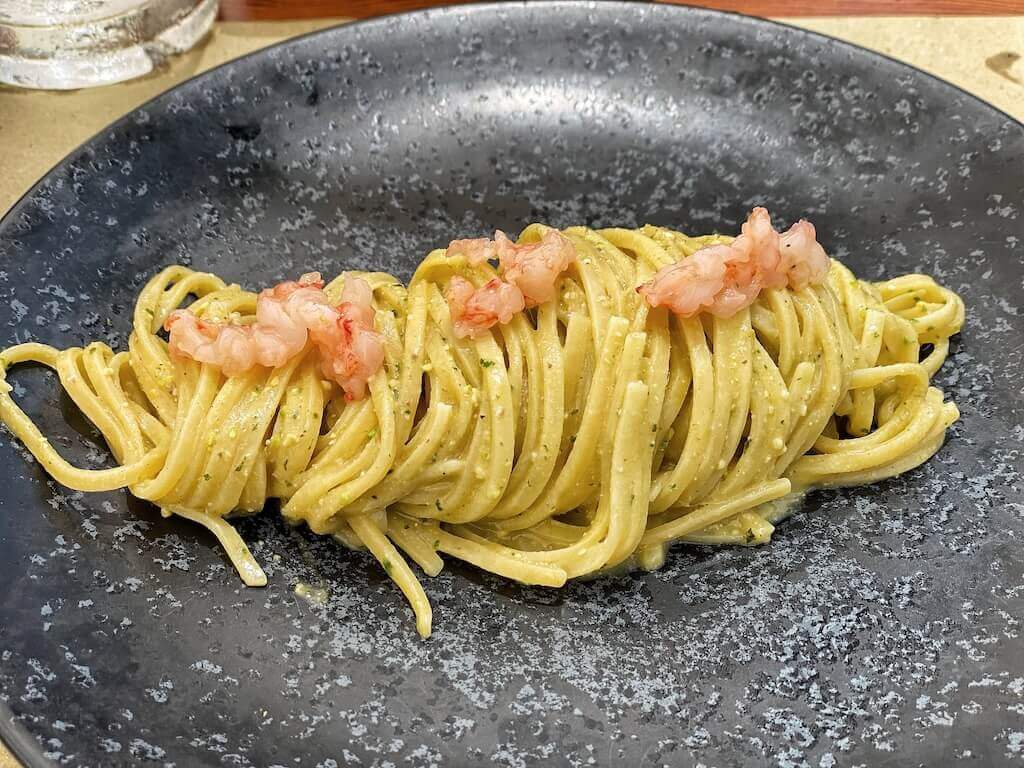
Pesto alla Genovese (pesto) is many people’s favorite traditional Italian food. It’s a delicious sauce from Liguria typically served on pasta (normally trenette, which is the most traditional pasta for this sauce, but also linguine).
It’s made from garlic, pine nuts, pecorino cheese, and olive oil, which are crushed together in a traditional mortar and added to the pasta.
The sauce is easily recognizable by its dark green color and has become known worldwide for its distinct flavor and healthy attributes. But still, the city of Genoa is definitely the best place to taste the real stuff.
Sarde in Saor
WHERE IT COMES FROM: Veneto
Sarde in saor is one of the most unique Ispecialties. It comes from the Veneto and Venice region but has become a symbol of Veneto. There’s no question you should put this traditional Italian food at the top of your list if you’re in Veneto.
Sarde in saor is an appetizer centered around fried sardines, onion, raisins, and pine nuts. It’s the perfect combination of sweet and sour.

Food from Central Italy
Lasagne
WHERE IT COMES FROM: Emilia Romagna
Lasagne, commonly spelled lasagna in other parts of the world, comes from Bologna in Emilia Romagna. Some argue it first made its entrance in Naples, but the real lasagna you’re probably more familiar with is from Bologna.
Lasagne is made of sheets of flat egg and spinach noodles, with ragú sauce (more about it in a bit), grated Parmigiano or grana padano, and bechamel saucen (a white sauce made of butter, flour and milk slowly boiled with salt and nutmeg) in between the noodles.
The best lasagne is definitely in Bologna, even if you can find it in other parts of the country. It’s a common Italian dish served on Sundays.
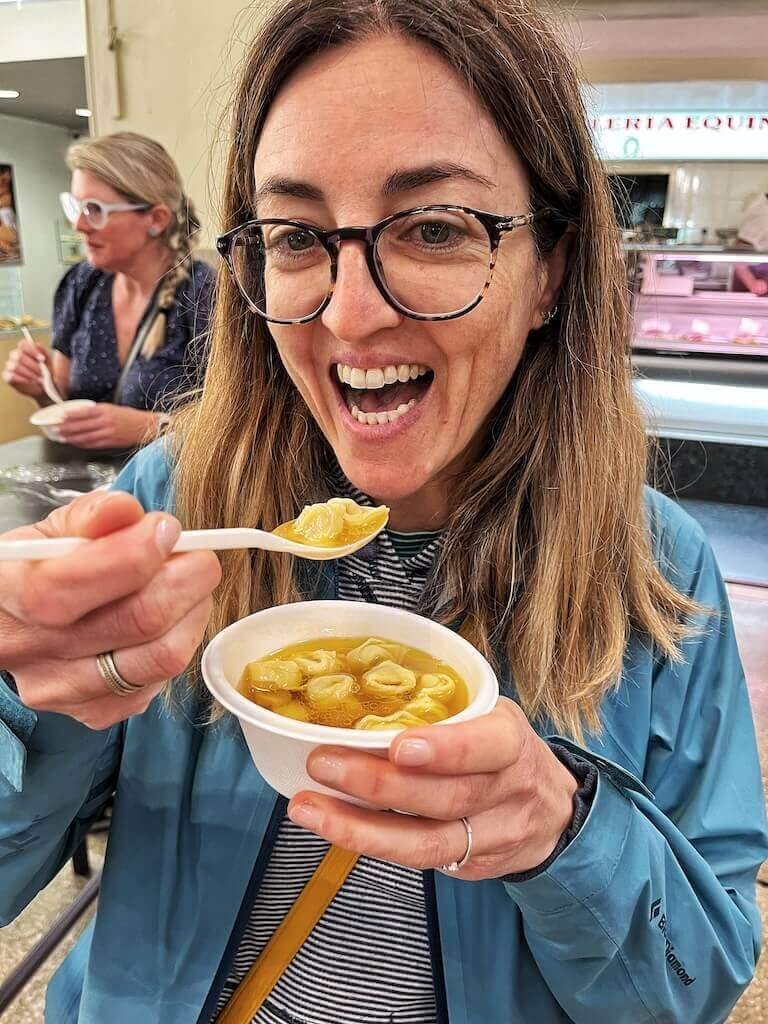
Tortellini
WHERE IT COMES FROM: Emilia Romagna
Tortellini is another dish you likely know and love. It’s found all over Italy and the world, to the point where it’s premade, packaged, and sold in all major grocery stores outside of Italy.
But the best tortellini definitely comes from Emilia Romagna, or more specifically, Bologna, Italy.
It’s made of egg pasta stuffed with meat, usually pork, prosciutto, mortadella, and Parmigiano cheese. It’s also usually served and cooked in meat broth (this is different from Americanized Italian food), so it’s best eaten in the winter when it’s a little cooler.

Tagliatelle al Ragu
WHERE IT COMES FROM: Emilia Romagna
Did you know that spaghetti bolognese is not actually Italian? I know it’s hard to believe as it’s one of the most recognizable Italian dishes. Spaghetti alla bolognese as you know it is the perfect example of Americanized Italian food that took the world by storm.
But Tagliatelle al Ragu is Italy’s closest thing to spaghetti bolognese and is likely its inspiration – or shall I say, the real thing.
Tagliatelle al Ragu comes from Bologna, Emilia Romagna. And believe it or not, it’s way better than what you know of as spaghetti bolognese.
It’s made from handmade egg noodles with ragù. Ragù is a sauce made from tomato sauce, ground beef, ground pork, carrots, onions, and oil slowly cooked for hours. Make sure to top it off with a dash of Parmigiano, as well!
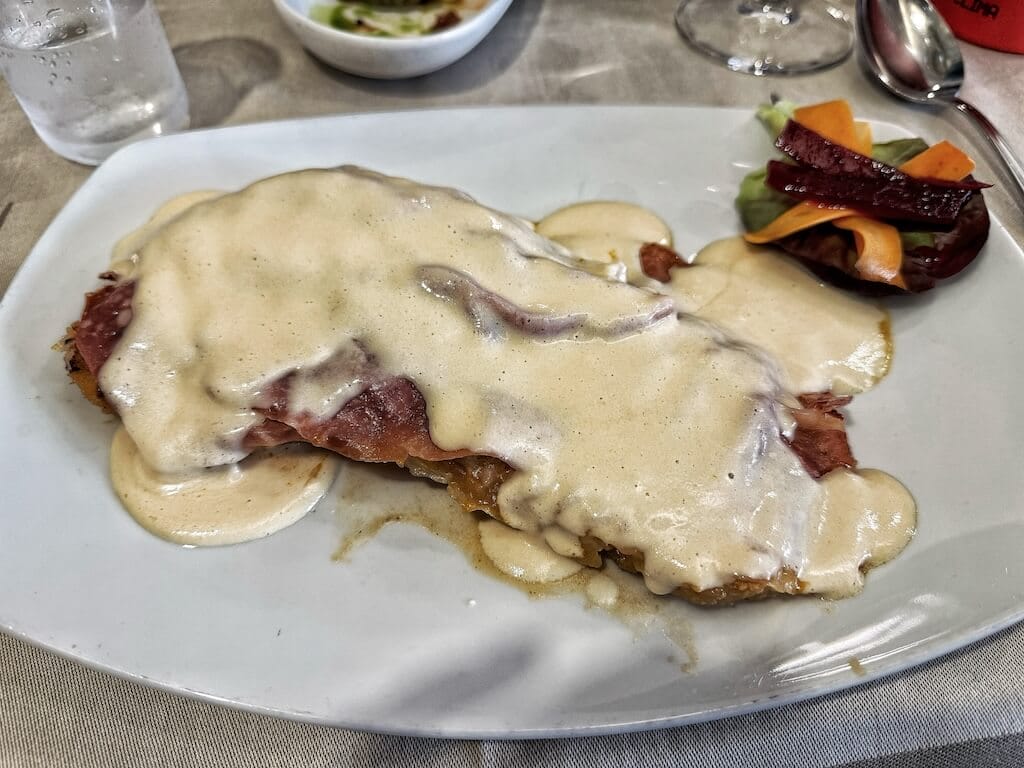
Cotoletta alla Bolognese
WHERE IT COMES FROM: Emilia Romagna
Cotoletta alla Bolognese (locally known as Petroniana) is one of the most unique Italian dishes, and it’s really only found in Bologna, Italy. Actually, I had never tried it before visiting Bologna myself.
If you’re familiar with cotoletta alla milanese, it’s pretty similar. The main part of the dish is a butter-fried veal cutlet topped with a slice of prosciutto di parma and Parmigiano Reggiano cheese and a drizzle of beef broth.
It’s not the lightest meal, so make sure you’re hungry before trying this dish in Bologna!
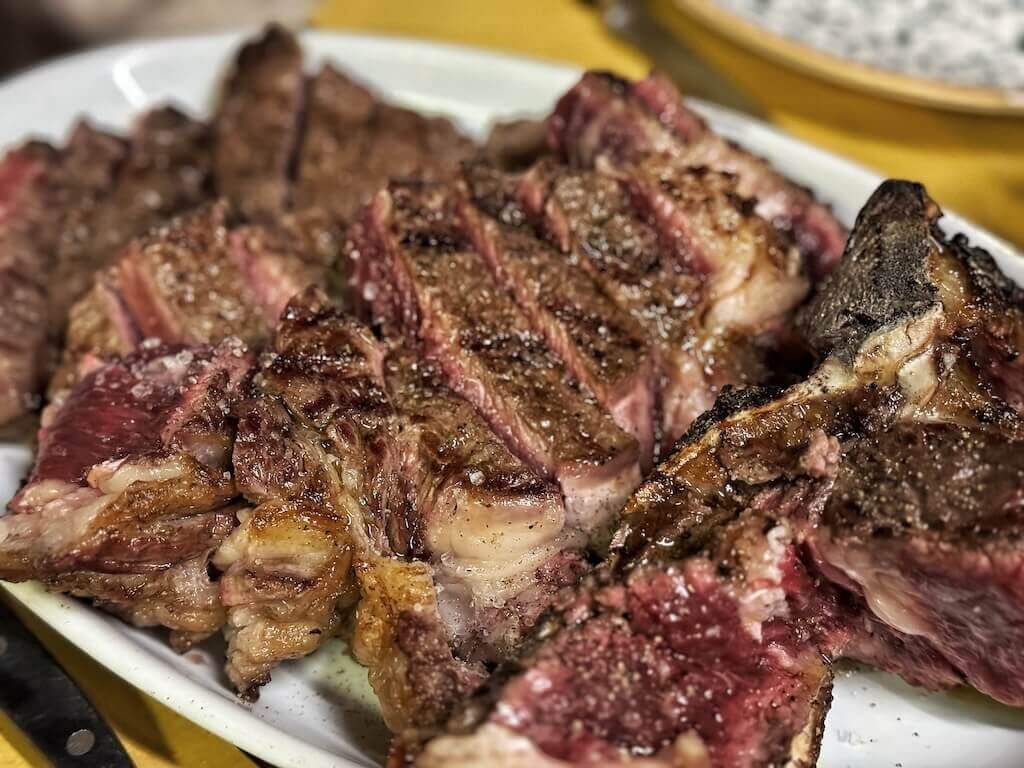
Bistecca alla Fiorentina
WHERE IT COMES FROM: Tuscany
Did you think central Italy food was all about the pasta? You’re mistaken. It’s also home to some of the best red meat dishes, and bistecca alla Fiorentina tops the list.
Bistecca alla fiorentina is a chianina beef (calf loin) served rare. The cut of meat is so fine and cooked so nicely on the barbecue that it simply melts in your mouth. The dish is from Tuscany, but it’s best tried in Florence, Italy.
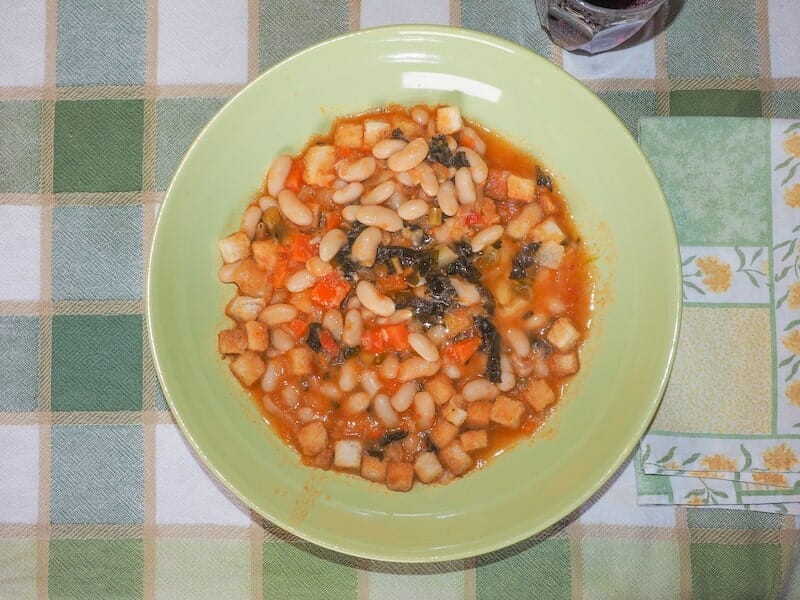
Ribollita
WHERE IT COMES FROM: Tuscany
Ribollita is another underrated dish in Tuscany. The name translates directly to “boiled again,” which is the perfect description of this healthy soup.
The soup is made from boiling (leftover) vegetables, usually any random assortment of vegetables, kale, beans, and dry bread. The more times you boil it, the more flavorful it gets.
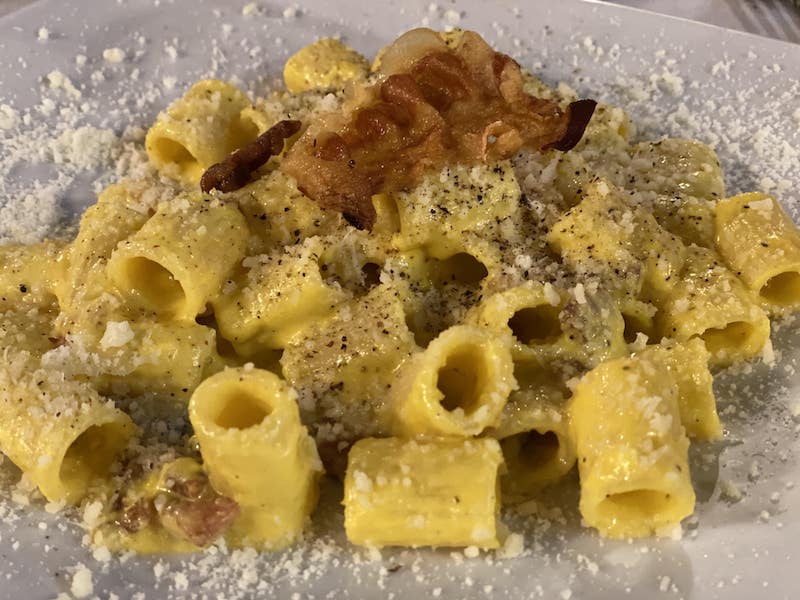
Spaghetti alla Carbonara
WHERE IT COMES FROM: Lazio
Carbonara is yet another strange example of Americanized Italian dish. In the United States, you’ll often find carbonara made from a creamy, cheesy sauce with cubed ham or bacon. This is almost nothing like the real spaghetti alla carbonara in Lazio, Italy.
Real carbonara is made of guanciale, egg yolk, pepper, and pecorino cheese. There’s no cream, butter, or oil in the sauce, believe it or not.
Rome is the best place to try authentic carbonara (unless you want to try my homemade one, which I promise is delicious). It is pretty convenient as Rome is also one of the best cities to visit in Italy. So, there’s no excuse not to try this dish.
My guide What To Eat In Rome will help you decide what you order from the menu.
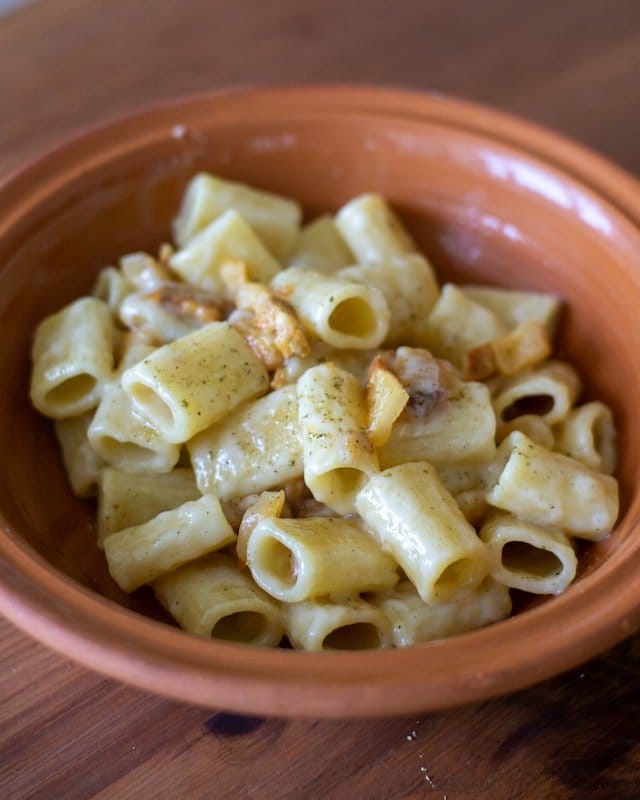
Pasta alla Gricia
WHERE IT COMES FROM: Lazio
If you like carbonara in Italy, you’ll also like gricia. This is often referred to as Italian carbonara without the eggs because that’s basically what it is.
The main ingredient is crispy guanciale with a sauce made of pecorino and glutinous pasta water. It’s a simple dish, but when it’s made right (with a nice thick, creamy sauce without even adding any cream or butter), there’s no doubt you’ll be craving it for weeks to come.
Rome is the best place to try pasta alla Gricia, and you’ll find it at most authentic Roman restaurants.
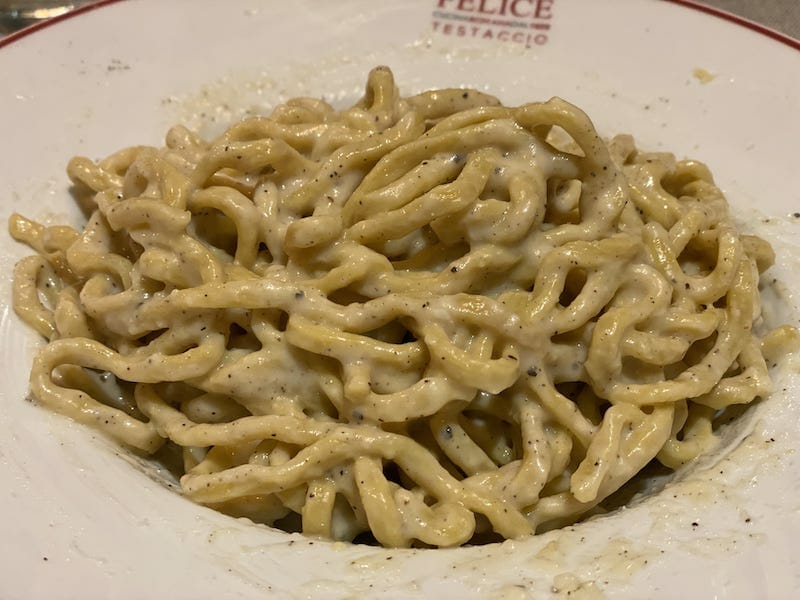
Tonnarelli Cacio e Pepe
WHERE IT COMES FROM: Lazio
Spaghetti cacio e pepe is yet another variant of carbonara and gricia, with a few key differences.
This Italian recipe calls for only three ingredients: pasta, pecorino romano cheese, and freshly ground pepper. You do not add cream or butter. The sauce thickens from the quick stirring of the grated cheese with a few spoonfools the boiling pasta water.
Cacio e Pepe is basically gricia without the meat and with more emphasis on the cheese. It’s also similar to carbonara without the egg. So, if you’re a fan of Carbonara, you have to try all three of these while visiting Italy! After all, familiarizing yourself with the local cuisine is one of the best travel tips for Italy because of its significance in our country.
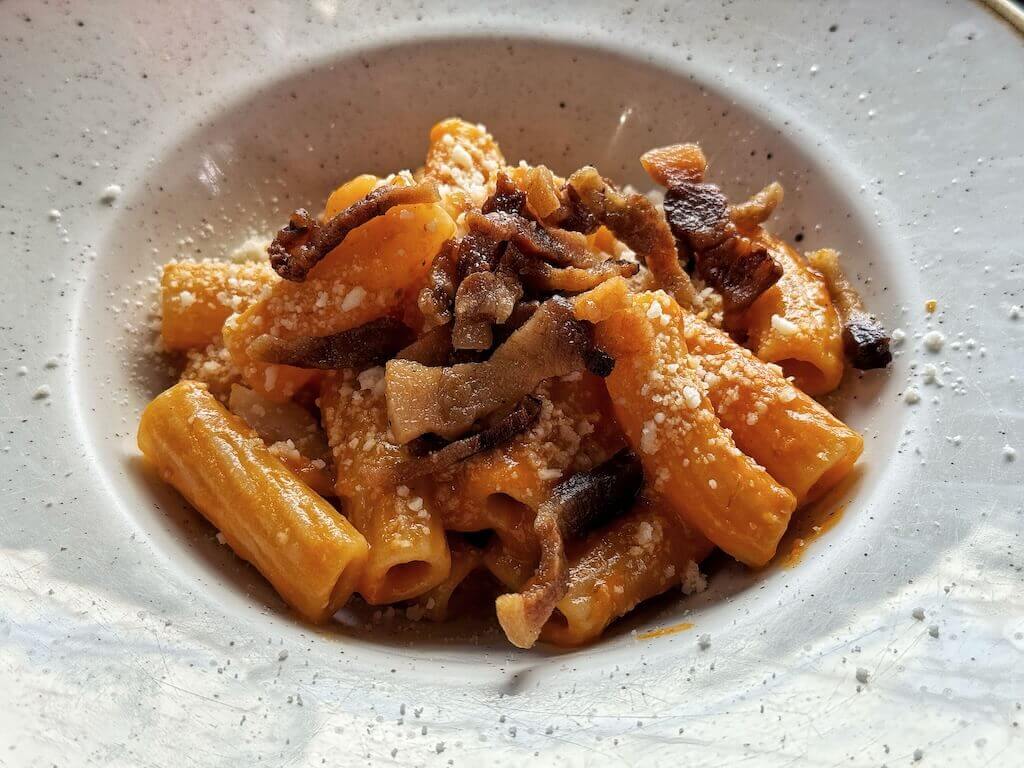
Bucatini all’Amatriciana
WHERE IT COMES FROM: Lazio
Fortunately, there’s no shortage of good food in Rome and the Lazio region of Italy. Amatriciana is another traditional Italian dish you should try during your travels.
The traditional amatriciana recipe involves guanciale and bucatini pasta (long pasta noodles similar to spaghetti but thicker and hollow), but that’s basically where the similarities end. The sauce is made from tomatoes and a drop of wine. There’s no onion or garlic.
There’s also some variation in the type of pasta used. It’s most often served with the above mentioned bucatini but is also found with spaghetti and rigatoni.
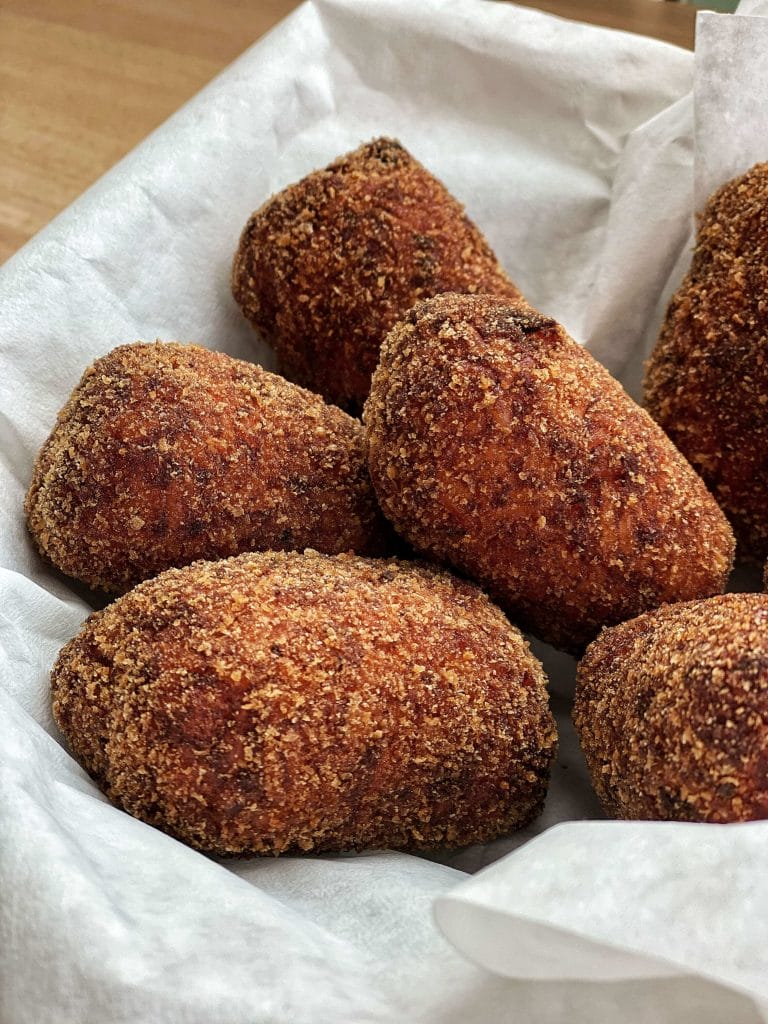
Supplì
WHERE IT COMES FROM: Lazio
Supplì is one of the most underrated snacks, especially if you’re a fan of mozzarella sticks.
It’s essentially deep-fried, breaded balls of leftover tomato risotto stuffed with mozzarella cheese. Again, it’s not the healthiest food in Italy, but it’s definitely tasty.
You can find them all over Italy (my mom in Sardinia learned to make them from my grandmother in Lazio), but they come from the Lazio region, so Rome is a great place to try it.
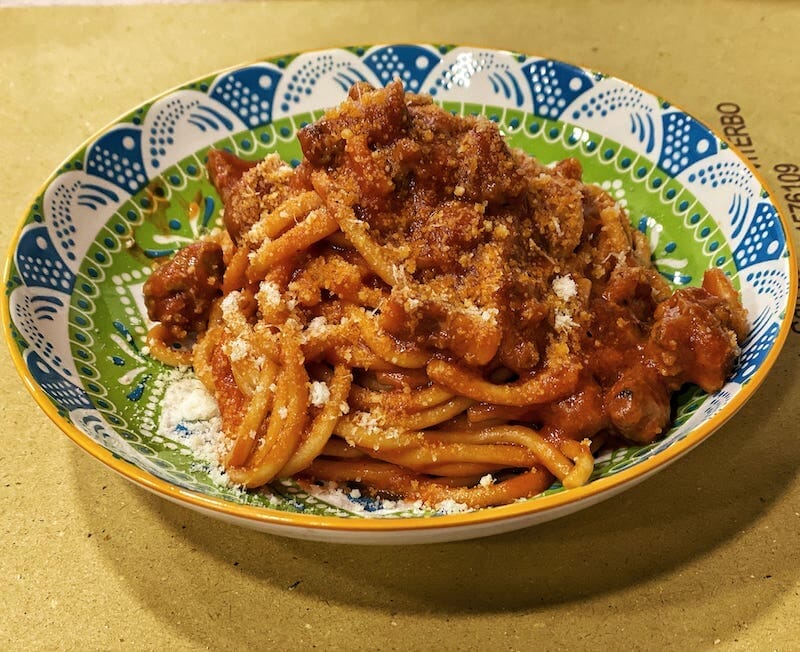
Lombrichelli
WHERE IT COMES FROM: Viterbo
Lombrichelli is a traditional Italian pasta from the Lazio region, specifically from Viterbo (my dad’s hometown). It’s hand-rolled and made from water and flour (no eggs involved). It can be served with all sorts of sauces, but I think it’s best with a tasty meat sauce.
Arrosticini
WHERE IT COMES FROM: Abruzzo
Arrosticini is another great snack (well, you can make a meal of it depending on how many you eat) and one of the tastiest on any list of traditional food. It’s made from chunks of mutton or lamb pierced on a skewer and barbecued.
You can sometimes find them in supermarkets all over Italy, but truly, the best ones are only in Abruzzo.
Olive all’Ascolana
WHERE IT COMES FROM: Marche
Olive all’ Ascolana is one of the best deep-fried treats in Italy. It was invented in Marche back in 1800 by private chefs who were trying to find ways to avoid waste and use leftover meat.
It’s basically deep-fried breaded green olives stuffed with meat. And when done properly, it’s the perfect snack or appetizer.
Southern Italy Food
Pizza
WHERE IT COMES FROM: Campania
Although Pizza first appeared in Campania, it’s become a widespread meal across all of Italy (and even the world). You know pizza. You love pizza. But I have no doubt that pizza in Italy will set entirely new standards if you’ve never been here before.
Italian pizza is a far cry from American style pizza, with its greasy cooking methods and too much sauce. – though personally, I am a fan of the New York style but don’t like the rest.
Pizza in Italy has a much thinner and crispier crust, thicker dough, less sauce, and considerably less cheese.
However, one true focus for a good pizza in Italy is simplicity, traditional cooking methods, and fresh ingredients.
My post What You Need To Know About Pizza In Italy explains the different kinds of pizza you’ll find here and what to expect when you order.
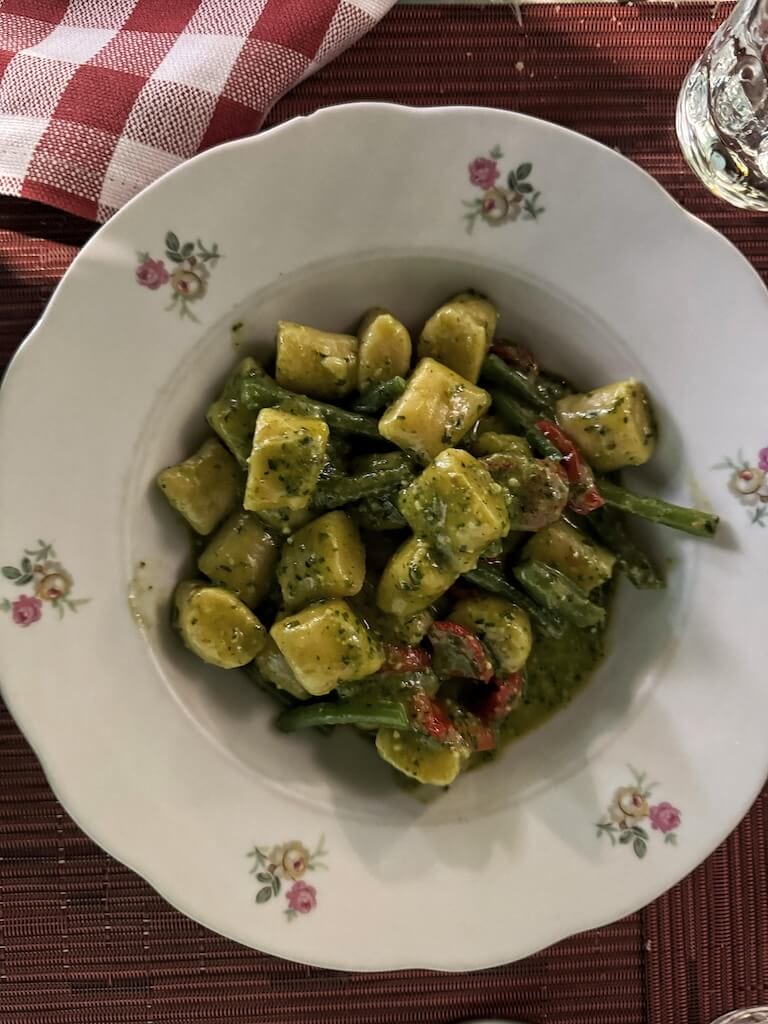
Gnocchi alla Sorrentina
WHERE IT COMES FROM: Campania
Gnocchi alla Sorentina is gnocchi made with potatoes, cooked in tomato sauce, and topped with mozzarella. Instead of boiling all the way through like some pasta types, it’s baked in the oven.
Gnocchi has become a staple all across the country (I recently had delicious gnocchi al pesto in Milan, speaking of fusion food!) and is a favorite amongst the best dishes in the country. But it’s best enjoyed in Campania, especially if you’re looking for authenticity.
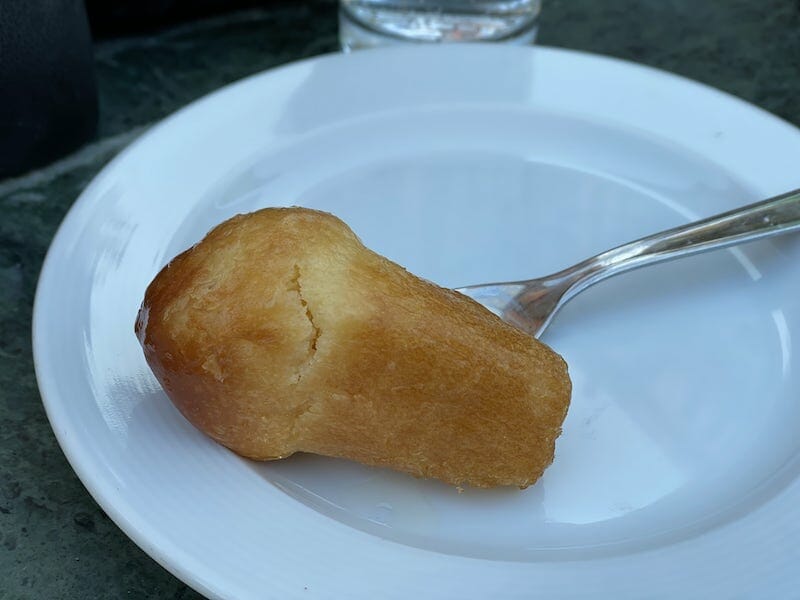
Babà
WHERE IT COMES FROM: Campania
Babà is a delicious, small sponge cake that originated in France but has morphed into its own taste and style in Campania.
It’s made with flour and yeast, soaked in rum. It sometimes has chocolate, cream, or some type of sweet filling.
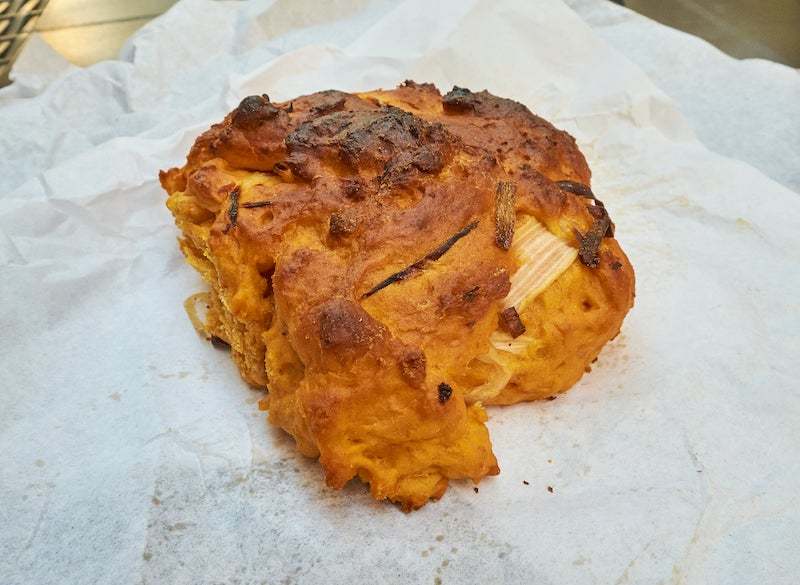
Puccia Salentina
WHERE IT COMES FROM: Puglia
If you’re looking for the best street food in Italy, you have to visit Lecce in Puglia. Puccia Salentina is the gem of Italian street food.
It’s made using a kind of bread dough that leaves no crumbs, making it an easy snack on the go. The dough is rolled and formed to make a sandwich, usually filled with fresh and tasty produce.
Focaccia Barese
WHERE IT COMES FROM: Puglia
Focaccia is a type of flatbread found all over Italy. The most famous kinds are in Genoa, where it’s spongy, salty and oily and is the perfect base for a great sandwich, and in Bari in the Puglia region of southern Italy, where it has a completely different flavor.
Focaccia Barese is truly delicious. To simplify it, it’s kind of like a different version of a pizza made on focaccia flatbread instead of pizza dough.
The traditional version, and the most popular variant, is topped with and tomatoes and oregano, though sometimes you may find it with onions too.
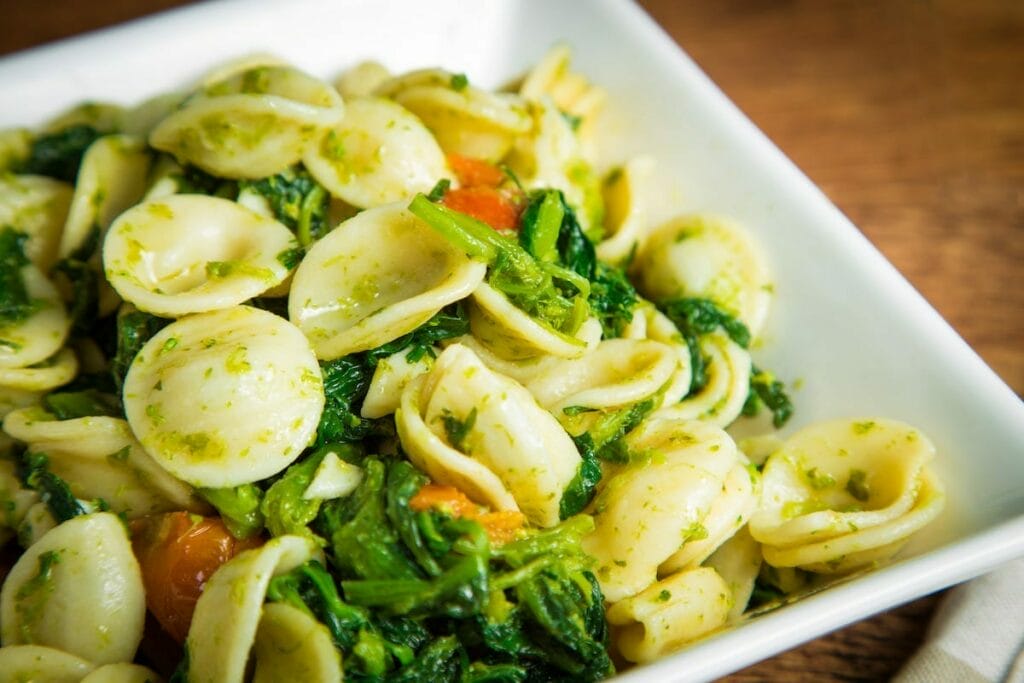
Orecchiette alle Cime di Rapa
WHERE IT COMES FROM: Puglia
The name Orecchiette literally means “small ears” in English. As you can surely imagine, it directly refers to the shape of this pasta that is typical of Puglia but now more often eaten all over Italy.
The most typical way of serving orecchiette is with a sauce made with “cime di rapa” – turnip tops, which look a bit like spinach but taste more like broccoli. They are gently fried in olive oil with a bit of garlic, some anchovies and cayenne pepper.
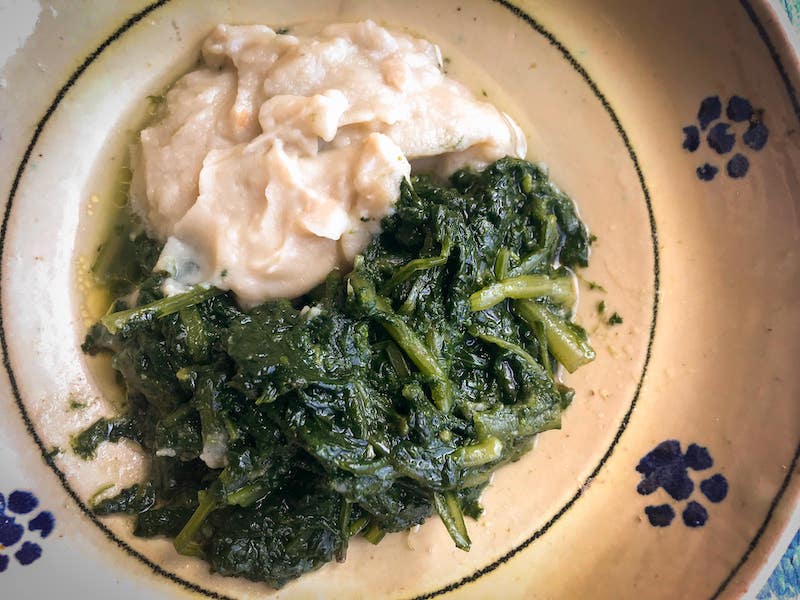
Fave e cicoria
WHERE IT COMES FROM: Basilicata
Fave e cicoria is one of the most famous dishes in southern Italy. It’s found in many places, but for the best one you’ll have to go to either Puglia or Basilicata. It’s a puree of dried fava beans that makes a delectable cream and plated with chicory.
It’s actually inspired by traditional Egyptian purees but has transformed into a regional specialty that must be tried while traveling in southern Italy.
Food from the Italian islands
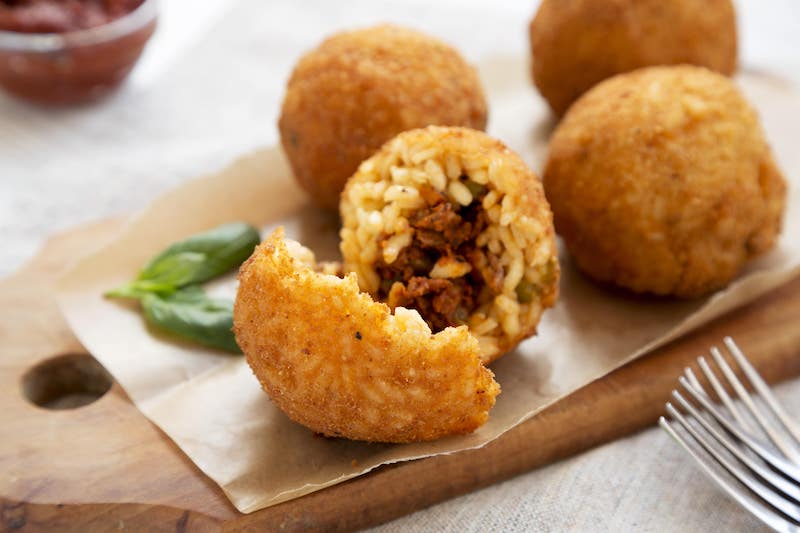
Arancini
WHERE IT COMES FROM: Sicily
Arancini (or arancine, depending on where you have it) is a classic snack and street food from Sicily, Italy. It’s a deep-fried rice ball filled with meat sauce, peas, and caciocavallo cheese. However, you’ll find hundreds of different variations all around Sicily.
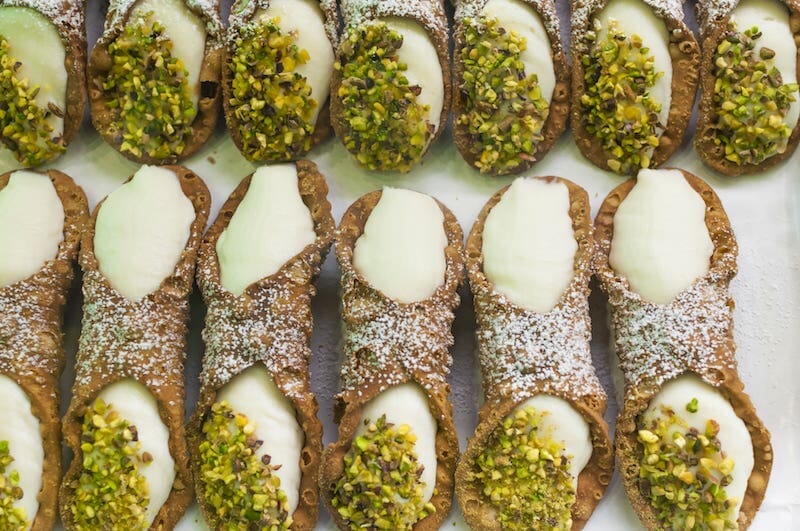
Cannoli
WHERE IT COMES FROM: Sicily
Cannoli actually has Arab origins, but it has taken over Italy by storm. It comes from Sicily, and you’ll find thousands of different variations and fillings. This popular Sicilian dessert is a fried wafer shell with a mixture of sheep ricotta cheese and candied fruit.
Sometimes, it’s stuffed with chocolate chips and pistachio crumb toppings. However, all Sicilian variations are just as good as the last.
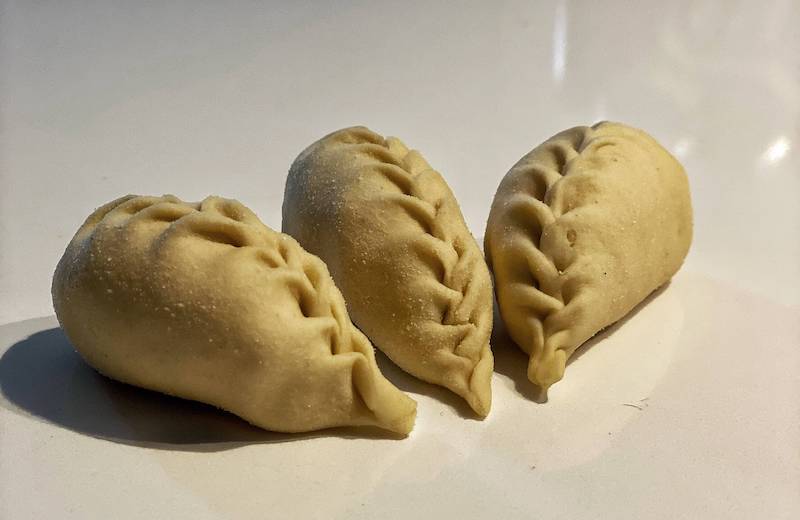
Culurgiones
WHERE IT COMES FROM: Sardinia
Maybe I’m biased coming from Sardinia, but I think culurgiones are the best traditional pasta in Italy. They are somewhat similar to ravioli, a form of stuffed pasta. Originally, they are stuffed with potatoes, pecorino cheese, mint and just a hint of garlic (though every family has its own recipe).
After being boiled, they are served with just grated pecorino cheese (no olive oil!) or with a plain tomato sauce. They are also a fun snack when fried.
Culurgiones have developed over the years, and you can find them with all sorts of stuffing across Sardinia. I recommend trying at least a few different varieties to appreciate their versatility and deliciousness truly.
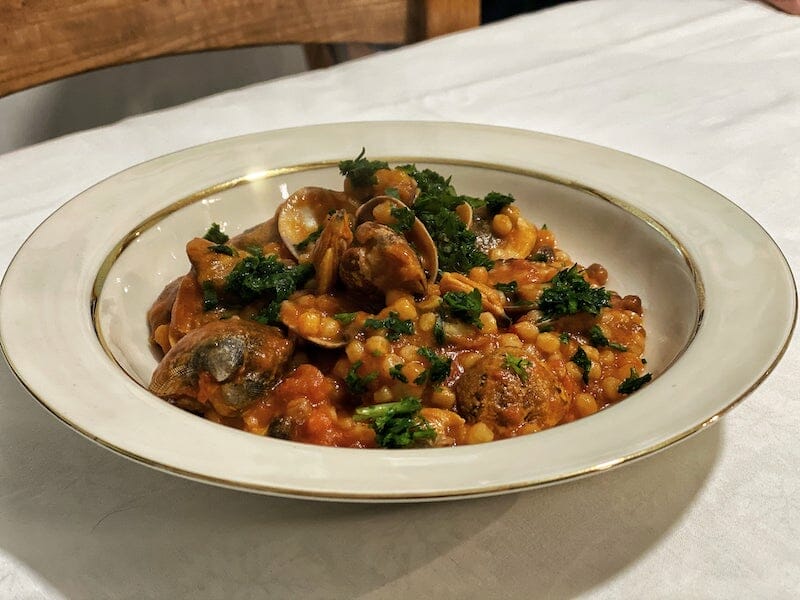
Fregola con Arselle
WHERE IT COMES FROM: Sardinia
Fregola con arselle is bran pasta similar to cous cous. It is often made into a soup or cooked in broth. It’s hard to describe fregola itself. It has a nutty flavor and unique texture.
Fregola is made from durum wheat flour, a process similar to making cous cous, which explains the similarities between the two.
My favorite fregola recipe from Sardinia is the seafood variant – fregola con arselle. It’s made with fregola, clams, garlic, parsley, tomatoes, and white wine. The best place to find this dish is in Cagliari, but it’s available all over Sardinia.
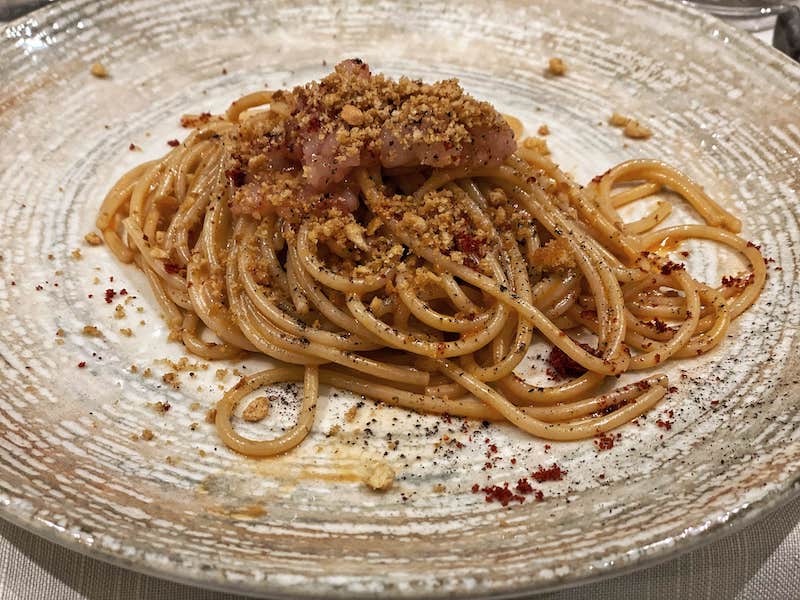
Spaghetti ai Ricci di Mare
WHERE IT COMES FROM: Sardinia
Spaghetti ai Ricci di Mare translates to “Spaghetti with Sea Urchins” in English, and it’s exactly that. It’s a unique combination of flavors and one of the many seafood specialties in Sardinia.
Interestingly enough, this was a typical food for the lower class on the islands. Sea urchins were abundant on the coast.
However, the sea urchin population has been drastically declining, and there are now a lot of restrictions to harvesting sea urchins, so this dish is considered more of a specialty.
National Dishes
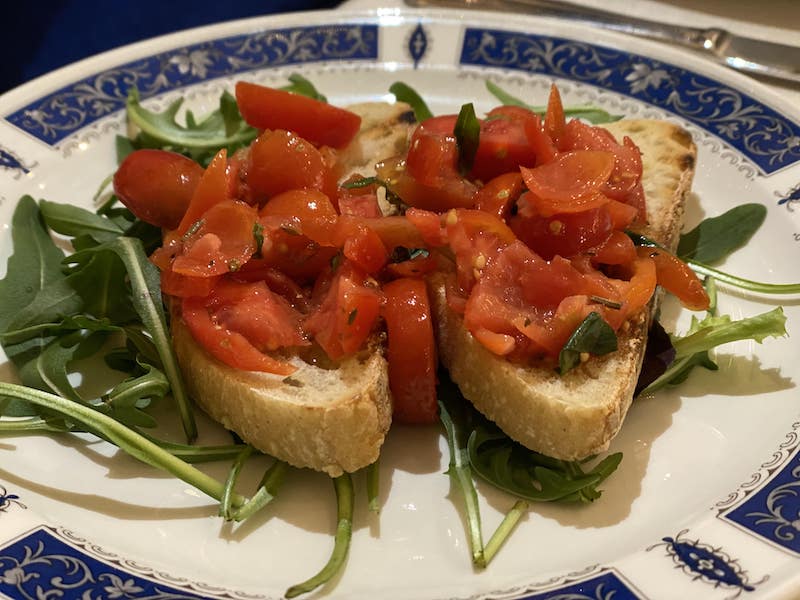
Bruschetta
Bruschetta has been around for centuries but likely became popular with the Romans. Like many popular dishes nowadays, it was once popular amongst the lower class. It was a way to make use of stale bread.
It’s made from toasted bread, sometimes drizzled with garlic (but definitely not in the same amount you may have in north America: Italians don’t nearly eat as much garlic as the rest of the world), and topped with simple ingredients like oil, olives, basil and tomatoes.
It’s now a popular Italian appetizer and is served with all sorts of toppings and garnishes across Italy.
Minestrone
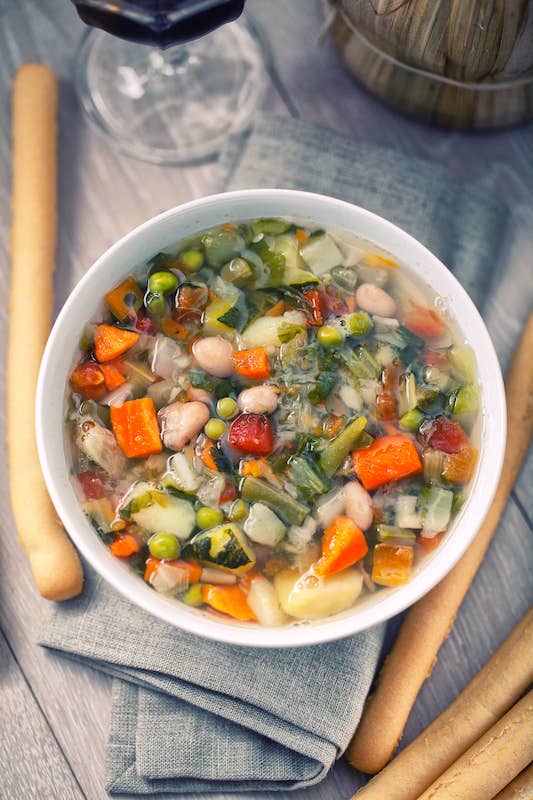
Minestrone soup is one of the most popular Italian staples. Believe it or not, it’s actually more common than pasta in some places. That might be because it’s one of the easiest things to do.
You need only water, salt, vegetables and beans, chickpeas or lentils. Depending on the season, you can add your own twists and ingredients.
It was considered a typical food for farmers and low-income families, but it’s now found and enjoyed in every corner of the continent, especially during the winter months.
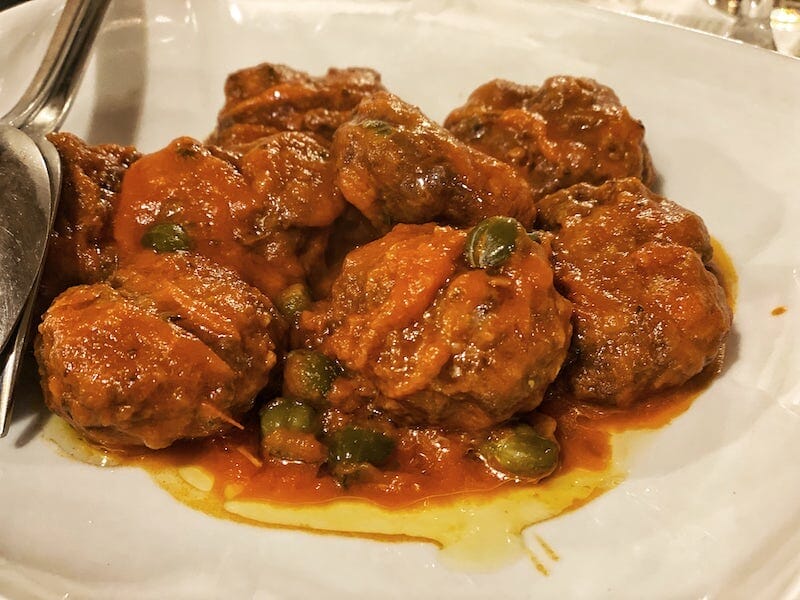
Polpette
Polpette are meatballs in Italian. They’re almost exactly as you know them: ground balls of meat with seasonings (usually breadcrumbs, eggs and parmigiano cheese) rolled together and often cooked in thick tomato sauce. They are universal across Italy.
The Americanized version of polpette, or meatballs, is served on pasta. But in Italy, it’s often served as a separate course and enjoyed with good bread.
Truffles
If you’re looking for the most exclusive food, you have to try truffles in Italy. Truffles are an expensive type of mushroom, and you can really only find them in high-end restaurants across the country.
The mushrooms are hard to find (thus the exclusivity of the food). They used to be hunted and found with pigs, but that proved damaging to the environment, so now they are only found in the wild with specially trained dogs.
Up until recently, truffles were only found in certain parts of Europe, specifically Italy, France, and Spain. But other parts of the world are working on cultivating their own.
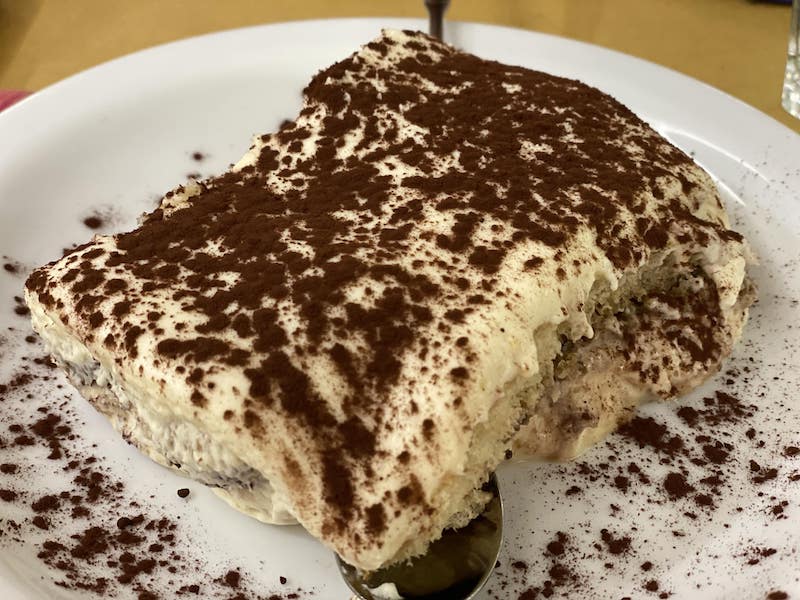
Tiramisù
Tiramisu is undoubtedly one of the most beloved desserts across the country. There’s no hard proof that it originated in Italy, but Italians certainly love it. In fact, a survey in 2017 showed that tiramisu was the most frequently ordered dessert among Italians.
Tiramisu means “pick me up” in Italian. It’s made from savoiardi – a kind of biscotti – dipped in coffee, layered with a thick cream made with mascarpone cheese and eggs and sprinkled with cocoa powder, but there are a few different variations.
Either way, there’s no question it’s the perfect after-meal treat.
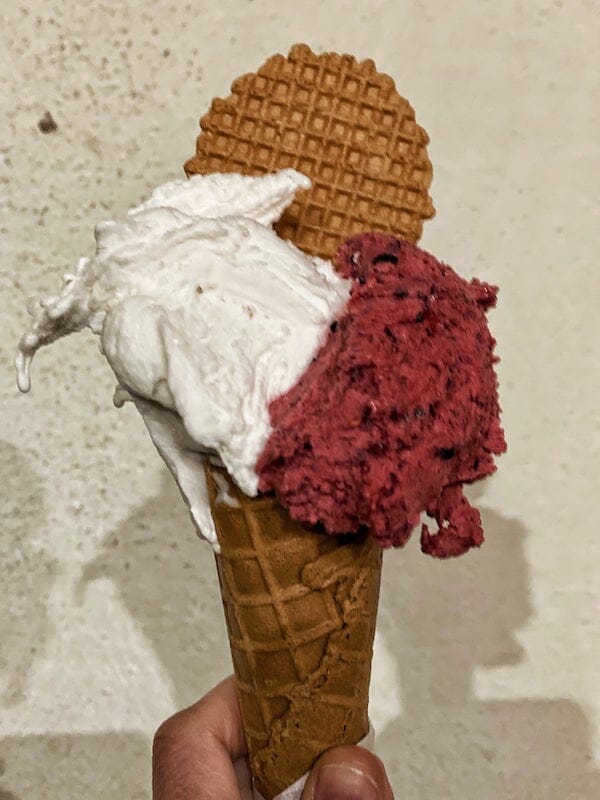
Gelato
Speaking of dessert, we can’t talk about the best food in Italy without talking about gelato. Gelato is another specialty that has taken the world by storm, slowly but surely replacing ice cream as everyone’s favorite cold treat.
Gelato is similar to ice cream but with a lower milk fat content than cream. It’s also whipped differently. This makes gelato taste much lighter and fluffier.
You can find gelato everywhere in Italy, but make sure you choose wisely. There are a lot of colorful, over-the-top gelato stands in tourist areas. You can tell because the gelato is often too colorful and vibrant.
Instead, stick to more low-key, traditional gelato shops with less choice in flavors. They’ll have fresher, tastier gelato.
Gelato also has a lower calorie count than traditional ice creams because of its lower milk-fat content. Take that into consideration when you’re planning your Italy trip. You don’t need to let any guilt bring you down!
Popular Ingredients In Traditional Italian Food
There’s no question that Italy has some of the best food in the world. One of the things that make Italian food so special is the ingredients and love that go into each dish.
Italians pride themselves on using fresh ingredients and recipes that are passed down through generations, and the results show in the mouthwatering flavors.
Food clearly reflect over our quality of life and even our average life expectancy. For example Sardinia is a Blue Zone, where people live longer than other parts of the world. One of the many factors that come into play in such a long life expectancy is food for sure!
Anyway, make sure you take a moment to appreciate each ingredient and the freshness of said ingredient. These are some of the most popular ingredients and proponents that go into traditional Italian food and make it what it is:
- Mozzarella
- Tomatoes
- Mortadella
- Parmigiano and Grana Padano
- Prosciutto
- Olive Oil
- Aceto Balsamico di Modena
Of course, there’s a lot more to it. But these are just a few to keep in mind when traveling around all the amazing places in Italy.
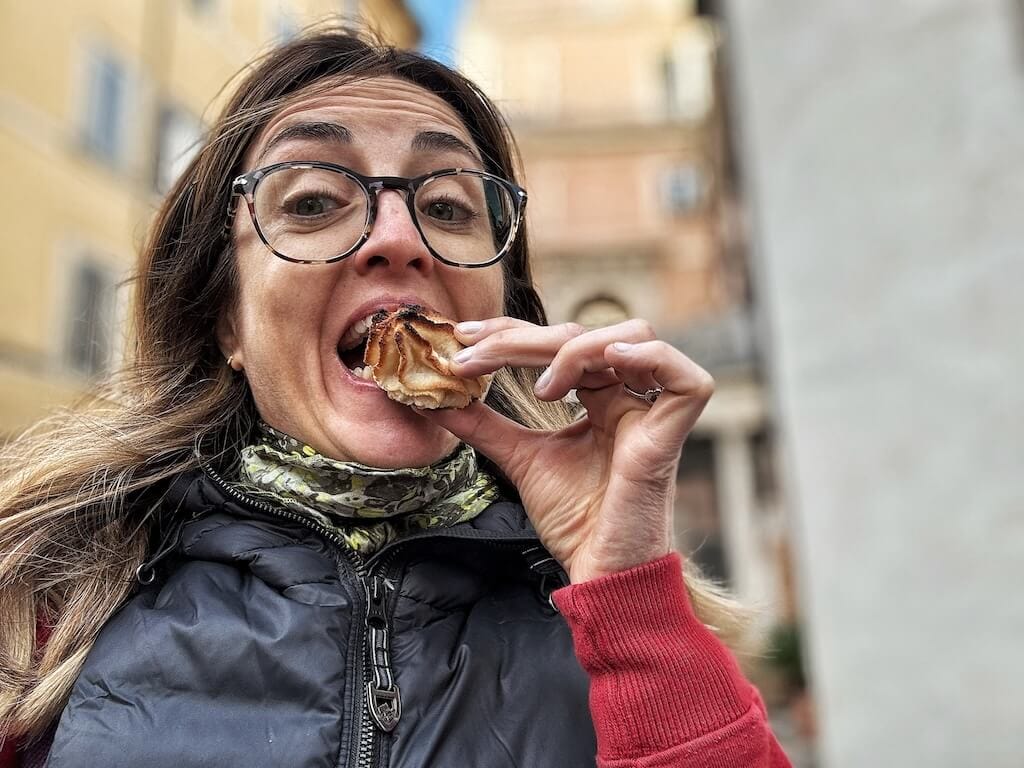
Best Food Tours In Italy
Joining a food tour or even a cooking class is one of the best ways of learning more about all the amazing food in Italy.
What you will eat will vary a lot, depending on the city where you are joining the tour. So for example if you are in Rome you may try the pizza romana, the carciofi alla giudia (typically found in Rome’s Jewish Ghetto) and the supplì; whereas if you are doing a food tour in Bologna you will have tortellini, mortadella and tagliatelle.
A food tour will also give you a chance of stepping out of your comfort zone and check out the most local spots with the help of an experienced guide.
Further to this, you could also join a cooking class. Once again, what you’ll learn to prepare in a cooking class will vary depending on where you are. But in all cases, you will learn to make a local dish (oftentimes a pasta dish) from scratch, all the while sipping on wine.
At the end of the class, you’ll get to sit down for a meal to try what you prepared. It’s overall a great way to learn the secrets of Italian cuisine.
These are some of my favorite food tours in Italy – and some cooking classes too. It’s just a selection of the many I have tried recently (yes, I am a real foodie).
If you’re in Rome, I recommend this Tastes & Traditions of Rome: Testaccio Food and Market Tour – I took the tour last time I was in Rome, and loved it. The tour starts at 10:00 with a typical local breakfast of maritozzi and coffee, and then moves to the market where you’ll try several local specialties. It ends with three different tastings (actually, proper portions) of pasta at a local restaurant, and gelato at the end.
If you are in Bologna, you could join this Tastes & Traditions of Bologna: Food & Market Tour – my sister and I took this tour in May in Bologna and really enjoyed it. It starts at 10:00 am and you will have 9 tastings, including rice cake (a delicious local sweet), a good panino con la mortadella, tortelloni and a full portion of tagliatelle.
If you are traveling to Florence, there’s this Oltrarno at Sunset: Florence Food & Wine Tour – I took the tour last time I was in Florence in April, and it exceeded my expectations. The guide will take you to a more local area of Florence where you will try proper bruschetta, a good bistecca alla fiorentina, and learn about the food culture of Florence. You should expect to eat a lot!
If you are visiting Venice, you could consider this Tastes & Traditions of Venice: Food Tour with Rialto Market Visit. The tour walks you through the culinary traditions of Venice as you explore the market and taste various bits along the way.
When in Naples, consider joining this Ultimate Naples Food Tour. It goes around the lively Quartieri Spagnoli and Pignasecca where you will try the best local specialties such as sfogliatella, cuoppo, pizza and many more culinary delights.
Finally, there’s this Rome Pasta-Making Class: Cook, Dine & Drink Wine with a Local Chef. It’s a great idea if you want to learn the secrets of perfect Italian pasta. The class takes place in a lab in Trastevere. Needless to say, wine is poured abundantly during the lesson!
And of course, most importantly, enjoy the delicious Italian cuisine. After all, you won’t find better food anywhere else in the world.
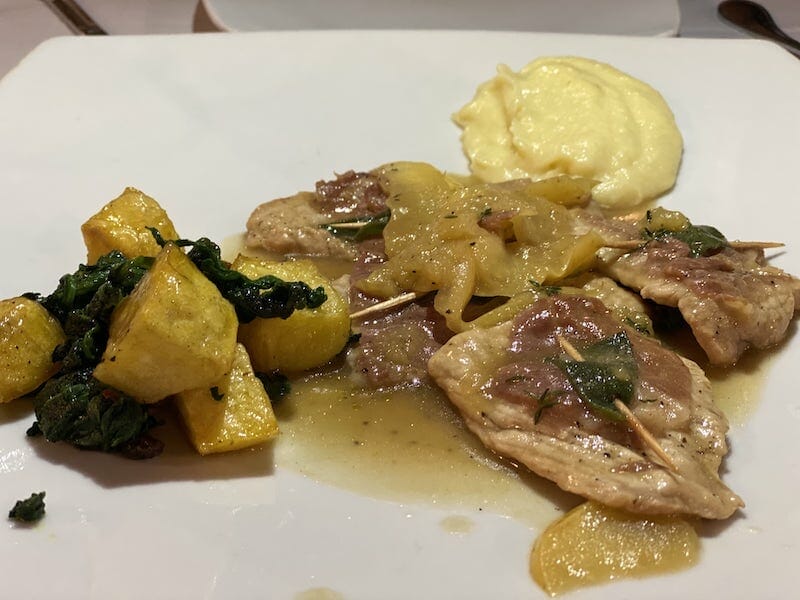
Some Final Tips For Dining In Italy
If you’re traveling to Italy, you’ll likely be eating out a good amount. Here are a few basic tips for dining in Italy that might help you feel more prepared:
TIPPING ISN’T TOO COMMON: Tipping in Italy is a bit different than in places like the United States. It isn’t always expected, and when it is (like at a nicer sit-down restaurant), 10% is the most that’s expected.
MAKE RESERVATIONS WHEN POSSIBLE: It gets busy, especially in touristy areas during high season – besides Italians love eating out – so make sure to make a reservation a few days beforehand. There are pros and cons to all seasons in Italy, but one disadvantage of peak season is the crowds and higher demand for nice restaurants.
KNOW WHAT’S REGIONAL AND WHAT’S NOT: It might be considered rude to order a regional Italian dish in a different region, so make sure to check on this before making a special request for something you’re craving. Besides, most restaurants only serve local dishes and if you find dishes that are not from that region on the menu, steer away as that’s the sign of a tourist trap.
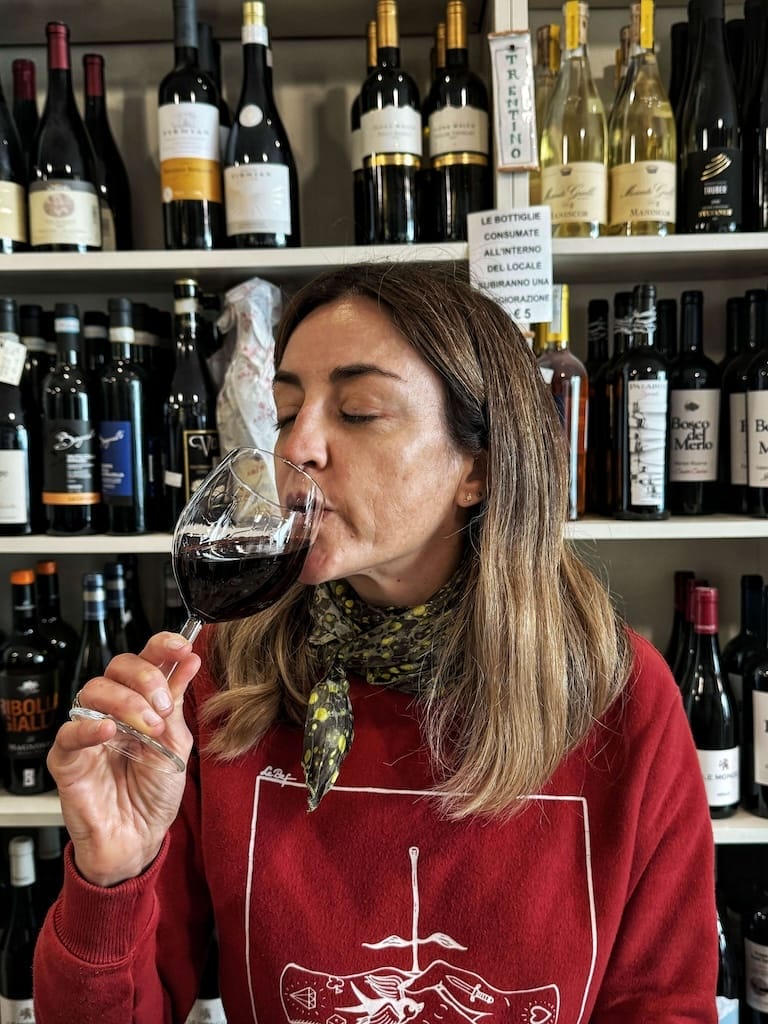
PICK YOUR DRINKS WISELY: Here in Italy, we spot tourists at restaurants from a distance because they are the ones having iced tea or coffee drinks with their meal. Not only that’s an unusual thing to do here, but we find it ultimately disgusting. Tea and coffee drinks have a very strong flavor, and they ruin the taste of your food. Stick to wine, beer or – if you don’t drink alcohol – just water with your meal. Then have a delicious espresso (and by all means, not a cappuccino which we only have for breakfast) at the end of your meal.
FOLLOW BASIC ITALIAN ETIQUETTE: Eating out in Italy is not complicated by any means. But you should follow some basic common knowledge about eating here For example, never use a spoon with pasta, and don’t ask for pineapple on your pizza.
TAKE YOUR TIME: One of the biggest differences between Italy and North America is that here we really consider a meal out a time to socialize with family and friends. Service is never as fast as it is in the United States, and we often spend hours at the table, savoring food and enjoying a good chat.
Summary Of The Best Traditional Italian Food
Traditional Italian food is much more complex than most people think. It’s heavily influenced by various factors, including the Roman Empire, the influx of ingredients from the New World, and the diversity of our population.
And interestingly enough, things that were once considered “low-class” are now considered Italian specialties.
But you don’t necessarily need to know everything to enjoy the food in Italy. Whether you’re snacking on more typical food or trying something a little more adventurous, it’ll definitely leave a lasting impression.
PIN IT!

Claudia Tavani
Claudia Tavani was born and raised in Sardinia, and after moving between the United States and the United Kingdom, she's now back living in her hometown, Cagliari. She's a travel blogger and certified travel designer who loves planning trips and publishing guides, travel tips, and packing lists so that you don't have to. Owner of Strictly Italy, cat mom to Minnie. Loves pizza, hiking, archeology, cities, beaches, swimming, and running. Hates peppers.