

I had always heard wonderful things about Le Langhe Italy, and I had always wanted to go. I finally managed to visit during a trip to Piedmont with my friend. We rented a car in Turin and set out to explore the beautiful small towns of the Langhe and the beautiful rolling hills covered in vineyards.
Of course, all those vineyards produce some of the best Italian wines – Alta Langa (a dry sparkling wine), Arnais (a dry varietal), Barolo, Barbera, Barbaresco and more (you can learn more about Italian wine regions and varietals on my drinks page)
We had such a wonderful time that I decided I should write a guide to the Langhe region of Italy to help you plan your trip there.
In a rush? These are the best day trips to the Langhe:
I also have more travel tips for day trips in Northern Italy that you can read.
Continue reading to discover the best wine tasting experiences in the Langhe, the prettiest villages, the best restaurants, and some useful tips to plan your trip.
Where Is Langhe Italy
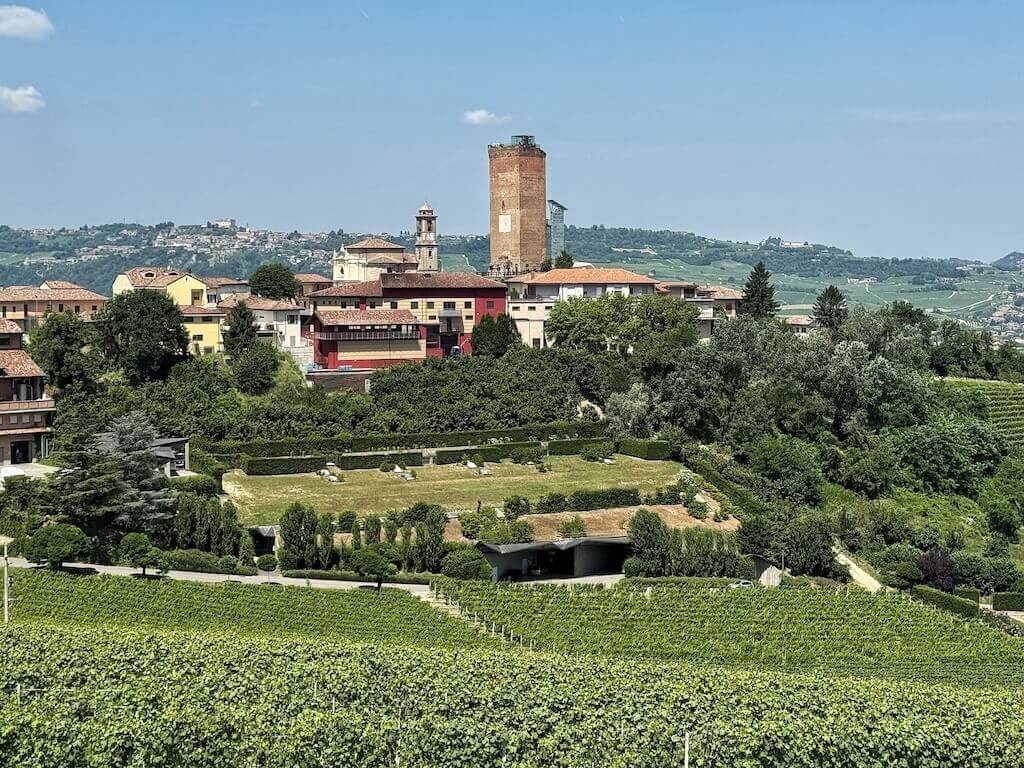
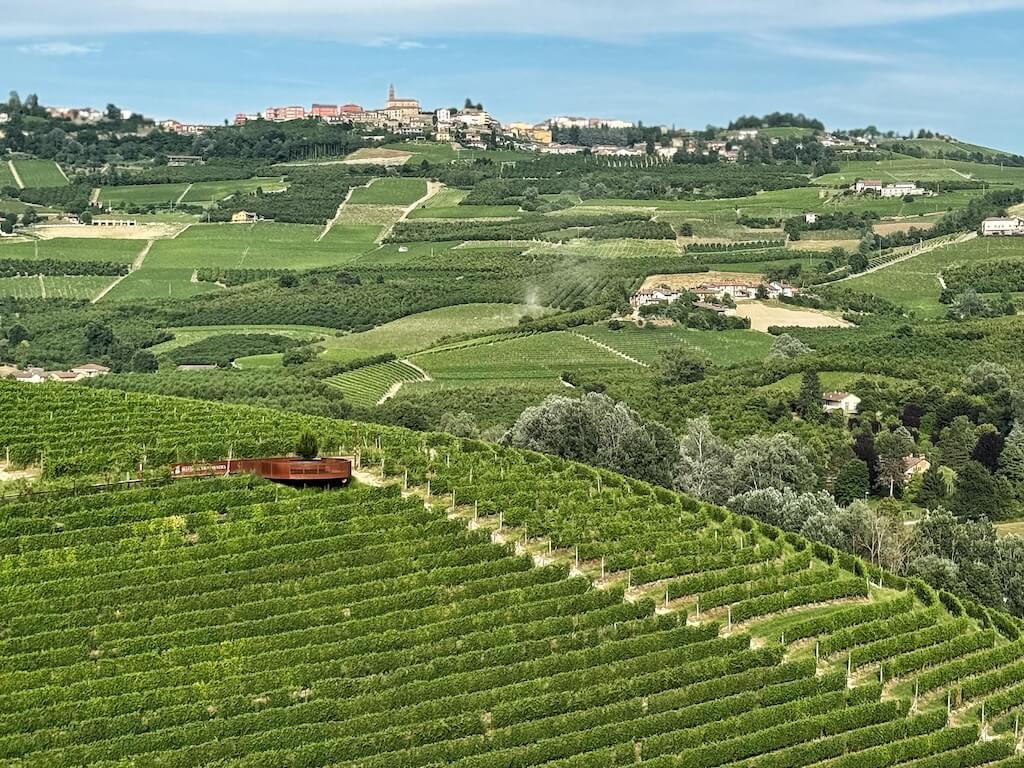
Langhe (or Le Langhe, as we refer to it in Italian) is in the northwest of Italy, tucked into the rolling hills of southern Piedmont. This beautiful region lies between the Tanaro River and the Ligurian Apennines, mostly spread across the provinces of Cuneo and Asti.
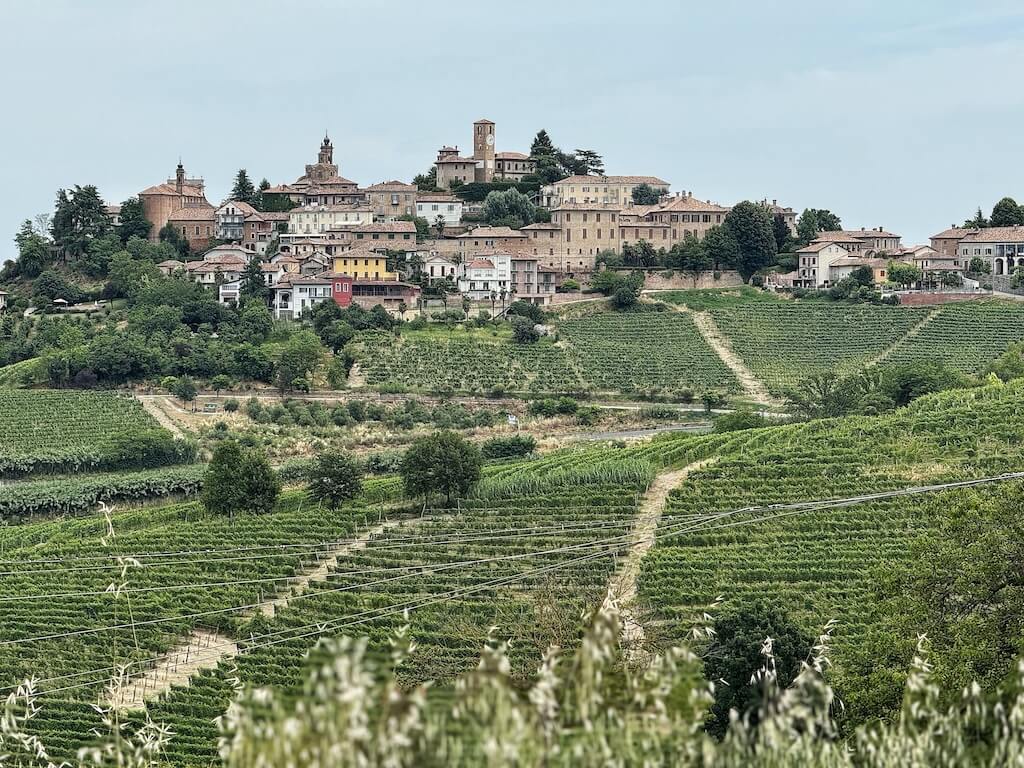
The area is about an hour’s drive south of Turin. This region is famous for its vineyards, hazelnut groves, and white truffles, and tiny hill towns like Barolo and La Morra.
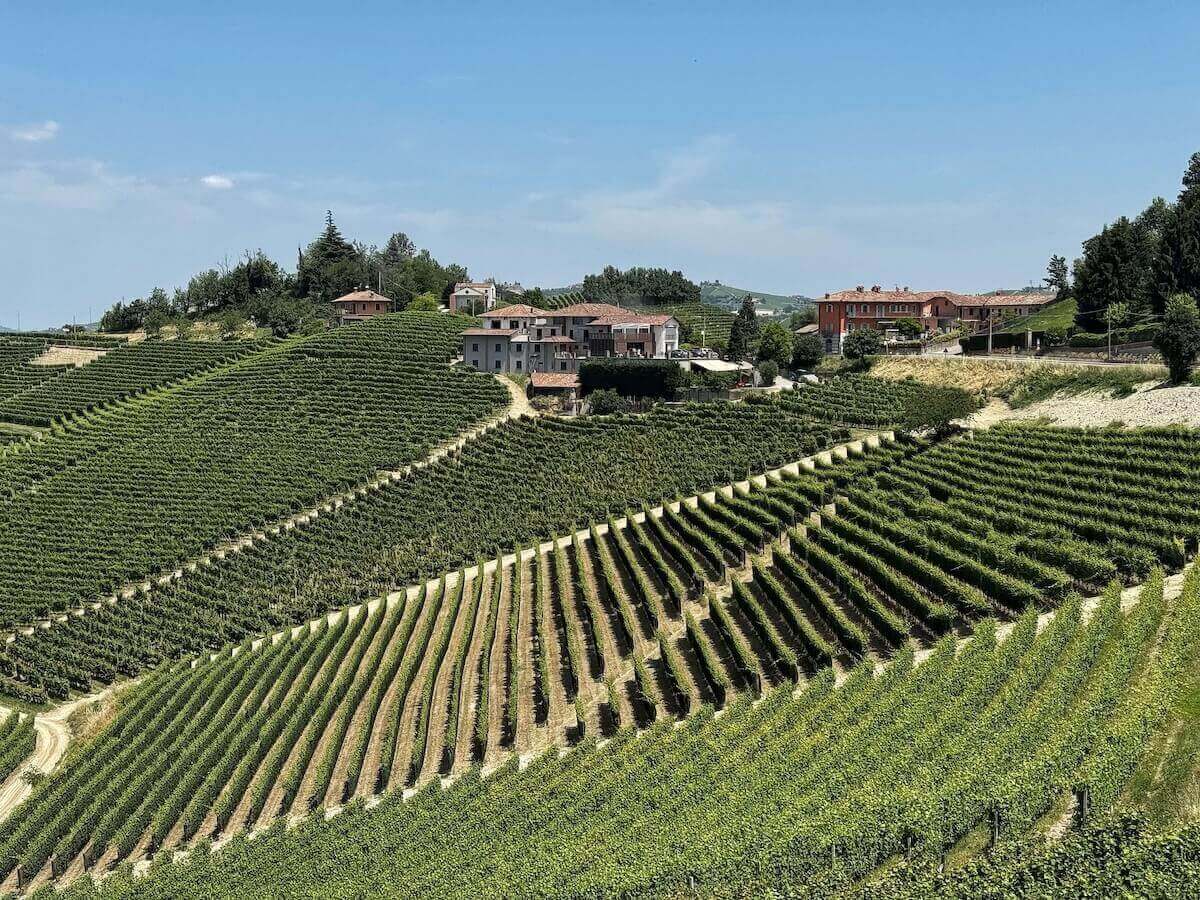
Since 2014, the Langhe—along with Roero and Monferrato—is a UNESCO World Heritage Site for its vineyard landscape. Here, the hills stretch out in soft waves, with the Alps often on the horizon.
You may think this area is rural – and it is in a way. But it’s also surprisingly accessible, with lots of local roads connecting the various villages to the Langhe capital (Alba). Alba itself is easy to reach from Turin by car, train, and bus.
Why Visit Le Langhe In Piedmont
If you are wondering, “Is the Langhe worth visiting?” the simple answer is yes.
Do you need actual reasons to visit Le Langhe Piedmont? Let me write them down for you:
- It’s a fantastic wine destination – This is where wines like Barolo and Barbera come from. If you want to go wine tasting during your trip to Italy, you should push yourself off the beaten path and put the Langhe on your Italy itinerary.
- Food is delicious – You will find all sorts of food: from traditional cuisine that uses local ingredients to more contemporary dishes that create unique pairings.
- It’s not crowded at all – My friend and I were positively surprised to see that this area of Italy doesn’t have a fraction of the tourist crowds of other regions like Tuscany. I visited Le Langhe immediately after Tuscany and can testify to this.
- You can still experience local life – This is the kind of place where most of the people you see out and about are locals, including at restaurants.
- It has an interesting history – This is testified by the many castles that you will often find perched at the top of a hill, in a tiny village.
I can also imagine that with such winding streets and hills, it’s a great cycling destination. I haven’t tried it when I visited, but I can only imagine what a fun experience biking in the vineyards is.
Now that you know that the Langhe are worth visiting, let’s discover the best things to do in le Langhe Italy.
Things To Do In Le Langhe Italy
Wine tasting
This is by far the best thing to do in le Langhe – and sure enough, my friend and I obliged when we were there.
Contrary to other regions of Italy where wine tasting experiences may feel rushed, the Langhe offer a truly slow, peaceful experience. There certainly are some large wineries you can visit, but there is an infinity of smaller wine producers and family-run wineries.
Most wine tasting experiences include a visit to the vineyards, a tour of the cellar, and then the actual wine tasting, which can include up to 5 generous tastings.
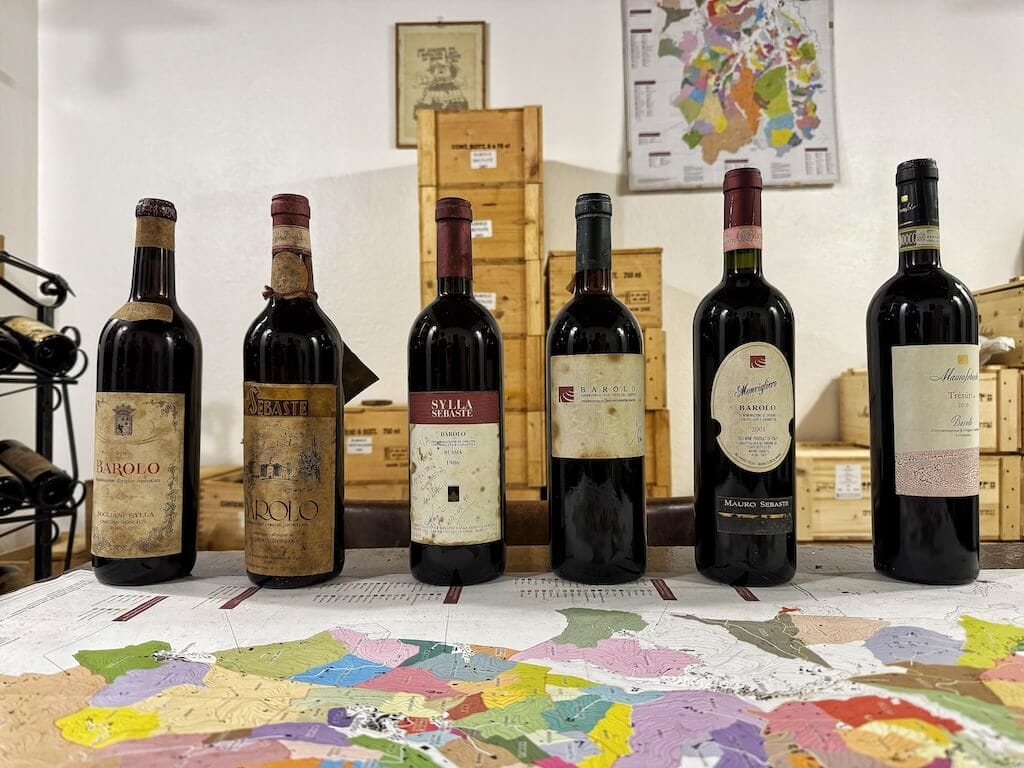
We tried two different wineries on two different days, and I recommend both for different reasons – Mauro Sebaste and the Marchesi di Barolo.
The latter (Marchesi di Barolo) is probably the most famous winery in the Langhe. It’s located in Barolo and was first founded in the early 19th century, when the Marchese Carlo Tancredi Falletti and his wife Juliette Colbert started elevating the quality of local wines. They offer all sorts of wine tasting experiences.
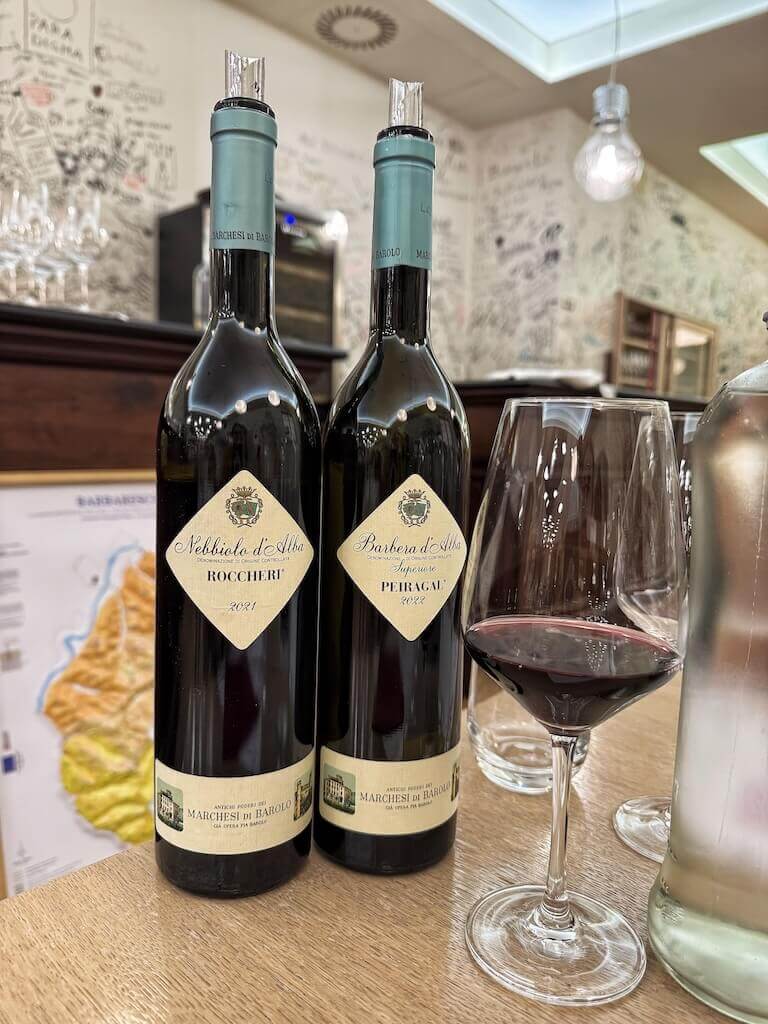
We opted for the “Classics and the Rarities” tasting experience, during which we tried 5 different red wines, which included a Nebbiolo d’Alba, a Barbaresco, a Barolo, and a Barolo Riserva.
Mauro Sebaste is a significantly smaller winery. Our visit was led by Sylla, the daughter of Mauro Sebaste. We were the only guests, and we loved learning about the family and winery fortunes and misfortunes. Apparently, Mauro wanted to be a sailor, and the founder, his mother Sylla, was the first woman of the area to separate from her husband.
It was an intimate experience, and the wines were delicious (and we brought home a few bottles).
You will need to make reservations for your wine tasting experience. Most wineries allow you to book online directly; otherwise, it’s just a matter of sending them a quick request via email.
You can also consider this wine tasting experience in Monforte d’Alba that lasts two hours and has glowing reviews. It includes tastings of several vintages of Barolo.
There’s also this wine tasting at Dogliani, which includes 7 tastings, perfect if you want an even fuller experience.
Finally, there’s this dinner in the vineyard with wine tasting that is one of the best ways to experience the fabulous wines of this region.
Hunt for truffles
If you like truffles, then one of the unmissable things to do in Le Langhe is truffle hunting. This is very much a tradition here, and locals have been doing it for generations.
Alba is famous for its premium white truffle – that’s the one with the most powerful aroma, and the one that is incredibly expensive too. White truffle hunting season typically runs from late September to early January, when the air gets colder and the soil is moist, so that the truffles grow underground.
If you happen to visit in the spring and summer months, you can still hunt for black truffle, which typically grows in the summer.
Traditionally, the trifolai (trifolao means truffle hunter) go out early in the morning or at dusk with their trained dogs. These honestly do most of the job, as they sniff beneath tree roots (usually oaks and hazels, which abound in the region) to find truffles.
You’ll walk through wooded hillsides, usually just outside small towns, and if you’re lucky, find a truffle or two.
I recommend this truffle hunting experience in Alba that lasts up to 3.5 hours. You will be guided by a trifolao and his dog. During the tour, the trifolao explains the techniques, history, and how the dogs are trained. The tour also includes wine tasting, which is unmissable in this part of the country.
Taste hazelnut products
One crop that you will notice consistently in the Langhe other than grapevines is hazelnuts. The prized Tonda Gentile delle Langhe variety grows mostly at lower altitudes, where the hills aren’t ideal for grapevines.
These areas are not steep enough for quality wine production, so locals plant hazelnut trees instead. It’s a smart use of terrain that doesn’t go to waste.
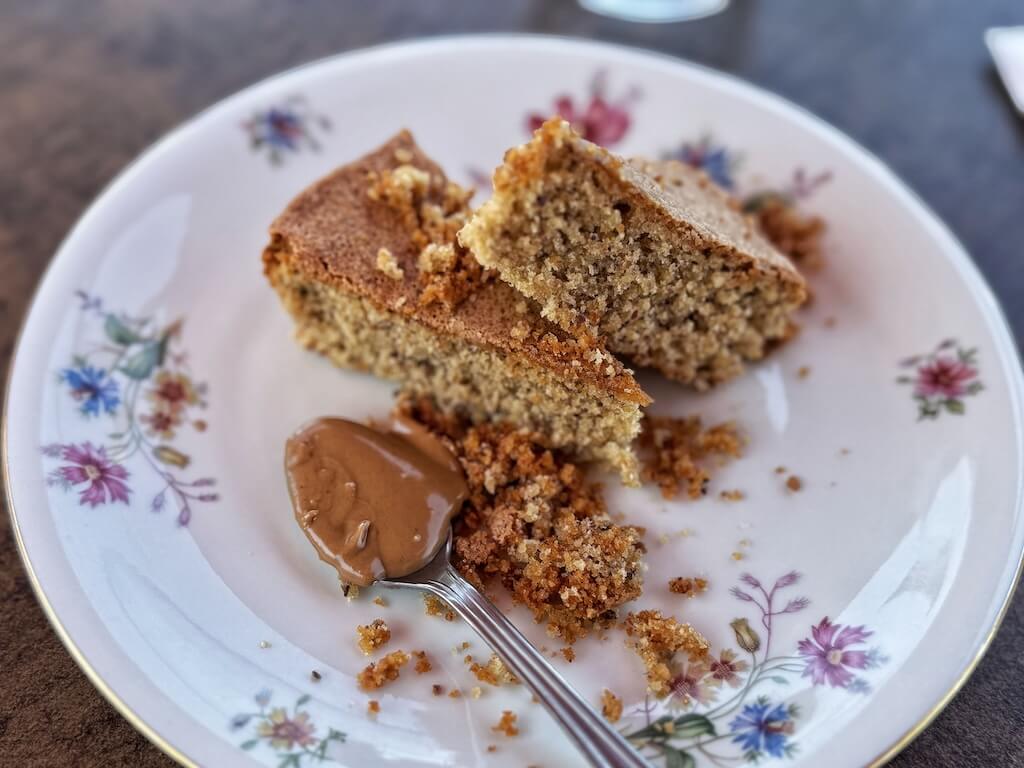
This hazelnut has a round shape, fine skin, and balanced flavor. It’s the one used in gianduia (a hazelnut-flavored chocolate) and the original recipe for Nutella, which was invented right here in Alba.
Many estates in the Langhe will offer hazelnut-based products alongside their wine, and of course, you need to try them! Locals use hazelnut cakes, pasta, and savory sauces. You’ll find torta di nocciole on almost every dessert menu. It’s simple, flourless, and rich.
Explore the villages
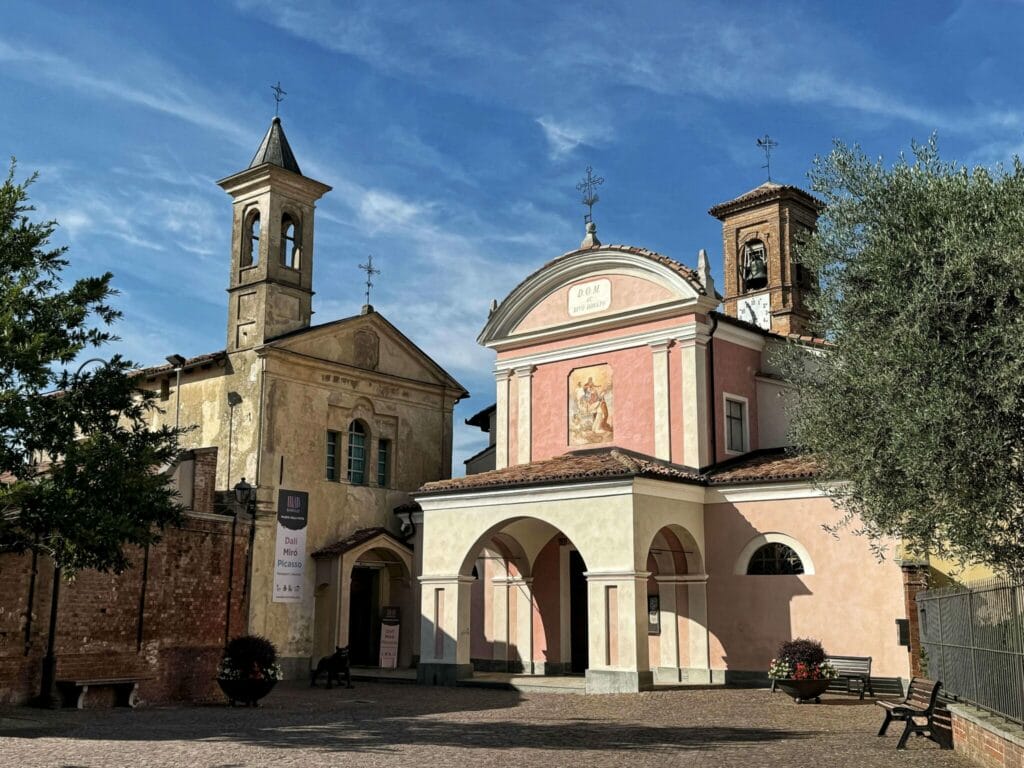
While Alba, the main town of the Langhe, is certainly worth visiting, the small towns and villages of the Langhe definitely steal the show. Here are the villages we explored during our trip.
Barolo
Barolo is one of the most famous villages in the Langhe, if anything, because it’s the birthplace of the wine that shares its name—structured, age-worthy, and made entirely from Nebbiolo grapes. The town itself is tiny and easy to explore, entirely surrounded by vineyards.
The main attraction is the Wine Museum, housed inside the 11th-century Castello Falletti. The museum was designed by François Confino, and takes you through wine’s cultural, historical, and sensory journey with a modern, immersive touch. It’s a truly fun place to visit, even for families with children, as there’s a rather interactive exhibit.
Don’t miss the terrace on the third floor of the museum – the views from there are stunning.
Around the town, you’ll find enoteche and cantine (wineries) that offer tastings, along with excellent places to eat.
Barbaresco
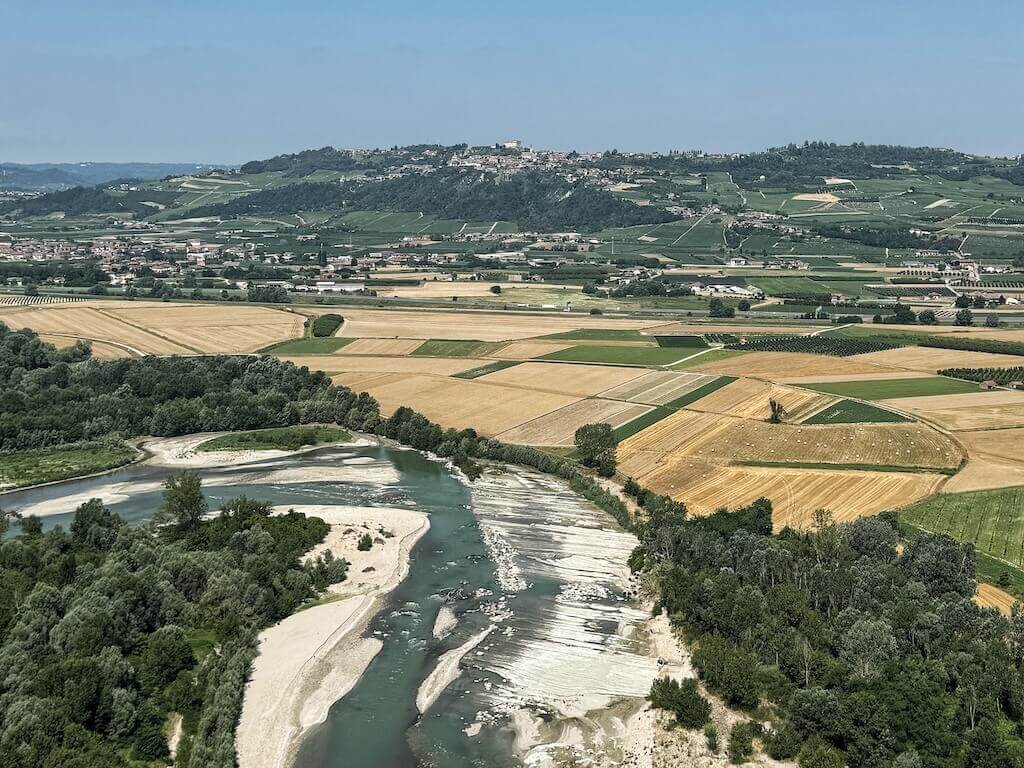
Barbaresco is a quiet hilltop village just east of Alba. It’s famous for producing one of Italy’s most elegant wines. Like Barolo, Barbaresco is made from Nebbiolo grapes, but upon tasting both of them, you will see they are different wines – this one is lighter, smoother perhaps.
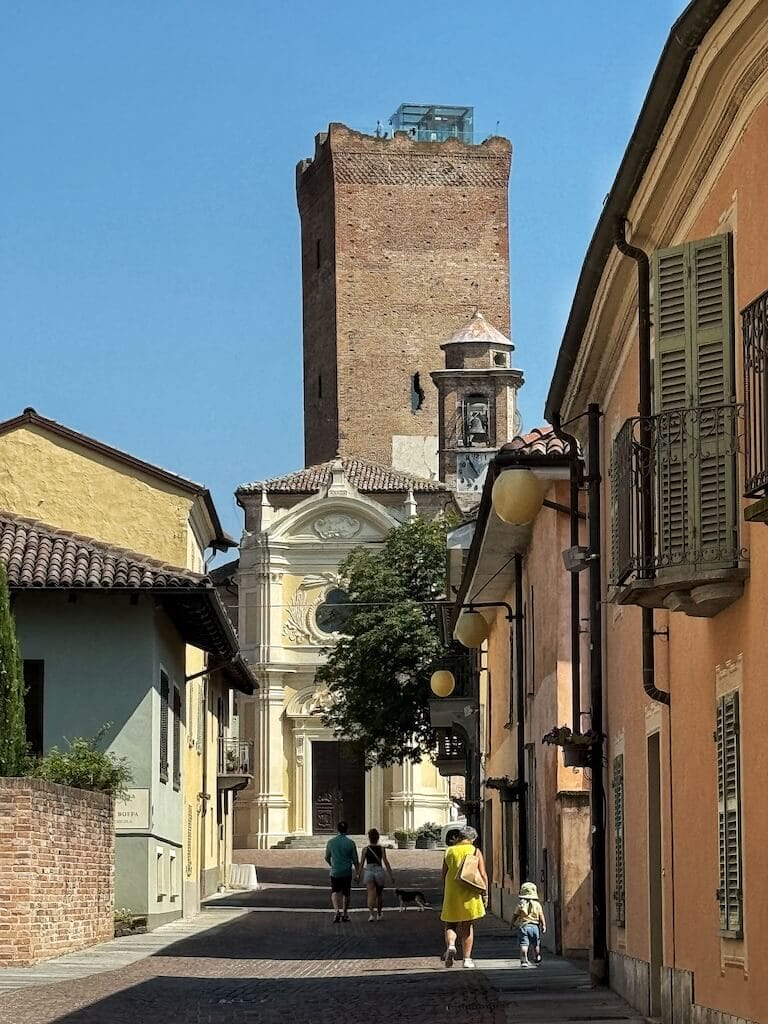
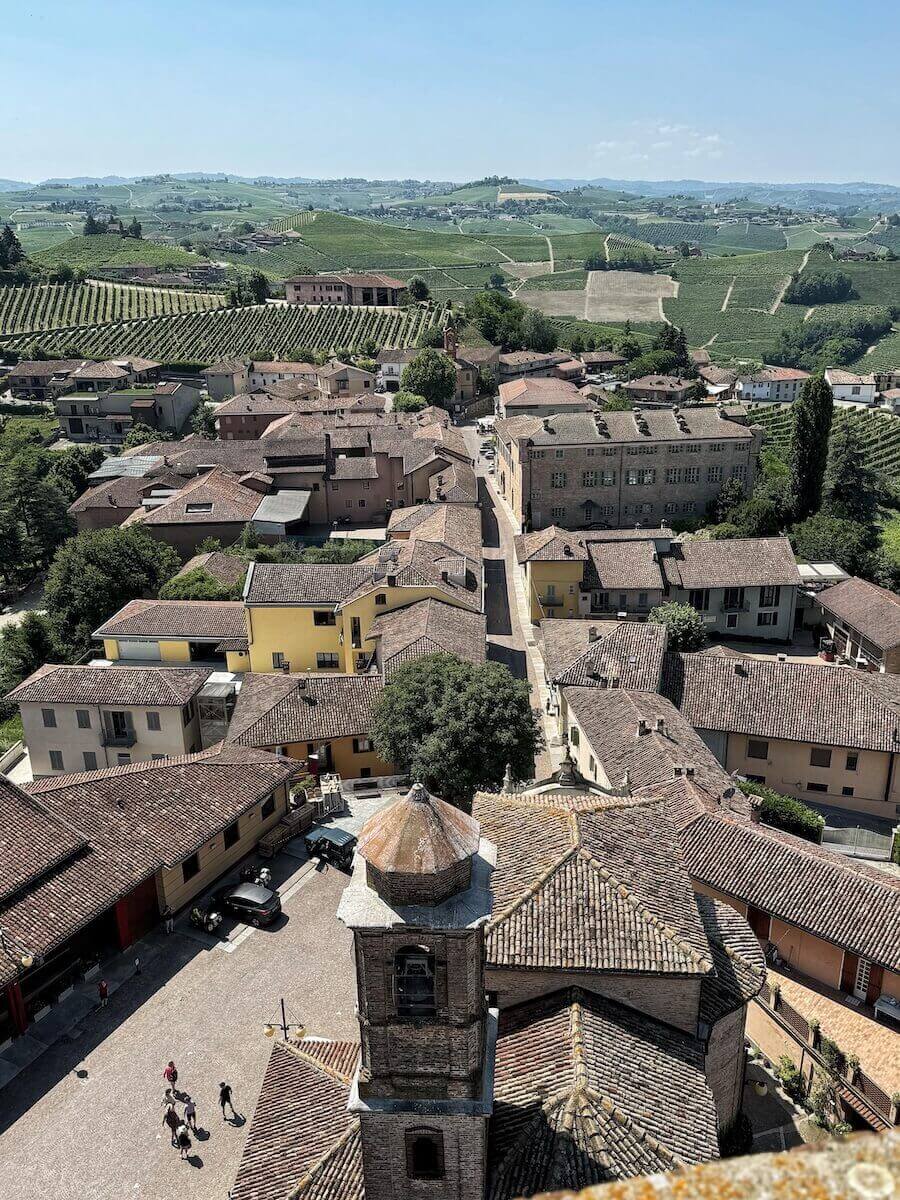
The main attraction in Barbaresco is the Torre di Barbaresco (Barbaresco Tower), a watchtower that dates back to the 11th century. An elevator takes you to the top floor, from where you get a 360-degree view over the Tanaro Valley and surrounding vineyards—on a clear day, you can even spot the Alps.
The village itself is small. There are a few restaurants, wine shops, and cellars offering tastings, much like in the other Langhe villages.
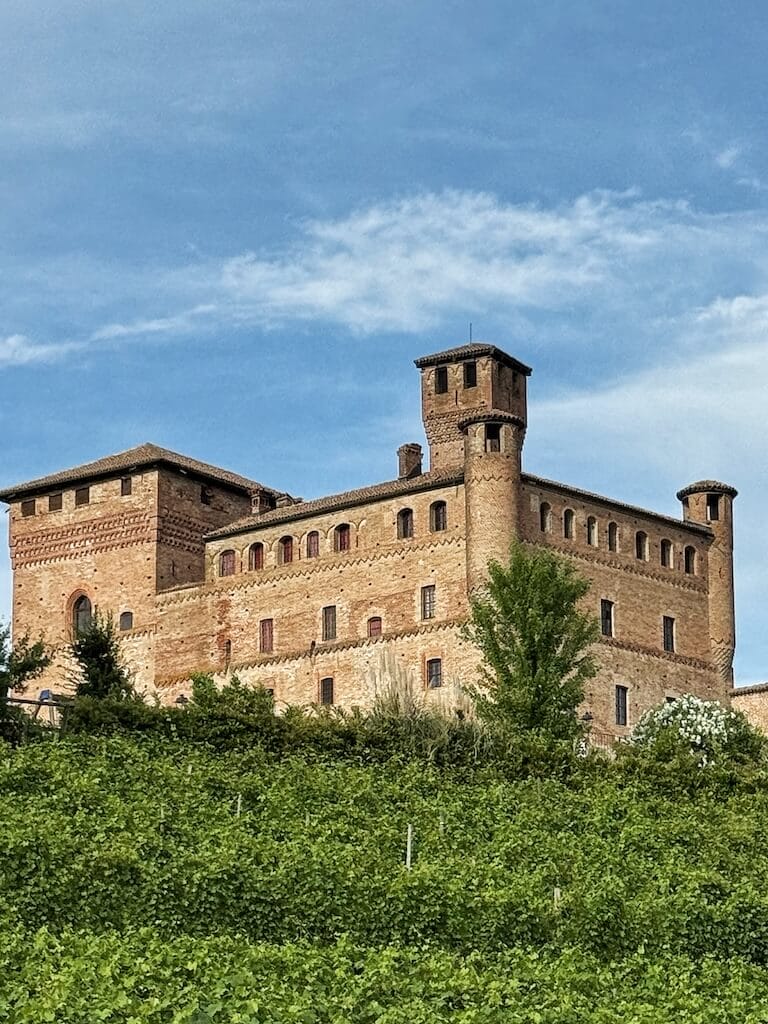
Grinzane Cavour
Grinzane Cavour is one of the smallest villages in the Langhe, and not many foreign tourists ever make it there.
Italians know it as this is where the castle of Camillo Benso, Count of Cavour (one of Italy’s unification architects) is located. Before becoming the first Prime Minister of unified Italy, Camillo Benso served as a mayor in Grinzane Cavour, where he helped modernize local agriculture—including wine production.
The castle itself is one of the oldest and best-preserved in the region, with thick red-brick walls and a hilltop position that overlooks the surrounding vineyards. The views from there are breathtaking.
Inside, you’ll find the Enoteca Regionale Piemontese Cavour, a regional wine shop and tasting space, along with a small museum on winemaking and local traditions.
Each year, the castle hosts the World Alba White Truffle Auction.
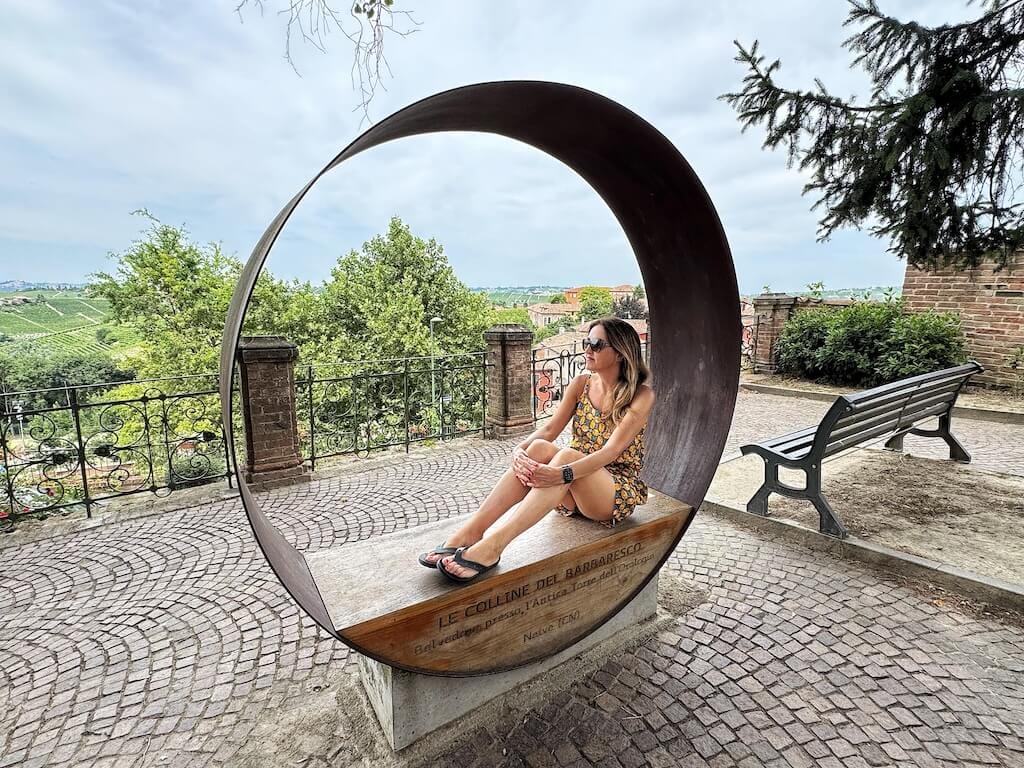
Neive
This village is often mentioned here in Italy for being listed among I Borghi più belli d’Italia (Italy’s most beautiful villages). It really is one of Italy’s hidden gems.
Neive is perched on a hill between Barbaresco and Castiglione delle Lanze, and it’s really tiny. We ended up there as we ate lunch at Umano, one of the best restaurants in the area, and decided to explore a bit.
It’s a truly quaint place. Picture cobblestone alleys, brick houses with faded shutters, and quiet courtyards framed by climbing vines.
Much like the rest of the region, Neive is famous for wine—Barbaresco from the surrounding hills, but also Dolcetto, Barbera, and Moscato from nearby zones. There are plenty of enoteche where you can go wine tasting.
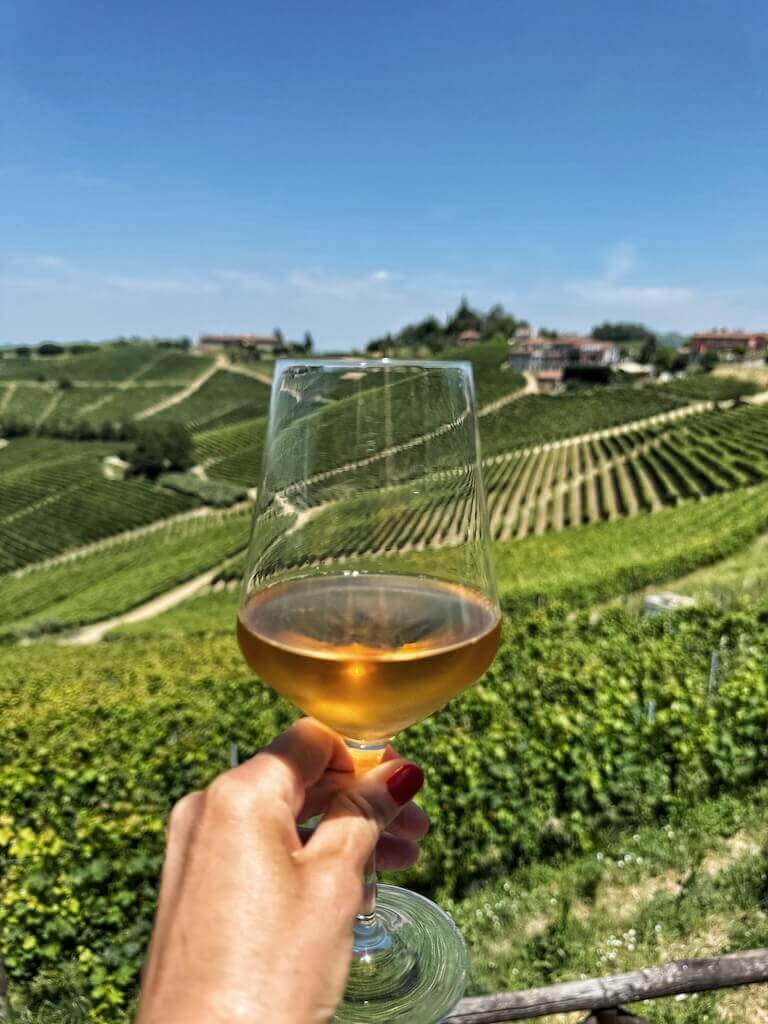
Serralunga d’Alba
Like many other villages of the Langhe, Serralunga d’Alba has its own medieval castle towering over the village. This small town is built on a ridge, with narrow lanes winding uphill.
The main attraction here is the Castello di Serralunga, built in the 14th century, one of the best-preserved examples of noble military architecture in the region. You can tour the inside, where spiral staircases lead to panoramic views over the Barolo vineyards.
The village itself is quiet and compact. There are very few (excellent) restaurants and some wine bars where you can taste the local Nebbiolo wine.
The Langhe aren’t exactly touristy, but Serralunga is even less touristy than the rest!
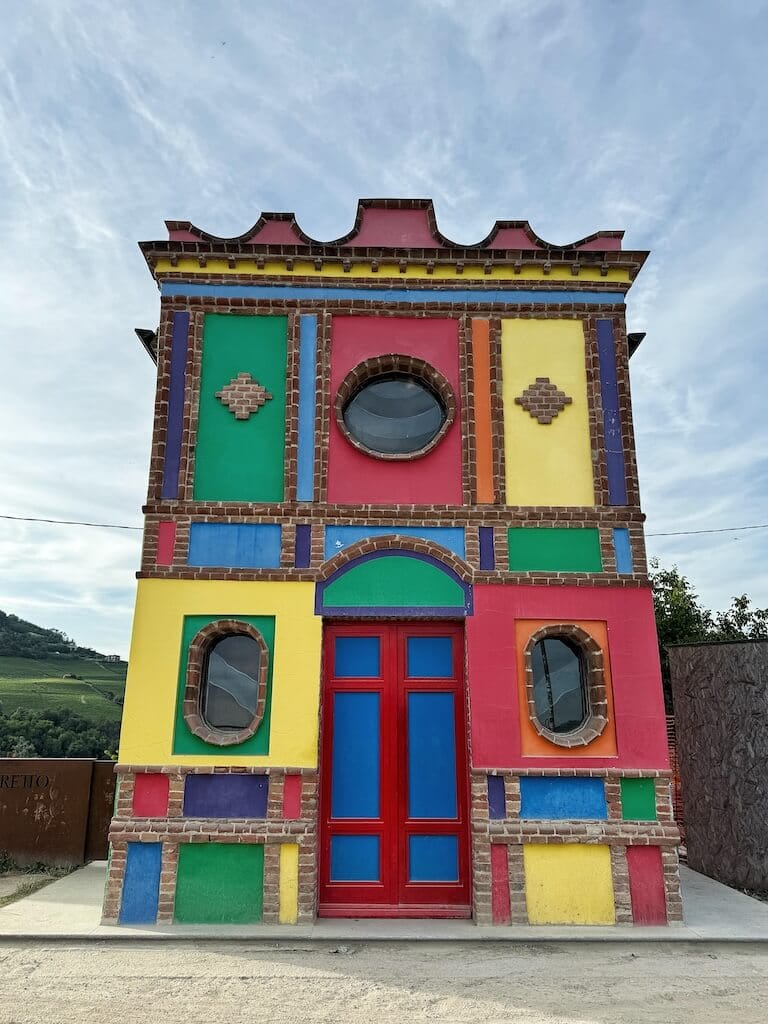
Take a photo at Cappella delle Brunate
The Cappella delle Brunate, also known as the Cappella del Barolo, is one of the most fun places to visit in the Langhe. It’s tucked at 513 meters (1,683 feet) above sea level, in the vineyards near La Morra, where it was first built in 1914 by local vineyard workers.
It was meant to be a shelter against bad weather, and for this reason, it was never consecrated.
The chapel fell into neglect until the Ceretto family purchased it along with their Brunate vineyard in 1970. In 1999, the chapel was completely transformed. The exterior was painted in bold colors and geometric prints. The interior was turned into serene, pastel-toned colors.
It really is a tiny place, but fun to see. When we visited, it was closed – so we had fun taking photos outside. Apparently, it’s undergoing restoration works and it will open again in autumn 2026.
You’ll need a car to get there.
Where To Eat In The Langhe
The wine region of Piedmont is home to some fabulous restaurants, and no matter what your budget is, you will be able to enjoy some great food. Of course, each region in Italy has its traditional food. Specialties you need to try in the Langhe include:
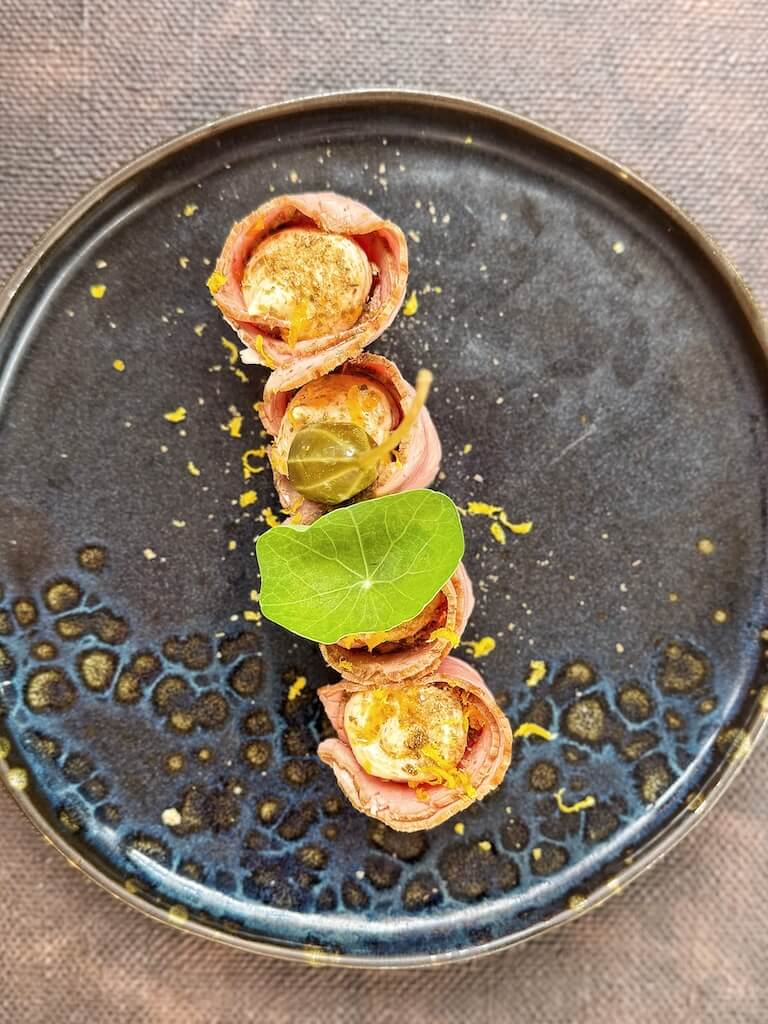
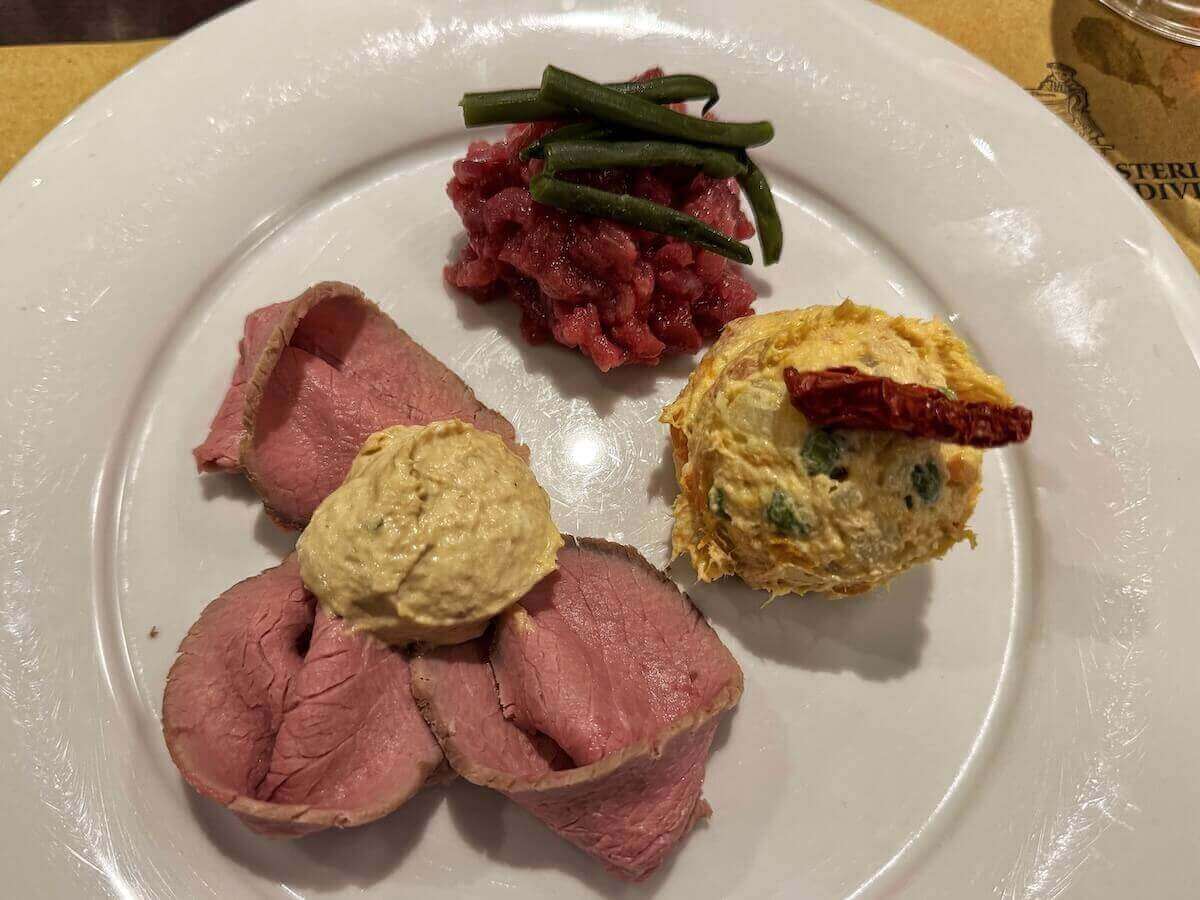
- Vitello tonnato – Thin slices of pink veal served cold with a delicious sauce infused with tuna; it’s quite the perfect appetizer.
- Insalata russa – The famous Russian salad was invented here in Piedmont. It’s made of boiled, chopped vegetables (usually carrots, peas, potatoes), hard-boiled eggs, and a rich mayonnaise sauce.
- Battuta di fassona – Fassona is one of the local varieties of beef. Raw meat is chopped very thinly with a sharp knife. It can be flavored with various condiments.
And here are some of the best restaurants in Langhe Italy that my friend and I tried and loved:
- Umano – Located in Neive, it serves delicious steaks as well as pasta dishes. We had a mouthwatering vitello tonnato here. The chef and owner is a really fun guy.
- Ventuno.1 – In the center of Alba, it has a strong focus on contemporary cuisine with revisited dishes of the local tradition as well as staples from the Campania region.
- Osteria dell’Arco – Probably the most famous restaurant in Alba. It has an immense wine list and lots of dishes of the local tradition. Try the mixed local appetizers, and don’t skip dessert. Their panna cotta is the best I have ever had.
- Casa Mia – A fantastic place in Serralunga d’Alba, perfect for a quick lunch or aperitivo with views of the vineyards. It serves dishes of the local tradition, such as vitello tonnato and battuta di fassona, and has a great selection of local cheeses and charcuterie.
Where To Sleep In The Langhe
When we visited, we opted to sleep in Alba as it’s the largest town in the area, from where it’s easy to move around, and the one with the best accommodation and dining options.
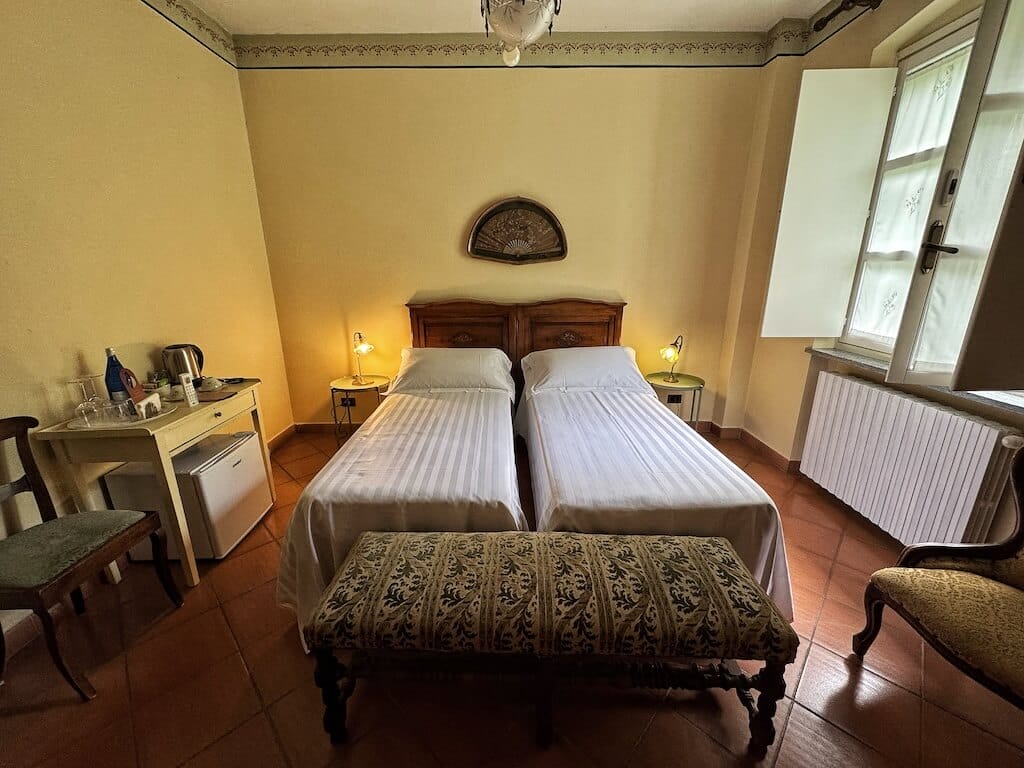
We stayed at Villa La Meridiana Cascina Reinè, and I couldn’t recommend it more. Rooms are spacious, cozy, and comfortable. It’s beautifully immersed in the countryside of Alba, with great views over the vineyards. At the same time, it’s within walking distance to the center of town, where all the restaurants are.
There’s a beautiful garden where you’ll also find a pool to relax at the end of the day. In the morning, you can have a delicious breakfast – in the summer months, you’ll eat on the veranda overlooking the garden.
How To Get Around Le Langhe Italy
To be honest, unless you plan on going on a guided day trip to the Langhe region from Milan or Turin, the only real way to get around the Langhe is by car.
My friend and I had originally planned to take the train from Turin to Alba to then explore the Langhe region by local bus. However, it didn’t take us long to understand that it’d be impossible to properly see the region without a car.
Public buses are few and infrequent, and oftentimes they run at times that are impossible to coordinate with winery opening hours and tours.
You may find the occasional direct bus from Alba to one of the smaller villages, but not between the various villages. For example, if you want to travel from Barolo to Barbaresco, it’s just a 25-minute drive, but it can take more than 3 hours, several changes, and long walks to travel between the two by public transport.
We rented a car via Discover Cars – my favorite comparison site for car rental – and I actually enjoyed driving along the narrow winding roads of the Langhe hills.
Should You Consider A Day Trip To Le Langhe?
The Langhe is one of the best places to visit in Italy, and you should try to spend at least a few days there.
If you are really short on time and still want to visit Le Langhe during your trip to Italy, you can consider visiting on a day trip from Milan or Turin. For such a day trip, you will be significantly better off driving or simply joining a guided tour that takes care of all the logistics.
If you are in Turin, there’s this full-day trip that includes wine tasting, lunch and transportation from your hotel. It’s perfect for couples as it stops at several romantic viewpoints in the region.
I recommend this day trip to the Langhe from Milan. It explores Alba, the main town in the Langhe, and includes a wine tasting experience. The tour doesn’t include pick up from your hotel in Milan, but it stops at various convenient locations in the city.
FAQs on Le Langhe, Italy
The Langhe is located in the south of Piedmont. It’s a hilly area found south and east of the Tanaro River. It’s one of the most important wine regions of Italy.
The phonetic for the word “Langhe” is /ˈlan.ɡe/. Many simplify it in English as “Lahn-geh”.
The key to pronouncing it correctly is making sure the ‘g’ has a hard sound, as in “go” and the ‘h’ is silent. Then, the final ‘e’ is pronounced like the ‘e’ in “bet”.
Actually, it’s the other way around. Barolo is a small town famous for its wine that’s located in the Langhe of Piedmont.
There are many lovely towns in Piedmont, but my personal favorite is Barolo. This tiny town, nestled in the Langhe wine region, is entirely surrounded by rolling vineyards, it is home to historic wine cellars, and to an 11th-century castle that houses the Wine Museum, and from whose terrace you can appreciate incredible views of the surrounding landscape.
Final Considerations
If you are looking for a wine region in Italy that’s less visited compared to the famous Val d’Orcia in Tuscany, you should definitely consider a trip to the Langhe of Piedmont. Exploring small towns like Barolo or Alba, you won’t feel like you are missing out on the charm of its famous Tuscan counterparts like Pienza.
With all the things to do in Langhe, you will be busy for days. Make sure to plan at least 3 days in this lovely region, you won’t regret it.
If you have more questions about exploring the Langhe, let me know in the comments below.
Recommended Readings
PIN IT!


Claudia Tavani
Claudia Tavani was born and raised in Sardinia, and after moving between the United States and the United Kingdom, she's now back living in her hometown, Cagliari. She's a travel blogger and certified travel designer who loves planning trips and publishing guides, travel tips, and packing lists so that you don't have to. Owner of Strictly Italy, cat mom to Minnie. Loves pizza, hiking, archeology, cities, beaches, swimming, and running. Hates peppers.