
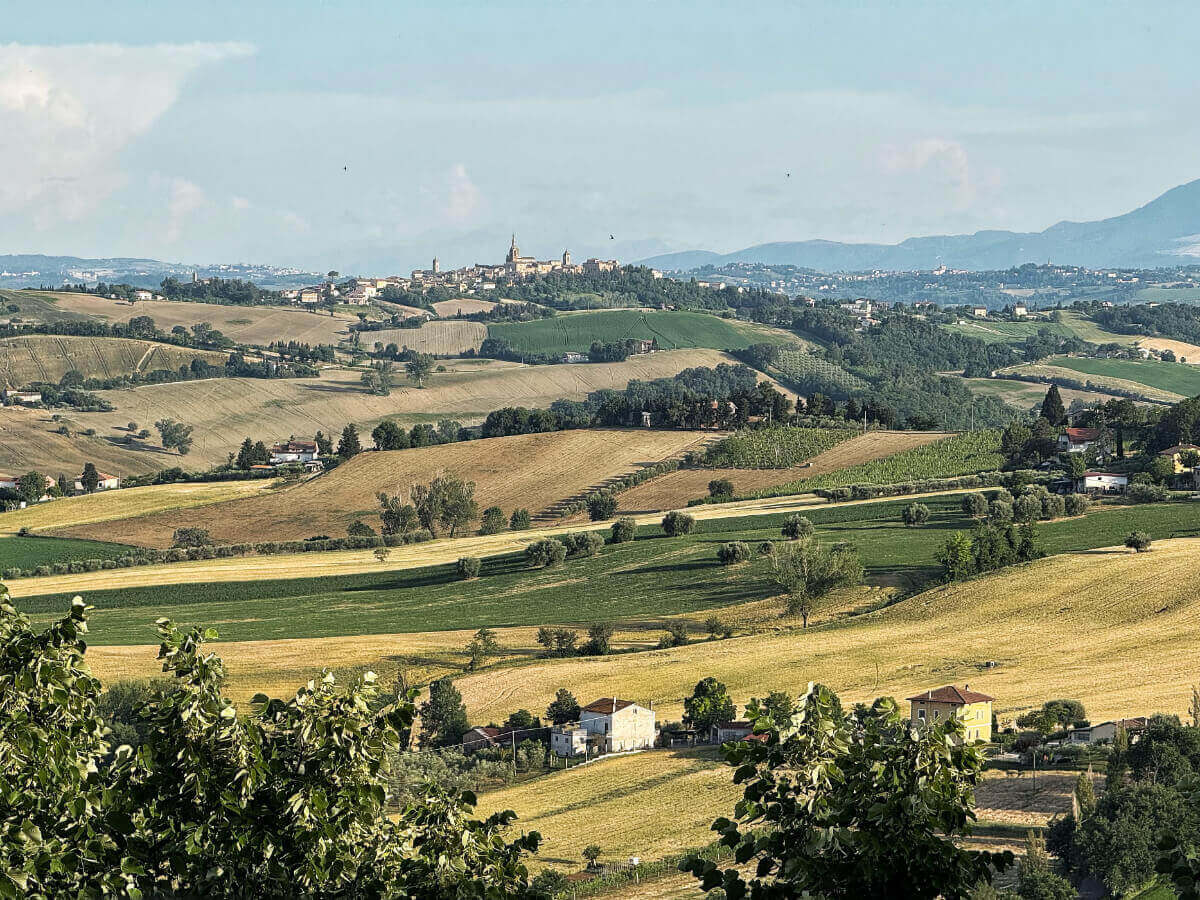
Marche is one of Italy’s lesser-known regions and, consequently, it attracts fewer tourists despite its history and beauty. So, if you’re looking for off-the-beaten-path itineraries, quiet villages, and small medieval gems to discover, Northern Marche is an ideal destination.
Overlooking the Adriatic Sea, the region boasts nearly 200 kilometers of coastline that ranges from fine white sand beaches (some are among the most beautiful beaches in Italy) with trendy beach clubs, to wild stretches with coarser sand, all the way to limestone cliffs plunging into the sea. On the other side, there are the Apennine Mountains.
Between mountains, sea, ancient villages, National Parks, and a unique food and wine culture featuring excellent vineyards and wineries, there are truly countless things to do in the Marche region.
I recently spent five days exploring northern Marche with my sister, but there is still so much more I’d like to see. On my next trip (because there are always good reasons to explore more of Italy), I plan to visit Pesaro, the birthplace of composer Gioachino Rossini; Ancona, the regional capital; and Fabriano, famous for its centuries-old papermaking tradition and museum.
If you are planning a trip to Italy and have the time, I recommend setting aside at least a week to explore the region more thoroughly.
The itinerary below follows the exact route my sister and I took during our recent road trip. Every destination, restaurant, hotel, winery, and attraction mentioned is somewhere we personally visited or experienced.
Rather than offering a list of possibilities, I’m sharing the Northern Marke itinerary exactly as we followed it, so you can recreate the same journey if it appeals to you. You will find advice on where to stay and my personal tips to make the most of it.
Planning Your Northern Marche Italy Trip
For this itinerary, my sister and I flew into Rimini, just across the border in Emilia-Romagna.
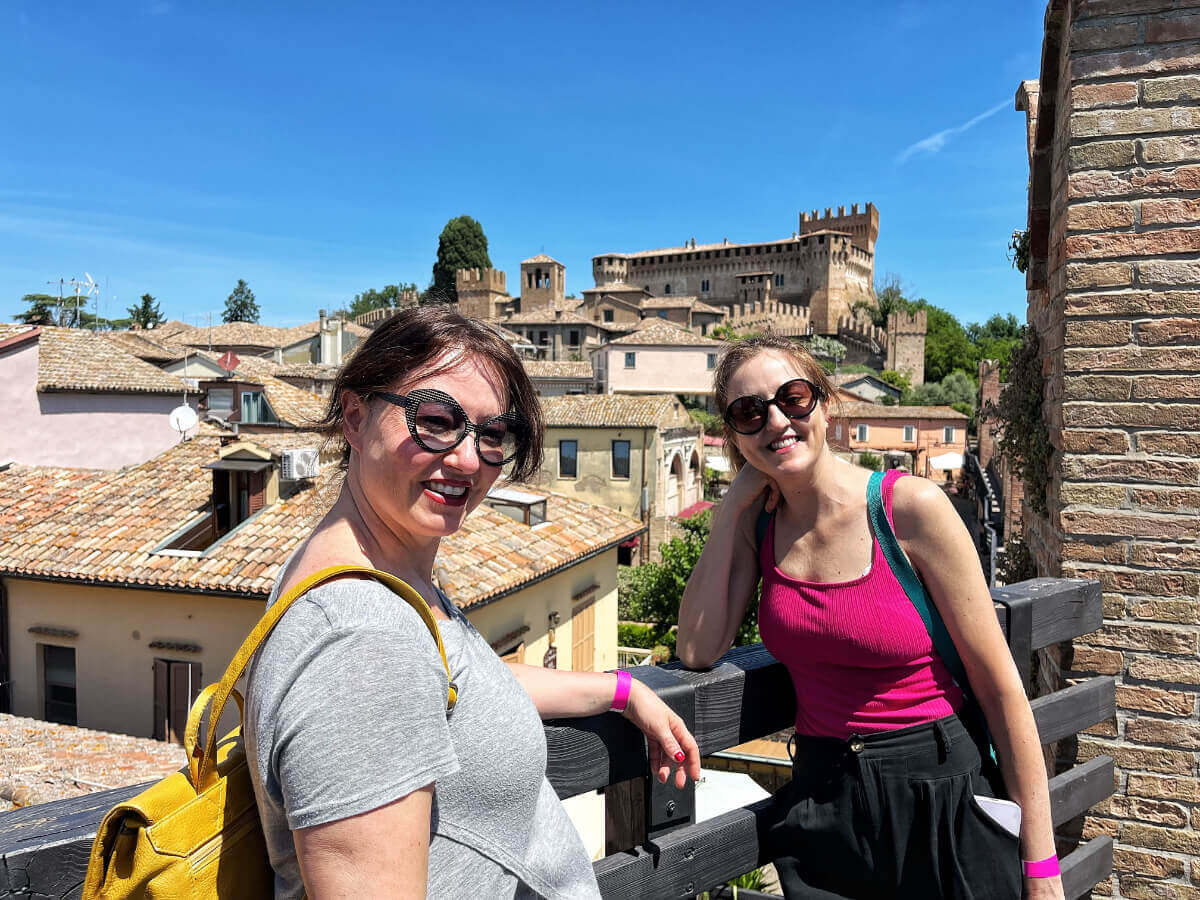
Our flight landed at around 7:00 pm, so we drove directly to Gradara, had dinner, and spent the night there. The following morning, we began exploring the village and the castle before continuing to Monte San Bartolo.
If you’re arriving earlier in the day, you could start sightseeing as soon as you arrive. However, I found that spending the first night in Gradara made for a much more relaxed start to the road trip and allowed us to enjoy the village before it became busy the next morning.
This itinerary follows the exact route we took over five days and is designed to minimize driving while allowing plenty of time to enjoy each destination.
Marche Trip Logistics
Before diving into the itinerary, here are a few practical details to help you plan your trip. These are based on the route my sister and I followed during our five-day road trip through Northern Marche.
- Duration: 5 days / 5 nights
- Start: Gradara
- End: Urbino
- Nearest airports: Rimini Federico Fellini Airport (our arrival airport) or Ancona Falconara Airport.
- Getting around: Rental car
- Driving: Easy, with reasonable distances between destinations
- Best for: Historic villages, Renaissance cities, nature, hiking, and food and wine
Northern Marche Itinerary Map
Use the map below to see where each stop on this Northern Marche Italy itinerary is located. You’ll notice the route gradually heads south through the region, combining medieval villages, natural attractions, wineries, and one of Italy’s finest Renaissance cities.
Northern Marche Itinerary: A 5-Day Road Trip
Day 1 – Gradara and Parco San Bartolo
Gradara
Practical guide
- Time needed: Allow 2–3 hours to visit the castle, walk the ramparts, and explore the village.
- Parking: Paid parking is available just outside the medieval walls. From there, it’s a short walk to the historic center.
- Tickets: The combined castle and ramparts ticket offers the best value.
- Accessibility: Expect cobbled streets and some steep sections. Wear comfortable shoes.
- Best time to visit: Early morning or late afternoon, especially in summer.
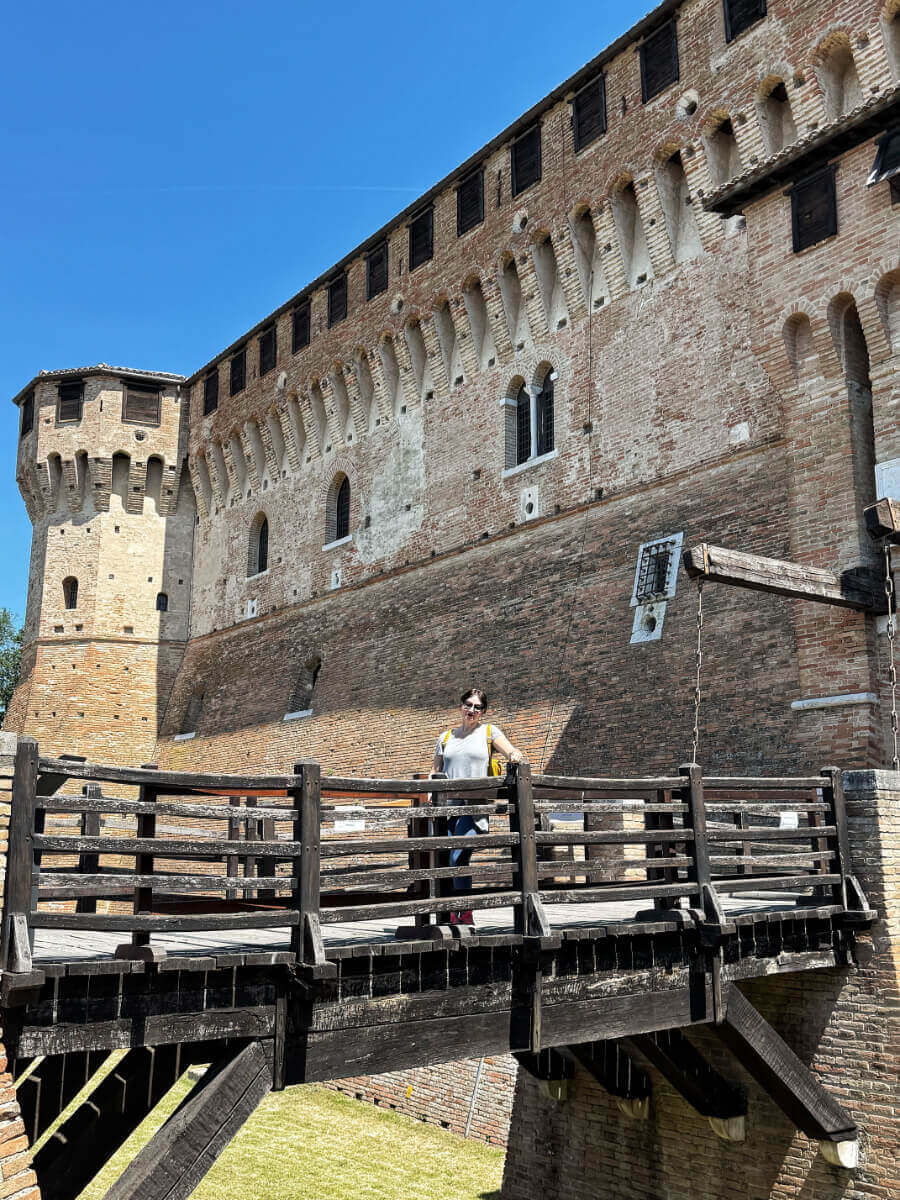
The first stop of our Northern Marche itinerary was Gradara. Immediately after breakfast at our hotel, we headed out to explore the castle and the lovely medieval town.
Amor, ch’a nullo amato amar perdona,
mi prese del costui piacer sì forte,
che, come vedi, ancor non m’abbandona.Amor condusse noi ad una morte.
Love, which no beloved one ever frees from loving, seized me,
and yet is not dispelled in Hell, as you and every spirit sees.
Love led us to one death, conjointly felled.
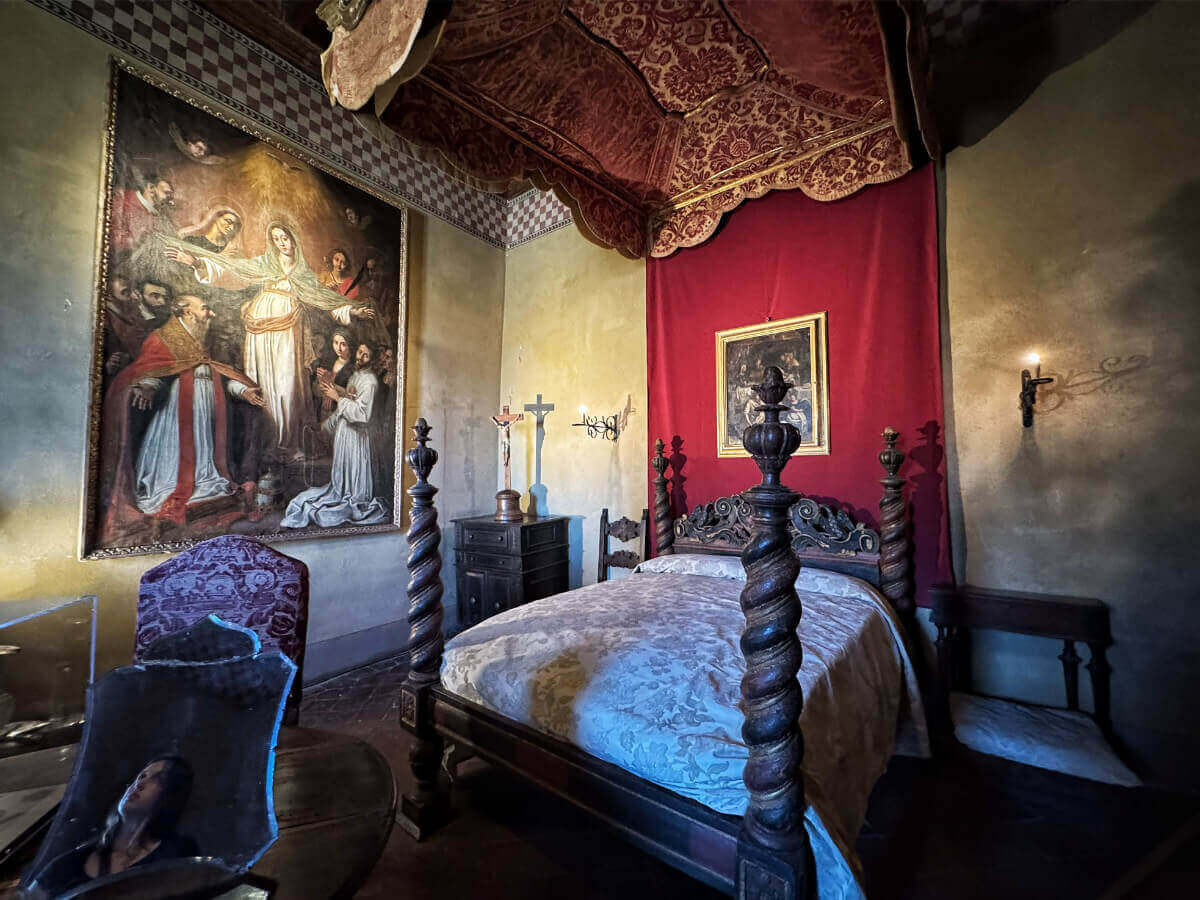
These are the famous words of the great Italian poet Dante Alighieri in Canto V of Inferno (The Divine Comedy), which describe the love between Paolo and Francesca. In fact, Paolo and Francesca actually existed, and it is said that their love story unfolded against the backdrop of the beautiful Castle of Gradara.
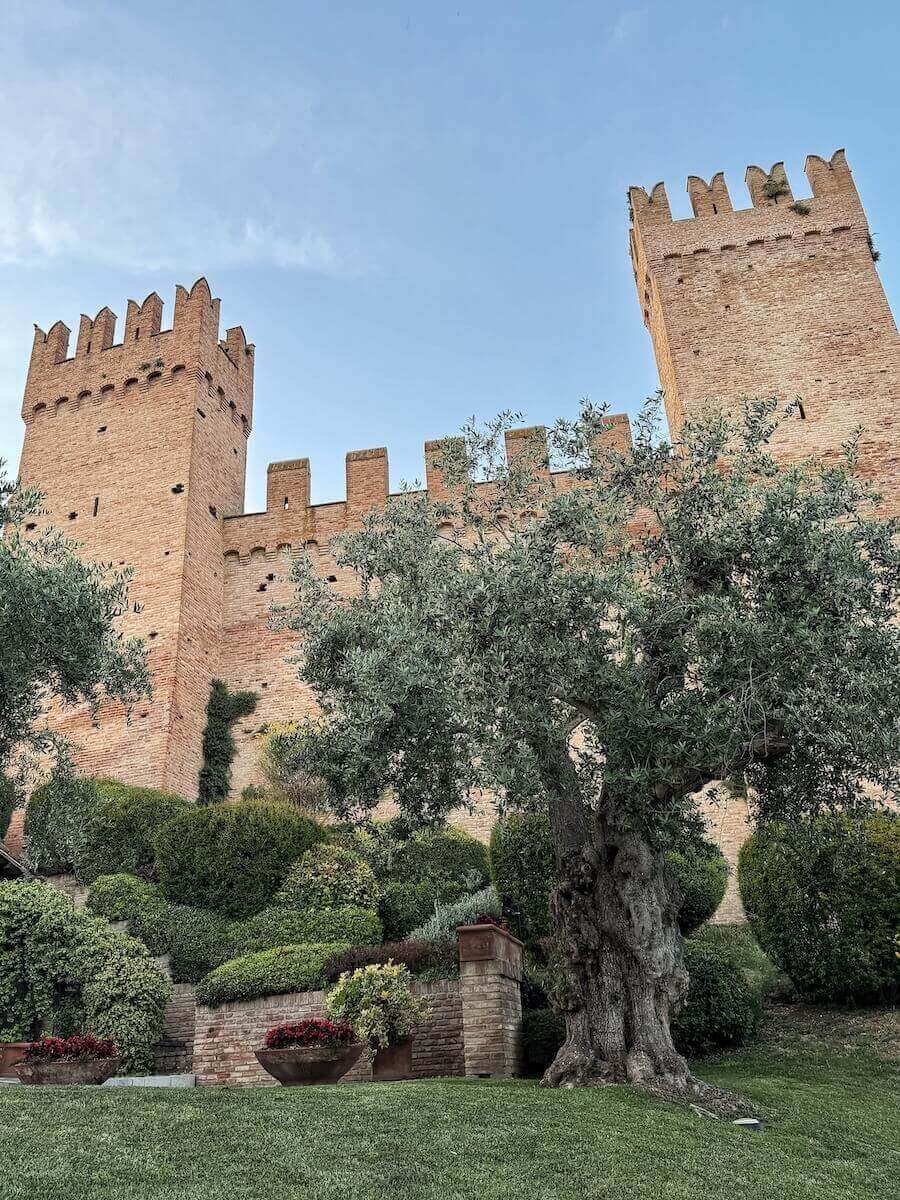
Gradara is one of the highlights of northern Marche, thanks to its remarkably preserved medieval village, impressive castle, and rich history.
Start your exploration at the Castle. Over the centuries, Gradara’s Castle has passed through the hands of different families: Malatesta, Sforza, and Della Rovere. Lucrezia Borgia also lived here for a few years.
I suggest joining a guided tour of the castle to learn about its history, the families who lived there, and some interesting anecdotes.
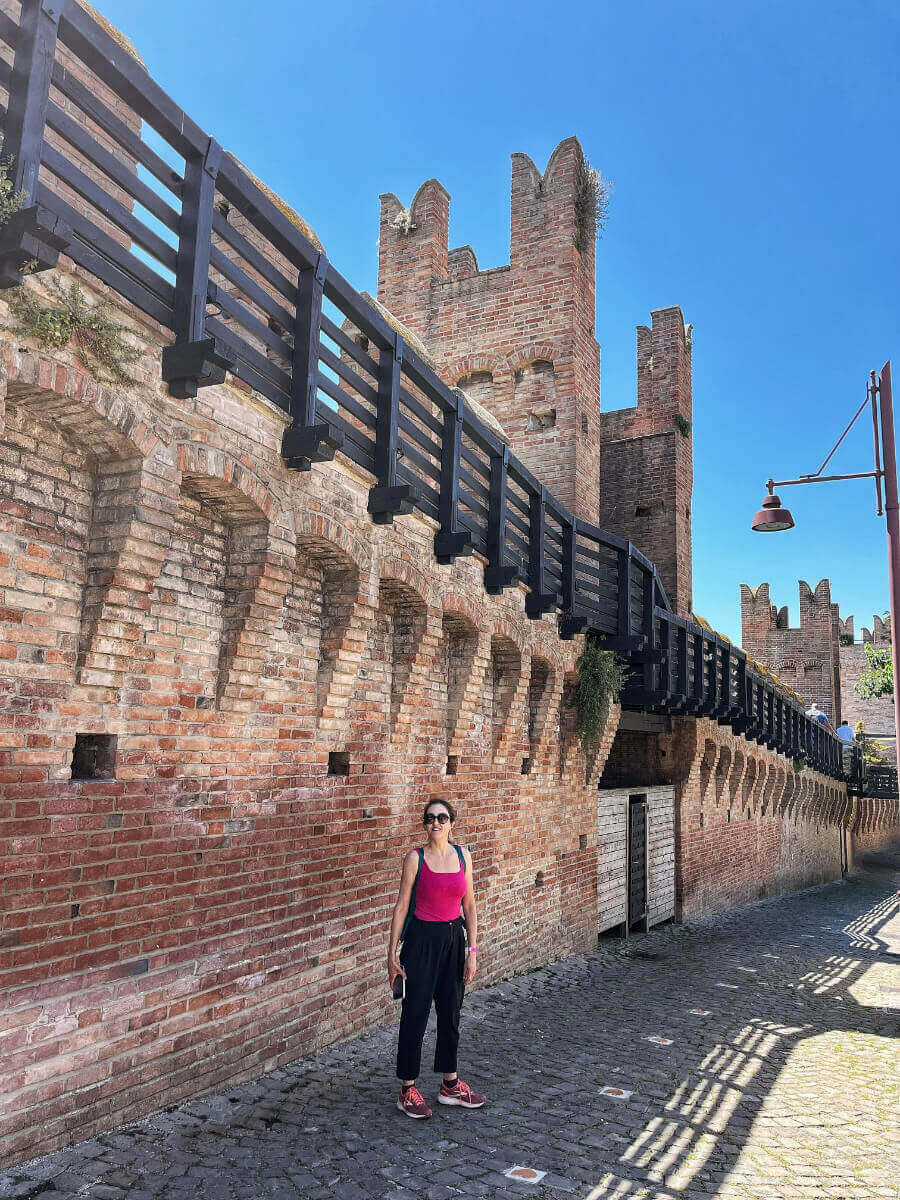
Good to know: The tour lasts about one hour, and you can buy tickets online via the official website. Alternatively, you can buy tickets directly on-site at the Information and Ticket Office in Viale Mancini 19. I recommend purchasing the Rocca and Ramparts Walk combo ticket, which gives you access to both the Castle and the ramparts surrounding the fortress. The view of the castle, the village, the valley, and the coast is breathtaking.
After visiting the castle and walking along the ramparts, continue exploring Gradara with a stroll through the streets of the perfectly preserved medieval village. Visit the Historical Museum and the Church of St. John the Baptist, and in Via dei Cappuccini, rest in the shade of the centuries-old olive trees that surround the stone amphitheatre.
This guided tour of Gradara includes various stops around the village, and takes you to the outer areas of the Castle (you can then purchase tickets at the door if you wish).
Parco San Bartolo
Practical guide
- Driving time: Around 20 minutes from Gradara to Fiorenzuola di Focara.
- Time needed: Allow 2–4 hours, depending on whether you hike, visit the village, spend time at the beach, or all of the above.
- Parking: Paid parking is available in Fiorenzuola di Focara, a short walk from the trailhead.
- What to bring: Wear comfortable shoes and carry plenty of water. In the summer, pack a swimsuit and a towel if you plan to stop at the beach.
- Best time to visit: Spring and autumn are ideal for hiking, while summer is perfect if you want to combine the trails with a swim.
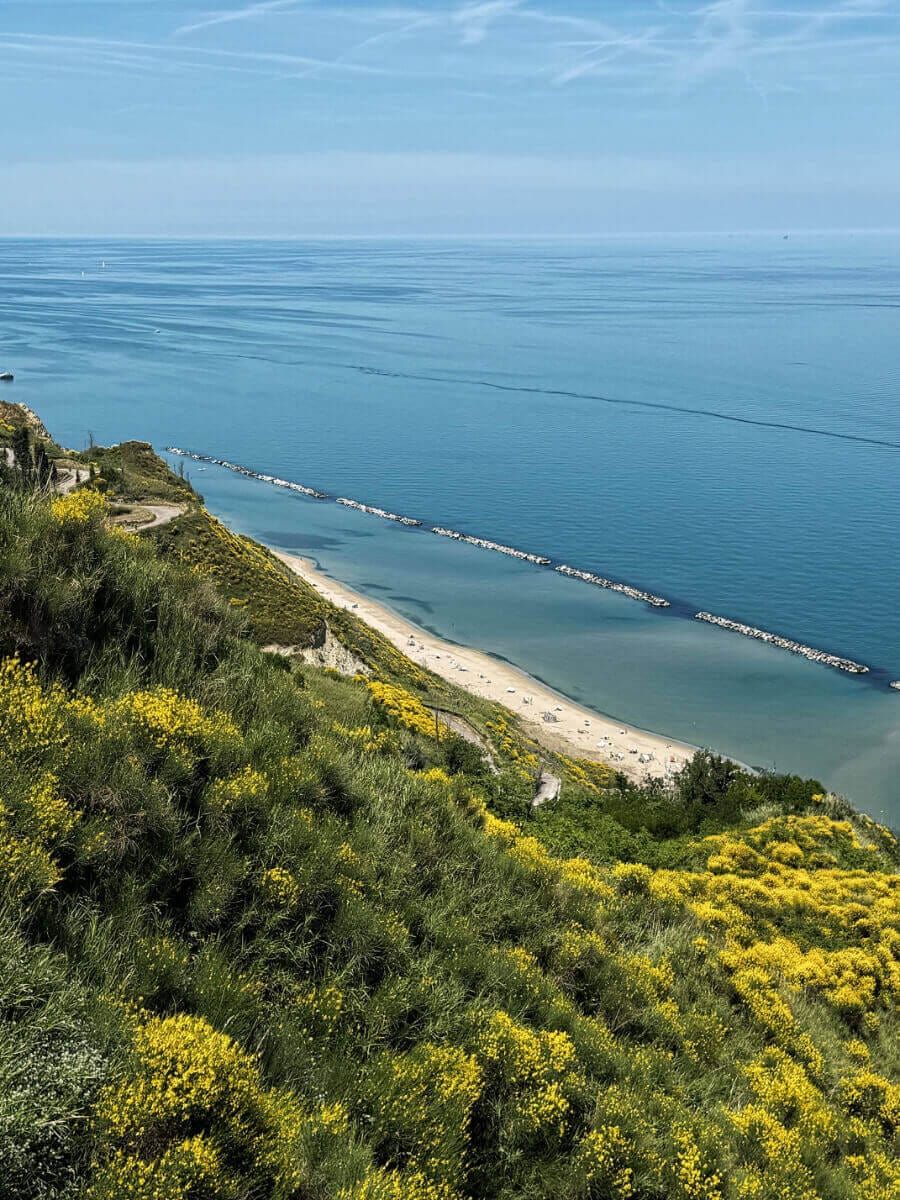
Monte San Bartolo Natural Park is a protected area located on one of the most picturesque stretches of the Adriatic coast: a promontory overlooking the sea. The landscape here is breathtaking.
The nature reserve is home to roe deer, foxes, badgers, ospreys, and cormorants, just to name a few. There are several well-marked trails, with different lengths: from 2 km to more than 8 km, which lead to fantastic views, unspoiled nooks, Renaissance and 18th-century villas, and beaches.
You could consider this guided hike of Monte San Bartolo that lasts 3 hours and allows you to better appreciate the unique environment and landscape of the area.
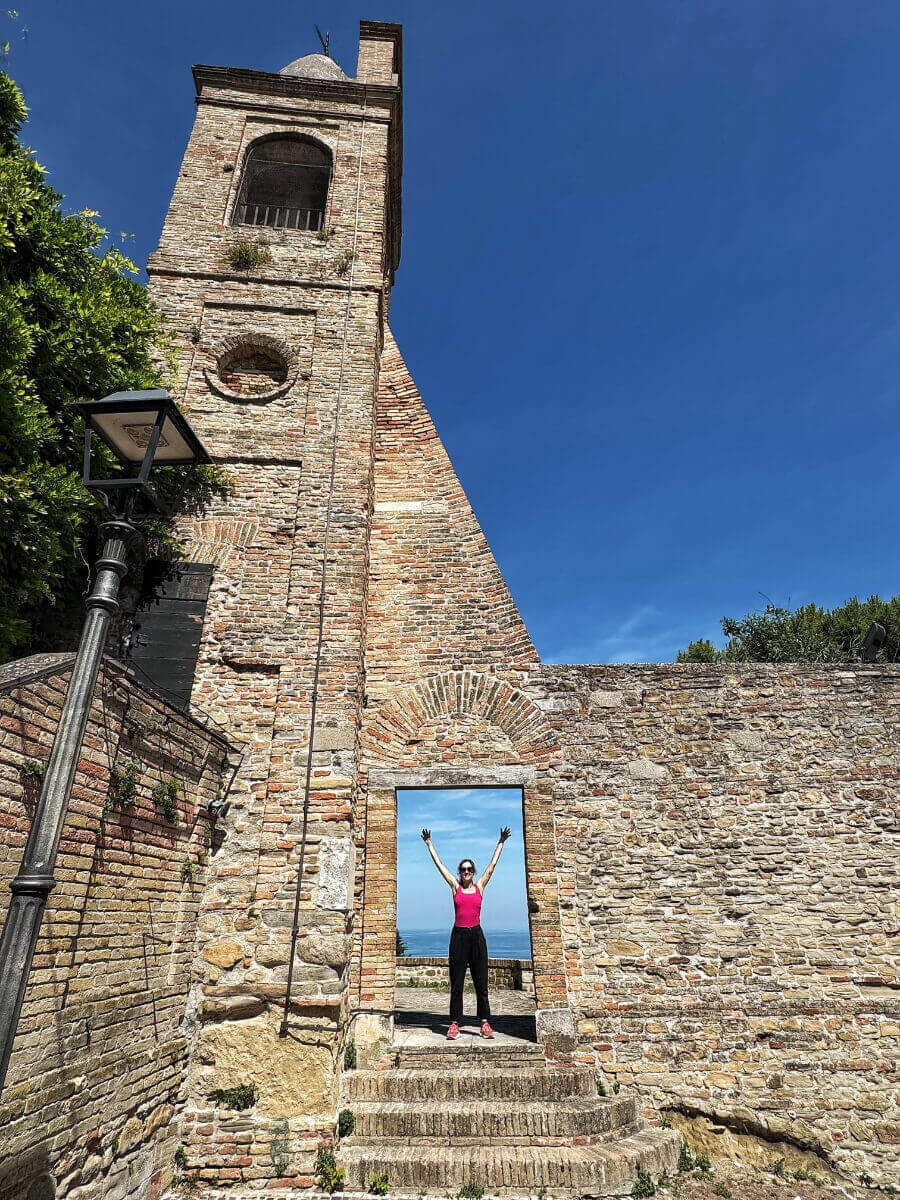
There are several trails in the park, but no actual gated entrance (which we found a bit confusing). When we asked some locals, they told us we were already driving in the regional park, so we decided to park the car and just go for a walk. We were close to Fiorenzuola di Focara, so we parked there.
The village of Fiorenzuola di Focara is an excellent starting point for hiking. We walked the trail, partly under the trees (where we stopped for a picnic) and partly along a paved road (closed to vehicles), to reach the Fiorenzuola di Focara beach.
It was very hot on the day we visited, at the very end of May, and we both wished we had brought our swimsuits for swimming at the beach, which was pretty, packed with locals enjoying a relaxing day in the sun. Instead, we just enjoyed a walk along the beach before walking back up to Fiorenzuola.
Make sure to also explore Fiorenzuola di Focara. It’s not very big and the visit doesn’t take long, but the view is breathtaking. If you have time, continue on to the village of Casteldimezzo, which has beautiful ramparts.
From there, we drove back to Gradara for our second night in Northern Marche.
Where to eat in Gradara
There is a wide variety of bars and restaurants in Gradara. These are the ones we tried and loved:
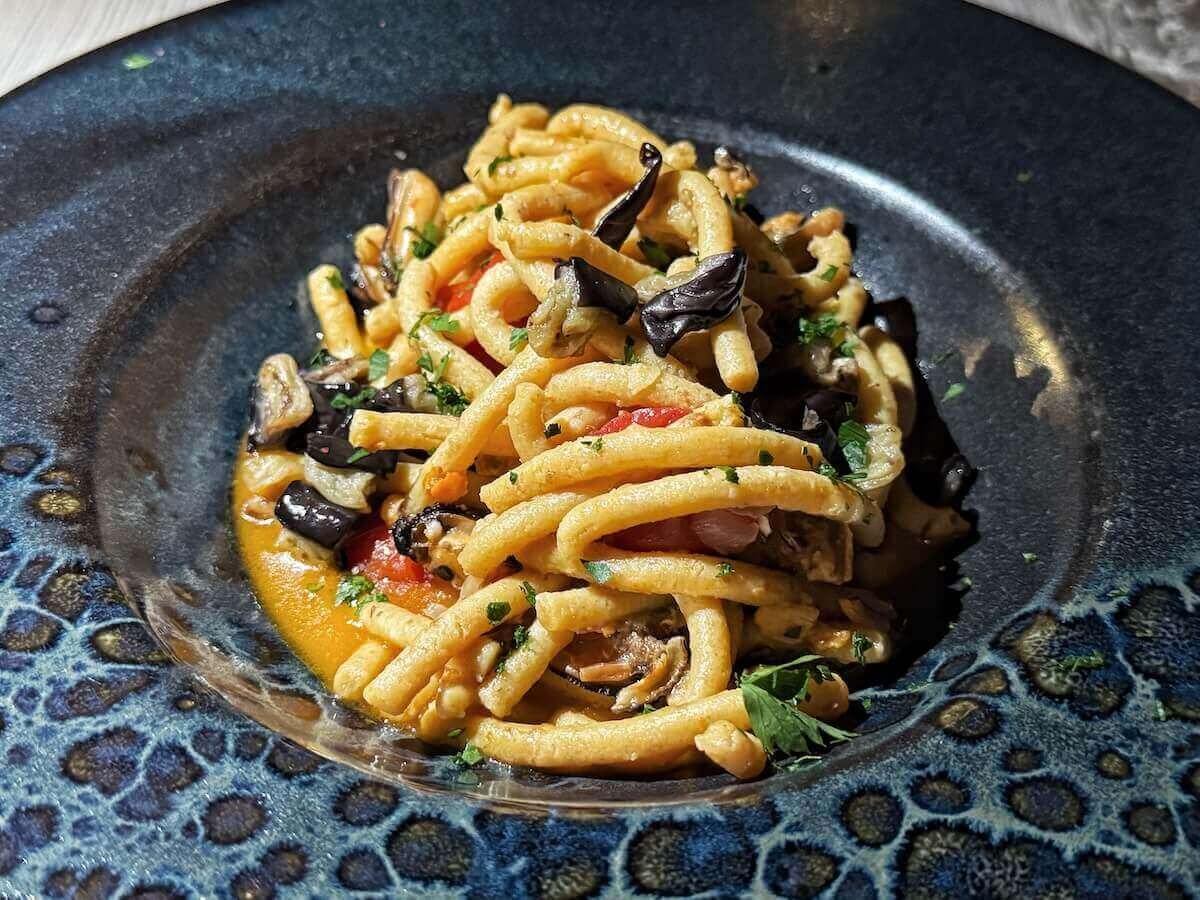
Locanda Quinto Canto – Named after the canto in “The Divine Comedy” about Paolo and Francesca. It’s located within the village walls and has a beautiful terrace overlooking the castle. The service is outstanding: the staff really pamper you in every way, and the food is excellent. We tried the seafood passatelli, a typical kind of pasta, and the wagyu beef tagliata-
Cibovagando – Great place if you want a more casual atmosphere. Located on the main street, the menu features both quick bites like piadina wraps, as well as homemade pasta and excellent grilled meat.
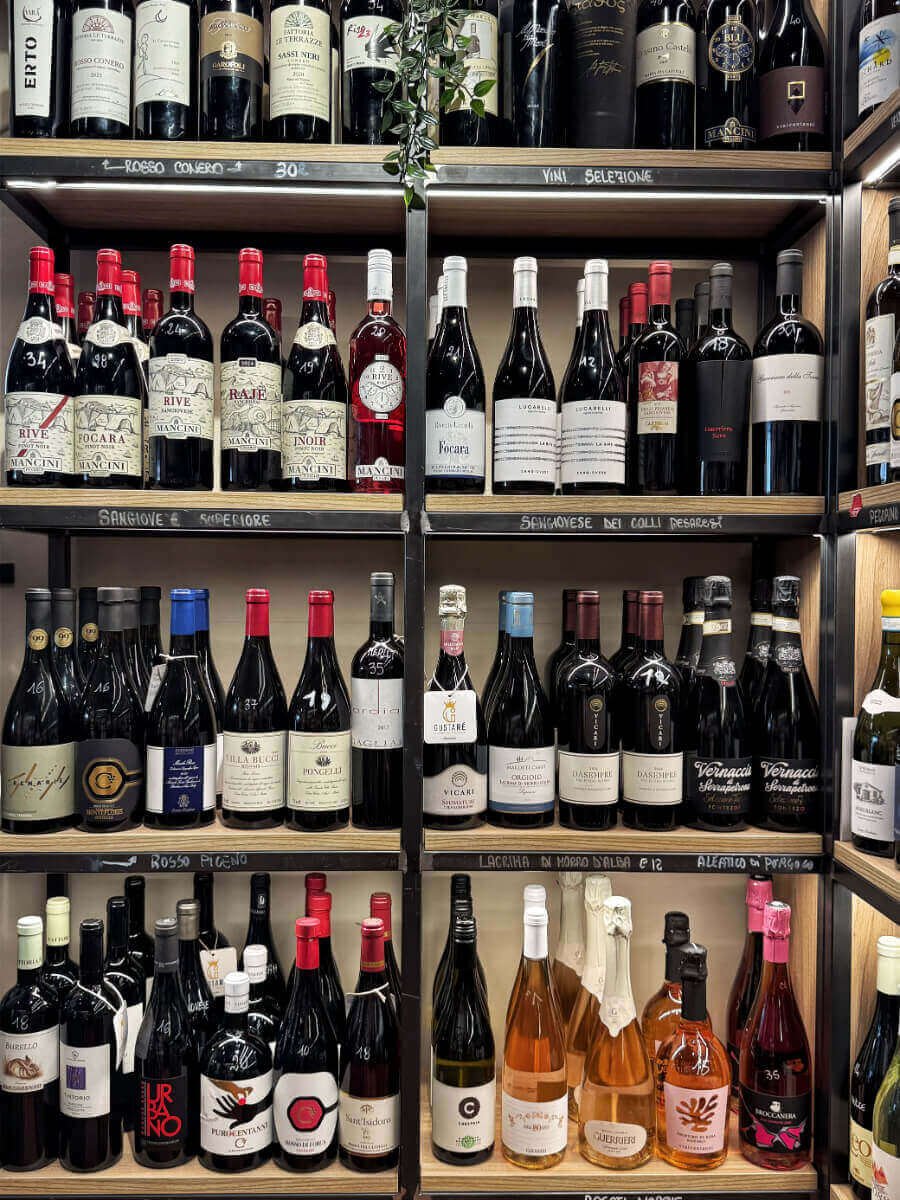
GustaRé Alimentari Gourmet – That’s where I purchased a crispy focaccia stuffed with mortadella, pesto, and stracciatella cheese for my picnic in Parco San Bartolo. Inside the deli, you’ll find different kinds of cheeses, cured meats, wines, liqueurs, and various local desserts.
Dishes you should try while in Gradara include:
- Amorosa, Gradara’s traditional sweet – In the classic version, it has a pink shortcrust pastry, an apricot filling, and a tasty layer of meringue topped with toasted nuts.
- Tagliolini con la Bomba, or Bomb Tagliolini in English: a simple, rustic pasta dish made with humble ingredients (oil, onion, and lard). The name comes from the method of preparation and has absolutely nothing to do with wars or battles.
Good to know: On the main street, Via Umberto I, and in Piazza V Novembre, there are other restaurants and shops where you can either sit down or take away. In Cattolica, in neighboring Romagna, you will find an even wider selection of restaurants. We ate dinner there one night as we wanted to eat by the sea and have sunset views.
Where to sleep in Gradara
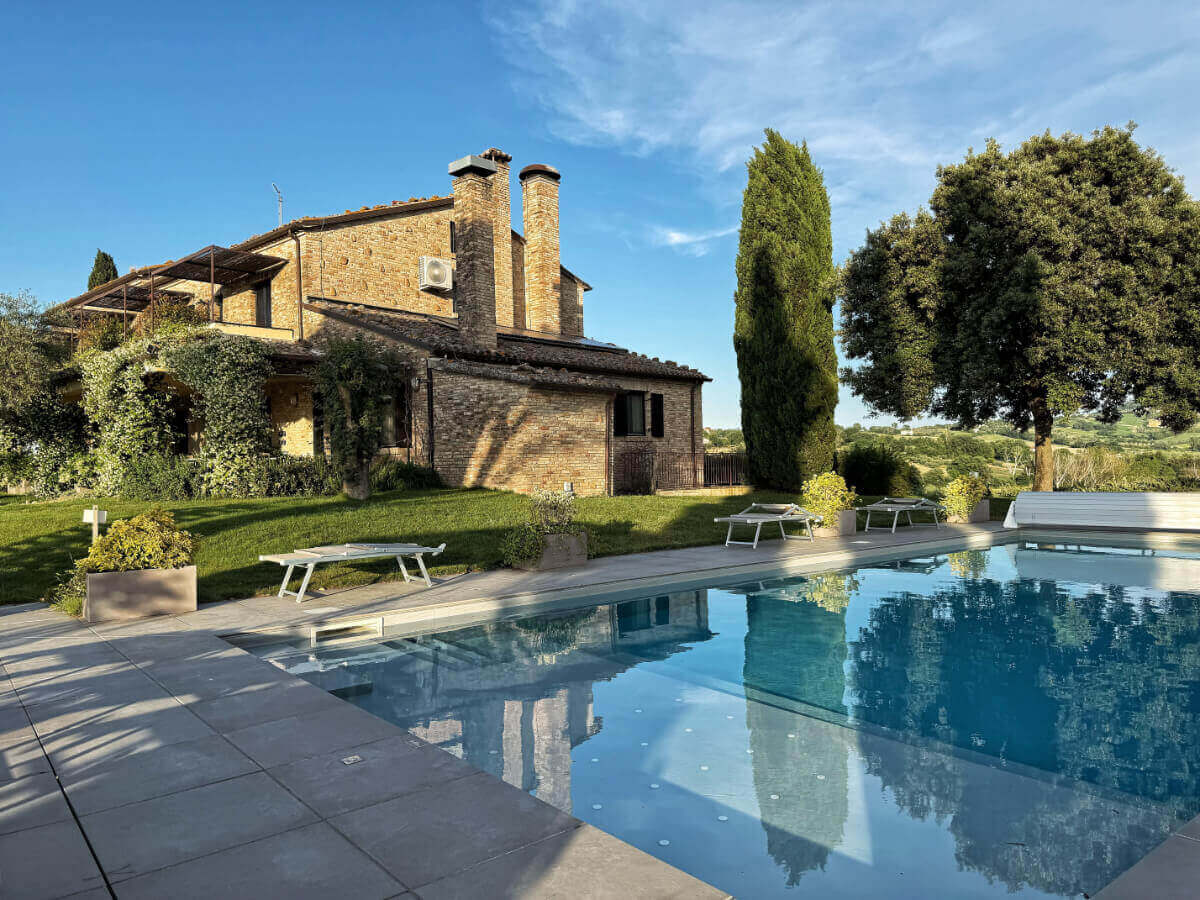
We decided to sleep outside the village, in the countryside, at B&B Serra Country House. I truly loved their open spaces: a big and beautiful garden, the swimming pool, and the stunning view. We had a comfortable, spacious room with a balcony.
It’s a fairly large property that is working to become an agriturismo: Conventino is the main structure where you will find the parking lot, reception, breakfast room, spa, swimming pool, and bar. The other two buildings, La Loggia Relais and Emporio, are not far (less than 200 meters away) and reachable only on foot.
Day 2 – Mondolfo, wine tasting, Corinaldo
Mondolfo
Practical guide
- Driving time from Gradara: Around 40 minutes.
- Time needed: Allow 1.5–2 hours at most to explore the historic center and visit the main sights.
- Parking: Free parking is available just outside the medieval walls, a short walk from the historic center.
- Accessibility: Expect cobbled streets and a few uphill sections. Wear comfortable shoes.
- Good to know: Even during our visit, we only came across a handful of other tourists. Mondolfo still feels wonderfully local and largely undiscovered.
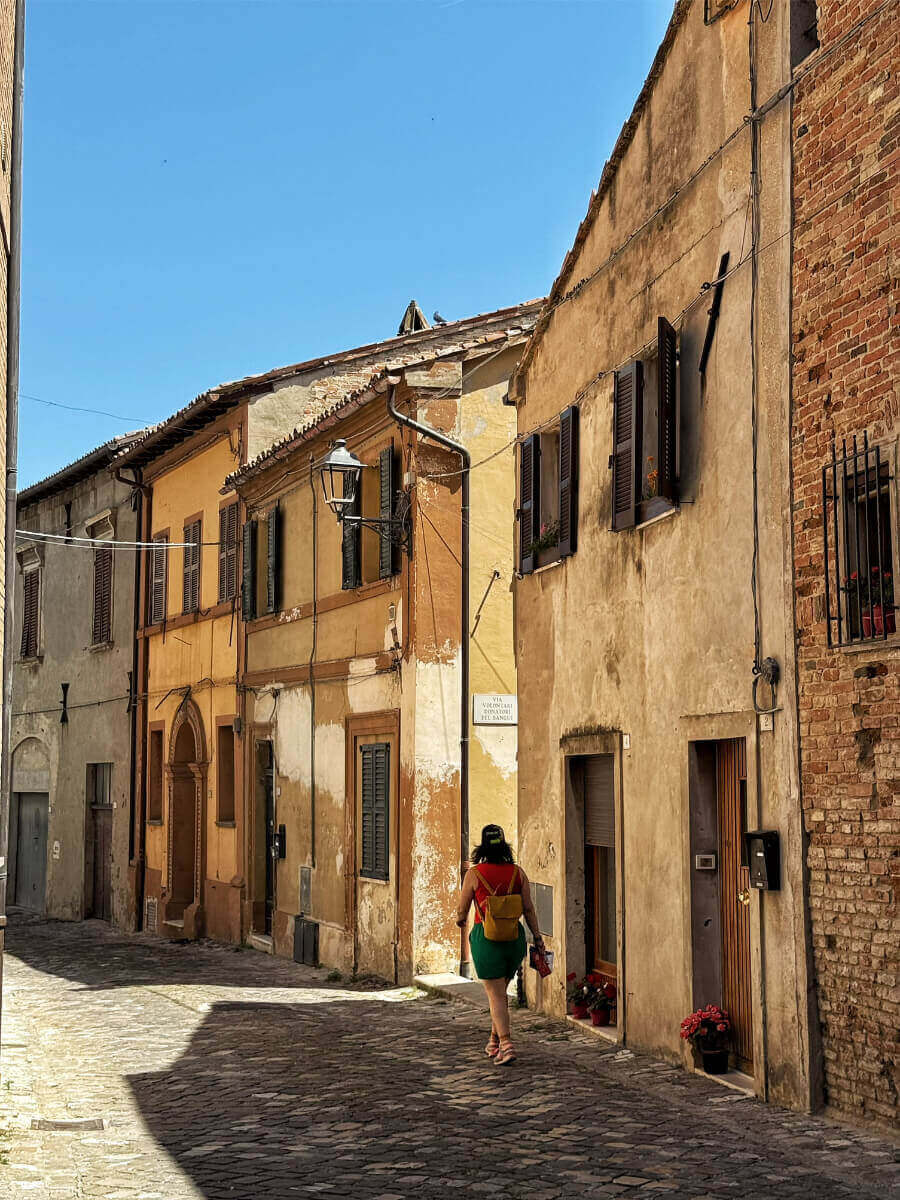
On the second day, we visited Mondolfo, one of Italy’s most beautiful small towns, just a short distance from the Adriatic Sea.
Our first stop was the Sant’Agostino Mondolfo Monumental Complex: within the courtyard, there are Sant’Agostino Church, with its frescoes and barrel vaults, and the town’s Civic Museum, which tells the story of the town. The clock from 1858 is still working. On the first floor, there’s an exhibition of accordions, while the top floor hosts temporary exhibitions.
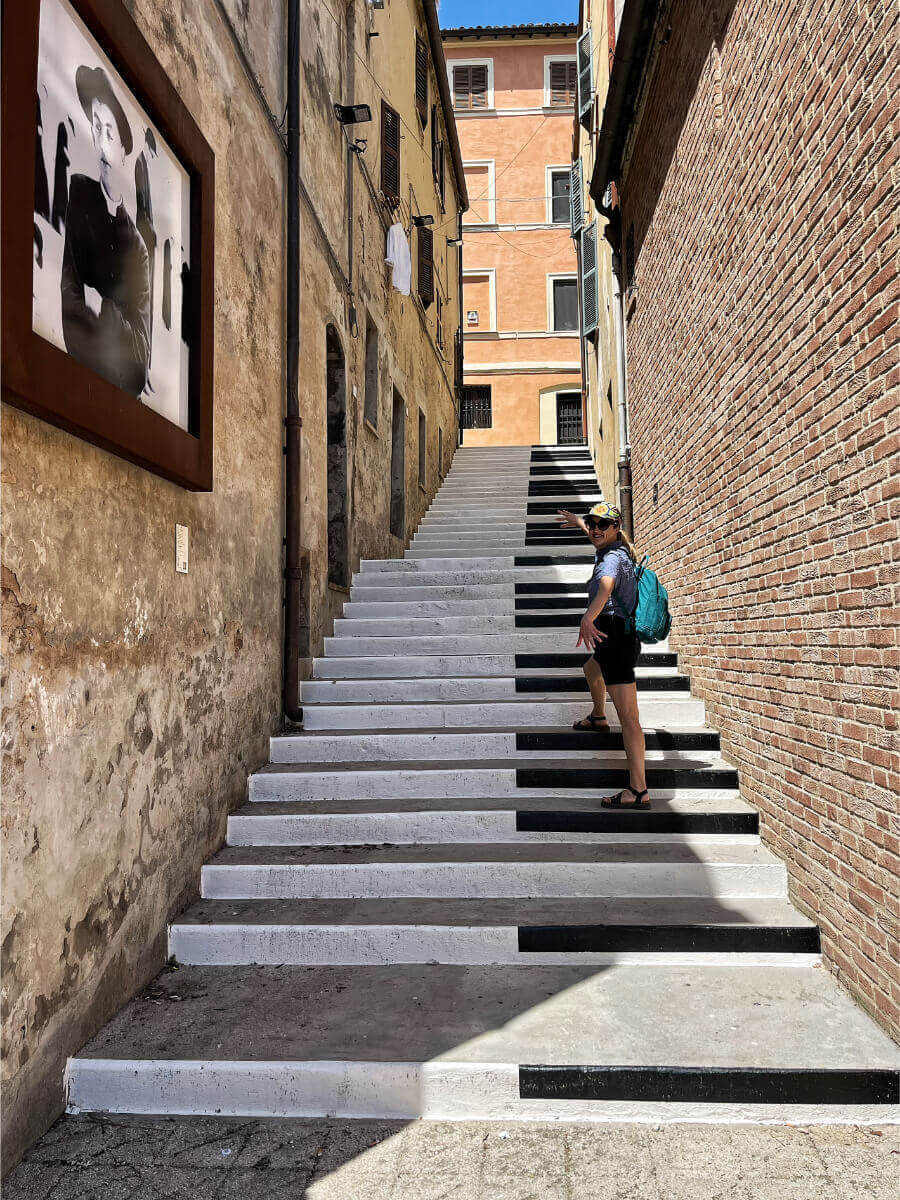
The historic center of Mondolfo is surrounded by ramparts. In the historic center, you can admire the Town Hall and the Civic Tower. Its battlements, clock, and beautiful staircase are particularly striking.
We decided to walk along the fortified walls and reached the splendid Italian-style garden in front of the Bastion of Sant’Anna and then the Castle’s viewpoint; from here, the view is spectacular and stretches all the way to the sea. Our last stop was the Collegiate Church of Santa Giustina, which houses a beautiful 18th-century organ.
Make sure not to miss Mondolfo street art: in fact, as you walk through its narrow alleys, you’ll find a series of photographs by Mario Giacomelli, murals, and other works of art by national and international artists.
Lunch in Marotta
Practical guide
- Driving time: Around 15 minutes from Mondolfo.
- Reservations: Recommended, especially for dinner and weekends. You can reserve via the App The Fork.
- Parking: Free parking is available on site.
- Cuisine: Contemporary cuisine with both seafood and meat dishes, plus an excellent wine list.
- My tip: Leave room for dessert.
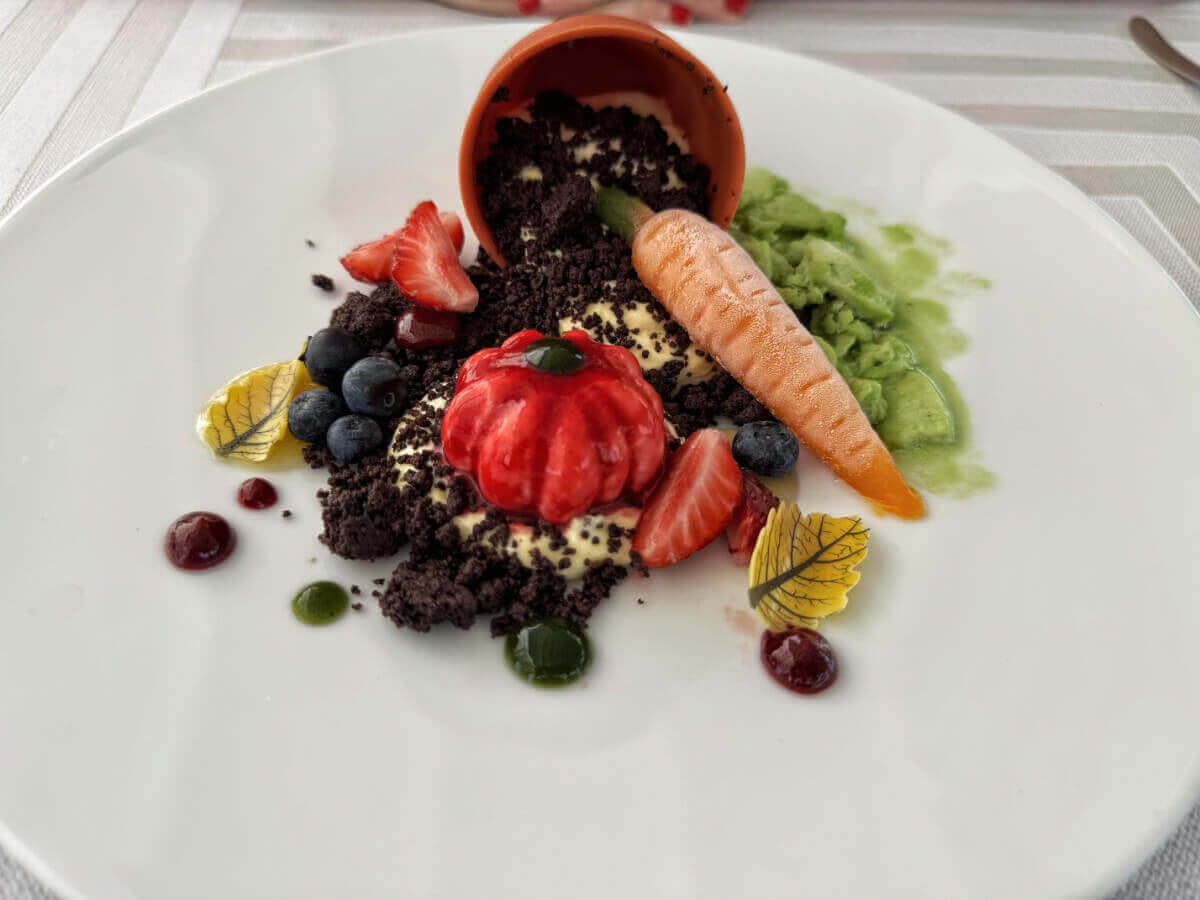
On our way between Mondolfo and the Guerrieri Farm, we took a quick detour to have lunch at Ristorante la Paglia in Marotta, and it was absolutely worth it. On a terrace overlooking a lush garden, we were pampered by the staff, who were extremely kind and professional.
We had black tortelli of squid ink, stuffed with shellfish, saffron cream, and crunchy pistachios, along with a fresh handmade pasta dish with olives, tuna, and capers.
The wine list was also excellent; we chose a refreshing sparkling rosé from the Costaripa winery, straying for a moment from the region we were visiting. The desserts were not only beautiful but also delicious.
Azienda Agraria Guerrieri
Practical guide
- Driving time: Around 15 minutes from Mondolfo.
- Time needed: Allow 1.5–2 hours for a guided tour and tasting, or longer if you plan to browse the farm shop.
- Reservations: Recommended for guided tours, especially in summer. Free guided tours in English are offered on selected days between mid-June and mid-September.
- Parking: Free parking is available on site.
- Don’t leave empty-handed: In addition to excellent wines, the farm shop sells olive oil, honey, and pasta produced on the estate.
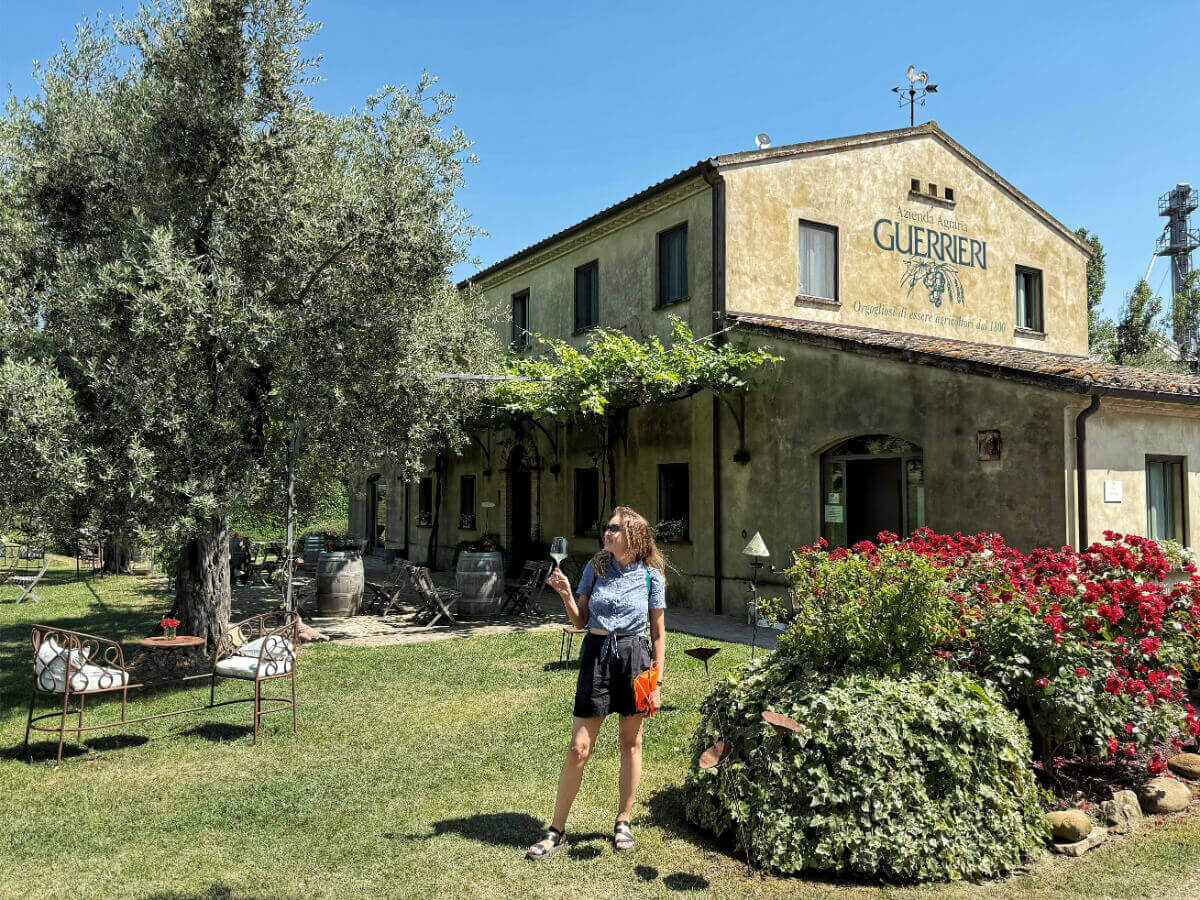
After lunch, we headed to Azienda Agraria Guerrieri. By pure chance, we visited on a special day called “Cantine Aperte” (Open Cellars in English), which is a day during which all the local wineries are open to the public for tours and tastings. Just like on feast days, the atmosphere was relaxed and convivial.
As the name suggests, Azienda Agraria Guerrieri is more than just a winery. The Guerrieri family, in fact, for five generations, has taken great pride in producing olive oil, pasta, honey, and wine. I tasted several wines as well as the olive oil, and I bought a few packages of their pasta.
Among the wines I tasted, I particularly loved the Guerriero del Mare, a white wine, and the Guerriero Nero, a red wine.
The motto, as displayed at the entrance to the building, is “eating is an agricultural act,” and it truly reminds us that, whatever food we put on our table, it comes from the land.
In addition to the beauty of the vineyards, which stretched across the surrounding hills, we were struck by Luca’s (the owner) love and pride when speaking of his land, his products, and the importance of cultivating them ethically and with respect for nature.
Corinaldo
Practical guide
- Driving time: Around 30 minutes from Azienda Agricola Guerrieri.
- Time needed: Allow 2–3 hours to explore the village, walk the medieval walls, and visit the main sights.
- Parking: Free and paid parking are available just outside the historic walls, within a short walk of the center.
- Accessibility: Expect cobbled streets, staircases, and some steep uphill sections. Wear comfortable shoes.
- My tip: Spend the night in Corinaldo if you can. After most tourists leave, the village becomes wonderfully peaceful, and it’s the perfect setting for a relaxed dinner within the medieval walls.
Our next stop was Corinaldo, where we only spent one night. This isn’t just a small medieval town, but also one of the most beautiful and best-preserved in Italy. It’s a charming place you should add to your itinerary, even if just to spend the evening and have dinner within its walls.
Good to know: If you don’t want to sleep in Corinaldo as we did, you can continue to Urbino, which is just a one-hour drive.
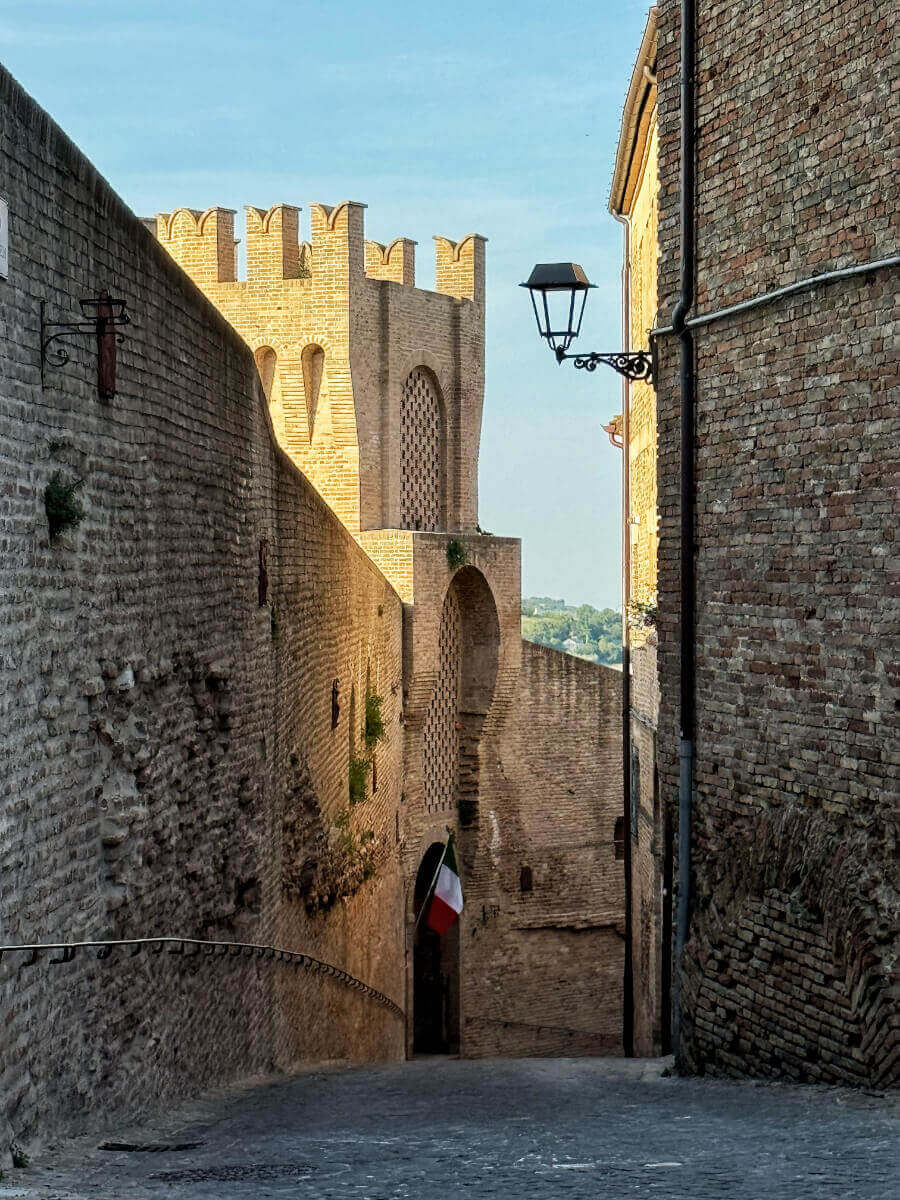
The historic center of Corinaldo is surrounded by nearly a kilometer of perfectly intact medieval walls, dotted with gates, bastions, and towers.
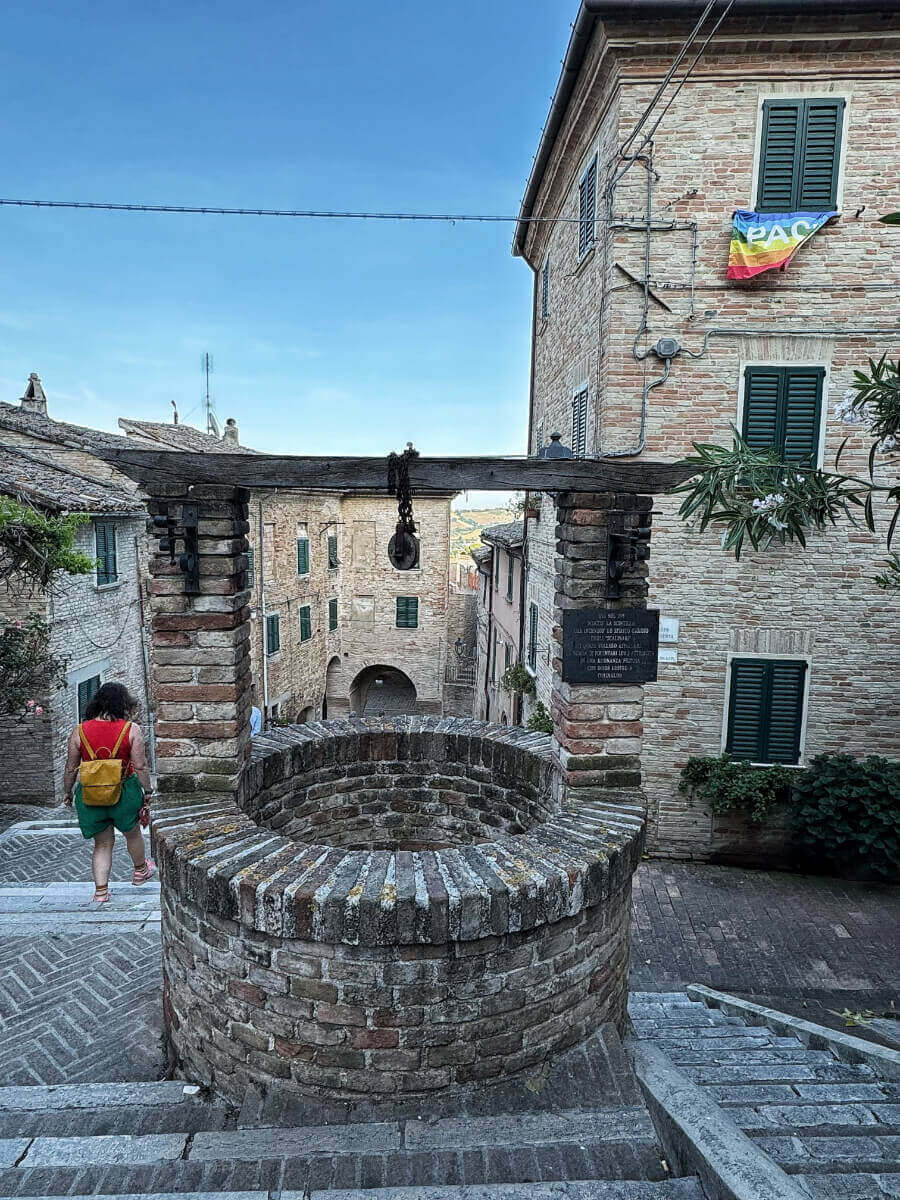
Make sure to admire the Piaggia, a 100-step staircase flanked by characteristic brick houses that leads to the top of the hill. Halfway up the staircase, there is a well, known as the “Pozzo della Polenta”, Polenta well. The legend has it that a farmer dropped a sack of flour into it.
Other places of interest are the recently restored Carlo Goldoni Theater, which hosts concerts, plays, dance performances, and amateur shows, and the Casa dello Scuretto: a local shoemaker, instead of using the money sent by his son to finish the house, spent it all on wine. He constructed only the facade to deceive his son.
Finally, there’s Saint Maria Goretti’s house: this is where the Saint was born and spent her childhood. Her relics are preserved in the sanctuary bearing her name.
If you’d like to explore Corinaldo more in depth, consider this 2-hour guided tour that includes a stop at La Piaggia and the Pozzo della Polenta, as well as by the Scorticatore Tower.
Where to eat in Corinaldo
If you stay in Corinaldo for dinner, try the local cured meats paired with a glass of Verdicchio dei Castelli di Jesi wine. These are the places we tried and loved during our short stay:
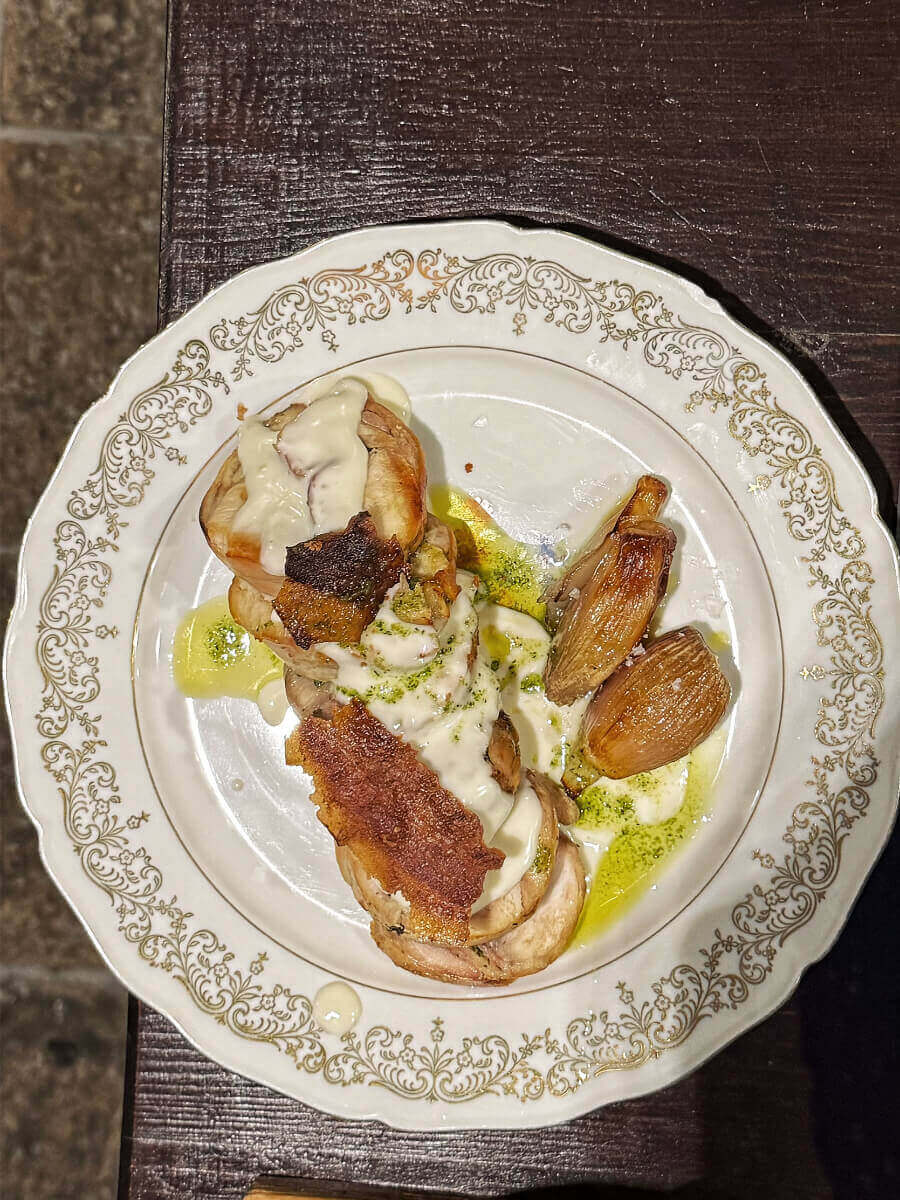
Nova Taberna – We had dinner at Nova Taberna during our overnight stay in Corinaldo, and it turned out to be an excellent choice. Located inside the medieval walls, the restaurant serves traditional Marche cuisine prepared with high-quality local ingredients. I particularly enjoyed the rabbit, which is a local specialty.
Pasticceria Antonelli – The following morning, before leaving Corinaldo, we stopped at Pasticceria Antonelli for a lovely Italian-style breakfast. This long-established local pastry shop serves excellent coffee alongside a tempting selection of freshly baked pastries, cakes, and other sweet treats. It was the perfect way to start another day exploring northern Marche, and I’d happily return the next time I’m in town.
Where to sleep in Corinaldo
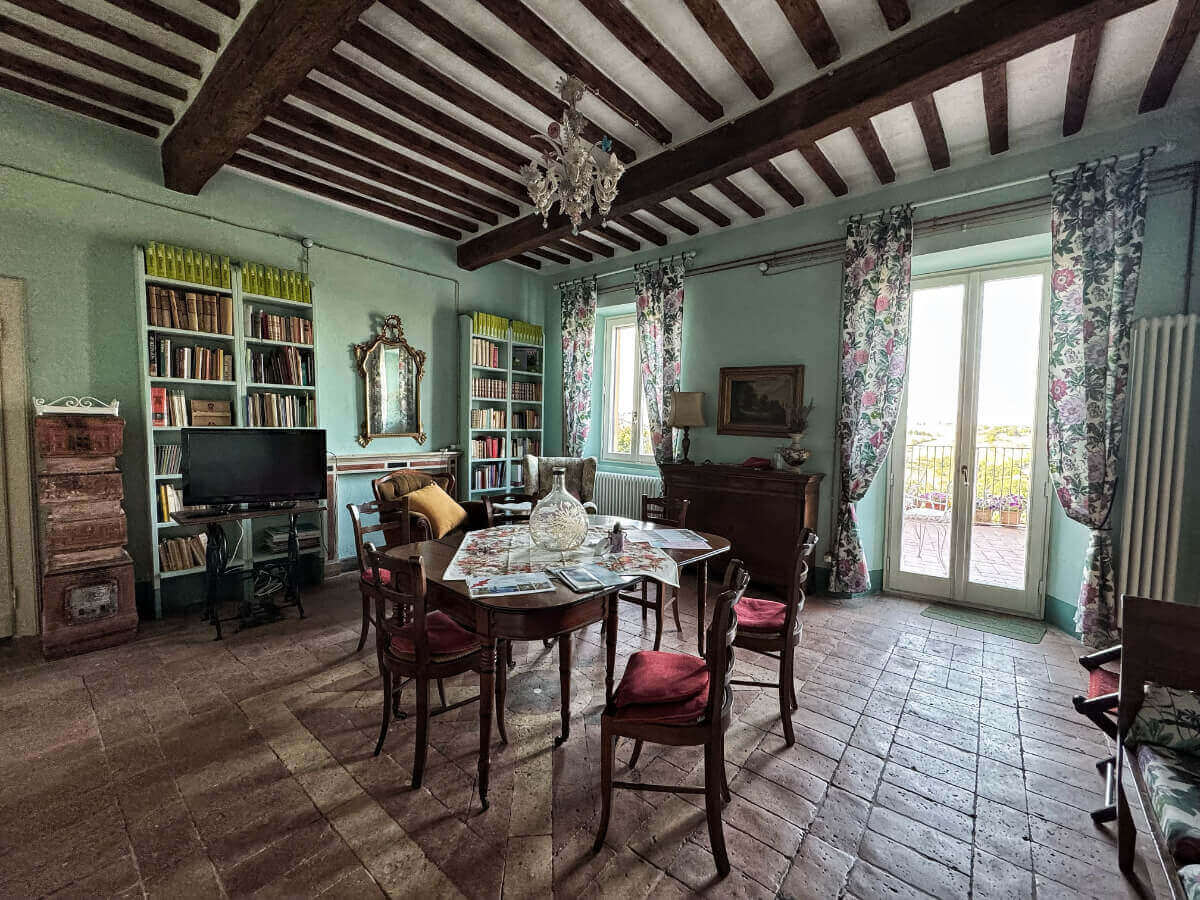
My sister and I spent the night at Antica Dimora Sforza Bed and Bike, a historic residence inside Corinaldo’s medieval walls. The house has belonged to the same local family for generations, and many of its original features and antique furnishings have been carefully preserved, giving it plenty of character.
Our room overlooked the rolling hills of Le Marche, and waking up to that peaceful view was one of the highlights of our stay.
The owners, originally from Corinaldo and now based in Rome, return regularly to manage the property and are genuinely passionate about sharing their family’s home with visitors. If you’re looking for something with more personality than a standard hotel, this is an excellent choice.
Day 3 – Frasassi Caves and Valadier Temple
Fracassi Caves
Practical guide
- Driving time: Around 1.5 hours from Corinaldo.
- Time needed: Allow 2.5–3 hours, including the guided tour and time to visit the ticket office if you haven’t booked online.
- Tickets: I recommend booking in advance, especially in spring and summer. If tours are sold out online, you can try purchasing tickets at the ticket office on the day of your visit. Tours are available in Italian and English.
- What to wear: The temperature inside the caves is around 14°C (57°F) year-round. Bring a light jacket or sweatshirt and wear closed-toe, non-slip shoes.
- Accessibility: Visits are only possible as part of a guided tour. Dogs are allowed if carried in a suitable pet carrier.
We honestly had not planned to visit Frasassi Caves, but when we got to our accommodation in Corinaldo, we saw a leaflet and our hosts told us they were truly worth visiting, so we took a small detour from our itinerary.
Located not far from Fabriano, these beautiful caves have been discovered relatively recently: some chambers in 1948, others as late as 1971.
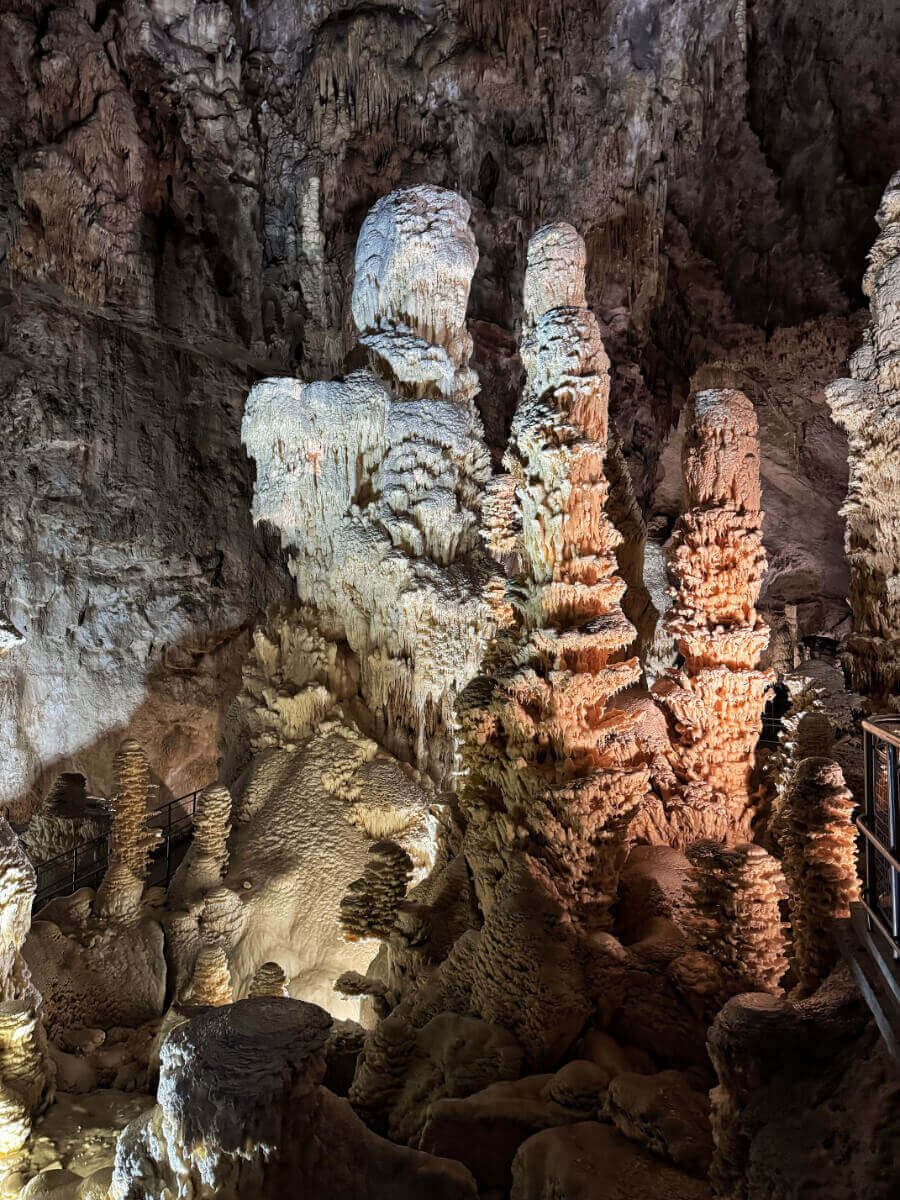
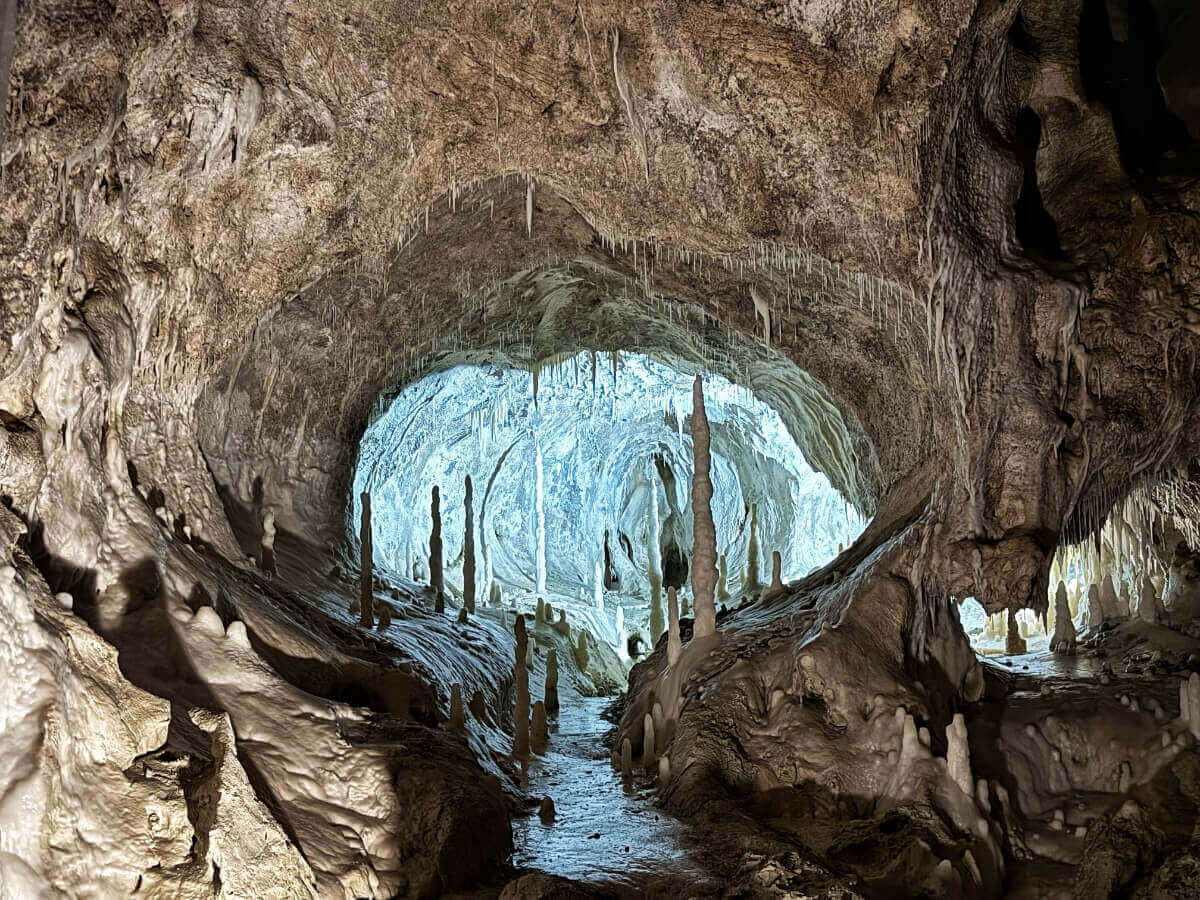
They are a real masterpiece of nature: inside, you can spot stalactites, stalagmites, and columns of the most varied shapes, some of them pure white. The formations all have interesting names: Niagara Falls, the Witches’ Castle, the Obelisk, the Organ Pipes, Dante’s Profile, and the Hall of Candles.
Once you’ve passed through the access tunnel, you’ll visit five chambers, each with its own unique features. The first, for example, has the highest ceiling – about 180 meters (more than 590 feet).
Visits are only permitted as part of a guided tour to ensure the respect of the site and for safety reasons.
Tours last about 1.5 hours. As this is a rather popular attraction in the Marche region, I recommend purchasing tickets in advance via the official website or via a third-party booking site (the price is the same, and the provider is actually the official attraction). If online tickets are sold out, you can purchase them on-site at the ticket desk, though expect a bit of a line on holidays and weekends.
Good to know: For caving enthusiasts, there’s also a caving tour. You can find more information on the official website.
Valadier Temple
Practical guide
- Driving time: Around 10 minutes from the Frasassi Caves ticket office.
- Time needed: Allow 45–60 minutes for the visit, including the walk to the temple.
- Getting there: From the parking area, it’s an uphill walk of just under 1 km (0.6 miles) to reach the temple.
- What to wear: Wear comfortable shoes (best if hiking shoes or running shoes with a good grip), as the path is uneven in places.
- Good to know: Before visiting, check that the path is open, as it may occasionally close for maintenance, as happened during my visit.
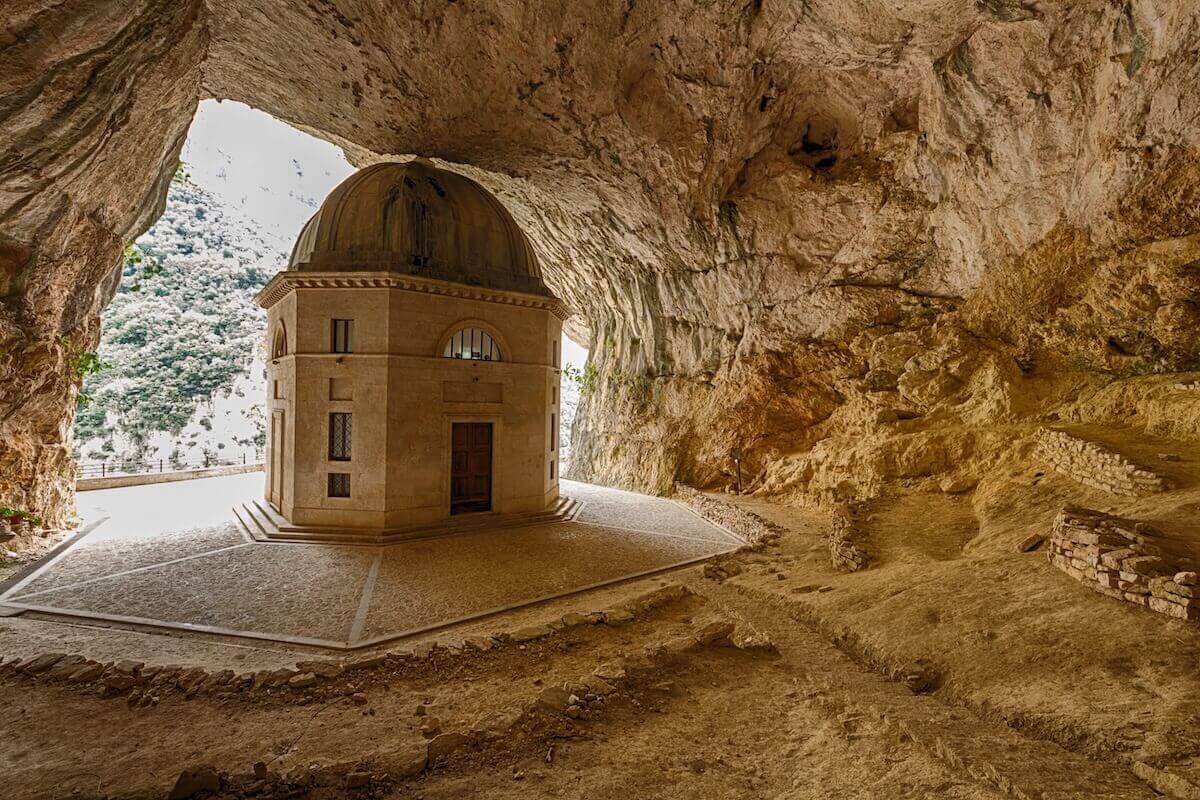
Not far from the Frasassi Caves, you will find the Valadier Temple. Set inside a cave, this temple’s location is truly picturesque. Built in 1828, this elegant octagonal temple seems almost hidden within the rock, creating a striking contrast between architecture and nature.
It was commissioned by Pope Leo XII, born nearby, as a place of prayer and refuge. Unfortunately, we did not get to visit it because the trail to get there was under maintenance. If you have the chance, be sure to visit it and let me know what you think about it.
Lunch in Fabriano
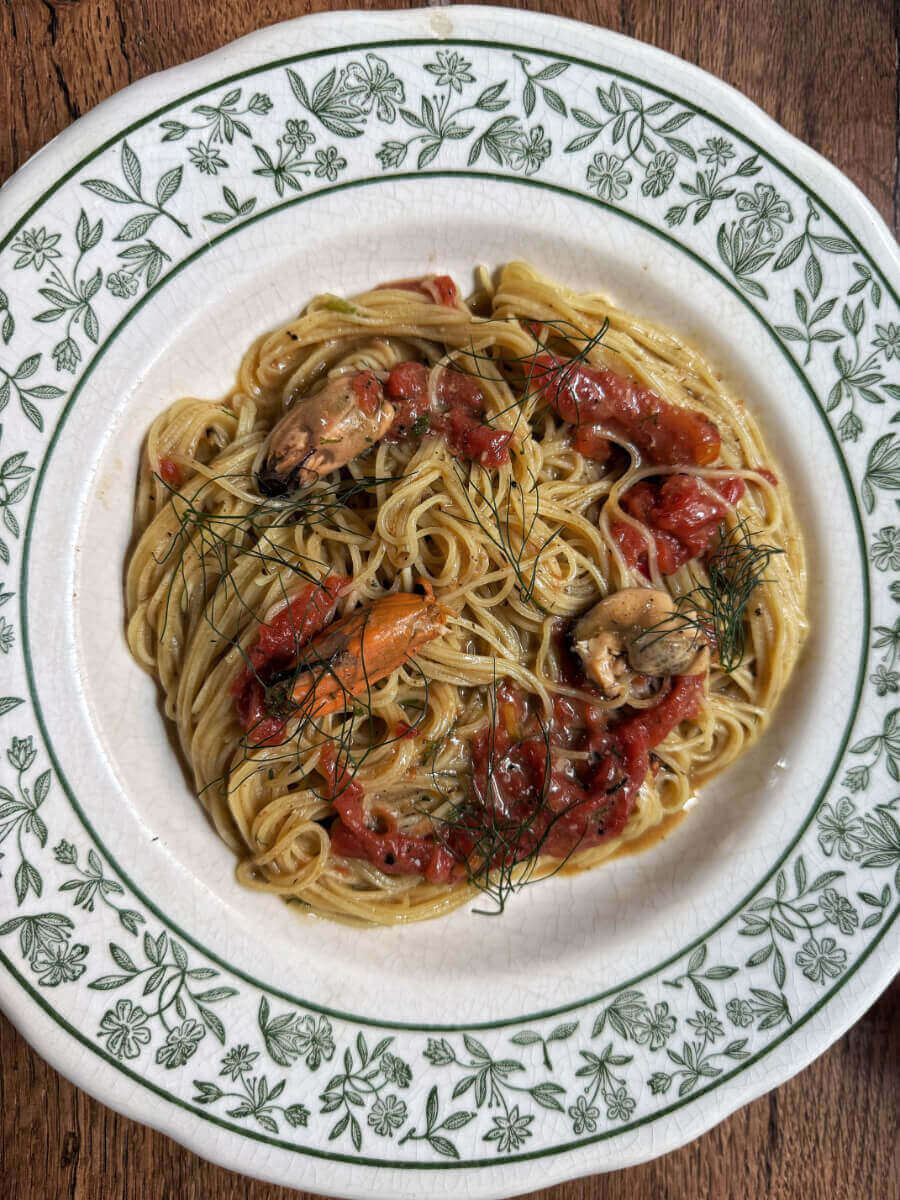
Our day continued in Fabriano, a 20-minute drive from Frasassi, where we had lunch at Osteria San Biagio.
This welcoming restaurant serves traditional Marche cuisine with a contemporary touch, with a focus on seasonal, locally sourced ingredients. We particularly enjoyed the homemade pasta and the warm, attentive service. We did not have wine that day as we had to drive a bit longer after lunch, but we noticed a very good wine list.
After lunch, we were supposed to go to the Gola di Furlo, but it started pouring so we went directly to Urbino, where we slept for two nights. It took us about 1.5 hourst to get there.
Day 4 – Gola del Furlo and Marmitte dei Giganti
Gola del Furlo
Practical guide
- Driving time: Around 30 minutes from Urbino.
- Time needed: Allow 2–3 hours, depending on whether you simply walk along the gorge or tackle one of the hiking trails.
- Parking: Several free parking areas are available near the gorge and along the old Via Flaminia.
- What to wear: Comfortable walking shoes, or hiking shoes if you plan to hike. Bring water, too.
- My tip: Don’t just admire the gorge from the road. Walk along the ancient Via Flaminia and through the Roman tunnel to fully appreciate this spectacular landscape.
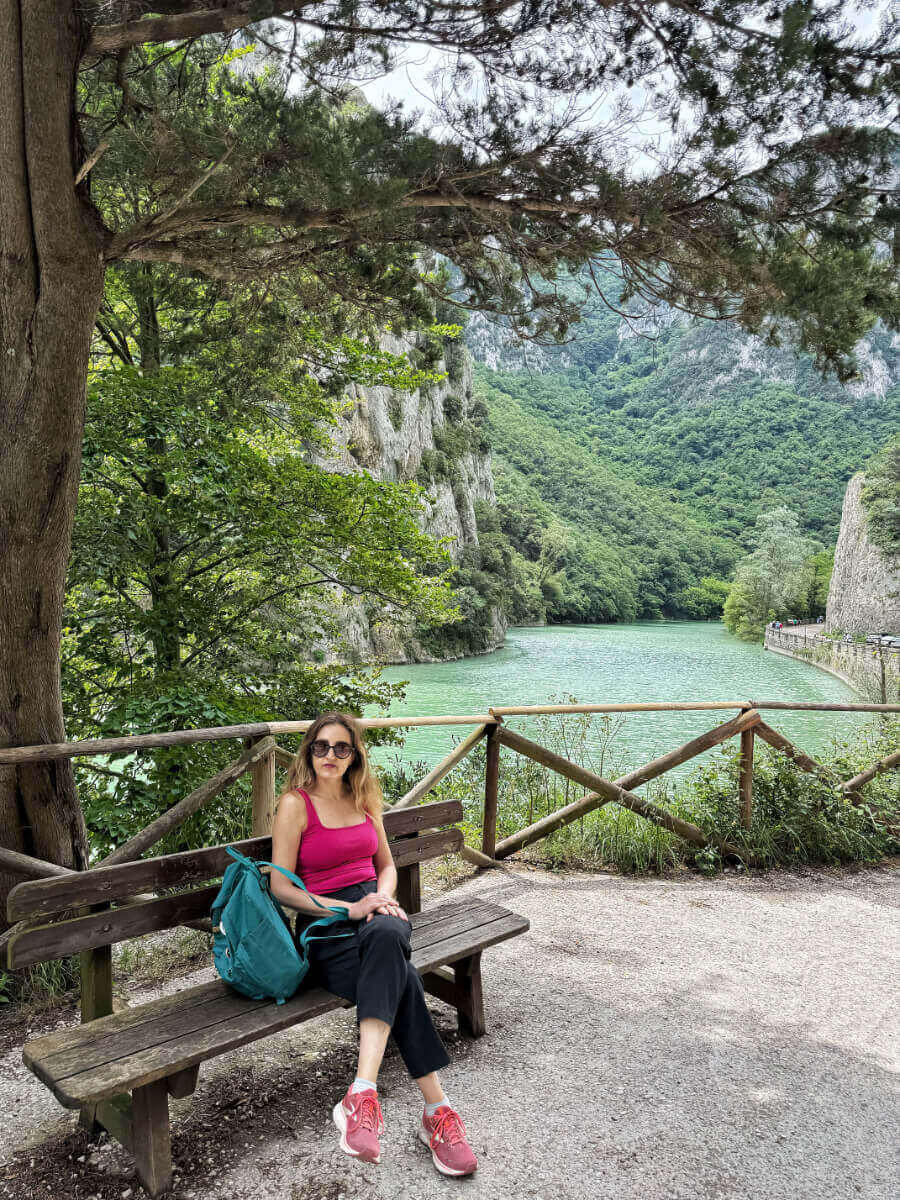
The Furlo Gorge or Pass offers one of the most beautiful landscapes in Northern Marche. The Candigliano Rive, a tributary of the river Metauro, has carved out this valley between the Mount Pietralata and Mount Paganuccio over millions of years.
The beauty of this place is preserved thanks to the establishment in 2001 of a State Nature Reserve. The Furlo Gorge is characterized by the combination of a unique landscape: the imposing rock walls, hundreds of meters high, and a rare example of flora and fauna, such as the Tanfani bellflower, the golden eagle, the eagle owl, and the wolf, to name just a few.
The ancient Via Flaminia, which connected Rimini to Rome, runs alongside the gorge. You can still see part of the original road and the Furlo Tunnel, carved into the rock, with its cobblestone pavement and passageway for carts.
Nature lovers and outdoor enthusiasts can enjoy the area in various ways: a network of well-marked hiking trails, and you can also go biking along the road that runs alongside the gorge.
Marmitte dei Giganti
Practical guide
- Driving time: Around 20 minutes from Gola di Furlo.
- Time needed: Allow 1–2 hours, depending on whether you simply admire the gorge or go down to the river.
- Parking: Free parking is available near the bridge, just a short walk from the access path.
- What to wear: Wear comfortable shoes with good grip, as the path to the river is short but can be steep and uneven.
- My tip: If you’re visiting in summer, bring a swimsuit if you’d like to take a dip in the clear water.
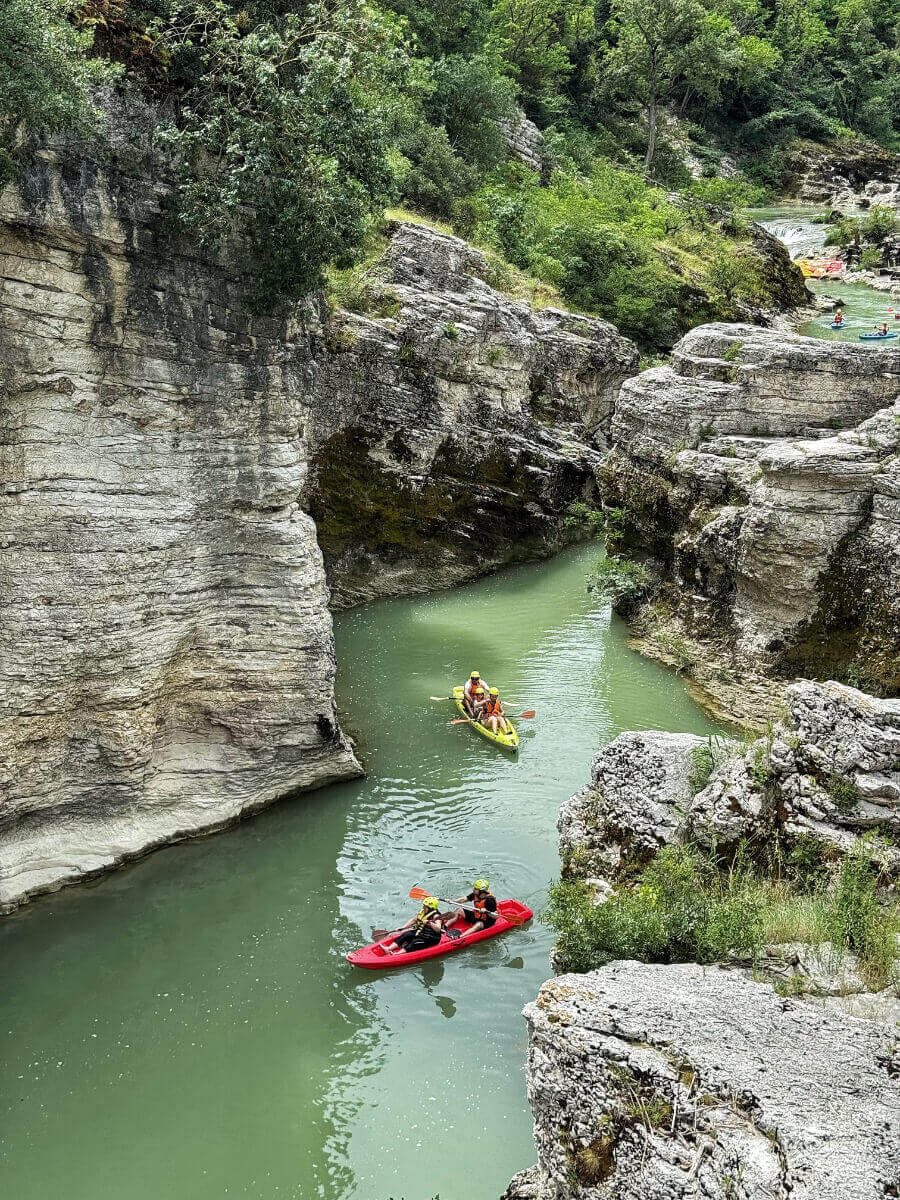
Before returning to Urbino (a 20-minute drive away), we stopped at the Marmitte di Giganti, a canyon carved by the Metauro River along the ancient Via Flaminia, not far from Fossombrone. Also known as “Forra di San Lazzaro”, the slow and steady action of water and glaciers over the millennia has shaped the limestone, creating these deep gorges.
Its name comes from the sequence, along the riverbed, of the so-called “marmitte”: perfectly cylindrical cavities that can reach up to 5 meters (more than 16 feet) in diameter and 4–5 meters in depth.
The scenery is outstanding: smooth walls, clear water, and the vegetation climbing among the rocks. Legend has it that these huge “pots” were used by giants to cook wild boar soup.
Don’t just stop to admire the gorge from the bridge: get up close. The path is short and slightly steep. But once you reach the river, you can take a dip or even join a canoe tour.
Day 5 – Urbino
Practical guide
- Time needed: Allow at least half a day, or a full day if you plan to visit the Ducal Palace, Raphael’s House, and the city’s museums.
- Parking: Cars are not allowed inside the historic center. Leave your car in one of the parking lots outside the city walls and continue on foot.
- Accessibility: Urbino is very hilly, with steep streets, staircases, and cobbled lanes. Wear comfortable shoes.
- Tickets: If you plan to visit several attractions, check whether combination tickets are available to save money.
- My tip: Don’t rush your visit. Urbino is one of those cities best enjoyed by wandering its narrow streets, stopping in its cafés, and taking in the views from its many panoramic spots.
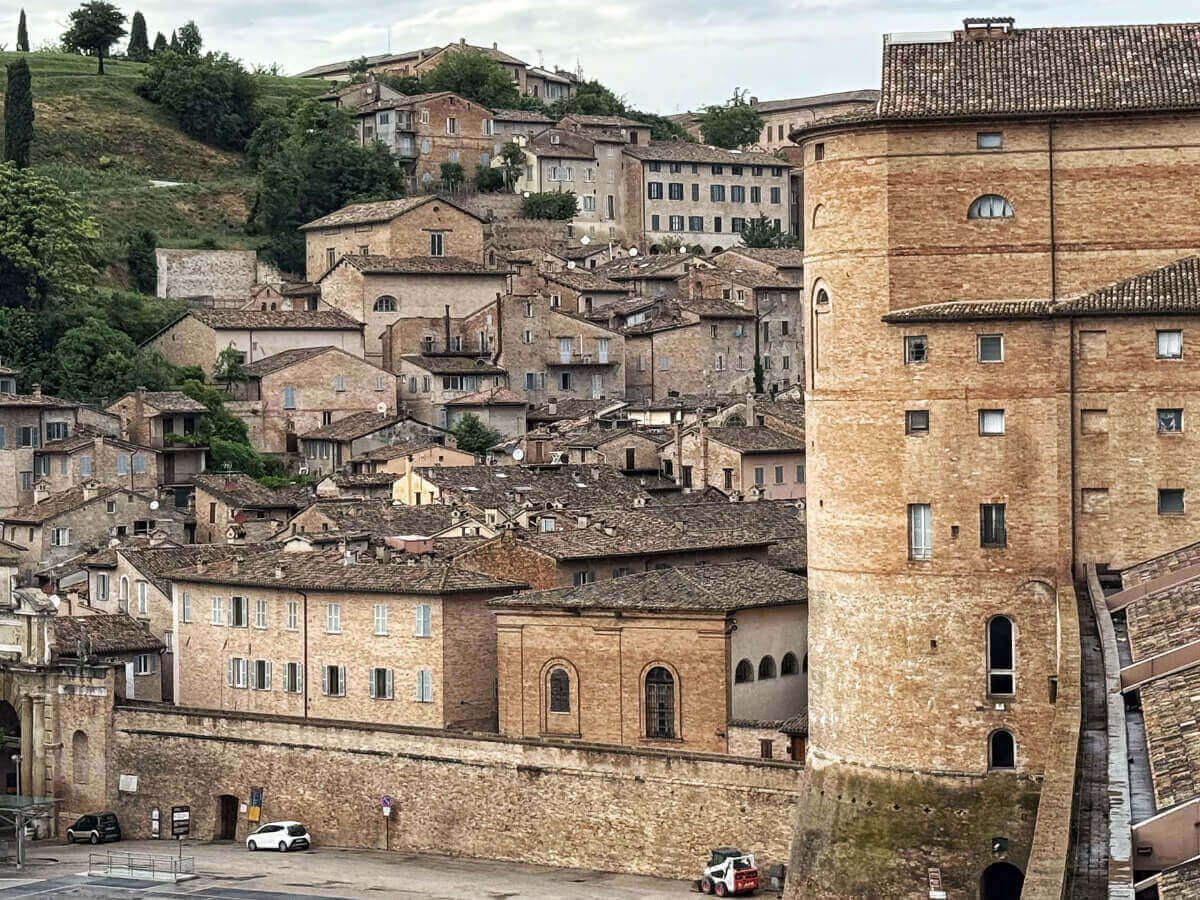
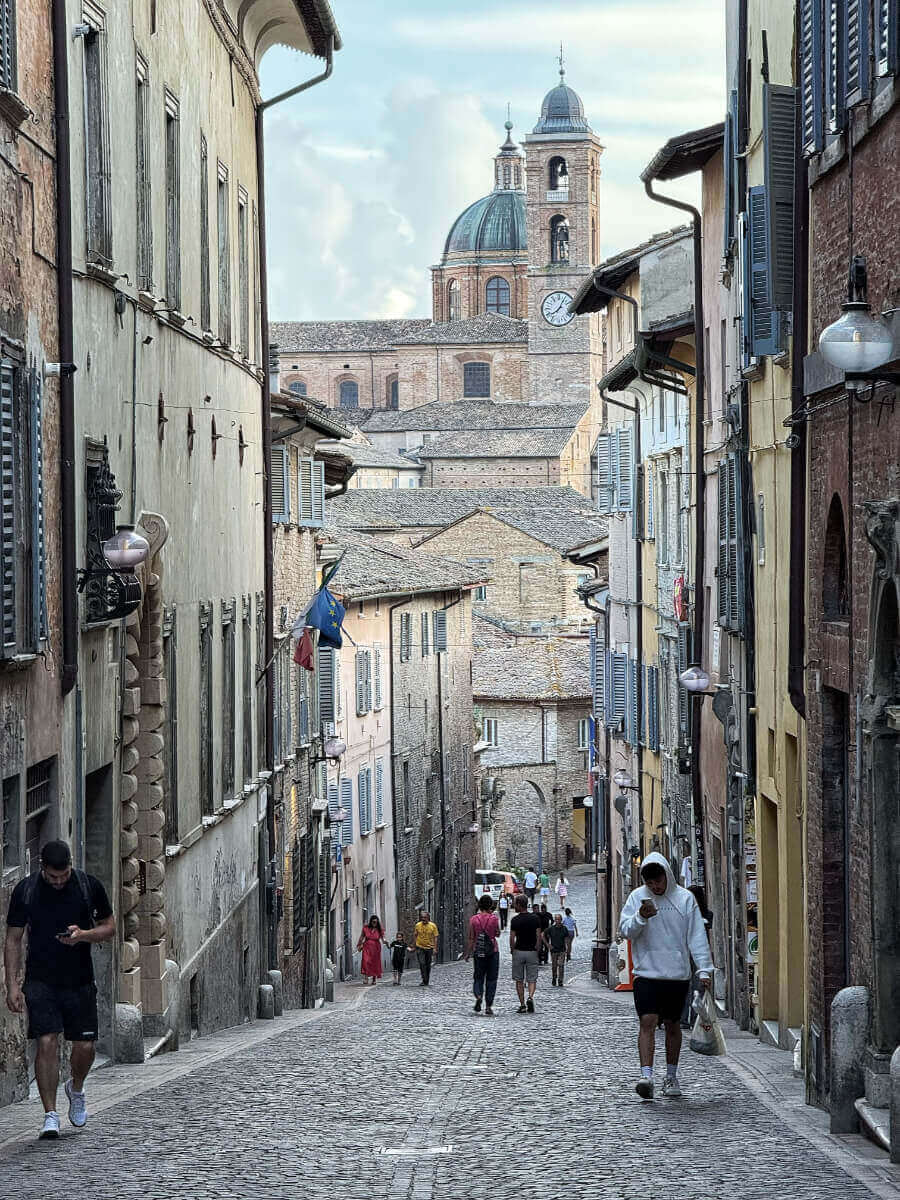
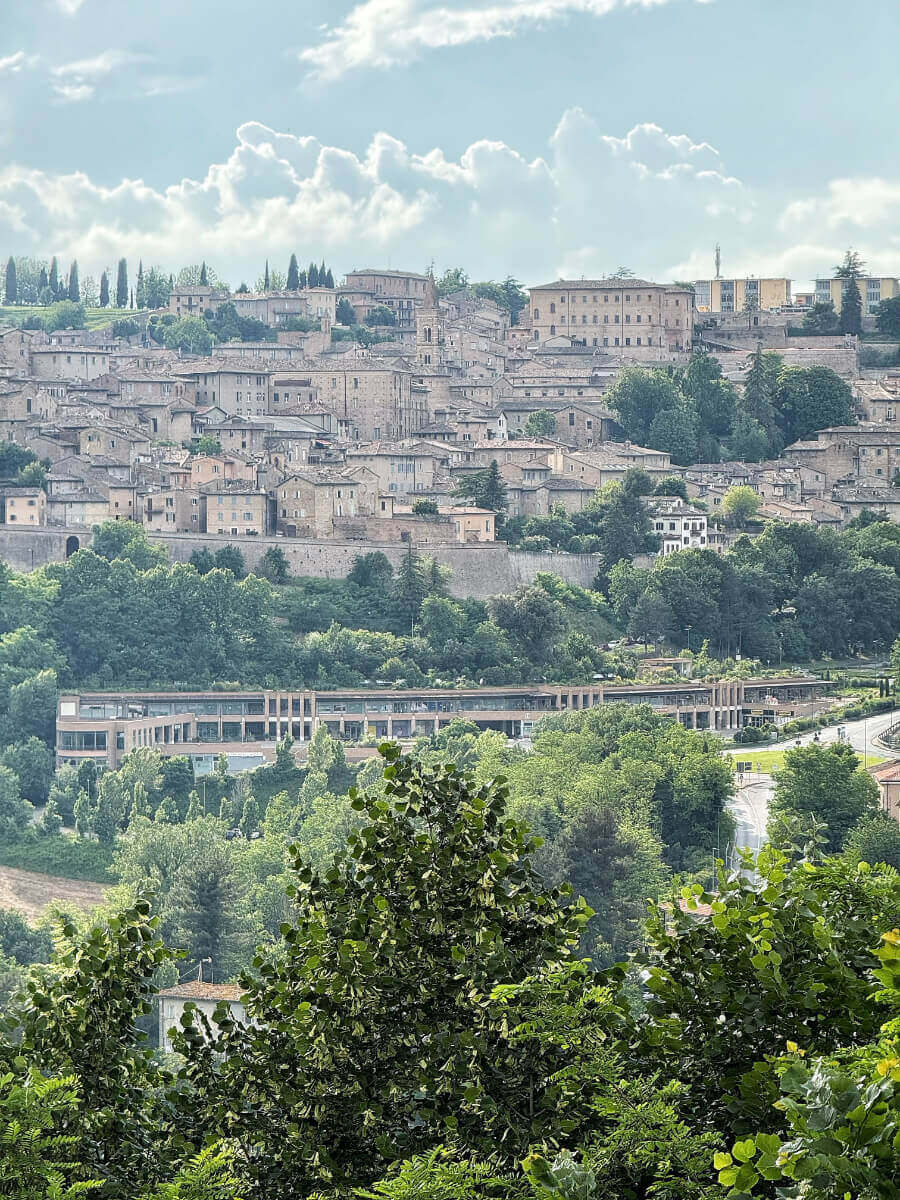
Set on the hills of Northern Marche, with an outstanding view of the Adriatic Sea, you’ll find the city of Urbino, one of the most important centers of the Italian Renaissance. Its artistic and architectural charm has been so perfectly preserved that its historic center was added to the UNESCO World Heritage List in 1998.
The historic center, surrounded by a long wall, covers just over one square kilometer. You can fully appreciate its beauty by strolling through its narrow streets, since the entire area is pedestrian-only.
Good to know: You’ll need to park your car in one of the (rather expensive) parking lots outside the walls and get around on foot, or take the train on wheels.
One of the most beautiful views of the historic center and its walls is from the parking lot in Piazza Mercatale (which is where we parked our car).
Start exploring from the Ducal Palace, a symbol of the Italian Renaissance. Today, it houses the National Gallery, which features an important collection of Italian Renaissance art, including masterpieces by Raphael, Piero della Francesca, Titian, and Orazio Gentileschi.
All these works of art were commissioned and collected by Federico da Montefeltro, who ruled Urbino from 1444 to 1482. As you walk through the various rooms, pay attention to the ceilings, sculptures, and furniture.
Adjacent to the Palace, you’ll find the Cathedral dedicated to Santa Maria Assunta. It was completely rebuilt after the earthquake in 1789. We happened to arrive in Urbino during its patron saint’s celebration, and the Church was packed with worshippers.
Under the Cathedral, in its Caves, there’s the Oratory of the Holy Crucifix of the Cave. Inside the Resurrection Chapel, there is a marble sculpture by Giovanni Bandini.
Stop at the café in Piazza della Repubblica to rest and enjoy the beauty of the city: all the buildings are made of red brick. From there, you can also admire the Church of San Francesco, with its portico and bell tower.
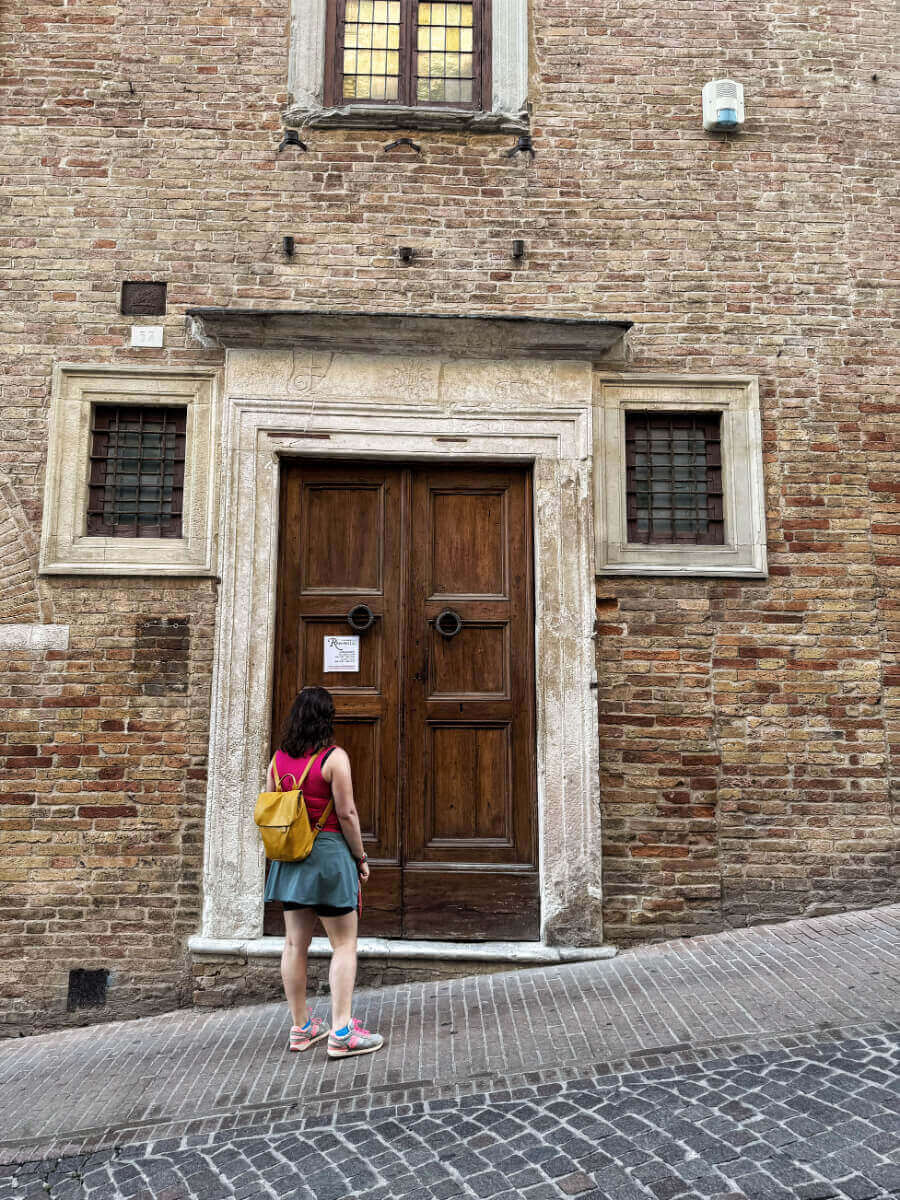
Your next stop should be the House Museum of Raffaello Sanzio, who was born in Urbino in 1483. It’s located at Via Raffaello 57, and the artist’s room is the one with the fresco of the Madonna and Child.
Although few of his works remain in Urbino, and they are all from his early years, it’s well worth a visit. On the ground floor, there used to be the workshop of his father, Giovanni Santi, who was also a painter. It now hosts temporary exhibitions.
Continuing along Via Raffaello, you’ll arrive at Parco della Resistenza and the Albornoz Fortress. Located at the highest point of the city, the fortress served a defensive purpose in the past and now houses a museum dedicated to medieval weapons. The park offers one of the most beautiful views of Urbino.
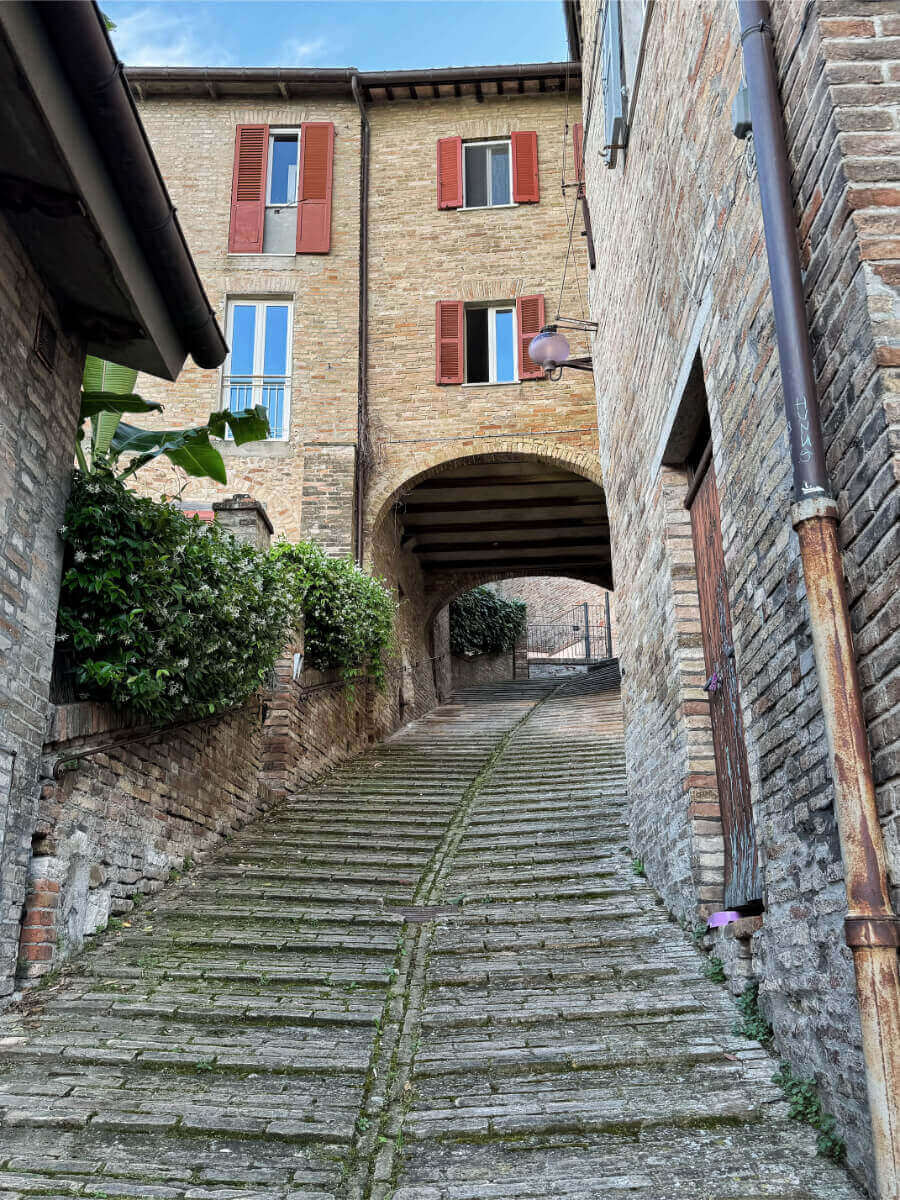
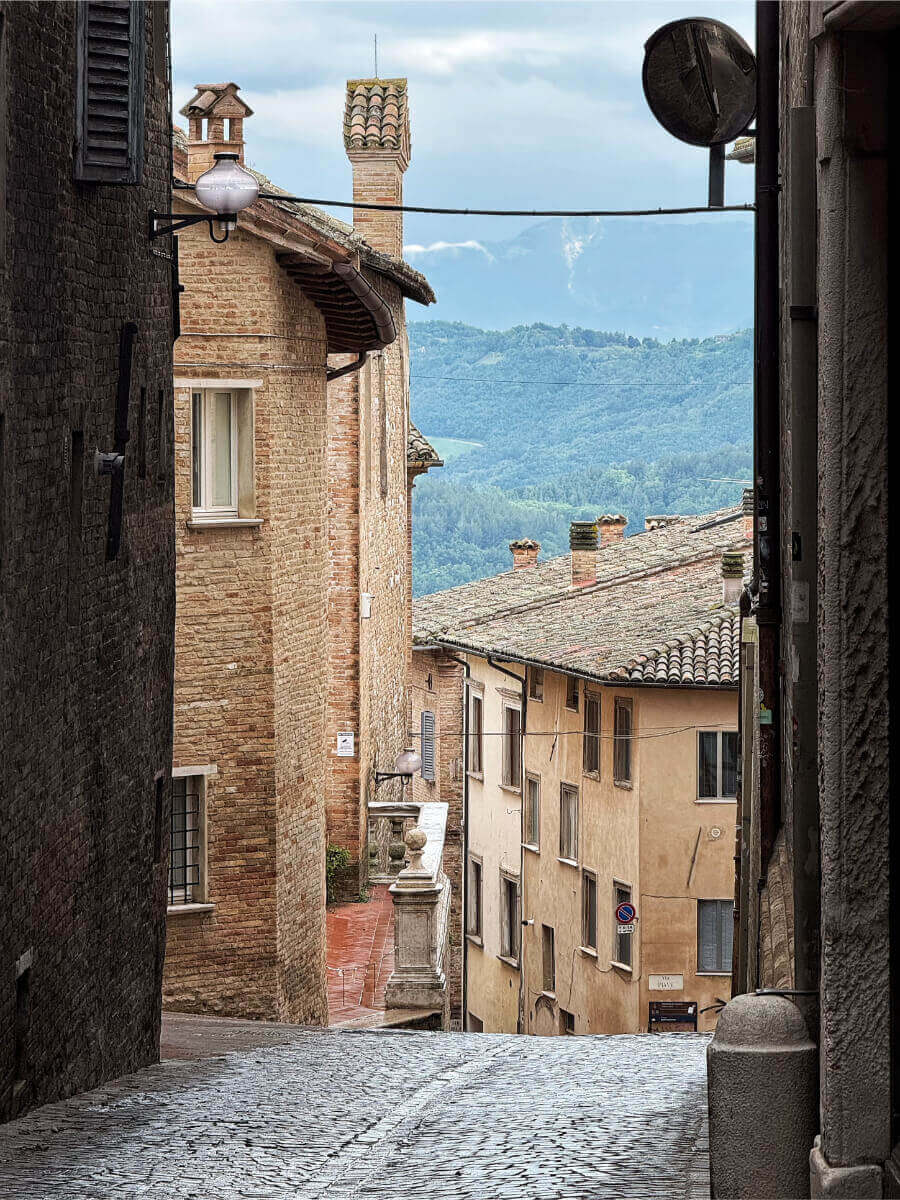
One of the things you’ll notice as you explore Urbino are the steep streets paved with terracotta steps, the famous “piole.” The city is so well-kept, with fountains and small artisan shops, that it’s a pleasure to simply wander.
Other places you should not miss are the San Giovanni Oratory, whose walls are entirely frescoed by the brothers Lorenzo and Jacopo Salimbeni, and San Giuseppe Oratory, which consists of two chapels – a Baroque-style one, and a smaller chapel with a stucco nativity scene and life-size statues created by Federico Brandani (one of the oldest nativity scenes in the world).
We also enjoyed visiting the San Bernardino Church, commissioned by Federico da Montefeltro. In fact, he and his son Guidobaldo are buried in the adjacent cemetery. The views of Urbino from San Bernardino Church are stunning.
Where to eat in Urbino
To complete your visit and get to know Urbino better, you should also try some local specialties.
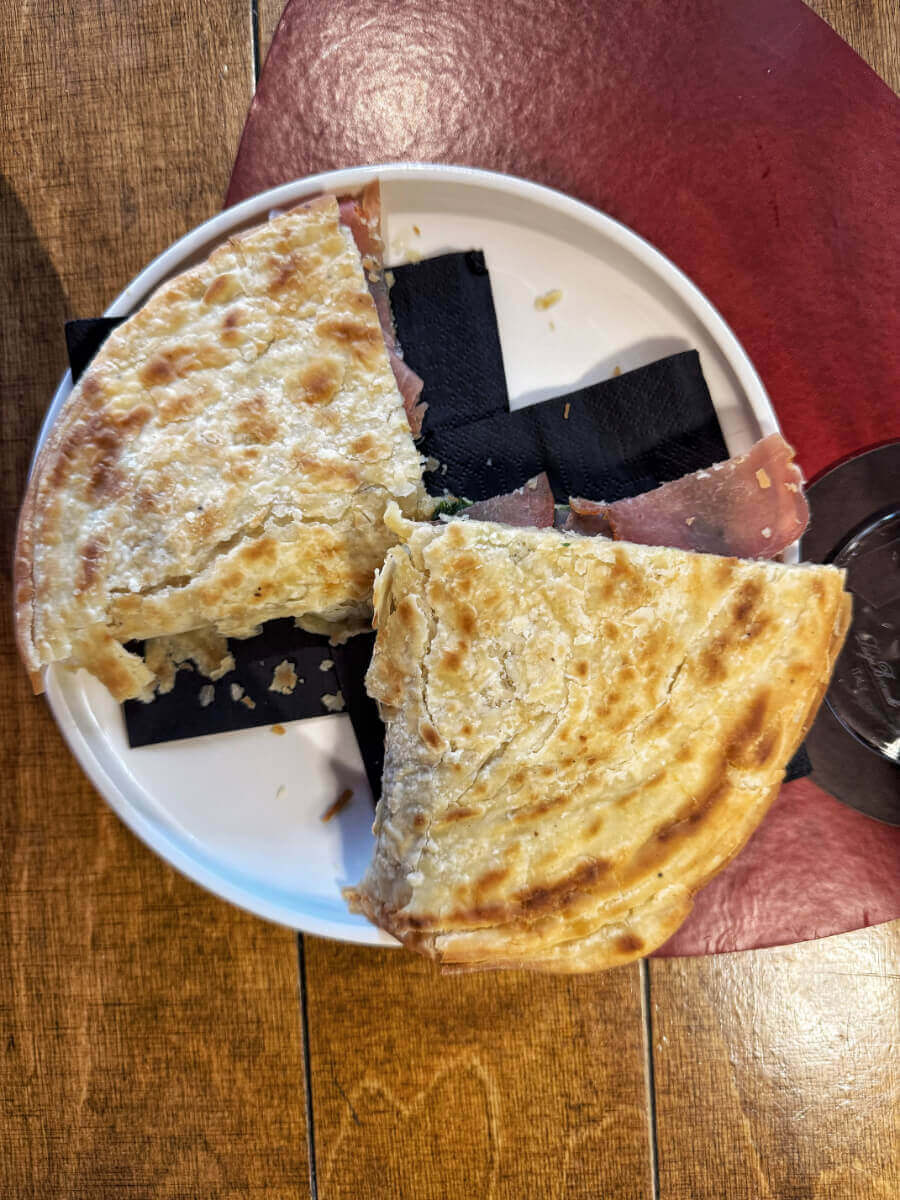
Crescia sfogliata – Although it may look similar to piadina, its flaky and fragrant texture makes it truly unique. It’s usually eaten stuffed or served alongside platters of local cheeses and cured meats such as Casciotta DOP from Urbino, Pecorino di fossa, Salame di Montefeltro, and Prosciutto DOP from Carpegna.
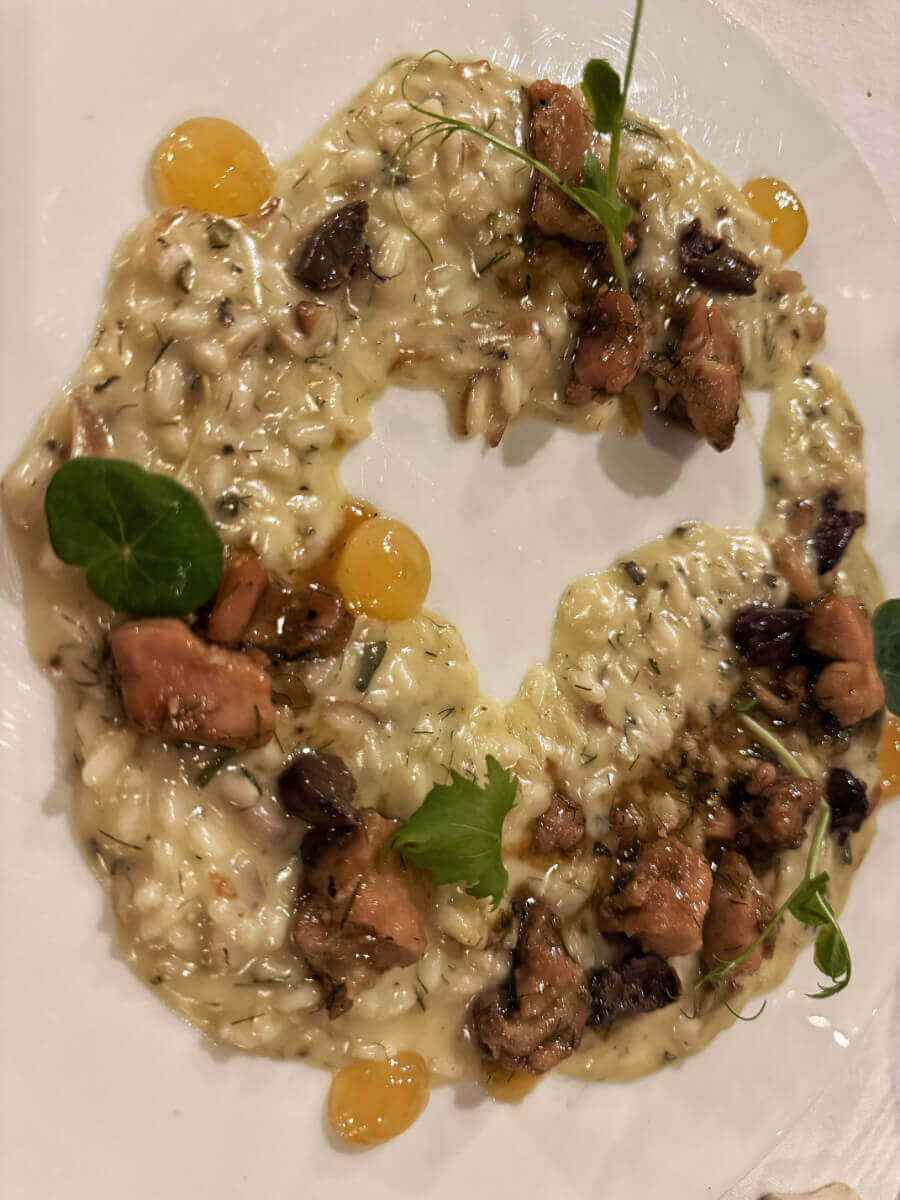
Passatelli – Like every region in Italy, this area also has its own traditional pasta: passatelli, a fresh pasta served with Parmesan and breadcrumbs. They’re usually served in a broth, but during the warmer months, you should try the dry version, with truffle shavings or game meat.
Bostrengo – A traditional Christmas dessert made with rice, bread soaked in milk, white flour, and cornmeal mixed with apples, pears, walnuts, raisins, and cocoa.
These are the restaurants we tried and loved in Urbino:
Portanova – My sister and I had dinner here, and it was one of the highlights of our trip to Marche. We opted for the tasting menu with wine pairing, a wonderful journey through the flavors of the region, with each course thoughtfully matched to a local wine. Located in the historic center, the restaurant reinterprets traditional Marche cuisine with creativity and elegance, using high-quality local ingredients. Service is impeccable, and it was an unforgettable dining experience and one I’d happily recommend for a special evening.
Posta Vecchia – We stopped at Posta Vecchia for lunch while exploring Urbino and were glad we did. We ordered the traditional crescia sfogliata, generously filled and freshly prepared, accompanied by a glass of Franciacorta that was so generous it could almost have counted as two! The relaxed atmosphere, friendly service, and central location make it an excellent place to sample one of Urbino’s most typical specialties.
Amici Miei – If you have a car and don’t mind driving a few minutes outside Urbino, Amici Miei is worth the detour. We had dinner there on our last evening in Marche: my sister ordered a perfectly cooked pork dish, while I opted for one of the gourmet pizzas, which was excellent. The menu also includes homemade pasta and other seasonal dishes. It’s a great choice if you’re looking for a relaxed meal away from the historic center.
Where to sleep in Urbino
My sister and I stayed at Albergo Italia during our time in Urbino. While we weren’t particularly impressed by the room or the overall ambiance, which we found rather basic and lacking in character, the hotel’s biggest strength is undoubtedly its location.
Right in the heart of the historic center, it’s within easy walking distance of all the main attractions, restaurants, and cafés. If convenience is your priority, it’s a practical choice, though if you are looking for a more memorable stay may want to consider other options.
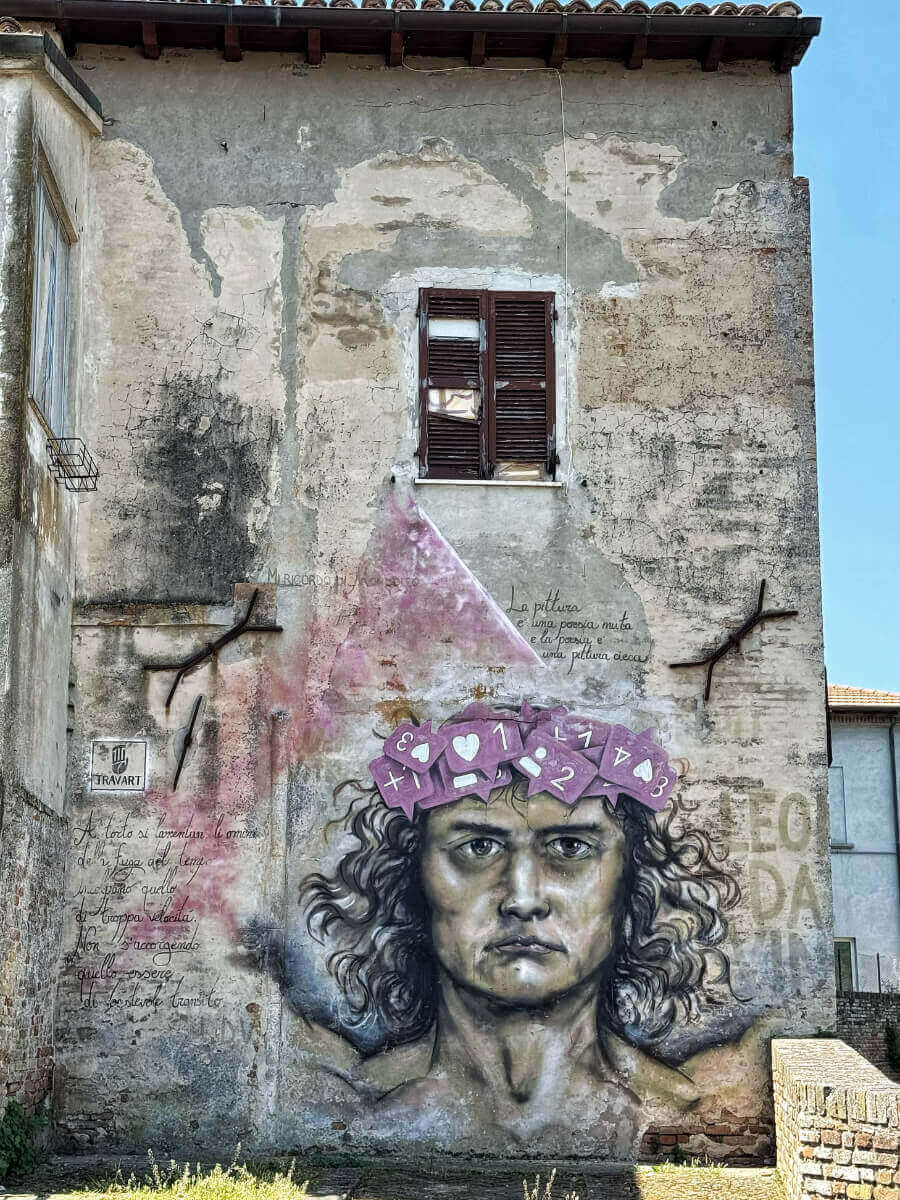
How To Get To Le Marche Italy
The easiest way to get to Marche, Italy, if you are traveling from outside the country is by plane. Ancona International Airport is the only one in the region, but there are others in the surrounding areas. For example, my sister and I landed in Rimini, which is the closest to Urbino and Northern Marche. You could also fly to Florence, Perugia, and Bologna, just to mention a few.
If you are already in Italy, the best way to get to Marche by train. The main coastal cities, such as Pesaro, Senigallia, Ancona, and San Benedetto del Tronto, as well as inland cities such as Fabriano and Ascoli Piceno, are well connected by the rail network. However, keep in mind that not all cities have a train station.
Good to know: Among the cities that don’t have a train station in Northern Marche, there’s Urbino. That’s why we decided to rent a car for our trip.
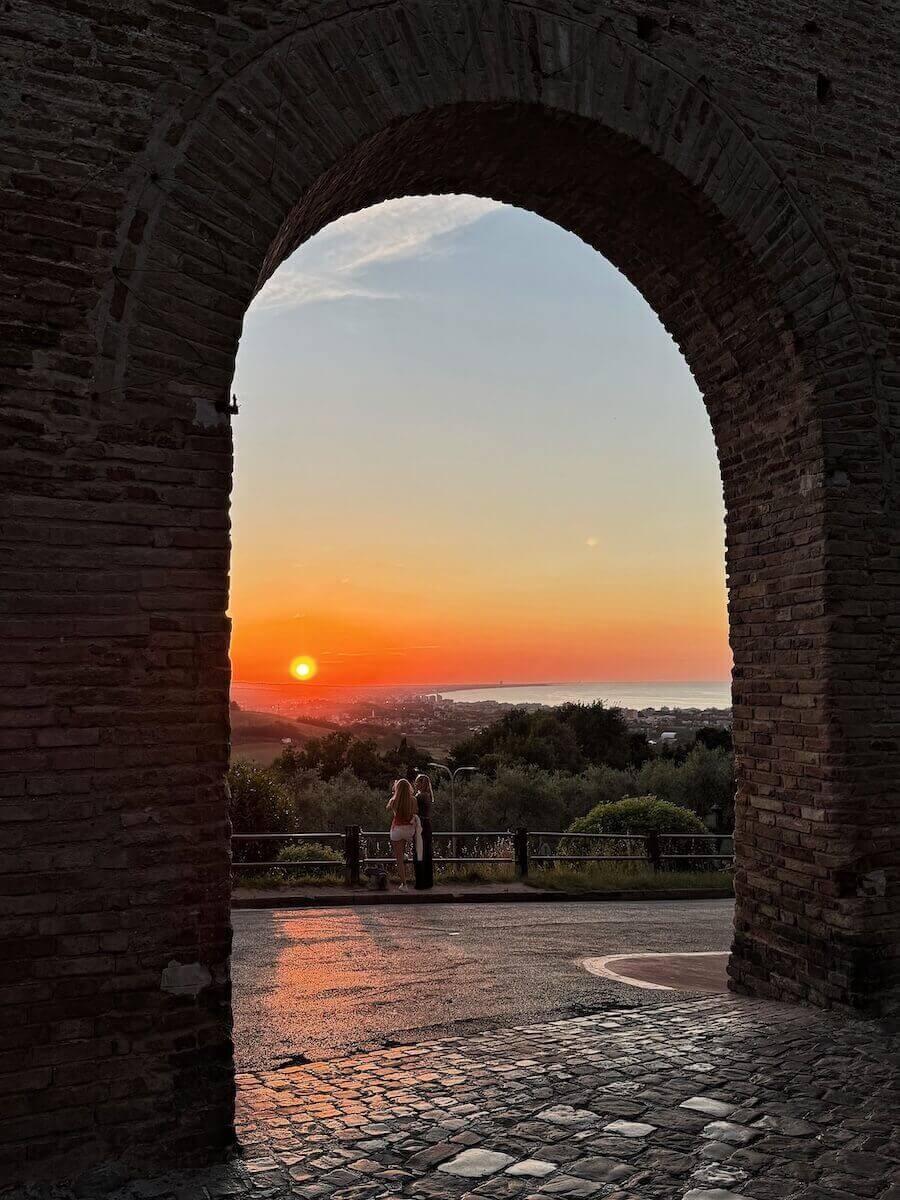
How To Get Around Le Marche, Italy
Like for Tuscany or Umbria, the best way to get around Marche is by car: in fact, you can easily reach all the major attractions, and you’ll have the freedom to plan your own itinerary and set your own schedule. For our road trip, we used a mix of state and provincial roads, as well as the occasional toll road.
For biking enthusiasts, I recommend exploring the region by bike as well. I met lots of cyclists on my trip, and there are tours designed specifically. Obviously, this isn’t a flat route, so take into account your fitness level, the weather conditions, and the type of bike you’re riding.
If you have lots of time, you could explore Northern Marche by public transport, but, as mentioned earlier, not all destinations are accessible by train, and buses are fairly slow so this is not ideal if you have limited time.
Planning this itinerary? Since many of these places aren’t easily reached by public transport, I recommend renting a car. Compare prices on Discover Cars here.
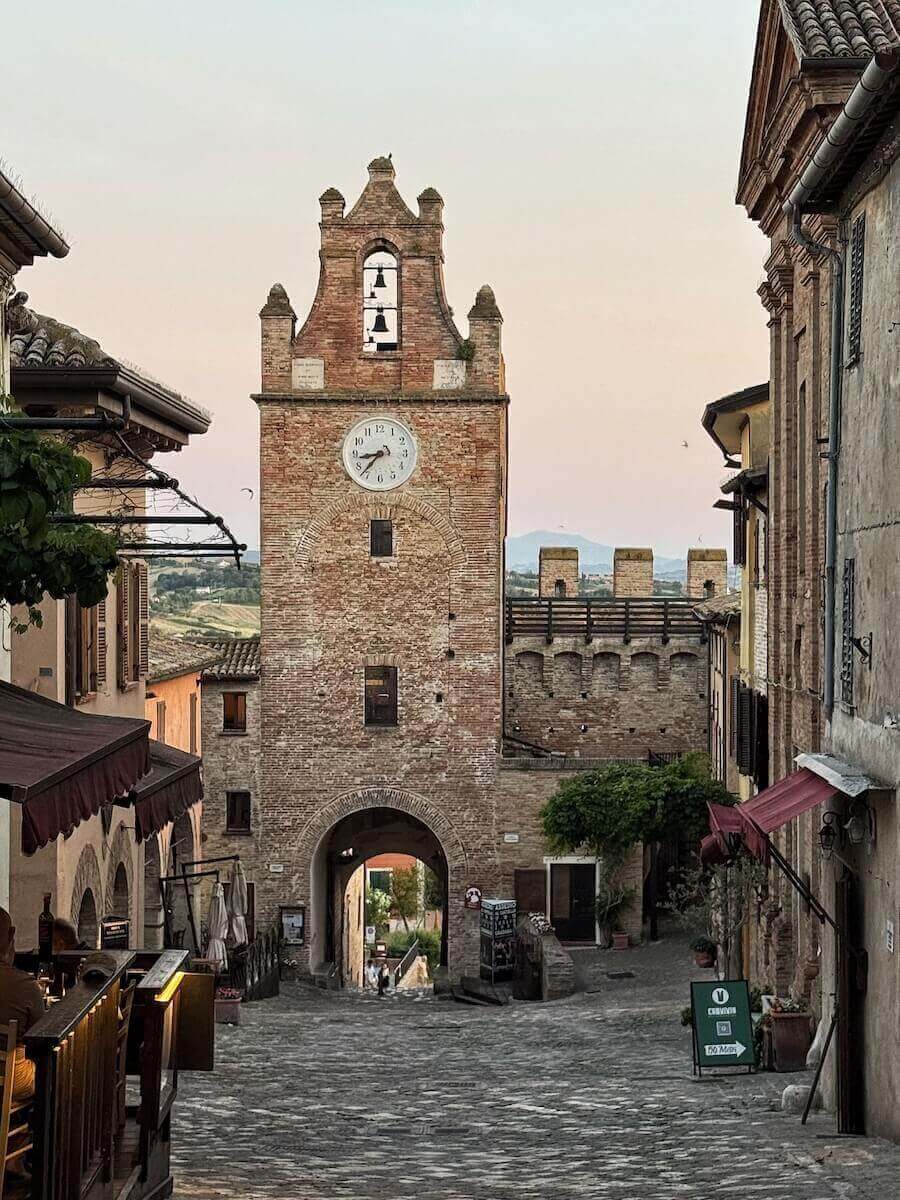
Is Marche Worth Visiting?
Absolutely. After spending five days exploring northern Marche, I came away wondering why the region isn’t more popular with international visitors. It offers an incredible mix of medieval villages, Renaissance cities, spectacular natural landscapes, excellent wineries, and outstanding food, it is very safe, yet it remains one of Italy’s most underrated destinations.
One thing that struck me throughout the trip was just how little tourism has developed compared to many other parts of Italy.
In some places, such as Mondolfo, the atmosphere was almost surreal. We visited on a Sunday and, apart from a small café where locals were gathered to chat and play cards, the village was almost completely deserted. If you’re expecting bustling piazzas, souvenir shops, and crowds of visitors, Marche may surprise you.
Personally, I found this to be part of its charm. The region feels authentic and refreshingly local, and you get to experience historic towns, family-run restaurants, and beautiful landscapes without competing with large crowds. If that’s the kind of Italy you’re looking for, Italy Marche region deserves a place high on your travel list.
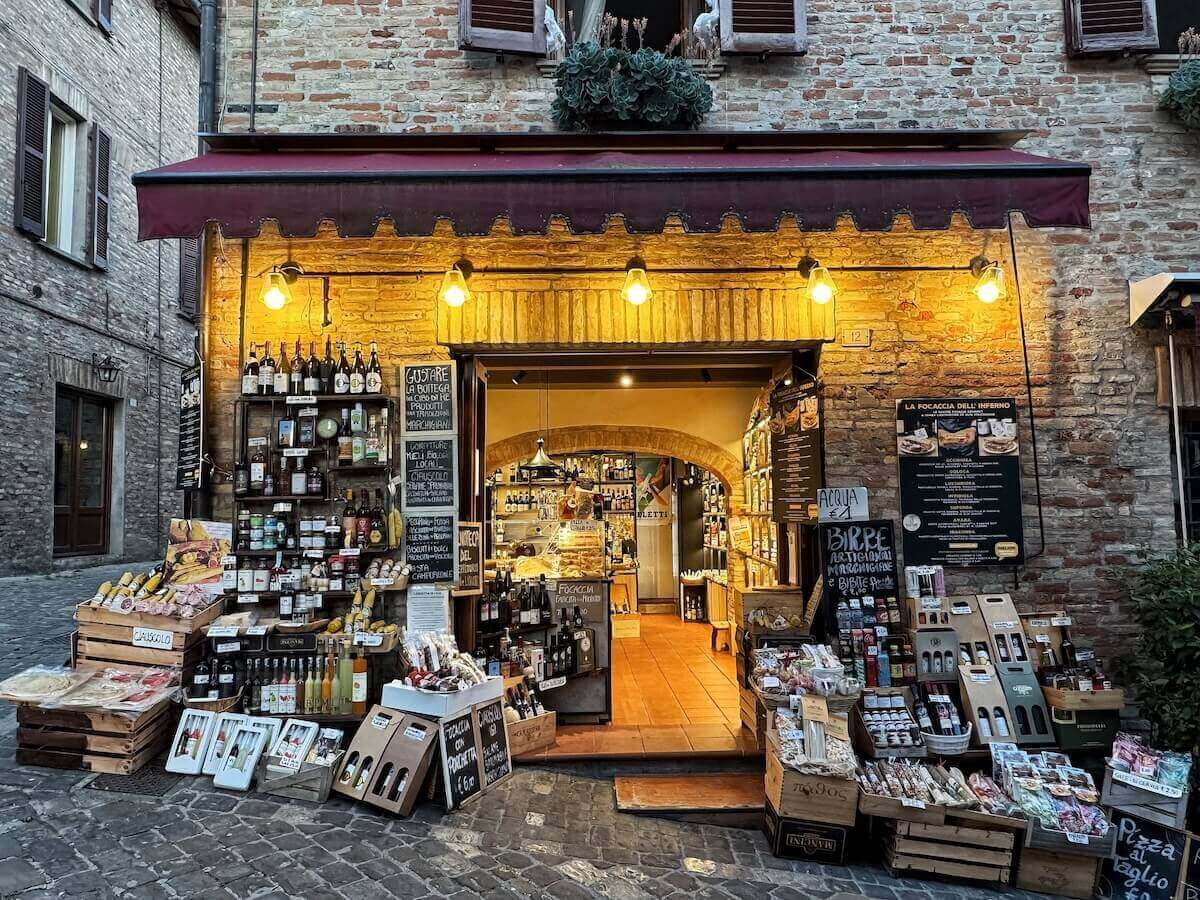
Best Time To Visit Marche, Italy
Much like the rest of Italy, Marche is a destination you can visit year-round. The best time to go really depends on the type of trip you’re planning and the experiences you’re after.
Winter is ideal if you enjoy festive traditions. Many historic villages host charming Christmas markets and display beautiful nativity scenes, while the mountains offer opportunities for winter sports.
Spring is one of the best seasons to explore the region. Mild temperatures and longer days make it perfect for sightseeing, hiking in the parks, and visiting hilltop villages.
Summer is the busiest time of year, when both locals and visitors head to the Adriatic coast to enjoy the beaches. It’s also the season for outdoor festivals, village celebrations, and long evenings spent dining al fresco.
Autumn combines pleasant temperatures with some of Marche’s best food experiences. It’s harvest season, so it’s an excellent time to visit wineries, while events such as the National White Truffle Fair in Acqualagna celebrate the region’s outstanding local produce.
FAQs on Visiting Northern Marche
Five days are enough to see the main highlights, including Gradara, Urbino, Frasassi Caves, Furlo Gorge, and several medieval villages. If you also want to visit Pesaro, Ancona, or spend time on the beaches, allow at least one full week.
Absolutely. Northern Marche combines medieval villages, Renaissance cities, dramatic natural landscapes, excellent wineries, and a beautiful Adriatic coastline, yet receives far fewer visitors than neighboring Tuscany or Emilia-Romagna.
Yes. While some towns can be reached by train, many of the region’s best attractions—including Monte San Bartolo, Furlo Gorge, the Marmitte dei Giganti, and several hilltop villages—are much easier to visit by car.
Not really. Coastal cities are well connected by rail, but many inland villages and natural attractions require a car. A road trip is the most practical option.
For a road trip, it’s easier to change accommodation once or twice. Gradara works well for the first part of the itinerary, while Urbino is an excellent base for exploring the inland attractions.
That’s subjective, but Gradara, Corinaldo, and Mondolfo are among the most beautiful. Each has remarkably preserved medieval architecture and a unique atmosphere.
Definitely. They are among the largest and most impressive cave systems in Europe, featuring enormous chambers filled with spectacular stalactites and stalagmites.
Spring and autumn are ideal thanks to mild temperatures. Summer is perfect if you also want to enjoy the Adriatic beaches, while winter offers Christmas markets and festive events in many historic towns.
Compared with regions such as Tuscany or the Italian Lakes, Marche generally offers better value for accommodation, restaurants, and attractions while delivering an equally rewarding travel experience.
Yes. Families will enjoy castles, caves, beaches, easy hiking trails, and charming villages.
Final Considerations
Before this trip, I knew very little about Marche. I knew I wanted to visit Urbino and the Frasassi Caves, but beyond that, the region had never really been on my radar. Five days later, I found myself wondering why.
Northern Marche offers exactly the kind of travel experience I enjoy most: beautiful historic villages, spectacular natural landscapes, excellent food and wine, and a pace of life that feels refreshingly slow.
It’s not a region that has been shaped around tourism. In fact, there were moments when entire villages felt almost deserted, with more locals than visitors enjoying the cafés and piazzas. For me, that authenticity was one of Marche’s greatest strengths.
Of course, five days are only enough to scratch the surface. I still want to return to visit places such as Pesaro, Ancona, and Fabriano, and I’m sure there are countless villages, wineries, and hiking trails I have yet to discover.
If you’re looking for a destination that feels genuinely Italian, where you can experience history, nature, and outstanding cuisine without the crowds found elsewhere, I wholeheartedly recommend adding northern Marche to your travel plans. I know I’ll be back.
Recommended Readings


Ultimate Local Viterbo Travel Guide: Best Things To Do And Tips
25 Best Hidden Gems In Italy – What To See In Italy Off The Beaten Path
PIN IT!

Claudia Tavani
Claudia Tavani was born and raised in Sardinia, and after moving between the United States and the United Kingdom, she's now back living in her hometown, Cagliari. She's a travel blogger and certified travel designer who loves planning trips and publishing guides, travel tips, and packing lists so that you don't have to. Owner of Strictly Italy, cat mom to Minnie. Loves pizza, hiking, archeology, cities, beaches, swimming, and running. Hates peppers.