
You know of Italy’s most popular cities, like Rome, Florence, Venice, and Milan, and the most famous Italian landmarks. But how much do you know about the hidden gems in Italy? You are in good hands here.
I’m not a fan of extreme travel gatekeeping. I have my secrets, but I also think it’s important to share travel tips and unique destinations because, often, these hidden gems give travelers a more authentic peek into Italian living.
When traveling to Italy, you should definitely hit all the tourist hot spots. After all, they are popular tourist destinations for a reason. However, if you’ve already visited Italy several times or have a little extra time to explore some of the best-kept secrets in Italy, you might want to go somewhere different.
From small villages to bustling local towns, these hidden gems of Italy will give you an entirely new perspective on the country and culture on the outskirts of the tourist destinations.
Ready to learn all about my favorite Italy hidden gems? Let’s get started!
Best Hidden Gems In Italy
Northern Italy
Trento (Trentino)
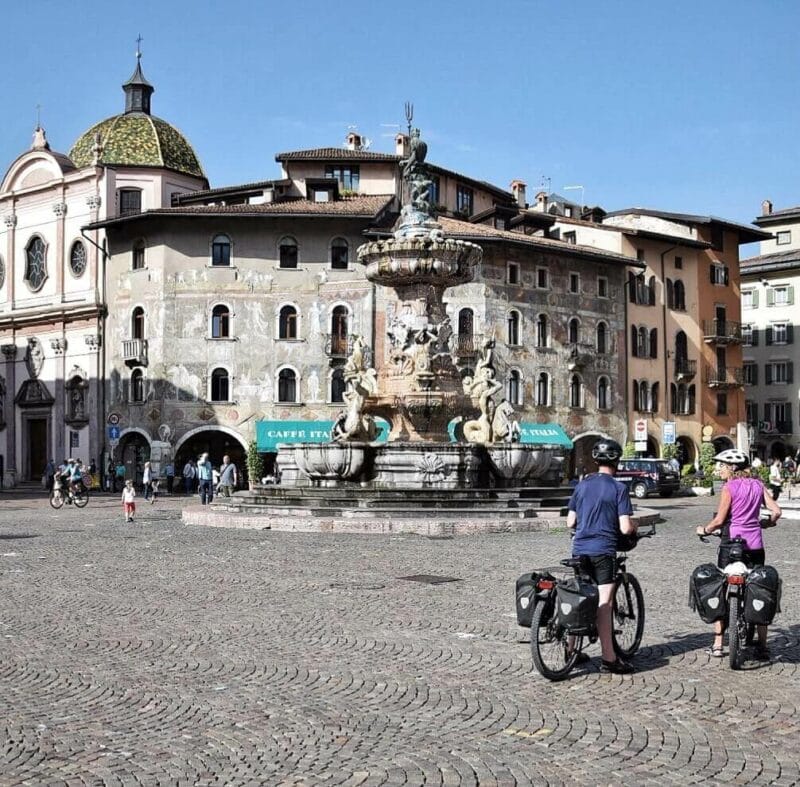
Trento is one of the best hidden gems in Italy, tucked away in the heart of the Italian Alps. It’s in the Trentino region in northern Italy. It was actually once part of Austria-Hungary and was annexed into Italy in 1918.
However, even when the region was under Austria-Hungary rule, many people in Trento had connection to the “Italian” identity, as some of the local population spoke Italian and the region was once a Roman colony.
Today, Trento and the Trentino culture reflect Italian heritage, Austrian heritage, and Alpine influence, making it a completely different experience for travelers.
It was always an important city because of its location on the trade route between Verona, Italy, and Innsbruck, Austria. However, Trento is also famous for the Council of Trent, hosted in 1545 and 1563, to bolster the Roman Catholic Church with reforms in response to the Protestant expansion.
While the culture and history are worth noting, Trento is also one of the best hidden gems of Italy because of its gorgeous, medieval historical city center and its proximity to the Trentino Dolomites.
When visiting Trento, Italy, visit Orridio di Ponte Alto waterfalls, ride the funicular over the Adige River, take a photo in front of Neptune Fountain, and spend some time in Piazza del Duomo.
If you have a short time in Trento, I recommend a walking tour of the historic center. This Trento: Guided Walking Tour of the Historic Centre is the best way to see all the main sites with a knowledgeable guide and learn more about the history and culture.
Treviso (Veneto)
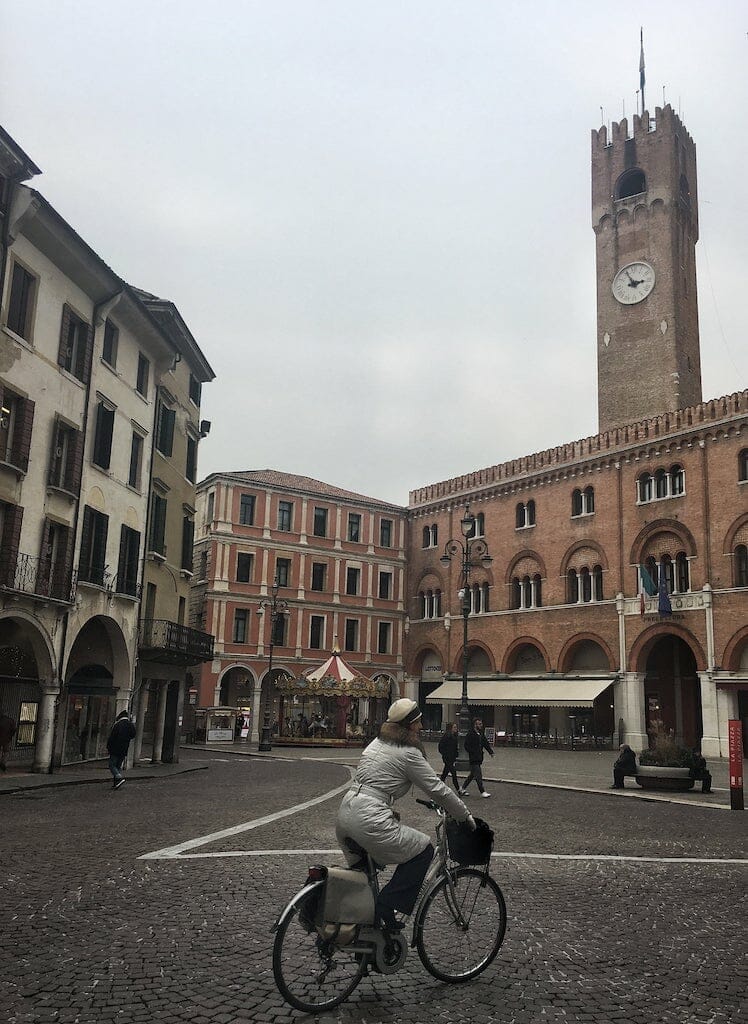
Treviso is one of my favorite Italy hidden gems, and it’s actually only about 30 minutes outside Venice. If you want to travel like a true local, you can even do what I did and use Treviso as a base to explore Venice (although my cousin does live in Treviso, so it was more convenient for me). Otherwise, you can visit Treviso on a day trip from Venice.
Treviso has a quintessential Italian historical center, canals, waterways cutting through much of the small city, and walls alight with beautiful frescoes. There are very few places in Italy more charming than Treviso.
I recommend anyone seeking the best hidden gems in Italy check out Treviso for the quintessential Italian community, but it’s also a must-visit for real foodies. This is home to tiramisu, the most popular Italian dessert – which is now available everywhere in the country. And it’s also right next to Italy’s prosecco-producing region.
So, it’s arguably the best place in the country to relax with a delicious tiramisu and a glass of prosecco.
If you don’t have time to visit Treviso but the idea of the local prosecco piqued your attention, you can also take a prosecco tour from Venice. This Venice: Prosecco Hills Wineries Tour with Tastings and Lunch is a great experience. It starts in Venice and takes you to a local winery, where you can taste some of the most delicious local prosecco. It doesn’t visit Treviso, but it comes close, so you’ll get an idea of the region.
Lake Orta (Piedmont)
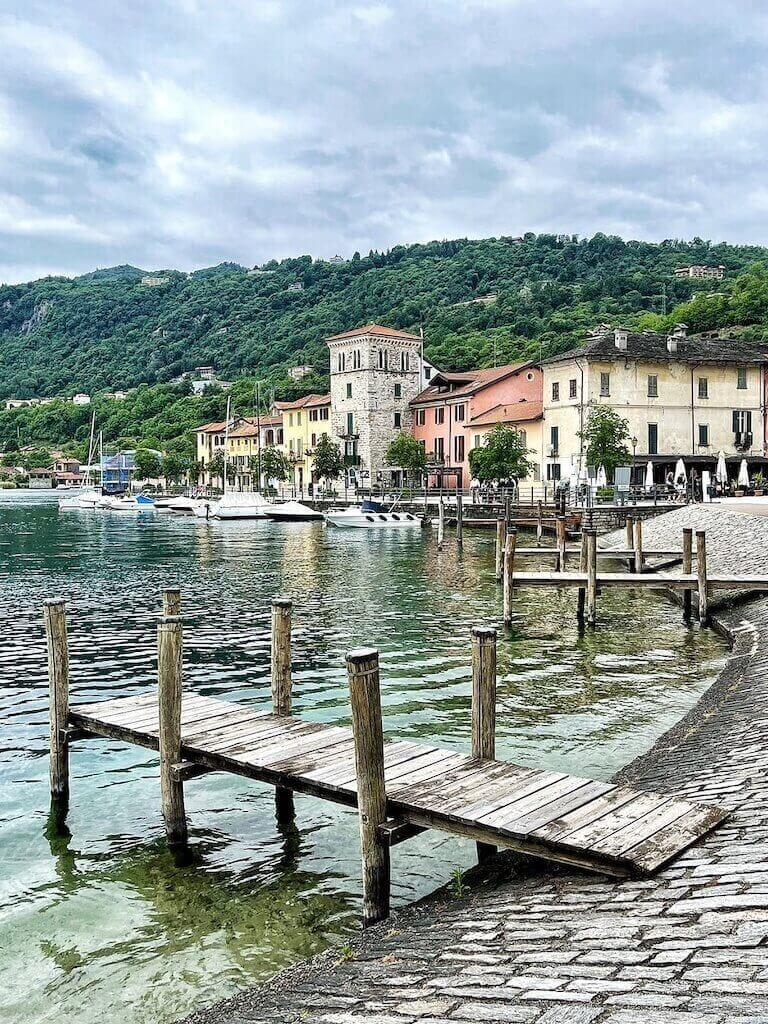
Lake Garda, Lake Como, and Lake Maggiore are arguably the three most well-known lakes in Italy, but they aren’t the only lakes. If you want to uncover the best Italy hidden gems and are a fan of lake life, you have to visit Lake Orta (Lago di Orta) in Piedmont.
About 40 km (25 miles) southwest of Lake Maggiore, Lake Orta is the most western of the subalpine lakes but sees significantly fewer tourists and travelers.
It’s a relatively small lake, but there’s no shortage of beautiful views and things to do. Several villages are scattered around the lake, including Orta San Giulio, Omegna, Pettenasco, and Pella. There are frequent ferry services around the lake and to the different villages, so you can easily get out and explore a handful of them.
Isola San Giulio is an island on Lake Orta worth visiting. The small island can be easily identified by a small handful of colorful buildings and historically relevant monuments (though only a few families actually live on the island).
Take a second to breathe in the fresh air and beautiful scenery. As it’s on the foothills of the Alps, it’s a great spot to admire the vast mountains and natural surroundings on a sunny day.
Visiting Orta San Giulio is a must-do when at Lake Orta. If you’d like a guided tour, I recommend this Private Tour of Orta San Giulio on Lake Orta. It’s an informational private tour with an excellent local guide. You’ll learn about Orta San Giulio, the region, and all the main attractions. Since it’s private, it’s also customizable.
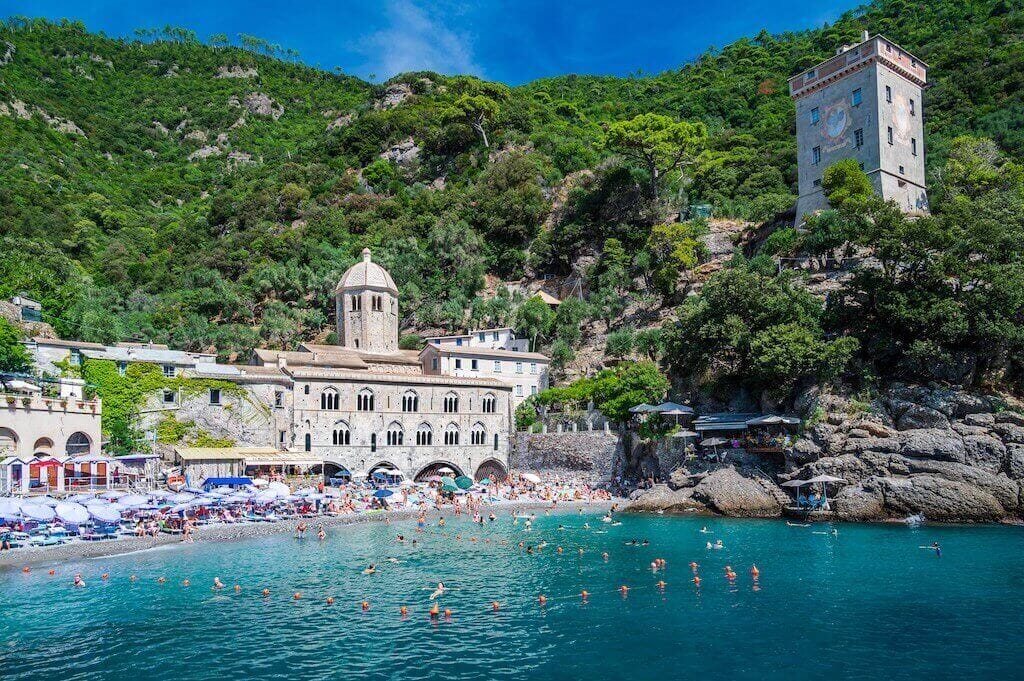
Camogli (Liguria)
To experience the Italian Riviera like a local, you must visit Camogli.
Camogli is one of the best kept secrets in Italy and on the Italian Riviera. The Italian Riviera stretches a whopping 350 km (218 miles), with dozens of cities, towns, and tourist destinations scattered along the route. Cinque Terre and Portofino are two of the most popular tourist destinations on the Riviera but aren’t the only ones.
Camogli is a small fishing village jutting out over the blue Ligurian Sea. It has picturesque buildings and an untouched, romantic vibe. The buildings were actually painted with apricot, amber, and cinnamon, creating a unique, bright pastel setting.
The marine views and memorable architecture make this town worth visiting, but there are also many other great tourist activities.
Castello della Dragonara (Dragon Castle) is an important castle dating back to the 12th century. It’s built on a cliff overlooking the village of Camogli, giving you the best views of the sea and town.
If you’re feeling extra adventurous, you can also take a short boat ride to Punta Chiappa, where you can find a beautiful hike along the Gulf of Paradise. You should also stretch to the San Fruttuoso Abbey, located in San Fruttuoso Bay – the only way to get there is via a coastal hike.
If you don’t have time to dedicate to Camogli, you can also take a day trip from Genoa. There are tons of guided day trips. I recommend this Genoa: Full-Day Tour to Camogli, San Fruttuoso & Portofino. The tour includes plenty of free time in Camogli and some other gems in the region.
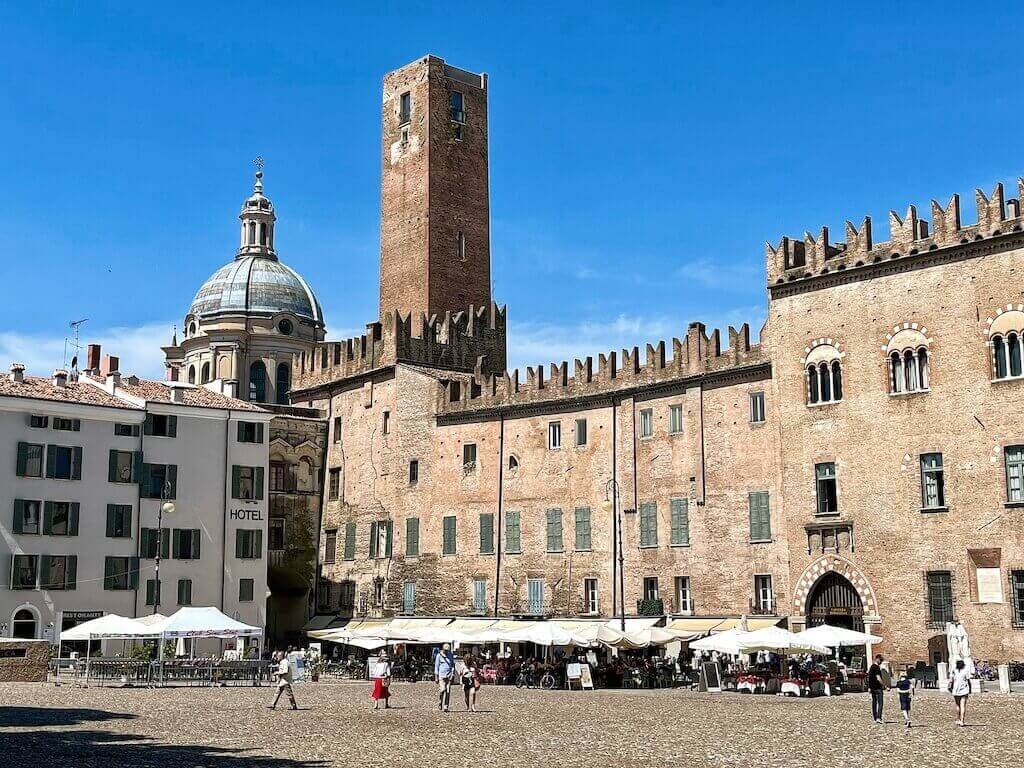
Mantua (Lombardia)
Mantua is another of the best hidden gems in Italy due to its cultural and artistic richness. It’s easy to visit from Bologna, Verona and even on day trips from Milan (there are regular trains), and it’s every artist’s dream.
The city as we know it today was built entirely by the Gonzaga family, a noble dynasty that ruled over Mantua in the 14th through 18th centuries.
The Gonzaga family was not without faults, but they did go to considerable lengths to try to cement Mantua and its legacy in time with immense investments in art and architecture. Nowadays, the city is famous for its elegant architecture, including gorgeous palaces with a heavy Renaissance influence.
One of the best things to do when visiting this hidden gem Italy is to explore the Ducal Palace (Palazzo Ducale di Mantua). This complex of buildings was built between the 14th and 17th centuries.
The buildings are connected by hallways and corridors. There are over 500 rooms, eight courtyards, and seven gardens. The most famous one is the Camera degli Sposi, decorated with beautiful frescoes.
If you’re looking for more things to do in Mantua, I recommend exploring Rotonda di San Lorenzo, Palazzo Te and enjoying the views from Piazza Sordello.
My post The Best Things To Do In Mantua shares more about the city’s best attractions.
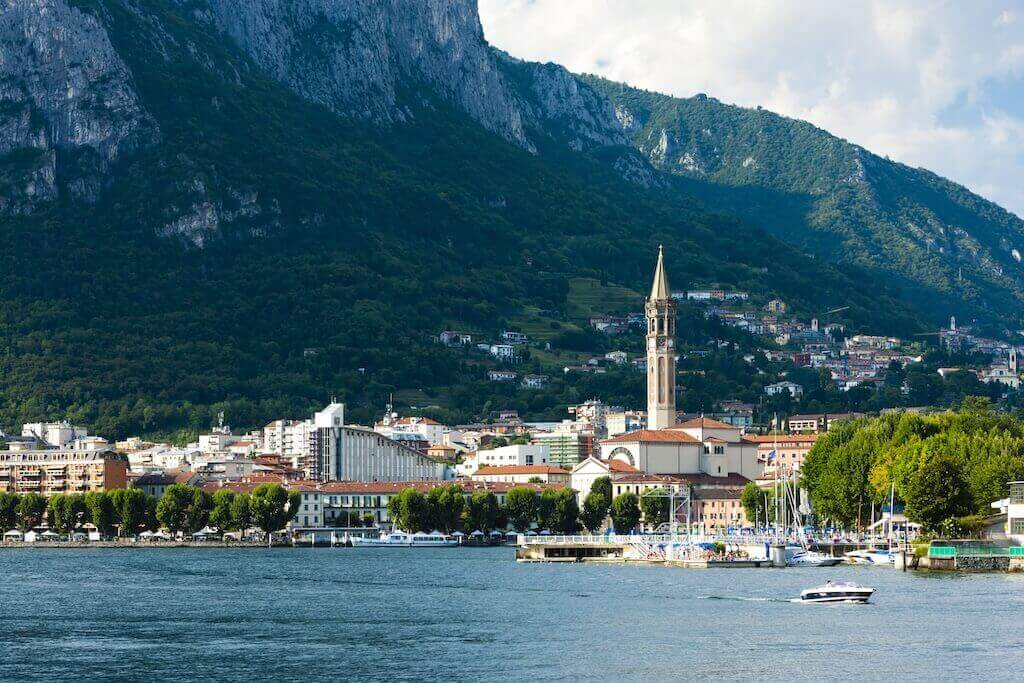
Lecco (Lombardia)
Lecco is arguably one of the most underrated Italian gems on Lake Como. This town, one of the best kept secrets in Italy, is located on the southern tip of Lake Como, in the foothills of the Northern Alps. You’re treated to incredible Lake Como views and breathtaking Alpine backdrops from this location.
Lecco is too often overlooked. It may not be as well-known as other towns and villages along the lake, but that doesn’t mean it’s not worth your time.
Visconti Bridge (Ponte Azzone Visconti), a medieval bridge constructed between 1336 and 1388, is one of the fascinating things to see in Lecco. The marvelous bridge connects Lecco to Malgrate and is still in use today.
If you’d like outdoor fun during the summer, you have to ride the funicular from Lecco to Piano d’Erna. Piano d’Erna is a beautiful, mountainous resort overlooking Lecco and Lake Como. There are tons of great hiking trails there, all with unbeatable views.
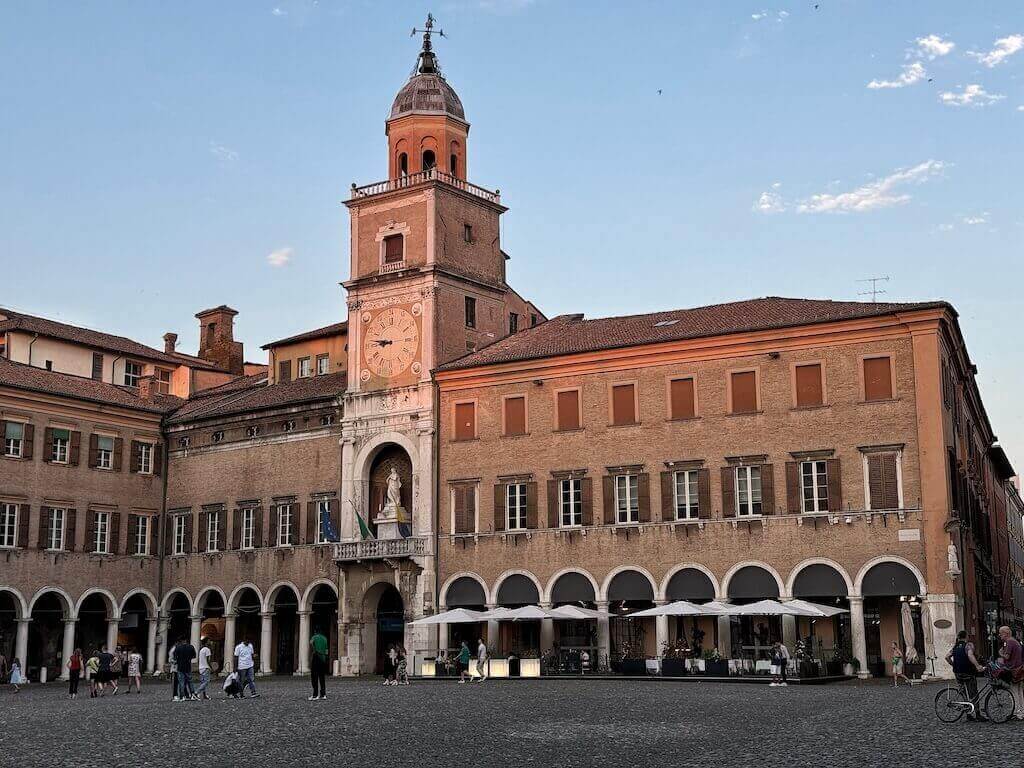
Central Italy
Modena (Emilia Romagna)
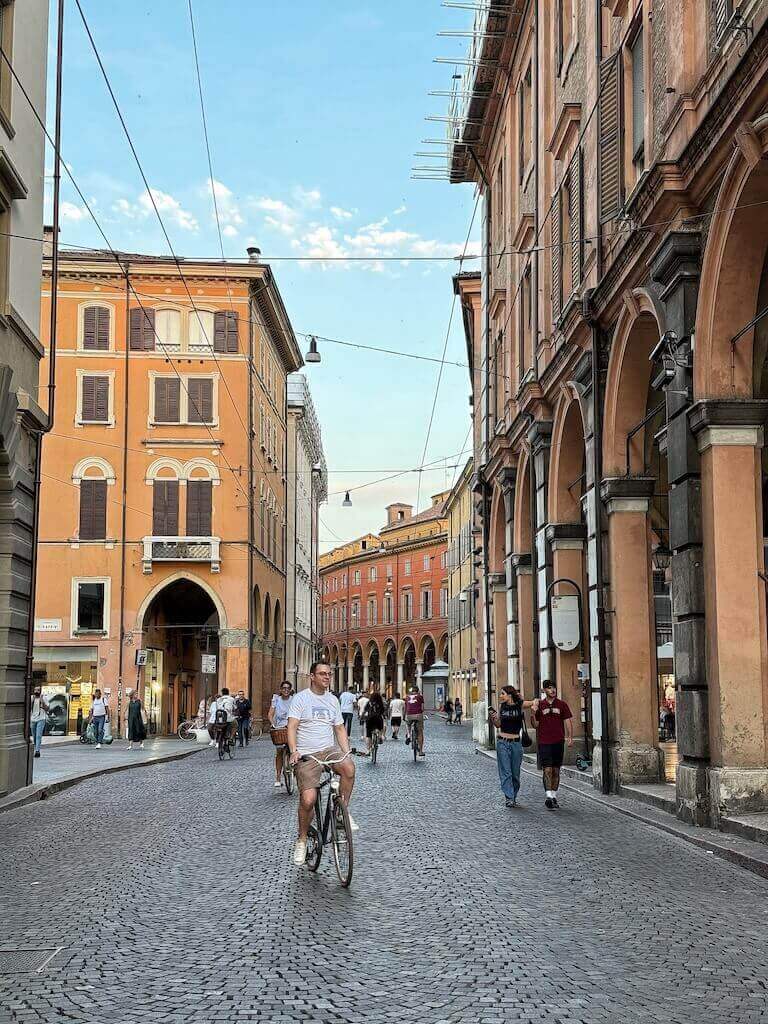
Modena, only about 20-30 minutes by train from Bologna, is one of the best hidden gems in Italy. Despite being easy to reach from major Italian cities, there are few tourists and endless charm on every corner.
One of the best reasons to visit Modena when traveling to Italy off the beaten path is its food. The famous tortellini, a meat-stuffed pasta, comes from the Emilia Romagna region, or more specifically, from Modena and Bologna. And you can find impeccable, mouth-watering meals at almost any restaurant in Modena (I tried Il Giardinetto and Zaman and loved both).
In addition to the food, there are many other things to do in the small city. The Duomo di Modena is an iconic Romanesque Cathedral dating back to 1184. You should also visit Galleria Estense, one of the most elegant and underrated art museums in Italy.
While the city is worth exploring, with its beautiful architecture, the surrounding areas are just as stunning. Outside Modena are some excellent hikes, incredible viewpoints, and tons of outdoor activities.
My post The Best Things To Do In Modena highlights more interesting activities in this lovely Italian hidden gem.
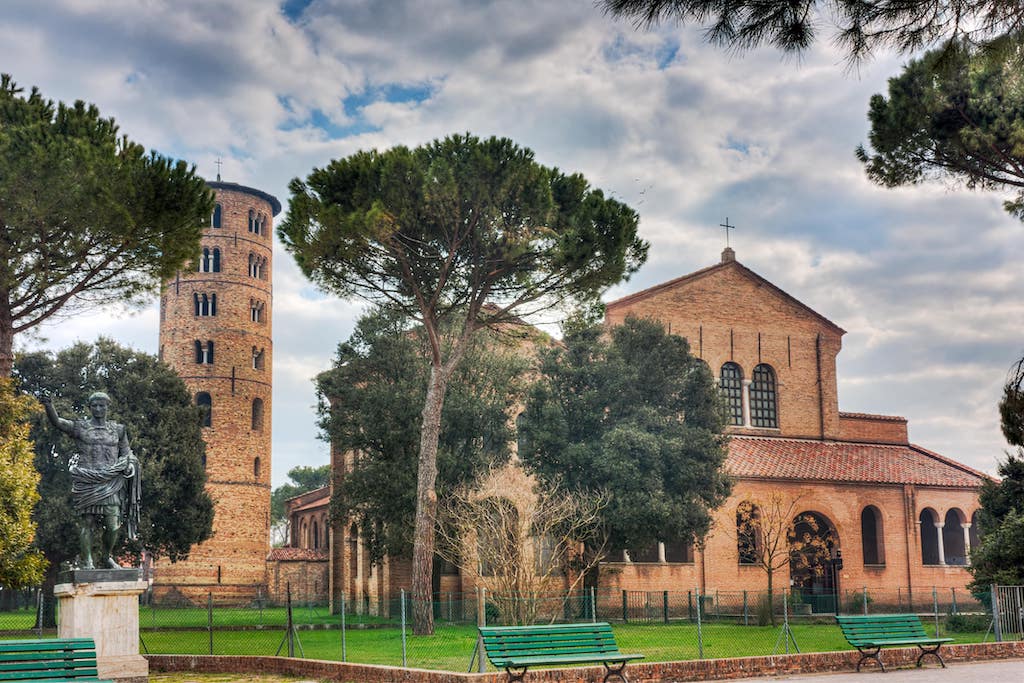
Ravenna (Emilia Romagna)
Once the capital of the Western Roman Empire, Ravenna is another one of Italy’s best hidden gems for culture, tranquility, and authentic Italian vibes.
The city is about an hour from Bologna but has significantly fewer tourists than Bologna, Venice, or Florence. Despite its low popularity among tourists, it’s one of the most cultural places to visit. In fact, the early Christian monuments in Ravenna are a designated UNESCO World Heritage Site.
There are eight critical monuments in Ravenna: the Mausoleum of Galla Placidia, the Mausoleum of Theodoric, the Neonian Baptistry, the Arian Baptistery, the Basilica of Sant’Apollinare Nuovo, Basilica of Sant’Apollinare in Classe, the Archiepiscopal Chapel, and the Church of San Vitale.
If you’d like to see all the Christian monuments and learn more about them, check out this Ravenna: UNESCO Monuments and Mosaics Guided Tour. It’s an incredible experience, and learning more about the monuments’ backstories makes exploring Ravenna much more fascinating.
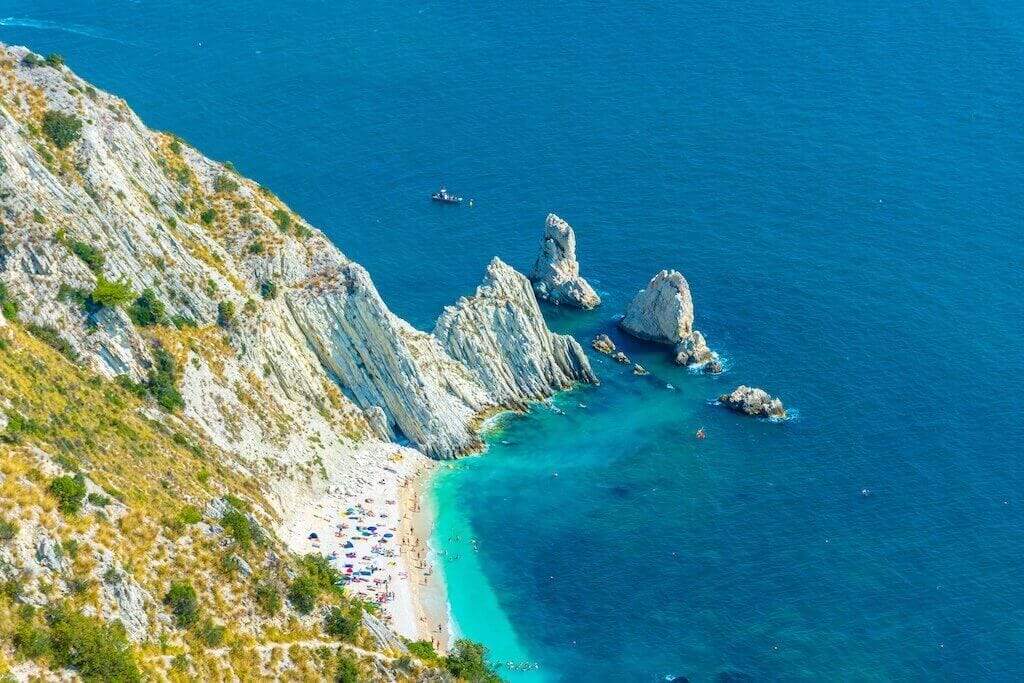
Parco del Conero (Marche)
Parco del Conero is a regional park in the Marche region of Italy. The park was established in 1987 to protect the diverse flora and fauna that thrive in the region. The regional park is centered around Monte Conero, the highest peak along the Adriatic Sea.
The park is right on the coast, with rugged rocks and rock formations jutting out into the Adriatic Sea, giving an intense and one-of-a-kind viewpoint.
Throughout the park, there are 10+ hiking trails, biking trails, and even horseback riding trails. Most trails are fit for beginners, so it’s the perfect escape for anyone who loves the outdoors and wants to escape the many Italian cities and sites.
Sirolo, Numana Alta, and Numana Bassa are three of the easiest starting points to visit Parco del Conero.
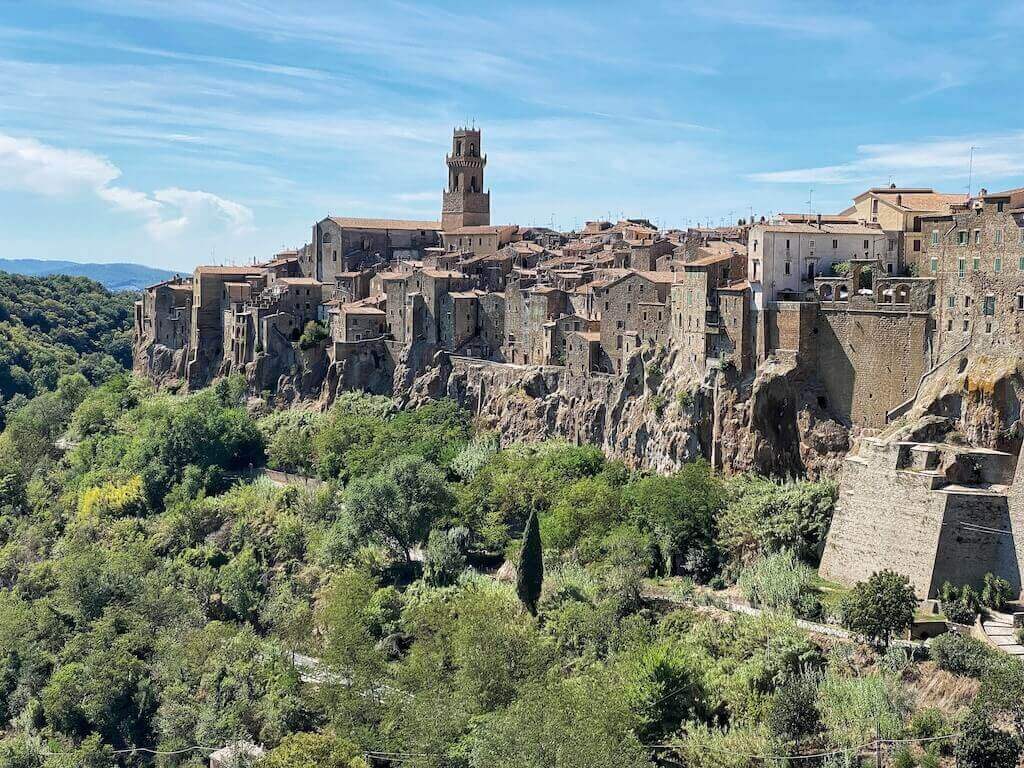
Pitigliano (Tuscany)
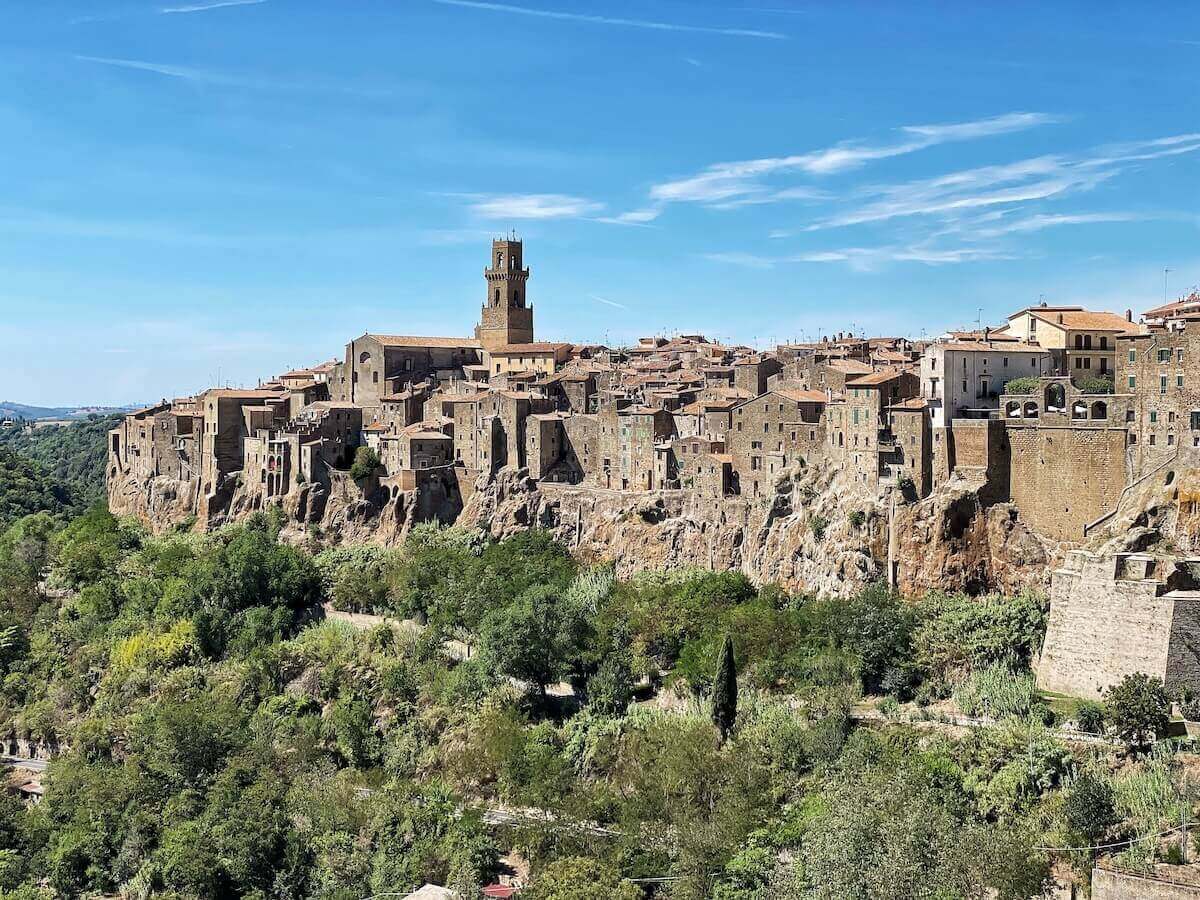
Pitigliano is one of my favorite hidden gems of Italy. It’s located in the Maremma Region in southern Tuscany and is one of the best off-the-beaten-path towns to visit and see the hidden sides of the Tuscany region.
One of the most unique characteristics of Pitigliano is its connection to the Jewish community. The town has a very complex and unique history, as this is where many Jewish families sought refuge between 1555 and 1569 when forcefully driven out of the Papal territories.
Besides learning more about and exploring what many call “Little Jerusalem,” there are tons of other great things to do in Pitigliano. Some of these include visiting one of the many museums, visiting the Duomo of Pitigliano, taking a tour of the underground tunnels, and learning more about the unique Vie Cave.
There are no direct trains to Pitigliano, but you can take local buses from Siena, Florence, Grosseto, and other major Italian cities. However, I recommend renting a car for this excursion as there’s a lot to see along the way (including the Terme di Saturnia, which contrary to Pitigliano are extremely popular), and it’s better to have a little independence.
While in Pitigliano, you can combine wine tasting with hiking and mini-history lessons. If you’re interested in the above, I recommend this Pitigliano in the Footsteps of the Etruscan: Hike and Wine Tasting Experience. You’ll be immersed in the Vie Cave, find secret caves, and enjoy wine tasting in a hidden cellar.

Perugia (Umbria)
Perugia, the capital of Umbria, is well-known amongst most Italians, but very few tourists venture out this way, making it one of the best hidden gems in Italy.
Perugia is famous for the defensive walls surrounding the historic city center, which only add to the beauty and fascination of an already lovely city. However, it’s also quickly becoming the chocolate capital of Italy.
The Perugina Chocolate Factory, located in Perugia, is where the famous Baci Perugina chocolates are made. The city also hosts the Eurochocolate Festival in October or November, which is worth checking out if your dates align with it.
The Etruscan Well (Sorbello Well) is another must-see if you’re looking for more interesting things to do. Built in the second half of the 3rd century to supply the city with water, it is still a marvelous work of architecture and design.
If you have time in Perugia, consider joining a local food tour. Not only will you try some of that famous chocolate, but you’ll also get to experience and learn more about the Italian regional cuisine. I recommend this Taste Perugia Food Tour Led by Local. The tour lasts around three and a half hours, filling you with delicious local snacks, chocolate, and wine.
If you’re interested in Italian regional cuisine on the whole, make sure to check out my post, Must-Try Traditional Italian Food. It’s a good way to prepare for a trip to Italy so you can try all the amazing, regional dishes.
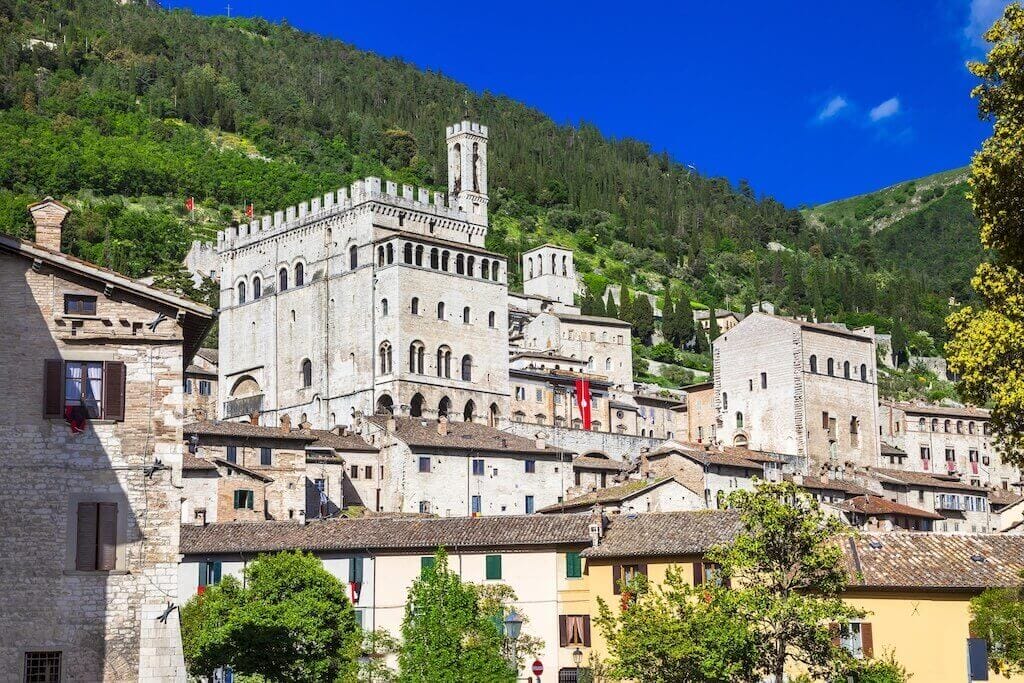
Gubbio (Umbria)
Gubbio is another of the most underrated, hidden gems of Italy. It’s about an hour from Perugia, so it’s best to visit after a few days in Perugia. There are no direct train lines to Gubbio, so you should travel by bus (quick from nearby towns) or rent a car and drive yourself.
Gubbio is relatively unknown, making it one of the most authentic places in Italy.
The Palazzo dei Consoli, a remarkable palace overlooking the stone town of Gubbio, is one of the best places to visit. Built in the 14th century, it has advanced architecture, made evident by its sheer height and the magnificent staircases throughout.
Another must-do in Gubbio is to ride the Funivia Colle Elette. This is like a gondola or funicular, but also somewhat different. It serves the same purpose, to bring you up the mountain, but it’s actually more like a tiny birdcage. The funivia fits two people in each “cage” and takes you up the mountain, where you can enjoy more beautiful views of Gubbio.
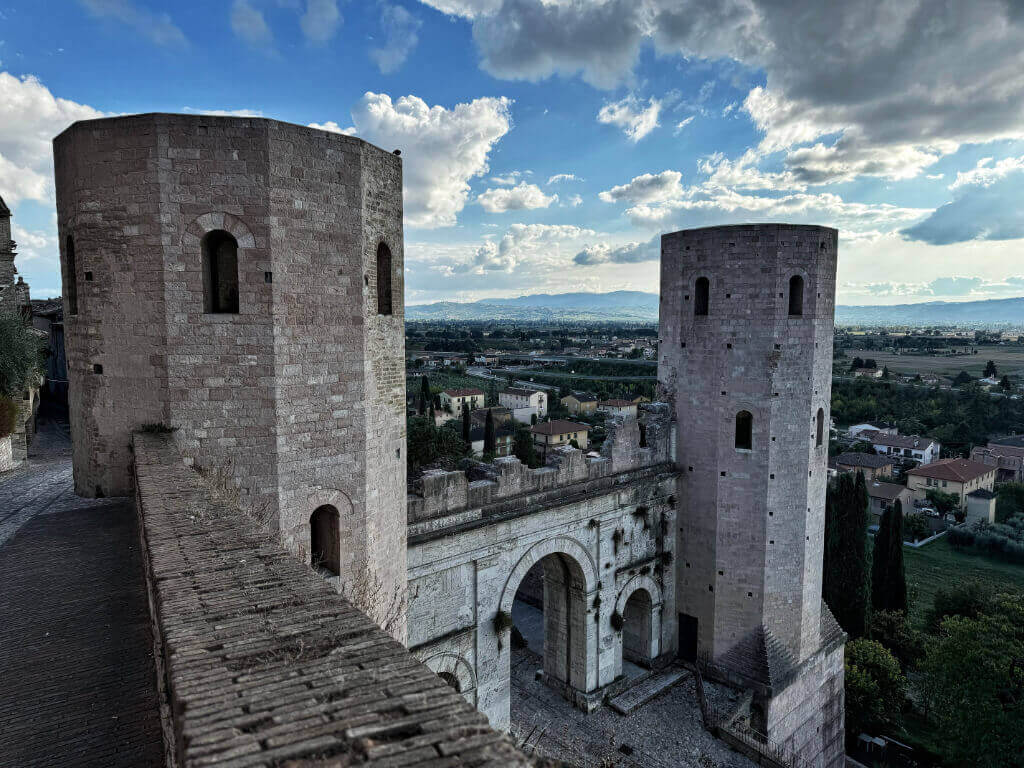
Spello (Umbria)
The charming town of Spello is the textbook definition of a small Italian town, and surprisingly, very few foreign people even know about it.
This little town has everything you think of Italian charm: cobblestone streets, narrow roads, hilly sidewalks, flowers lining the walls, and, of course, friendly locals. At times, it feels like you’re stepping out of an Italian storybook, honestly.
One of the best things to do in this hidden gem Italy is to enjoy the town simply. Stroll around the small neighborhood, grab a coffee, aperitivo, or some Umbrian wine, and enjoy the floral scenery.
It’s also surprisingly easy to get here. There’s a direct train from Rome (around 2 hours) and plenty of transportation options from Perugia and Assisi.
My post Where Is Umbria? explains some essential facts about Umbria and the reasons why you should visit. I also have a detailed Useful Guide To Spello that you can read for more things to do.
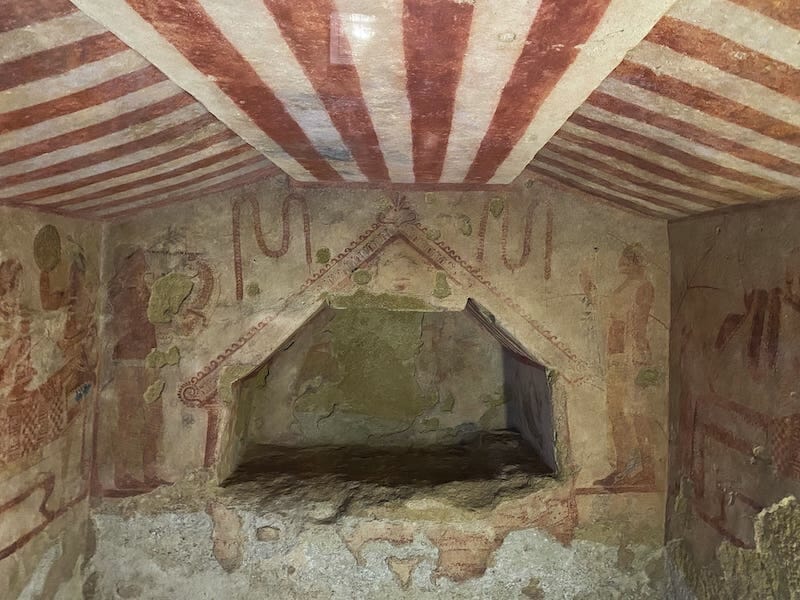
Tarquinia (Lazio)
Tarquinia is another perfect place for those wanting to find the best hidden gems of Italy. The town is ideal for history lovers. It’s said this is where many of the famous Roman ceremonies came from, and there are lots of historic artifacts left behind that may prove this.
The Etruscan Necropolis of Tarquina is a 7th-century BC historic burial site in Tarquina. The burial site is one of the most important of the Etruscan remains. Over 6,000 tombs have been excavated, 140 of which contain essential frescoes of the life of the Etruscans.
You can visit several tombs, with the Fowling and Fishing Tomb being the most important. It’s estimated that the frescoes that line the wall were painted in 520 BC, depicting a vivid illustration of hunting and surviving in the Etruscan world.
If you’d like to learn more about Etruscan society, the Tarquina National Museum is one of Etruscan culture’s most unique and fascinating displays.
But that’s not all this Italy off the beaten track destination has to offer. You can also visit the historic center and take a few day trips to some more scenic regions of Lazio.
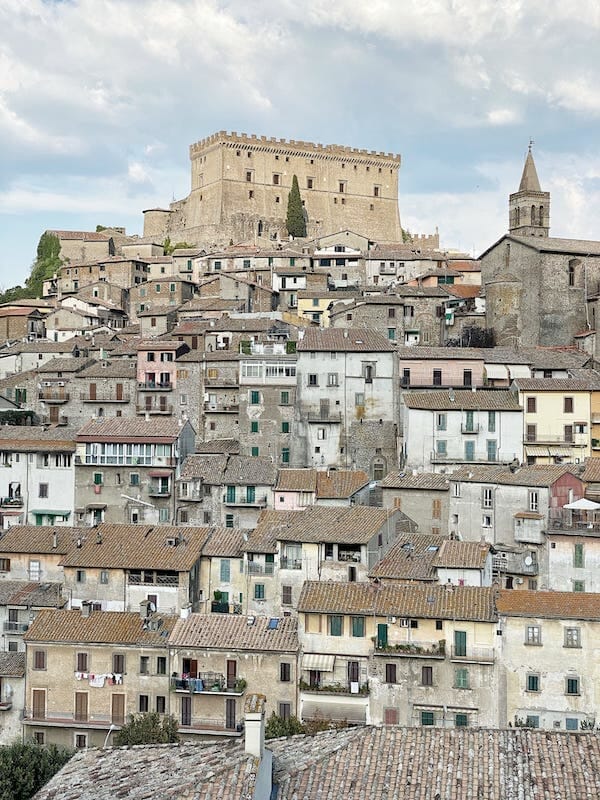
Soriano nel Cimino (Lazio)
Soriano nel Cimino is another great Italian hidden gem (and a favorite of mine: I have some family there and go all the time), perfect for those who want to experience a more authentic Italian small. It’s located only about an hour from Rome by car, so it’s also a unique day trip from Rome and an excellent way to escape the chaos of the city.
Soriano nel Cimino sits right on the slopes of Monti Cimini, and much like other places in this part of Lazio, it is another little town with a rich Etruscan history.
Castello Orsini is one of the best attractions in Soriano nel Cimino. Not only is the castle beautiful, but it also has a fascinating backstory. It was once the summer house of Pope Nicolas III and served as a prison until 1989. Nowadays, you can explore the castle, admire the views, and learn more about its history.
Another great thing to do while strolling the mellow streets of Soriano nel Cimino is to admire the many gates around town, including Porta del Ponte, the primary access to the walled city. For a bit of nature, consider going to the Faggeta Vetusta, a beautiful beech forest that is also a UNESCO site.
Overall, Soriano nel Cimino is one of the most charming places in central Italy and really shouldn’t be missed while on the hunt for the best hidden gems in Italy. You’ll love the charming historic center, the unique architecture and history, and the overall low-key vibes.
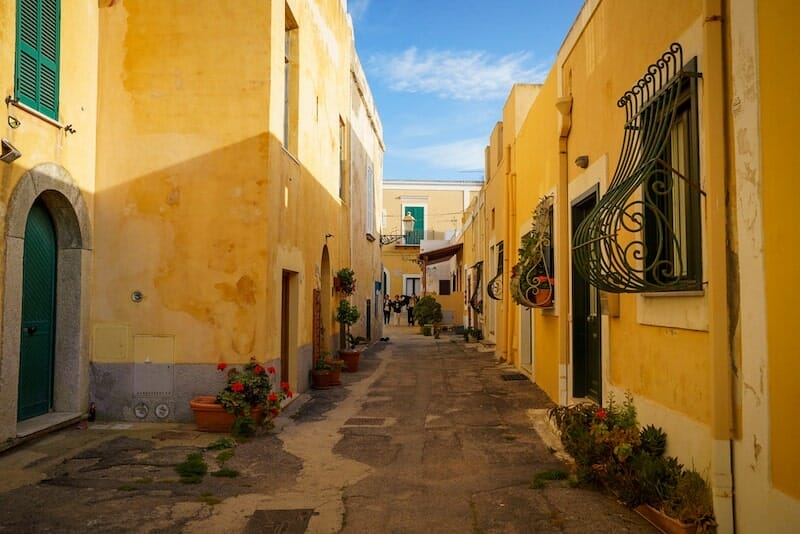
Ventotene (Lazio)
Ventotene is the next Italy off the beaten path destination in Central Italy, and it is unlike any other. It’s actually a tiny island, a part of the Ponziane Archipelago. Ventotene is roughly halfway between Ponza (the archipelago’s largest and most popular island) and Ischia.
Ventotene is actually a part of a protected marine reserve and one of the most underrated Italian islands.
When you think of islands, you likely think of beaches, sun, and paradise. And while Ventotene has a few lovely beaches (Cala Nave is my favorite), it’s not the only thing to do there.
The island is actually made from a volcanic eruption, so the sand and beaches aren’t as picturesque as other islands. But where the island is short on tropical beaches, it makes up for in culture and history.
Villa Giulia is one of the most fascinating places on the island. It’s an ancient Roman villa on the northern tip of the island. The massive area has thermal baths, gardens, and even aqueducts. Emperor Augustus ordered the villa’s construction as his summer palace, where he later sent his daughter, Julia the Elder, for exile (thus the name).
But there are lots of other fun activities on the island, including exploring Ventotene town itself and the central plaza, Piazza Castello.
Southern Italy
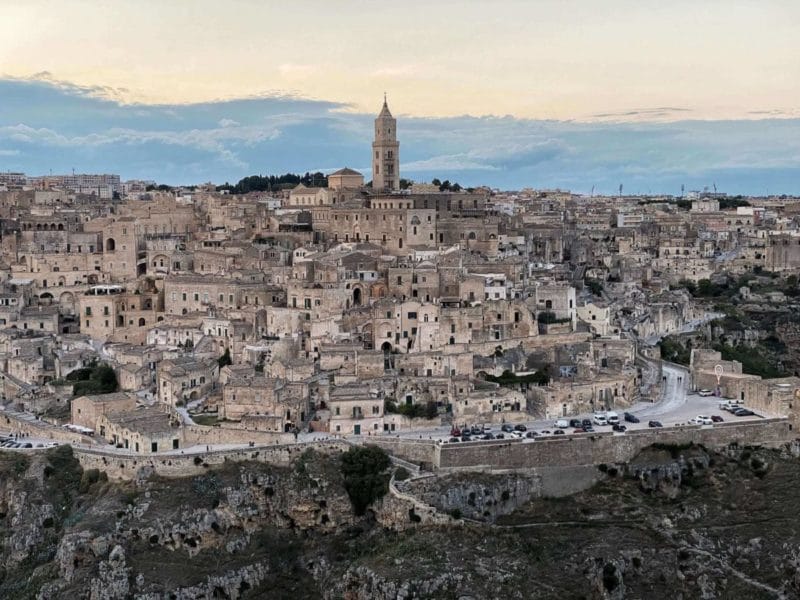
Matera (Basilicata)
Matera isn’t the best example of Italy off the beaten track because, well, a lot of Italians know about it. After all, it’s known as one of the oldest inhabited cities in the world. However, it’s still relatively foreign to international tourists and less crowded than other popular tourist hubs.
Interestingly enough, Matera hasn’t always had a good reputation in Italy. Back in 1945, Italian writer Carlo Levi wrote about Matera and essentially described the town as barbaric, explaining everyone lived outside in caves with no running water or electricity, among other horrifying details.
After the book was published, Matera quickly became “the shame of Italy.” Fortunately, the government took action to clean up the town, which soon became one of Italy’s pride and joy.
Don’t let the old reputation stop you from visiting this Italy off the beaten path destination in Southern Italy. It’s actually one of the loveliest (and most unique) places in the country. It’s become known for the cave houses in the two Sassi districts.
These cave dwelling were actually inhabited until the 1950s and some of them have now been turned into gorgeous boutique hotels.
One of the most unique things to do in Matera is experiencing the sunset from the Parco della Murgia: the lights of the city go on as soon as the sun starts to set and the view is stunning. Sassi di Matera, Palombaro Lungo, and the Duomo are also must-sees.
You should definitely make sure to explore some of the cave dwellings while in Matera. I recommend this Sassi di Matera Tour with Entry to Cave Houses. It’s a really fun tour that includes entry to the cave house and the Church of Sant’Antonio Abate.
Locorotondo (Puglia)
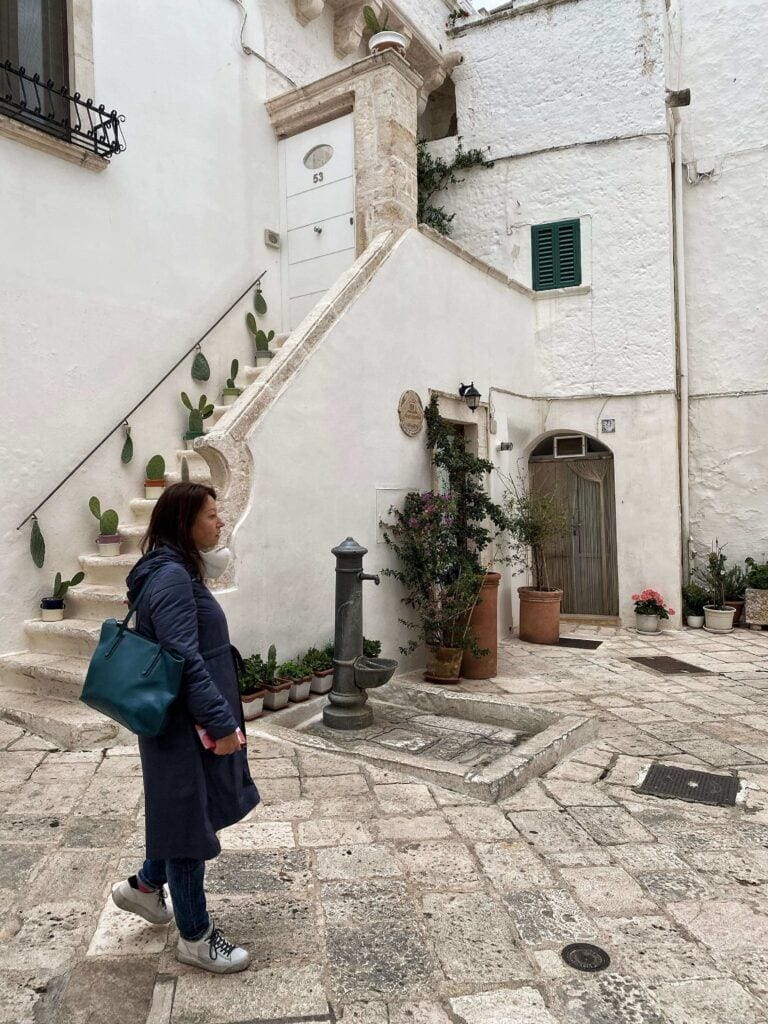
Locorotondo is another of the most charming small towns in Italy. With a population of around 14,000 and very few regular foreign tourists, it has retained the quintessential Italian charm we all know and love.
The town is known for its whitewashed buildings with colorful windows and doorways. The historic center is small, with beautiful old buildings, churches, and narrow streets.
One of the best things to do in Locorotondo is the walking along the Lungomare, which is a street that connects the panoramic garden to the market square. The name Lungomare translates to “seafront” in English, which is a bit deceiving as the Lungomare isn’t near the sea. But anyway, it’s the perfect place for a stroll.
Locorotondo is a little more challenging to get to. If you don’t have a rental car, the best way to get here is to take a bus from Bari, Puglia’s capital. However, I recommend renting a car to explore this little Italian gem and the other towns nearby.
Martina Franca (Puglia)
If you’re visiting Locorotondo, I recommend visiting Martina Franca as well. Martina Franca is only about 7 km (4.5 miles) from Locorotondo, so there’s no reason to miss this hidden gem.
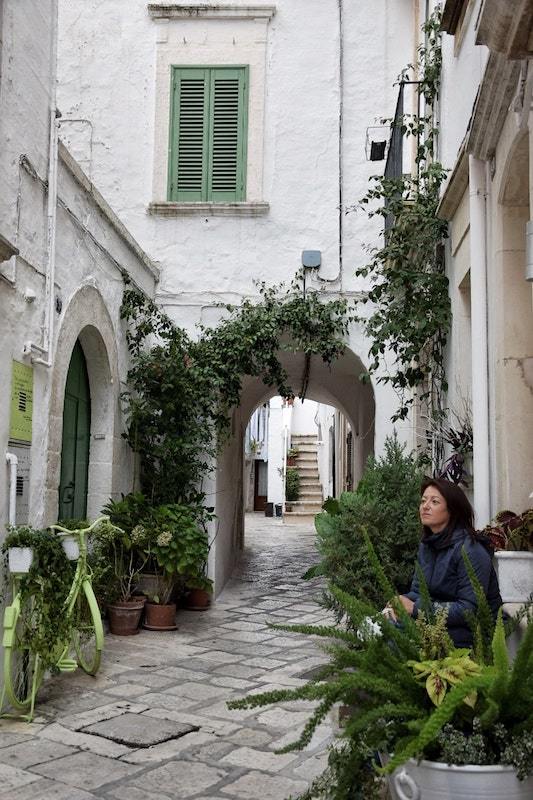
Martina Franca has architecture and colorings similar to Locorotondo’s, with its all-white buildings, cobblestone streets, and balconies lined with flowers and smiling faces.
I recommend exploring the town’s squares in the historic center. There are several worth visiting, but Piazza XX Settembre was my favorite and has excellent views of Palazzo Ducale. On that note, Palazzo Ducale in Piazza Roma is also worth checking out.
The palace was once the residence of the Caracciolo family but is now the town hall and one of the most impressive civic buildings in the region.
Finally, don’t forget to photograph the impressive Martina Franca gates. The entire city was once walled off and surrounded by watchtowers. When Italy unified, the walls were torn down, but the four gate entrances were left. Porta di Santo Stefano (Arco di Sant’Antonio) is the most famous one in the town.
As mentioned, Martina Franca is very close to Locorotondo. So close, in fact, that you could ride a bike between the two towns. If you’re interested in a fun day outdoors from Locorotondo, I recommend this E-Bike Ring Tour Between Locorotondo and Martina Franca. It departs from Locorotondo and includes a few hours of sightseeing in Martina Franca, so perfect if you have limited time to visit both places.
Monopoli (Puglia)
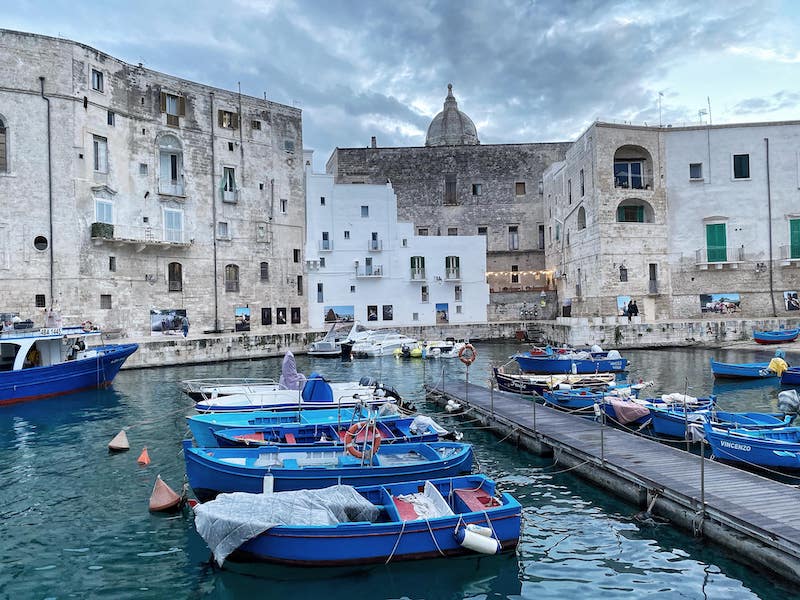
Monopoli is another hidden gem in southern Italy. The small town is only about a 40-minute drive from Bari, so it’s easy to visit if you’re planning to road trip to Martina Franca, Locorotondo, and other places around Puglia.
Monopoli is also easily identified by its Italian charm, small-town vibes, all-white facades, and cobblestone streets. The historic center is the best starting point for exploring the town, where you’ll find narrow alleyways lined with beautiful buildings, several churches, shops, and cafes.
The main cathedral in Monopoli is Basilica della Madonna della Madia, and the Museo Diocesano (attached to the cathedral) is worth visiting. You should also take a stroll along the Lungomare. This one, unlike Locorotondo, is actually along the coast.
Also, if you visit during the warm summer months, you can see one of the beaches. These are usually less crowded than popular ones in Sicily and even Sardinia. I visited Monopoli in October, so I couldn’t enjoy them, but it’s still worth pointing out.
Cala Porta Vecchia is Monopoli’s main beach, easily accessible from the historic center. For something different, head to Cala Cozze, a local favorite.
Another one of the best things to do in Monopoli is to take a boat cruise around the coast. There are so many great places to visit, including sea caves. If you’re interested in learning more, check out this Monopoli: 2.5-Hour Guided Boat Tour to Polignano a Mare Caves. The tour is very well-organized, and the perfect way to spend a sunny afternoon on the water.
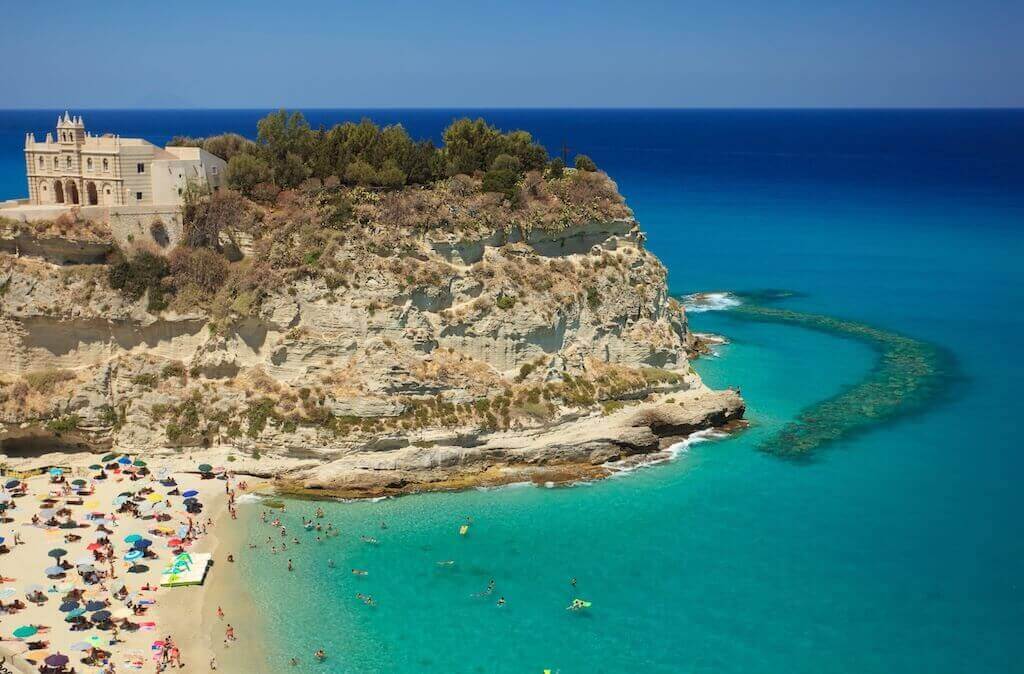
Tropea (Calabria)
If you’re looking for a beach holiday in one of the best hidden gems in Italy, you must check Tropea in Calabria. The small seaside town is right on the Mediterranean, has crystal-clear waters and perfect beachy vibes, and is much more affordable than other Italian beach destinations.
It’s important to note that the Calabria region is historically much poorer (thus the lower cost) than other parts of Italy. The town is entirely safe, but you’ll notice the economic conditions in the way of worse infrastructure and poor roads. The cuisine, on the other hand, is delicious – as anywhere in Italy!
The best things to do in Tropea are chilling at the beach, boat tours, and visiting the nearby island of Capo Vaticano. But you can also experience more authentic living and visit one of the nearby farms.
While I consider Tropea a hidden gem in Italy, it gets very busy in the summer because most locals and Italians know about the seaside town. So, if you’re visiting in the summer, plan and book things in advance.
If you want to escape crowded beaches and get in the water, I highly recommend a boat tour. This Boat Trip to Capo Vaticano with Snorkeling is the most fun water excursion in the area. You’ll go snorkeling in crystal-clear waters and make a stop at a white-sand beach. It’s only three hours, but that’s enough time to admire the beautiful coastline.
Islands of Italy
Lampedusa Island (Sicily)
There are honestly very few islands in Italy that are untouched by tourism. Italians love their beaches; therefore, many islands and beach destinations are rather touristy in the summer months.
However, some islands are most frequented by locals, and very few foreigners know about them. Lampedusa Island is one of those.
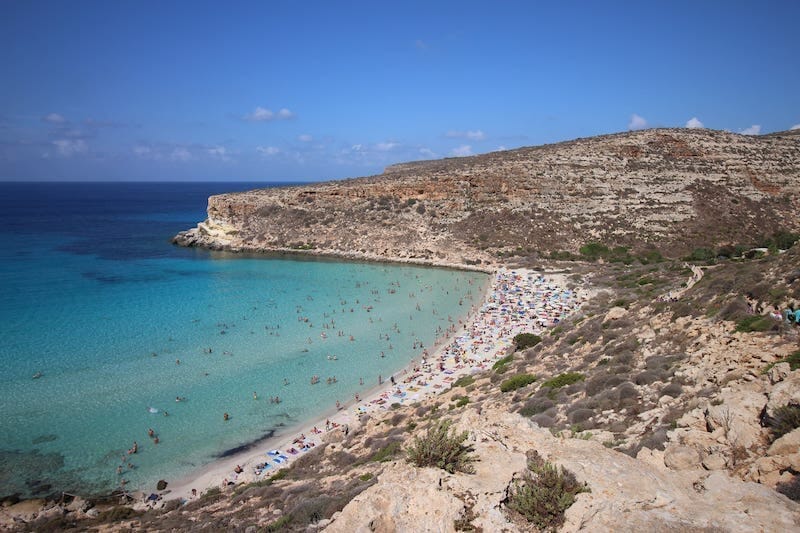
Lampedusa Island is the southernmost island in the Pelagian Archipelago in Sicily. Although the island is relatively small (only about 12 km, or 7.5 miles, long and 3 km, or 1.8 miles, wide), there’s still a lot to do.
Cala Francese and Cala Guitgia are the two best beaches on the island (and also very popular, so they do get crowded). I also recommend going on a boat tour around the island. If you’re into diving, you can visit the underwater statue of Madonna del Mare, a unique underwater site.

Stromboli (Sicily)
Stromboli isn’t exactly unheard of. In fact, it’s one of the most popular islands around Sicily, at least by name. That’s because it’s also home to the volcano Stromboli, one various volcanoes in Italy and incredibly active at that.
Don’t let the volcano scare you away, though. Stromboli is one of my favorite Italian islands.
The best thing to do on Stromboli is to hike the volcano. Believe it or not, you can see the eruptions! The last big eruption was in August 2023, and the volcano is monitored regularly, so don’t worry. If activity is detected, they won’t let you go near it.
If hiking isn’t your thing, you can explore the many volcanic sand beaches, walk through the beautiful whitewashed town, and enjoy the small island vibes.
If you’re thinking about hiking up Sciara del Fuoco, I highly recommend going at sunset for one of the most beautiful sunsets you’ll find in Italy. This Stromboli: Sunset Trekking at Sciara del Fuoco is a once-in-a-lifetime experience. Keep in mind that this isn’t a super technical hike, but does involve a good base fitness level. You are hiking up a volcano, after all!
Isola di San Pietro (Sardinia)
As someone born and raised in Sardinia, I might be slightly biased, but I think Sardinia is the best place in Italy for beautiful beaches.
Sardinia is the second-largest island in Italy after Sicily. There are actually over 100 islands in Sardinia. Many are uninhabited, and many are not well-known to international tourists. Isola di San Pietro (San Pietro Island) is one of my favorite lesser-known Sardinian islands.
The island is a part of the Sulcis Archipelago of southwest of Sardinia. It’s known for its breathtaking natural landscapes and being one of the best places for scuba diving in Italy (although the diving is a bit advanced as the current can be very strong).
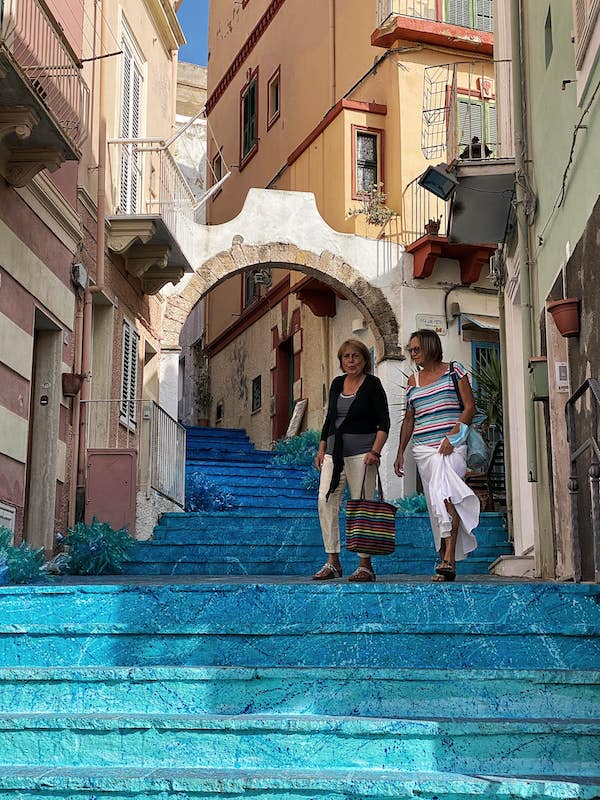
Even if you aren’t into diving, you can still thoroughly enjoy the island. Many of the island’s inhabitants live in Carloforte, a colorful small town with a different dialect and a very distinguished look that makes it look more Italian than the rest of Sardinia (it was indeed found by a Genoese community that lived in Tabarka, an island off the coast of Tunisia).
Of course, you also can’t miss the beaches, hiking trails, and beautiful sunset spots. Who doesn’t love an incredible sunset over the Mediterranean Sea?
Asinara Island (Sardinia)
Asinara Island, on the northwestern tip of Sardinia, is one of the region’s most popular islands and has been well-known among locals for centuries. It’s believed the Phoenicians, the Greeks, and the Romans all knew about the island.
And yet, it’s still less crowded than other famous places in Italy. That’s partially because Asinara Island was declared a National Park in 1997. Before the National Park status, the island had a really interesting backstory. It was actually once a leper colony and then a penal colony and finally a high security prison that was only officially closed in 1997.
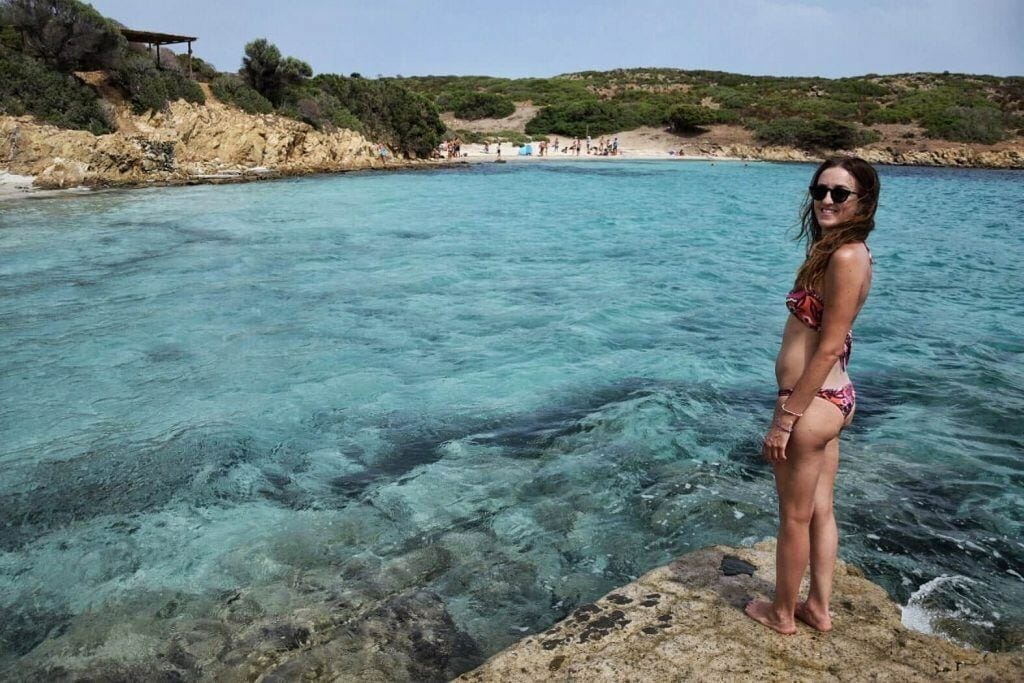
Nowadays, it’s famous for its beautiful beaches, tranquil setting, and stunning backdrop.
The best way to visit Asinara National Park is by taking a tour departing from mainland Sardinia. There are literally only two accommodation options on the island – you could stay at either the hostel or the boutique hotel in Cala d’Oliva if you’d like to explore for more than one day.
The best base to explore Asinara for a day is Stintino, Italy. From Stintino, you can easily take a half-day or full-day boat tour to Asinara National Park. I recommend this Boat Excursion Asinara. It leaves around 9:30 am and returns at 5:00 pm, so you get a full day on the water and in the park. It includes several stops where you can snorkel, swim, and lunch is provided.
Conclusions On Seeing Italy Off The Beaten Path
There are so many hidden gems in Italy across all regions. I could go on forever to mention incredible places like the Langhe of Piedmont, or the Sinis Peninsula in Sardinia. Whether you’re going to the north, central, or south or want to explore the Mediterranean islands, it’s easy to explore Italy off the beaten path.
With hundreds of islands off Sicily and Sardinia, you’re certain to find an island you like. You can also find some more quintessential Italian towns, like Treviso or Locorotondo. Getting away from major cities and tourist destinations helps you understand Italian history, culture, and way of living.
However, many of these destinations might not be recommended for first-time travelers in Italy. One of my biggest Italy travel tips is not skipping tourist destinations. They’ve become famous for a reason.
So, if you have to choose between visiting Rome for the first time or Perugia, I’d probably recommend getting Rome out of the way first – and you can check some Rome hidden gems there, anyways!
That said, this list of the best hidden gems in Italy should help you plan more unique Italian adventures, or at the very least, help you diversify your Italy itinerary.
PIN IT!


Claudia Tavani
Claudia Tavani was born and raised in Sardinia, and after moving between the United States and the United Kingdom, she's now back living in her hometown, Cagliari. She's a travel blogger and certified travel designer who loves planning trips and publishing guides, travel tips, and packing lists so that you don't have to. Owner of Strictly Italy, cat mom to Minnie. Loves pizza, hiking, archeology, cities, beaches, swimming, and running. Hates peppers.