
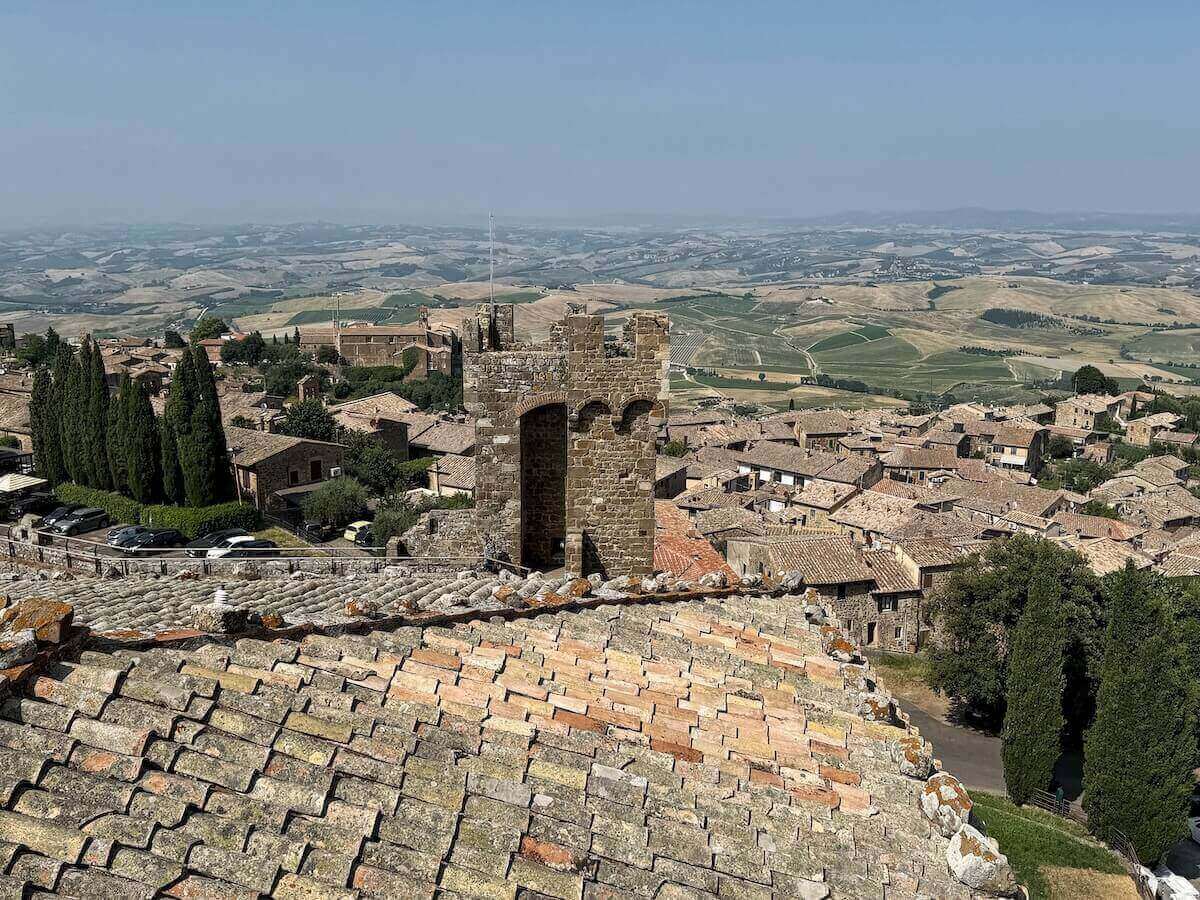
As its name suggests, Val d’Orcia is an area of hills and valleys that follows the winding course of the Orcia River. I have been there several times – the last time with my sister and my brother-in-law last summer – even if just to enjoy its delicacies.
This beautiful area of Tuscany has been UNESCO-enlisted since 2004 because of its magnificent combination of history, tradition, art, nature, food, and wine.
Since it’s one of the most popular tourist destinations in Tuscany, I thought I’d write a short guide to help you plan your visit, including my personal travel tips based on my experience.
Are you thinking of visiting Tuscany? Head over to my post, Best Things To Do In Tuscany, for ideas on activities and places to visit.
Quick Overview of Val d’Orcia
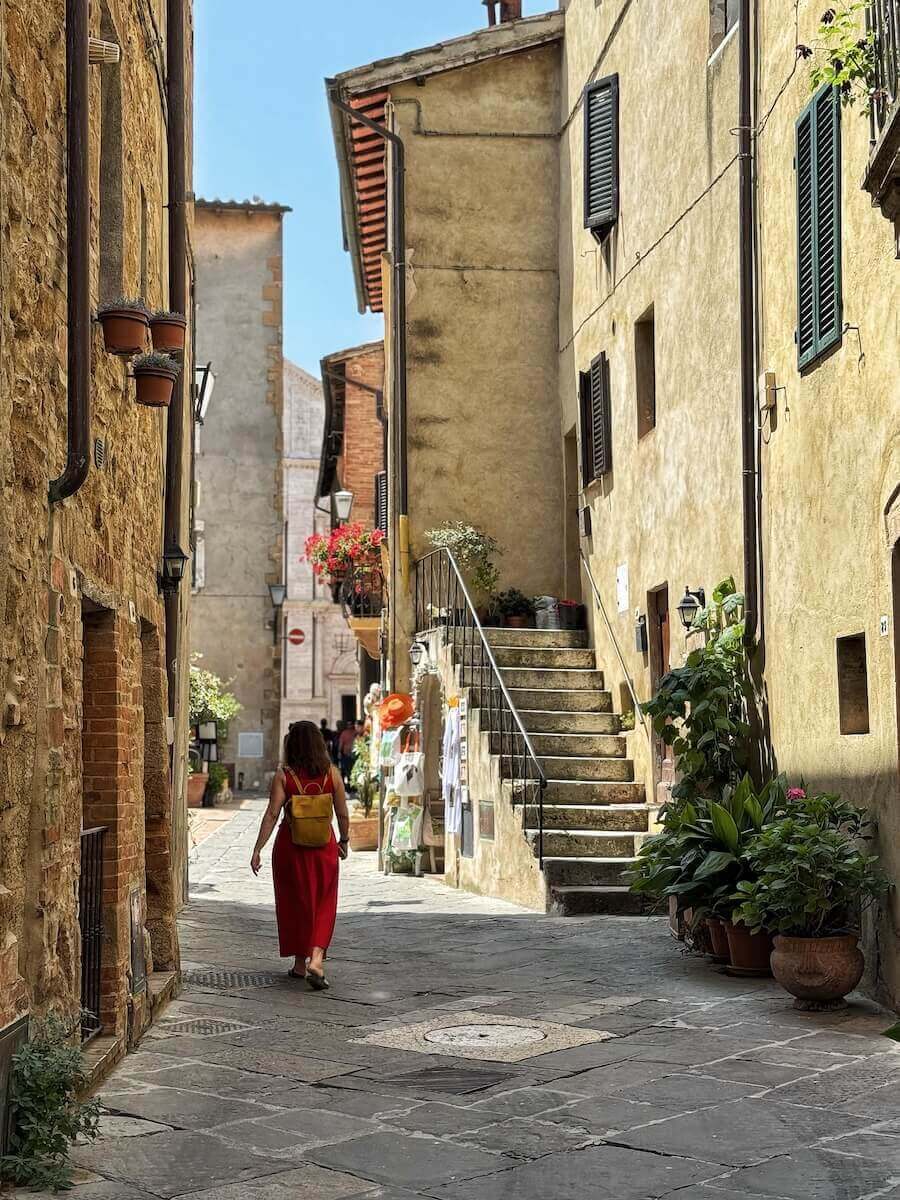
Short on time? Here’s a quick overview of the best things to do in Val d’Orcia, and some tips to plan your visit.
BEST THINGS TO DO IN VAL D’ORCIA
- Explore Pienza
- Wine tasting
- Visit Montepulciano
- Take in the views from the fortress of Montalcino
- Relax at Bagni San Filippo
BEST GUIDED DAY TRIPS TO VAL D’ORCIA
- Val d’Orcia day trip from Florence: Montalcino, Pienza, and wine tasting
- Val d’Orcia day trip from Siena: Montepulciano and Pienza + wine tasting
- Day trip from Florence to Siena, Cortona, Montepulciano, and Val d’Orcia
ESSENTIAL VAL D’ORCIA TIPS
- Rent a car in Florence to be able to explore more independently.
- Unless you are only visiting on a day trip, book your accommodation in advance, especially if you are visiting in the peak summer months.
- Don’t rush your visit: Val d’Orcia calls for slow travel.
Where Is Val d’Orcia?
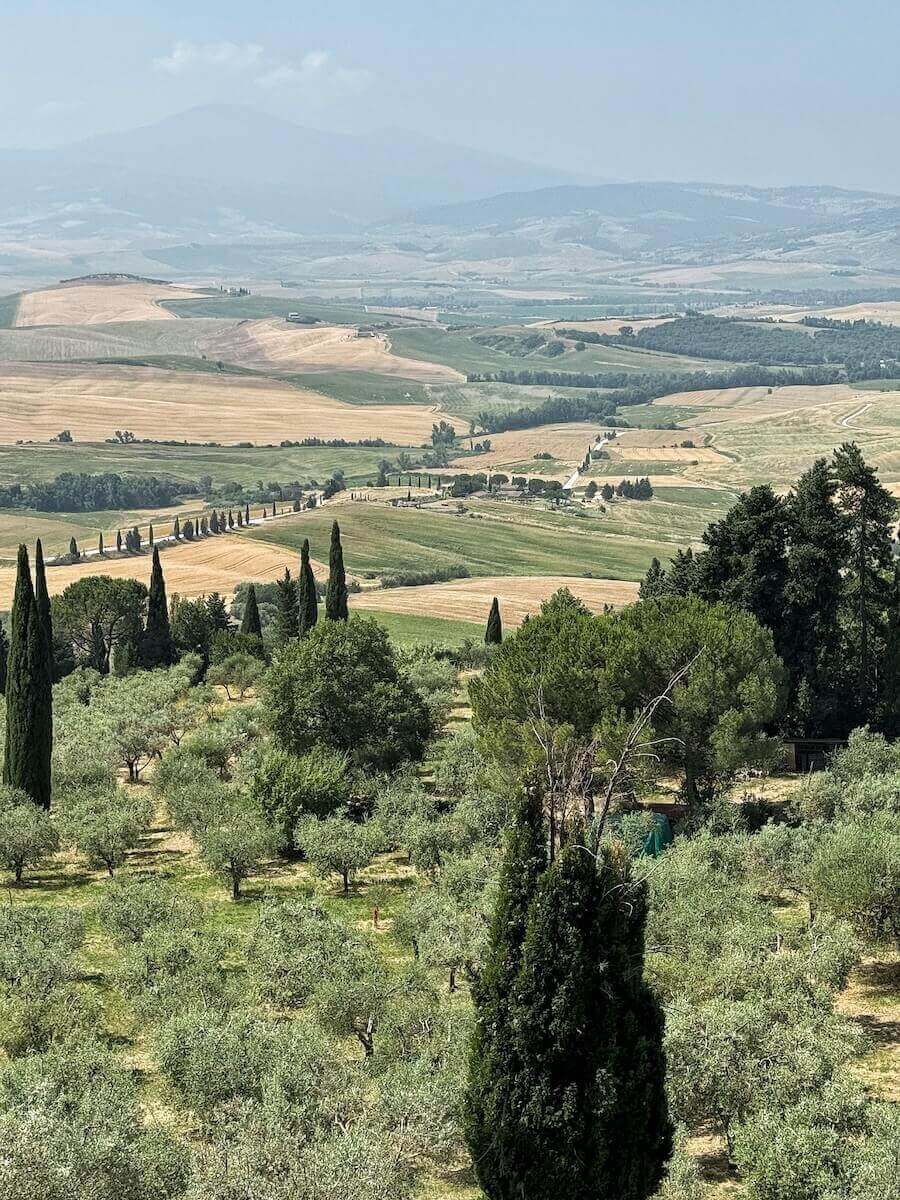
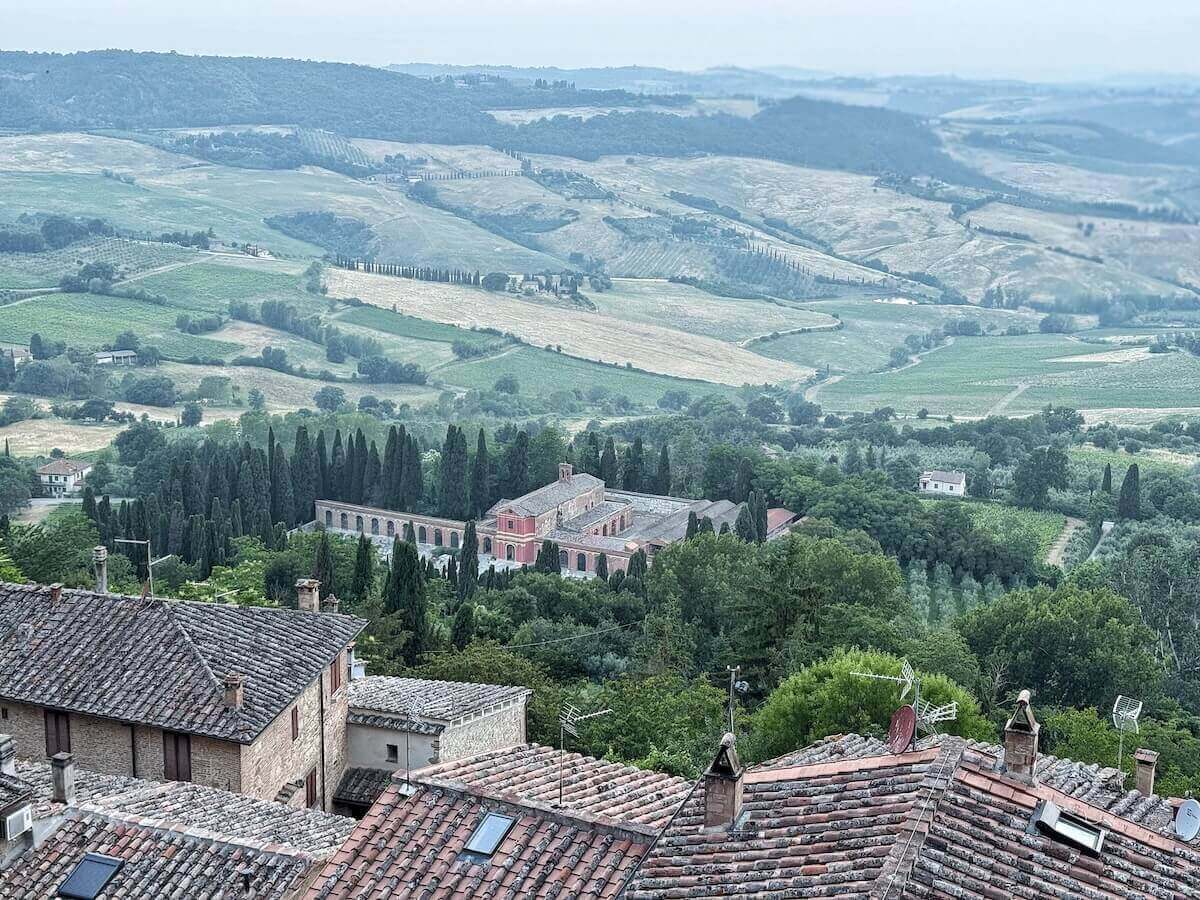
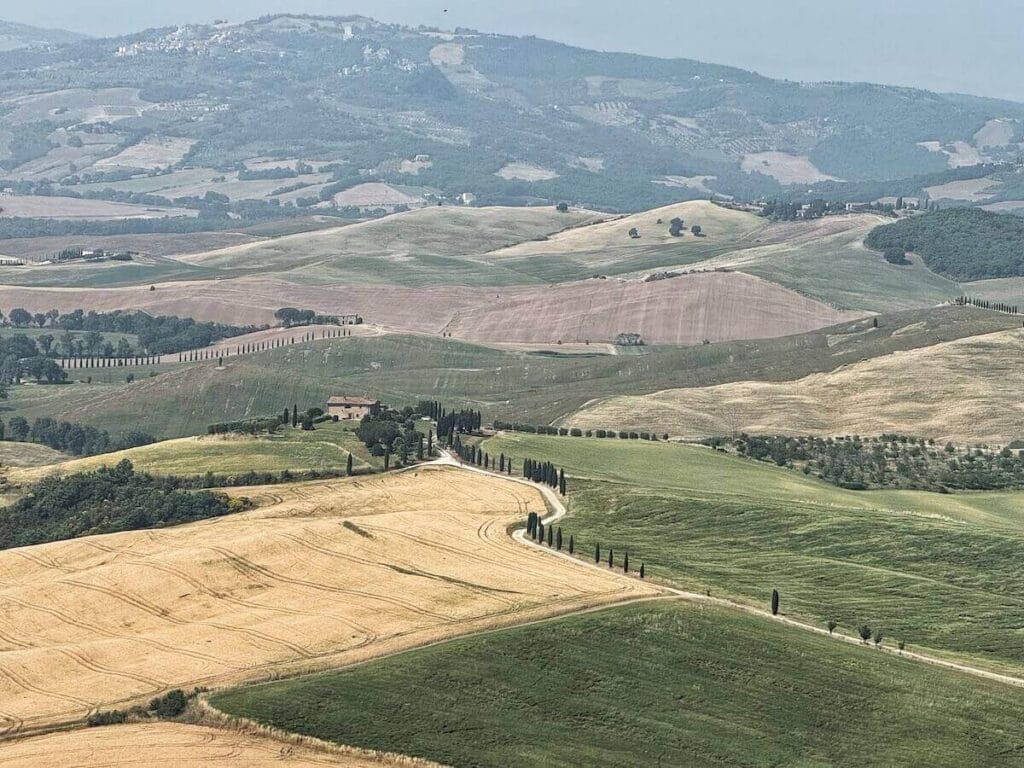
Val d’Orcia is located in southern Tuscany, between Siena, Grosseto, and the region of Umbria. The landscape of Val d’Orcia consists of the slopes of Mount Amiata, rolling hills, and valleys that have lush nature with vineyards, olive groves, cypress, chestnut, and beech trees.
To get to Val d’Orcia, you can first fly to Florence, Pisa, or Rome. Once there, the best way of getting around this part of Italy is by car – you can rent a car directly at the airport.
Where To Stay In Val d’Orcia
Val d’Orcia offers a wide range of accommodation options, and where you decide to stay depends on your preference and your budget.
You might prefer the comforts of staying in one of the Val d’Orcia towns, and have restaurants and bars just a few steps away.
Montepulciano is an excellent base for exploring the Val d’Orcia. Here, I recommend staying in Palazzo Carletti, located in a beautiful medieval building in the historic center of Montepulciano. You will be impressed by the original frescoes and high ceilings. The views of the Val di Chiana and Lake Trasimeno are stunning.
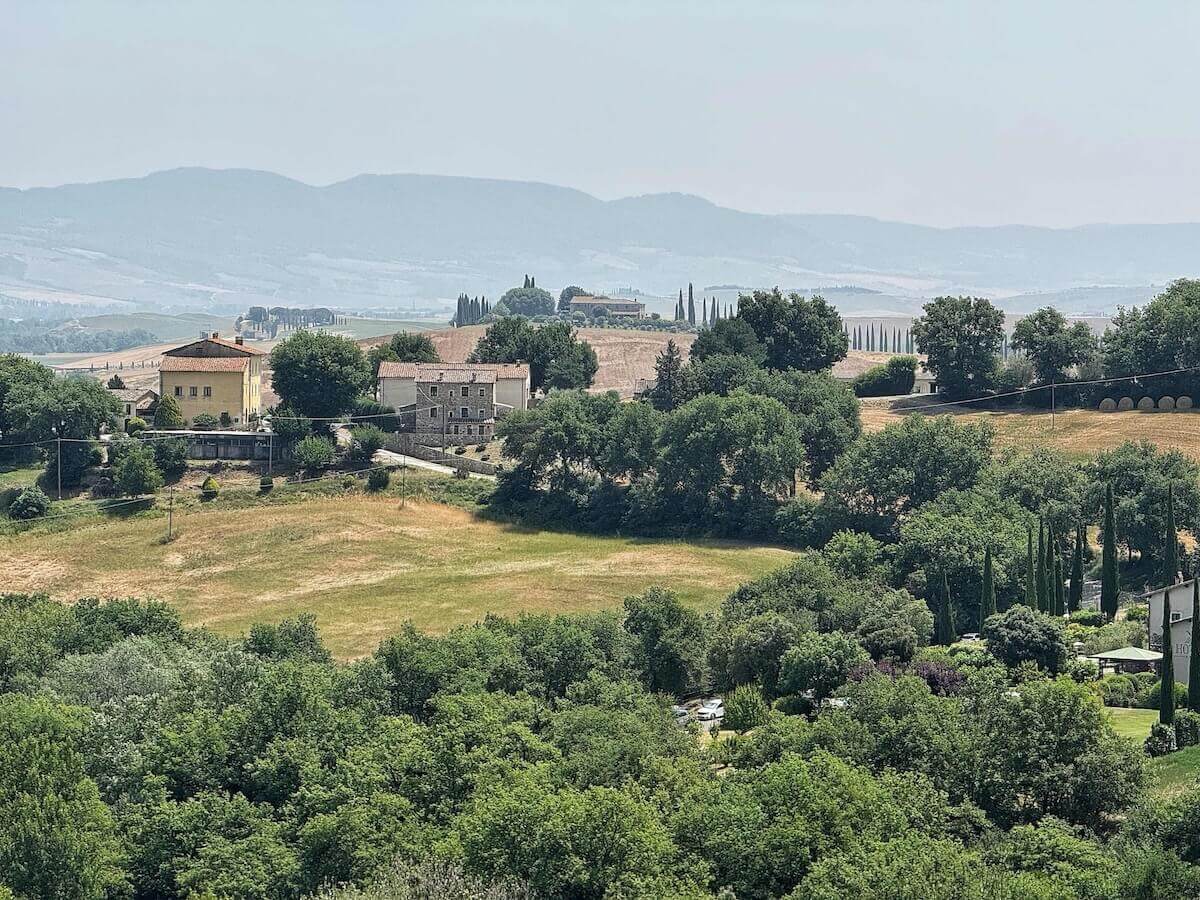
If you’d rather sleep in the countryside, lulled by the rustling of the trees with breathtaking views of the surroundings, you should try Agriturismo Il Macchione, with its 50 hectares of land. Located just outside Pienza, you will love this 18th-century stone farmhouse. The views of Val d’Orcia from the swimming pool are impressive.
If you have the budget to splurge, Mastrojanni Relais in Montalcino provides the perfect combination of nature and luxury. It is completely immersed in the countryside, you can go on long bike rides and, once back, relax at the wellness center and enjoy an excellent dinner in its restaurant.
Colle al Matrichese – Historic Winery, is immersed in the vineyards near Montalcino, is the perfect place if you want a unique experience: from a walk through the vineyards, to visiting he wine cellar and participating in the grape harvest, with wine tasting too.
I gifted my sister and brother-in-law with a weekend at Agriturismo Castello di Spedaletto in Pienza for their fifth wedding anniversary. They were delighted! They loved the location and the historic building and enjoyed cycling around on the many trails.
Best Things To Do In Val d’Orcia
Visit Montepulciano
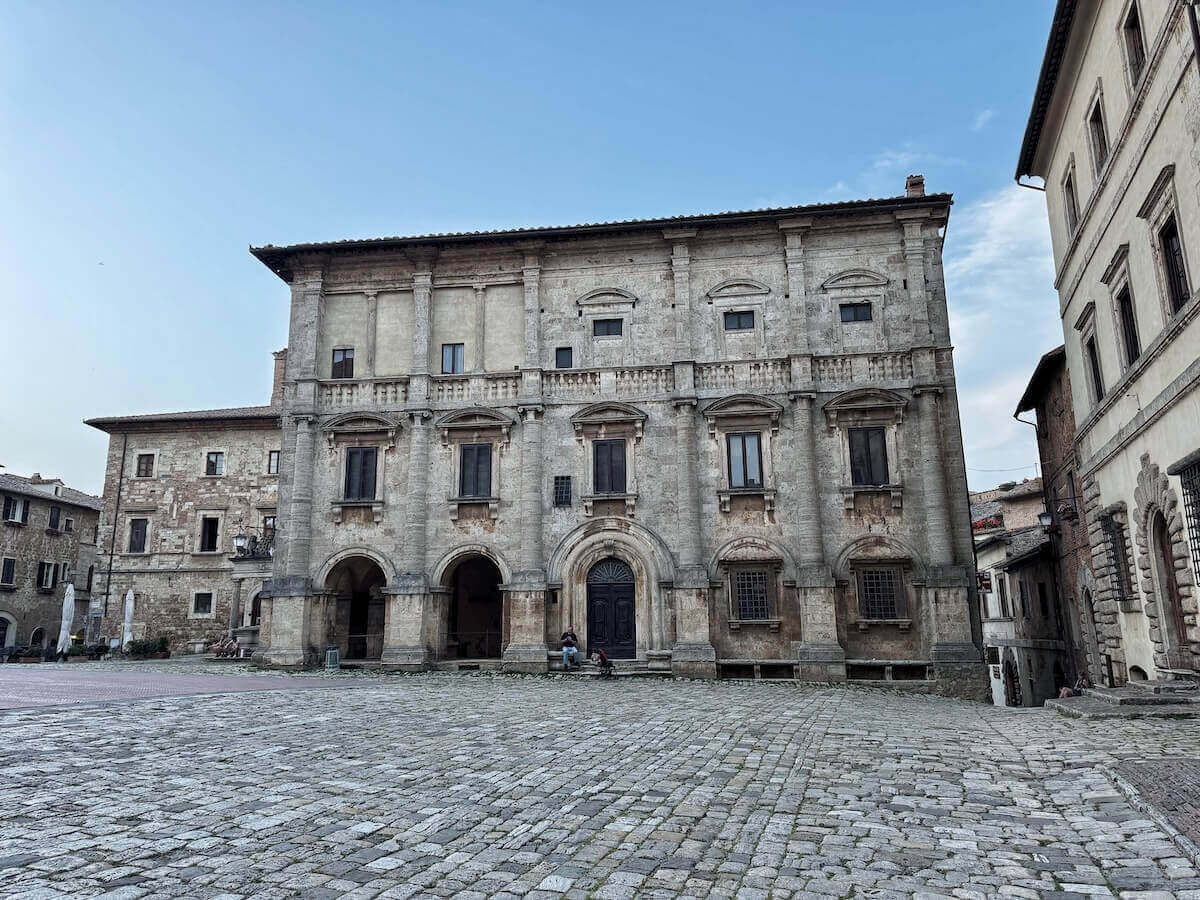
Montepulciano is one of the best-preserved small towns in the Val d’Orcia, where medieval origins and Renaissance splendor will transport you directly into its past.
While most know Montepulciano because of the wine that bears its name, this is an undeniably beautiful place to visit. It is so unique that it has been chosen as the filming location for many TV series, such as New Moon of the Twilight Saga.
Walk along the Corso, climbing the town from Piazza Savonarola all the way to the beautiful Piazza Grande, the heart ot Montepulciano. Here, you will find the Pozzo dei Grifi e dei Leoni, a well designed by Antonio da Sangallo. The Cathedral, also located in the square, is dedicated to Santa Maria Assunta.
Next to the Church, there’s the Palazzo Comunale, the Town Hall, with a beautiful Gothic facade.
Many events take place in this square – the most important one is the Bravio delle Botti, during which 8 districts of Montepulciano compete in rolling 80-kilogram barrels along a path uphill right in town.
Other places to visit include the Palazzo Neri-Orselli, which houses the Civic Museum – the Museo Civico Pinacoteca Crociani. Here, you can admire Renaissance paintings, including the famous “Portrait of a Gentleman” by Caravaggio, and Roman and Etruscan artifacts. Not far you will find the Medici Fortress.
The surroundings of Montepulciano are nice to explore too. You can visit the Temple of San Biagio, designed by Antonio da Sangallo, and another amazing example of Renaissance art.
Montepulciano Lake Nature Reserve is a great place to visit for birdwatchers, as it is a stopover for many birds along the migratory route from Europe to Africa.
Of course, one of the best things to do in Val d’Orcia is wine tasting, and Montepulciano is perfect for that. Here, you can try the Vino Nobile di Montepulciano, a DOCG red wine, in one of the many wine cellars in the historic center.
Since the 11th century, the Contucci family has produced this delicious wine: visit the historic palace and the vaulted underground cellars and enjoy the wine tasting. Another beautiful location for wine tasting is the Cantina De’ Ricci.
You can also follow the Montepulciano Wine Route, a route that links many of the region’s top wine estates. You can visit the vineyards to learn about the wine-making process, from harvesting the grapes to bottling.
I have written a Complete Guide To Montepulciano that you will find useful before you visit.
Explore Pienza
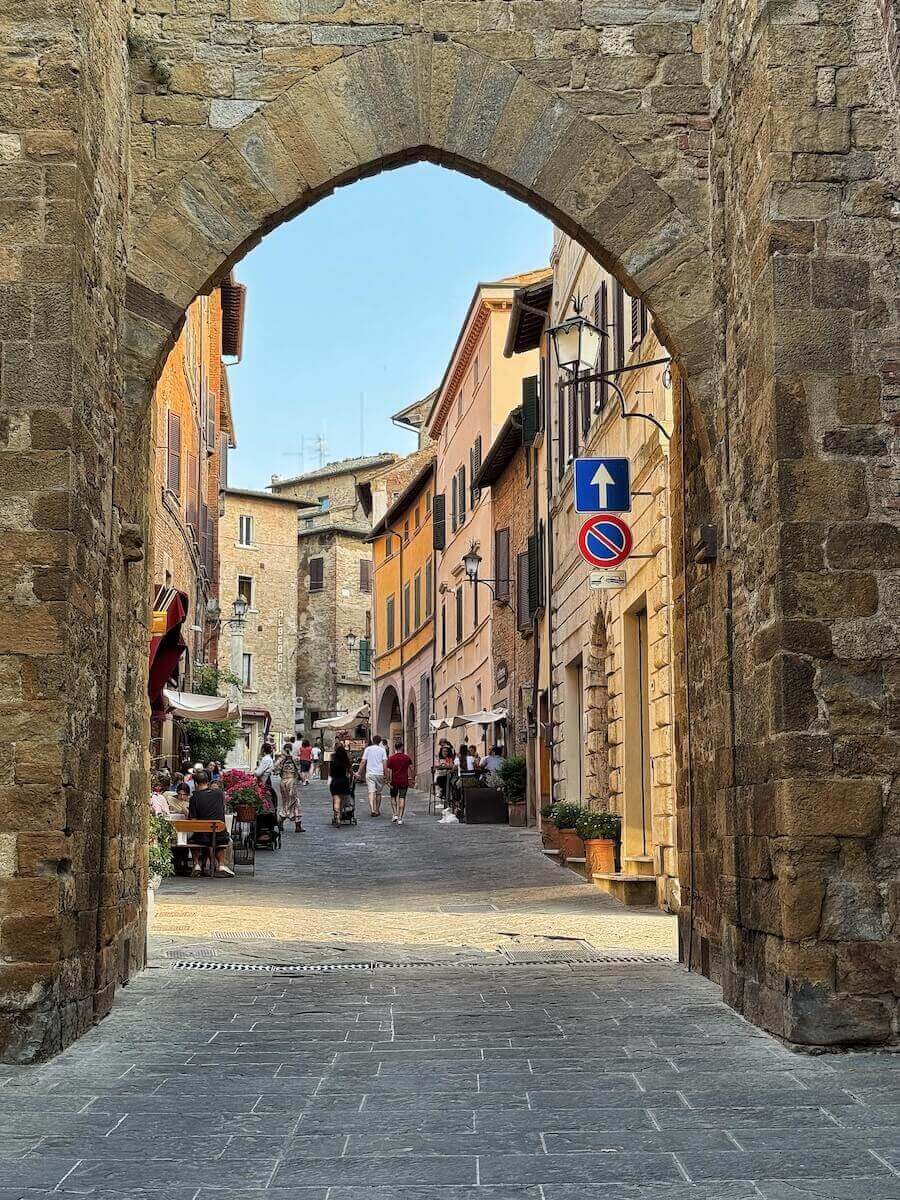
Pienza is the kind of place that will make you want to slow down. It is known as the Ideal Renaissance Town: Pope Pius II, in fact, entrusted the task of transforming the city to the architect Bernardo Rossellino.
In 1996, thanks to the rational organization of spaces and the perspectives of squares and palaces, Pienza was included in the list of the UNESCO World Heritage sites.
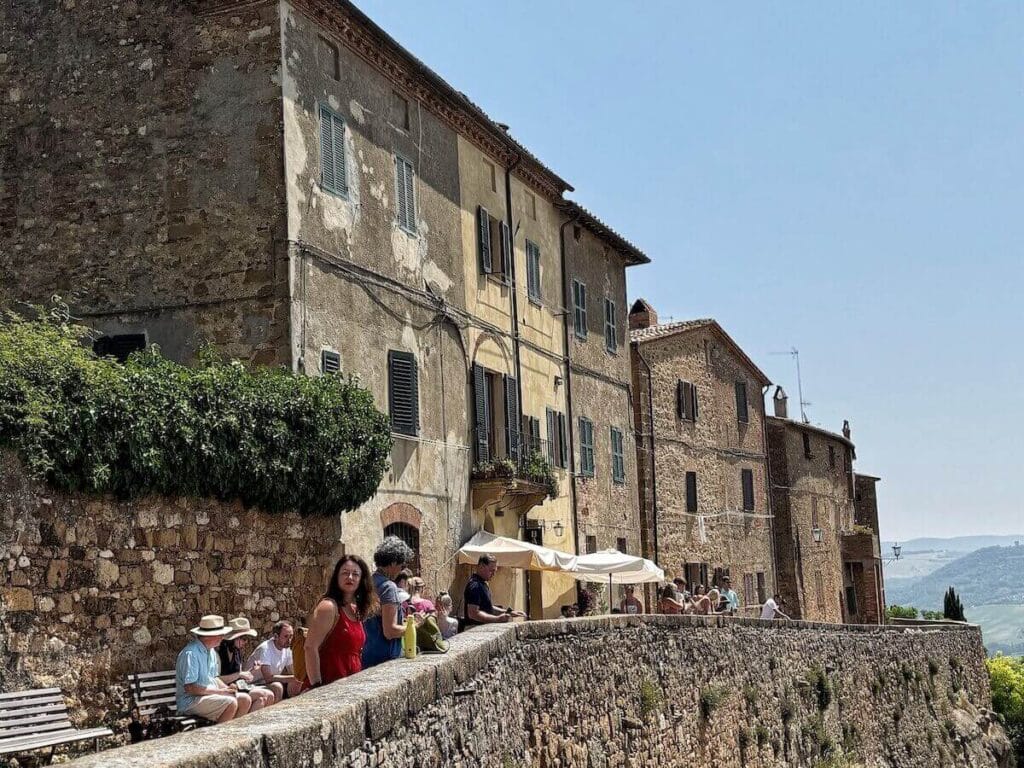
Once you get to Pienza, walk from Porta al Prato (also known as Porta al Murello) along the main street of Pienza, Corso Rossellino, named after the Florentine architect who designed Pienza.
Piazza Pio II is the heart of Pienza. Here you can find some of the most beautiful buildings in Pienza, such as the Duomo, the Palazzo Comunale, the ancient residence of the Priors, Palazzo Borgia, home to the Diocesan Museum, and Palazzo Piccolomini.
Palazzo Piccolomini, designed by Bernardo Rossellino, was the summer residence for the Pope Pius II. You can join a guided tour to visit its rooms, the library, and admire the antique furniture. Its loggia offers a beautiful view on the valley, and the hanging garden was the first of the Renaissance.
For panoramic views of Pienza, head to Via del Casello (known as the panoramic walk of Pienza). From here, you can find the famous Via dell’Amore, Via del Bacio, and Via della Fortuna.
Another thing you should do while in Pienza is try its famous Pecorino cheese, best if paired with a glass of red wine. The young cheese pairs perfectly with Sangiovese, while the aged cheese pairs better with Brunello di Montalcino.
If you have time, you could also visit the 12th-century Spedaletto Castle and Pieve dei Santi Vito e Modesto in Corsignano, a small church where the future popes Pius II and Pius III were baptized.
I have a Full Guide To Pienza that will help you plan your visit.
Spend an afternoon in Montalcino
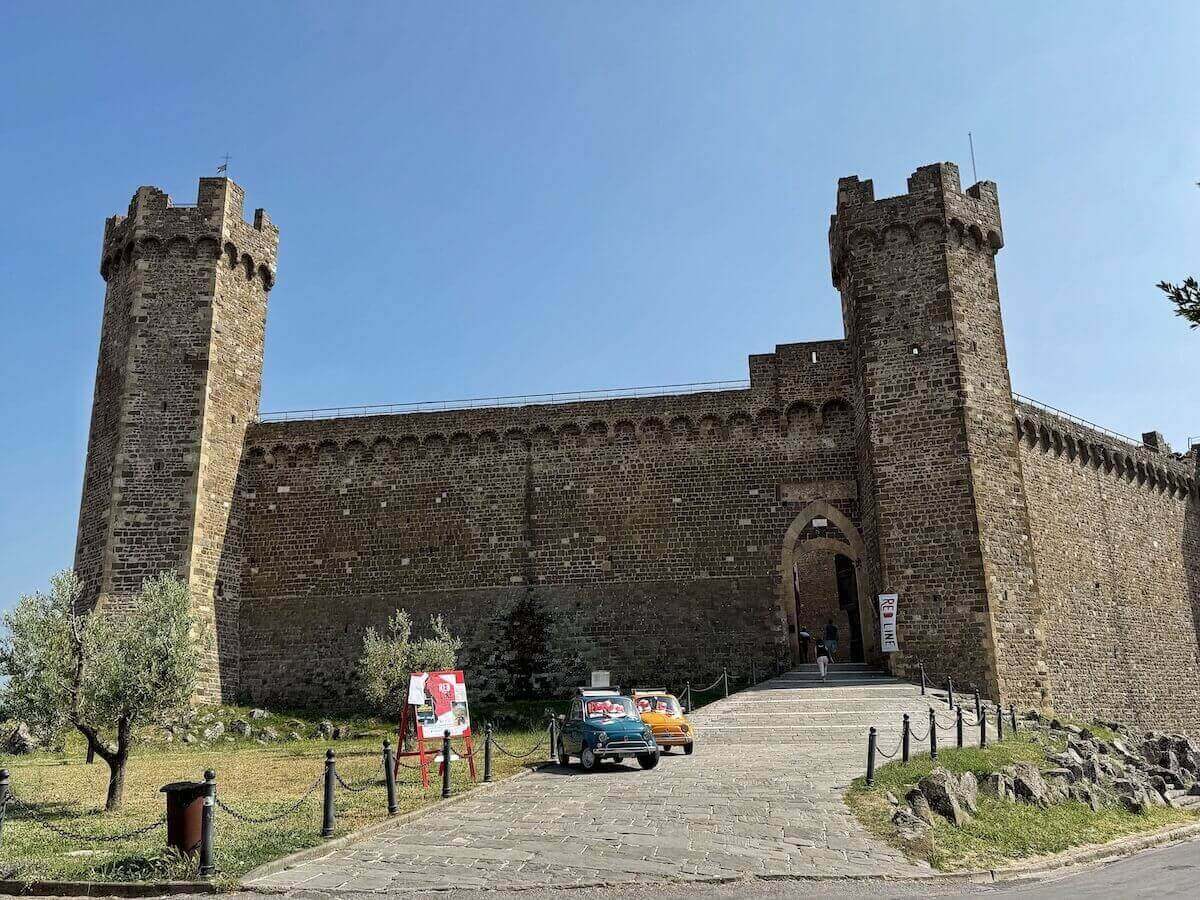
Montalcino is one of the unmissable places to visit in Val d’Orcia. The main attraction here is the 14th-century Fortress, located on the highest point of Montalcino and dominating the surrounding valleys. Walk along the ramparts to enjoy the view.
From the Fortress, walk to the heart of the village: Piazza del Popolo. Here you can admire the Palazzo dei Priori, the Town Hall, and the tall bell tower next to it.
Continue towards the Duomo, also known as the Co-Cathedral of the Most Holy Savior. Built in neoclassical style, it was designed by the architect Agostino Fantastici in the early 19th century. Inside, you will find the beautiful pipe organ and the painting of the Immaculate Conception by Francesco Vanni of Siena. The exterior is striking for its simplicity – here, the bell tower that predates the current Church.
Finally, you could visit the Civic Museum and the Diocesan Museum of Sacred Art: there are over 200 pieces of art on display.
If you happen to visit Val d’Orcia in October, you should not miss the Sagra del Tordo (Thrush Festival) held on the last Sunday of the month. The teams from the four districts of Montalcino (Borghetto, Pianello, Ruga, and Travaglio) compete in archery, reviving ancient traditions.
For truffle lovers, the most important event will be the White Truffle Market Exhibition in November.
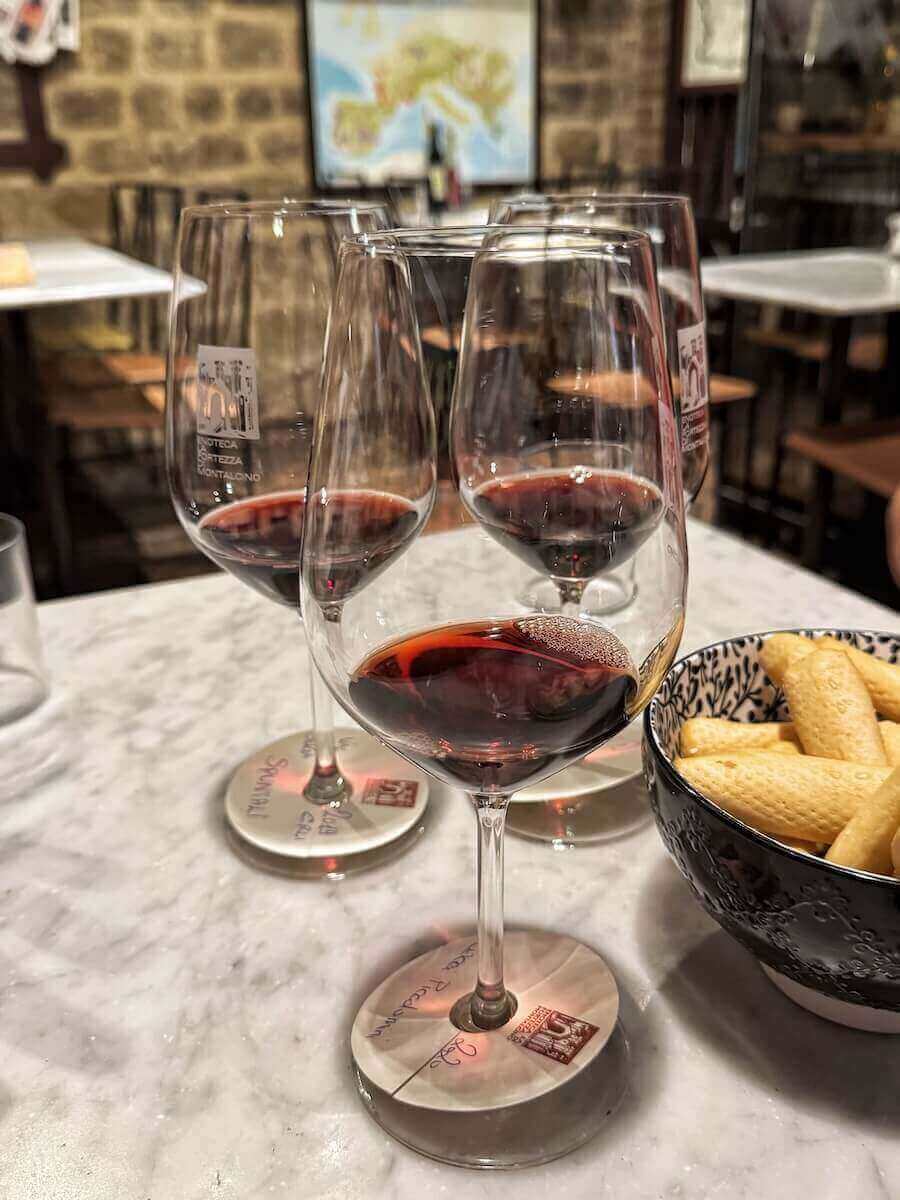
However, the main reason to visit Montalcino is to try the famous Brunello di Montalcino wine. There are wine bars and cellars on every corner where you can enjoy a tasting experience. We went to the Enoteca La Fortezza, located inside the Fortress.
My post, The Best Things To Do In Montalcino, will guide you through this lovely small Tuscan town.
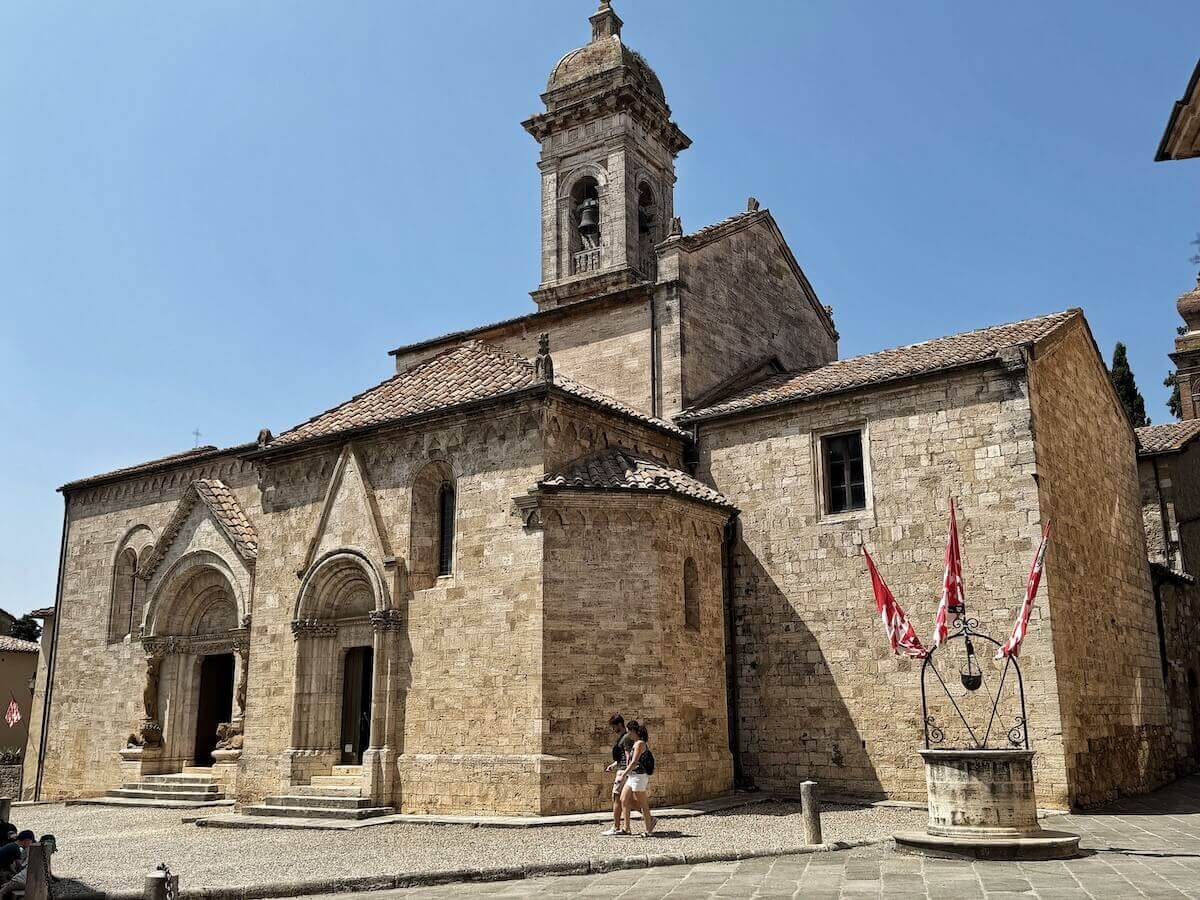
Check out San Quirico d’Orcia
San Quirico d’Orcia is an ancient small town nestled in the Val d’Orcia countryside, surrounded by oak woods, vineyards, and olive groves. It’s so small that is easy to explore on foot, you won’t even need a map.
Walk through the narrow alleys to reach the Horti Leonini Gardens and enjoy the view of the geometric patterns in the lower part from the top of the staircase.
Outside the walls, visit the Collegiate Church of Saints Quirico and Giulitta, a Catholic Church with a Romanesque external facade and Baroque interior.
Departing from San Quirico d’Orcia, there’s a network of 17 trails covering a total of 185 km (about 115 miles) that can be explored on foot or by bike.
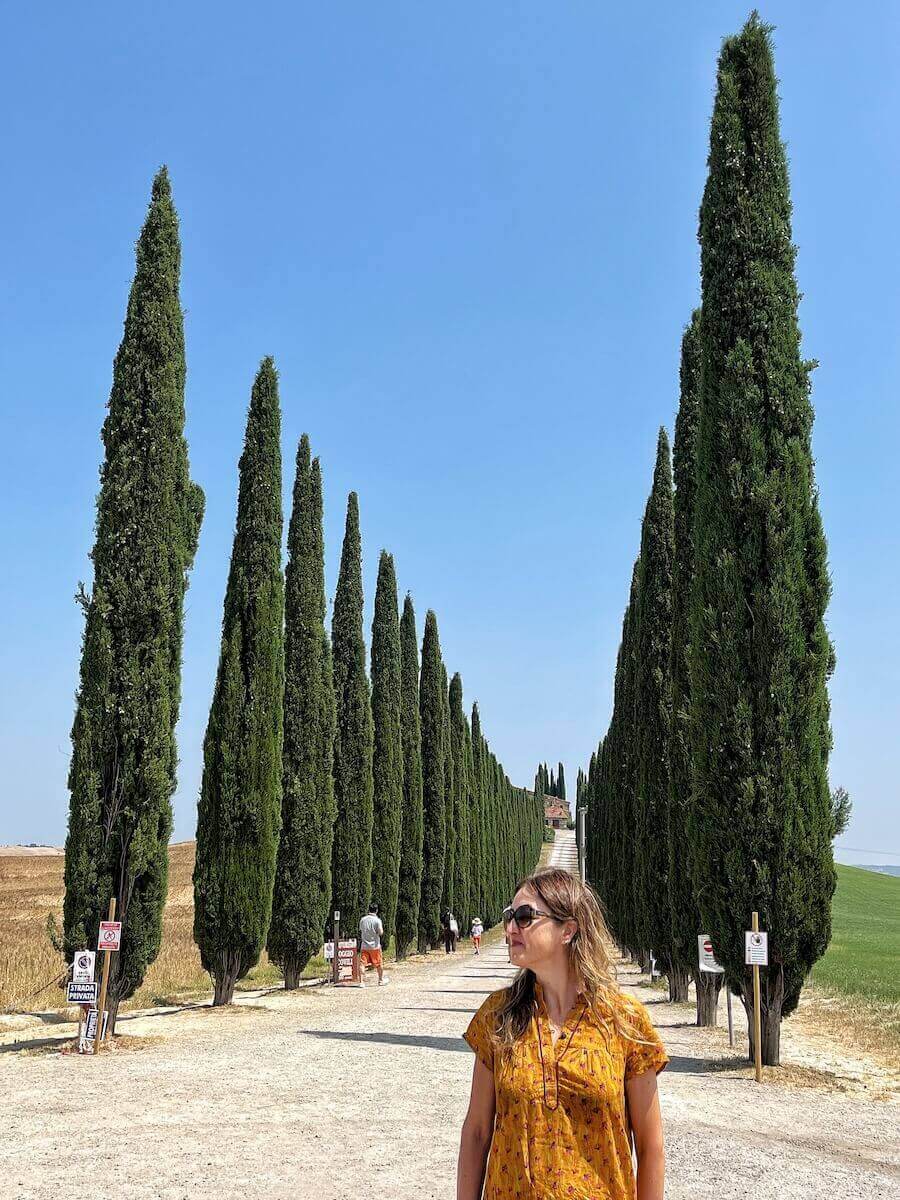
The most famous photo spot in the area is the Cypresses alley, about 6 kilometers (3.7 miles) from the center of San Quirico d’Orcia. You’ll easily spot it from afar thanks to the imposing trees, not to mention the tourist buses and line of people waiting to take photos.
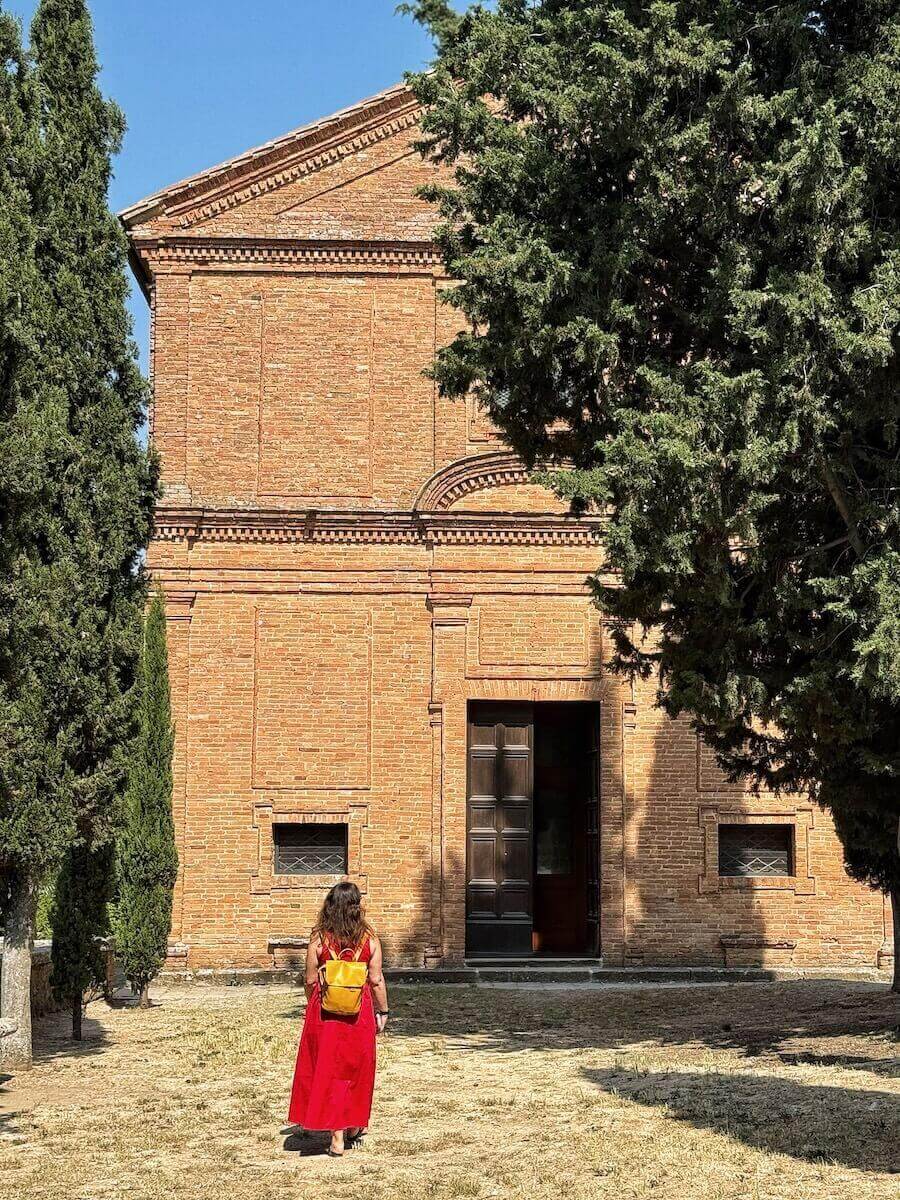
I also recommend stopping by the Chapel of the Madonna di Vitaleta, a small Renaissance country Church that has been recently renovated.
Relax in Bagni San Filippo
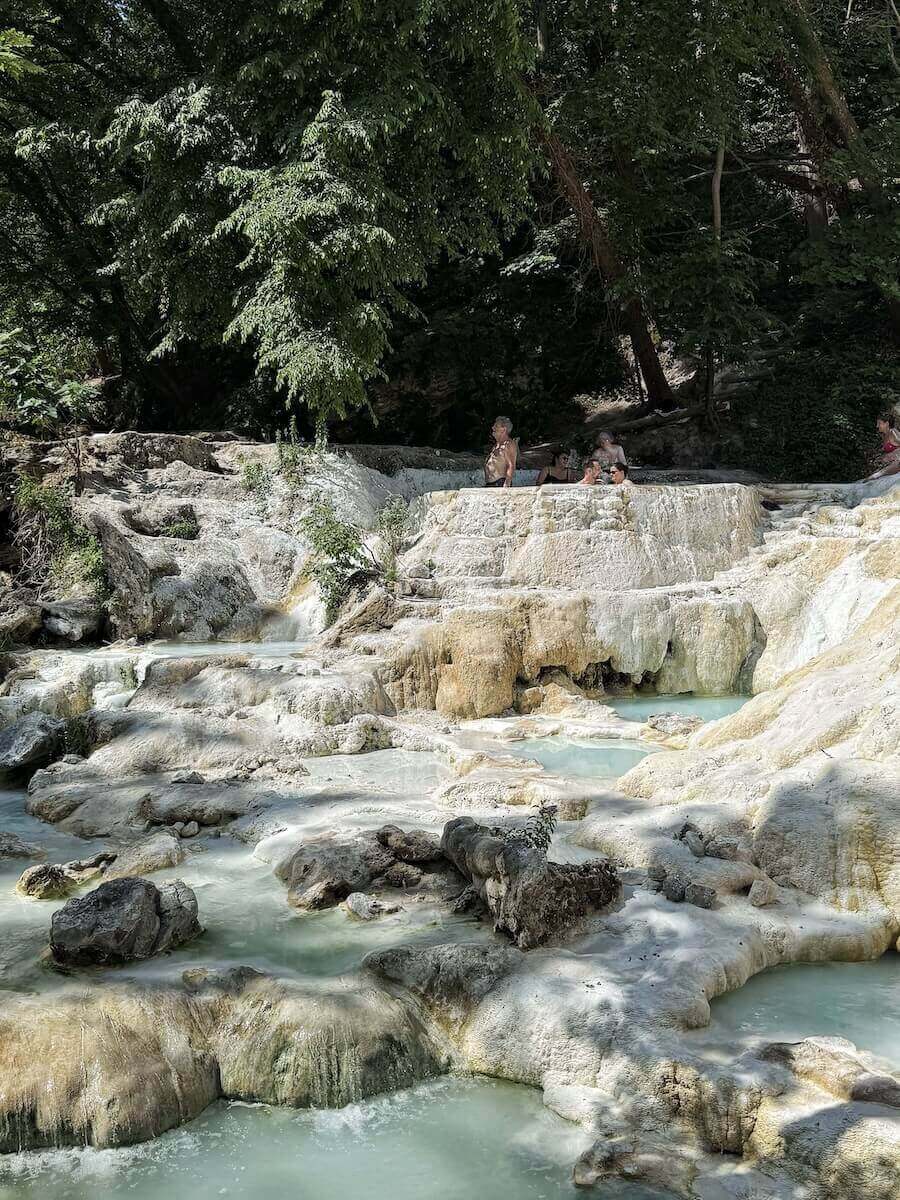
Bagni San Filippo is a small town between Val d’Orcia and Monte Amiata. Known since ancient times, locals love it for its thermal waters that have created a magical landscape of white limestone formations, waterfalls, and small hot pools in the middle of lush green woods.
The stream of thermal baths flows alongside the village. To visit, you can park your car along the main road, get into the woods, and follow the trail (make sure to wear good shoes, as it can be slippery). There are several small waterfalls and natural pools of different sizes and depths. The sulphurous waters have beneficial properties.
Our favorite spot when we visited was the Balena Bianca waterfall, a huge block of limestone formed by the sediments of the thermal waters.
Then go to Bagno Vignoni
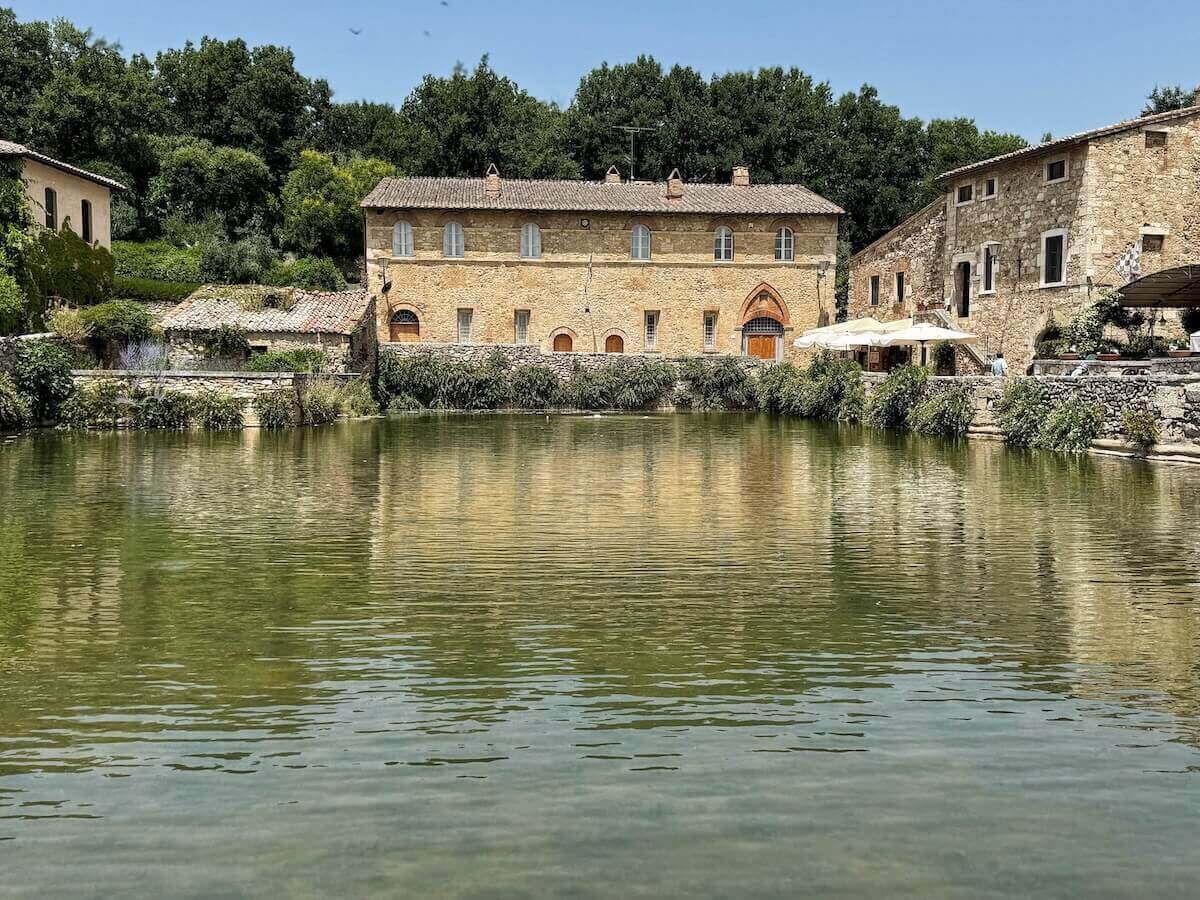
Next to San Quirico d’Orcia, don’t miss Bagno Vignoni. In the center of this tiny village, there’s the spectacular Piazza delle Sorgenti. This is a huge pool where thermal water rises naturally. In the past, locals and guests such as Saint Catherine, Lorenzo the Magnificent, Pope Pius II Piccolomini bathed in this pool.
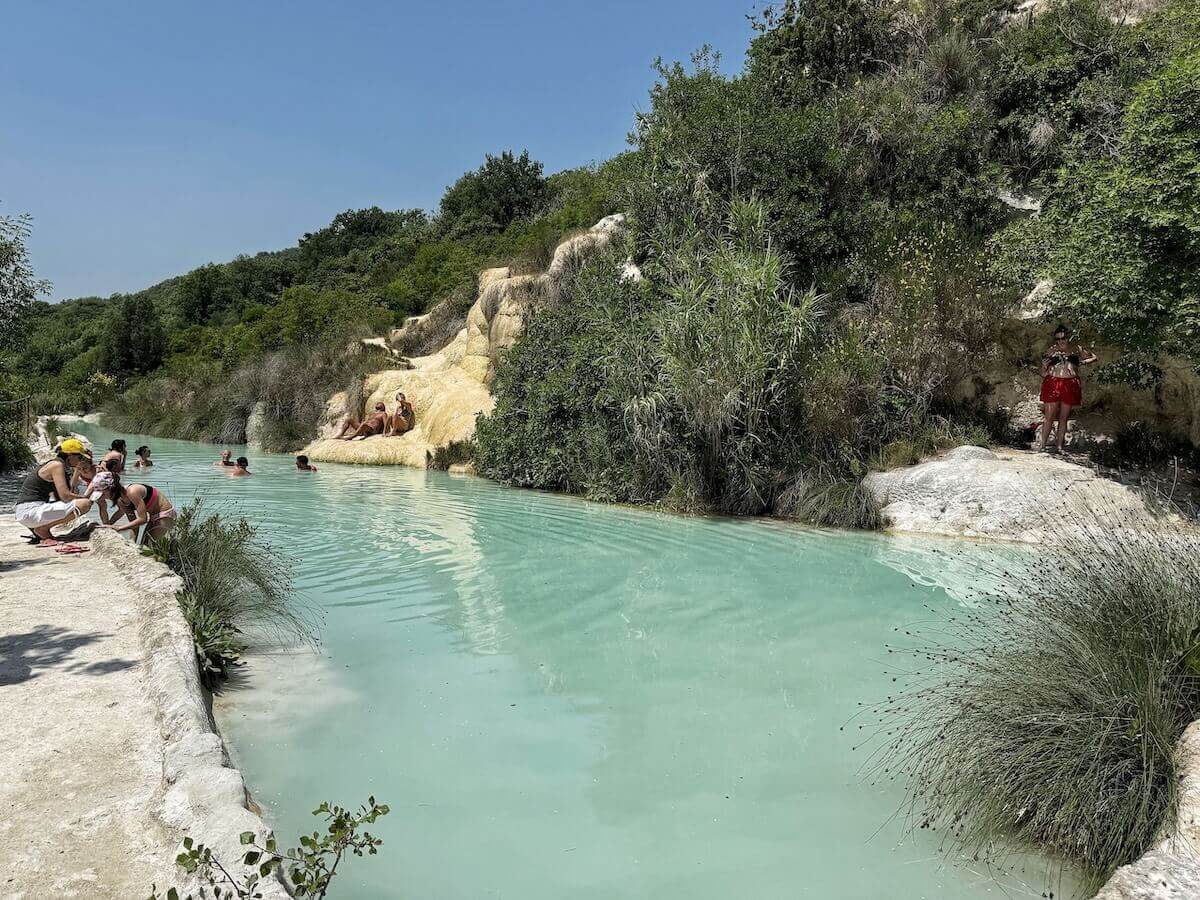
Today, unfortunately, it is no longer possible to bathe here, but just outside the village there are free thermal baths. You can easily reach them taking the steps next to the big car park.
Biking
One of the best things to do in Val d’Orcia is to explore by bike. There are many bike routes to discover the beauty of these places through nature.
A simple route of about 30 km (18.6 miles) on paved roads with an elevation gain of 500 meters (about 1,640 feet) connects Pienza to Montepulciano.
There’s also a biking trail that starts from Pienza and goes to San Quirico d’Orcia. It’s less than 25 km (15.5 miles) long and passes through hills and next farmhouses, as well as by the Chapel of the Madonna di Vitaleta.
The biking paths starting in San Quirico d’Orcia are more challenging – but a great way to experience the Val d’Orcia.
If you don’t have your own bike, you can rent one easily – ask your accommodation for the best bike rental.
Wine tasting
As you are in Italy, it goes without saying that one of the unmissable things to do in Val d’Orcia is enjoying traditional products such as olive oil, pici (a type of pasta), meat, and, of course, wine.
One of the best experiences is wine tasting directly in the cellar where it is produced: you can visit the vineyards, learn about the wine-making process, and of course taste the wines.
Brunello di Montalcino is a must-try. This iconic red wine can only be produced from 100% Sangiovese grapes grown in the municipality of Montalcino.
There are numerous wineries offering tours and tastings: I would recommend the Argiano winery, one of the historic wineries of Montalcino. I loved its combination of history and innovation.
Nobile di Montepulciano is one of the oldest wines in Italy: it was mentioned in a document dating back to 789 AD. This ruby red wine, made mainly from Prugnolo Gentile grapes, has a fruity and floral aroma with spicy notes.
In Montepulciano, you can go wine tasting in the panoramic terrace of Cantina Canneto, a short walk from the historic center and known to be one of the best wineries in Montepulciano.
In Montalcino, I recommend this winery tour with wine tasting at Corte Pavone, one of the best local wineries.
You could also consider this wine tasting tour in Montepulciano, during which you get to try local cheeses and olive oil too.
How Long Do You Need In Val d’Orcia?
To visit Val d’Orcia, you need at least a long weekend. But if you want to fully enjoy its beauty, slow down and get off the beaten path, I’d say you need a whole week.
Take as much time as possible to visit the wineries and taste the region’s famous wines, bike through the countryside and various small towns, and enjoy all the traditional delicacies. You won’t get bored, quite the contrary.
The best time to visit Val d’Orcia is in the spring (late April or May) or fall (from mid-September to October). Those are good compromises in terms of good weather, longer days for exploring, and fewer tourist crowds.
When we visited last time, in mid-June, we found the heat to be almost unbearable and many places to be more crowded than we had hoped.
Best Restaurants In Val d’Orcia
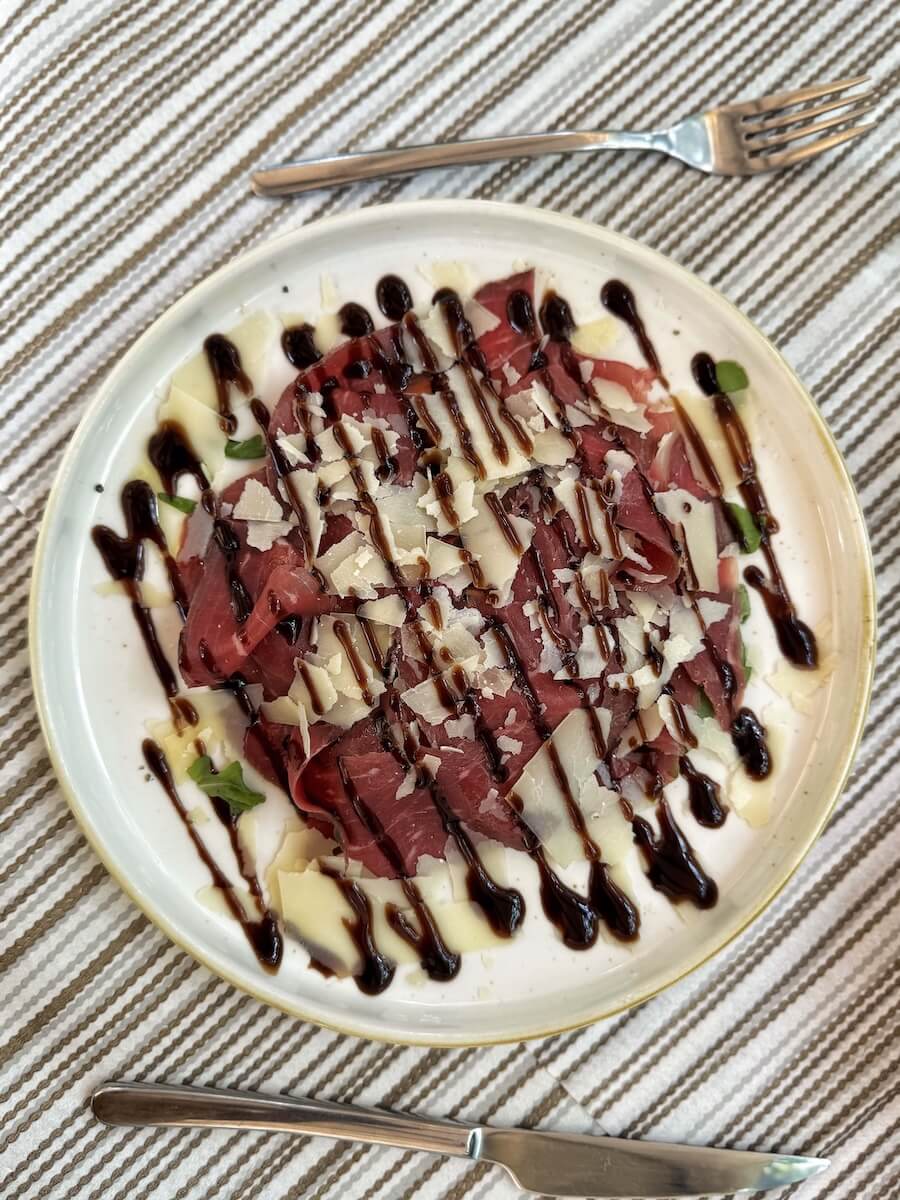
Food in Italy is delicious, and it certainly is so in Val d’Orcia. This area of Tuscany offers a wide range of quality products and typical, tasty dishes. You must try the exquisite meats, typical cured meats, aged pecorino cheese from Pienza, the olive oil, Pici (a type of pasta), accompanied, of course, by local red wines.
In San Quirico d’Orcia, we went to Trattoria Toscana al Vecchio Forno. The trattoria offers traditional Tuscan cuisine: we had a platter of assorted cured meats, crispy crostini, and an excellent salad. We had lunch in the courtyard, and they were kind to find us a table even though we didn’t have a reservation (but I recommend booking in advance if possible).
In the historic center of Montepulciano, I spent a wonderful evening dining at Le Logge del Vignola, where I opted for the tasting menu.
Bistrot Languorino is a small restaurant in Bagno Vignoni, run by a young team. We had lunch in the garden, tasting pici with guanciale, pecorino cheese, and picciola pear, and a tartare with burrata and truffle.
My guide What To Eat In Italy will guide you through Italian specialties. You should also read my post Common Misconceptions About Italian Food to avoid common mistakes.
How To Get Around Val d’Orcia
The easiest and fastest way to get around in Val d’Orcia is definitely by car. I recommend renting one, so you are independent and free to get up early in the morning or stay late at night, choosing where to go. Driving in Val d’Orcia is fairly easy: there aren’t toll roads once you get there, and there isn’t much traffic either.
Another excellent alternative, given the wide range of routes available, is biking. Obviously, this takes longer, but it also gives the trip a different flavor.
If you don’t feel confident driving, you can always use public transportation, but this takes longer, and you will need to plan your route based on timetables and availability. This will inevitably limit your trip.
I have a Guide on Renting A Car In Italy to help you decide which car to pick for your trip. I recommend using Discover Cars to pick a good car rental. It’s a third-party booking site that allows you to compare the prices and check out the reviews of the various companies, and what I always use for car rental (including for my latest trip to Val d’Orcia).
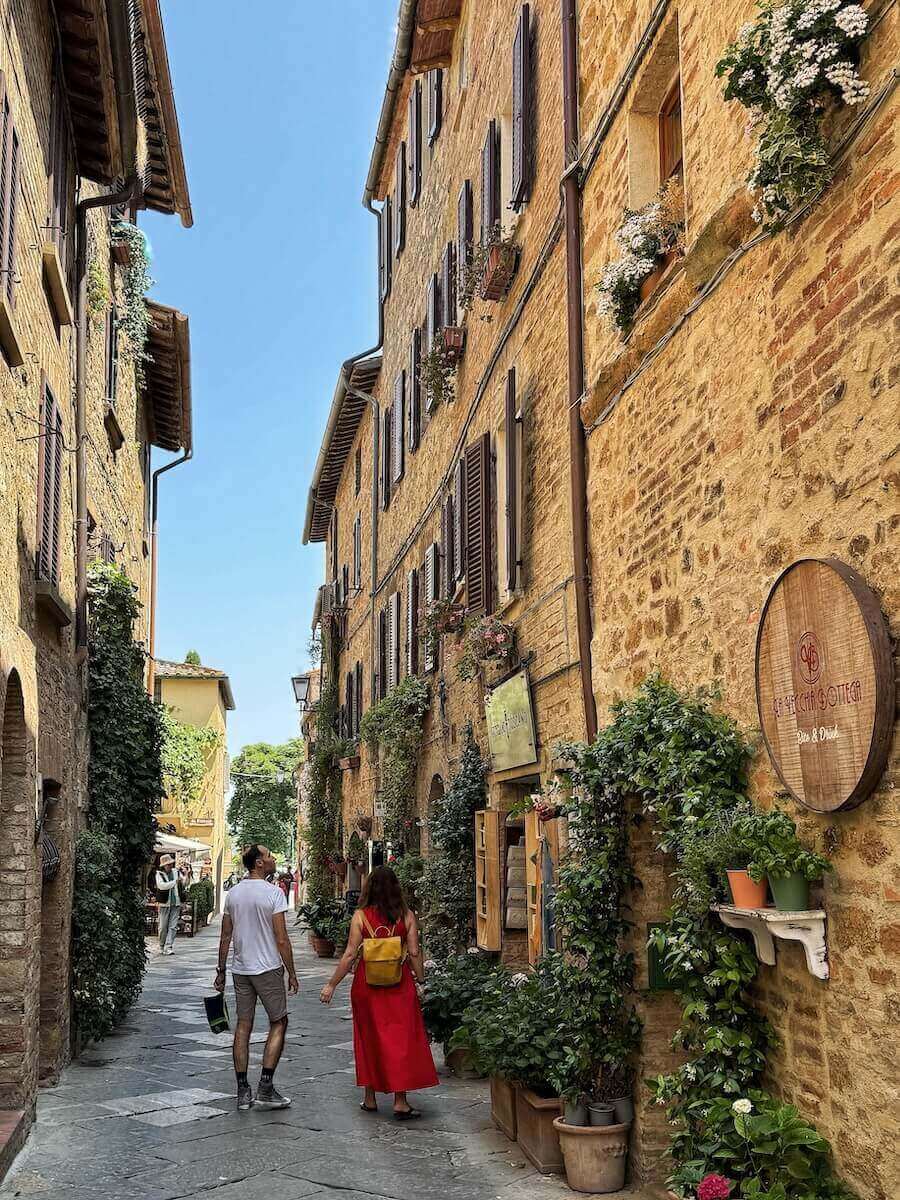
Day Trips To Val d’Orcia
If you only have one day to visit Val d’Orcia, you can do so as a day trip from Florence or Siena. If you don’t wish to rent a car, you can count on several guided tours. Here are my top recommendations:
This Val d’Orcia day trip from Florence goes to Montalcino and Pienza, and includes wine tasting and lunch. You will also explore the Tempio del Brunello and the Abbey of Sant’Antimo.
This Val d’Orcia day trip from Siena goes to Montepulciano and Pienza and includes wine tasting and cheese tasting too.
There’s also this day trip from Florence that goes to Siena, Cortona, Montepulciano, and Val d’Orcia. As a word of warning, I should point out that you will spend at least 3 hours on the bus and only have a small taste of each destination.
FAQs on Val d’Orcia
Val d’Orcia is famous for being home to some of the prettiest medieval villages of Tuscany, some of the most popular places to visit in the region for international tourists. There are castles and fortresses dating from 1000-1100 spread along the Via Francigena, an ancient road connecting France and northern Italy with Rome.
Yes, Val d’Orcia is worth visiting. It’s a truly unique place, so much so that it’s been listed as a UNESCO World Heritage Site since 2004 (not to mention, the historic center of Pienza is UNESCO-listed since 1996).
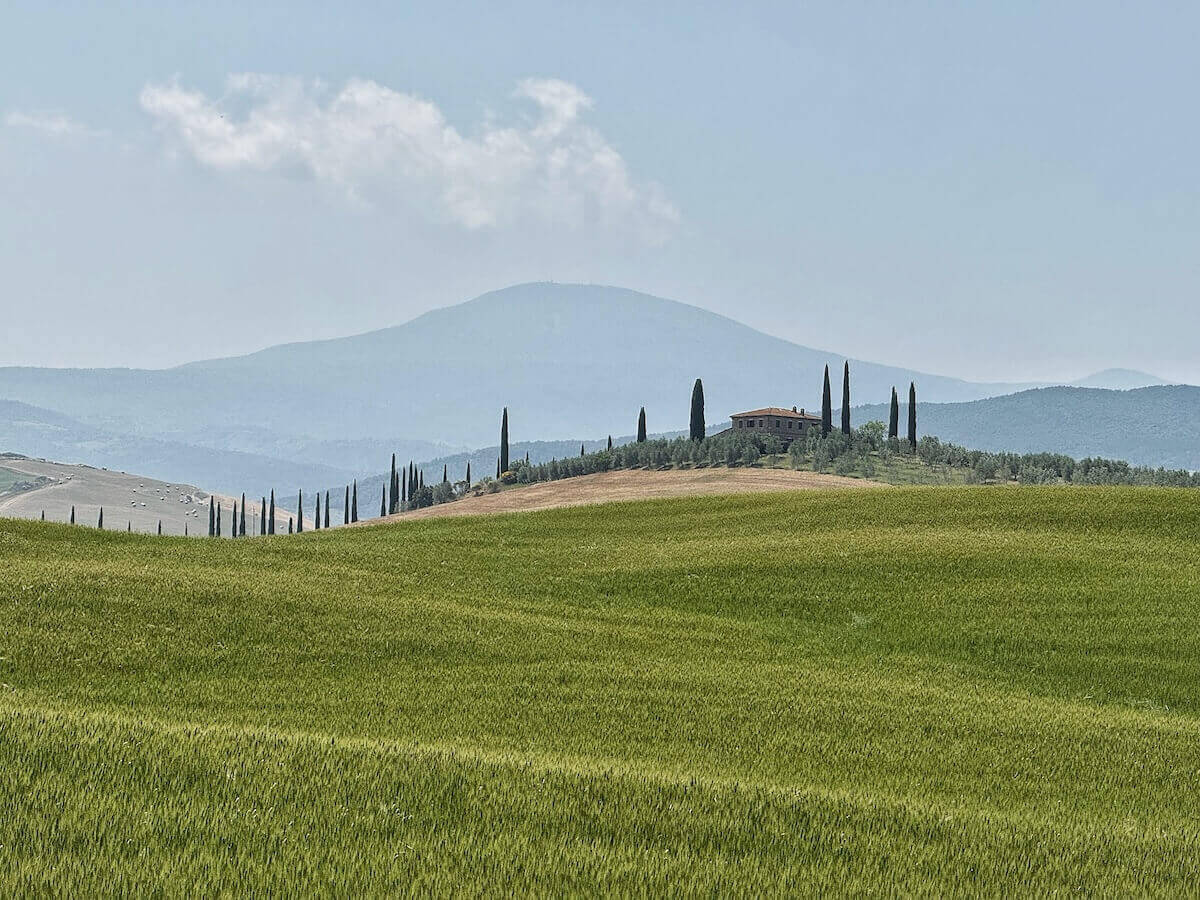
With its rolling hills and the driveways lined with cypress trees, Val d’Orcia also has a beautiful, dramatic landscape, which varies a lot depending on when you visit.
While you can go on day trips from Florence and Siena to Val d’Orcia, I recommend spending a minimum of 3 days there to explore the main sights, and even 5 days or a week to explore at a more relaxed pace and more in depth.
The key filming locations of the movie Gladiator in Val d’Orcia are around Pienza and San Quirico d’Orcia. One of the most iconic spots is the cypress-lined road leading to the Agriturismo Terrapille, which in the movie is Maximus’s home. The rolling hills around it appear in the movie as the “Elysian Fields.”
That would be Cypresses Road (strada dei cipressi, in Italian), near Monticchiello.

Final Considerations on Visiting Val d’Orcia
There is no doubt that the Val d’Orcia is one of the most beautiful places to visit in Tuscany. With its rolling hills, cypress-lined roads, medieval small towns, and a pace of life that feels timeless, as well as the delicious food and wine, the Val d’Orcia is a fantastic destination.
If you are visiting for the first time, don’t skip places like Pienza, San Quirico d’Orcia, Monticchiello, Bagno Vignoni, and Montalcino. We also loved driving along SP146 between Pienza and San Quirico for the incredible views that make Val d’Orcia so famous.
My recommendation is to spend at least two full days in Val d’Orcia, to fully appreciate everything it has to offer. And if you are there for just a day, make a mental note of the places that you should return to on your next trip.
Recommended Readings
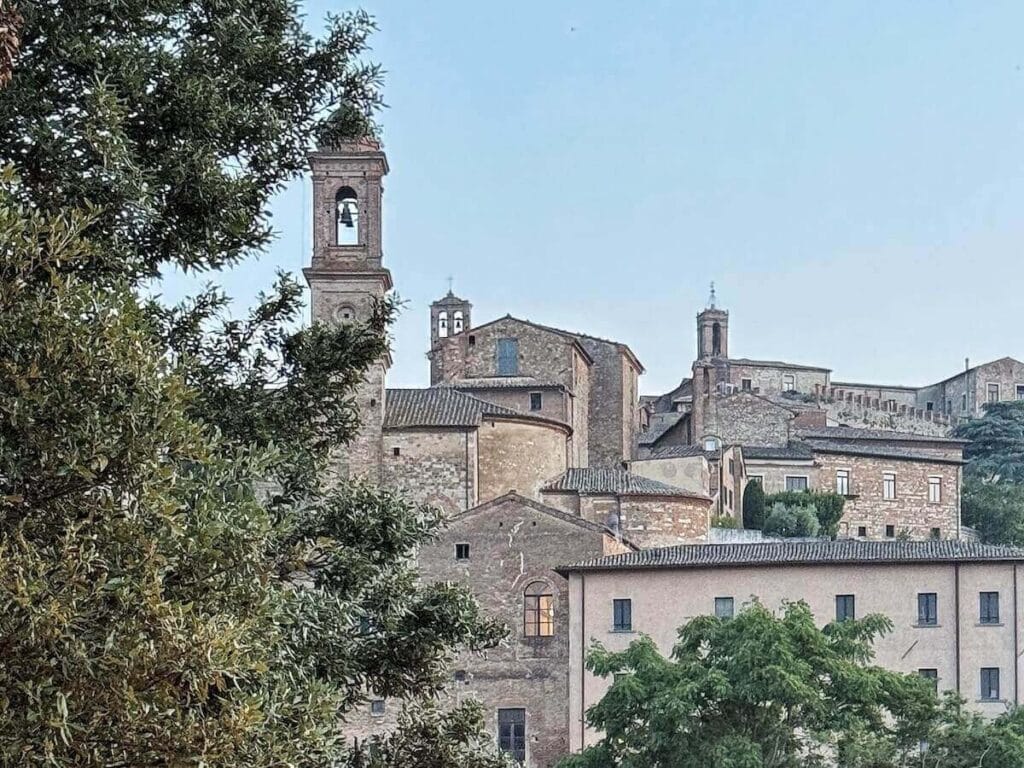
10 Best Things To Do In Montepulciano, Italy + Tips For Visiting
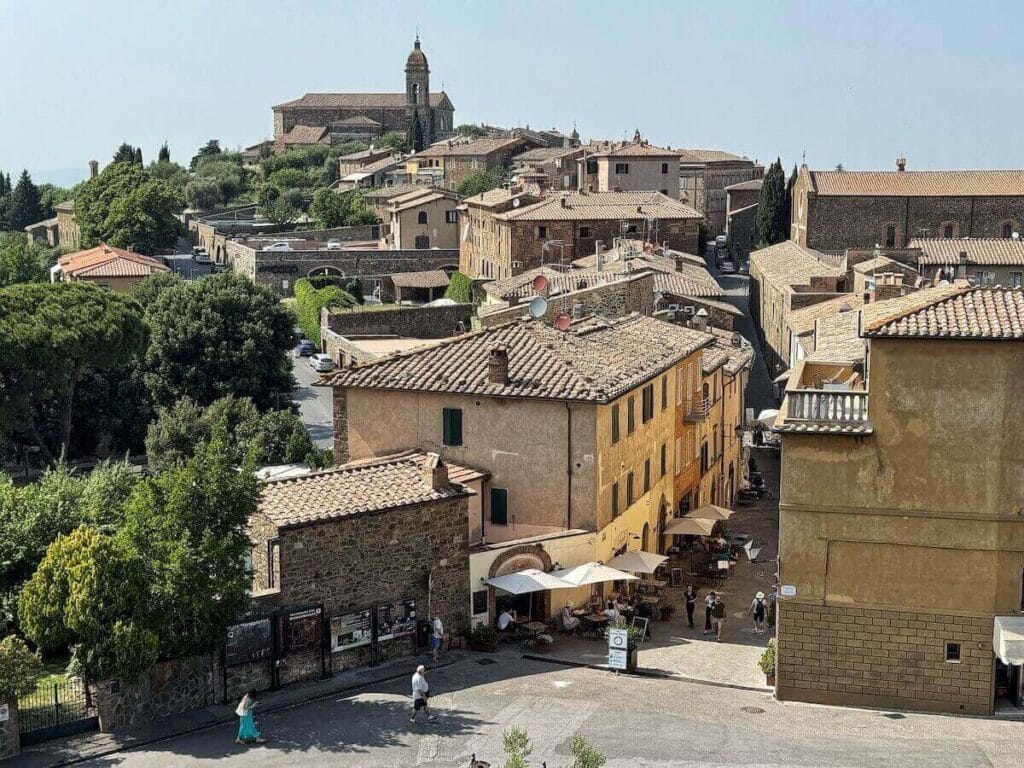
5 Best Things To Do In Montalcino, Tuscany + Tips For Visiting
Further Readings
You should also read the following posts:
PIN IT!

Claudia Tavani
Claudia Tavani was born and raised in Sardinia, and after moving between the United States and the United Kingdom, she's now back living in her hometown, Cagliari. She's a travel blogger and certified travel designer who loves planning trips and publishing guides, travel tips, and packing lists so that you don't have to. Owner of Strictly Italy, cat mom to Minnie. Loves pizza, hiking, archeology, cities, beaches, swimming, and running. Hates peppers.