
Which are the best things to do in Naples? Discover them with your favorite travel expert!
Located in Campania, one of Italy’s 20 regions, Naples is undoubtedly one of my favorite cities in Italy, and that says a lot coming from an Italian. However, it’s too often overlooked in favor of other popular tourist destinations, like Rome, Milan and Florence. Some even visit Naples on day trips from Rome!
Some don’t go at all because they fear Naples isn’t safe (Naples is safe, trust me!).
Naples has a lot to offer, if not more, if you’re drawn in by the proximity to Mount Vesuvius, Pompeii, and the Amalfi Coast.
And while there are so many great things to do outside the city, there are just as many fabulous things to do in Naples. You can spend a day exploring churches and shopping walkways or learn more about the spooky legends and myths in the underground tunnels or the catacombs.
Because of all the options, creating the perfect Naples itinerary when you are planning your trip to Italy is pretty hard. But don’t worry. I’ve traveled to Naples several times and can share all the unmissable things to do and places to visit.
These are the top attractions and tours in Naples that must be booked in advance:
Ready to learn about all the best Naples tourist attractions and the unmissable places to visit in Naples? Let’s go!
Do you want to visit Naples but don’t have more than a day to spare? My post How To Make The Most Of A Day Trip From Rome To Naples will help you plan your day.
Best Things To Do In Naples
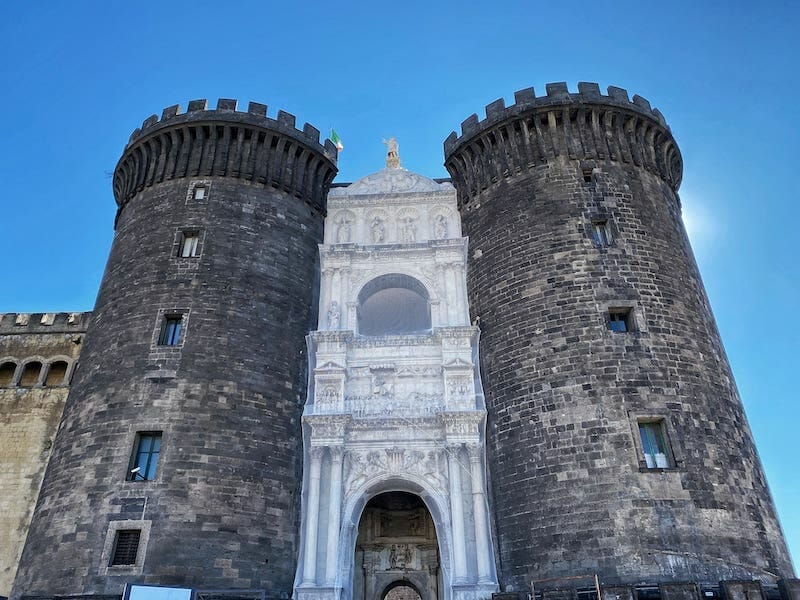
Maschio Angioino Castle (Castel Nuovo)
Maschio Angioino Castle (also called Castel Nuovo) is one of the most important places to visit in Naples.
The castle was built between 1279 and 1282. It was initially built as a palace for the royal residence and served as a fortress to protect the city during conflict. There are many myths and legends around Naples and Castel Nuovo, but there’s one in particular that’s very popular.
There are two prisons inside the Palatine Chapel in the castle. For a while, prisoners kept going missing. It’s said that crocodiles in the mote were dragging the prisoners out to sea from the castle. This isn’t proven, but it’s still an exciting story about the castle’s history.
Maschio Angioino Castle is in the city center near the city hall and has excellent city views. It is also great for history buffs and art enthusiasts, as the royal residences filled the castle with incredible artwork and decorations throughout their time there.
You can book tickets in advance on the official website and tour the castle. On a tour, you’ll learn more about the castle’s essential chambers and areas, including the Armoury Hall, Charles V. Hall, Saint Barbara Chapel, and Sala della Loggia.
Castel dell’Ovo
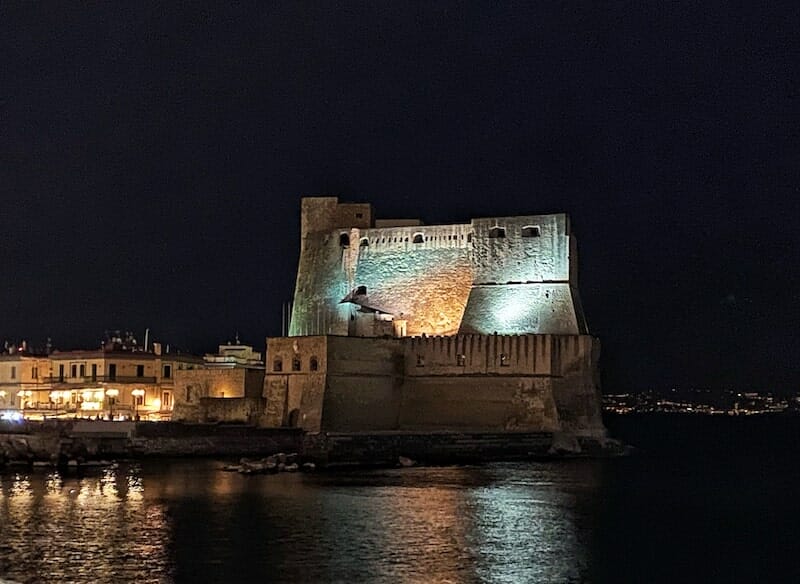
Castel dell’Ovo is currently undergoing some serious renovations after years of neglect. According to guards outside the castle, it’s expected to be closed for the next two years or so. You can’t go in and explore the castle due to the renovations, but you can still admire the exterior and enjoy the view of the city.
Castel dell’Ovo has a fascinating history, and it has become a symbol of Naples. It is perched on a small islet off the coast of Naples, with incredible views of the city and the surrounding region. It was once one of the most magnificent fortresses in Italy, but it also served as a royal palace and a prison throughout time.
Before the renovations began, it was an exciting place to explore, full of myths, legends, and pieces of Italian history. Hopefully, once the museums are finished and the castle is further protected from the mark of tourism, you can wander the medieval halls again.

The Royal Palace
The Royal Palace was one of the four royal palaces used by the Bourbon reign from 1734 to 1861. It was the most centrally located and also the most famous palace.
The palace is located in Piazza del Plebiscito, Naples’ main square (more about it in a bit). Once a royal residence for the elite, it’s now one of Naples’s most extravagant and fascinating museums.
You can explore the halls and learn more about its history. Also, make sure to walk through the royal apartments, the court theater, the garden and the library.

Piazza del Plebiscito
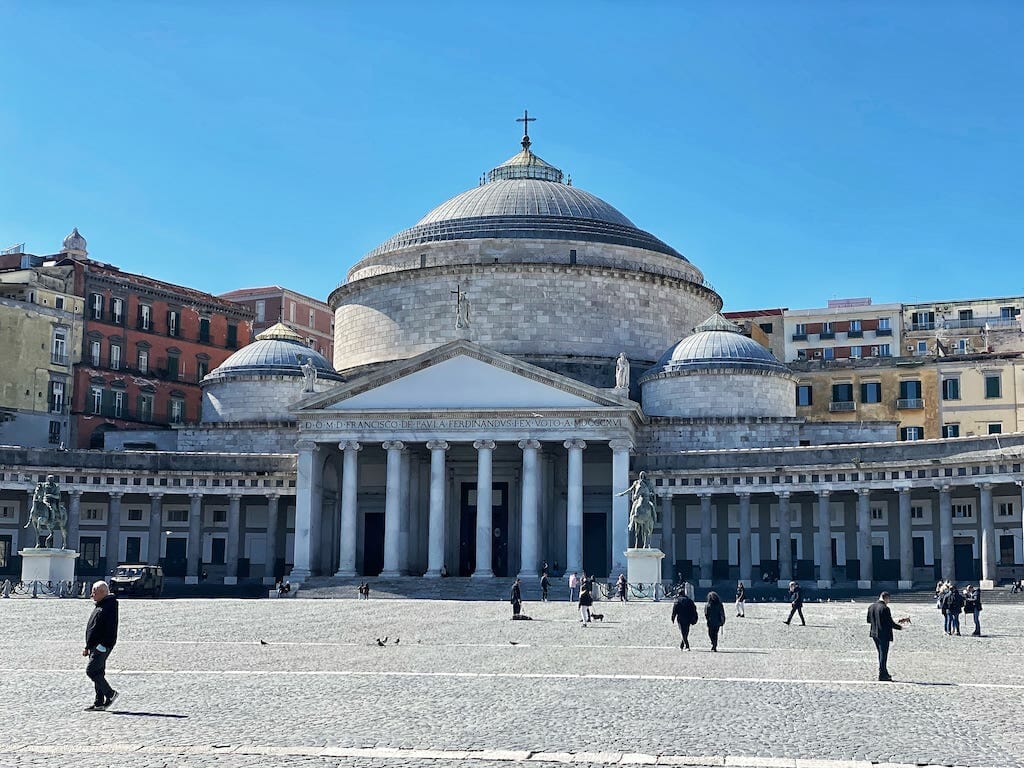
Seeing Piazza del Plebiscito is one of the top free things to do in Naples. This large square dates from the 19th century and is the largest public square in the city, a meeting point for locals and tourists alike and a venue for all sorts of events.
The name of the square comes from the plebiscite with which Naples and the then Kingdom of Two Sicilies were annexed to the newly founded Kingdom of Italy on 21 October 1860.
I have already mentioned Naples Royal Palace which is located in Piazza del Plebiscito, but you can also see the San Francis of Paola Basilica and the symmetric Prefecture Palace and Salerno Palace.
The square itself was built with volcanic rock from Mount Vesuvius. Not far from the square you’ll also find the historic Caffé Gambrinus, a lovely place to stop for a drink or a nice treat like a sfogliatella.
San Carlo Theater and Galleria Umberto I
The Real Teatro di San Carlo (which translates as “Royal San Carlo Theater” and is simply known as the Teatro San Carlo) is the main theater in Naples and now a UNESCO World Heritage site.
The theater was inaugurated in 1737 was the first theater in Italy to have a ballet school. It also holds the record for being the oldest, constantly-running opera house in the world.
You can visit the interior of the theater on guided tours – for information check Teatro San Carlo official website.
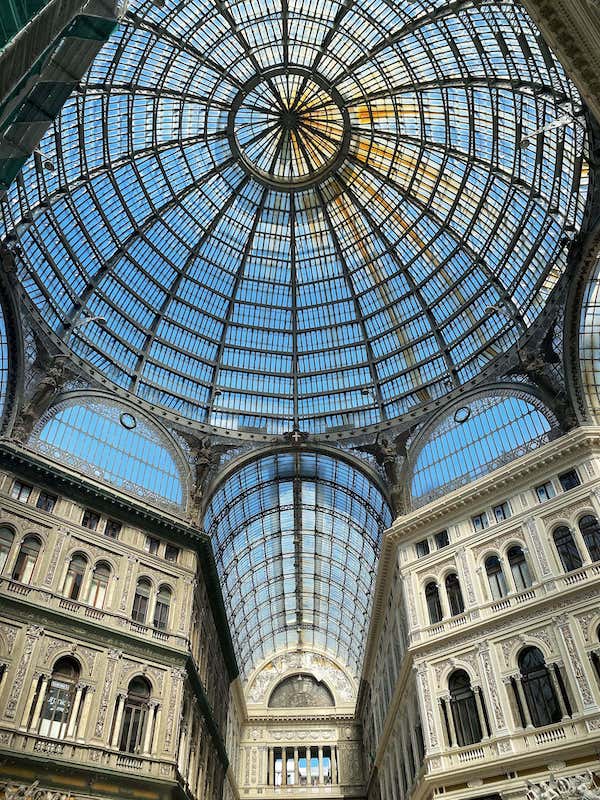
On the other side of the street from Teatro San Carlo there’s Galleria Umberto I, a historic shopping mall and one of the best free places to visit in Naples. It was built between 1887 and 1890 and dedicated to Umberto I King of Italy. Walk inside to admire the stunning atrium – a domed area with beautiful ironwork and glass.
Naples Archeological Museum
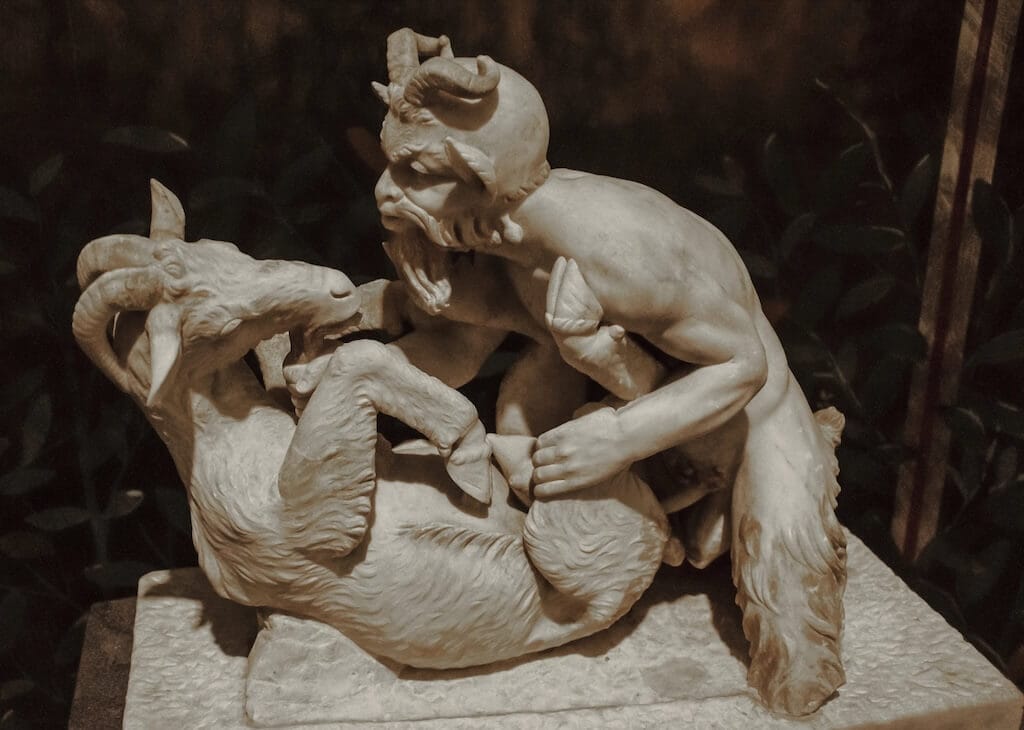
The Naples Archeological Museum should be on your list of places to visit in Naples. The museum has a massive collection of ancient Roman artifacts and a rather sizeable Egyptian collection of mosaics and statues.
Some of the museum’s most famous treasures are the rare artifacts from Pompeii and Herculaneum, two cities destroyed by an eruption from Vesuvius in 79 AD. The Farnese Collection includes famous sculptures, notably the Farnese Taurus, Hercules’ Last Labor and Atlantis’ statue.
The collections are divided across four floors, including the basement and ground floor. The Egyptian collection is in the basement, the Farnese collection is on the ground floor, mosaics from Pompeii and Herculaneum are on the first floor, and frescoes and artifacts from Pompeii and Herculaneum are on the second floor.
I recommend taking a tour of the Archeological Museum. You’ll learn more about the city’s history and society, and you’ll be able to explore the rest of the town with more knowledge and understanding. I also recommend doing so toward the beginning of your Naples travels.
I recommend this Archaeological Museum of Naples Guided Tour as one of the most educational and fun ways to explore the museum. The activity includes a two-hour walking tour of the museum with a knowledgeable guide and skip-the-line tickets, which can be convenient on busy days. If you’d prefer a more personal experience, book an Archaeological Museum 2-Hour Guided Private Tour.

Cappella Sansevero and the Veiled Christ
Seeing the Capella Sansevero (Sansevero Chapel) and the Cristo Velato (Veiled Christ in English) is an absolute must in Naples.
Cappella Sansevero is a Baroque chapel and museum founded in 1590, under the guidance of John Francesco di Sangro, then Duke of Torremaggiore.
Make sure to visit inside to admire the paintings by well-known artists of the 18th century. The centerpiece here is the sculpture of the Veiled Christ by Giuseppe Sanmartino, but there are more pieces to admire such as Francesco Queirolo’s 1753 Release from Deception, and Antonio Corradini 1752 Veiled Truth.
Taking photos inside the chapel is forbidden. This guided tour of Naples goes to Sansevero Chapel, Naples Cathedral and Spaccanapoli and lasts 2.5 hours.
Napoli Underground
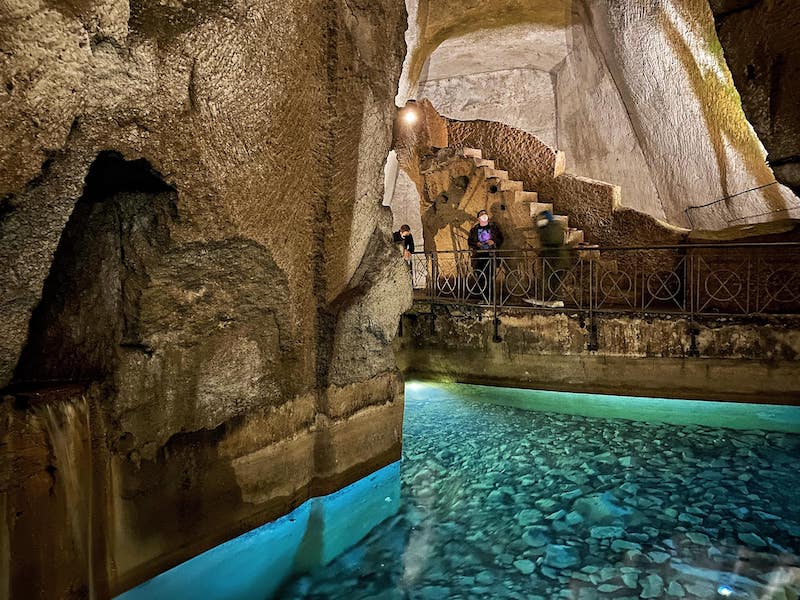
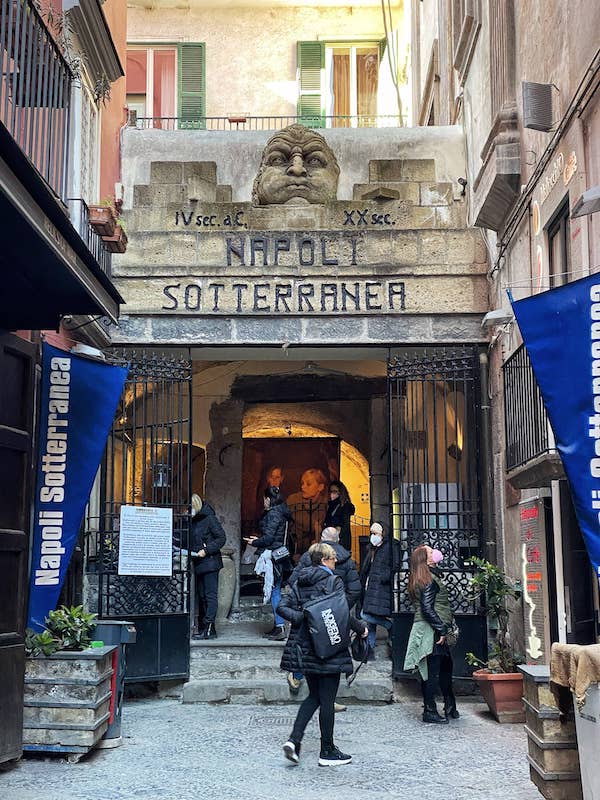
A guided tour of Napoli Underground is one of the most unique things to do in Naples. Running 40 meters below the city streets, a network of tunnels can be explored with a designated guide.
The Ancient Greeks initially built the tunnels for construction materials. The Ancient Romans expanded the tunnels and used them as aqueducts to supply the city with water. The tunnels were also reportedly used as a bomb shelter during WWII.
When you tour the underground, you’ll be able to see (and learn more about) the Greek-Roman Aqueduct, the ruins of an ancient theater, and even a small museum with artifacts found in the underground tunnels.
For one of the most popular underground tours, I recommend this Spanish Quarters Underground Guided Tour. The tour walks you through the tunnels while explaining its history, from the Greek construction to the Roman aqueduct to the air-raid shelters during WWII. The tour lasts around two hours, just enough time to explore.
Catacombs of San Gennaro
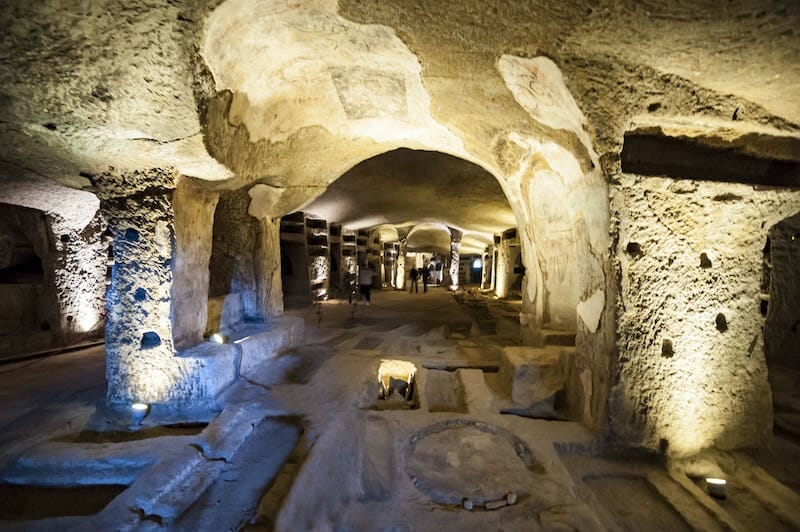
Speaking of underground, the Catacombs of San Gennaro are another must-see.
The Catacombs of San Gennaro date back to the 2nd Century. It’s believed they were first used as a burial site for a noble family but later became a place of worship and the burial site of San Gennaro, the city’s protector saint.
The catacombs here were so important that they were a popular pilgrimage site until the 9th century. They were then forgotten and rediscovered in the 17th century and are even a popular place of worship today. Mass is held in the lower catacombs in the Basilica of Agrippinus.
The San Gennaro Catacombs are below the Rione Sanità District, one of the city’s most popular neighborhoods.
You can only explore all the San Gennaro Catacombs on a guided tour. I suggest this Catacombs of San Gennaro Entry Ticket & Guided Tour. The tour only takes one hour, but you get to walk through and learn a lot about the fascinating history and buried artifacts.
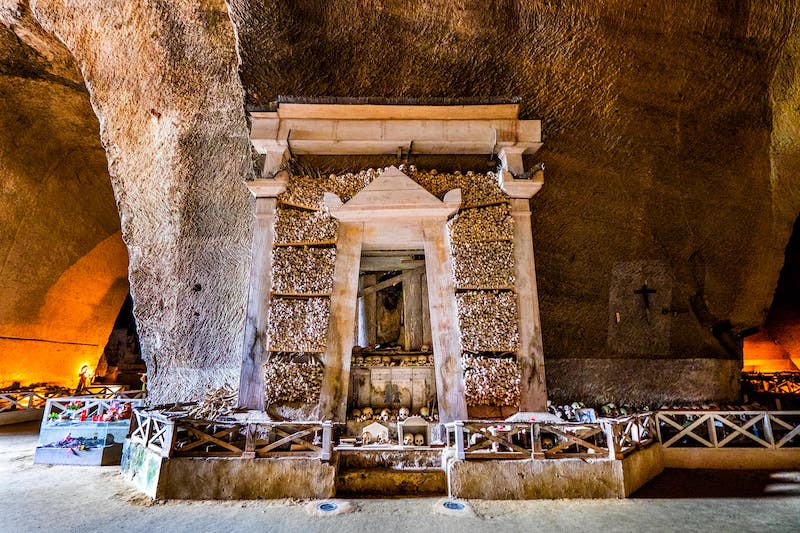
Fontanelle Cemetery
The Fontanelle Cemetery (Cimitero delle Fontanelle in Italian) has been closed since 2021 for renovations and safety work. It was supposed to reopen shortly after, and several announcements claimed it would reopen very soon.
Unfortunately, it has yet to reopen. That said, it’s one of the best free things to do in Naples, so if it’s finally open when you visit, add it to your itinerary.
The cemetery is on a hill outside the city, but this wasn’t the original burial site. When the Spanish arrived in the 16th Century, there was no space for cemeteries and graveyards. They decided to move older remains from the churches into Fontanelle Cemetery to make more room in the churches for burial.
Who knows when it’ll actually reopen, so try to keep up with the official website. With some luck, it could be very soon!
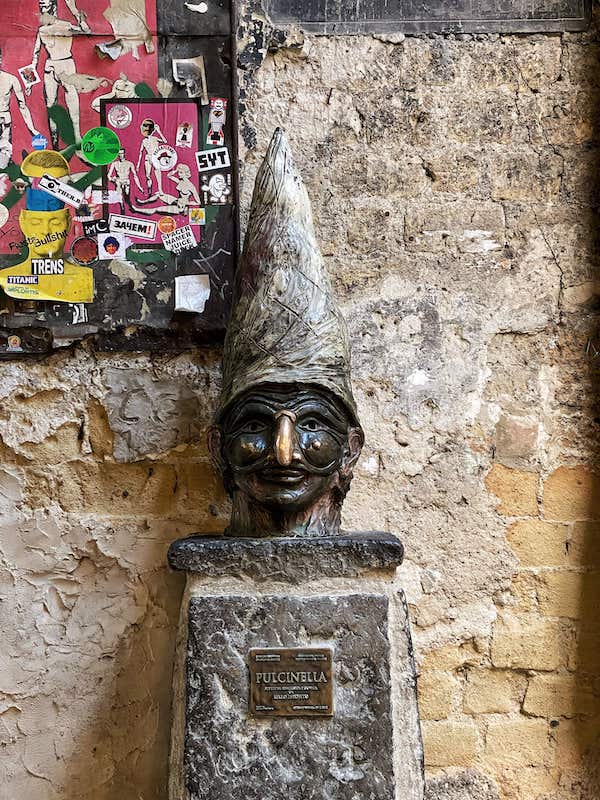
Pulcinella’s Nose
While touching Fontana del Porcellino for good luck is one of the best things to do in Florence, Pulcinella’s Nose can bring similar well wishes.
Pulcinella’s Nose is a statue of the Pulcinella mask in the heart of Naples. It’s not entirely clear where the tradition of rubbing its nose for good luck came from, but the character itself is from a Latin Comedy.
Pulcinella is also Naples’ carnival mask and has become a symbol for the city itself. You’ll find a mask and different variations of him all around the city. Many people believe he characterizes the people of Naples. He faces misdeeds and misfortune with laughter and optimism.
Other characteristics of Pulcinella include authenticity, wittiness, simplicity, strength, and generosity. He is also said to be a great appreciator of good food, which fits a city like Naples with excellent regional Italian cuisine.
If you’d like to ensure the rest of your trip goes smoothly, make sure to swing by the mask statue and rub it for good luck.
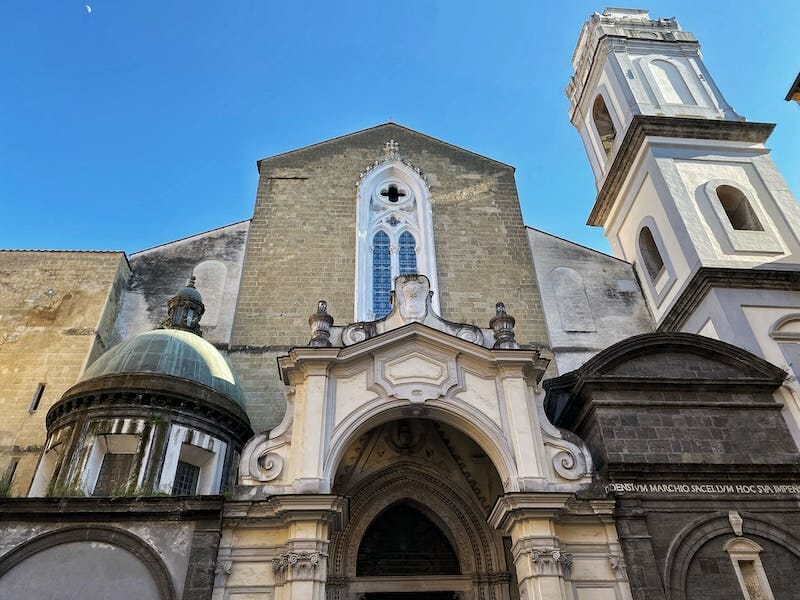
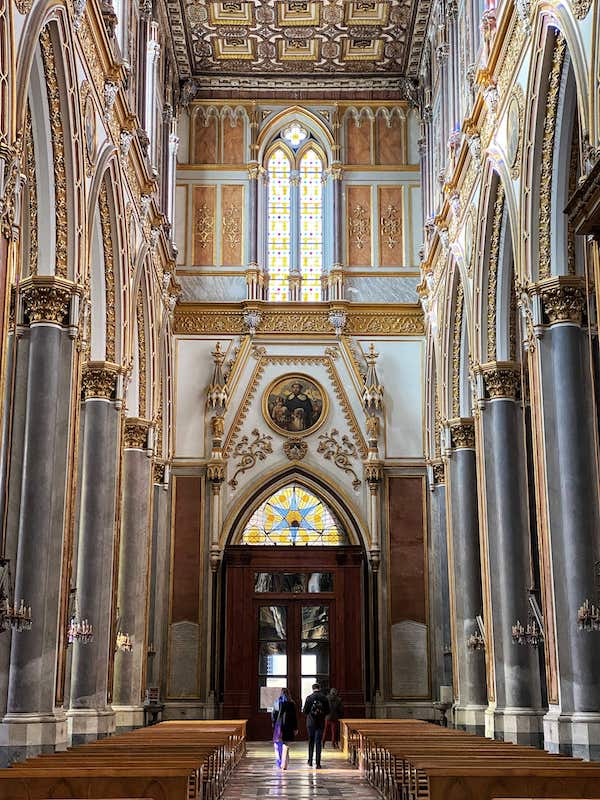
San Domenico Maggiore Basilica
Some of the best things to do in Naples involve visiting the many churches. In case you aren’t aware, European churches differ from those in the United States in that they are so much more than simple churches.
The churches reflect Italian history in art, architecture, and faith. San Domenico Maggiore Basilica is one of the most beautiful churches in Naples.
The church is located in Piazza San Domenico Maggiore and was found by the Dominican order friars with a blend of Gothic and Baroque architecture.
Once you’ve marveled at the impressive exterior, you can head inside to explore the many treasures throughout the basilica. The Sacred Relics Chamber houses the preserved hearts of Charles II of Naples, Ferdinand II of Naples, and Alfonso V of Aragon.
Additionally, explore the Aragonese Arches, the Processions, and the Sacred Ornaments collection, showcasing priceless art and artifacts.
San Gregorio Armeno Church
San Gregorio Armeno Church is another beautiful piece of art, history, and religion in Naples, Italy. It is one of the oldest and most important Baroque complexes in Naples.
The facade features three arcades with Tuscan pilaster strips. Inside, a single nave with side arcades by artist Luca Giordano is also on display.
The church is also known for its famous Holy Staircase, a narrow staircase made of stone steps. Nuns use it during penitential practices, and it is a place for reflection, prayer, and self-discipline.
The cloister, or the heart of the monastery, is the main attraction, though. It was built in 1580 and features a marble fountain adorned by statues of “Christ and the Samaritan Woman.”
Gesù Nuovo Church
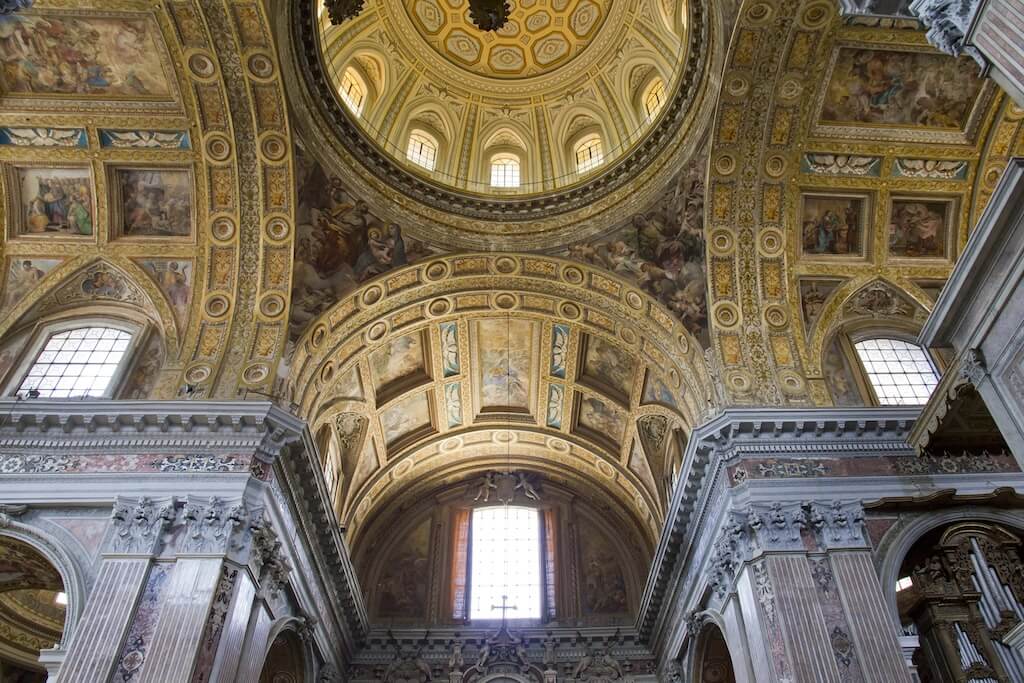
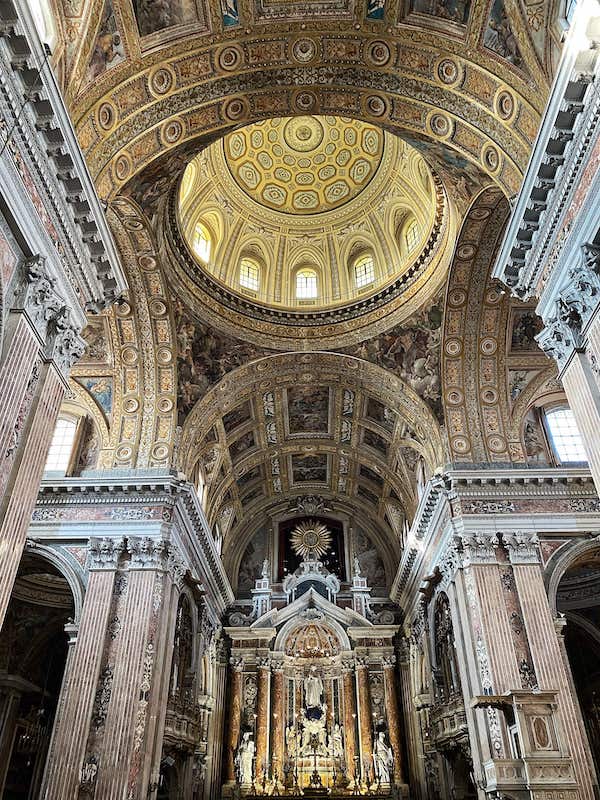
Gesù Nuovo (Italian for ‘New Jesus’) stands just outside the western boundary of Naples’ historic center and is one of the best examples of Baroque art in Naples. The church was initially built in 1470 as a palace for Roberto Sanseverino, Prince of Salerno.
Because the exterior was initially designed for a palace, it has a very unusual facade for a church. It features rustic ashlar diamond projections.
Once inside, you can explore mesmerizing art from hundreds of years ago, including the Expulsion of Heliodorus from the Temple by Francesco Solimena. The art and architecture make Gesù Nuovo worth visiting and one of the best free things to do in Naples.
Naples walking tour
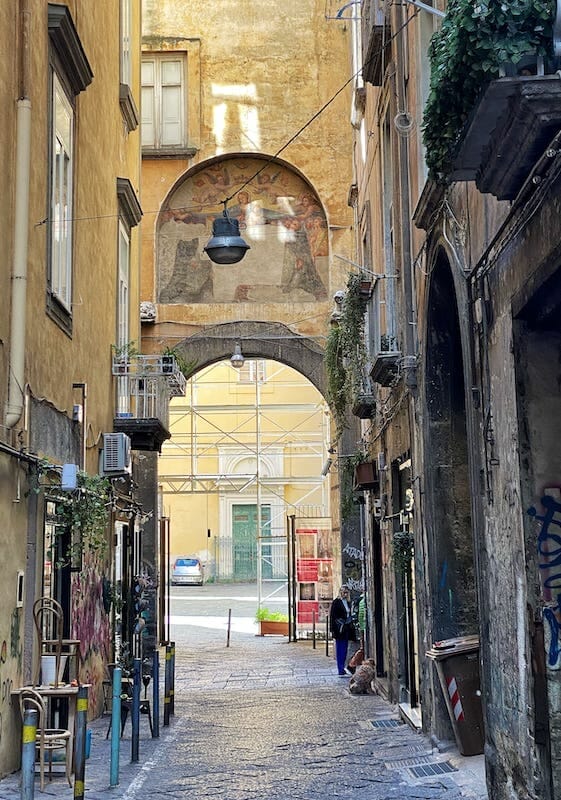
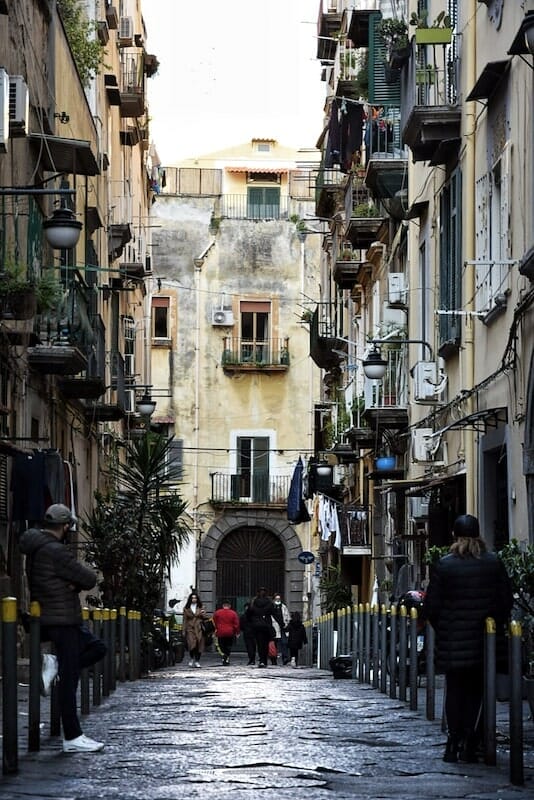
If you want to enjoy the best of Naples sightseeing while also learning a little more about the city’s history, consider a city walking tour. Most walking tours are around the historic center, where many tourist attractions are located.
There are some free walking tours in the city that cover the basic sights – normally these tours feature very large groups so it can be difficult to actually hear the guide; and you are also sort of expected to tip the guide at the end of the tour (so you might as well pay for a small group tour).
Indeed, you can opt for a paid walking city tour, which may cover a little more ground and will likely be much less crowded.
If you’re looking for an in-depth Naples walking tour, I recommend this Origins, Cults, and Legends History Walking Tour. You can choose between a private or shared tour. The tour includes brief stops at San Domenico Maggiore Church, Piazza San Domenico Maggiore, Spaccanapoli, Purgatorio ad Arco, Via San Gregorio Armeno, Naples Cathedral, and more.
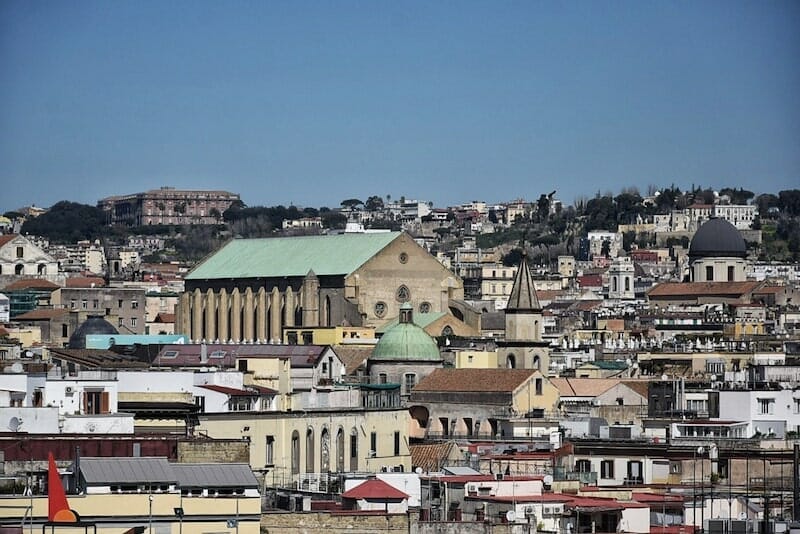
Napoli shopping
Naples has some amazing shopping streets and districts, even if you aren’t into shopping. There’s so much variety, from antique souvenir shopping to luxury shopping, and lots of original souvenirs and beautiful leather goods, there’s something for everyone.
Here are some of the best shopping streets and galleries around Naples:
- Via San Gregorio Armeno: Otherwise known as “Christmas Alley,” this is the most unique shopping alley in Naples. It’s located outside San Gregorio Armeno Church and sells novel Christmas decorations and ornaments year-round.
- Via Toledo: This is one of the longest shopping streets in Italy and the most important shopping thoroughfare in Naples. The street connects Piazza Dante with Piazza Trieste e Trento and stretches a whopping 1.2 km (0.8 miles). It has excellent shops selling souvenirs, clothing, and other goods. It also runs right through the historic center, so it’s very easy to access.
- Via Chiaia: This is the best pedestrian walkway in Naples. The street has luxury clothing stores, souvenir shops, and cute boutique stores. There’s a pretty large variety, so there’s something for everyone.
- Poggioreale Market: This is the place for leather goods, shoes, and bags. It’s a vibrant market with mostly good-quality leather items.
- Galleria Umberto I: This already mentioned gallery isn’t just a monument, but it’s also filled with luxury shops, cafes, and restaurants. Even if you don’t want to shop, you should walk around for the architecture alone.
The main squares in the city center are also really great spots for shopping. All tourist areas will have a variety of shops that cater to tourists.
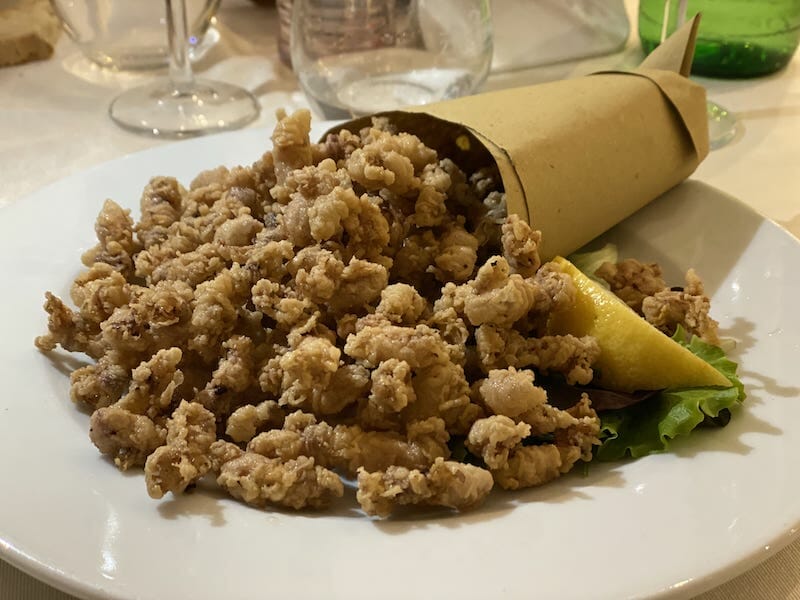
Sample Napoli cuisine – one of the unmissable things to do in Naples
Naples is world-renowned for its pizza, one of the most famous dishes in Italy. After all, this is the birthplace of pizza. But Napoli cuisine is actually pretty varied and reason enough to visit Italy. It’s heavily influenced by Greek, Roman, French, and Italian cultures. So, in addition to amazing pizza, you’ll also find a lot of pasta, fish, and vegetable-based dishes.
One of the best ways to truly experience Napoli cuisine is with a food tour and/or a cooking class. It will also help you debunk some myths about Italian food!
You can choose a food tour that fits your preferences best. Some food tours focus on pizza, others on street food, and others on more regional specialties you might not have heard of.
A cooking class is also a fun and interactive way to learn more about the connection between Napoli cuisine and culture. You’ll also be able to bring home a brand-new, authentic recipe.
If you’re looking to sample the mouth-watering Napoli street food, I recommend this Street Food Walking Tour with Local Guide. This tour is great because not only will you try a large handful of authentic street food, but it’s also like a mini tour of the city.
If you’re more interested in the pizza side of Napoli cuisine, check out this 3.5-Hour Pizza Food Tour. This pizza tour takes you to five different shops and includes food and drinks.
If you’d like a very hands-on approach to learning about Napoli food, you might want to try a cooking class. Like food tours, you have a lot of variety and options to choose from. I recommend this Neapolitan Pizza Making Class for all you pizza lovers. If you’re more of a pasta person, there’s this Pasta Making Class with Tiramisù and a Drink. Both are excellent options for aspiring chefs or travelers.
My post What To Know About Italian Pizza explains the difference between various kinds of pizza in Italy and what to expect when you order one.
Also, if you’re planning to eat out while in Naples (which I’m sure most of you are), make sure to read my guide, Tipping In Italy. The tipping culture is very different from country to country, so it’s good to be informed before traveling to a new place. Spoiler alert: Tipping is usually not expected in most places in Italy, and when it is, it’s usually just the change from the bill.

Mount Vesuvius
You can see Mount Vesuvius from almost anywhere in the city, so hiking to the top for the reverse view is one of the best things to do in Naples. Believe it or not, the hike is actually pretty easy.
When you go on a tour, you’ll just be hiking 30 minutes each way, not at a steep incline. It’s not a walk in the park, but most people with a base physical fitness level can accomplish it pretty quickly.
At the top, you can enjoy views of the sea and the villages scattered around it and even peek down into the volcano’s crater.
While the stratovolcano devastated Pompeii, Herculaneum, and surrounding villages in 79 AD, it’s resting now. That means if there are any eruptions, there should be plenty of warnings beforehand.
The easiest way to hike Mount Vesuvius from Naples is to join a guided tour. If you’re already visiting Pompeii on your own, you can join this From Pompeii: Mount Vesuvius Guided Tour with Transfer. The guided hike is only about three hours, including transportation time, so you could visit Pompeii and other villages on your own.
Or, you can do a combination tour of Pompeii and Mount Vesuvius for a full day of adventure. I recommend this Pompeii Ruins & Mount Vesuvius Day Tour. With transportation and planning taken care of for you, it’s the easiest option.
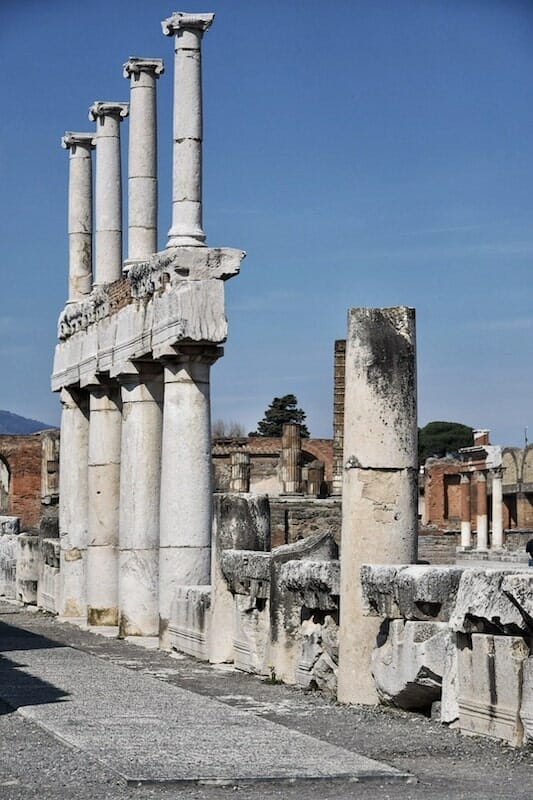
Pompeii and Herculaneum
Pompeii is one of the most important landmarks in Italy. It was a bustling Roman town on the shores of the Bay of Naples until the infamous Mount Vesuvius eruption in 79 AD. That eruption totally decimated the city, and it was left abandoned in rubble for centuries.
A group of explorers discovered the ruins of Pompeii in 1748, still resting under layers of ash and dust that continued to collect over the years. The explorers were shocked that many artifacts, skeletons, and even some buildings were left intact.
Nowadays, Pompeii is an incredible archeological site and UNESCO World Heritage Site that can teach visitors a ton about what life was like during the volcanic eruption and so much more.
Herculaneum is another small city, only about 20 km (12.5 miles) from Pompeii, which was left in rubble after the 79 AD Vesuvius eruption. Despite being lesser-known, Herculaneum is actually in slightly better shape. Many more of the buildings were left standing post-eruption, including some balconies and larger structures.
If you’re going to visit one of the ruined cities, I recommend trying to visit both. And most tours will include a trip to both, anyway.
If you’d like a guided tour of both cities, I recommend this From Naples: Pompeii & Herculaneum with Archaeologist Guide. The seven-hour tour is the best educational experience. You’ll learn so much about the rise and fall of both cities, as well as everything we’ve learned about life back then after the recovery of the cities.
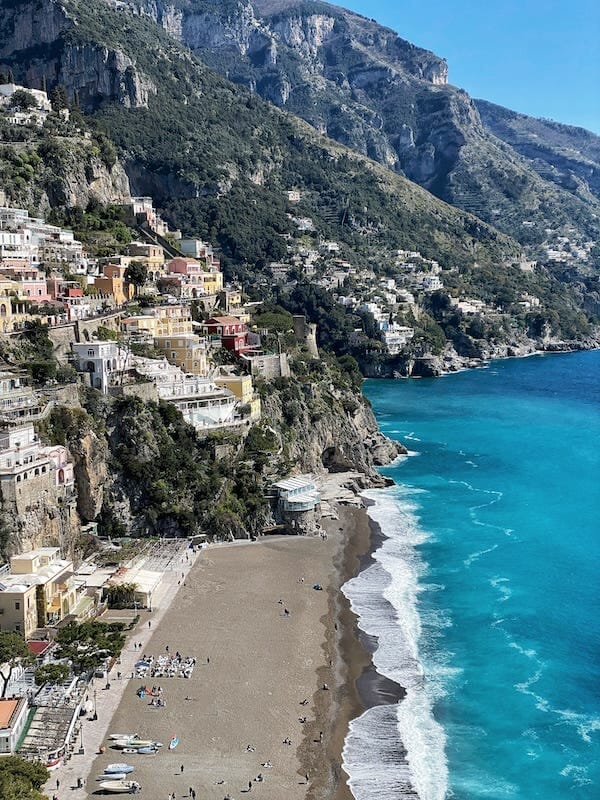
Amalfi Coast
Considering the Amalfi Coast is one of the best places in Italy, you may want to try to set aside more than one day to explore the 50-km stretch of coastal road. After all, it’s not just a road.
There are some of the country’s absolute best coastal viewpoints, as well as several fishing towns and villages that have maintained the quintessential Italian charm over the years.
Some of the best towns to visit along the Amalfi Coast are Amalfi, Positano, and Ravello. Some of the most popular attractions include Emerald Cave, Vallone delle Ferriere Waterfalls, and Villa Rufolo.
If you don’t have more time to dedicate to Naples sightseeing along the Amalfi Coast, you can opt for a day trip from Naples that also goes to Sorrento. You won’t be able to see and do everything, but you’ll get a good taste of some of the highlights.
If you’d like to save time and stress, you can opt for a guided tour to the Amalfi Coast from Naples that includes transportation. I recommend this From Naples or Sorrento: Amalfi Coast Full-Day Trip. The tour includes a shared boat ride from Positano to Amalfi during the summer season, a guided tour of Positano, and plenty of free time in Positano and Ravello.
If you plan on spending a lot of time on the coast, you might want to check out my guide, The Best Time To Visit Italy, to make the most of the excellent weather and seasons. This can actually be helpful no matter where you go because the last thing you want is the wrong season to put a damper on your travels.

Summary Of The Best Things To Do In Naples
Naples is the third-largest city in Italy and one of the best cities to visit in Italy.
I’ve heard people describe Naples as “scruffy,” and that honestly might be partially true. It’s not as clean and organized as other popular European cities and feels like it’s retained so much of its old-city charm.
Because of this, it’s too often overlooked. But one of my best tips for Italy is to actually visit Naples! People don’t realize all the amazing things to do in Naples, and these things might just turn it into their favorite city in the country!
Whether you want to spend a day shopping along Via Toledo, walk the city underground, or visit the catacombs, you’ll never be bored.
PIN IT!


Claudia Tavani
Claudia Tavani was born and raised in Sardinia, and after moving between the United States and the United Kingdom, she's now back living in her hometown, Cagliari. She's a travel blogger and certified travel designer who loves planning trips and publishing guides, travel tips, and packing lists so that you don't have to. Owner of Strictly Italy, cat mom to Minnie. Loves pizza, hiking, archeology, cities, beaches, swimming, and running. Hates peppers.