
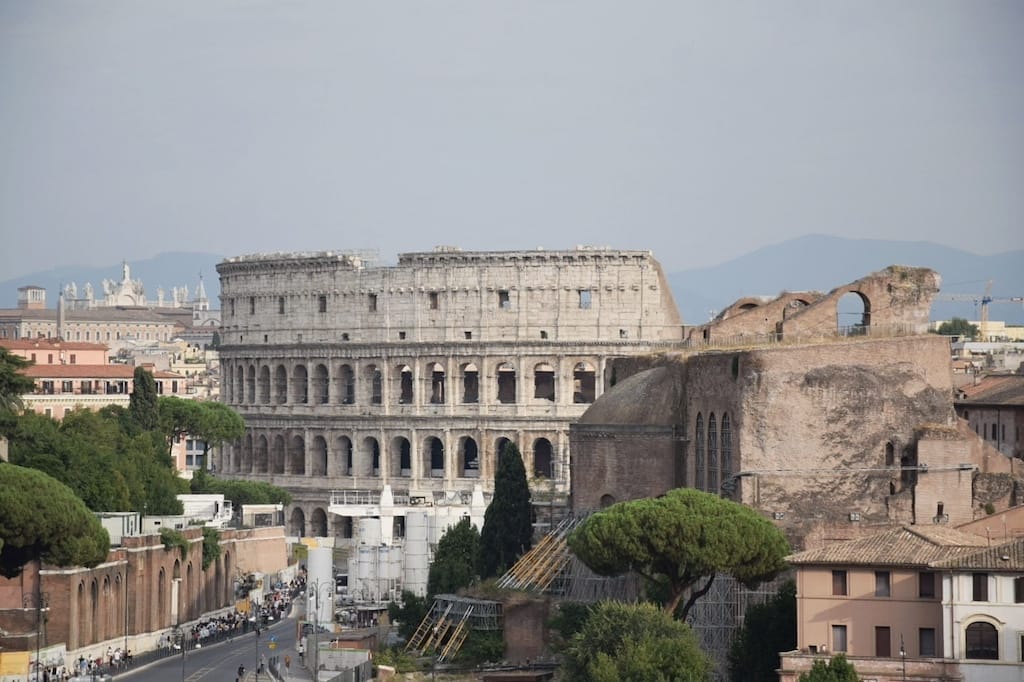
Which are the unmissable Italy landmarks? Discover them with an Italy travel expert (and local).
Italy is one of the most beautiful countries in the world, and I’m not just saying that because I’m Italian.
Italy has a little bit of everything (or a lot of certain things). There’s endless history spread out across the country, with remnants of the rich history still standing in cities and villages. There are also incredible mountains and volcanoes that are great for hiking and exploring. And, of course, there’s an incredible coastline and some of the most beautiful islands in the world.
You won’t be able to see everything with just one short visit to Italy, but you can definitely try to knock off some of the biggest Italian landmarks from your Italian bucket list. And I’m here to help with that.
I’m Italian, born and raised in Sardinia, with a deep love and connection to my country. I love traveling, learning more about its history, and visiting all the best landmarks. So, I’m here to share with you the top landmarks in Italy that you can try to fit into your itinerary.
21 Italy Landmarks For Your Travel Itinerary
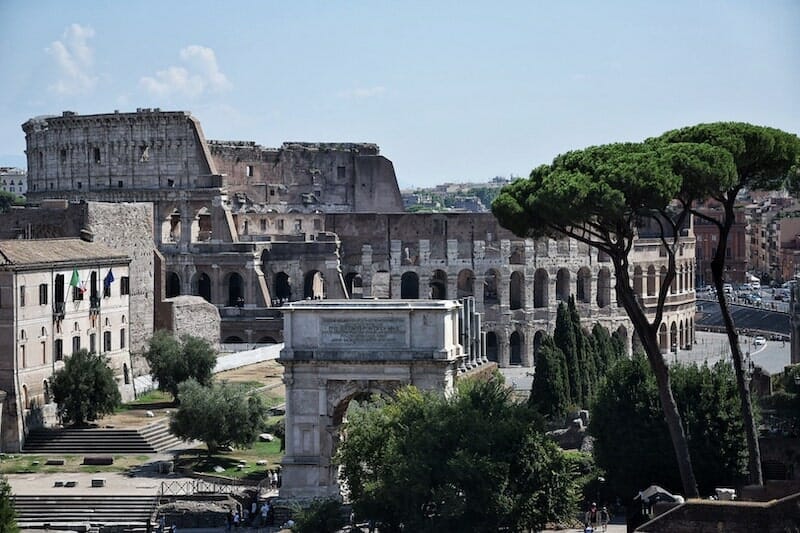
The Colosseum in Rome
The Colosseum in Rome is definitely the most famous landmarks in the country. This is the iconic Colosseum, where gladiator battles took place in an arena packed with over 80,000 spectators. There are countless Hollywood movies and TV shows centered around the Colosseum and the “entertainment” within.
Construction began in 72 AD under Emperor Vespasian and was completed in 82 AD under Emperor Titus. The Colosseum was active for around 400 years, so you can only imagine the gladiator battles, animal fights, and other forms of entertainment held in this arena throughout history.
The Colosseum has endured a lot, and today, it’s definitely not in all its former glory. But it’s been restored and maintained, so you can visit during your trip to Rome, and walk through some sections to get an up-close look at everything. With an active imagination, you can certainly be transported back hundreds of years to the wild times.
You can get your tickets through the official Colosseum website, book through a third-party website, or take a guided tour that includes admission. If you decide to take a tour, I recommend this Colosseum Underground, Arena & Forum Tour. The three-hour tour is one of my favorite in all of Rome and includes a guided tour of the Colosseum and a walkthrough of the Roman Forum and Palatine Hill.
Roman Forum in Rome
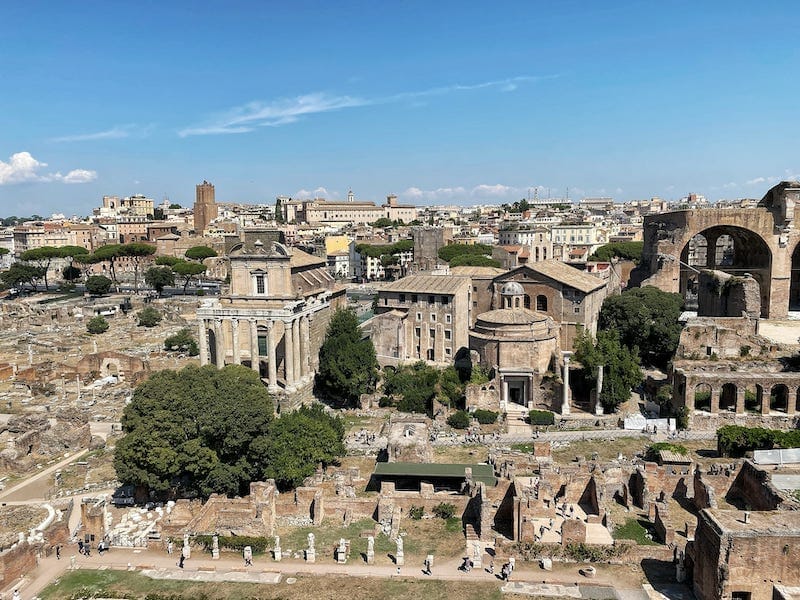
If you’re visiting the Colosseum, the Roman Forum is a must-see, as it’s another one of the best Italian landmarks.
The Roman Forum was the most important forum in all of ancient Rome. It was built on low ground between Palatine Hill and Capitoline Hill and was the centerpiece for public discussions, meetings, civil courts, and even gladiator fights.
The perimeter of the forum was lined with shops, stalls, and little markets, and it was almost always bustling with people and local events.
The Roman Forum was in active use for approximately 1,400 years, and today, you can visit and even admire the handful of ancient structures still standing. The Temple of Saturn, on the northwest side of the Forum, was an ancient temple dedicated to the god Saturn. It’s been rebuilt several times, but its most recent reconstruction still stands to this day.
Conveniently, entrance to the Roman Forum and Palatine Hill are included in official tickets to the Colosseum. However, entry to the Colosseum is not included in a ticket to the Roman Forum (because it works on a time-slot system). You can get your tickets to the Roman Forum either with your Colosseum entry, right from the ticket office at the entry, online through the official website, or you can book a tour.
If you’d like to visit with a guided tour, I recommend this Best of Rome Walking Tour With Access To The Roman Forum. The tour includes a wonderful guided tour of the Colosseum and Roman Forum with verified local guides. It’s a great learning experience and perfect for first-time visitors to Rome.
Rome Pantheon
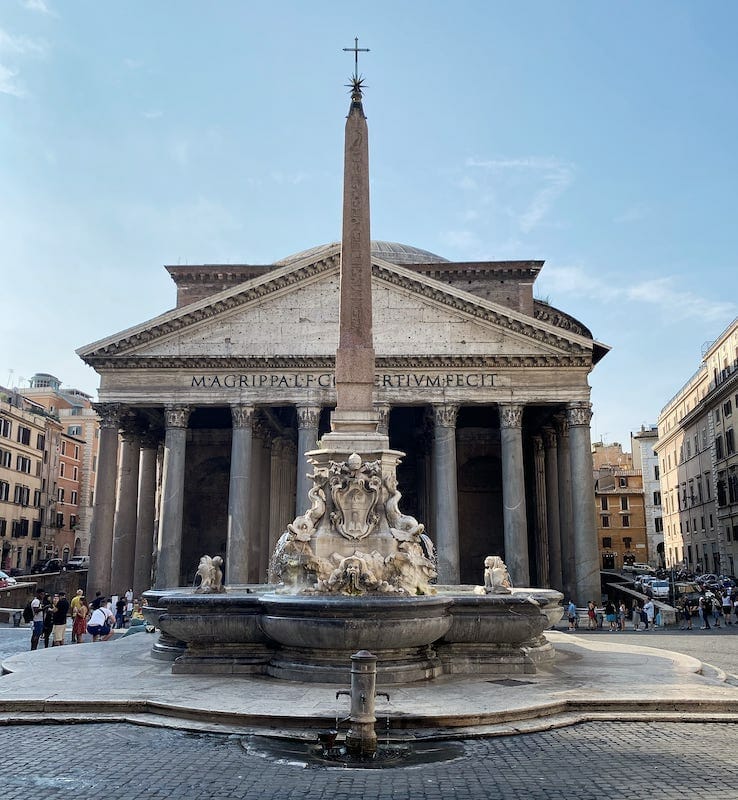
The Pantheon is one of the most iconic landmarks in Italy and a must-see while visiting Rome. It has a rich history and is one of the best-preserved structures from Ancient Rome.
The Pantheon was originally built by Marcus Agrippa between 27 BC and 25 BC and later rebuilt around 118-125 CE after a fire destroyed the first one.
Most historians believe it was built as a place of worship, making it one of the first places for Christians to go and pray (only priests had a dedicated place of worship). However, there are several other theories and controversies over its history.
It became a burial site for several important figures, like Raphael and Angelo Corelli. Today, it’s still a functioning church (Basilica of St. Mary’s and the Martyrs), a well-preserved monument, and a popular tourist attraction in Rome.
You can purchase tickets for the Pantheon on the Musei Italiani website, directly at the Pantheon’s box office, or through a third-party legitimate booking site, like this Pantheon Entry Ticket with Digital Audio Guide.
You can also go on a guided tour of the Pantheon, which is a really nice experience and a good way to learn more about the fascinating history. However, you don’t need so much time at the Pantheon, so I recommend doing a general walking tour of the area. This Fountains and Squares Small-Group Walking Tour is a great option and includes plenty of time for the Pantheon.
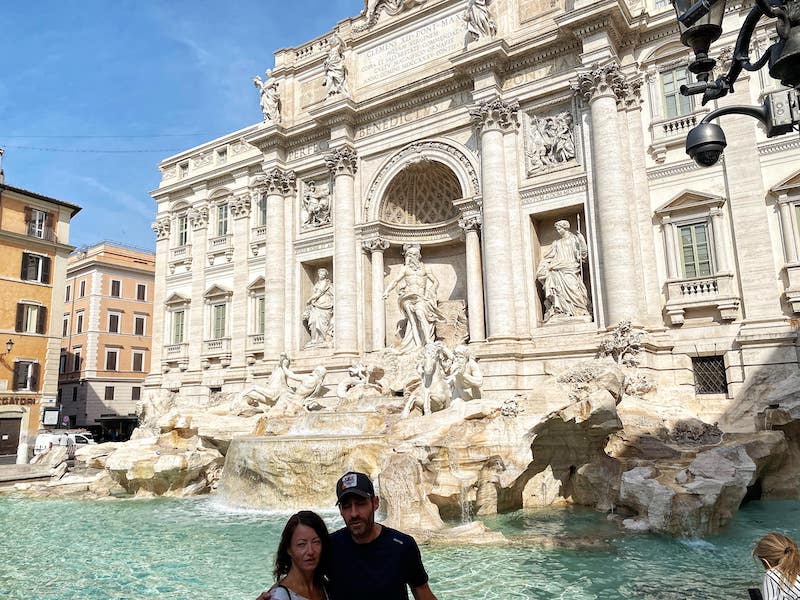
Trevi Fountain in Rome
There are so many iconic landmarks all over Rome, but the Trevi Fountain is one of the most important. Not only is it Rome’s most famous fountain, but it’s arguably the most recognizable fountain in the world.
The Trevi Fountain was originally commissioned by Pope Urban VIII in 1629, but it was never finished. The project resumed in 1732 after Pope Clement XII’s design contest, with Nicola Salvi winning and later finishing the fountain in 1762.
It gained fame over the years for its stunning Baroque design and the tradition of tossing coins into the water, which is said to ensure a safe return to Rome in the future. The fountain remains a symbol of Rome’s rich history and architecture, drawing visitors from around the world.
Keep in mind that it gets very crowded, as it is one of the most iconic Italy landmarks. If you want to avoid the crowds, you basically have to go in the middle of the night or very early in the morning. But it’s still worth seeing, with or without crowds.
You don’t need tickets or a tour to visit Trevi Fountain. It’s located in the Trevi district of Rome, in the historic center, and is pretty easy to get to. However, if you want more background information, I recommend this Trevi Fountain Rome: Underground Domus Guided Tour. I took it myself and can confirm it’s an amazing way to really learn not just about its history but also its foundation.
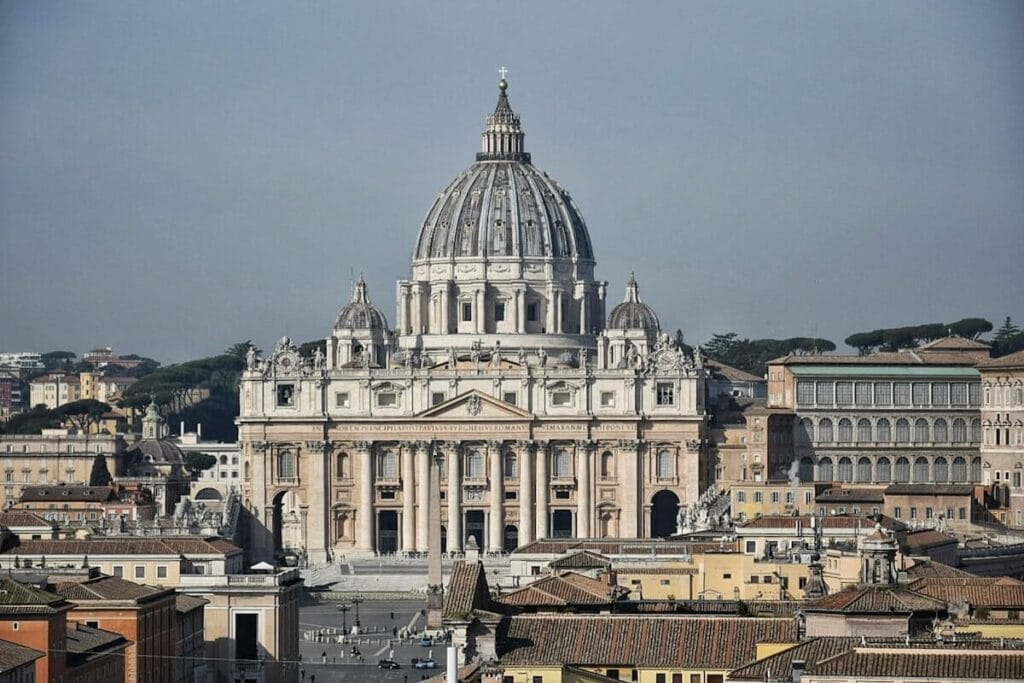
St. Peter’s Basilica in the Vatican City – not actually in Italy landmarks
The Vatican City is an independent microstate in Rome, so it’s technically not one of the Italian landmarks, but it’s still very easy to visit while in Rome and worth the trip.
St. Peter’s Basilica is “the spiritual heart of Christianity,” and whether or not you’re religious, it’s a mesmerizing site with a great atmosphere, deep history, and spiritual connections. The Pope actually holds mass here, and he addresses the audience every Sunday from his balcony in the nearby Apostolic Palace, the pope’s official residence.
I recommend first climbing St. Peter’s Basilica Dome and then visiting St. Peter’s Basilica afterward, starting as early in the morning as possible to avoid the larger crowds. The Basilica is free to visit, but you need tickets for the Dome. You can’t buy tickets online, so you’ll have to get them at the site itself.
If you decide to go with a guided tour, check out this Rome: Guided Tour of St. Peter’s Basilica with Dome Climb. The tour includes climbing up to the dome, where you’ll get one of the best views of Rome, and a tour of St. Peter’s Basilica. You can also choose between a private or shared tour group.

Duomo of Milan – one of the most famous Italy landmarks
Moving away from landmarks in Rome, we have Milan. Milan is one of the most vibrant cities in Italy, with a great historical center that’s easy to explore in just one day. The Duomo of Milan is a highlight and a must-see landmark in Italy.
Building for the Duomo began back in 1386 under Gian Galeazzo Visconti and wasn’t finished until the 19th century. The cathedral is famous for its mesmerizing Gothic design, which features hundreds of spires and thousands of statues.
Additionally, unlike many of Italy’s most famous Duomo’s or cathedrals, it has a unique marble facade. The interior is equally impressive, with high-vaulted ceilings and stained glass windows.
You can book tickets and even tours directly through Duomo Milano official website. You can also go through a third-party booking site for a more well-rounded tour with a local guide. If you go this route, I recommend this Duomo Rooftops and Cathedral Guided Tour with Tickets. The tour includes entry to the roof terraces (one of the best parts of the cathedral) and a guided walkthrough of the rest of the cathedral.
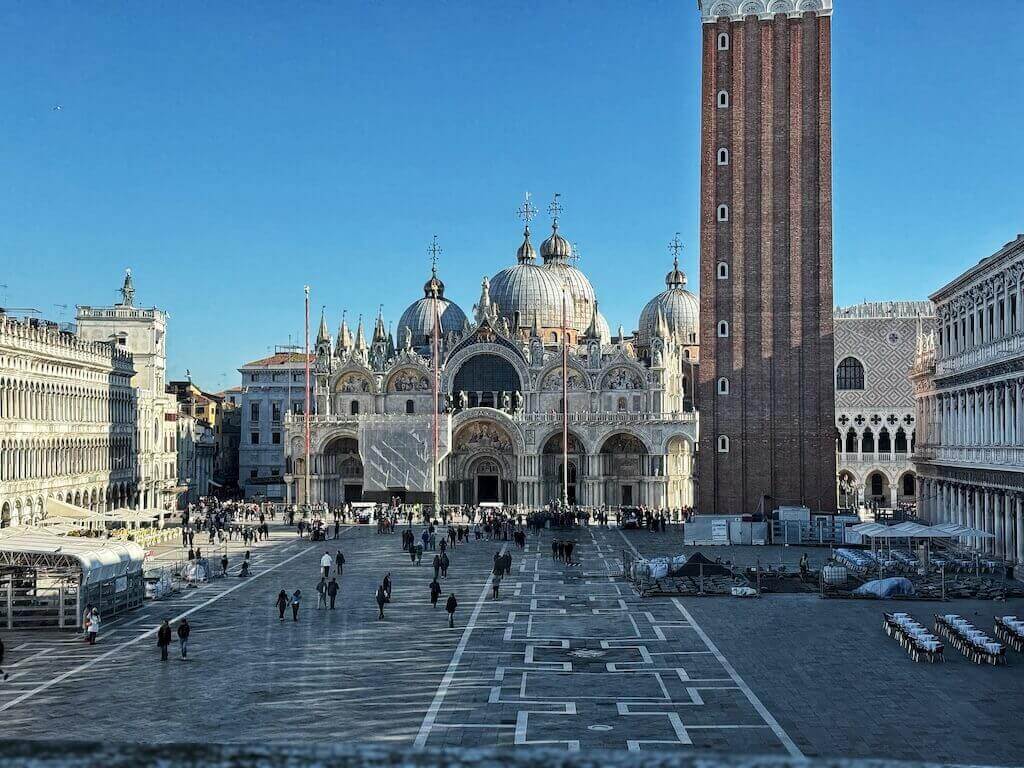
St. Mark’s Square and Basilica in Venice
Venice is one of the best cities in Italy for good reason, and one of those reasons is St. Mark’s Square in the historic center. St. Mark’s Square in Venice is the most popular public square in the city. It’s also home to St. Mark’s Basilica, a must-see landmark in Italy.
St. Mark’s Basilica is the most famous building in St. Mark’s Square, although it didn’t even become the city’s cathedral until the 19th century. Its stunning Italian Byzantine architecture includes impressive columns, cupolas, and mosaics.
Don’t miss the Pala d’Oro, a dazzling altar screen with precious gems, and be sure to check out the Transept Chapels and St. Mark’s Tomb.
You should also visit Doge’s Palace, another must-visit landmark in Venice. It’s right next to St. Mark’s Basilica in St. Mark’s Square. This palace is a great example of Venetian Gothic architecture and is simply stunning. Other points of interest in Piazza San Marco include St. Mark’s Campanile (St. Mark’s Bell Tower) and the Museo Correr.
You can purchase tickets directly through the official website. Make sure you do so well in advance because they sell out. And be mindful of which ticket(s) you buy, because not all tickets include entry to everything. For a more VIP experience, consider this Exclusive Alone in St. Mark’s Basilica After Hours. This tour basically guarantees minimal crowds as you tour after the official closing time. It’s a really unique experience.
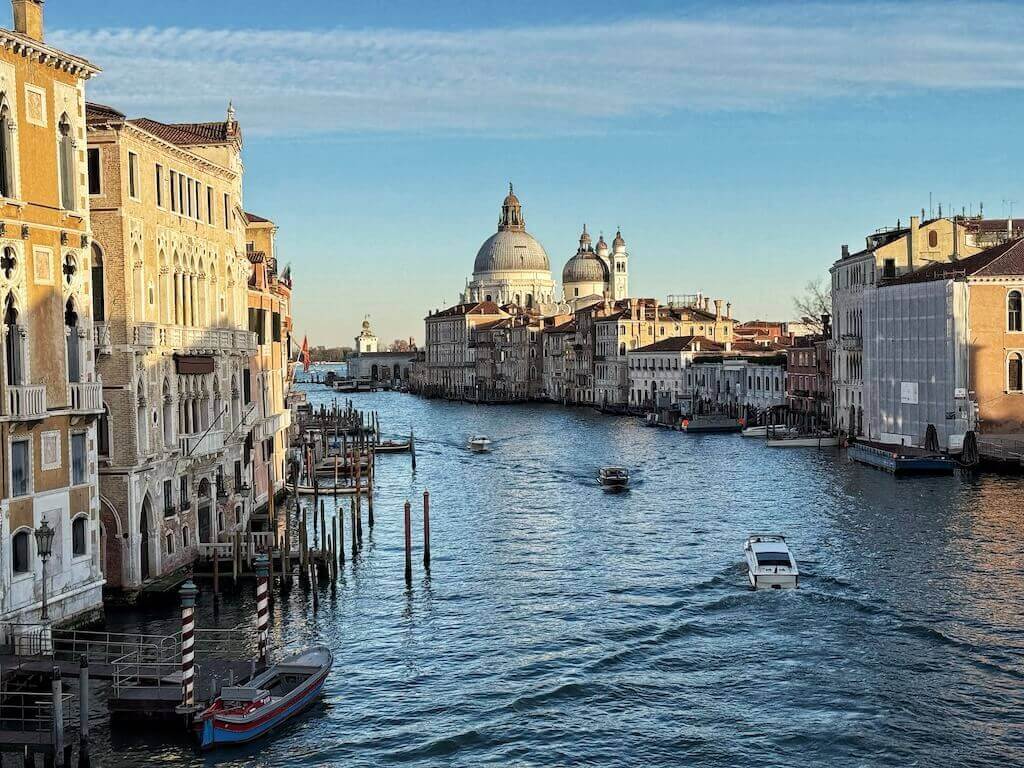
Canal Grande in Venice
The canals that cut through Venice are one of the most iconic images of Italy. Everyone has pictured the romantic canals, flowing slowly through the romantically lit alleys, with relaxing music playing in the background and maybe a couple cuddled up on one of the private gondolas.
Considering this is basically a worldwide image, it’s also a really popular activity for any Italy bucket list, making Venice’s Canal Grande (the largest of the canals in Venice) one of the best Italy landmarks.
The Canal Grande zigzags through Venice and runs approximately 4km (2 miles) through the city, with four bridges crossing over it. There are hundreds of buildings and shops on either side, as the canals were a major economic hub during the city’s formation.
You can ride a Vaporetto, like a public ferry, along the Canal Grande, take a private boat ride, or take a full-day tour of Venice. I recommend sailing Venice’s Grand Canal in the evening for its tranquil ambiance.
If you’re short on time in Venice, you should consider a combination tour that includes a boat ride through Venice’s canals. I recommend this Boat Tour with Grand Canal and Tower Climb. The activity includes a tour down the Grand Canal with a private motorboat and a ride to the nearby island, San Giorgio Maggiore, where you’ll climb the Bell Tower.
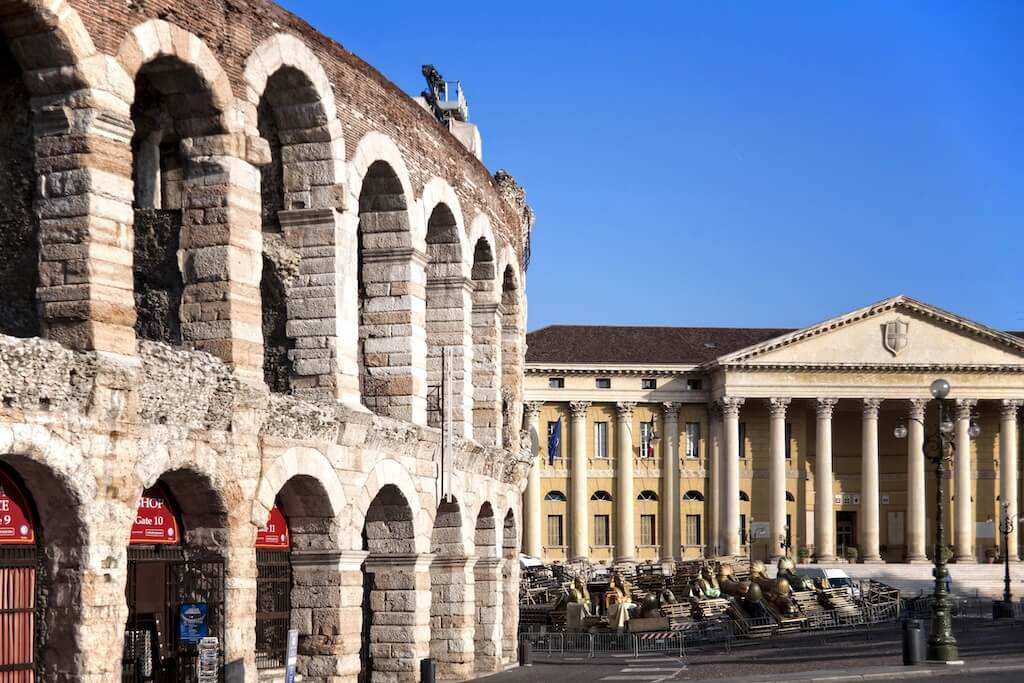
Arena of Verona
The city of Verona is another of the best places to visit in Italy, especially for romance. Not only is this city an inspiration to Romeo and Juliet (you can actually visit Juliet’s famous balcony here), but it’s also where you’ll find the Arena of Verona.
The Verona Arena is actually the third-largest standing theater in Europe, behind the Colosseum in Rome and one in Capua. It was built in 30 AD and originally sat over 30,000 people. What’s so remarkable about it is that it’s still in use today.
The Verona Arena is home to Italy’s Opera Festival, which began in 1913 and is still an active annual event. Even if you can’t make a performance at the historic arena, you can still visit and tour the interior and exterior. This is a fascinating piece of Italy’s history and has been so well-preserved it really shouldn’t be missed.
If you can’t make it for an opera show, you can still tour the arena. I recommend this Verona Arena Skip-the-Line Guided Tour. You’ll briefly walk through with a licensed tour guide and learn more about this rich piece of Roman/Italian history. It’s a short tour, but definitely worth it.
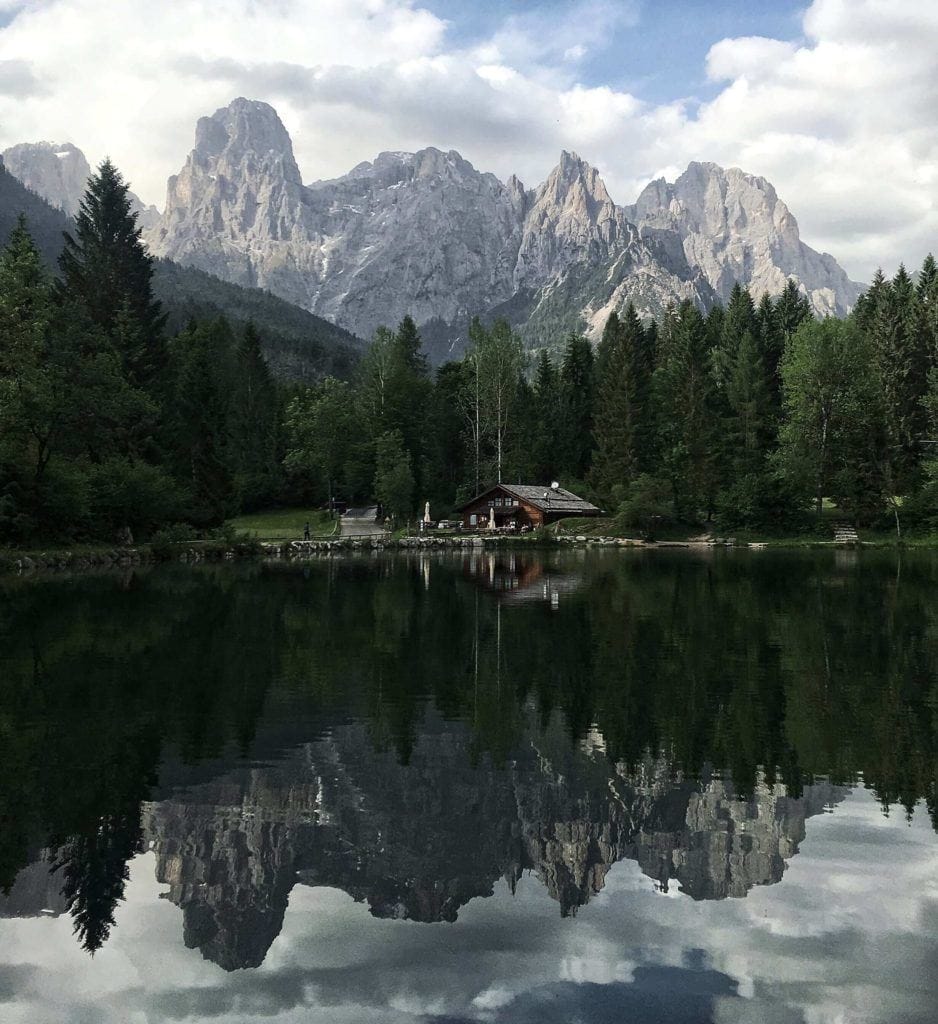
Dolomites – one of the most impressive natural landmarks
The Dolomites in northern Italy aren’t a simple landmark or tourist attraction like other places in Italy, but they’re certainly one of the most beautiful parts of the country. The Dolomites are a stunning mountain range known for their dramatic peaks and beautiful landscapes.
They stretch across the Trentino-Alto Adige and Veneto regions and are a part of the southern Alps. And depending on when you visit Italy, there’s a variety of different outdoor activities to choose from.
In the summer, you can explore numerous trails and enjoy the lush scenery. In the winter, the area becomes a popular destination for skiing and snowboarding. The region also has a handful of charming mountain villages, which are worth checking out if you want to see what northern Italian life is like.
Lake Garda is a popular starting point for exploring the Alps, but there are a lot of other options, especially if you’re renting a car. However, if you don’t have your own transportation, a day trip through the Dolomites might be a good option. In that case, I recommend this Dolomites Full-Day Tour from Lake Garda. You’ll hit some of the most scenic spots nearby, spend two hours at the famous Pordoi Pass, and explore a small, local village.
If you’re interested in learning more about the seasons in Italy, make sure to read my article, When Is The Best Time Of Year To Visit Italy? The article outlines the different regions and seasons to help you plan your trip.
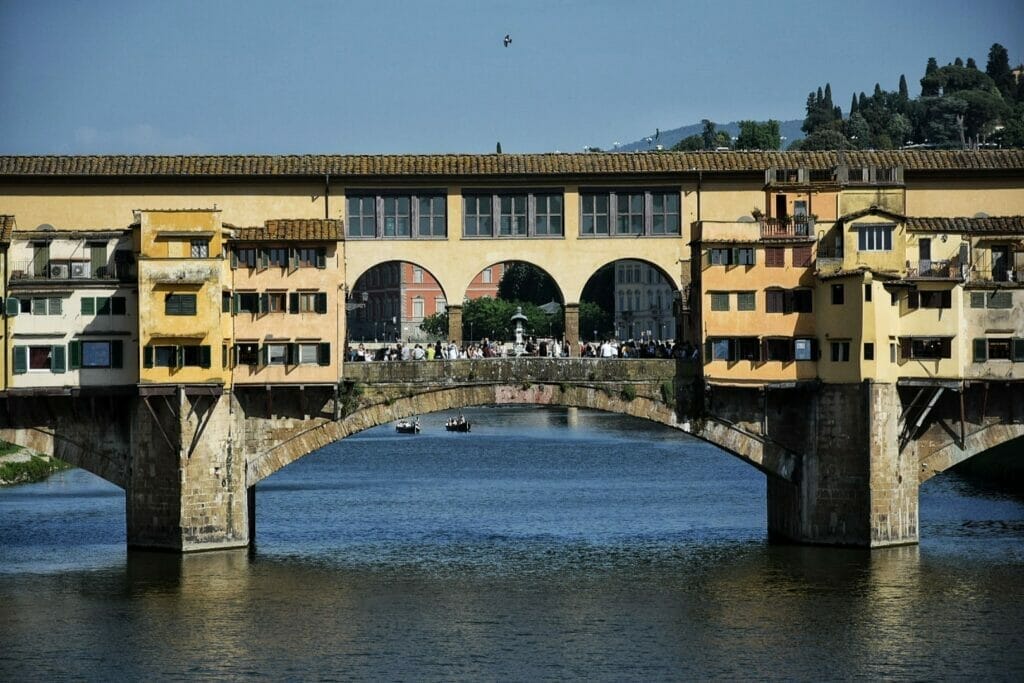
Ponte Vecchio in Florence
Ponte Vecchio is one of Florence’s most iconic landmarks that you must visit when in the country. It’s easily recognizable for its charming medieval architecture and vibrant atmosphere.
Originally, the bridge was lined with butchers and fishmongers, but they have since been replaced by jewelers and artisans. But what makes this bridge particularly interesting is its history of surviving multiple floods and wars. During World War II, it was the only bridge in Florence to survive the bombing.
Today, Ponte Vecchio is a symbol of Florence’s past and enduring charm, even in the worst of times. Its vibrant little shops, views over the Arno River, and role in the historic hub make it a must-see on anyone’s Italy bucket list.
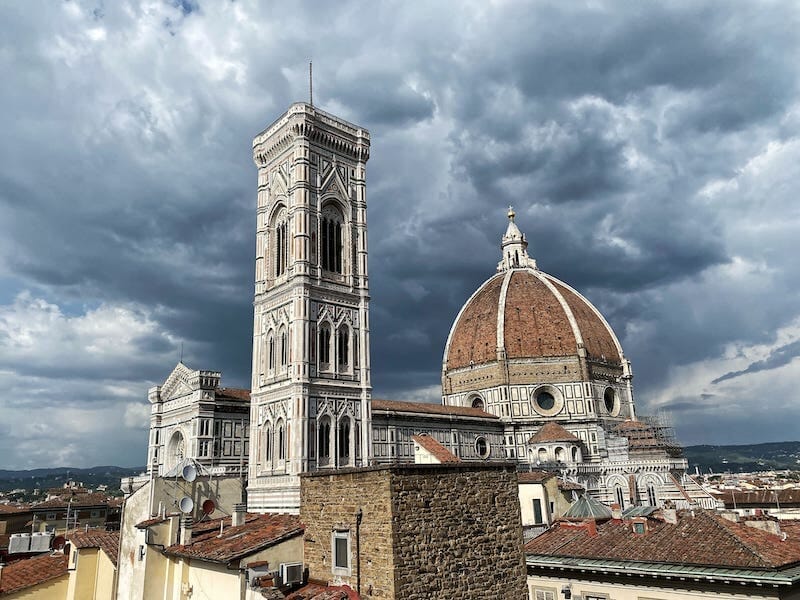
Florence Duomo and Giotto’s Bell Tower – beautiful Italy landmarks
The Florence Duomo, officially known as the Cathedral of Santa Maria del Fiore, is a standout landmark in Italy.
It’s famous for its impressive dome, designed by Filippo Brunelleschi in the 15th century. The dome is really the highlight of the Florence Duomo, so make sure you don’t miss it. After climbing exactly 463 steps, you can enjoy breathtaking views of the city from the top.
Next to the Duomo, you’ll find Giotto’s Bell Tower, another stunning piece of architecture with marble patterns. Built by Giotto in the 14th century, the bell tower is known for its facade and detailed sculptures. You can also climb the bell tower for great views of the city.
You can purchase entry tickets from the official Cattedrale Di Santa Maria del Fiore website, or you can join a guided tour. For tours, I recommend this Alone in the Duomo: VIP After-Hours Tour with Dome Climb & Private Terrace Access. This is one of the most unique experiences because you’ll tour the property without the overwhelming crowds, which definitely makes it an even more unforgettable landmark in Italy. You’ll get to climb Brunelleschi Dome too.
My post The Best Things To Do In Florence will guide you to all the most interesting attractions in the city.
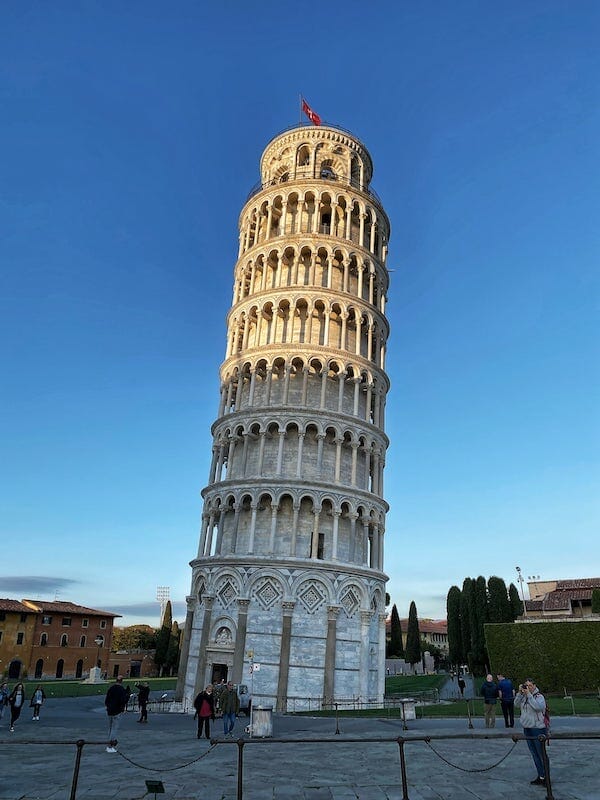
Leaning Tower of Pisa
The Leaning Tower of Pisa (Pisa Tower) is one of the most famous Italy landmarks, and it’s really a must-see on anyone’s first visit to the country.
The Leaning Tower of Pisa was built in 1372 as a campanile, or bell tower, for the Duomo di Pisa. It was designed to hold the seven bells of the nearby cathedral, but it wasn’t designed to be leaning.
During construction, the tower began leaning because the soft ground couldn’t support the structure’s weight. But don’t worry—it was built with a really good foundation and infrastructure, and it should not actually fall over.
Pisa Tower is sitting at an angle of 3.97 degrees, but it’s withstood the test of time, including several earthquakes and two world wars. So, don’t let worry stop you from climbing to the top for some good views and, of course, taking the iconic photo holding the tower up.
You can find tickets on the official website. The traditional ticket also gives you access to the Pisa Cathedral, and there are other combination tickets that include other associated attractions. You might want to consider a guided tour of Pisa that includes the Leaning Tower of Pisa, like this Pisa Cathedral Guided Tour and Leaning Tower Ticket. It includes a small-group tour of Piazza dei Miracoli, Pisa Cathedral, and Leaning Tower of Pisa.
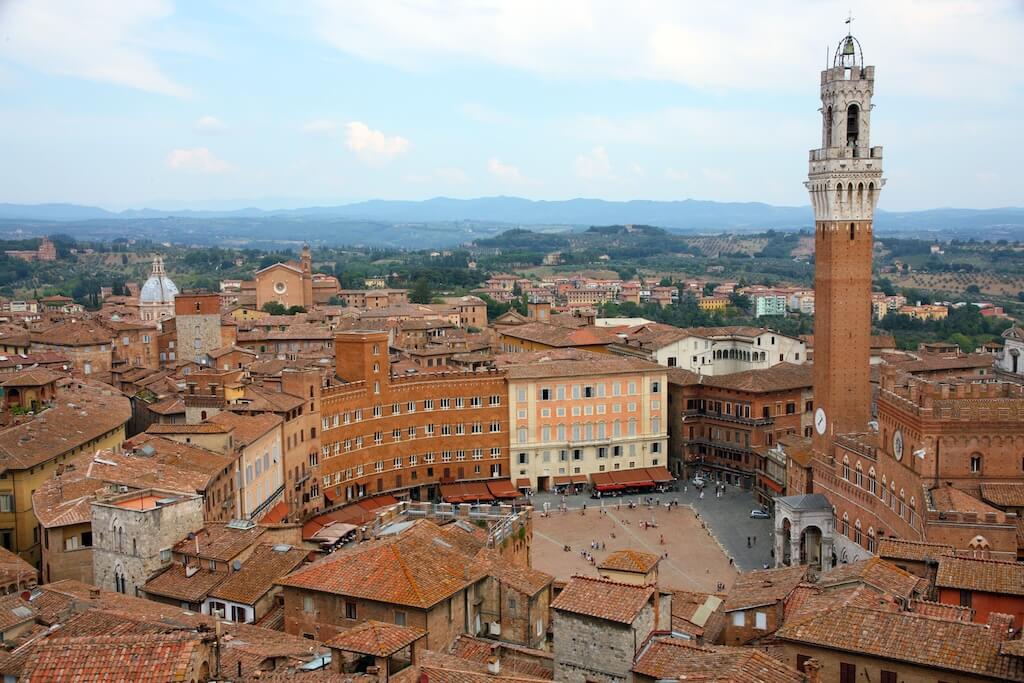
Piazza del Campo, Siena
Piazza del Campo is the main public square in Siena, Italy. Sure, it’s a piazza, not an actual monument, but it’s such a strikingly beautiful public square that it deserves a spot as one of the best Italy landmarks.
Piazza del Campo has a unique shell shape and is surrounded on all sides by medieval architecture and little stalls, creating a lively atmosphere. It is still the centerpiece of Siena for both locals and tourists.
Piazza del Campo is considered one of Europe’s best examples of medieval architecture and is home to the Palio, a festival of medical origin involving bareback horseracing. The first one was held in 1482 and is now held every year in the summer.
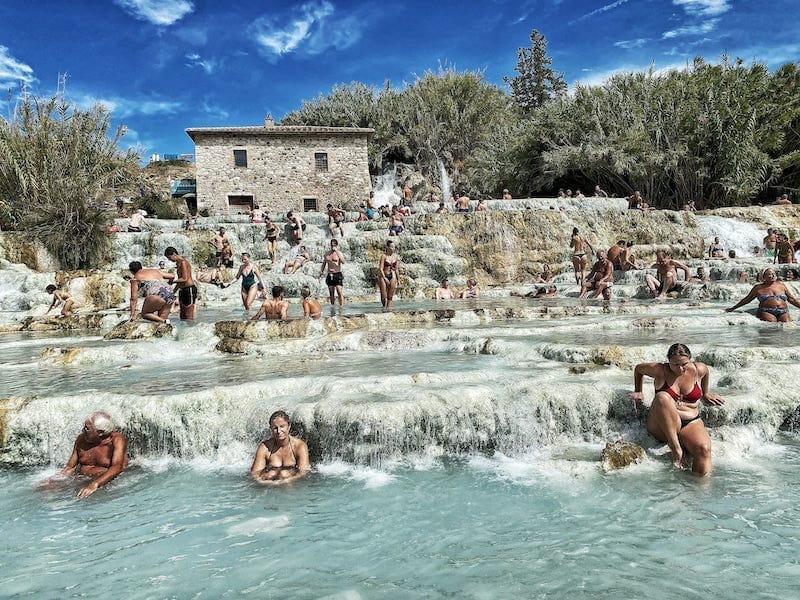
Saturnia Hot Springs
Saturnia Hot Springs is actually one of the best free things to do in all of Italy. The natural hot springs are located near Saturnia Town in Tuscany and a short driving distance from either Grosseto and Viterbo.
There are some unique Roman legends surrounding the hot springs, most of which aren’t very well-known. One of my favorites is the hot springs were created where the Roman deity Saturn threw a lightning bolt down in a fit of anger. The lightning bolt created a crater and formed the Saturnia Hot Springs.
The hot springs have also been popular among locals throughout history. They are located right on Via Clodia, one of the most trafficked roads connecting Rome and Etruscan lands. The springs are mentioned in several old texts and scriptures.
They’ve clearly stood the test of time because the hot springs are almost always full of people basking in the “healing” properties and warming up in the toasty waters. It’s a really fun experience and completely free (just pay for parking), so it’s worth it if you’re already going on a road trip in southern Tuscany or northern Lazio.
The Tuscany region is one of the most famous regions in Italy, but there are so many more. Before your trip, make sure to read my article, Explaining the 20 Regions of Italy, so you can better understand the geography and areas you’re traveling to.
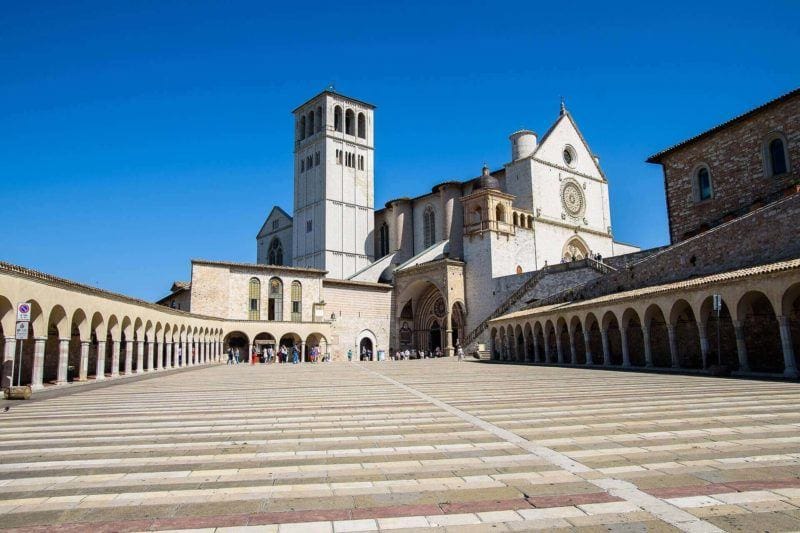
San Francesco d’Assisi Basilica
San Francesco d‘Assisi Basilica in Umbria is another one of the best Italy landmarks, especially for church-lovers. The cathedral is located in the town of Assisi, which is also a great day trip from Rome.
Assisi is the birthplace of St. Francis, who founded the Franciscan Order, a group known for its extreme humility.
San Francesco d’Assisi Basilica is significant because it honors St. Francis and showcases beautiful frescoes by renowned artists like Giotto. The church is actually divided into two parts: the Lower Church and the Upper Church, each filled with stunning artwork.
Visiting the basilica allows you to explore its spiritual and historical importance as well as its artistic treasures. It’s a peaceful spot with a lot to offer to anyone interested in art, history, or simply experiencing a little slice of Italy’s heritage.
I recommend this Assisi: Private Walking Tour with St. Francis Basilica. The tour includes 45 minutes to explore the basilica with a guide and several other notable Italian landmarks in Assisi. You’ll also visit San Rufino Cathedral, Basilica of Saint Claire, Santuario di San Francesco Piccolino, and others.
My post The Best Places To Visit In Assisi shares more information about this lovely small town.
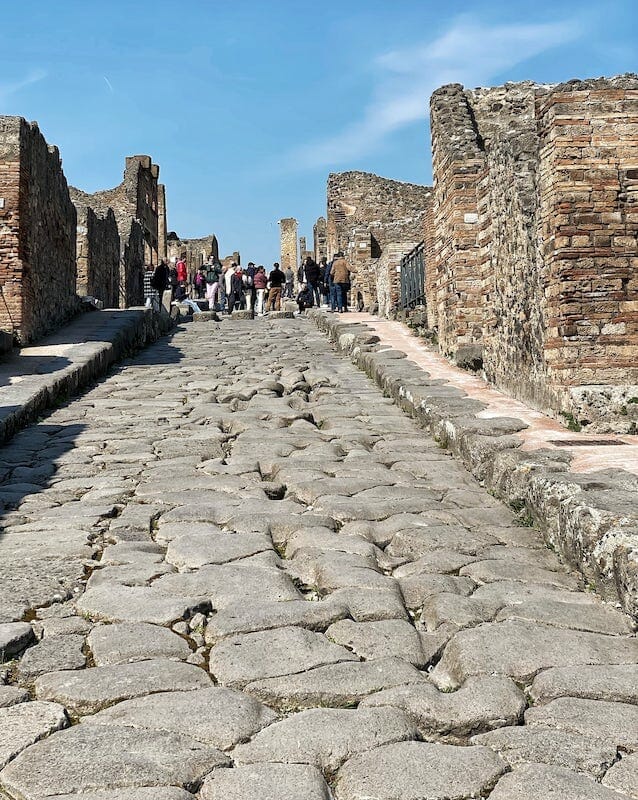
Pompeii Ruins
Pompeii Ruins should be on everyone’s Italy bucket list, as it’s one of the most fascinating places in the country.
Pompeii was once a bustling Roman city. It is located about 15 km (9.3 miles) from Naples and at the base of Mount Vesuvius. In 79 AD, Mount Vesuvius erupted and basically buried the city under a thick layer of ash. The city went untouched and undiscovered for hundreds of years.
Today, visiting Pompeii gives you a unique glimpse into ancient Roman life. As you walk through the streets, you’ll see well-preserved buildings, homes, and even public baths that reveal how people lived 2,000 years ago.
While you’re at it, you can also go up to Mount Vesuvius on certain hiking tours and have a delicious Napoli pizza in Naples, which is one of the best regional dishes in Italy.
You can get official tickets for Pompeii from Ticketone, but I recommend looking into a guided tour with an archeologist. You’ll learn a lot more on your visit. For a simple tour of Pompeii, I recommend this Small Group Tour with an Archaeologist. The tour lasts around two hours and includes a guide from start to finish and an entry ticket. You can also go for a combination tour, like this Small-Group Tour of Pompeii and Herculaneum, another remarkable ancient Roman city.
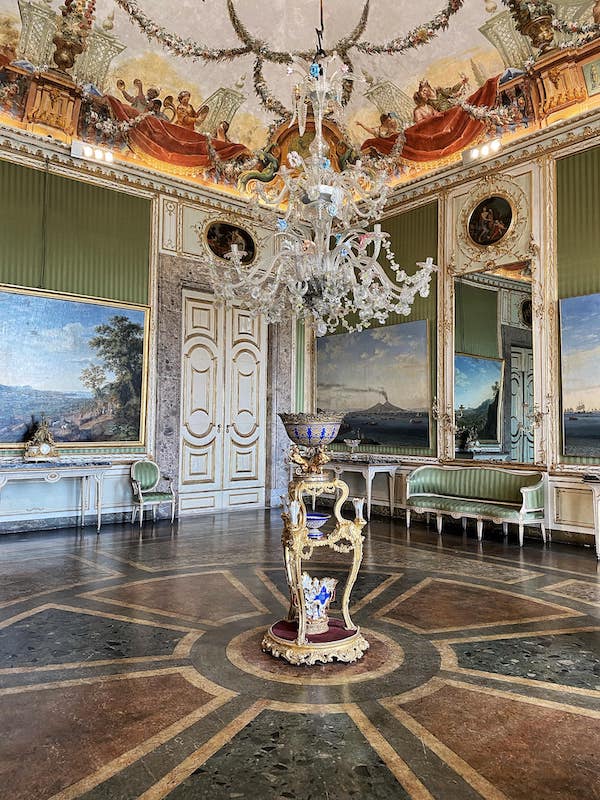
Caserta Royal Palace
The Royal Palace of Caserta, begun in 1752 by architect Luigi Vanvitelli, was inspired by the Palace of Versailles and intended as a grand residence for Charles VII of Naples. Although Charles didn’t end up living there, the palace played various important roles over the centuries.
Today, the Royal Palace is a must-visit for its stunning architecture and vast gardens. You can walk through the opulent halls, including the grand staircases and several luxurious rooms, and stroll through the extensive property grounds.
There’s also the Old Woods, a section of the forest that existed long before the palace was built and remains standing to this day. And I can’t forget the stunning stretch of fountains along the Fountains Waterway. It’s clear that Caserta Royal Palace is so much more than a simple palace.
It’s a perfect spot for history buffs, classy architecture enthusiasts, and even fans of Star Wars (the palace was featured in Star Wars: The Phantom Menace).
You can visit the Caserta Royal Palace on your own and buy tickets directly through the official website, but I took a guided tour of the palace and would definitely recommend it. The property grounds are so massive and a bit overwhelming that a guide will make the experience much more enjoyable and time-efficient. I took this Royal Palace of Caserta: Skip-the-Line Ticket + Guided Tour and really loved it. It was very well-organized and thorough, and I felt we got to see the most of the palace.

Taormina Theater in Sicily
Taormina Theater in Sicily is a must-see for anyone visiting the island and one of the best Italy landmarks.
Built by the Greeks in the 3rd century BC, this ancient theater offers incredible views of Mount Etna and the surrounding coastline. It was later expanded by the Romans, making it a fascinating blend of Greek and Roman architecture.
Today, the theater is used predominantly for performances and cultural events. If you’re able to make one, it’s the perfect chance to experience a piece of history in action. While you’re in Taormina, you can also take some time to explore the nearby town with its charming streets and stunning views.

Etna Volcano
Mount Etna is one of the most active volcanoes in the world and is a centerpiece in Sicily. It’s basically in a constant state of activity, with several eruptions throughout the year and sometimes multiple in one month.
Italy is not considered a dangerous place, but natural disasters (like a major eruption from Mount Etna) are one small threat. It’s unlikely anything will happen to anyone visiting Sicily or Mount Etna, and the volcano is constantly being monitored for any emergencies. You can actually even watch live footage of Mount Etna from the Etna Observatory.
Anyway, if you’re an adventurous traveler, hiking up Mount Etna is a must-do. It’s an incredible experience and quite an accomplishment. Additionally, when you admire the volcano for the rest of your days in Sicily, you’ll feel proud that you explored it!
You can only hike up a portion of the volcano on your own. If you want to go to the summit, you have to go on a guided tour. I recommend this Mount Etna: Guided Trek 3,000 Meters to the Summit. This tour includes a guide, hiking poles, and helmets. You’ll definitely need a good baseline fitness, but going with an expert guide helps a lot.
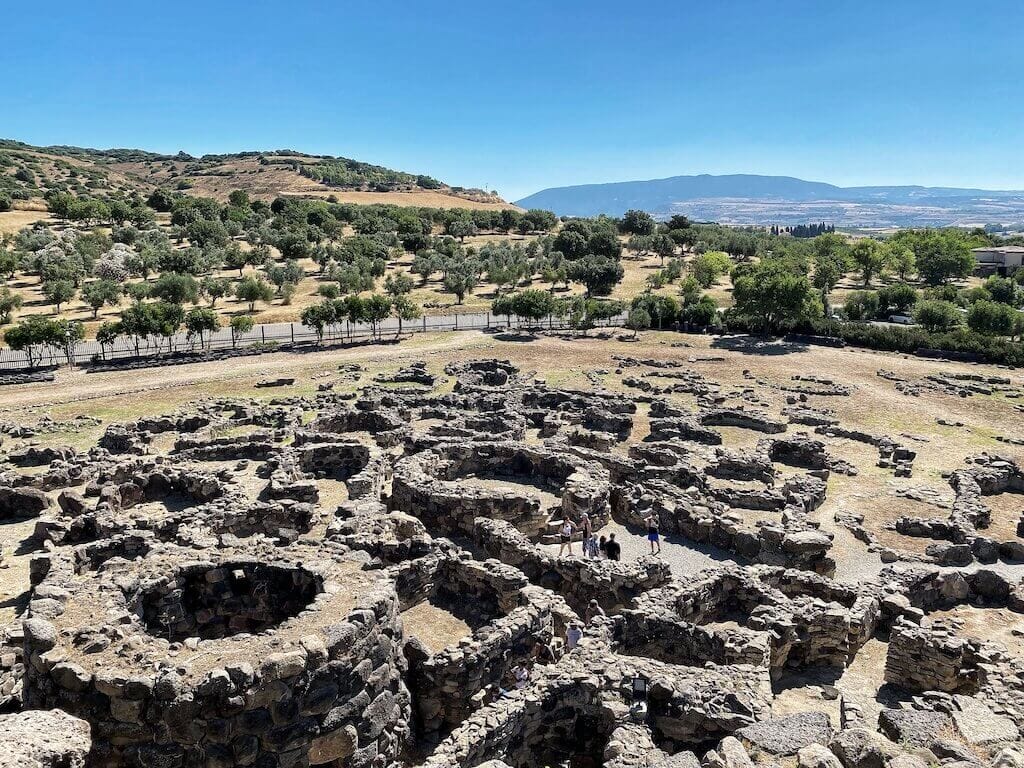
Su Nuraxi of Barumini in Sardinia – one of the lesser known Italy landmarks
Su Nuraxi di Barumini is a fascinating ancient site that should be on every history enthusiast’s bucket list, and I’m not just saying that because I’m from Sardinia.
Located in Sardinia, this prehistoric village dates back to around 1500 BC and is famous for its well-preserved tower, known as “nuraghe” (or “nuraxi” in Sardinian). The site offers a unique glimpse into the mysterious Nuragic civilization which built these impressive stone structures.
Visiting Su Nuraxi di Barumini lets you explore the village’s labyrinth layout and towers, giving you a real sense of Sardinian life and history. The site is also recognized as a UNESCO World Heritage Site, highlighting its cultural significance. While you’re in Sardinia, don’t miss the chance to wander around these ancient ruins and learn more about the island.
Su Nuraxi di Barumini grounds are open year-round, and entry includes admission to all the site and Museo Casa Zapata in town. However, you need to be accompanied by an official guide. I recommend booking a guided tour in advance, like this Cagliari: Su Nuraxi di Barumini UNESCO Site Guided Tour. The tour includes transportation, a two-hour guided tour of Su Nuraxi, and a quick tour of Casa Zapata and Domus De Janas De S’Acqua Salida.

Conclusions On The Famous Landmarks In Italy
Italy has the most UNESCO World Heritage Sites, with 60 designated heritage sites, in the world. Every single one of them is worth visiting, and there are tons of villages, monuments, and landmarks in Italy that aren’t designated a world heritage site.
The endless cultural and historical connections across the entire country are actually one of the best reasons to visit Italy in the first place. So, make sure to visit some of the most famous landmarks during your next visit.
However, try not to get too overwhelmed. You won’t be able to catch them all in one visit, so visit whatever you can, and come back in the future for more!
PIN IT!


Claudia Tavani
Claudia Tavani was born and raised in Sardinia, and after moving between the United States and the United Kingdom, she's now back living in her hometown, Cagliari. She's a travel blogger and certified travel designer who loves planning trips and publishing guides, travel tips, and packing lists so that you don't have to. Owner of Strictly Italy, cat mom to Minnie. Loves pizza, hiking, archeology, cities, beaches, swimming, and running. Hates peppers.