

Which are the most beautiful islands in Italy? Discover with an Italian islander!
There are around 400 islands in Italy, but only about 80 are inhabited – and I am from one of them! Indeed, I was born and raised in Sardinia, the most beautiful island in the world, and this is where I currently live.
Some of the Italian islands are accessible from mainland Italy, while others are a little further away. But all of Italy’s islands are beautiful. There are the volcanic wonders of the Aeolian Islands, the colorful lagoon islands near Venice, little hidden gems in every corner, and, of course, the unique islands off the coast of my home, Sardinia.
In fact, Sardinia and Sicily are the two largest islands in the Mediterranean Sea, and they are also good starting points for exploring some other untouched islands of Italy.
If you want to explore some of the underrated tropical paradises around Italy, you’re in luck. I’m an ocean-lover, I have visited all the islands off the coast of my home Sardinia, and have visited many of the best Italian islands.
In this post, I share the best islands in Italy from north to south, including some Italy travel tips on what to do on each island and a brief explanation of how to get there. Ready to learn more about the best slices of paradise in Italy? Let’s go!
Are you a big beach lover? If so, you must read my article, Best Beaches In Italy. This is the ultimate insider’s guide to the beaches all over my country and is an excellent compliment to the best Italian islands.
Italian Islands From North to South
Murano
Location: Northern Italy, in the Venetian Lagoon
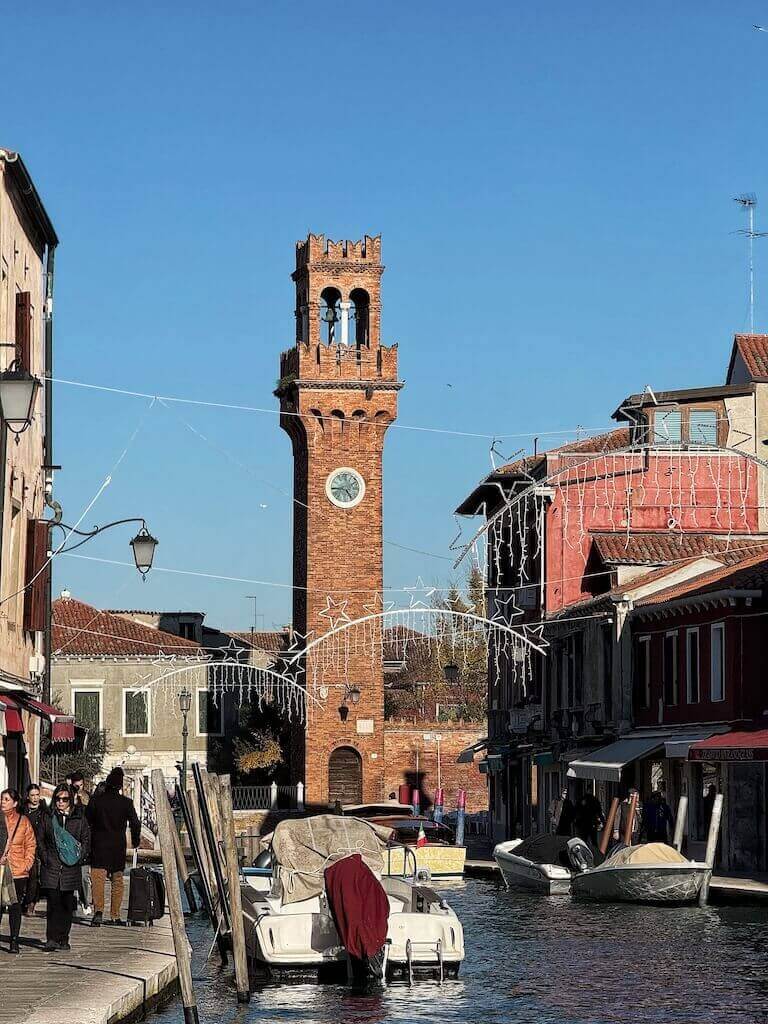
I have the fondest memories of visiting Murano as a child, with my parents, so of course I had to add it to this list of the most beautiful islands in Italy. The tiny island of Murano is famous for its glass-making industry. Murano is actually a cluster of islands just a short boat ride from Venice.
In addition to a glassblowing factory, visitors can explore historic churches like Chiesa di San Pietro Martire or take photos of the blue comet star sculpture at Campo San Stefano. Murano’s calm canals and less crowded streets offer a relaxing alternative to Venice – but don’t come here expecting it to be empty, as it is a popular destination for a day trip from Venice.
These chill canals are perfect for an afternoon stroll, during which you can discover hidden gems at every corner, like quaint glass shops and local eateries.
You can take a vaporetto, Venice’s public water bus, which offers a direct route to the island. Vaporetto line 12 departs from various locations in Venice, such as Fondamente Nove or San Zaccaria. The ride usually takes about 10-20 minutes, allowing you to enjoy beautiful views of the Venetian lagoon as you travel.
While it’s pretty easy to get there, you can also join a guided tour, like this Murano & Burano Panoramic Boat Tour w/ Glassblowing. You’ll head to both islands on a large boat with a nice deck to soak in the views from the water. You’ll go to the glassblowing factory in Murano and spend some free time exploring Burano.
If you’d like to learn a little more about Italy’s geography to better understand these locations, read my article, Explaining the 20 Regions of Italy. You’ll have a much better feel of where things are and the different norms across the country.
Burano
Location: Northern Italy, in the Venetian Lagoon
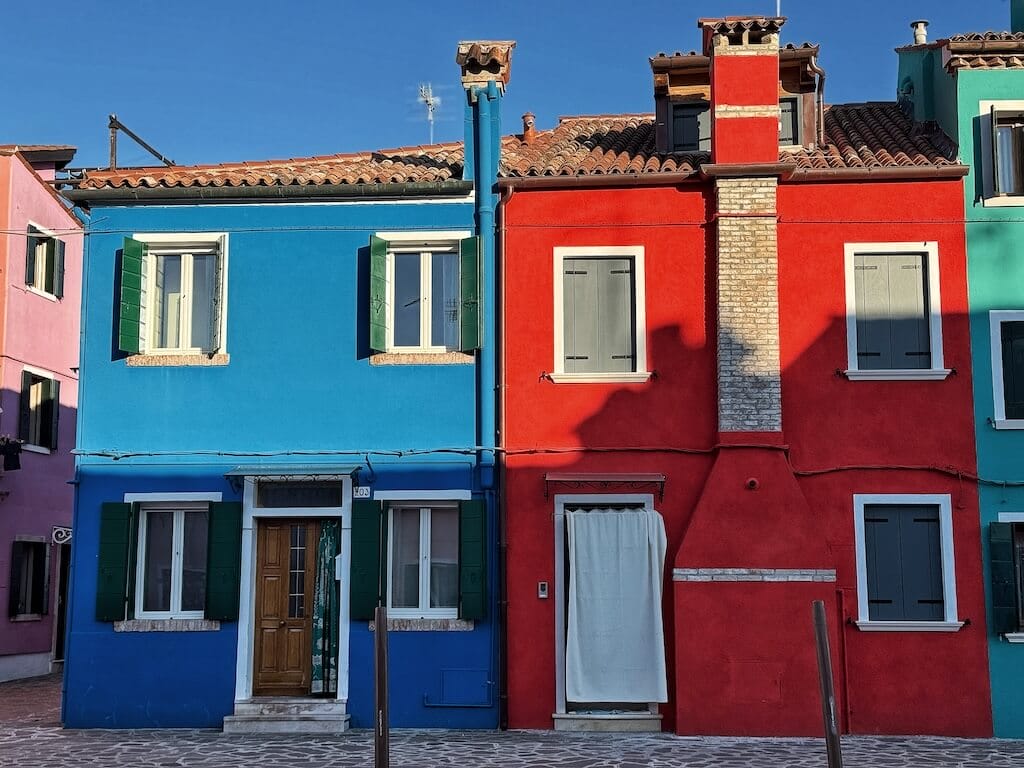
Burano is one of the most picturesque islands in Italy, known for its vivid, colorful houses and intricate lace-making. Wandering through its streets feels like stepping into a painting, each house more brightly colored than the last.
Fishermen initially chose the bright colors of Burano’s buildings to help them find their way home on foggy days—a tradition that still brings joy to every visitor’s eyes.
Be sure to visit the lace museum and dine at the renowned Trattoria al Gatto Nero (The Black Cat) for fresh seafood.
You can take the same ferry (Vaporetto line 12) to Burano from Venice and between Murano and Burano, so I recommend visiting these two Italian islands in one day.
Many tours are also going to Burano and Murano (like the one mentioned above). You can choose a group tour or opt for something more independent, this Murano, Burano, Torcello Hop-On Hop-Off Boat Tour. It includes a demonstration at the glassblowing factory and gives you more time and space to enjoy one of the islands more without being forced to go along with a group.
I wrote a detailed post on The Best Things To Do In Burano that you should read before you go.
Sant’Erasmo
Location: Northern Italy, in the Venetian Lagoon
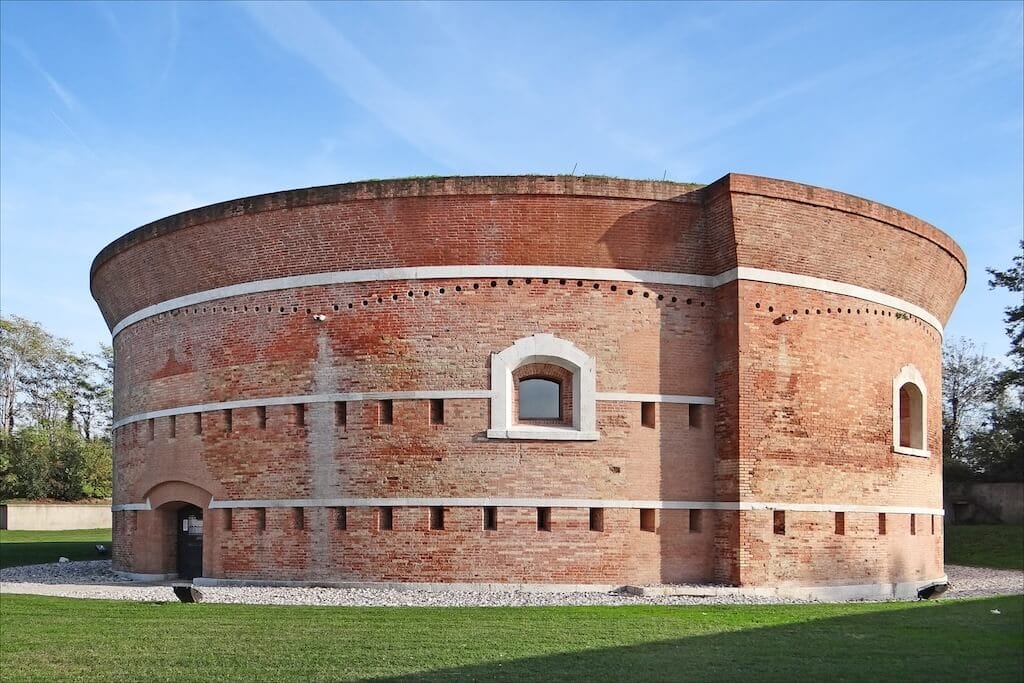
The “Garden of the Doge” in Sant’Erasmo Island is another peaceful escape from Venice’s bustling crowds. If you’re looking for fun activities, I recommend renting a bike to explore the Sant’Erasmo scenic vineyards, olive groves, and beaches.
The quiet lanes lead past orchards and fields, reflecting the island’s deep agricultural roots. Make sure to sample the local violet artichokes, a delicacy available in spring and summer, or taste the artisanal honey produced by local beekeepers.
To get to Sant’Erasmo, take the Vaporetto line 13 from Fondamente Nove in Venice. The water bus runs several times a day and takes about 30 minutes. It offers scenic views of the lagoon and its surrounding islands. Make sure to check the schedule, as departures are less frequent than those to more popular islands like Murano.
If you’re looking for a guided experience on the island, I recommend this Bike Tour with Honey and Artichokes on Sant’Erasmo Island. The tour does not include transportation to the island. Still, it does include bicycle rentals, local products (either honey or artichokes, depending on which is in season), and a licensed guide.
Are you trying to figure out when to visit these amazing Italian islands? Make sure to read my article, When Is The Best Time Of Year To Visit Italy? The article explains Italy’s seasons and climate to help you plan the perfect getaway.

The Borromean Islands
Location: Northern Italy, on Lake Maggiore
The Borromean Islands in Lake Maggiore each offer something special – they really are among the most unique islands of Italy.
Isola Bella is known for its Baroque palace, terraced gardens, and roaming white peacocks, which create an unforgettable experience. Enjoy the botanical gardens and serene pathways where Mediterranean and subtropical plants flourish.
Finally, Isola dei Pescatori charms visitors with its narrow streets, cozy waterfront restaurants, and traditional fishing village atmosphere. It is perfect for a leisurely meal and a stroll by the water. Together, these islands in Italy make for an enchanting escape on Lake Maggiore.
To reach the Borromean Islands, take a train from Milan to Stresa, a picturesque town on the shores of Lake Maggiore. The journey takes about an hour and there frequent departures throughout the day.
Once in Stresa, head to the ferry terminal, where you can board a local ferry or boat service that stops at each of the Borromean Islands: Isola Bella, Isola Madre, and Isola dei Pescatori. They are all perfect places to visit on a day trip from Milan.
You can also join a guided tour in Stresa to make things a little easier. I recommend this 3 Borromean Islands Hop-On Hop-Off Boat Tour. The tour doesn’t include entry fees but lots of free time on all three islands, transportation between the islands, and even some commentary on the boat.
Montisola
Location: Northern Italy, on Lake Iseo
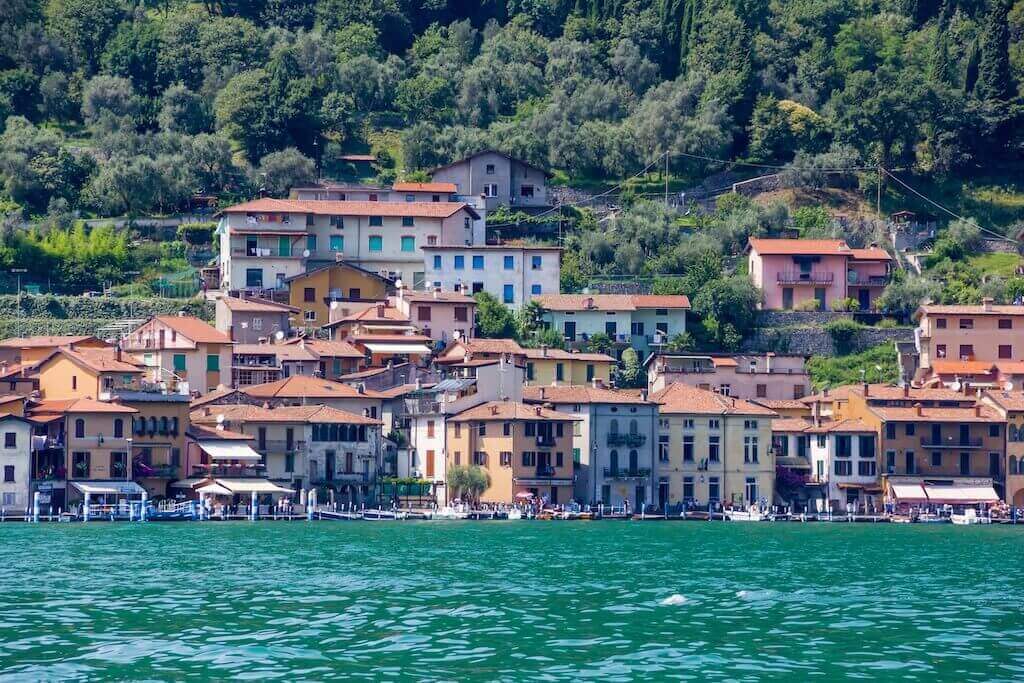
As the largest lake island in Europe, Montisola offers serene landscapes, car-free roads, and cycling and hiking opportunities. Climbing to the Santuario della Madonna della Ceriola, a chapel perched on a hilltop, can be a bit of a challenge, but the stunning views of Lake Iseo will make every step worth it.
What makes the island special is its simplicity—small fishing villages, quiet lakeside trails, and a welcoming community make it a peaceful retreat where you can truly disconnect.
Reaching Monte Isola is easy: there are regular ferry services from several villages along the shores of Lake Iseo, such as Sulzano and Sale Marasino. The ferry crossing takes just a few minutes, providing a swift and scenic ride across the lake.
Elba
Location: Central Italy, in the Tuscan archipelago
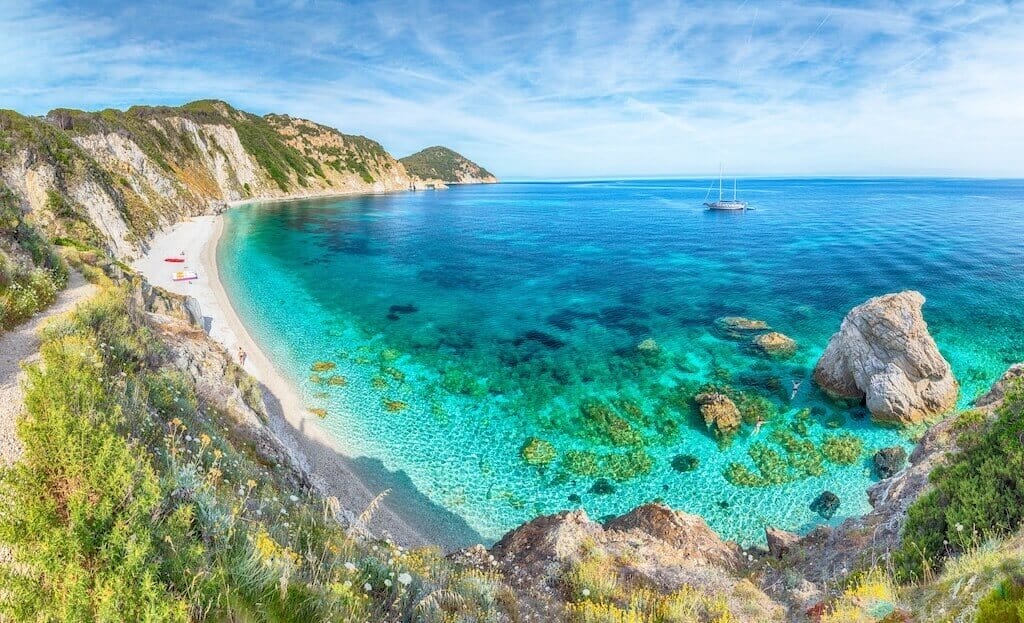
Elba (Isola d’Elba in Italian), the largest island of the Tuscan Archipelago, is known for its diverse landscapes, from white pebbly beaches to lush mountains. You will enjoy the island’s rich history—Napoleon Bonaparte was exiled here in 1814, a fact I learned while visiting the Villa dei Mulini, his residence.
The beaches are varied, each offering unique character, from the family-friendly shores of Marina di Campo to the secluded cove of Sansone Beach, where crystal-clear waters are perfect for snorkeling.
To reach Elba, head to the port of Piombino on the Tuscan coast. From there, regular ferries depart to various ports on the island, such as Portoferraio, Cavo, and Rio Marina. The ferry ride typically takes 30 to 60 minutes, with several options available throughout the day.
There are tons of great activities for everyone in Elba. If you want to enjoy a delicious meal on a local farm, I recommend this Elba: Tuscan Farmhouse Tasting. The farm is on top of a hill, making it an excellent sunset place.
If you want to experience more of Elba from the water, consider booking this Elba Island — Aperitif on the Boat at Sunset. The boat ride is private, making it a really romantic way to admire sunset near the island.
Giglio Island
Location: Central Italy, in the Tuscan archipelago
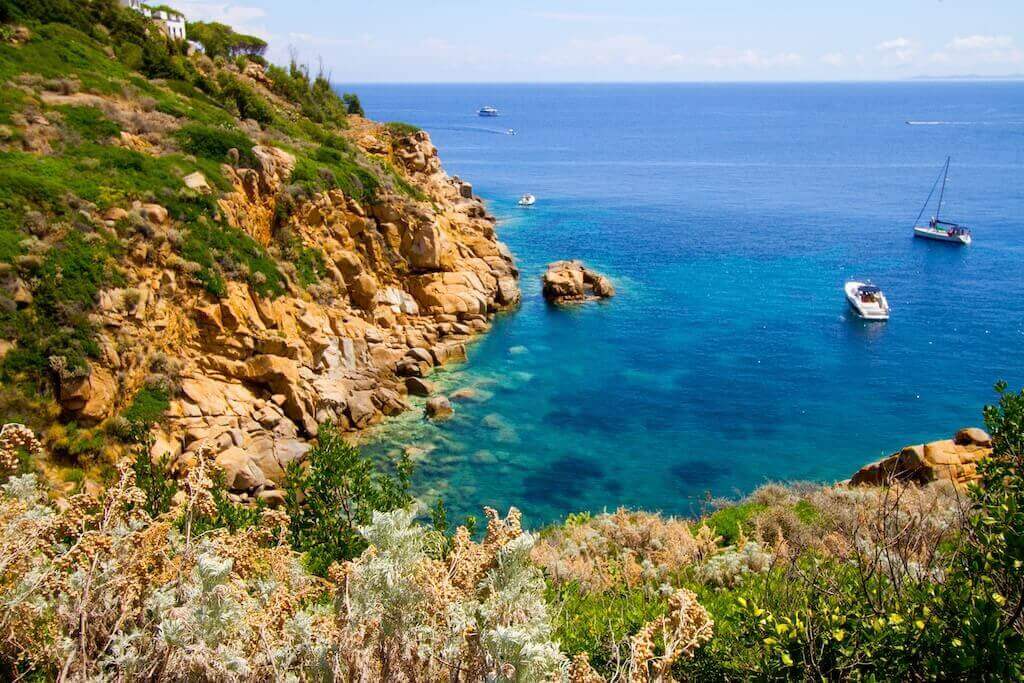
Giglio Island (Isola del Giglio in Italian) is one of the lesser known islands in Italy. Locally, it is famous for its vibrant harbor and hidden bays, offers natural beauty and historical charm. The marina is a series of pastel-colored houses against the deep blue waters—a picturesque sight that feels like a painting and will definitely surprise you.
The island is also a destination for nature enthusiasts, offering hiking trails that wind through the Mediterranean maquis and lead to panoramic views over the Tyrrhenian Sea.
To get to Giglio Island, take a ferry from Porto Santo Stefano on the Tuscan coast. Ferries run regularly throughout the day, and the crossing takes about an hour to reach the island’s main port. Tickets can be purchased at the port or online in advance.

Tiber Island
Location: Central Italy, in Rome in the Tiber River
Who said islands have to be located in the sea or in lakes? Italy has a few river islands, and one of them is very easy to visit too.
Tiber Island is located in the heart of Rome – in fact, it’s the only island inside the Tiber River that you’ll find within the city. While it’s one of the best known river islands in Italy for locals, not many foreign tourists make it there – which means that it remains one of the few corners of Rome that’s still very much local.
Attractions on the Isola Tiberina (as it is called in Italian) abound.
You’ll be able to see some of the most impressive bridges in Rome – Ponte Fabricio and Ponte Cestio; the Torre della Pulzella (Tower of the Maid), originally used as a fortification for the island; and the beautiful Basilica of San Bartolomeo Apostolo, originally built in the 10th century but with a Baroque facade.
The Tiber Island is also home to the Fatebene Fratelli Hospital, one of the oldest hospitals in the city of Rome, which first opened in 1585.
You can easily walk to Tiber Island from the historic center of Rome – you will find it located between the Jewish Ghetto and the quaint Trastevere district.
Very few tours of Rome visit Tiber Island. This guided tour goes to the Jewish Ghetto, Trastevere and Tiber Island so you’ll get to visit three places that many foreign tourists in Rome miss. It’s a private tour, which means you’ll have the guide to yourself to ask any question you’d like.
Ponza
Location: Central Italy, off the coast of Lazio
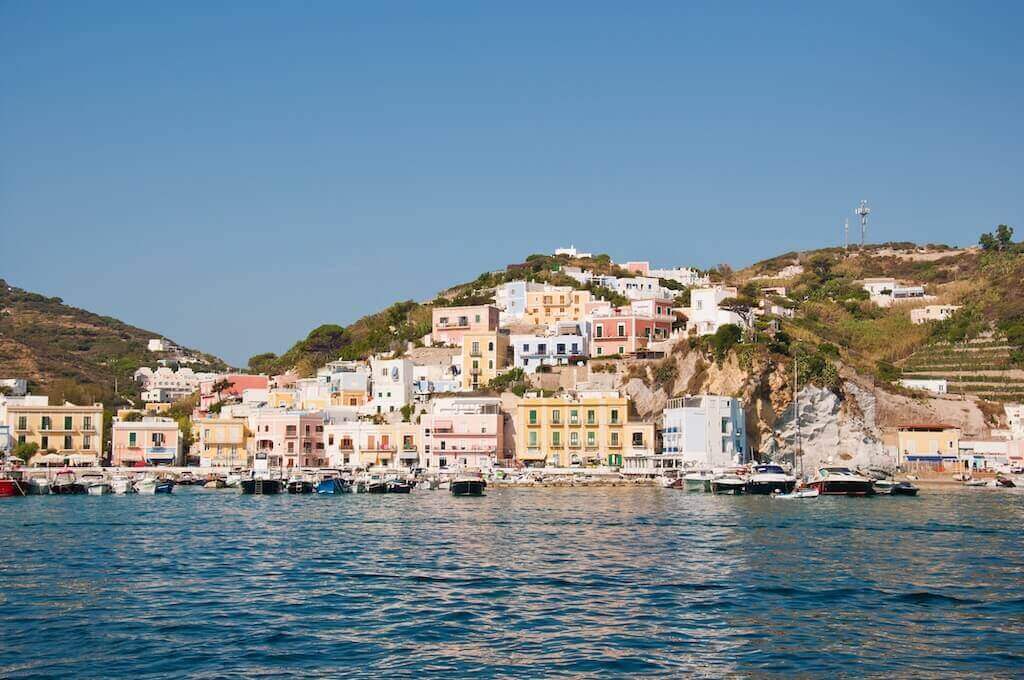
Ponza, a favorite among Italians but one of the lesser known Italian islands among travelers, is known for its clear waters, charming villages, and hidden grottos.
The island’s dramatic cliffs are dotted with colorful houses and small beaches like Cala Feola, where natural rock pools provide a unique swimming experience. Ponza’s history, with ancient Roman ruins and tales of pirates, adds a layer of intrigue to its stunning natural beauty.
For those who love the sea, Ponza is a paradise with numerous coves and caves accessible only by boat. Renting a small boat or joining a local tour is the best way to discover places such as the Grotte di Pilato, a series of Roman-era caves that glimpse the island’s past.
To reach Ponza, take a ferry or hydrofoil from Anzio, Formia, or Terracina. The crossing takes about 1 to 2.5 hours, depending on the departure point and type of service. Ferries run regularly, especially during the summer months.
If you’d like to visit Ponza on a day trip from Rome, I recommend joining a tour to make your life easier. This From Rome: Ponza Island Day Trip with Boat Excursion is perfect. It includes transportation to the ferry, the ferry ride itself, a boat ride once you are in Ponza, and much more. It’s a great choice when Rome gets hot and sticky in the summer.
Ventotene
Location: Central Italy, off the coast of Lazio
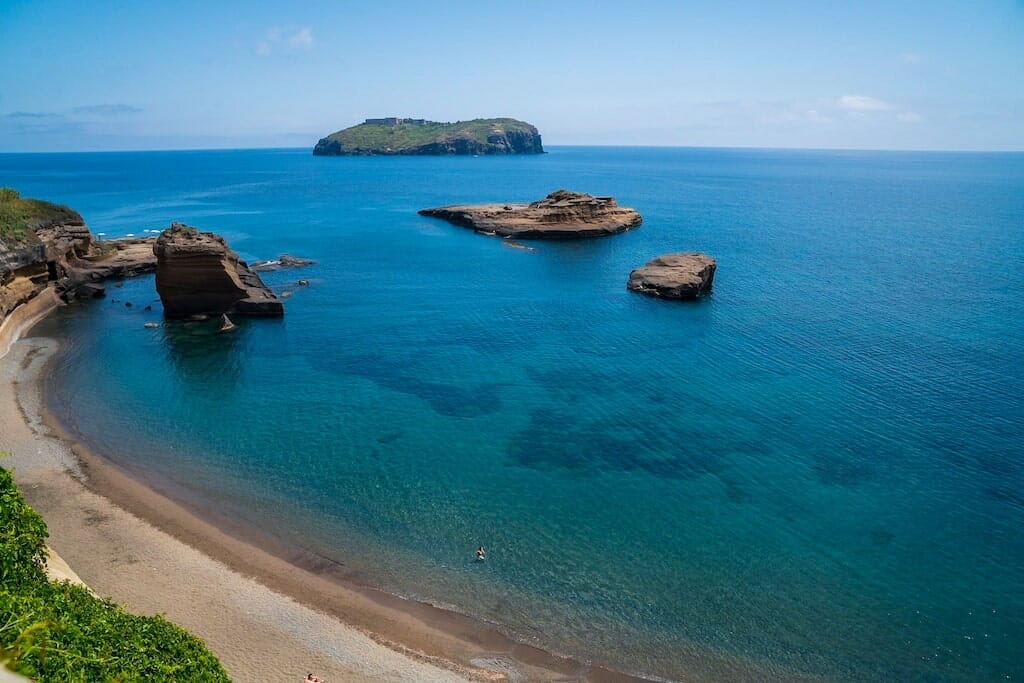
Ventotene is one of the lesser known Italian islands, part of the Ponziane Archipelago and located roughly between Ponza and Ischia, 20 nautical miles from each, and about 25 miles from Formia/Gaeta, where ferries to the island depart from. It is also part of a protected marine reserve which was established in 1997 to protect the delicate local environment.
The island is significantly lesser known compared to other Italian islands, which means you won’t find it nearly as crowded with international tourists, so you will find it an ideal place to slow down for a few days.
The main attraction in Ventotene is Villa Julia, named after Augustus’s daughter. She was exiled on the island after she was accused of adultery – and four more women followed in her footsteps after that. The Roman Cistern of Ventotene is another must see.
The Old Town of Ventotene is a series of colorful building, pretty squares and narrow alleys that are perfect for a walk. Of course, as this is an island, you should consider hitting the magnificent Cala Nave beach, a lovely place for a swim.
You can reach Ventotene by ferry or hydrofoil from Formia/Gaeta. The trip takes between 1 hour and 20 minutes and 2.5 hours depending on whether you go by hydrofoil or ferry. You can check the website of Laziomar for departures.
Procida
Location: Southern Italy, on the Amalfi Coast
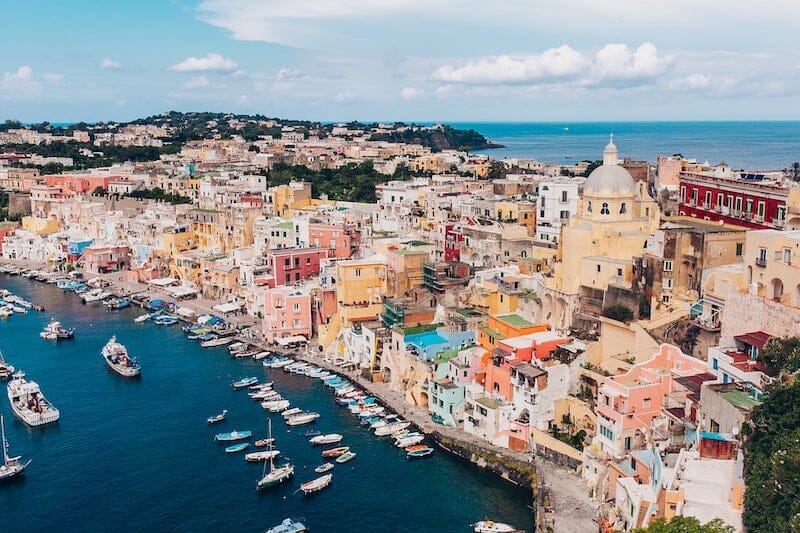
Procida stands out with its bright pastel houses and authentic fishing village charm.
Unlike Capri or Ischia (more about them below), Procida feels more local and less touched by mass tourism. It’s a place to enjoy slow mornings in quaint cafes, stroll along narrow alleyways, and relax on quiet beaches like Chiaiolella, which offers a stunning sunset view over the Tyrrhenian Sea.
One of the things to do in Procida is simply going on a walk. Every corner reveals something new—an old church, a hidden courtyard, or a local market filled with fresh seafood and vibrant produce. The island’s small size makes it easy to explore in a day, but its charm may make you want to linger longer.
You can reach Procida by ferry or hydrofoil from Naples or Pozzuoli. Journeys take 30 to 60 minutes, depending on the service. Ferries run frequently throughout the day, so you just need to make your way to the ferry harbor and get tickets before hopping on the next one.
Since you can get to Procida from several places, there are also different day tours depending on your starting point.
If you want to visit Procida from Sorrento, I recommend this Ischia and Procida Boat Tour. It’s a small group tour, and the boat stops for swimming and snorkeling. If you’d like to spend more time in the water once you’re in Procida, check out this Procida Island Tour by Boat with Swimming and Underwater Photos. It will be a peaceful day out on the water.
Capri
Location: Southern Italy, on the Amalfi Coast
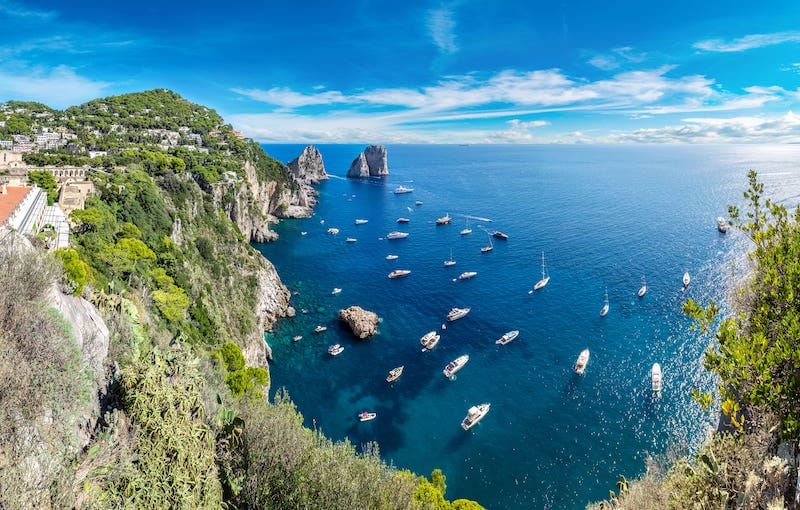
With its dramatic cliffs, glamorous boutiques, and iconic Blue Grotto, Capri is an island that never fails to impress – this is one of the most popular islands of Italy among tourists.
Beyond the luxury, Capri has more natural beauty, hiking trails like the Path of the Forts, and historical sites such as Villa Jovis, where Emperor Tiberius of Rome retired to private life.
Even with celebrity status, Capri still holds secrets for those that have a little more time to explore the off-the-beaten-path. Taking the time to wander beyond the typical sights reveals a Capri that’s full of character.
While the main “piazzetta” buzzes with visitors, a short walk can lead you to quieter spots like the Gardens of Augustus or the secluded beaches of Marina Piccola.
Capri is just a short ferry or hydrofoil ride away from Naples, Sorrento, or other nearby ports on the Amalfi Coast. Depending on your route, expect the trip to take anywhere from 20 to 50 minutes, with frequent crossings, especially during the peak season.
If you’re short on time and just want to spend one day in Capri, I recommend this From Naples: Gulf of Naples & Capri Sightseeing Tour. The tour includes an optional swimming tour if you request that in advance; otherwise, it’s a picture-perfect view of the coast from the water.
Ischia
Location: Southern Italy, off the coast of Naples
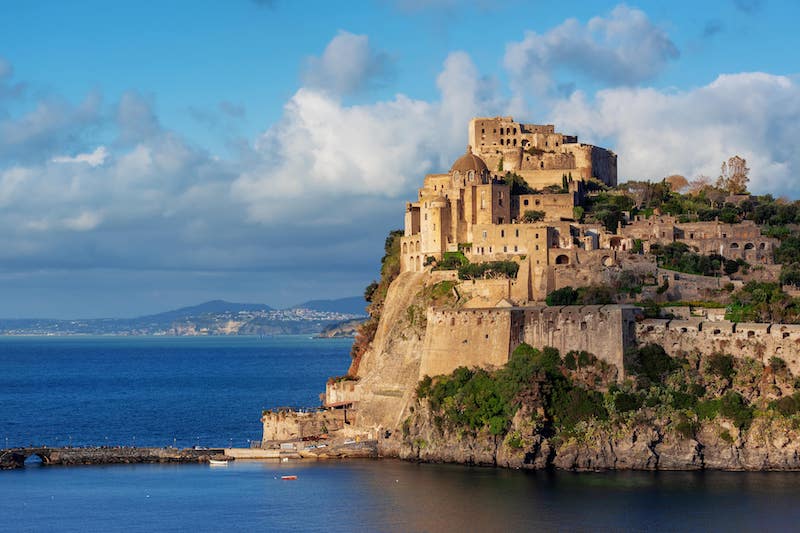
Ischia, the largest island in the Bay of Naples, is famous for its thermal waters and healing spas, which have attracted visitors for centuries.
The island also boasts a variety of landscapes, from sandy beaches to forested mountains. Ischia’s charming towns, like Forio and Sant’Angelo, offer picturesque streets, friendly locals, and a chance to experience authentic island life.
Back in November 2022 Ischia was unfortunately hit by a flood and reconstruction works for parts of the affected buildings are ongoing – but this doesn’t make the island any less charming.
To get to Ischia, catch a ferry or hydrofoil from Naples, Pozzuoli, or Sorrento. Travel times range from 50 minutes to 1.5 hours, and many departures are available, particularly during peak travel times.
Once in Ischia, I highly recommend a boat tour around the island, like this Boat Excursion with Lunch on Board to Discover Ischia. The tour is super family-friendly. In fact, it’s run by a local family who sometimes even have their children onboard. On the boat tour, you’ll have amazing local cuisine and plenty of good swimming opportunities.
Sardinia
Location: Off the western coast of Italy
It would be criminal to talk about the best islands of Italy and not mention Sardinia—where I was born and raised and the place I still call home. Sardinia is not just a destination for me; it’s a part of my heart.
Sardinia is the second-largest island in the Mediterranean, with stunning beaches, rugged landscapes, and unique history. Sardinia’s coastline is dotted with countless coves and bays, each with its personality, each equally stunning.
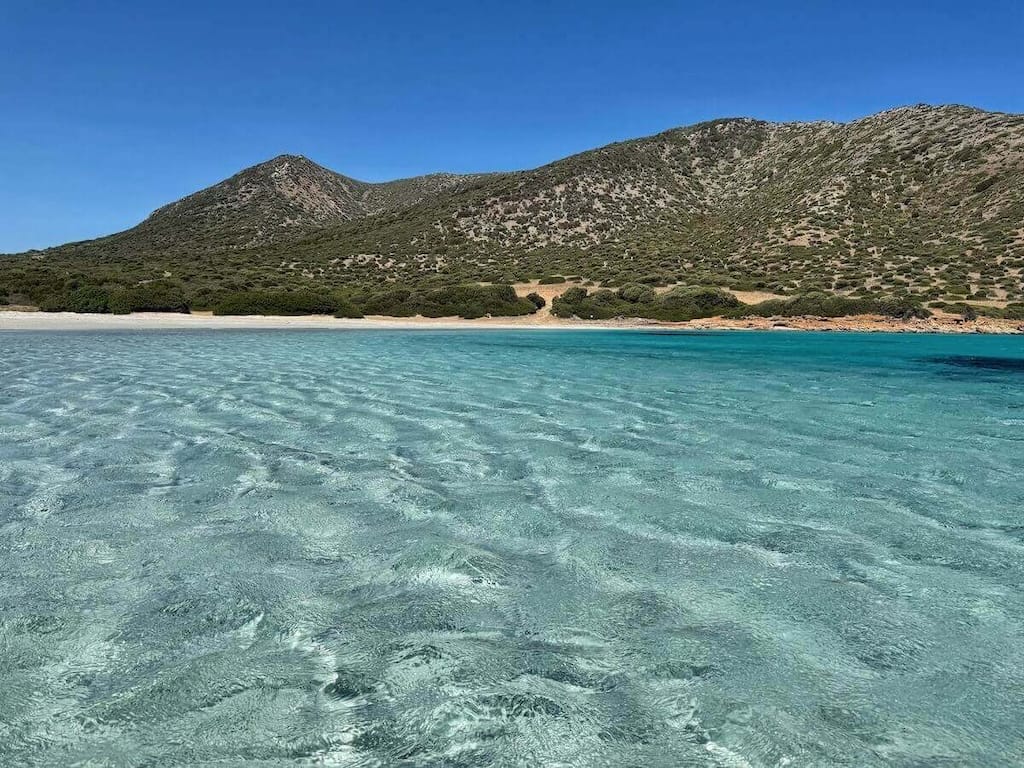
I could spend a lifetime talking about the beaches of Sardinia, but let me mention two that are a must see. One is Cala Zafferano, pictured above. It’s part of a military area and can only be accessed by boat from Teulada and Capo Malfatano, which means it’s never crowded, even in the peak months.
Another is Punta Molentis, a protected beach in Southern Sardinia where access is capped at 600 daily visitors where you will find pristine waters perfect for snorkeling.
Sardinia is also a paradise for active hikers, as we also have many great trails (some of which even lead to remote beaches).
You can reach Sardinia by both air and sea. Three airports on the island—Cagliari Elmas, Olbia Costa Smeralda, and Alghero Fertilia—have direct flights from many European cities and Italian mainland hubs like Rome and Milan.
If you prefer to travel by ferry, routes are available from ports such as Civitavecchia, Genoa, Livorno, and Naples. Ferry trips range from 5 to 12 hours, with both daytime and overnight options available.
Fun Fact: Sardinia is home to one of the world’s blue zones, a region with a higher life expectancy than the rest. Take some time to observe the way of life and cuisine that seems so mentally and physically beneficial for us.
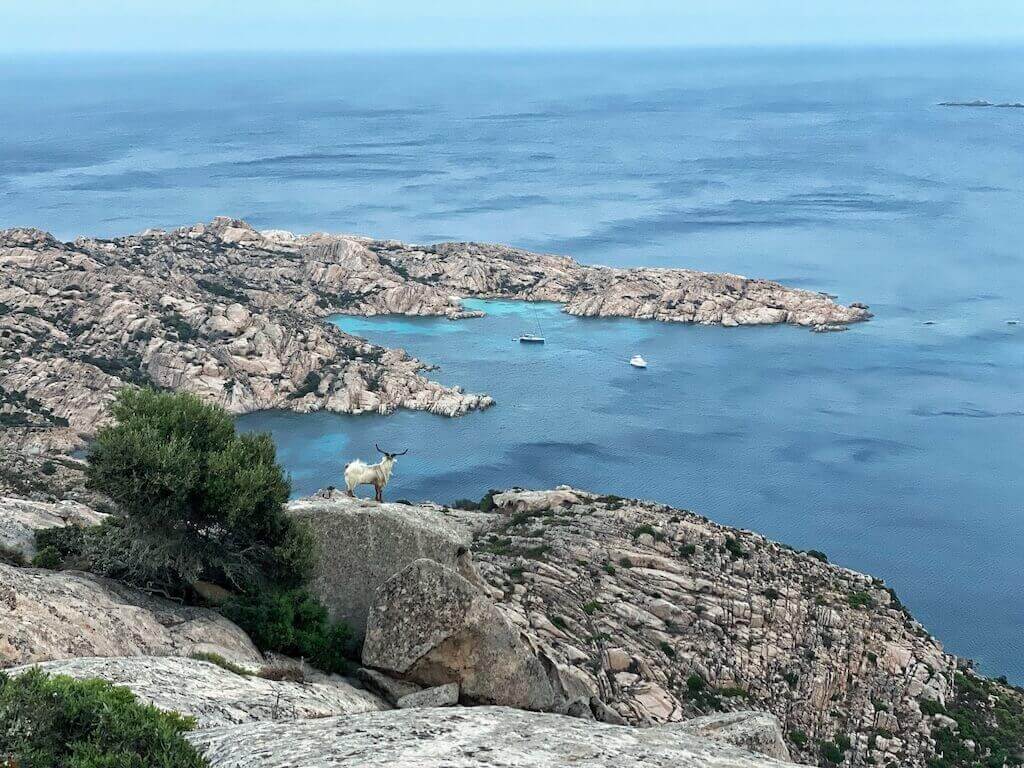
La Maddalena Archipelago
Location: Off northwestern coast of Sardinia
Located between Sardinia and Corsica, La Maddalena Archipelago consists of seven main islands and numerous smaller ones and it is also a national park. It is known for its pristine beaches and rich marine life.
La Maddalena is the largest island and typically used as a base for exploring the area, which is best done by boat. Sunset at Punta Tegge here is absolutely magical.
Caprera, the second largest island, is connected to La Maddalena by a bridge. That’s where you’ll find the Garibaldi House Museum, located in the very house where the Italian unification hero spent his final years; as well as iconic beaches such as Cala Coticcio and Cala Brigantina.
Spargi is home to the gorgeous Cala Granara beach, whereas Budelli is where you can see (but only from a distance) the famous Pink Beach.
To explore the La Maddalena Archipelago, take a ferry from Palau, located on the northern coast of Sardinia. The short crossing to the main island, La Maddalena, takes 15 to 20 minutes, with ferries running frequently throughout the day and night.
You can also join a guided tour from Palau. They often have a ton of activities planned and can take you to some hidden coves for swimming. I recommend this La Maddalena Islands Full-Day Trip by Boat. The tour includes free time on Spargi, Budelli, La Maddalena and Caprera. It’s really an adventure and worth considering, perfect for families too.
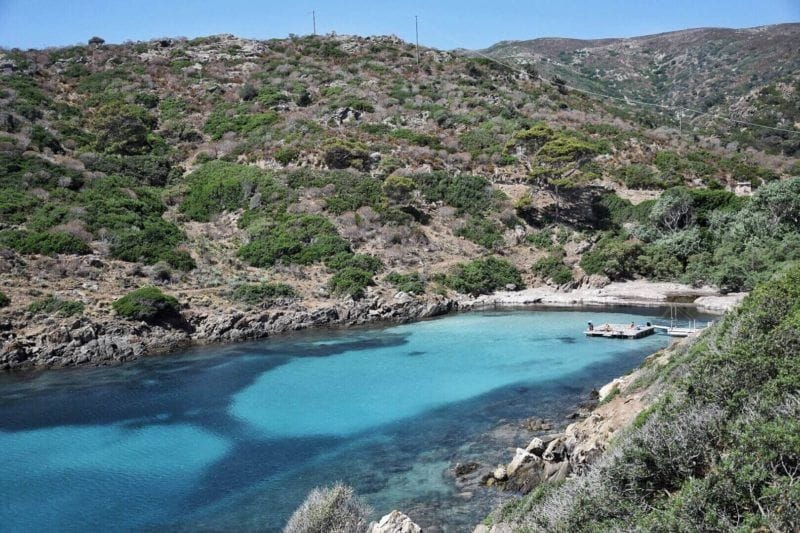
Asinara Island
Location: Off northwestern coast of Sardinia
Asinara Island is one of my favorite places in Italy, and I’m not just saying that because it’s in Sardinia. I have been multiple times, and this is one of the most unique, surreal and beautiful places you can hope to see in your lifetime.
Once a leper colony, a prison colony and then a high-security prison, Asinara is now a national park home to albino donkeys, peregrine falcons, and various marine species. It’s a haven for those who love wildlife and untamed nature.
Exploring Asinara often feels like stepping back in time. With no cars allowed and limited human presence (nobody lives there except for the park rangers), the island remains largely unchanged, where ancient stone buildings and grazing animals coexist in a rare, unspoiled environment.
Cycling or walking (well, hiking) are the best ways to truly appreciate its quiet beauty.
You can reach Asinara Island by ferry from the port of Stintino or Porto Torres in northern Sardinia. The journey takes roughly an hour, and services are limited, so I recommend checking the schedule in advance.
If you’re into adventure travel, check out this Asinara National Park Full-Day Off-Road Tour. It includes transportation to the island from Stintino and an off-road adventure all over the island. You’ll go to Cala Reale, Cala d’Oliva for photos, Cala Sabina for swimming, and other points of interest.
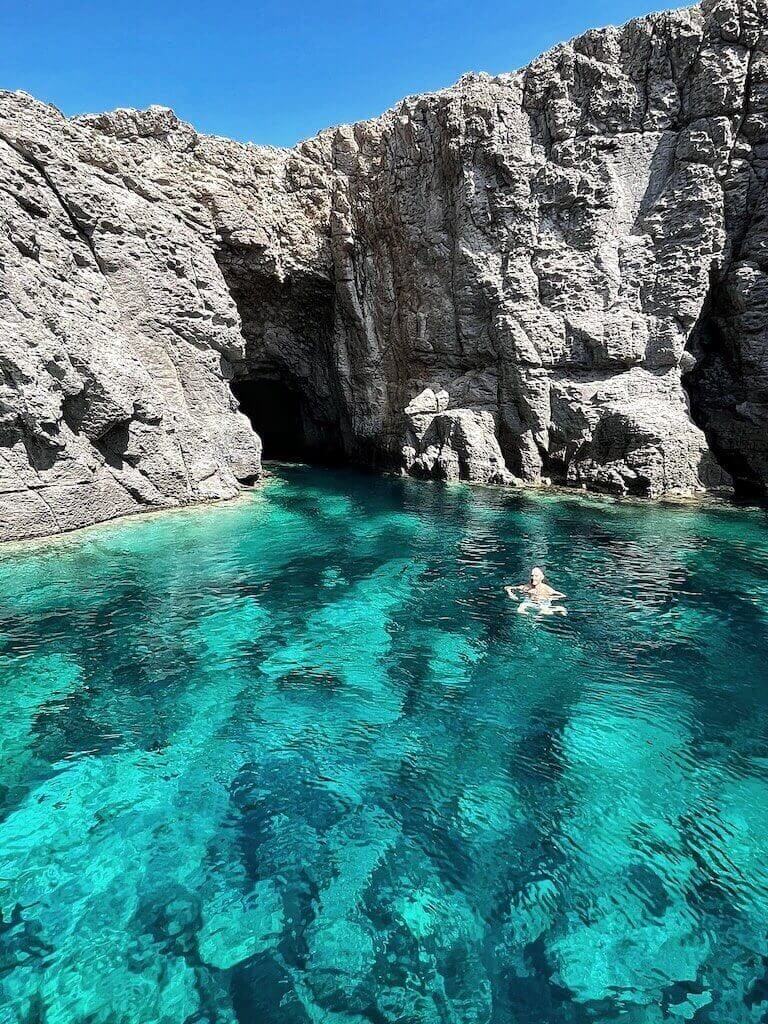
Sant’Antioco
San Pietro
Location: Off southwestern coast of Sardinia
Sant’Antioco is my sister’s favorite island off Sardinia, so of course it had to be included in this post. It is connected to mainland Sardinia by a bridge, and here history and nature converge. Roman ruins and Phoenician necropolises sit alongside beautiful beaches and hidden coves in Sant’Antioco.
Must see places in Sant’Antioco include the small town (aptly named Sant’Antioco); the Arco dei Baci, a fantastic snorkeling spot that can be reached via a hike; Calasetta, a small town with whitewashed buildings and a fantastic winery; the nearby Faro Mangiabarche, a unique lighthouse set on a rocky outcrop; and the beautiful Cala Lunga beach.
To get to Sant’Antioco, drive or take a bus from mainland Sardinia to the island, which is connected by a bridge.
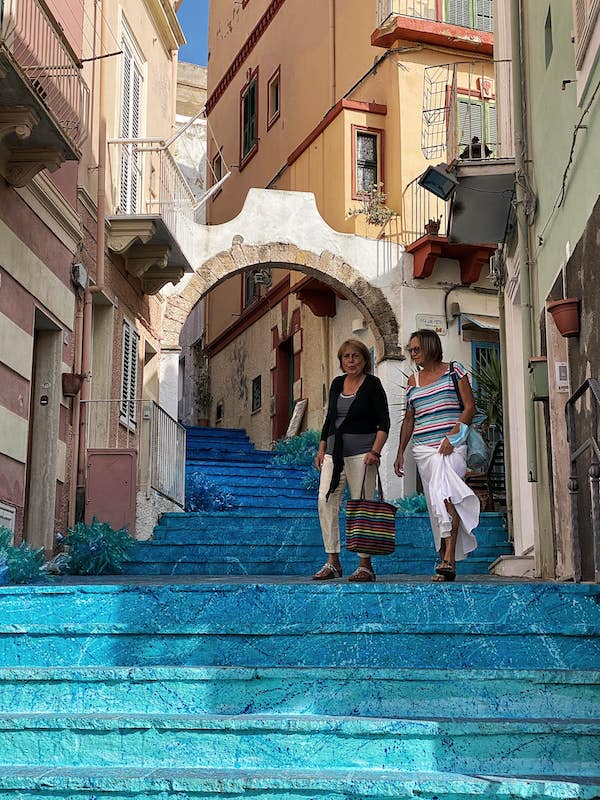
San Pietro
Location: Off southwestern coast of Sardinia
Not far from Sant’Antioco, San Pietro is even wilder than its neighbor. Here you’ll find the colorful town of Carloforte which boasts a unique cultural heritage; and a plethora of beaches (I am a fan of La Bobba) and panoramic spot.
The Genoese dialect – that’s because Carloforte was founded by Genoese merchants escaping from Tabarka, a small island off the coast of Tunisia – is still spoken.
The local cuisine of Carloforte, especially its tuna dishes, is celebrated for its distinct flavors.
For San Pietro, take a ferry from Portoscuso or Calasetta (which is actually located in Sant’Antioco). The crossing to San Pietro takes between 30 minutes to one hour, depending on where you travel from.
I always recommend trying the local cuisine everywhere you go in Italy, but read my article, Common Misconceptions about Italian Food, before trying any of our food. You might be surprised by some of these popular international dishes that are not so popular here.
Tavolara
Location: Off northeastern coast of Sardinia
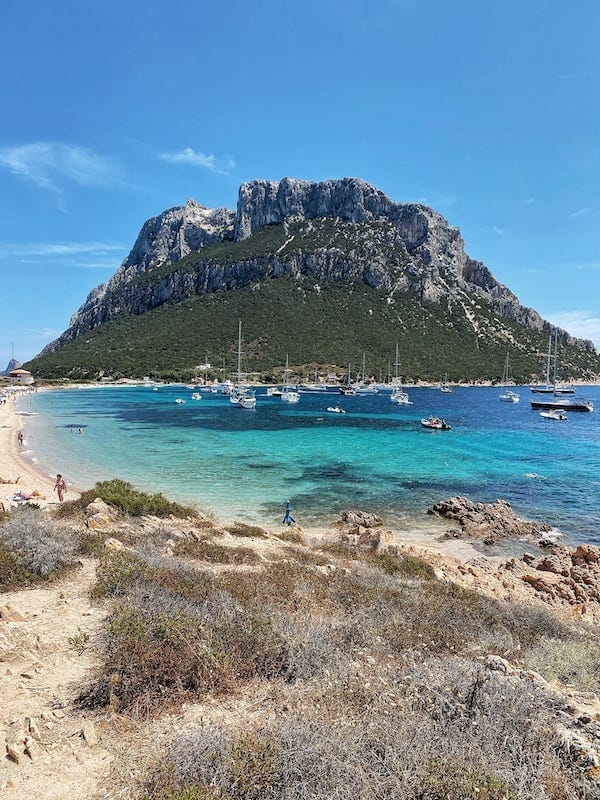
Tavolara may be one of the lesser known islands of Italy among international travelers, but well known to Sardinians. I have been countless times and each time I fall in love with it.
Tavolara limestone massif rises dramatically from the sea, a stunning backdrop to its pristine beaches. There’s a main one that most people access once they get off the ferry that takes them to the island, but a walk will allow you to see the rest. There’s also a small cemetery in the island – which used to be a kingdom, actually – it’s right behind the main beach.
Most adventurous travelers can even choose to hike to the peak of Tavolara. It’s not an easy hike and there’s some abseiling to do too, so guided tours are a must.
Tavolara can be reached by boat from Porto San Paolo, a small town on Sardinia’s northeast coast. The ride takes about 20 minutes.
If you want to snorkel around Tavolara and Molara (more about it below) but don’t want to deal with the logistics, I recommend this Olbia: Tavolara and Molara Snorkeling Boat Tour. It’s one of the most popular in the region and includes snorkeling equipment, drinks, snacks, and a local guide. You’ll even hear some local legends during the tour.

Molara
Location: Off northeastern coast of Sardinia
Molara’s is right next to Tavolara and even more unique, in my opinion. Its rocky coastline and clear waters provide excellent snorkeling and diving opportunities. Molara is actually a private island but nobody lives there anymore, so it offers a rare and precious sense of seclusion and natural beauty.
Visits to Molara typically include an easy hike to appreciate its nature and wildlife, and the farms that once operated on the island, as well as the tiny (and now mostly collapsed) church.
Trips to Molara require a private boat arrangement via Associazione Molara, otherwise you can take a boat tour that won’t allow you to disembark, but you can still snorkel in the area.
Malu Entu (Mal di Ventre)
Location: Off western coast of Sardinia
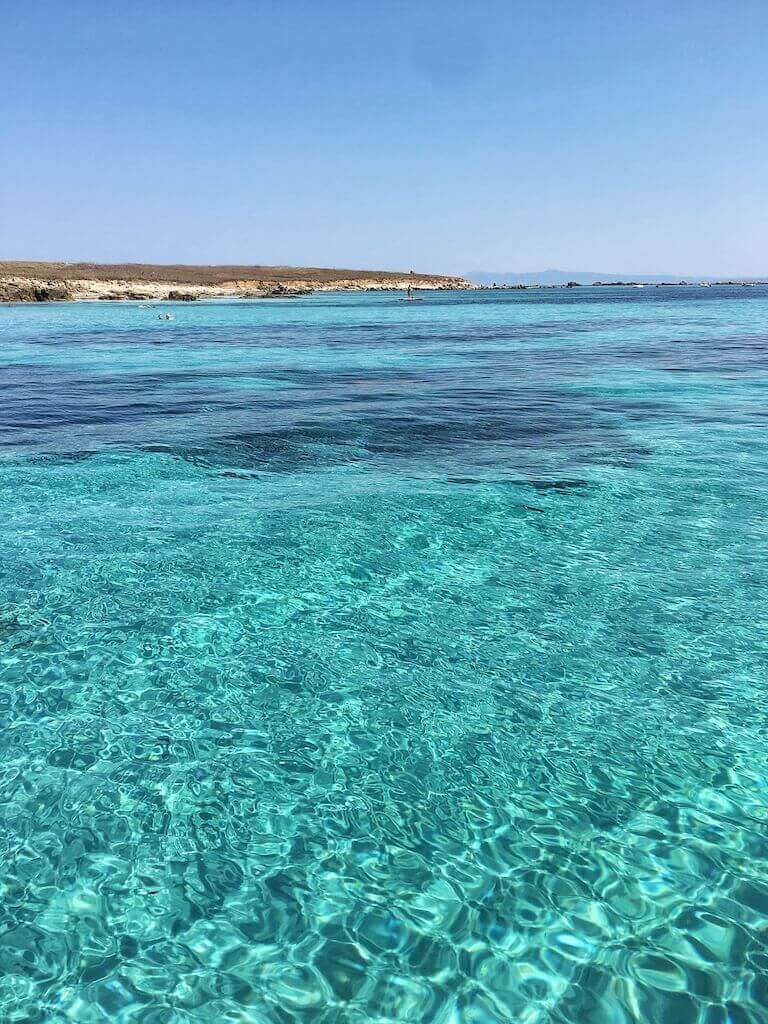
A lesser-known, uninhabited island, Malu Entu is ideal for day trips from the Sinis Peninsula of western Sardinia. Surrounded by turquoise waters, it’s a paradise for swimmers and snorkelers.
The island’s rugged landscape, with its wild garlic fields and pristine beaches, is perfect for a summer day at the beach. Much of the island is protected and unaccessible as it is part of a marine reserve, so most visitors choose to stay on the main beach. Also, there are no services at all on the island so you’ll need to bring whatever you need for the day.
To visit Malu Entu, also known as Mal di Ventre in Italian, hire a private boat or join a guided excursion from the town of Putzu Idu or the nearby Mari Ermi beach. The trip takes roughly 30 minutes, depending on sea conditions – I don’t recommend going when the mistral is blowing as this part of Sardinia is very exposed to that wind.
Sicily
Location: South of the Italian peninsula
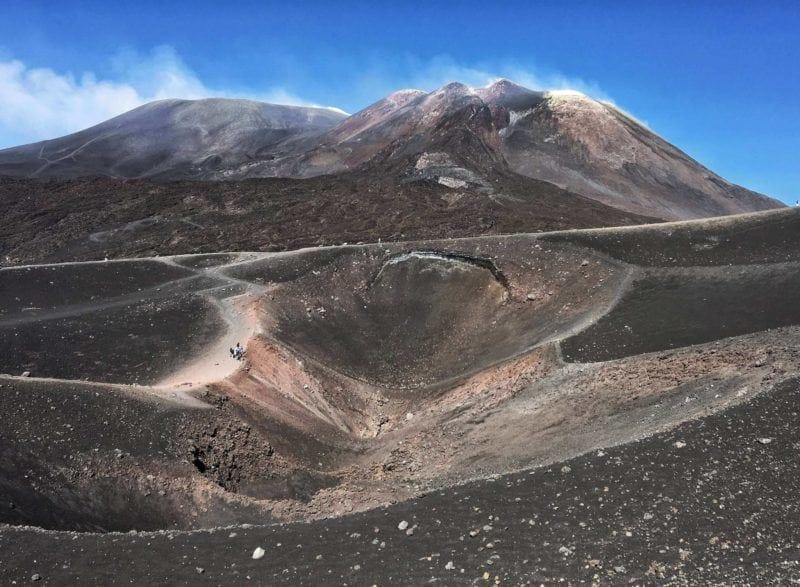
Everyone who knows Italy is familiar with Sicily, its golden beaches, and Mount Etna’s smoking craters. In fact, islands like Sicily (and Sardinia, of course) are among the main reasons you should visit Italy if you’re a fan of swimming, snorkeling, diving and other water sports
Furthermore, Palermo, the island’s capital, is a vibrant city with Arab, Norman, and Baroque influences.
But there’s so much to see and do outside of the capital. Every town has its unique character—Cefalu with its medieval streets, Syracuse with ancient Greek ruins, and Taormina perched high above the sea, offering panoramic views that are hard to forget. I also love Catania, at the foot of Etna: it’s incredibly lively, and there’s a fantastic market.
Sicily can be reached by plane or ferry. Several airports, including Palermo, Catania, and Trapani, offer direct flights from many European and Italian cities.
You can also take a ferry from mainland Italy. Regular services depart from Naples, Genoa, Civitavecchia, and Villa San Giovanni (in Calabria). Ferry trips vary, from about 30 minutes for the shortest routes to overnight crossings.
Stromboli
Location: Off the northern coast of Sicily
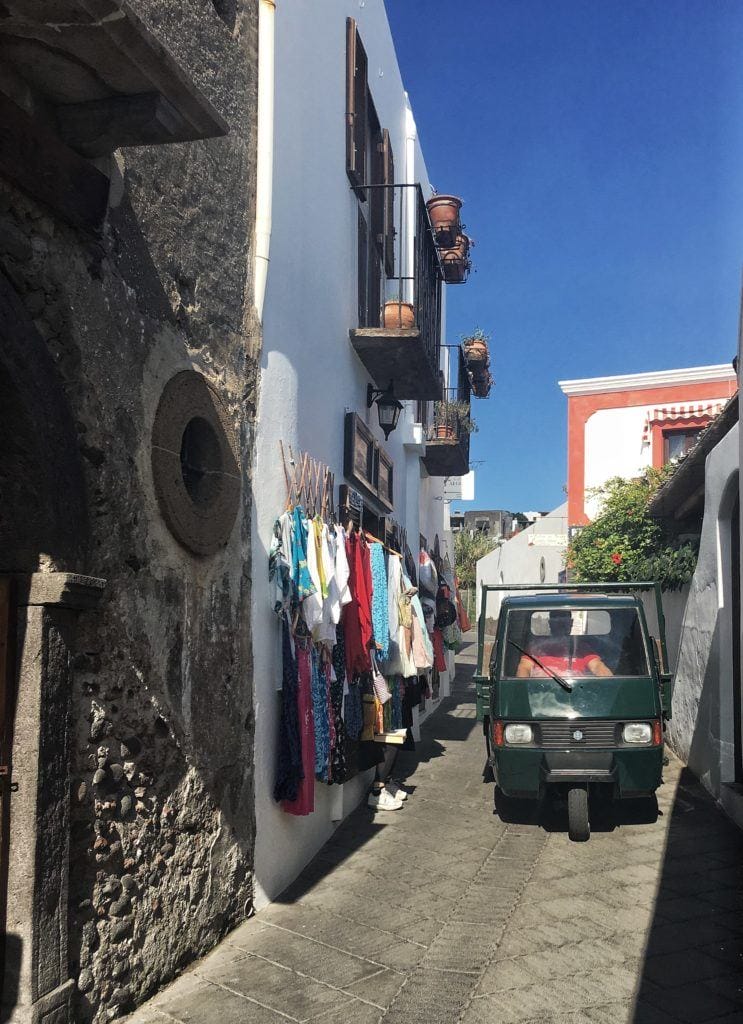
Home to one of the most active volcanoes in Europe, Stromboli offers an unforgettable adventure for active travelers. I visited during my most recent trip to Sicily as I went around the Aeolian Islands (Stromboli is one of them) and the highlight of my visit was indeed hiking Mount Stromboli. Seeing the lava burst against a darkening sky is both humbling and exhilarating.
The hike to Stromboli’s summit is moderately challenging and takes about 2 to 3 hours, depending on your pace and fitness level. This has to be a guided hike, for safety reasons, but I wholeheartedly recommend it as it’s a truly unique experience.
This Stromboli: Sunset Trekking at Sciara del Fuoco is my top recommendation. The tour includes a headlamp, rock helmet, and local guide, so you’ll be well-prepared for the journey to see the lava flows.
Don’t miss the island’s black sand beaches and a stroll around the quiet village. It’s tiny, easy to explore but really pretty!
To reach Stromboli, take a ferry or hydrofoil from ports in Sicily, such as Milazzo, Messina, or Palermo. The trip from Milazzo, the closest point, takes around 1 to 3 hours, depending on the type of boat.
Vulcano
Location: Off the northeastern coast of Sicily
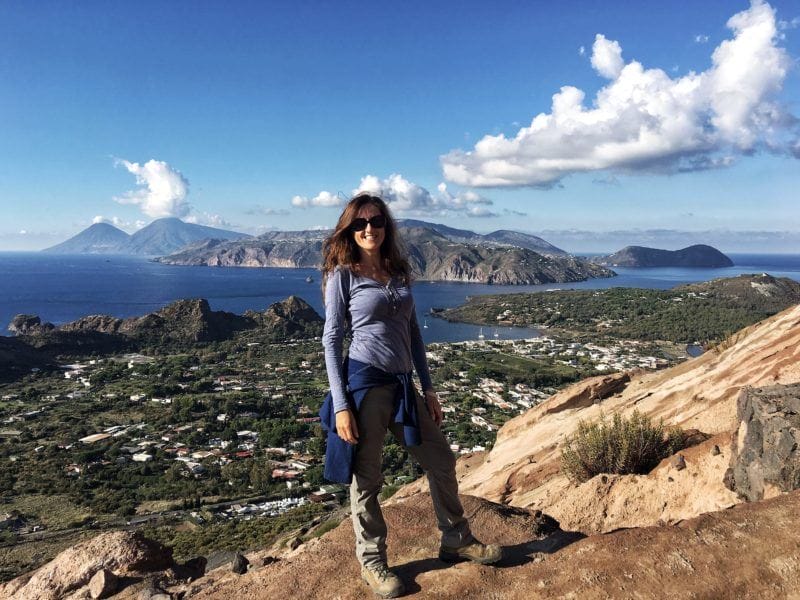
Also part of the Aeolian Islands, Vulcano is aptly named after the volcanoes that here are center stage. It’s more developed compared to Stromboli (not to mention larger), but it’s just as fun to visit.
The island’s hot mud baths are renowned for their therapeutic properties (and their horrendous smell), and the hike to Gran Cratere offers panoramic views of the entire Aeolian Archipelago. The sulfur-scented air and smoking fumaroles create a unique atmosphere – I should warn you that depending on how the wind blows some parts of the island smell quite strongly!
The hike to Gran Cratere takes 1 to 2 hours, depending on your pace. While it’s not a difficult climb, the sulfur fumes can be intense near the top, so be prepared – if you go on a guided tour, you will be provided with a gas mask and even then the smell can be unbearable.
Reaching the crater’s edge, however, rewards you with a sweeping view of the Aeolian Islands that is genuinely worth the effort.
You can reach Vulcano by ferry or hydrofoil from Milazzo, a port town on Sicily’s northeastern coast. The crossing typically takes 45 minutes to 1.5 hours. There are also direct routes from other Aeolian Islands.
If you want to visit the volcanoes in the easiest and most scenic way possible, consider this Lipari: Vulcano, Panarea, and Stromboli Cruise. The speedboat goes to all three islands, gives you free time on each, and even a nice glass of wine on the boat.
Salina
Location: Off the northeastern coast of Sicily
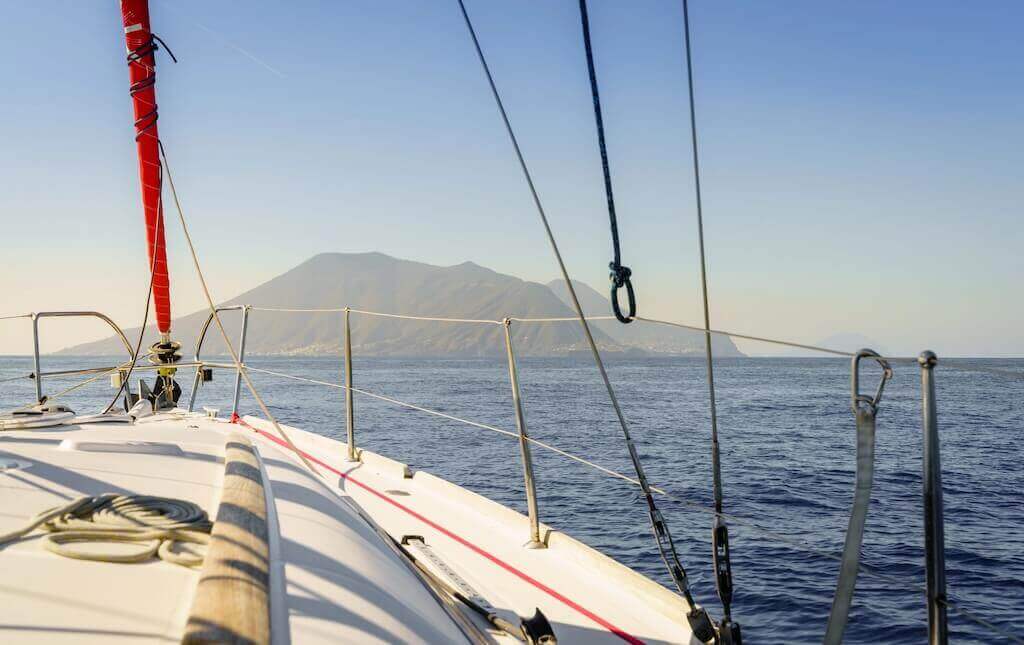
The greenest of the Aeolian Islands, Salina is a place where nature and tradition blend. The island is dotted with vineyards producing sweet Malvasia wine, and its black, pebbly beaches which lay in contrast with the lush, green hillsides.
Pollara Beach, famous for the movie Il Postino (which got several Academy Award nominations in 1996, and ended up winning one), is a must-visit for its dramatic scenery.
Salina is great place to visit for walking enthusiasts, with numerous hiking trails crisscrossing the island’s lush landscape. For example you could hike to Fossa delle Felci, the highest point in the Aeolian Islands: from there, you can enjoy panoramic views of the archipelago.
You can get to Salina by ferry or hydrofoil from Milazzo, Palermo, or Messina. The journey from Milazzo takes around 1.5 to 2.5 hours. Ferries also connect Salina with the other Aeolian Islands, with regular rides during the summer months, and less frequent ones in the off season.
If you’d like to enjoy the beautiful scenery and have some free time in Salina on a day trip, I recommend this From Lipari: Lipari and Salina Full Day Sightseeing Cruise. You get several hours on Salina, where you can climb up to the viewpoint and enjoy the island.
Panarea
Location: Off the northeastern coast of Sicily
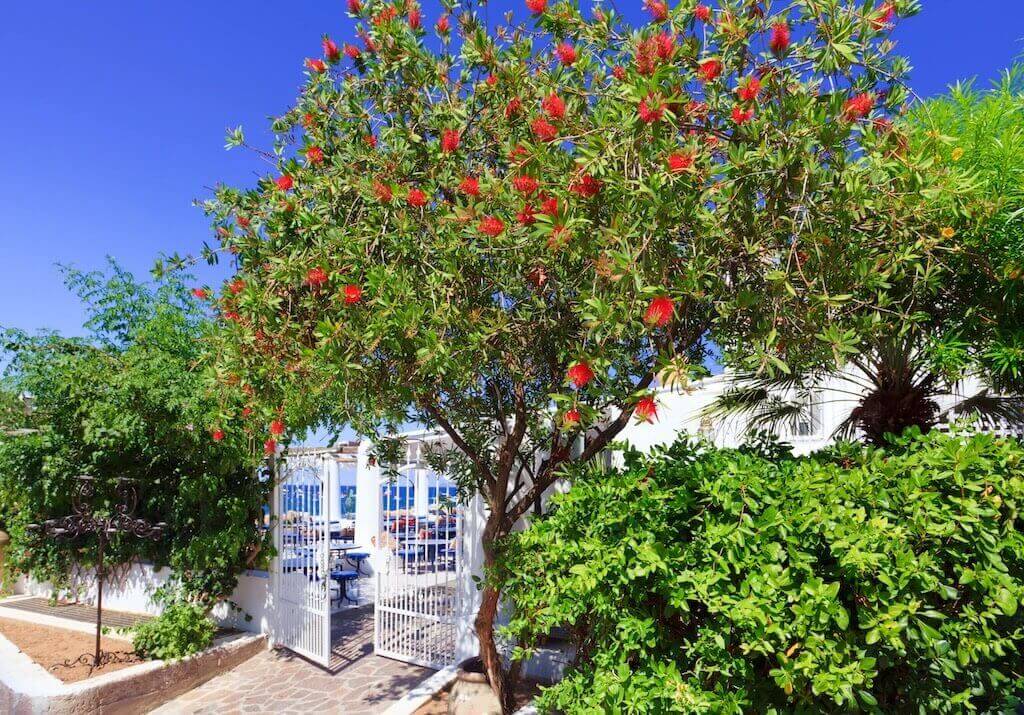
Panarea, also part of the Aeolian Islands, is a bit quieter compared to the other islands in the archipelago. There are no cars here, so you’ll enjoy a slower pace of life. You can explore by foot or boat, and sip an aperitivo in the evening while watching the sunset over the sea.
Panarea’s streets and hidden pathways are perfect for a walk. The island is really small, so you can easily wander from its charming whitewashed village to secluded coves and ancient ruins in a single afternoon.
You can reach Panarea by ferry or hydrofoil from Milazzo, it takes between 1.5 and 3 hours depending on the service. There are also departures from other Aeolian Islands and Sicily’s larger cities, especially during the tourist season.
If you’re looking for a boat tour that has it all, I recommend this From Milazzo: Panarea and Stromboli Boat Trip by Night. The boat tour lasts around around 10 hours and includes several hours of free time on Panarea Island. But you’ll also go to several beaches, hidden swim spots, and Stromboli and finish the tour off with (hopefully) a beautiful sunset on the water.
Favignana
Location: Off the western coast of Sicily
Favignana is perfect for those who love the sea. Here you’ll find gorgeous beaches like Cala Rossa, with wonderfully turquoise waters and rocky shores.
The island’s old tuna processing plant, now a museum, provides insight into its maritime history and the traditional art of tuna fishing.
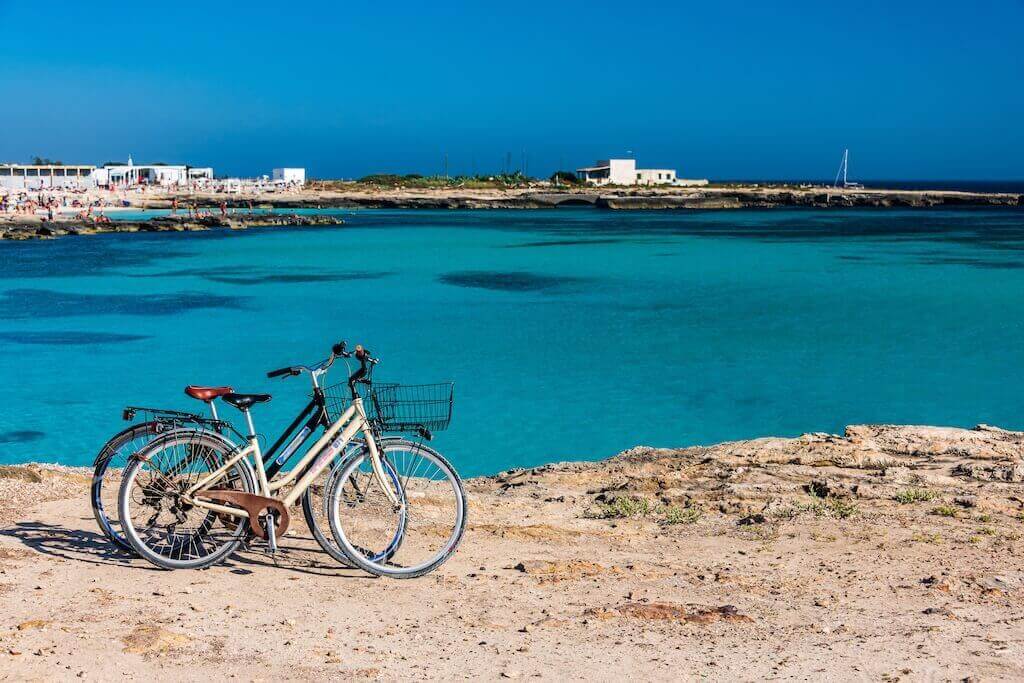
The best way to explore Favignana is on a bike. The flat roads that lead to hidden beaches and quiet corners. Bikes are easy to rent in the main town, and the island’s compact size means you can cover a lot of ground in a day without much effort.
To visit Favignana, take a ferry or hydrofoil from Trapani, on Sicily’s western coast. The crossing takes about 30 to 60 minutes, with multiple departures daily, especially in summer.
You can also visit Favignana on a boat tour from Trapani. I recommend this Cruise to Favignana and Levanzo with Lunch. The tour starts with a quick boat ride and free time on Favignana island to get a taste of what it’s like. Afterward, you’ll visit a few other islands and swimming spots.
Ustica
Location: Off the northern coast of Sicily
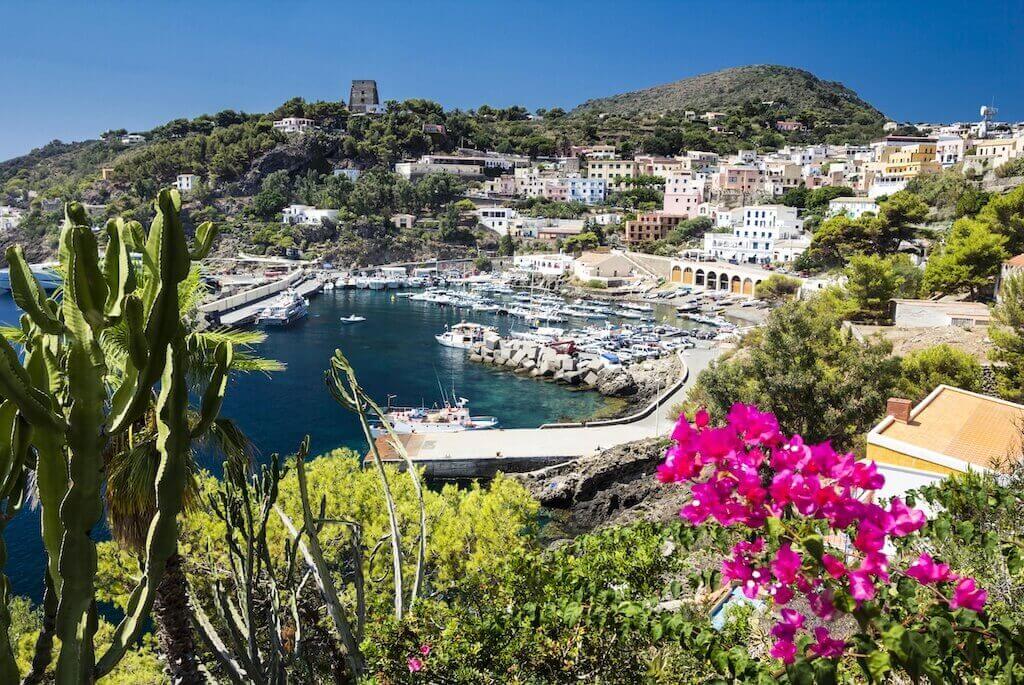
Ustica is a tiny volcanic island famous for its underwater marine reserve, making it a great place to visit for divers. Its small village offers a perfect base. You will find family-run restaurants and a laid-back vibe, ideal if you like the idea of exploring Sicily’s lesser-known gems.
Snorkeling and diving in Ustica’s clear waters will give you the chance to admire vibrant marine life and unique underwater rock formations. You can also explore the island on foot to reach the panoramic spots.
You can get to Ustica via ferry or hydrofoil from Palermo. The trip takes 1.5 to 3 hours, depending on the vessel type. Ferries operate year-round but are more frequent in the summer months.
Lampedusa
Location: Southernmost island of Italy, between Sicily and Tunisia in Africa
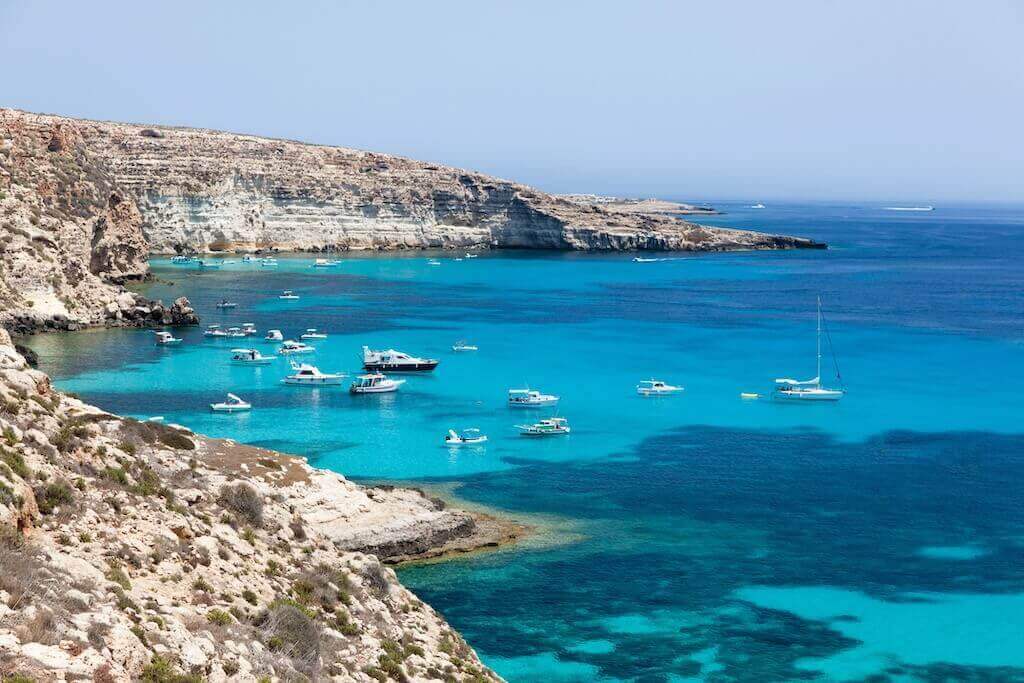
As the southernmost island of Italy, Lampedusa is closer to Africa than Europe, giving it a unique character.
The island’s most famous beach, Isola dei Conigli (Rabbit Island), is regularly ranked among the best in the world for its clear waters and white sands. It can get really packed in the summer months as this is a popular holiday destination for Italians.
Beyond its famous beaches, Lampedusa has rugged cliffs and hidden coves that are fun to explore. You can rent a scooter or a small boat to roam around the island and appreciate its unique mix of Mediterranean and North African influences.
You can fly directly to Lampedusa from several Italian cities, including Milan, Palermo, Catania, and Rome, especially during the summer when flights are more frequent. Alternatively, ferries run from Porto Empedocle near Agrigento, with a crossing time of about 8 to 10 hours.
Once in Lampedusa, check out this Yacht Excursion, Swimming Stops, and Typical Lunch. It’s a really fun activity and the best way to get out in the water.

Conclusions On The Best Islands In Italy
Italy’s islands are as fun to visit as its other more popular Italian landmarks, each offering a unique experience in the Mediterranean or Adriatic seas.
You might find yourself enchanted by the colorful streets of Burano, the dramatic volcanic scenery of Stromboli, or the serene wilderness of Asinara. Just as the cities in Italy surprise and delight with their diversity and charm, so too do these islands.
As you plan your travels, consider exploring these lesser-known gems—each a distinct paradise that adds a special touch to your future Italy travels.
PIN IT!


Claudia Tavani
Claudia Tavani was born and raised in Sardinia, and after moving between the United States and the United Kingdom, she's now back living in her hometown, Cagliari. She's a travel blogger and certified travel designer who loves planning trips and publishing guides, travel tips, and packing lists so that you don't have to. Owner of Strictly Italy, cat mom to Minnie. Loves pizza, hiking, archeology, cities, beaches, swimming, and running. Hates peppers.