
Looking for what to eat in Rome? I go there all the time, and I will share all the best food in Rome.
Italy has some of the best food in the world, and I’m not just saying that because I’m a proud Italian. Italian food has been recreated all around the world; I’d bet that every one of you reading this right now has been to an “authentic” Italian restaurant outside of Italy (hint: there aren’t that many).
The truth is, no one can do Italian food like Italians. Sampling local cuisine, from pizza to pasta to street food and more unique dishes, is one of the best reasons to visit Italy. And Rome is one of the best places to start.
If you are visiting Rome for the first time, you are probably wandering what to eat in Rome. Don’t worry, I am here to tell you.
I grew up with a lot of Roman cuisine because my dad is from Viterbo, a city near Rome, and my grandma would make classic Roman dishes all the time. My grandma passed on these dishes to my mom so that he wouldn’t miss them when my dad moved to Sardinia.
Before I start sharing all the food in Rome that you should try during your trip, let me underline that food in Italy isn’t all the same. It’s very region-dependent, with distinct variations between the northern, central, and southern areas. Don’t go to Rome expecting to find lasagne, or you’ll be disappointed!
If you’re interested in Italian food, you have to read my article, Must-Try Traditional Italian Food By Region. It breaks down all the most popular foods in each region, so if you’re traveling outside of Rome, you’ll know what to expect elsewhere.
As you know, I was born and raised in Sardinia, but I have traveled all over Italy and lived in Rome for several months. So I thought I’d help you uncover the secrets of all the must eat in Rome and share my ultimate guide on what to eat in Rome.
First time in Rome? Don’t worry! My posts The Best Things To Do In Rome and The Best Tips For Visiting Rome will help you plan your trip.
What To Eat In Rome – Pasta Dishes
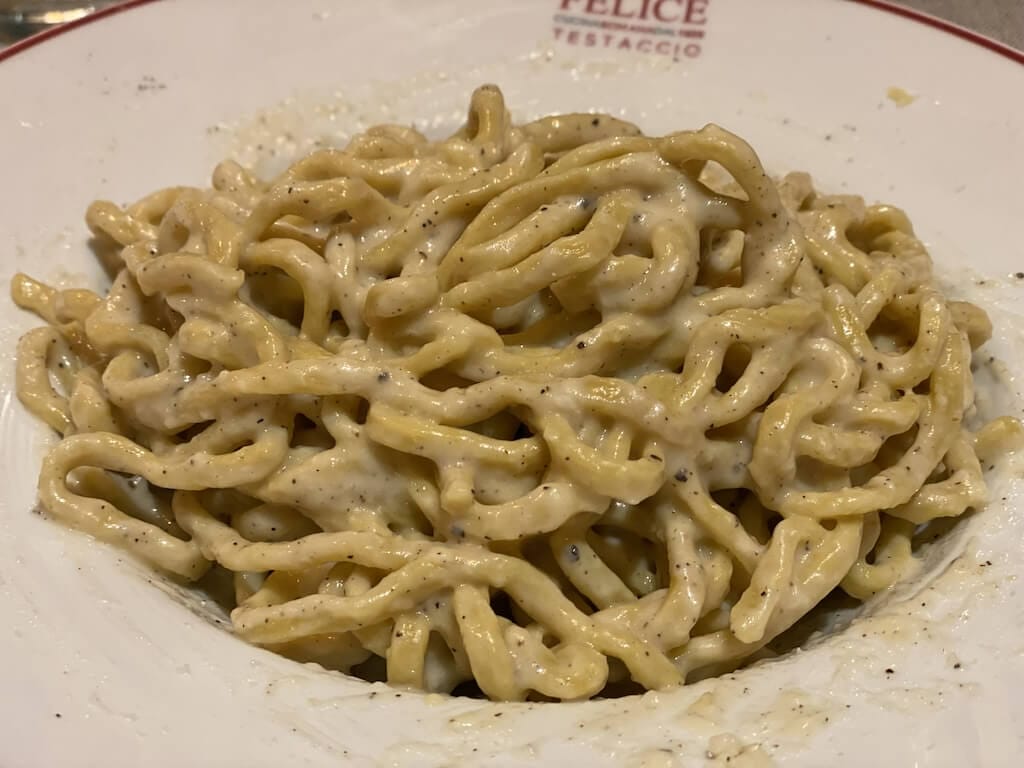
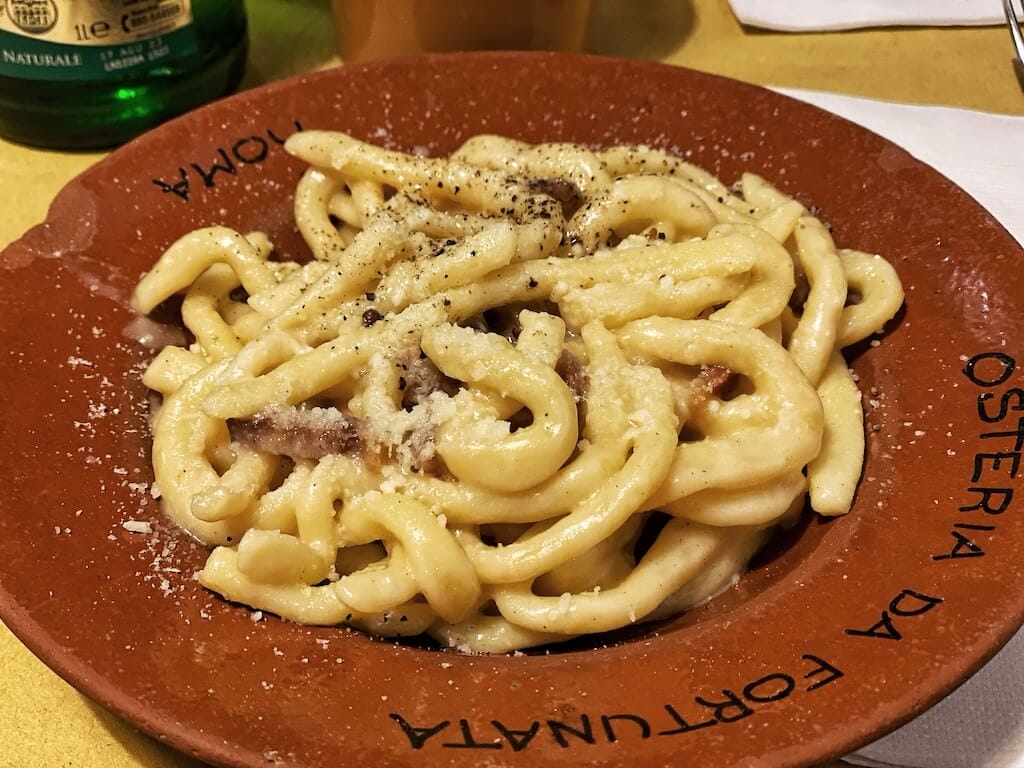
Cacio e Pepe (the cheese and pepper classic)
The name of this dish translates simply to “cheese and pepper,” and that’s exactly what this dish celebrates. Just three ingredients—spaghetti (or occasionally tonnarelli, but honestly any pasta will do when you make it at home), pecorino romano cheese, and freshly ground black pepper—create pure magic on your plate.
Don’t let the simplicity fool you, though; making authentic cacio e pepe is an art form that even experienced home cooks struggle to master (FYI, I manage to make my own!).
The secret lies in the technique. Pecorino cheese is carefully mixed wit
h just the right amount of pasta cooking water to create a creamy sauce without any butter or cream (additions that make us Italians cringe).
When done right, each strand of pasta is coated in a silky, peppery sauce that perfectly balances the sharp, salty punch of the sheep’s milk cheese with the warmth of black pepper.
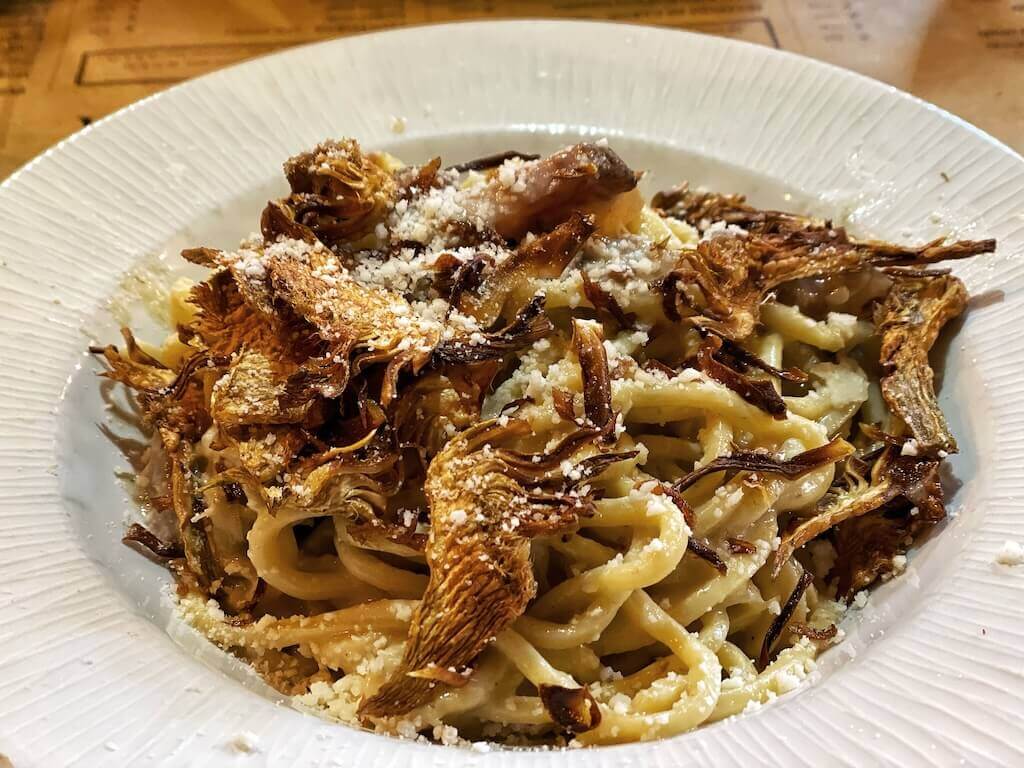
PRO TIP: Read the menu for seasonal variations of cacio e pepe. Depending on the season, you may find other ingredients added to the basic sauce, such as fried artichokes (my absolute favorite) and even zucchini flowers (more of a summer variation). A more contemporary variation is shrimp tartare with a hint of grated lemon peel.

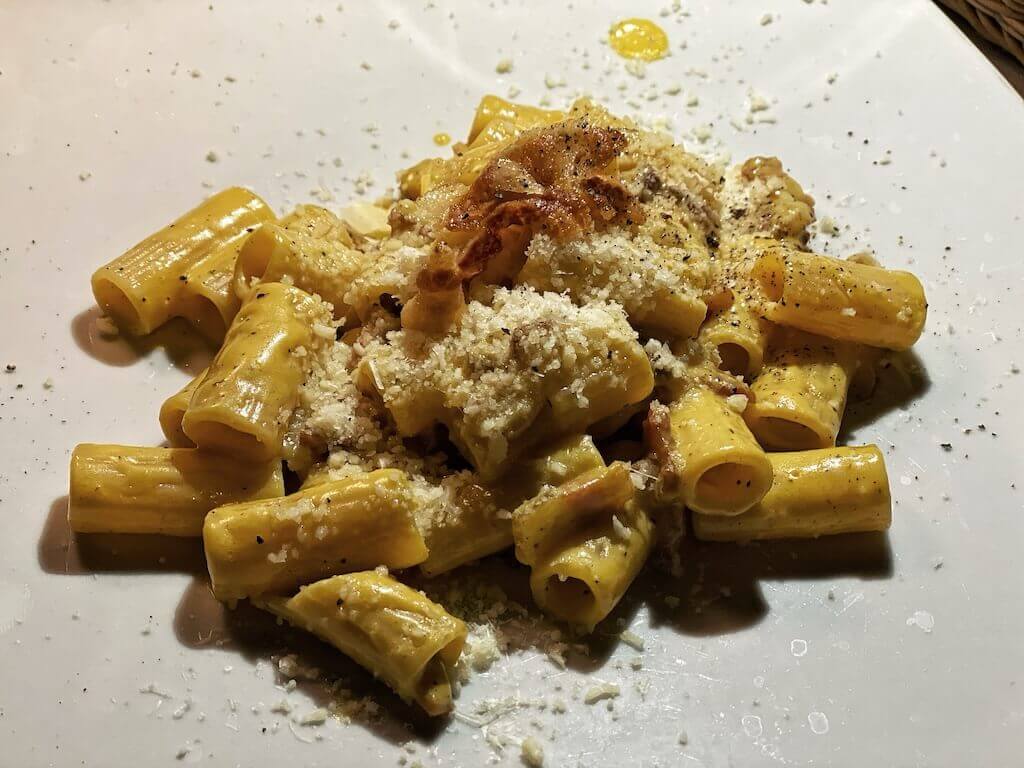
Carbonara (eggs, guanciale, and tradition)
Despite its relatively recent appearance in Roman cuisine (there are no records of carbonara before World War II), this dish has become the undisputed king of Roman pasta.
While several origin stories circulate, including one involving American soldiers craving eggs after the war, what’s undeniable is Carbonara’s ability to captivate anyone who tries it: it’s definitely what to eat in Rome if it’s your first time in the city (personally I have it every time I go!).
The authentic version relies on four key ingredients: egg yolks, pecorino romano cheese, black pepper, and guanciale (cured pork cheek). While some Italian regions substitute pancetta (my mom prefers it that way, but don’t tell anyone), in Rome, guanciale is non-negotiable—its rich, intense flavor is essential to the dish’s character.
The technique requires careful timing: the hot pasta is tossed with crispy guanciale and its rendered fat, then quickly mixed with beaten egg yolks and pecorino. The residual heat gently cooks the eggs just enough to create that signature sauce without scrambling.
I’ve seen international restaurants outside of Italy serving a pasta, bacon, cream, and cheese dish labeled “carbonara”. Don’t be fooled; this is nothing like what carbonara is meant to be like; it’s just yet another misconception about Italian food. I have more on my article Common Misconceptions About Italian Food (From A Local).

Amatriciana (tomato-based goodness)
While this sauce originated in the small town of Amatrice in Lazio, it has become a must eat in Rome.
Traditionally served with bucatini—long, hollow spaghetti that challenges even experienced pasta-eaters—amatriciana sauce combines the depth of guanciale with the brightness of tomatoes and a hint of heat from dried chilies.
Let me clear up a common misconception: authentic amatriciana never includes onions (a modification that makes Roman food purists gasp in horror). The sauce’s beauty lies in its balance of just a few ingredients: tomatoes, guanciale, a splash of white wine, chili flakes, and a generous showering of pecorino romano.

Gricia (carbonara’s cousin)
Think of gricia as carbonara without eggs or cacio e pepe with guanciale. This lesser-known Roman pasta dish actually predates carbonara and has deep roots in Lazio’s shepherding tradition.
The dish combines pecorino romano cheese with crispy guanciale, creating a savory, slightly salty pasta that lets you truly appreciate these two cornerstone ingredients of Roman cuisine.
While tourists often overlook gricia in favor of more famous dishes, it’s a favorite among locals for its pure, straightforward flavors. I am a massive fan of it!
Spaghetti Cicoria e Pecorino (bitter greens meet comfort food)
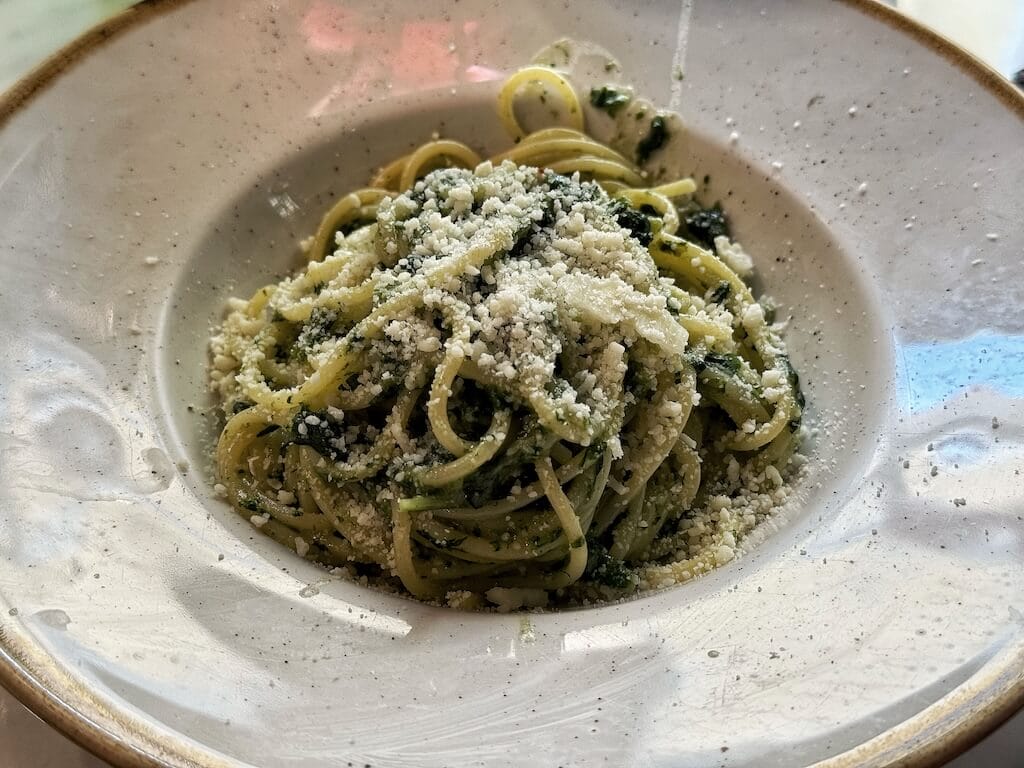
When Romans want to combine their love of pasta with their passion for bitter greens, they turn to spaghetti cicoria e pecorino.
This dish perfectly balances chicory’s slight bitterness with the sharp, salty punch of pecorino romano cheese. The greens are traditionally sautéed with a tiny bit of garlic and peperoncino before being tossed with perfectly al dente spaghetti.
A generous pinch of pecorino romano finishes the dish, creating a satisfying combination that shows Rome’s ability to transform simple ingredients into something extraordinary.
Of course, this is a seasonal dish as cicoria isn’t always available – but if you are visiting Rome in the right season, it’s a must try!
Rigatoni con la Pajata (for the adventurous eater)
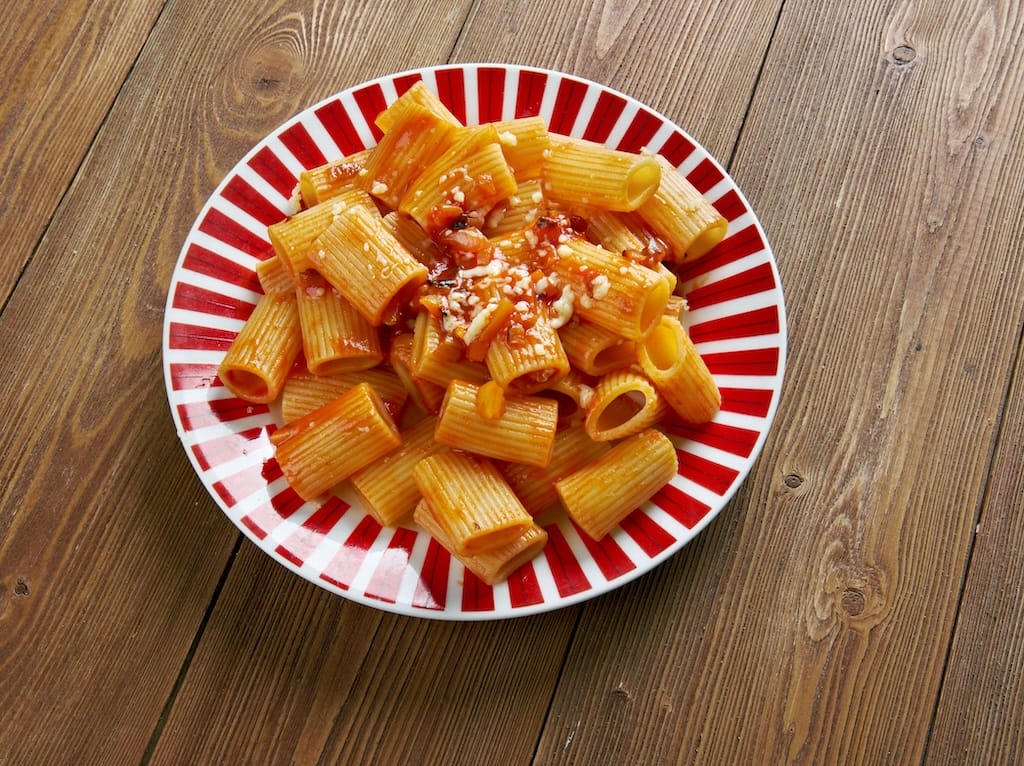
If you’re looking for a truly unique Roman experience, rigatoni con la pajata is about as authentic as it gets. This dish comes from Rome’s quinto quarto (fifth quarter) cuisine—a cooking style that evolved from using leftover or less valuable cuts of meat.
When Europe’s largest slaughterhouse operated on the banks of the Tiber River, workers were often paid with these leftover cuts, leading them to create ingenious dishes that eventually became local delicacies.
The main ingredient is pajata—the intestines of an unweaned calf, still containing partially digested milk. These are slowly braised in tomato sauce until tender, then served with rigatoni and pecorino romano.
The result is surprisingly delicate and creamy, though admittedly not for everyone. This dish is only really available in Rome, and not often on the menu (definitely not in touristy places), making it a must-try for adventurous eaters interested in traditional local specialties.
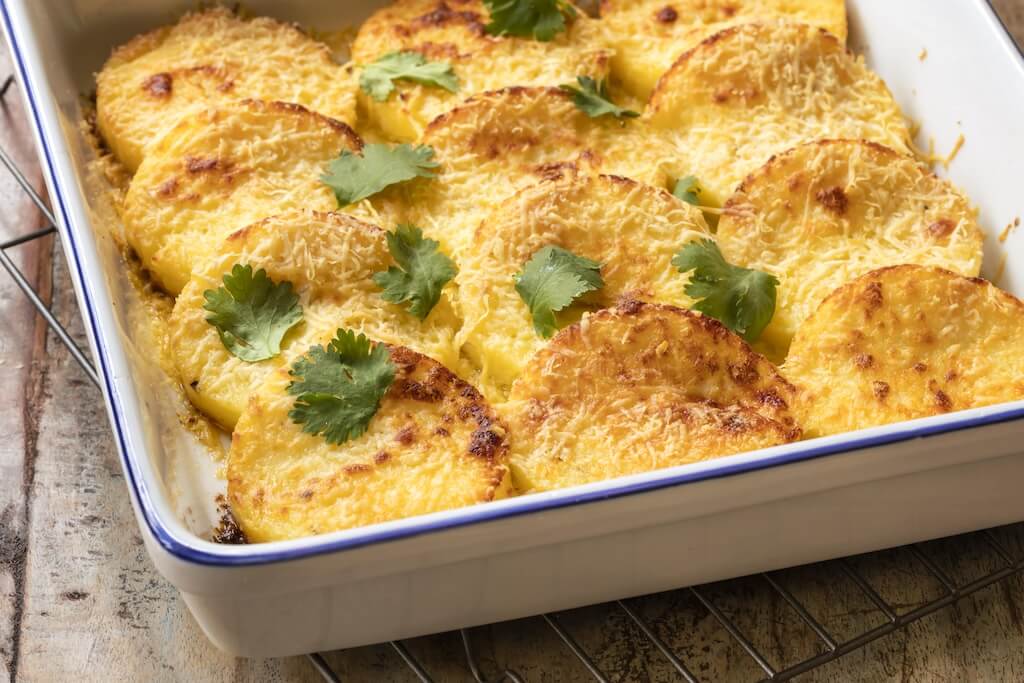
Gnocchi alla Romana (not your typical gnocchi)
When ordering gnocchi alla Romana, don’t expect the potato dumplings you might know as gnocchi—this Roman variation is completely different.
These are flat, round discs made from semolina flour cooked in milk, then baked with plenty of butter and parmesan until golden and crispy.
The texture is creamy inside, with a satisfying crunch on the outside. This hearty, comforting dish is particularly popular during colder months, though it’s becoming harder to find in restaurants. If you spot it on a menu, it’s worth ordering for a taste of traditional Roman home cooking.

Must Eat In Rome – Main Courses
Saltimbocca alla Romana (veal, prosciutto, and sage)
The name saltimbocca means “jump in your mouth,” and this classic Roman dish lives up to its name. It’s one of those food in Rome that my grandma taught my mom how to make, and I grew up eating it (and love it).
At its core, it’s a simple but elegant preparation: thin veal cutlets are layered with prosciutto and fresh sage leaves, then quickly pan-fried in butter and white wine. The result should be served piping hot, and you’ll want plenty of bread to soak up the rich, buttery sauce.
This is one of those dishes where the quality of the ingredients makes all the difference—when done right, each component complements the others perfectly.
Coda alla Vaccinara (oxtail stew)
Another triumph of Rome’s “quinto quarto” tradition, this hearty oxtail stew is slow-cooked to perfection. The meat is braised with a rich mixture of vegetables, tomatoes, red wine, and spices until it literally falls off the bone.
The long, slow cooking process transforms this tough cut into something remarkably tender while creating a deep, flavorful sauce.
Like many Roman dishes, this one calls for a good piece of bread to scoop up every last bit of the sauce—what we locals call fare la scarpetta (literally, making the little shoe).
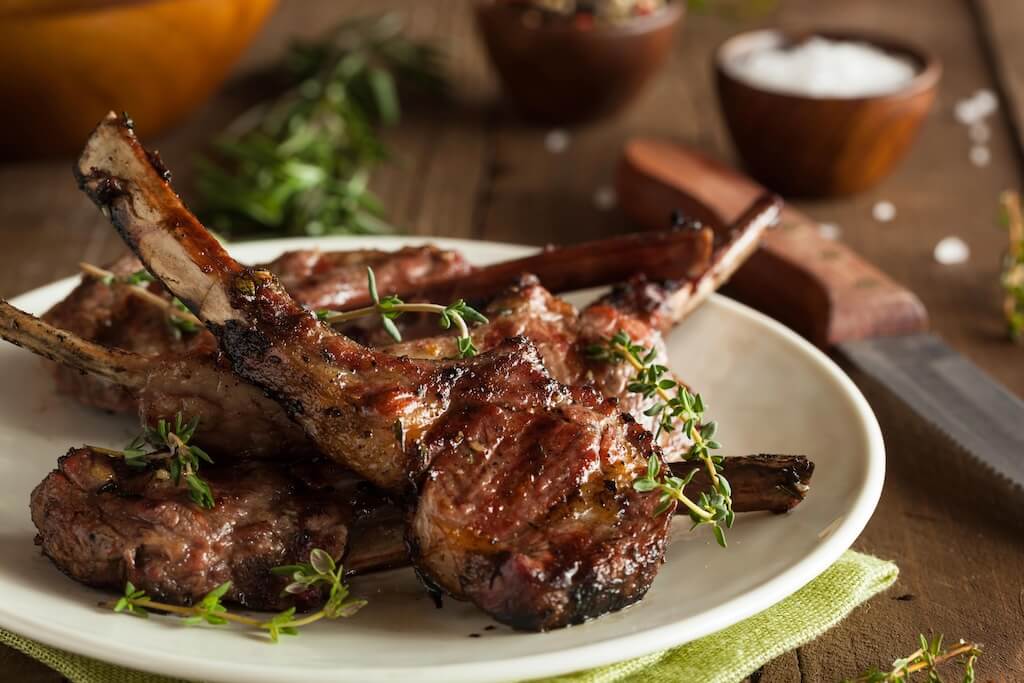
Abbacchio alla Scottadito (lamb chops, Roman-style)
Scottadito means “burn your fingers”—a playful name from the traditional way of eating these lamb chops with your hands while they’re still sizzling hot.
This seasonal dish (lamb is usually found on Italian tables during the fall and winter months) features milk-fed lamb cutlets seasoned with olive oil, salt, pepper, and herbs (typically a mixture of marjoram, mint, and thyme) and then quickly seared.
The preparation is minimal to let the quality of the meat shine through.
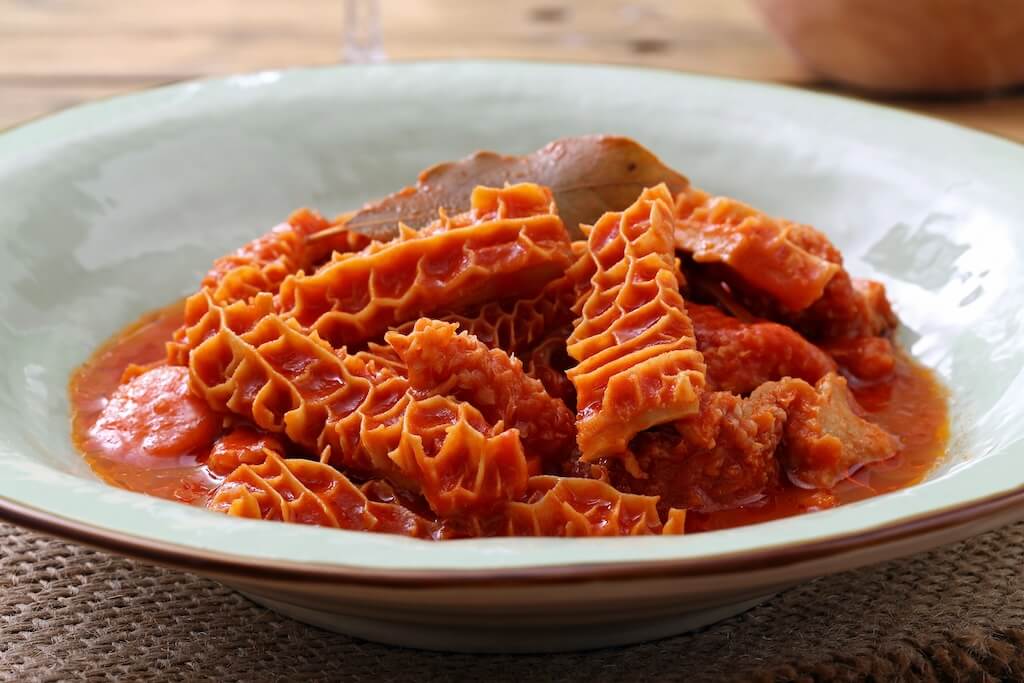
Trippa alla Romana (tripe for the brave)
Here’s another testament to Rome’s waste-not-want-not culinary tradition. Trippa, or tripe (the honeycomb-textured cow’s stomach), is slowly simmered in a sauce of tomatoes, carrots, onions, and aromatic herbs until tender.
The dish is always finished with a generous shower of pecorino romano cheese. While the chewy texture might take some getting used to, this protein-rich, low-fat dish has been sustaining Roman workers for generations, particularly in the city’s historic working-class neighborhoods, where it remains a beloved comfort food.
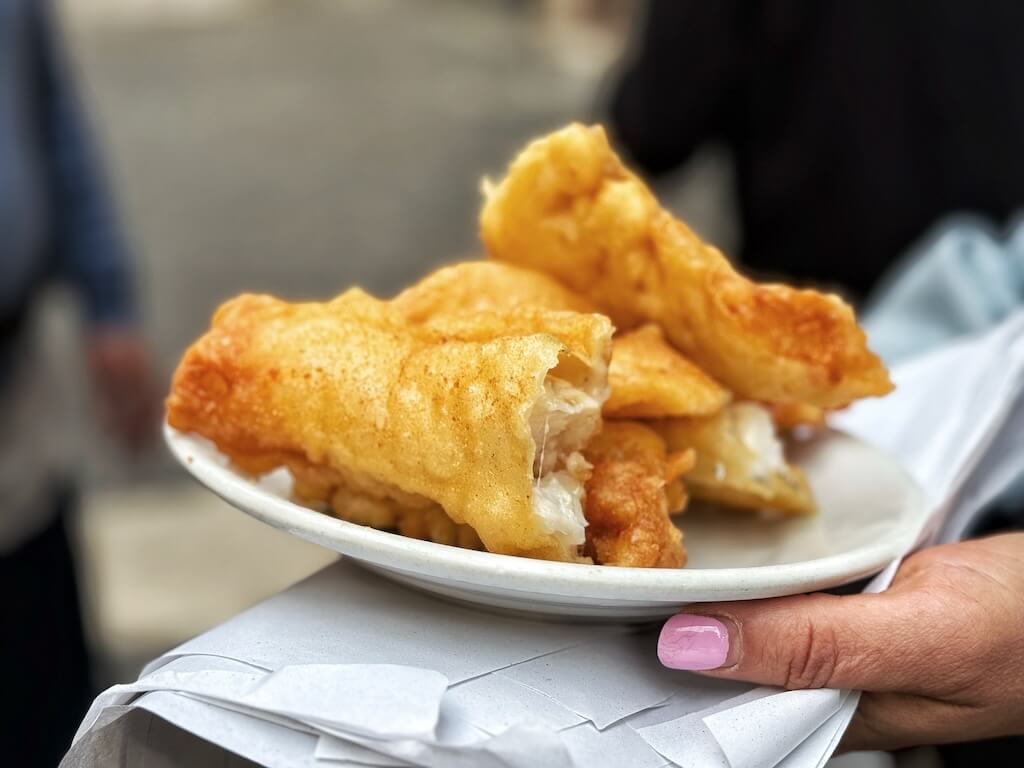
Baccalà (salt cod, Roman Jewish style)
A cornerstone of Roman Jewish cuisine, baccalà is cod dipped in a light, airy batter and fried until perfectly crispy.
For the most authentic version, head to Dar Filettaro a Santa Barbara near Campo de Fiori, where they’ve been perfecting this dish since 1872—just look for the iconic “filetti di baccalà” sign, which has become one of Rome’s most photographed culinary landmarks.
The crispy exterior giving way to flaky, tender fish inside represents the pinnacle of Roman-Jewish culinary craftsmanship. Or you could simply eat it because it’s delicious.
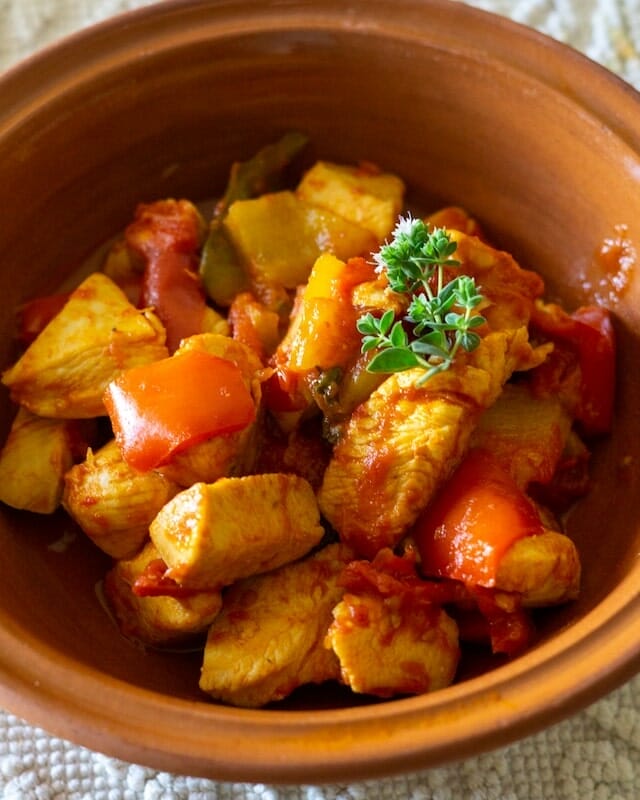
Pollo con i Peperoni (chicken and peppers)
This hearty dish combines chicken pieces and bell peppers in a rich preparation that showcases Rome’s love for simple, flavorful cooking. The chicken is pan-seared with olive oil, salt, and pepper, then simmered with wine and ripe tomatoes.
Meanwhile, bell peppers are separately cooked with onions and tomatoes before being combined with the chicken for a final melding of flavors. Originally a late summer dish when peppers were abundant in the Roman countryside, it’s now enjoyed year-round.
It is particularly popular during the Ferragosto holiday in August when many Roman families gather for festive meals.
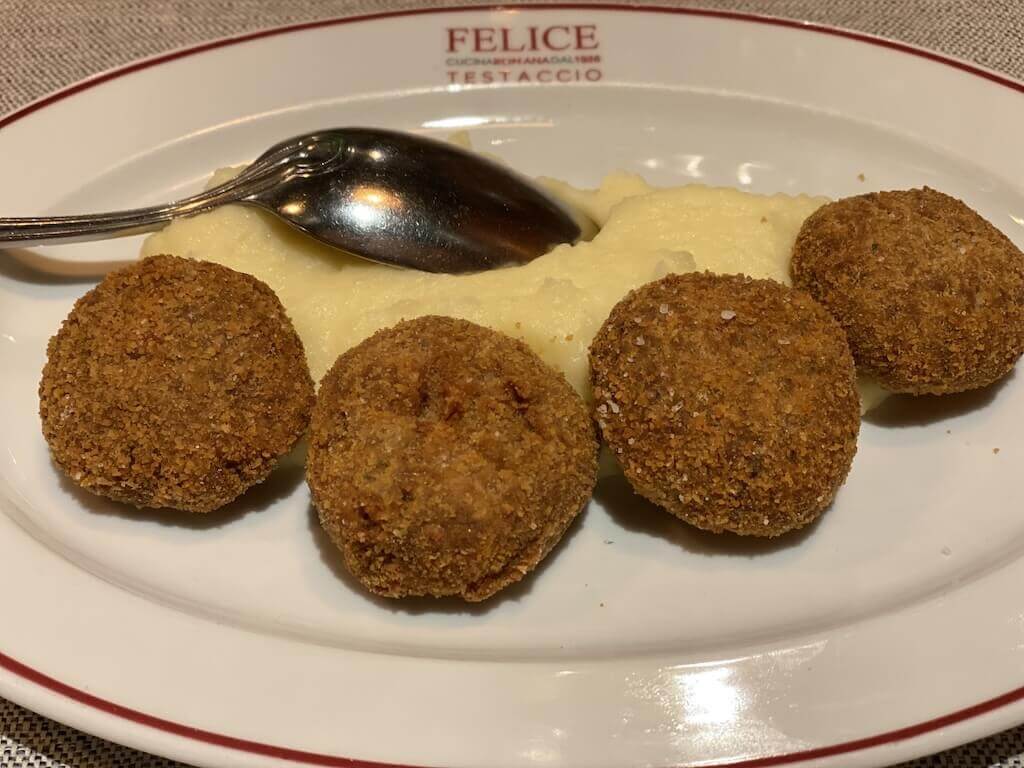
Polpette di Bollito (resourceful Roman meatballs)
These clever meatballs represent the resourceful side of Roman cuisine, transforming leftover boiled meat into something entirely new and delicious.
My grandma was a master at making these. She’d save the meat from making broth, finely chop it, and mix it with parmesan, eggs, and breadcrumbs before frying it to golden perfection.
She taught my mom this recipe when my dad moved to Sardinia, knowing how much he loves them. The secret, as my grandma always said, was in chopping the meat by hand rather than using a grinder, giving the polpette their distinctive texture.
Today, this is a popular street food in Rome (you will find it small holes in the wall in Trastevere that sell them), but you can also find the polpette di bollito at the best trattorie in the city.
Vegetarian Things To Eat In Rome
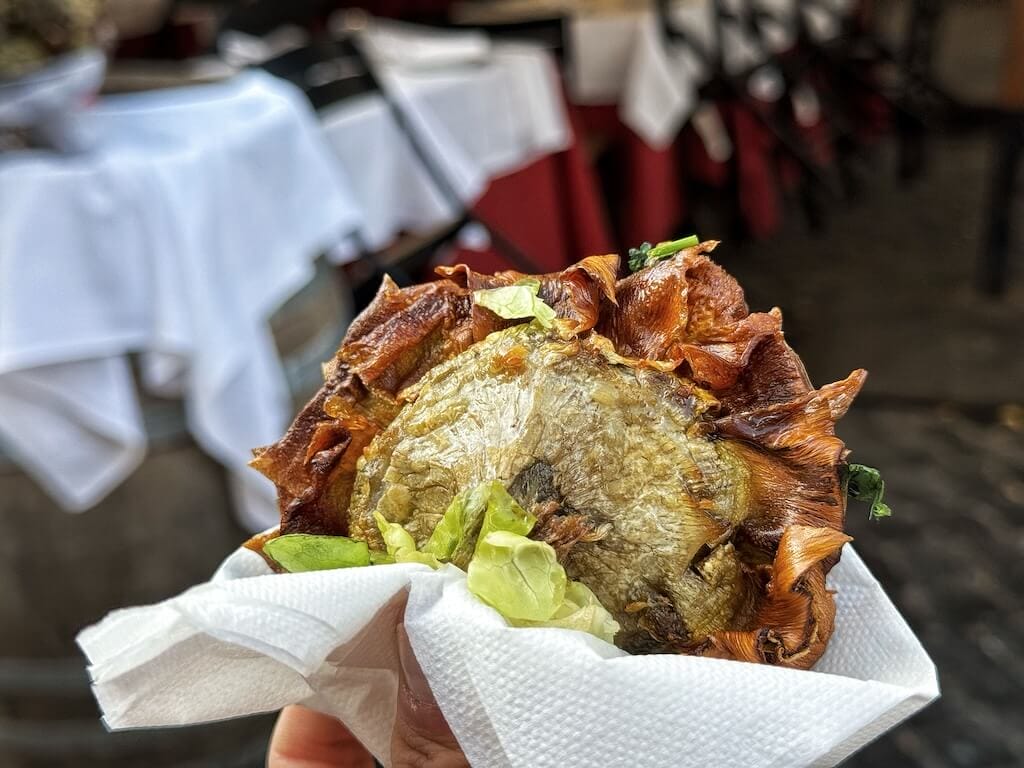
Carciofi alla Giudìa (Jewish-style fried artichokes)
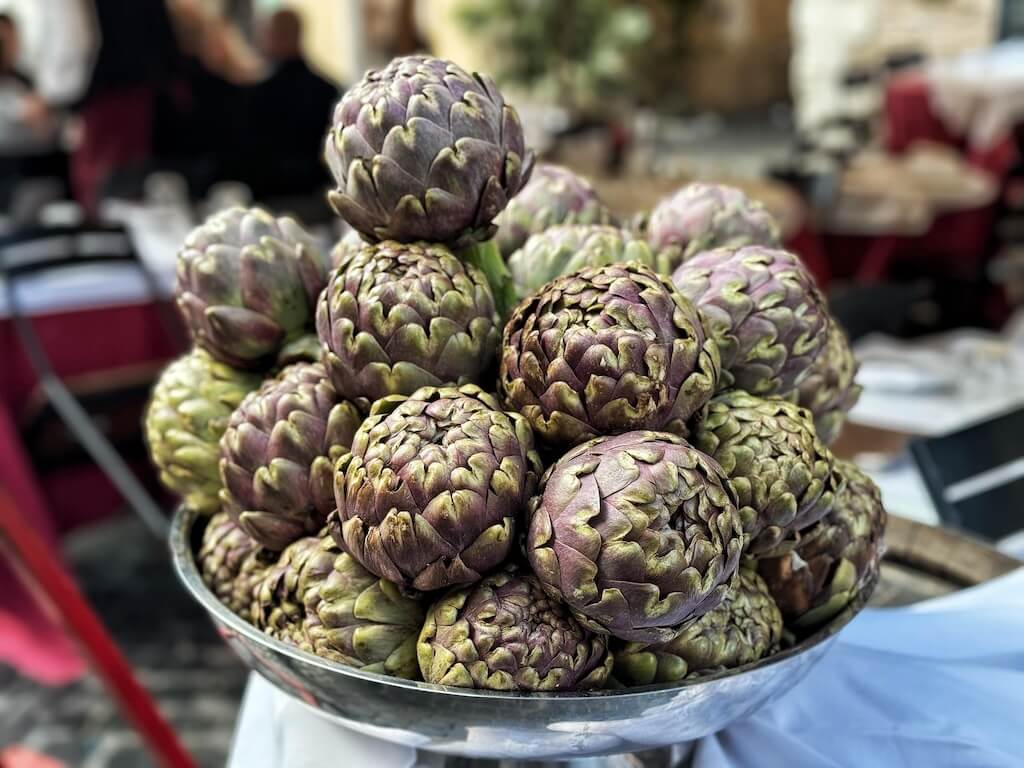
If you’re visiting Rome between January and May, you’re in for a special treat. That’s artichoke season, when the prized local variety, carciofo romano, takes center stage.
The most famous preparation is carciofi alla giudìa, a signature dish from Rome’s Jewish culinary tradition. Originally served during Hanukkah, these artichokes are prepared using a distinctive technique. They’re carefully flattened until they resemble golden sunflowers, then deep-fried twice.
This double-frying process creates the perfect contrast—impossibly crispy outer leaves that crunch like chips while the heart remains tender and succulent. The most authentic versions are found in the restaurants of the Jewish Quarter.
The Jewish Quarter is an exciting part of Rome, so I would consider joining a guided food tour through the neighborhood. Not only will you get a local experience of the best food, but you’ll also learn a lot more about its history. I recommend this Jewish Ghetto & Campo de Fiori by Night Food Wine Tour. It’s a really popular tour that’s perfectly designed for foodies and history buffs.
If you’re visiting the Jewish Quarter, you should also read my article, An Expert Guide To Visiting The Jewish Ghetto In Rome. In the post, I discuss the best things to see and do there and provide some background information.
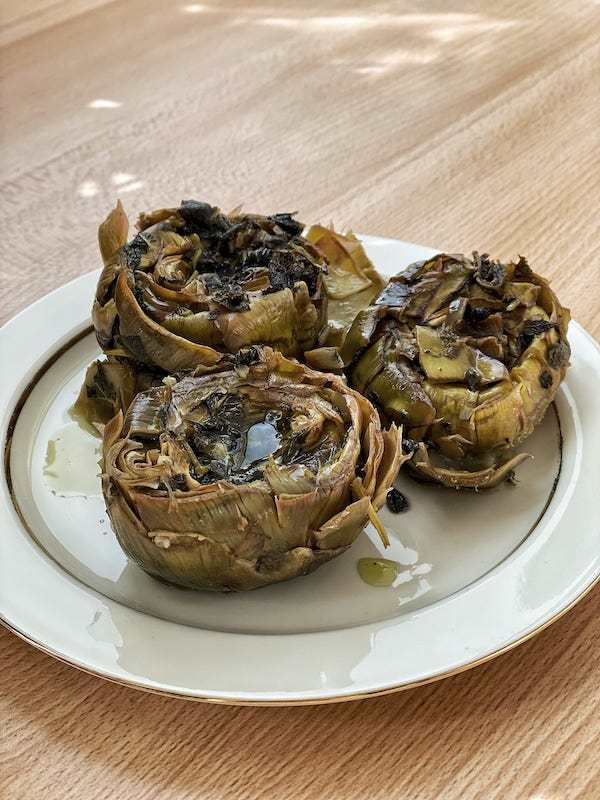
Carciofi alla Romana (braised artichokes)
While Jewish-style artichokes get a lot of attention, carciofi alla Romana holds a special place in many Romans’ hearts—myself included. When I lived in the United States, I would specifically request this dish from my mother whenever I visited home for Christmas.
These artichokes are prepared by stuffing them with a finely minced mixture of garlic, parsley, mint, oregano, and pepper, then slowly braised in olive oil and water. The result is an artichoke that quite literally melts in your mouth, having absorbed all the flavors of the herbs while becoming incredibly tender.
It’s a perfect example of how Roman cuisine can transform a simple vegetable into something extraordinary.
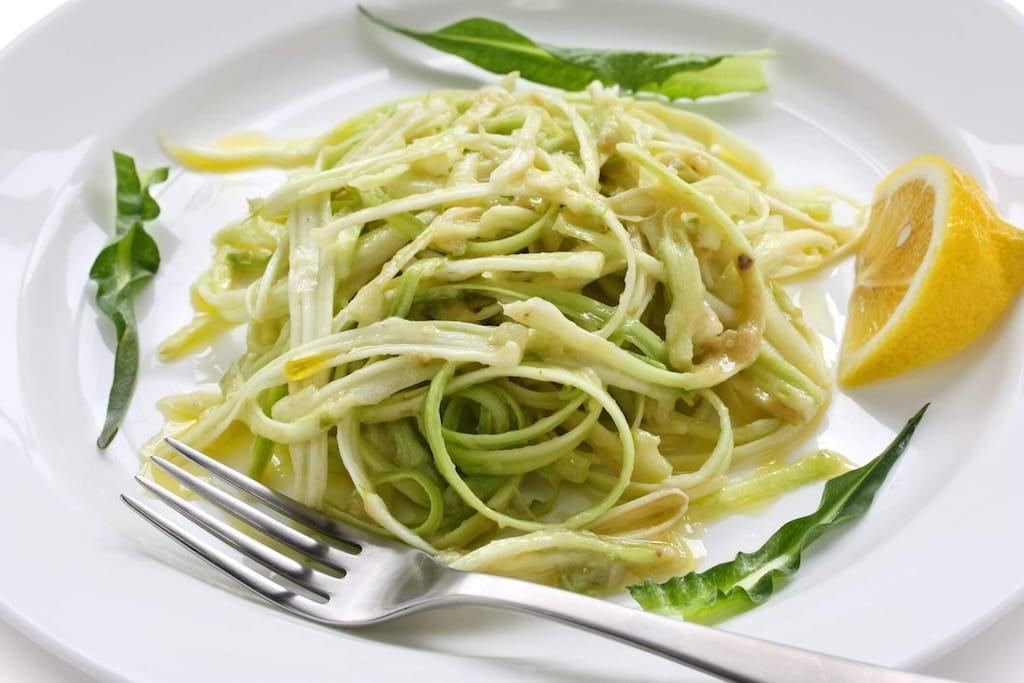
Puntarelle (chicory salad with anchovy dressing)
Don’t let the “salad” designation fool you—this isn’t your typical bowl of greens. Puntarelle consists of the crisp, white shoots of Catalonian chicory, skillfully cut into thin strips that curl in cold water, creating their characteristic shape.
The dressing makes this dish distinctly Roman: a punchy combination of olive oil, garlic, and anchovies that perfectly complements the slightly bitter crunch of the chicory. While you can request it without anchovies for a vegetarian version, most Romans would argue that the anchovy dressing is essential to the dish’s character.
When in season, puntarelle is found on menus throughout Rome, particularly in traditional trattorie.
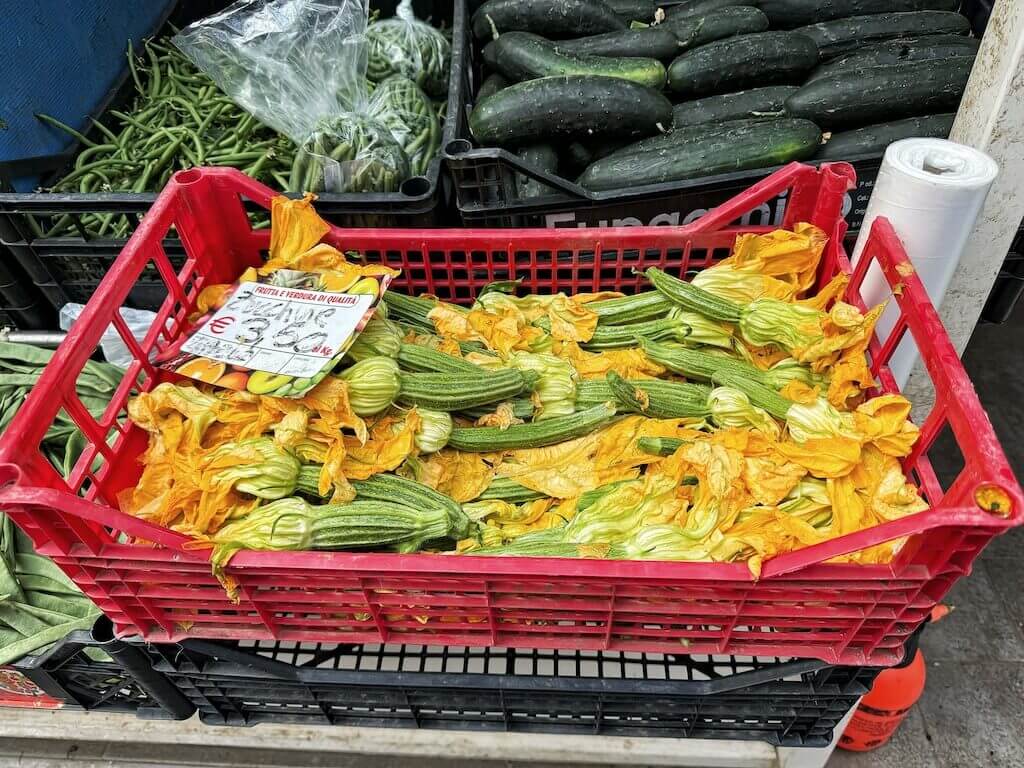
Fiori di Zucca (stuffed zucchini flowers)
Summer in Rome brings these delicate golden blossoms to restaurant menus across the city. Zucchini flowers are stuffed with mozzarella and anchovies, then dipped in a light batter made with ice-cold sparkling water or beer and fried until crispy.
The contrast between the crunchy exterior and the melted, savory filling makes these flowers a beloved Roman antipasto. Many restaurants will happily prepare them without the anchovies if you’re vegetarian. Here’s a secret: my mom makes them without any stuffing and they are full of flavor!
PRO TIP: Fiori di zucca are delicious on just about anything. Try them on pizza (best without tomato sauce) or on pasta (ie on a cacio e pepe).
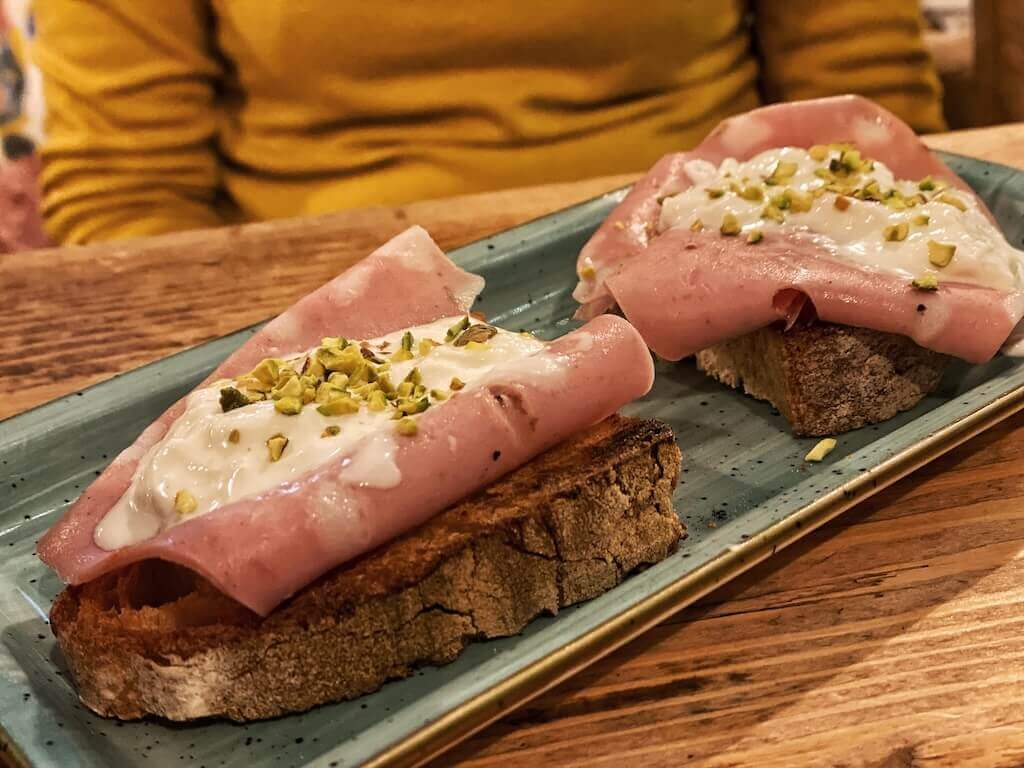
Bruschetta
This deceptively simple dish originated in the region between Lazio and Tuscany—in fact, its name comes from the local dialect word “bruscare,” meaning “to roast over coals.”
In its simpler form, bruschetta consists of grilled bread rubbed with garlic and drizzled with high-quality extra virgin olive oil.
However, the most popular version in Rome tops the grilled bread with fresh, chopped tomatoes and basil. The key to great bruschetta lies in the quality of its ingredients—crusty local bread, ripe tomatoes, and excellent olive oil make all the difference.
PRO TIP: Many places now offer more elaborate (and delicious) versions of bruschetta. My favorite has mortadella and burrata – which however isn’t vegetarian!
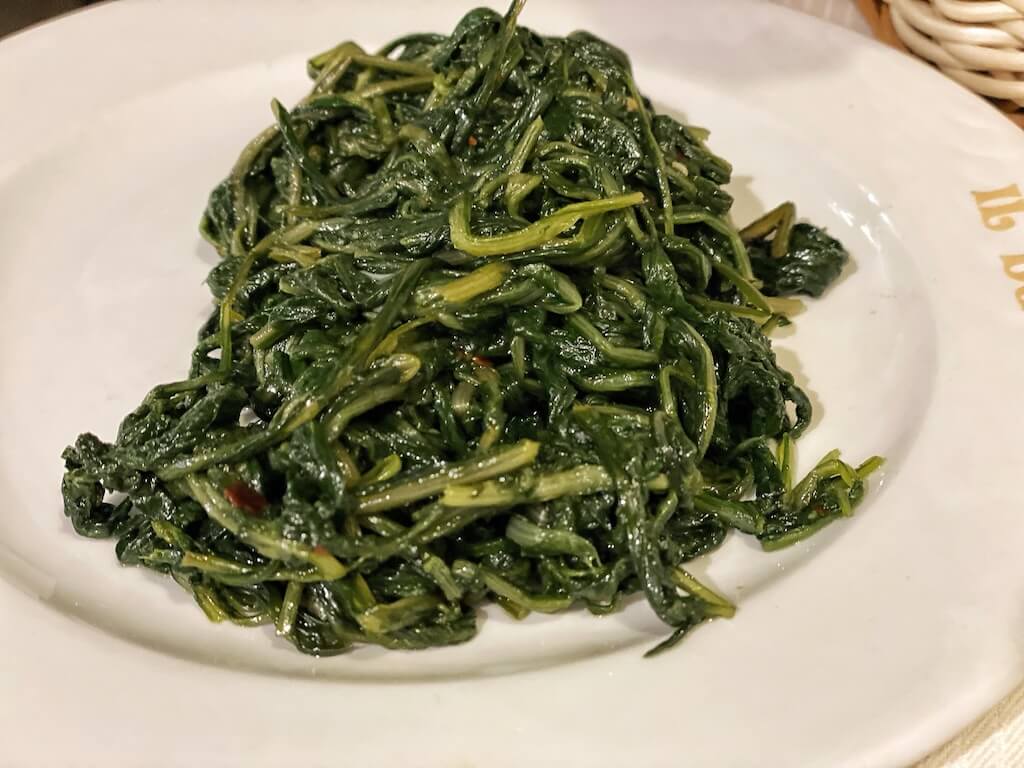
Cicoria ripassata (sautéed chicory)
This quintessential Roman side dish appears most frequently on trattoria menus during the cooler months. The chicory is first boiled, then ripassata (re-cooked) in a pan with olive oil, garlic, and peperoncino (chili peppers).
The result is a pleasantly bitter green with a hint of heat that perfectly complements heavier main courses. It’s a light, flavorful, and naturally vegan dish that showcases Rome’s vegetable preparation skills.
Vignarola (spring vegetable stew)
This seasonal stew celebrates the best of Rome’s spring vegetables, traditionally combining the last artichokes of the season with the first fava beans and peas of spring.
The vegetables are gently stewed with spring onions, lettuce, and white wine, creating a bright, fresh dish that Romans eagerly anticipate each year. Traditionally, small pieces of guanciale add depth to the dish, though many modern restaurants offer vegetarian versions.
You’ll only find authentic vignarola on menus for a few weeks in spring, making it one of Rome’s most exclusive seasonal dishes.

Famous Street Food In Rome
Supplì (the king of Roman street food)
The undisputed star of street food in Rome, supplì al telefono is a masterpiece of crispy-meets-creamy textures. These rice croquettes are made by cooking rice in a rich meat and tomato sauce (honestly though my mom makes it without meeat), letting it rest overnight, then mixing it with eggs and parmesan.
Each supplì is crafted by flattening the rice mixture, tucking in a piece of mozzarella, rolling it into an oval shape, and coating it in breadcrumbs before frying. The name al telefono (telephone style) comes from the stretchy strand of melted mozzarella that forms when you break the supplì apart. It resembles an old-fashioned telephone cord.
While the classic version reigns supreme, you’ll now find creative variations like pumpkin risotto with bechamel. Look for supplì at takeaway spots or as an appetizer before pizza.
Pizza al Taglio (slice it your way)
Unlike Naples‘ round personal pizzas, Rome’s pizza al taglio (pizza by the cut) is served in rectangular slices and sold by weight. The crust is distinctively Roman—thin and crispy rather than soft and chewy.
While you’ll find countless toppings, locals often opt for the simplest version with olive oil, tomato sauce, mozzarella, salt and oregano. For a true Roman experience, try it with mortadella, or choose classic combinations like or ham with artichoke hearts.
The pizza is cut to your preferred size and usually served folded in paper, perfect for eating while walking through Rome’s historic streets.
Pizza al taglio is also quite common in Cagliari, my hometown!
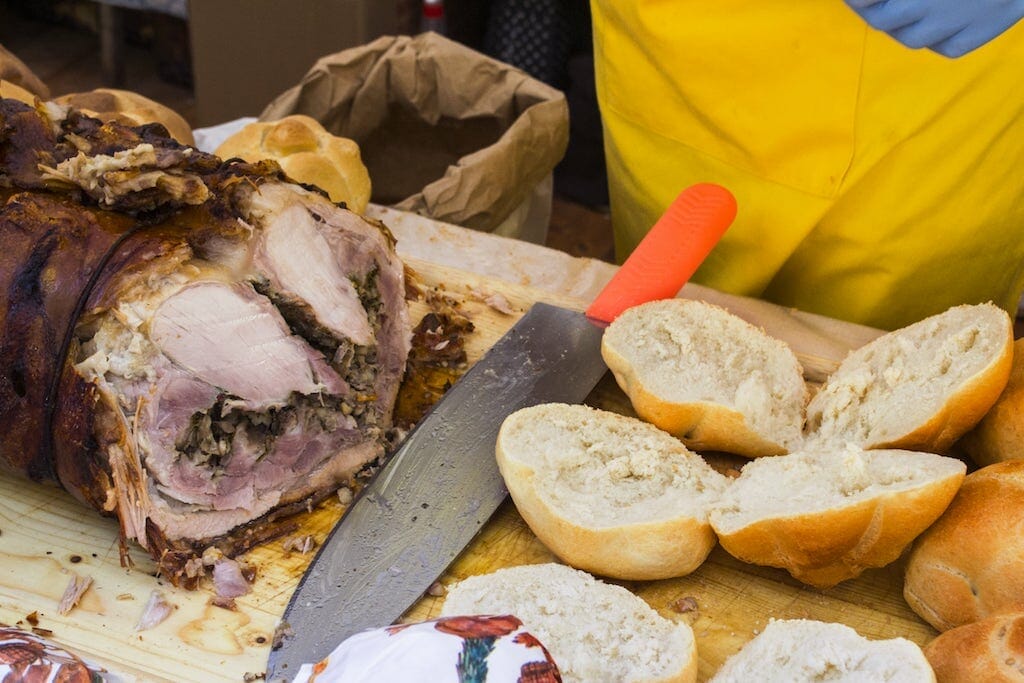
Porchetta Sandwich (roast pork perfection)
Originally from Ariccia in the Castelli Romani hills (a lovely place to visit near Rome, by the way), porchetta has become a beloved street food in Rome.
This masterpiece of butchery involves a whole deboned pig seasoned with herbs and salt, then slow-roasted on a spit until the meat is tender and the skin transforms into crackling.
The authentic Roman porchetta sandwich requires nothing more than fresh, crusty bread and thin slices of meat—no condiments needed. While vendors might offer additional toppings, locals know the perfectly seasoned meat speaks for itself.
Trapizzino (the modern Roman pocket)
This innovative Roman street food, invented in 2009 by pizza maker Stefano Callegari, has already become a modern classic. A trapizzino is essentially a pocket of fluffy pizza dough filled with traditional Roman ingredients. Think polpette al sugo (meatballs in tomato sauce) or slow-cooked eggplant.
The original location in Testaccio still draws crowds (though Testaccio is still one of Rome’s best kept secrets to foreign travelers); now, you’ll find these triangular pockets of goodness throughout the city. It’s a perfect example of how food in Rome continues to evolve while respecting traditional flavors.

Pizza Bianca (simple, salty goodness)
While less famous internationally than pizza al taglio, pizza bianca holds a special place in Roman hearts (and in mine).
This flatbread is the essence of Roman simplicity—stretched thin, dimpled with fingertips, and dressed with olive oil and sea salt. The result is crackling crisp on the outside and light and airy inside, with the perfect balance of salt and oil.
Many Romans have a warm piece of pizza bianca with mortadella for a quick lunch or enjoy it as an afternoon snack. For the best experience, look for it fresh from the oven at traditional forni (bakeries) throughout the city.
The best way to experience the best of Rome’s street food scene is with a guided tour, like this Trastevere or Campo de Fiori & Ghetto Street Food Tour. You choose your starting point; both are great options, and enjoy five tastings, beer and wine samples, and a local guide to tell you all about the neighborhood’s history.
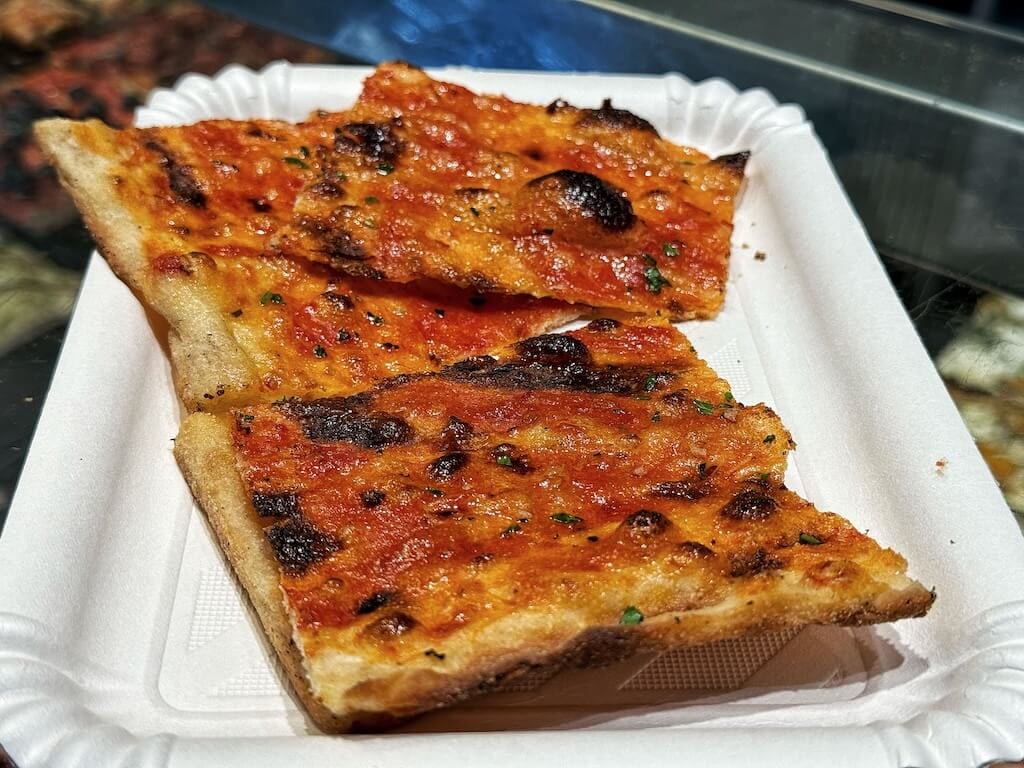
Pizza Romana Scrocchiarella (the crispy Roman pizza)
While Naples might be famous for its soft, pillowy pizzas, Rome’s signature pizza style—the scrocchiarella—takes pride in being paper-thin and delightfully crispy.
The name itself comes from the Roman dialect word ‘scrocchiare,’ meaning ‘to crackle,’ which is exactly what this pizza does when you bite into it.
The dough is stretched incredibly thin and cooked at a slightly lower temperature than Neapolitan pizza, resulting in that characteristic crackly crust that Romans adore. Traditional toppings are lighter than what you might find in Naples (it’s literally just tomato sauce, olive oil, salt and oregano), allowing the crust to maintain its satisfying crunch.
Rome’s Sweet Treats
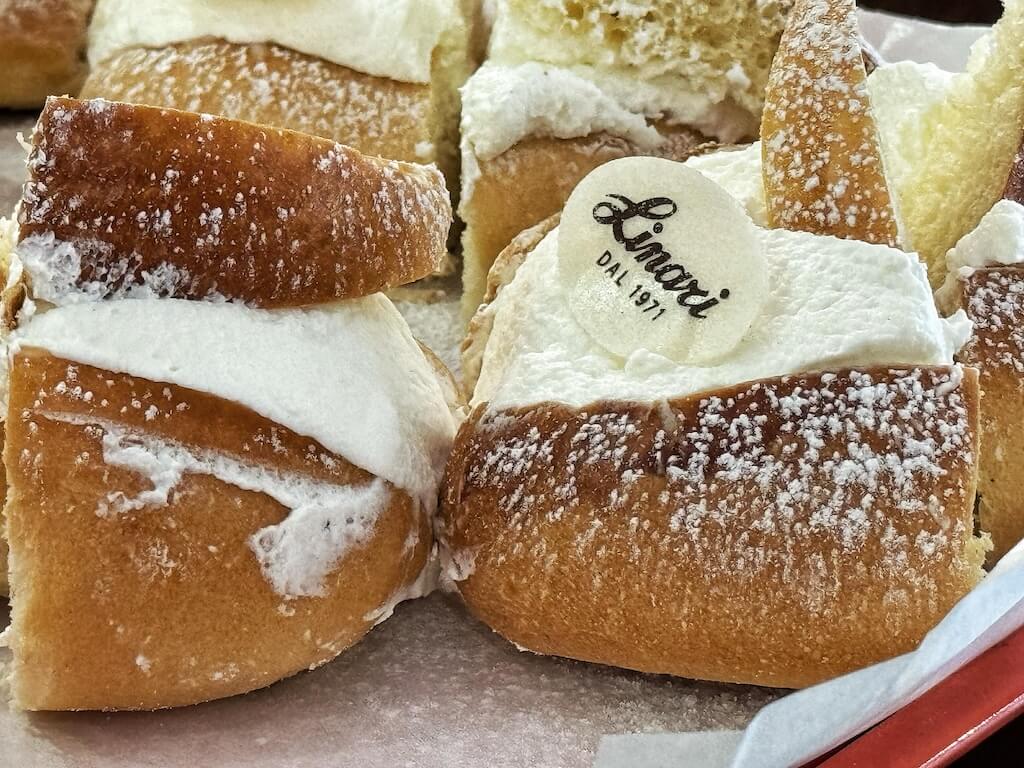
Maritozzi (cream-filled breakfast buns)
If you’re looking for a truly Roman breakfast experience, skip the cornetto and opt for a maritozzo instead. These soft, slightly sweet buns are sliced and generously filled with fresh whipped cream—and by generously, I mean the cream should practically spill out the sides.
The name has a charming history: traditionally, these treats were given by grooms-to-be to their fiancées, hence maritozzo (roughly meaning “almost husband”). While originally only served during Lent, their popularity convinced Roman bakeries to make them year-round.
For the most authentic version, head to Regoli, a historic pasticceria near Vittorio Emanuele metro station, where they’ve perfected this cream-filled delight.
You might be surprised to learn that Italian breakfast differs from American, Canadian, and even some other European breakfasts. If you want to know more, read my article, A Guide To The Perfect Italian Breakfast.
Crostata di Ricotta e Visciole (ricotta and sour cherry tart)
Think of this as Rome’s own version of cheesecake but with a fascinating twist from the city’s Jewish culinary tradition. Originally served during Hanukkah, this dessert has become a year-round favorite in traditional Roman restaurants.
The tart combines a buttery pasta frolla (shortcrust pastry) with a filling of smooth ricotta cheese and tart visciole (sour cherries). The contrast between the creamy ricotta and the slightly sharp cherries, all wrapped in that delicate pastry, creates a distinctly Roman and perfectly balanced dessert.

Roman Jewish Cookies (almond-scented treasures)
The Jewish bakeries of Rome have been perfecting their cookie recipes for generations, particularly their almond-based creations.
These cookies, ranging from simple crescents dusted with powdered sugar to more elaborate preparations with candied fruits, are a testament to Rome’s Jewish culinary heritage. The almond paste provides a rich, complex flavor that’s somehow both delicate and intense.
While you can find them year-round in the Jewish Quarter’s bakeries, they’re particularly popular during holidays like Passover. My personal favorite is chewy amaretti, which practically melts in your mouth with its perfect balance of sweet almond flavor and subtle spices. They don’t look nearly as good as they taste – but I promise you it’s impossible to have just one!
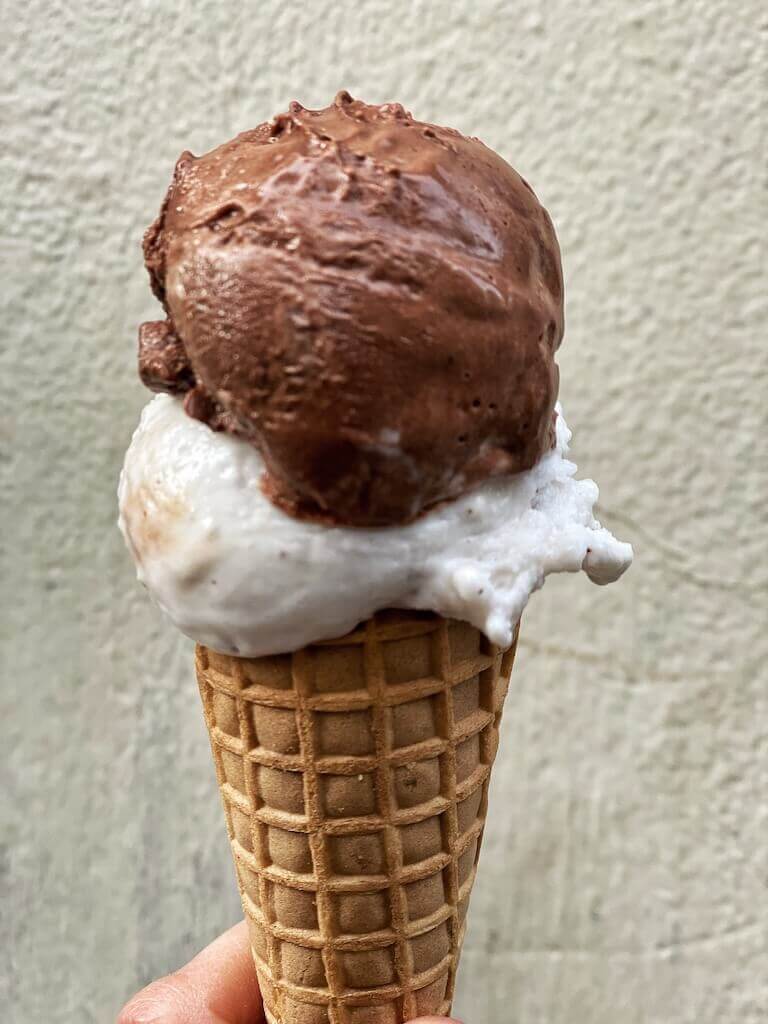
Gelato (and how to spot the real deal)
While gelato isn’t unique to Rome, knowing how to find authentic gelato artigianale (artisanal gelato) in a city full of tourist traps is an essential skill.
Here’s what locals look for: real artisanal gelato melts quickly and is stored in covered metal bins, often below counter level (not piled high in bright colors).
Quality gelaterie typically offer fewer flavors (around 15 or so, at times even less) because they make everything fresh in small batches. If you spot 40 flavors of unnaturally bright gelato displayed in mountainous peaks, keep walking.
The real stuff has intense but natural colors and flavors that come from actual ingredients, not artificial additives. Remember: a smaller selection usually means better quality.
Grattachecca (roman-style shaved ice)
A quintessential Roman summer refreshment, grattachecca has been keeping locals cool since the 1930s. Unlike standard shaved ice or granita (which you may know already), true grattachecca is made by hand-scraping a large block of ice (originally harvested from the mountains and stored underground) into fine, snow-like crystals.
The ice is then topped with your choice of sweet syrups and pieces of fresh fruit. Traditional kiosks, called chioschetti, still dot the city, especially along the Tiber River. Each stand has signature combinations, but classics include lemon, mint, and cherry syrups, often topped with fresh coconut chunks or seasonal berries.
While tourists flock to gelaterias, you’ll find Romans lining up at their favorite grattachecca stand on hot summer evenings.
Best Places To Eat In Rome
Avoiding tourist traps in Rome is an art form worth mastering. The tourist traps aren’t an official scam in Italy, but they might as well be. You’re paying for food that isn’t nearly as good as it should be.
Be wary of restaurants directly facing major monuments, especially those with hosts outside trying to beckon you in or menus featuring photos of the food. A general rule of thumb in Rome is to skip restaurants where someone’s trying to convince you to enter— the best restaurants let their food do the talking.
So you may be wondering where to eat in Rome…
I say, venture down narrow side streets where you’ll find authentic trattorias filled with local voices. Look for places where the menu is handwritten or changes daily, and don’t be put off by a cramped or simple interior—some of the best food in Rome comes from its most unassuming spots.
One of my personal favorites, Trattoria Vecchia Roma near Vittorio Emanuele, was a local secret for years before word got out about its incredible pasta. Ask your hotel’s reception staff where they eat—not where they send tourists, but where they actually go for lunch.

Best Food Tours In Rome
One of the best ways to decode Rome’s rich culinary landscape is through a guided food tour. These tours offer more than just tastings—they connect you with local experts who can explain the history behind each dish, show you which establishments locals frequent, and teach you how to order like a Roman.
Now, I am almost a local in Rome since I go there so often and used to live there, and regardless of that I still go on food tours in Rome, because they are so much fun, and enlightening.
The best food tours in Rome will help you distinguish authentic trattorias from tourist traps, teach you about seasonal specialties, and introduce you to dishes you might not be brave enough to try alone.
Some tours even include cooking classes where you can learn to make pasta from scratch, while others focus on specific aspects like Rome’s historic street food or evening wine and appetizer culture.
The best food tours in Rome are an investment in your entire Rome dining experience—the knowledge you gain will help you eat better for the rest of your stay. Plus, you’ll learn about the cultural significance of Roman cuisine and the stories behind iconic dishes, making every subsequent meal more meaningful.
There are honestly so many different types of food tours in Rome. Here are some of my top recommendations for food tours (that I have tried and loved):
Tastes & Traditions of Rome: Testaccio Food and Market Tour—This is the most well-rounded food tour in Rome. It includes dishes from every meal, including breakfast, lunch, and snacks. It also includes 14 food tastings across 8 family-run establishments and ventures more off-the-beaten-path.
There’s also this Trastevere & Historic Center VIP Food Tour with Rooftop Spritz—This food tour also aims to take you into more local territory away from tourist traps. You’ll enjoy 8 different tastings across 7 small restaurants and eateries, including some drinks and access to a private rooftop where you’ll learn to make your own spritz.
If you’re looking for something classic, I recommend this Rome: Food Tour and Wine Tasting in a Traditional Trattoria—It’s an exciting walking tour through Rome’s historic center where you’ll learn more about the city, try some of the best food in Rome, and explore with a local.
If you’d like to try a cooking class, I recommend this Traditional Pasta-Making Class with a Local Chef. You’ll make pasta from scratch and taste some delicious gelato paired with a glass of Italian wine. If you’re visiting Italy for the food, this is a must-do Rome activity.
Now, my final tips on eating in Rome!

Tips For Eating In Rome
Understanding Roman mealtimes
One of the quickest ways to spot a tourist trap is to see people eating outside of what we Italians consider normal eating times. Locals follow a distinct dining schedule worth adapting to for the best experience.
Lunch never starts before 12:30 pm, with most locals sitting down around 1:00 pm. Dinner is even later. Restaurants filling up with Romans won’t happen before 8:00 pm, with peak dinner time around 9:00 pm. You’re probably in tourist territory if you spot a busy restaurant serving pasta at 6:00 pm.
Seasonal eating in Rome
Romans take their seasonal ingredients seriously—it’s not just a tradition; it’s a way of life.
Each season brings its own specialties: artichokes reign from January to May, with Jewish-style artichokes becoming a citywide obsession. Summer brings zucchini flowers and tomatoes at their peak, perfect for pasta all amatriciana. Fall ushers in wild mushrooms and hearty meat dishes, while winter is the time for bitter greens and warming soups.
Watch for menu changes that follow these seasons. If a restaurant offers the same dishes year-round (or if you spot artichokes on the menu in July), it’s likely not using the fresh, local ingredients that make Roman cuisine special. True Roman chefs cook with what’s available at the market that morning, not what tourists expect to find.
Can’t decide when to go to Rome? My post When To Visit Rome is a helpful read if you are still in the deciding phase. And if you are stuck trying to figure out how long to stay there, my guide How Many Days In Rome Is Enough? will provide further guidance.
Ordering like a local
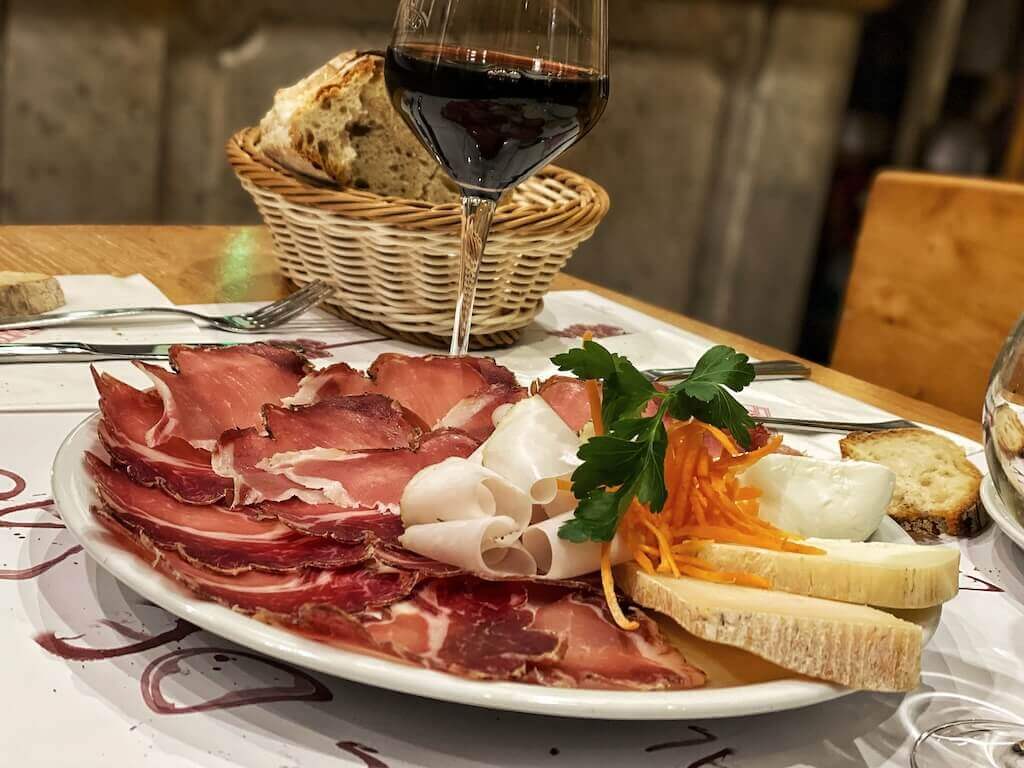
When in Rome, embrace the traditional meal structure. Start with antipasti (perhaps some supplì), followed by a primo (pasta) and then a secondo (meat or fish) with contorni (side dishes).
Don’t feel obligated to order every course. Romans often share plates or just enjoy a perfect pasta dish. And please, don’t ask for chicken with your pasta; it’s simply not done in Italy.
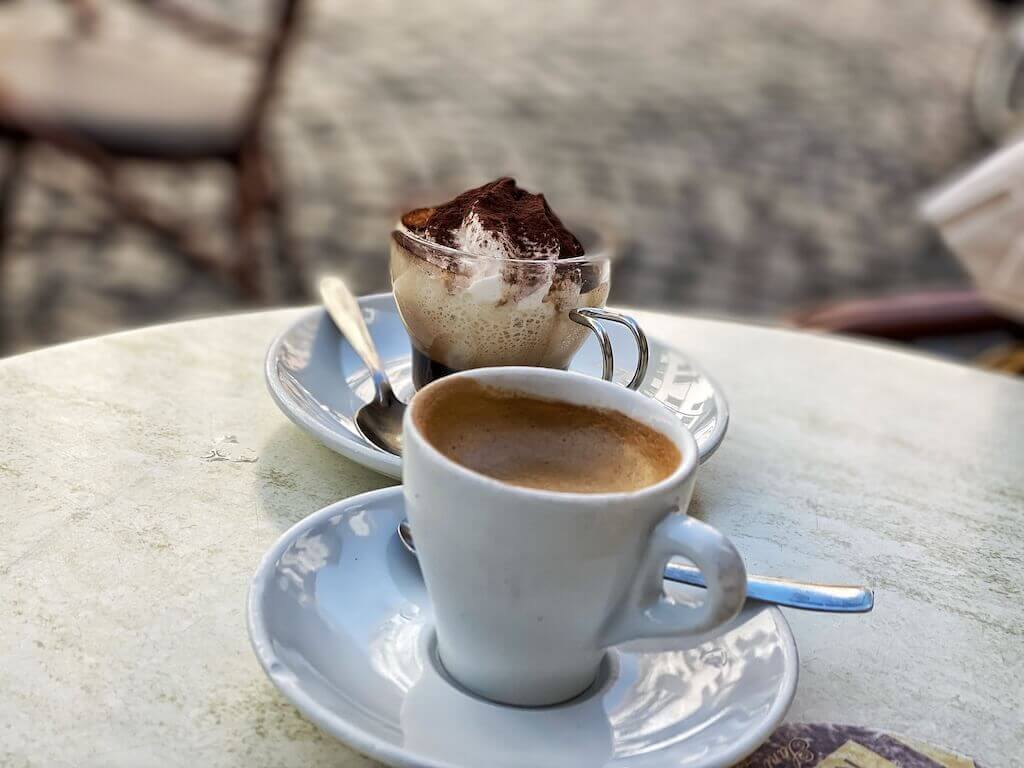
Also, skip the cappuccino after meals (and God forbid, with your meal) —it’s strictly a breakfast drink in Rome. Instead, end your meal like a local with an espresso or, if you need something gentler, a caffè macchiato (espresso with a touch of milk).
If you’re dining with Romans, you’ll notice they never rush their meals—dining is a social experience meant to be savored.
Tipping etiquette
Unlike in North America, tipping in Roman restaurants isn’t a strict requirement. Service is typically included in your bill as servizio (service charge) or coperto (cover charge). If these charges aren’t listed and you’ve had excellent service, leaving a 5-10% tip is appreciated but not expected.
In more casual establishments or for coffee at a bar, locals often round up the bill or leave a small coin or two. The key is to check your bill first—if service is included, no additional tip is necessary.
If you’re visiting Italy and planning to eat out at a restaurant, my article, Tipping In Italy: The Ultimate Guide, From A Local, is a must-read. It’s best to do a little research on this so you’re prepared and don’t spend unnecessary amounts at restaurants, cafes, bars, taxis, and other services.
Conclusions On What To Eat In Rome
I love food in Italy, and I especially love food in Rome. As you can see, it’s so much more than just pizza and pasta. There’s a complex variety of flavors, much of which is seasonal, ranging from season to season and neighborhood to neighborhood.
On top of all that, the food reflects Rome’s history beyond the typical myths and legends. The cuisine has evolved, keeping some important elements from the past, for example, carciofi alla giudìa from the Jewish Quarter and trippa alla romana, which goes all the way back to the slaughterhouse workers of the Testaccio district.
Even modern innovations like the trapizzino show how Roman cuisine continues to evolve while honoring its roots. What makes food in Rome exceptional isn’t just its flavors but how it tells the story of the city itself.
PIN IT!

Claudia Tavani
Claudia Tavani was born and raised in Sardinia, and after moving between the United States and the United Kingdom, she's now back living in her hometown, Cagliari. She's a travel blogger and certified travel designer who loves planning trips and publishing guides, travel tips, and packing lists so that you don't have to. Owner of Strictly Italy, cat mom to Minnie. Loves pizza, hiking, archeology, cities, beaches, swimming, and running. Hates peppers.