

Tuscia is one of the most beautiful and underrated parts of Italy. It’s home to the famous Civita di Bagnoregio, but most non-Italians have never heard of this part of Italy.
Unlike the administrative regions of Italy, Tuscia doesn’t have a hard border and primarily encompasses northern Lazio, southern Tuscany and parts of Umbria. The area is more characterized by its historical and cultural connections to the Etruscans.
My dad grew up in the Tuscia Viterbese (he was born and raised in Viterbo, the capital of Tuscia), and while he moved to Sardinia a long time ago, met my mom and started a family there, I still have a lot of family in Tuscia, so I visit all the time.
If you’ve decided to explore more off-the-beaten-path Italy, Tuscia is the place for you. In this Tuscia travel guide, I’ll share essential travel tips, like how to get there, how long to stay, and the best things to do in Tuscia.
If you wish to explore Tuscia a bit more in depth, consider joining one of these guided tours:
Now, let’s continue to discover the magical beauty of the Tuscia Viterbese.
Essential Tips For Visiting Tuscia
How to get to Tuscia
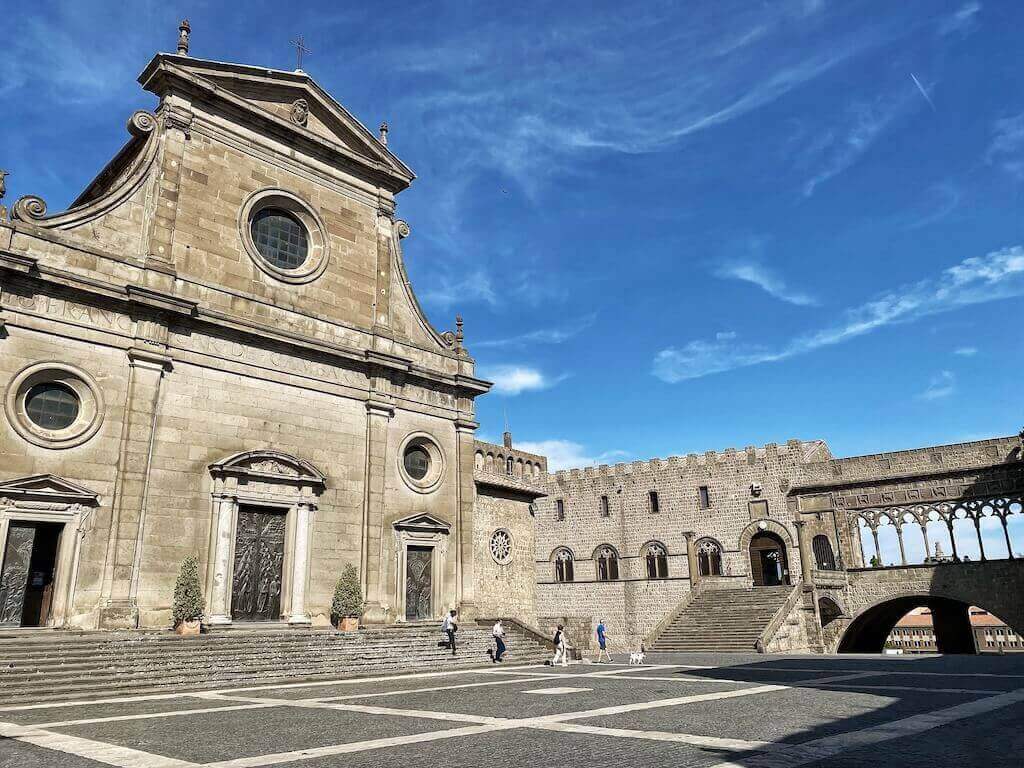
Tucked between Rome and Tuscany in northern Lazio, Tuscia is the historical region where the ancient Etruscans once lived.
It roughly covers the area around Viterbo, stretching from Lake Bolsena in the north to Tarquinia on the coast and from Orvieto in the east to the Mediterranean Sea.
While it’s just 90 minutes from Rome, this enchanting region feels worlds away from the capital’s busy streets.
Here’s how to get there.
By car
Honestly, renting a car is the only real way to explore Tuscia properly. I always rent a car when I visit: this region was made for road trips, with winding country roads connecting its medieval towns and hidden treasures.
From Rome, it’s a straightforward 1.5-hour drive north on the A1 motorway (one of Italy’s toll roads). Make sure you have an international driving permit if you’re coming from outside the EU—you’ll definitely need it here. While it might seem intimidating to drive in Italy, Tuscia’s roads are much calmer (though not as well kept) than Rome’s chaotic streets.
If you are going to rent a car in Italy, I recommend using Discover Cars. It’s a comparison site that allows you to pick the best car rental for your trip. I have used it in many places in Italy and outside of the country, and it never failed me!
By train
Trains are a great way to get around in Italy, but unfortunately, they are not your best bet here.
Tuscia is a historical region in central Italy, and you really can’t see the best of it if you’re relying solely on trains. However, you can pick a few good places in Tuscia to visit by train if you have no other options.
For example, you can reach Viterbo by train from Rome (about 2 hours from Ostiense station), but you’ll be pretty limited in what you can explore elsewhere in the Tuscia Viterbese without a car. The train journey is scenic, winding through the countryside, but consider it more as a backup plan or a way to get to Viterbo before renting a car locally.
By tour
Taking a tour of the Tuscia region is also pretty limiting (there aren’t many options and they are mostly day tours from Rome), but it’s another last resort if you can’t get around by car and just want to see one or two of the region’s most famous landmarks.
One of the most popular day trips is Civita di Bagnoregio (the Dying City), combined with either Orvieto or Viterbo.
If you aren’t able to drive and need to visit on a tour, I recommend this Viterbo and Tuscia: a full-day private tour from Rome. It takes you to three of Tuscia’s most beautiful spots: the medieval city of Viterbo with its Papal Palace, the charming lakeside village of Capodimonte, and the incredible Civita di Bagnoregio. You’ll have a private driver-guide and plenty of free time to explore each location at your own pace.
How long to stay in Tuscia
The real magic of Tuscia reveals itself when you slow down and take your time. While you could rush through the highlights in a day trip from Rome, you’d miss the region’s true charm. Here’s what makes sense:
- 1 day: Doable but rushed – only if you absolutely can’t spare more time
- 3-4 days: The sweet spot for seeing the major sites without exhausting yourself
- A week: Perfect for really soaking in the atmosphere and discovering those special hidden corners
Trust me on this one: Tuscia makes you wish you’d planned to stay longer. I spend at least 3 or 4 days whenever I visit, and I have been hundreds of time, and I always long to stay for more. Once you discover its charming villages and hidden corners, you’ll want to linger and explore more deeply than you initially planned.

Best time to visit Tuscia
Each season here has its own charm, but some seasons are better than others, depending on what you’re looking for:
Spring (April-May) brings mild temperatures and blooming gardens—it’s when Villa Lante shows off its best colors. Summer (June-August) can get quite hot, but it’s perfect for cooling off at Lake Bolsena.
Fall might be the most magical time, with harvest festivals and comfortable hiking weather, and all restaurants start offering one of the best local delicacies: porcini mushrooms. Winter gets quiet, with some sites reducing their hours, but you’ll have most places to yourself (not that they are particularly crowded otherwise).
If you can, plan your visit for September 3rd—that’s when Viterbo comes alive for the incredible Macchina di Santa Rosa festival. Seeing 100 locals carry a 30-meter illuminated tower through medieval streets is something you’ll never forget.
Best Things To Do In Tuscia
Civita di Bagnoregio (the floating city)
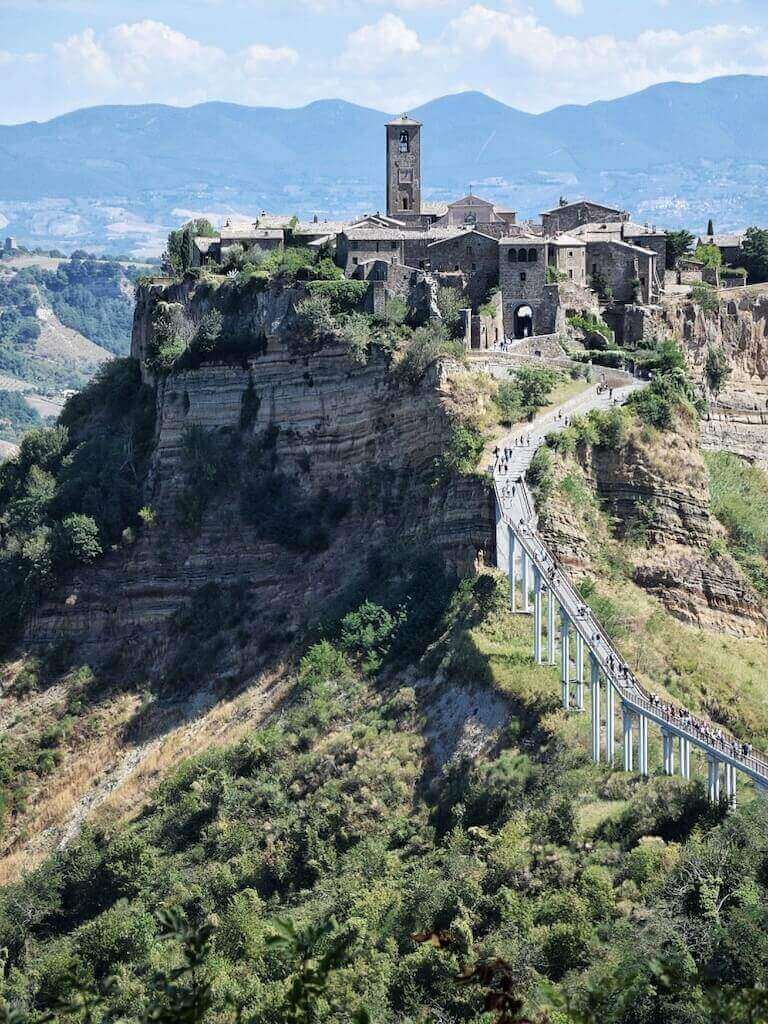
Perched dramatically on a plateau of volcanic rock, Civita di Bagnoregio looks like something straight out of a fairy tale. The only way to reach this magical town is by crossing a long footbridge that stretches across a scenic valley—it’s a sight that never fails to take my breath away, no matter how many times I see it.
What makes Civita truly special is its fascinating history. While the Etruscans first settled here 2,500 years ago, most residents moved away in the 16th century due to the eroding cliffs.
Today, only a handful of determined souls live here year-round, making it feel like a living museum (the rest have moved in the new town just next to it).
To visit, you’ll need to pay a small fee to cross the bridge (cars aren’t allowed), but the views and atmosphere are worth every euro. Once inside, you’ll find charming restaurants and local craft shops, but the real joy is simply wandering the timeless streets and soaking in the atmosphere.
If you just want to visit Civita di Bagnoregio and a few other places without the hassle of driving, I recommend this this guided tour from Rome: Bagnoregio & Orvieto Day Trip with Wines & Lunch. The tour includes roundtrip transportation, a local guide, and everything you need for a fun adventure around Tuscia. It’s not the same as driving, but it’s still a memorable tour.
My post What To See In Civita Di Bagnoregio guides you through the town’s most important attractions.
Terme di Saturnia
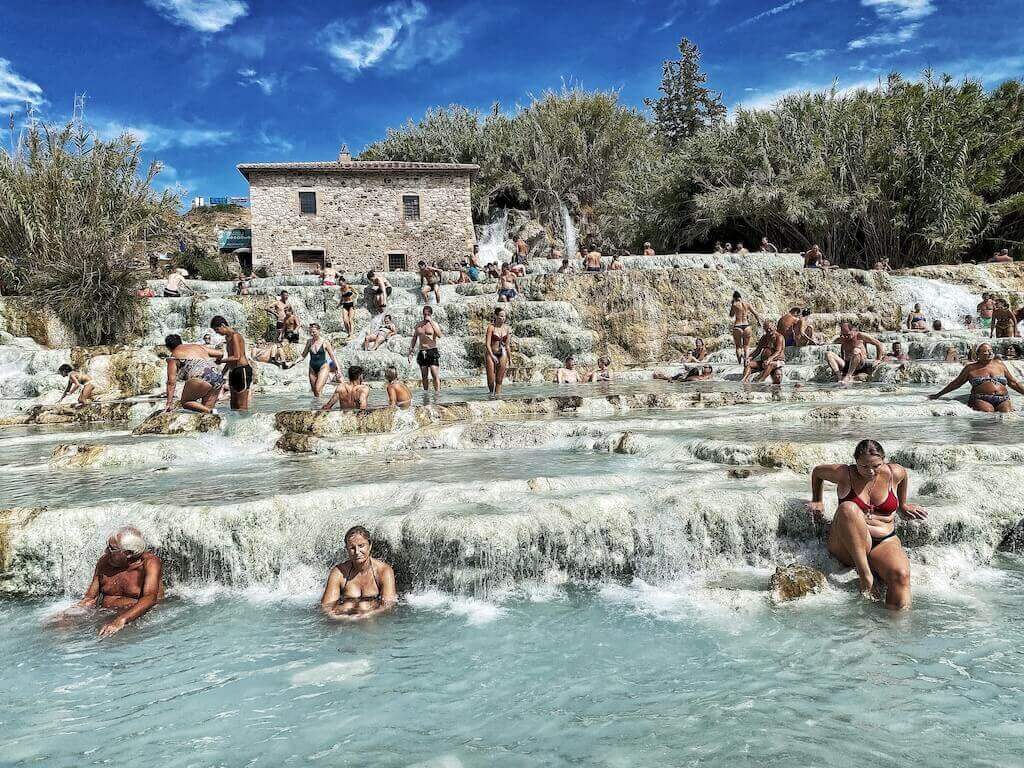
Imagine relaxing in warm, clear waters bubbling up from the earth for thousands of years.
According to a local Roman legend, these springs were created when Jupiter hurled a thunderbolt at Saturn during an argument—and while that might be a myth, the therapeutic 37.5°C (99.5°F) waters are very real.
The most famous spot here is the Cascate del Mulino (Mill Falls), where the thermal waters cascade over natural white stone formations, creating perfect natural pools for soaking. The best part is that these falls are free to visit and open 24/7.
If you’re looking for a more luxurious experience, a high-end spa is nearby, but the natural falls offer the most authentic experience. Just avoid visiting at the weekend during the peak season, as they can get very crowded.

Viterbo’s Medieval Quarter
The medieval quarter of San Pellegrino in Viterbo isn’t just another pretty Italian neighborhood—it’s one of the best-preserved medieval districts in Italy. Walking through these winding cobblestone streets feels like stepping directly into the Middle Ages, with weathered stone buildings, flowering balconies, and ancient fountains around every corner.
The star attraction here is the Palazzo dei Papi (Papal Palace), where you’ll find the fascinating Aula del Conclave, the site of the first and longest papal conclave in history.
It took the Cardinals an incredible three years to choose Pope Gregory X in 1271, and they were locked in until they made their decision. Also, don’t miss the elegant Loggia della Benedizione, the balcony where newly elected popes would first appear to the public.
Despite being the capital of Tuscia, Viterbo doesn’t get as attention from foreign tourists as it should. Visiting is a real treat, especially if you are looking for a more authentic local experience.
My post A Local Guide To Viterbo shares more tips for visiting this lovely town of Northern Lazio.
Bomarzo Monster Park
Bomarzo is one of my favorite small towns in Tuscia. It’s right next to Soriano, where my cousin and his partner (who’s from Bomarzo) live, so I go any time I can. It’s quaint, unique and relaxing.
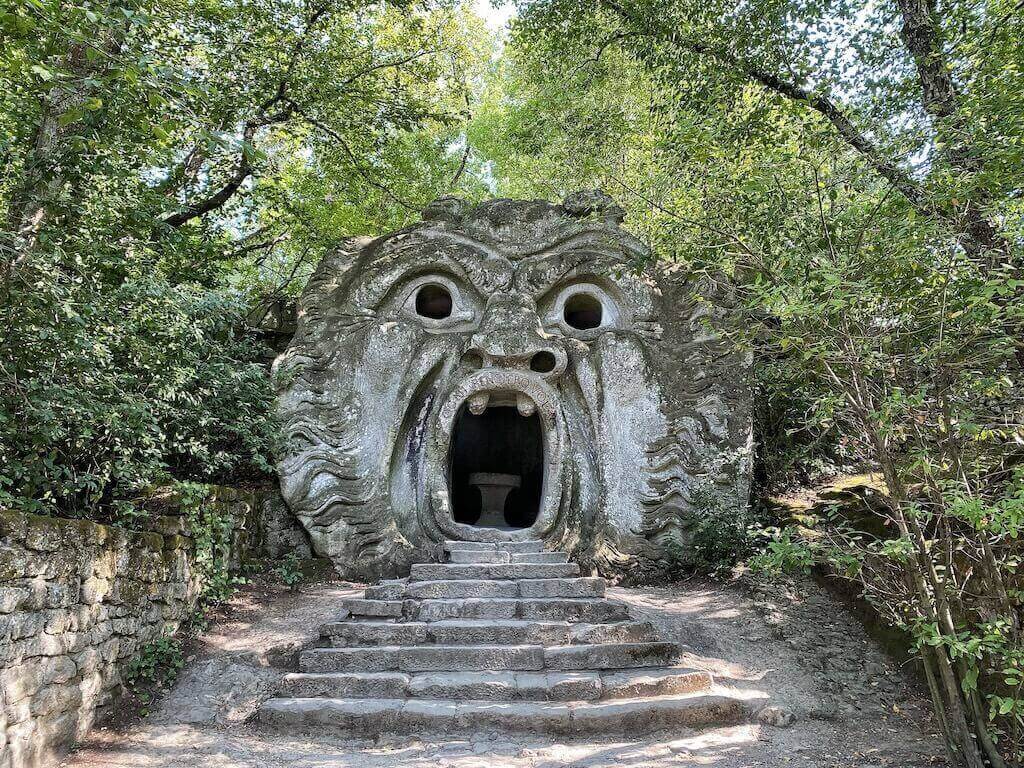
If you’re tired of perfectly manicured Italian gardens, you’re in for a treat. The Monster Park (Parco dei Mostri) is anything but typical—it’s a wonderfully weird 16th-century garden filled with larger-than-life stone monsters and mythological creatures.
Created by Prince Pier Francesco Orsini in 1552, these gardens weren’t meant to be pretty. They were designed to shock and amaze.
The most famous feature is the massive head of Orcus, god of the underworld, whose mouth serves as a stone picnic spot. Look for the inscription on its lip that reads “ogni pensiero vola” (“all thoughts fly”).
Be careful what you say while inside. Thanks to clever acoustic engineering, any whisper at the stone table can be heard from the entrance steps.
If you’re looking for a guided tour, check out this Rome Tour to Bomarzo Caprarola & Calcata. It takes you to three incredible spots: the bizarre Monster Park of Bomarzo with its 16th-century sculptures, the impressive Renaissance Palazzo Farnese in Caprarola, and the artistic village of Calcata perched on its clifftop. Transportation from Rome is included, making it easy to see these hidden gems in a single day.
Villa Lante Gardens
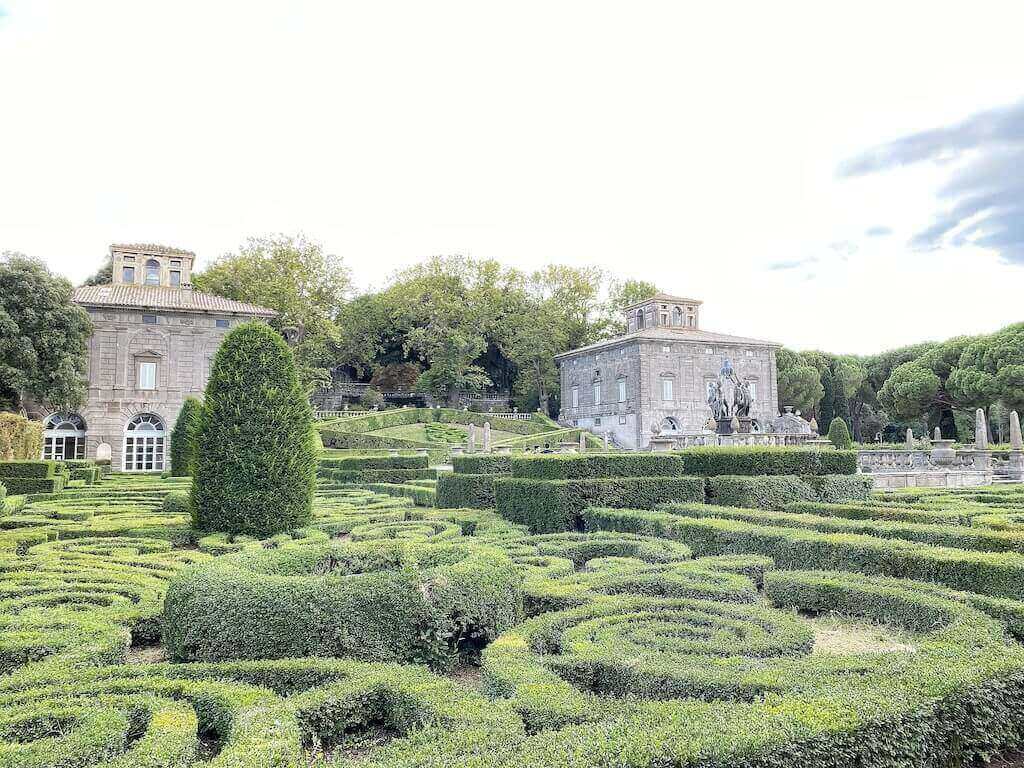
Just a few minutes from Viterbo in the village of Bagnaia, you’ll find Villa Lante, one of Italy’s most impressive Renaissance gardens. Picture perfectly maintained hedges cut into geometric patterns, beautiful fountains, and water features that flow from one level to the next.
My dad would take us there every time we visited Viterbo as kids (his cousin worked there, so we had a good excuse to visit), so of course it’s one of my favorite places in Tuscia!
Construction began in 1566 under Jacopo Barozzi da Vignola, though interestingly, the gardens didn’t become famous until a century after his death.
The site took quite a hit during World War II when the Allied bombing caused significant damage, but thankfully, it was restored and is now being looked after by the Italian government.
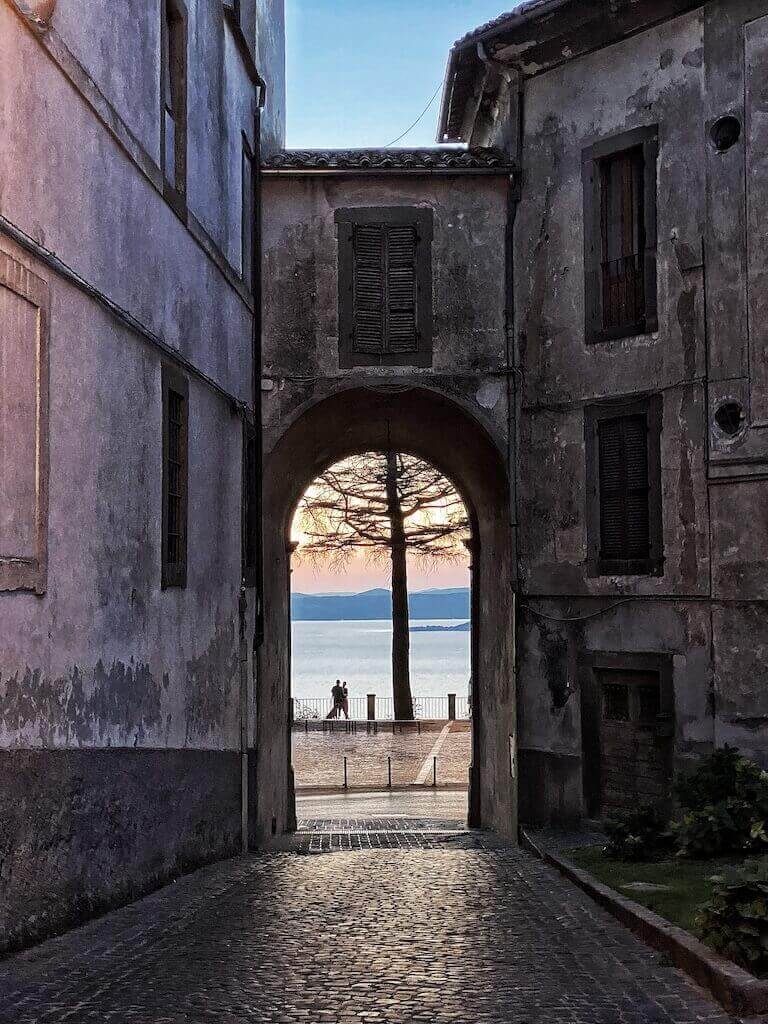
Lake Bolsena (Europe’s largest volcanic lake)
Lake Bolsena is a living testament to the region’s volcanic history. Created in the crater of the Vulsini volcano (which last erupted in 104 BC, according to Roman records), it is today a peaceful paradise surrounded by historic villages (my favorite is Montefiascone) and natural beauty.
The lake is a perfect day trip from Viterbo (just 40 minutes by car), but you might want to stay longer.
The shoreline is dotted with agriturismo (farm stays), campsites, and charming B&Bs, making it an ideal spot to base yourself for a few days of relaxation. The area is particularly popular with Italians in the summer, but even then, it feels worlds away from the tourist crowds of Rome.
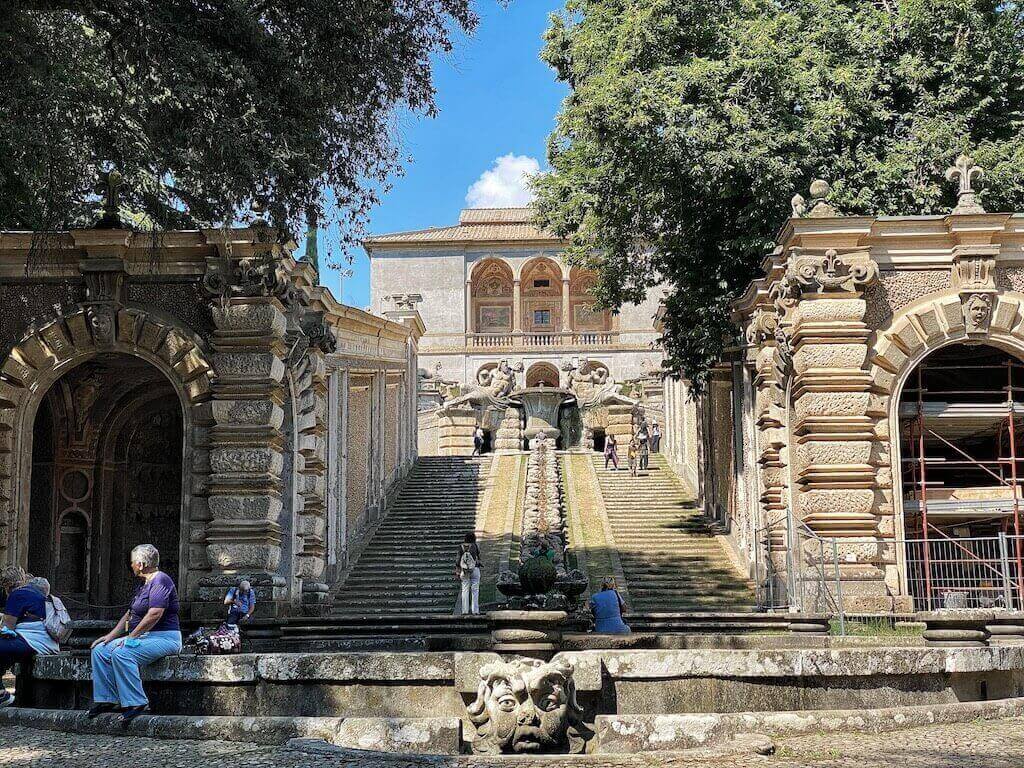
Palazzo Farnese in Caprarola
Just 21 km (13 miles) from Viterbo sits one of the most impressive Renaissance buildings and Italian landmarks you’ll ever see—and no, it’s not the famous one in Rome.
Palazzo Farnese was originally built as a fortress to protect the powerful Farnese family, but today, it’s a stunning palace that dominates the village of Caprarola.
For just a few euros, you can explore room after room of incredible frescoes and decorative details. The most fascinating feature must be the unique double-helix staircase that spirals through the building.
Don’t skip the gardens, either. The famous Villa d’Este inspired them in Tivoli, featuring beautiful fountains and perfectly maintained pathways.
If you want to explore Villa Farnese more in depth, I recommend this Villa Farnese in Caprarola, a masterpiece of Renaissance architecture—Private Tour. Your guide will take you through this unique pentagonal fortress, showing you hidden gems like the acoustics in the Hall of Angels and the stunning Renaissance gardens with their fountains and cypress trees. While you can visit independently, having a guide brings the history to life.
On the other hand, if you travel to Caprarola by car like we did when we visited, beware parking is limited in the historic town.
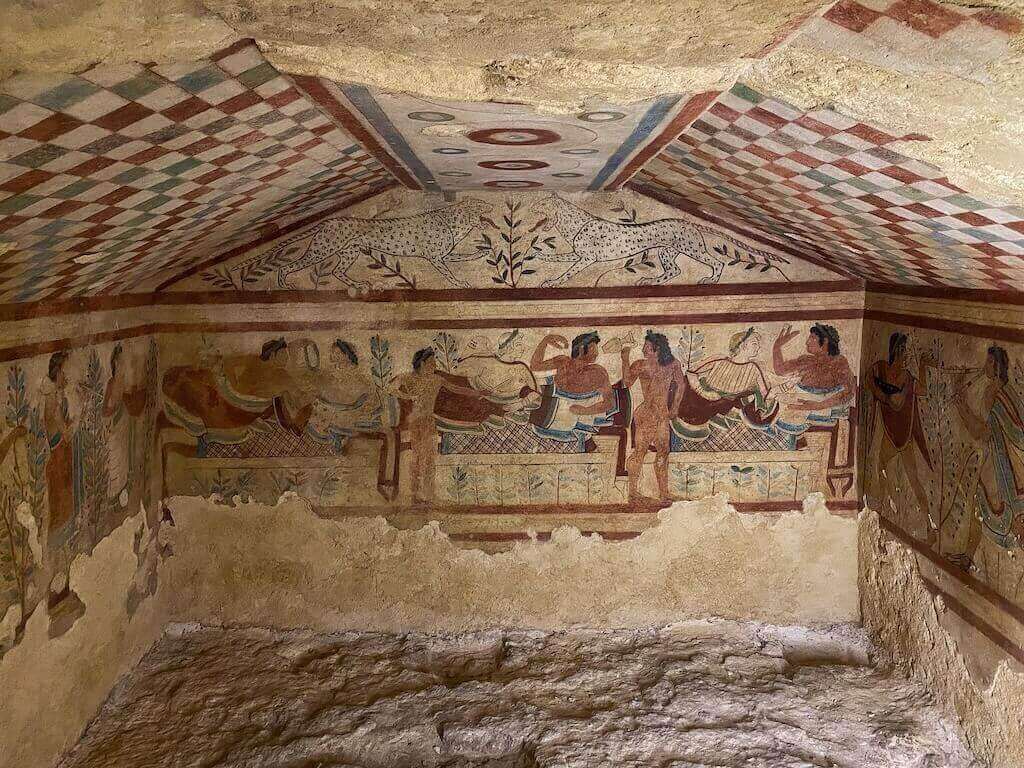
Tarquinia’s Etruscan Necropolis
If you’re interested in ancient history, Tarquinia’s necropolis is an absolute must-visit. This UNESCO World Heritage site offers a rare glimpse into the mysterious world of the Etruscans through its incredibly preserved tomb paintings. We visited for the first time when I was a teenager, and even then I could not help but be impressed by the magnificent site.
The vibrant frescoes show scenes from daily life—everything from lively banquets and dances to more solemn moments.
The most famous tombs include the Tomb of the Bulls, the Tomb of the Augurs, and the Tomb of the Leopards.
Make sure to get the combined ticket that includes the necropolis and the archaeology museum in town—they complement each other perfectly, and the historic center of Tarquinia is a very pleasant place to go for a walk.
For a guided tour from Rome, I recommend this Etruscan Highlights of Tarquinia and Cerveteri. The tour includes visits to two UNESCO-listed archaeological sites, where you can explore ancient painted tombs and artifacts at your own pace. You’ll stop at a local trattoria for lunch and get direct transportation from Rome.
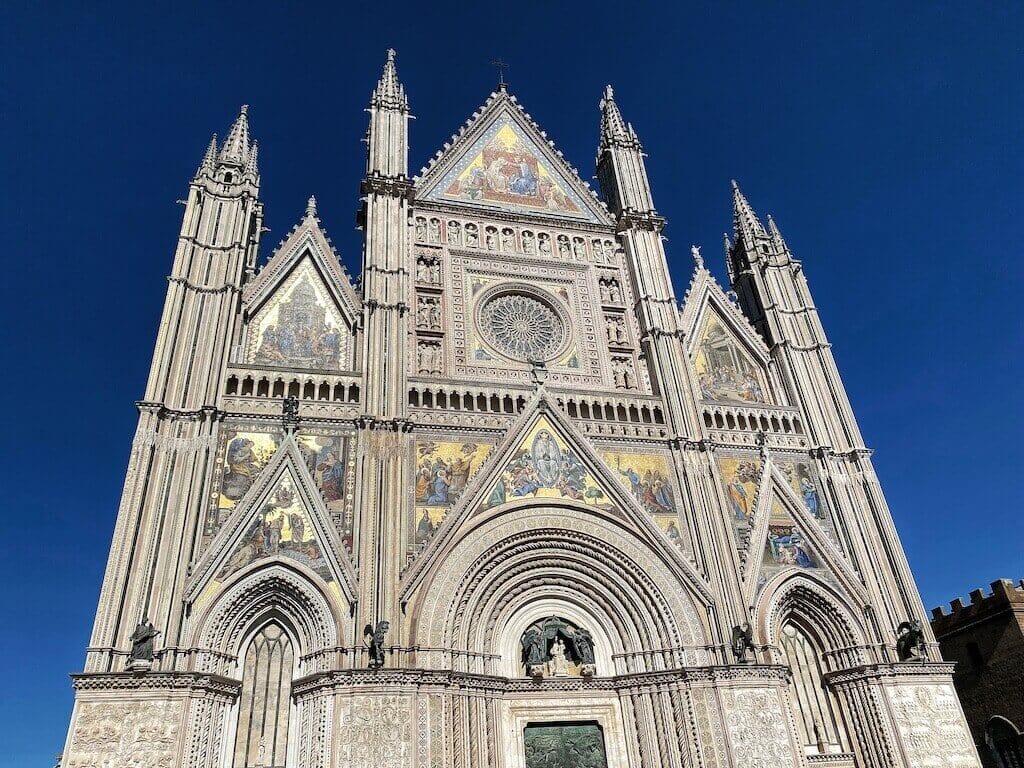
Orvieto & its stunning Duomo
While Orvieto is technically in Umbria, it is still part of Tuscia, it’s just 45 km (almost 28 miles) from Viterbo and offers some of the most breathtaking views in the region.
Like its neighbor Civita di Bagnoregio, Orvieto sits high on a volcanic rock plateau but on a much grander scale. The city rises almost vertically from the surrounding valley, with impressive tuff cliffs and medieval walls that once made it nearly impossible to conquer.
The crowning jewel is the Duomo, dating back to 1290, with its incredible mosaic-covered facade that gleams in the sunlight. But you should spend some time exploring the town that has so much more to offer (our favorite site was St. Patrick’s Well).
Pro tip: There’s a designated panoramic spot to safely pull over and take photos—you’ll definitely want to, given the gorgeous views.
If you’re traveling to Orvieto by car but want a guided tour, I recommend this Orvieto: 2-Hour Cathedral and Underground Tour. The tour is short but right to the point. You’ll explore the famous Duomo, learn more about its design and history, and have about an hour to explore Pozzo della Cava with a local guide.
If you are visiting Tuscia and planning to stop by Orvieto, don’t skip my post A Complete Guide To Orvieto for useful tips on the best attractions and more.
Tuscania
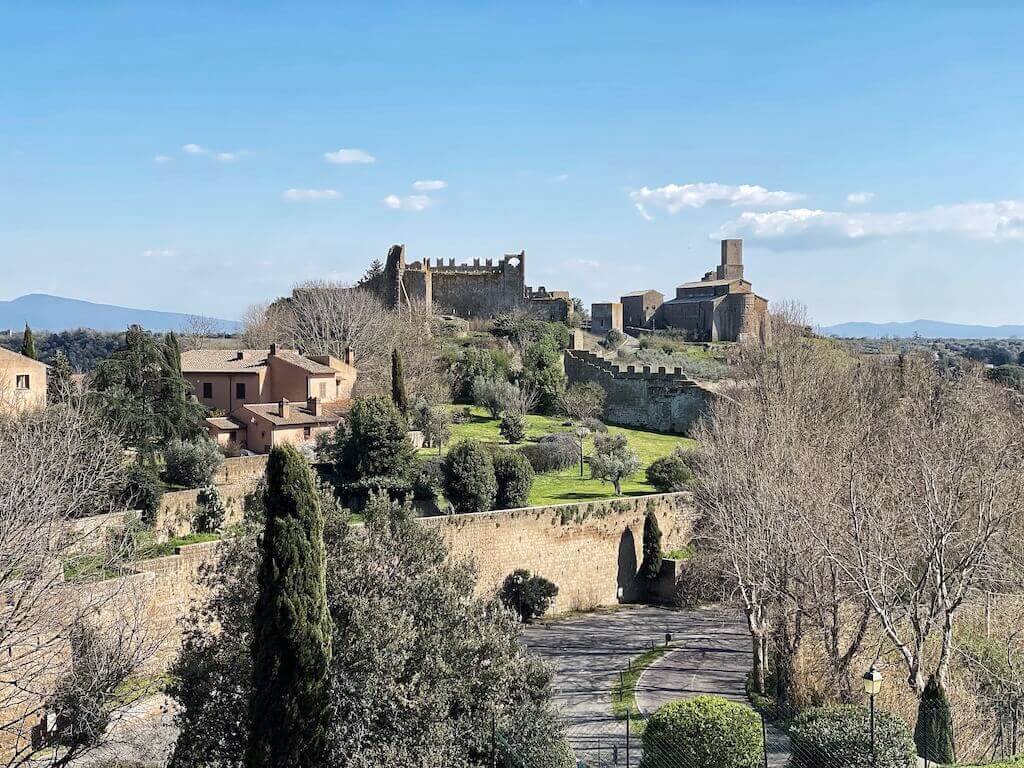
I visited Tuscania on a whim as I had to return my rental car in Fiumicino Airport and had a few hours to kill – my cousins recommended I stop there, and it was a great advice. The small town is located just 25 km (15.5 miles) from Viterbo, to which it’s also connected by public bus.
Tuscania is home to a few very interesting sites. My favorite is by far San Pietro Basilica, which was built in 739 in Lombard Romanesque style (though it was renovated in the 11th and 12th century). It is home of impressive mosaics.
I also recommend checking out Santa Maria Maggiore Church, which was built in 1206 over the ruins of a church that dates from 856.
Take some time to wander around town as you’ll be wowed by the pretty vistas, the quaint narrow alleys and the colorful buildings. The best views in town are from the Parco Lavello, where the Torre di Lavello is located.
Ancient underground cities
One of Tuscia’s most fascinating secrets lies beneath your feet. The region is honeycombed with underground networks, particularly in Orvieto and Viterbo.
These aren’t just caves—they’re entire cities carved into volcanic rock, with tunnels, wells, cellars, and escape routes that tell stories of medieval life.
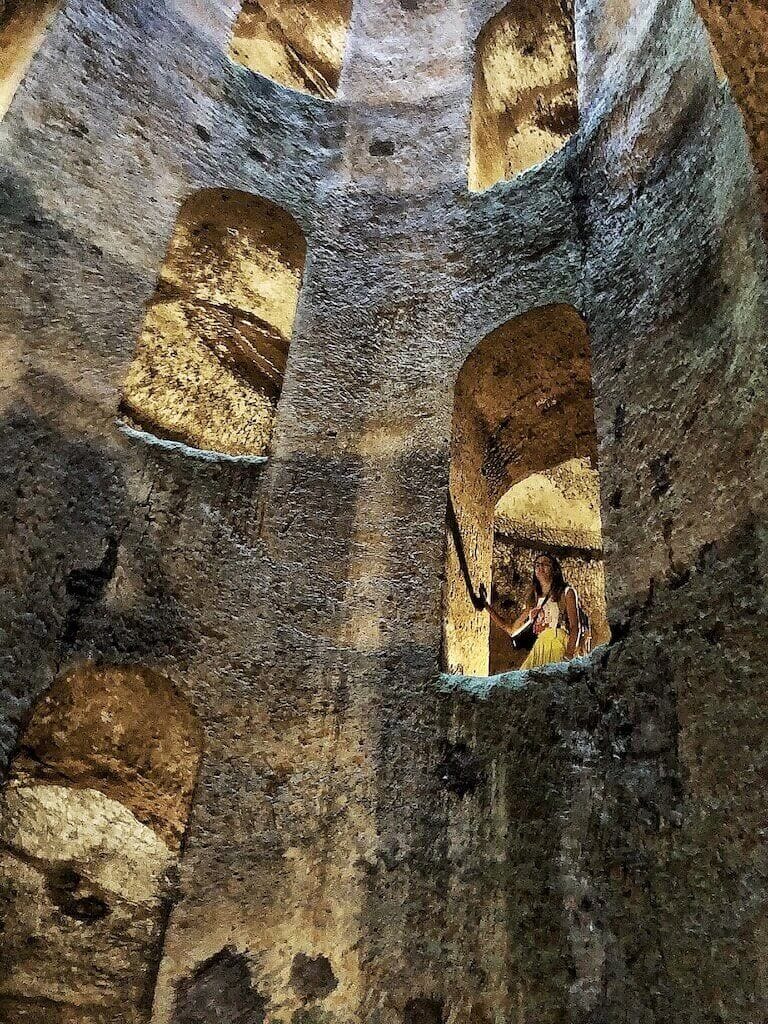
In Orvieto, don’t miss the famous Pozzo di San Patrizio (St. Patrick’s Well), an engineering marvel featuring a double-helix design that allows mules to carry water up without crossing paths with those heading down.
Meanwhile, Viterbo’s underground passages reveal medieval cellars, ancient water systems, and even escape tunnels once used by popes. You can explore these subterranean wonders through guided tours. It’s a bit chilly down there (even in the peak of the summer), so bring a light jacket.
If you want a short, informative tour of Viterbo’s underground, I recommend this Viterbo Underground tour. It’s only about 20 minutes, but it’s just enough time to explore and learn some fascinating tales about the underground.
Hidden Gems Around Tuscia
Vitorchiano
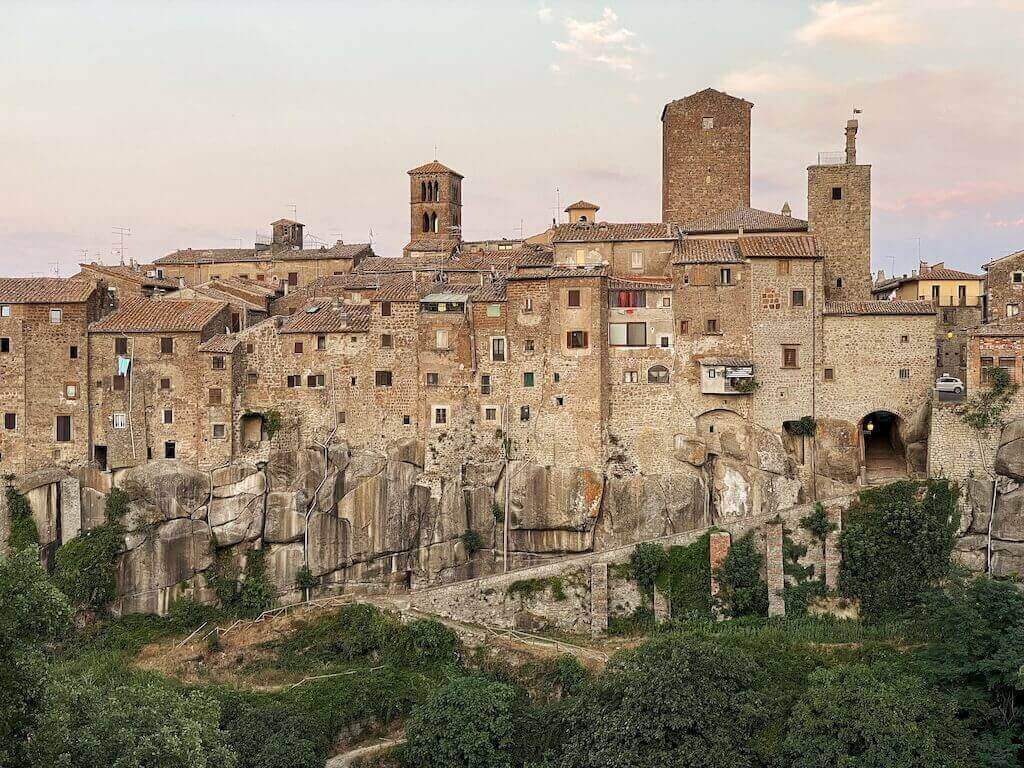
Of all the medieval villages dotting Tuscia’s landscape, Vitorchiano holds a special charm. Perched on volcanic rock (specifically peperino stone), this tiny town overlooks the lush Vezza Valley.
The view from the terrace near the camping site is stunning—possibly the best photo spot in all of Tuscia. When I last visited, I literally showed locals a photo of the poster we had in our landing growing up, because I wanted to find the exact spot where it was taken, and that’s where they said I should go.
The town has quite a rebellious history, too. In 1199, Vitorchiano declared independence from Viterbo (a pretty bold move), which led to attacks from both Viterbo and Rome. While they eventually submitted to Roman control in 1201, you can still see the defensive walls built during this tumultuous time.
For such a small place, Vitorchiano offers plenty to see: the Romanesque church of San Pietro, the beautiful 13th-century Santa Maria Assunta in Cielo, and the 14th-century Santissima Trinità.
Don’t miss the Madonna di San Nicola church, where gorgeous frescoes decorate the walls and ceiling. It’s a very relaxing town to explore, with so few tourists and incredibly welcoming locals.
Celleno Ghost Town
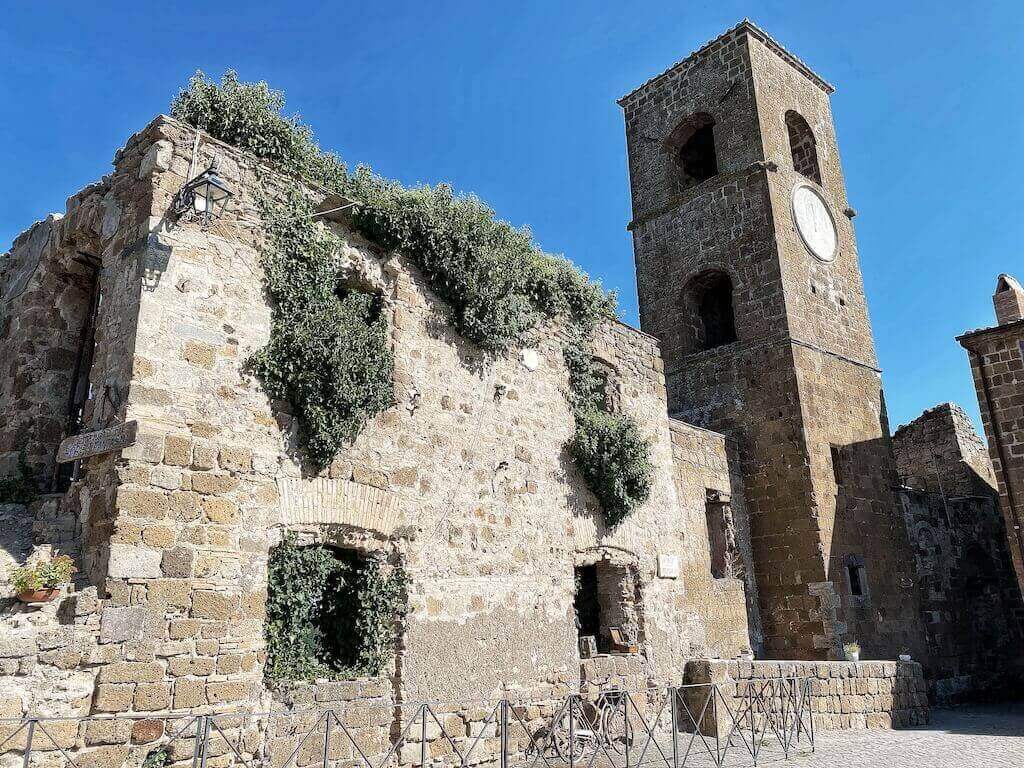
Ever wanted to explore a real ghost town? Welcome to Celleno, known locally as “Il Borgo Fantasma.” This fascinating place, just 15.5 km (9.6 miles) north of Viterbo, is home to only a handful of residents today, but its story is captivating. It’s not too different from Civita di Bagnoregio, except it’s completely unknown to tourists so you’ll have it to yourself if you visit.
The town’s “death” came suddenly on Christmas Eve 1951; the entire population was forced to relocate nearby due to unstable buildings.
Today, you can explore the eerily beautiful abandoned streets, the old Orsini family castle, and the San Carlo and San Donato churches. Nature lovers should check out the nearby Infernaccio waterfall and the dramatic “Gorges of Hell.”
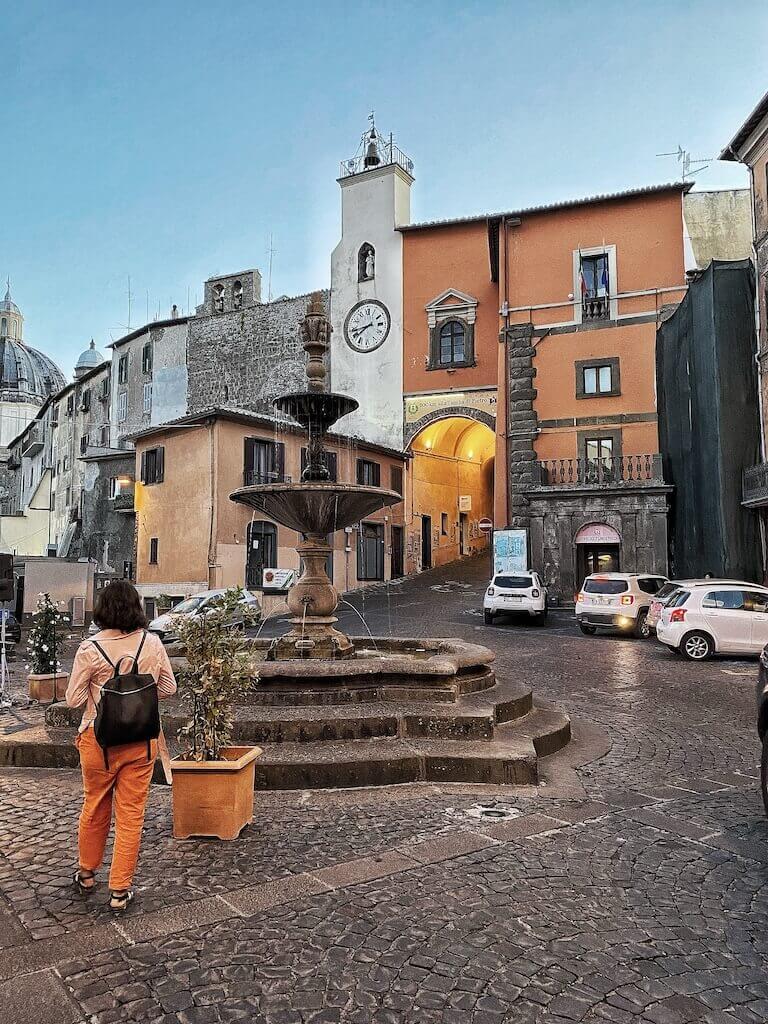
Montefiascone & its famous wine
Sitting at the highest point in the province of Viterbo, Montefiascone offers some of the most spectacular views in Tuscia.
The town’s position along the ancient Via Francigena (the pilgrim route from Canterbury to Rome) has blessed it with remarkable religious architecture, including the Cathedral of Santa Margherita with its impressive 1674 dome.
But what really puts Montefiascone on the map is its famous wine—Est! Est!! Est!! (Yes, that’s its name).
The story goes that a 12th-century German bishop sent his servant ahead to mark “Est” (meaning “it is here”) on the doors of inns serving good wine. When the servant reached Montefiascone, he was so impressed that he wrote, “Est! Est!! Est!!” Legend has it that the bishop died after drinking too much of this excellent wine!

Soriano nel Cimino & its forest
Dominated by the imposing Orsini Castle, Soriano nel Cimino might not be as well-known as other Tuscia towns, but it definitely deserves your attention. I go every time I am visiting Tuscia as that’s where my late uncle used to live, and where one of my cousins still lives with his family.
The 13th-century castle has quite a history—it was even used as a summer residence by Pope Nicholas III (who happened to be Uncle Orsini).
The real hidden treasure here, though, is the Faggeta Vetusta, a UNESCO-protected beech forest in the mountains above town.
It’s one of Europe’s most ancient beech forests, making it a perfect escape on hot summer days. The town offers plenty to explore, from the crumbling but beautiful 9th-century Church of San Giorgio to the grand Cathedral of San Nicola di Bari.
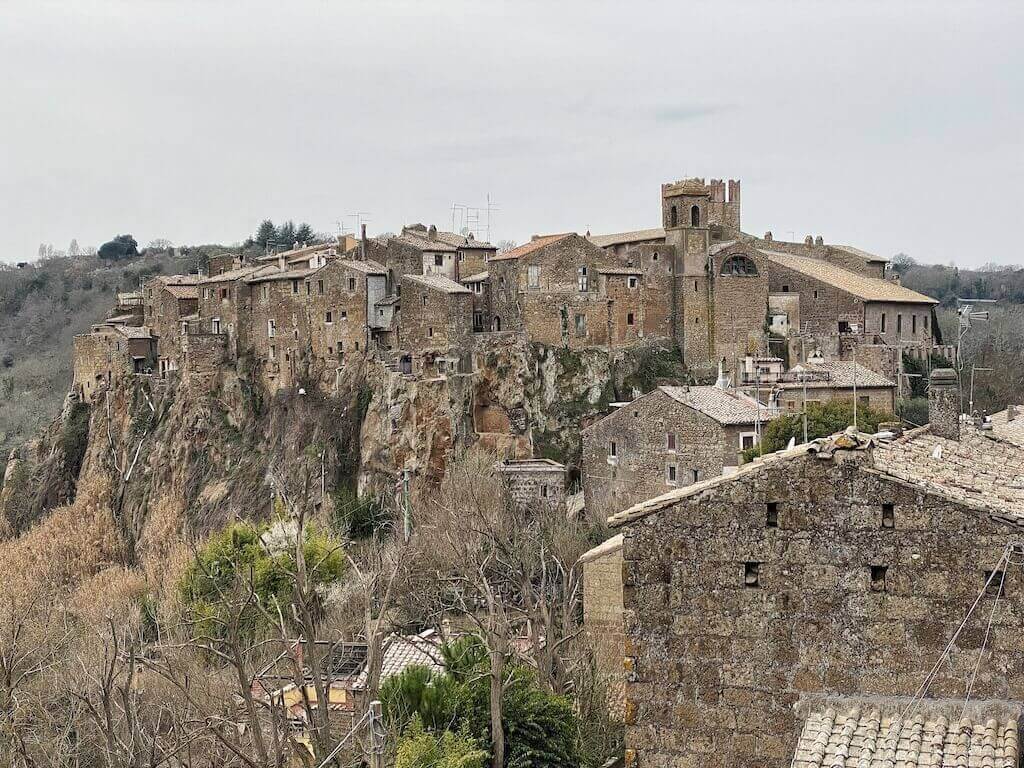
Calcata Vecchia
This is another small town I have discovered following local recommendations (namely: my parents’ friends are from there!). It’s a bit further from Viterbo (about 53 km, or 33 miles), and just about the same distance from Rome, so an ideal place for a day trip.
Founded in the Middle Ages, in the 1960s Calcata Vecchia became home of a community of artists and hippies, and to date it remains very much a bohemian kind of place.
The main sights of Calcata Vecchia are Piazza Umberto I – the main square – and the Museo della Civiltà Contadina. I also recommend simply going for a walk: the tiny historic town is peaceful, quaint. You’ll find art galleries, small local souvenir shops, a handful of excellent restaurants and a relaxed vibe.
The best views of Calcata are from the trail that takes from the parking lot just outside town to the historic center.
If you don’t want to drive around Tuscia, I recommend this Rome Tour to Bomarzo Caprarola & Calcata. It goes to the Monster Park of Bomarzo, the Renaissance Palazzo Farnese in Caprarola, and Calcata Vecchia. It includes transportation from Rome.
Tuscia Travel Guide Planning
Where to base yourself in Tuscia
When it comes to choosing your home base in Tuscia, you’ve got two main options. If you want easy access to restaurants, shops, and services, Viterbo is your best bet—it’s centrally located and has the widest range of accommodation options. However, if you’re after a more rustic experience, consider staying at an agriturismo around Lake Bolsena.
Where to stay in Viterbo
In Viterbo, Il Gallo Nero is a charming B&B in a quiet corner of San Pellegrino Medieval District. What makes it special is how it combines historic charm with modern comfort—think exposed stone walls but with all the necessary amenities. Plus, their Italian breakfast is a perfect way to start your day of exploring.
For something more upscale, check out Palazzo Grandori Alloggi Turistici on Piazza San Francesco. They offer spacious rooms; if you’re traveling to Italy with family or staying longer, their apartments come with fully equipped kitchens.
Then there’s B&B A Piazza del Gesù, a popular B&B tucked right in the heart of the medieval center. Some rooms offer stunning views over the town or garden, and the free parking is a massive bonus if you drive (especially considering that finding a parking spot in Viterbo can be a real nightmare).
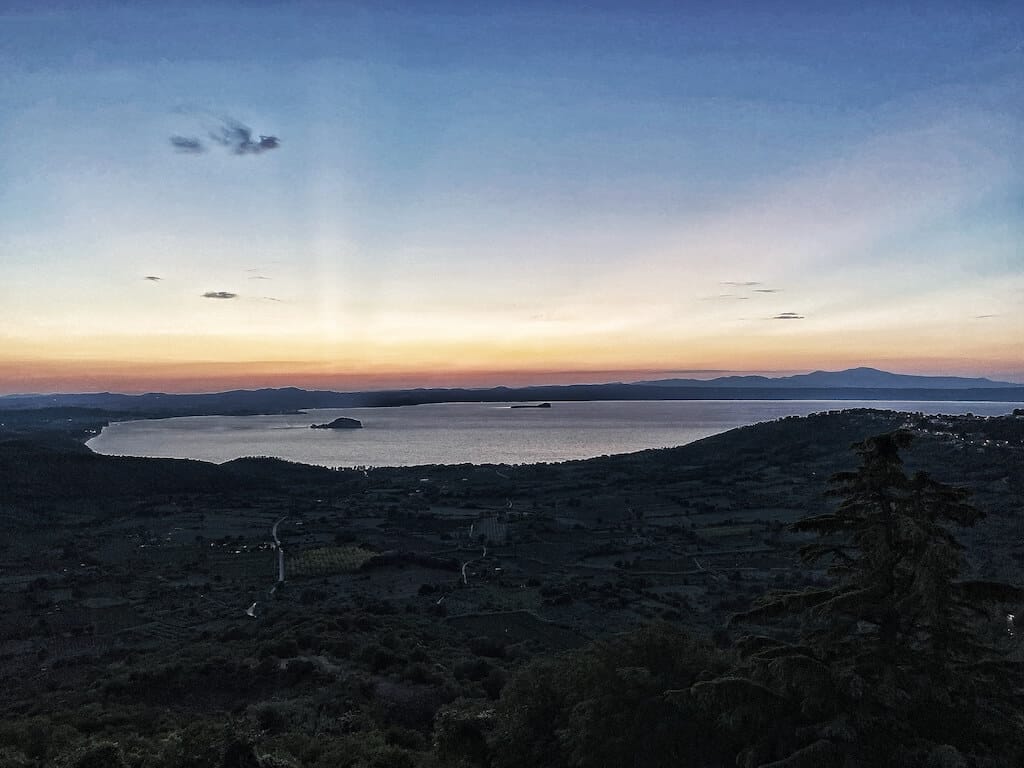
Where to stay around Lake Bolsena
For a true lakeside experience, there are some lovely options on the water’s edge. Hotel Lido – Beach and Palace is a beautiful property with its private beach and a summer restaurant offering stunning lake views.
The rooms are lovely; some even have private terraces overlooking the water. One of the best parts is that breakfast is served on the terrace, and you can access a partner property’s swimming pool.
For something with a family-run feel, Hotel Eden Sul Lago sits in a peaceful spot with large grounds leading right down to the lake. Their restaurant specializes in fresh fish dishes and has a gorgeous terrace overlooking the water.
There’s even a pizzeria with a traditional wood-burning oven. The location is perfect, too – you’re just a short walk from central Bolsena but far enough to enjoy the tranquility of the lake.
What to eat in Tuscia
Tuscia’s food scene is a delicious mix of tradition and local cuisines. The absolute must-try is porchetta—a succulent pork roast stuffed with fennel and liver. It’s a local specialty that’s been perfected over generations.
For something heartier, try acquacotta, a thick soup that tells the story of Tuscia’s peasant cooking. The name literally means “cooked water”—it was originally a clever way to make stale bread edible again.
You’ll also want to sample giubba e calzoni (a rich lamb stew with potatoes and artichokes) and the local pasta specialty, gnocchi al ferro—a unique, elongated type of gnocchi.
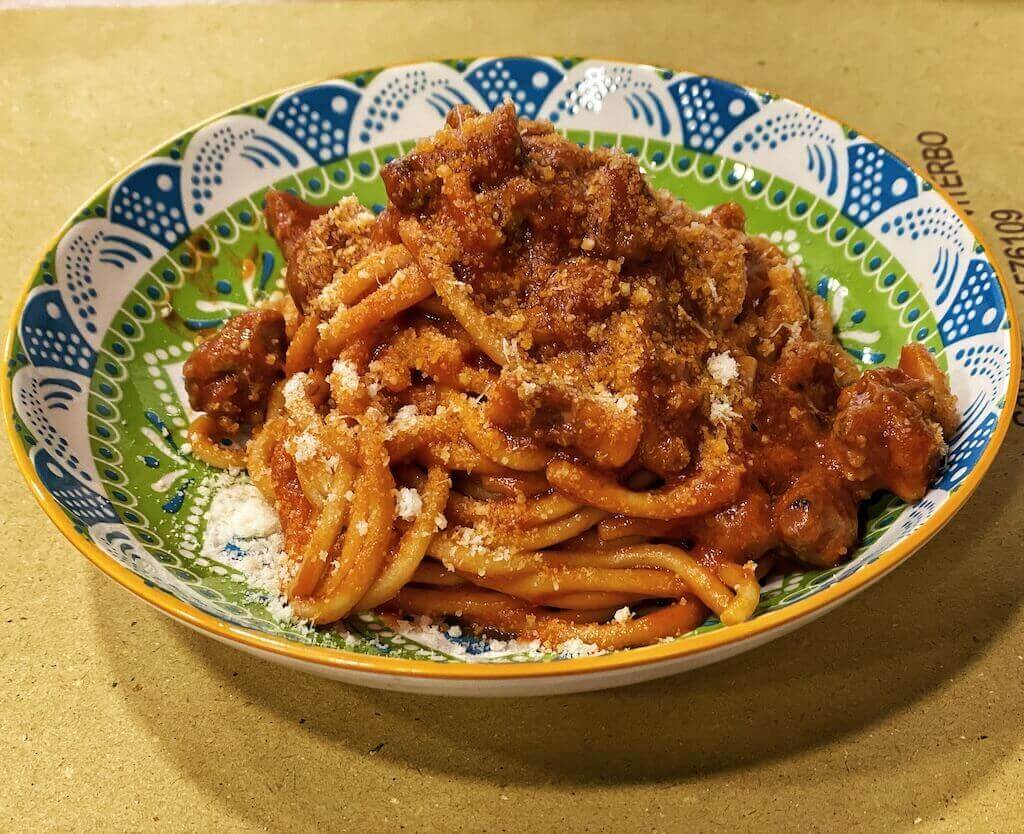
Around Lake Bolsena, don’t miss sbroscia, a rustic fish soup that’s been a local staple for centuries. And if you’re a pasta lover, look for lombrichelli served with spicy ragù—it’s hand-rolled and absolutely delicious.
Suppose you’re interested in food and have never traveled to Italy before. In that case, you have to read my article, 11 Common Misconceptions About Italian Food (From A Local), where I explain “fake” Italian foods you might find outside the country.
Conclusions On Visiting Tuscia
Tuscia isn’t as popular as other places like Venice, Rome, or Naples, but it has charm all on its own. And I’m not just saying that because my family’s from this region.
There’s something a little different about Tuscia. The local food is amazing, the people are friendly, and it’s way less touristy (and significantly more budget friendly) than other Italian cities. It’s the perfect place to escape the big crowds and experience a different side of Italy.
PIN IT!



Hello,
I lived in Rome for a few years and have seen much of Italy. I have never visited this region. If I plan to be in Rome for three days and then spend four days exploring this region with a rental car, do you have a suitable itinerary for that amount of time? I am willing to pay for the service. On a side note, my spouse and I hosted an exchange student from Cagliari for four years! Thank you in advance.
Hello Aaron, indeed I do offer a consultation service. You can book it here https://calendly.com/claudia-strictlysardinia/strictly-italy-travel-consultation